Watch the replay of our live Q&A media session (In English and Italian) with ESA astronaut Samantha Cristoforetti.
Samantha is scheduled to be launched to the International Space Station from NASA’s Kennedy Space Centre in Florida, USA, no earlier than 21 April 2022. She will fly to the Station as a Mission Specialist aboard a SpaceX Crew Dragon spacecraft alongside NASA astronauts Kjell Lindgren, Bob Hines and Jessica Watkins.
Upon arrival at the orbital outpost her ESA mission ‘Minerva’ will officially begin. This is the second space mission for Samantha and will see her support over 35 European and many more international experiments in microgravity.
We are Europe’s gateway to space. Our mission is to shape the development of Europe’s space capability and ensure that investment in space continues to deliver benefits to the citizens of Europe and the world. Check out https://www.esa.int/ to get up to speed on everything space related.
Join ESA astronaut Matthias Maurer live from the International Space Station, along with prominent experts and industry leaders, to explore how space research can improve life on our planet. ESA Director General Josef Aschbacher will take part in a panel discussion with Al Gore, Vice-President of the United States (1993-2001); Chris Kemp, CEO of Astra and Sarah bint Yousif Al-Amiri, Minister of State for Advanced Technology, Ministry of Industry and Advanced Technology of the United Arab Emirates. The panel discussion will be followed by a one-on-one conversation between ESA astronaut Matthias Maurer and Rebecca Blumenstein, deputy managing editor of @The New York Times. Event organised in partnership with the @World Economic Forum.
Jump to a specific moment in the replay: 00:00 – 20:19 – Stay tuned 20:19 – 54:42 – Conference 54:42 – 1:14:09 – Inflight call 1:14:09 – 1:21:22 – Final thoughts
★ Subscribe: http://bit.ly/ESAsubscribe and click twice on the bell button to receive our notifications.
We are Europe’s gateway to space. Our mission is to shape the development of Europe’s space capability and ensure that investment in space continues to deliver benefits to the citizens of Europe and the world. Check out https://www.esa.int/ to get up to speed on everything space related.
NASA’s #DARTMission is crashing a spacecraft into an asteroid to try to change its motion in space. But how will we know if this test worked? That’s where Johns Hopkins APL scientist Andy Rivkin comes in. He’ll be studying the precise change in the asteroid’s motion right here from Earth. Have questions about DART? Submit them using #askNASA and tune in on Monday, Nov. 15 at 4:30 pm ET for a LIVE Q&A with Andy.
ESA astronaut Thomas Pesquet gives a brief interview in Cologne, Germany, less than 48 hours after leaving the International Space Station.
He talks with ESA Web TV editor Julien Harrod about returning to Earth after his six-month International Space Station mission Alpha, how it feels to splash down in a @SpaceX Crew Dragon, and the differences with the Russian Soyuz spacecraft that flew him to space on his first mission, Proxima, in 2017.
After completing two six-month Space Station missions in five years, Thomas recounts the changes he saw while observing our planet Earth from 400 km above.
Thomas is the first European to fly to the International Space Station and return on a commercial spacecraft. SpaceX’s Crew Dragon Endeavour transporting Crew-2 autonomously undocked from the International Space Station and after a series of burns, entered Earth’s atmosphere and deployed parachutes for a soft water-landing. Thomas and crew splashed down on 9 November 2021 at 03:33 GMT (04:33 CET).
Thomas flew to Cologne, Germany, where he is being monitored by ESA’s space medicine team as he readapts to Earth’s gravity at ESA’s European Astronaut Centre (EAC) and @DLR ‘Envihab’ facility.
Over 200 experiments were run during Thomas’ time in space, with 40 European ones and 12 new experiments led by the French space agency @CNES. The experiments continue on Earth charting the astronauts physical adaptation to living with gravity again.
We are Europe’s gateway to space. Our mission is to shape the development of Europe’s space capability and ensure that investment in space continues to deliver benefits to the citizens of Europe and the world. Check out https://www.esa.int/ to get up to speed on everything space related.
Join ESA astronaut Thomas Pesquet on a tour of the International Space Station. On his second space mission Alpha, Thomas flew to space from Florida, USA, as part of Crew-2 in the @SpaceX Crew Dragon Endeavour together with @NASA astronauts Megan McArthur, Shane Kimbrough and @JAXA | 宇宙航空研究開発機構 astronaut Aki Hoshide
In this guided tour, a first shot in 4K, Thomas takes you through the modules of the International Space Station including the Dragon. Recorded in October 2021 the Space Station had just seen the departure of Soyuz MS-18 and the relocation of a Progress supply spacecraft. On board where also NASA astronaut Mark VandeHei and Russian cosmonauts Anton Shkaplerov and Pyotr Dubrov.
Over 200 investigations are planned during Thomas’ time in space, with 40 European ones and 12 new experiments led by the French space agency @CNES.
We are Europe’s gateway to space. Our mission is to shape the development of Europe’s space capability and ensure that investment in space continues to deliver benefits to the citizens of Europe and the world. Check out https://www.esa.int/ to get up to speed on everything space related.
NASA planetary defender Dr. Kelly Fast has a hard and fast rule: “Find asteroids before they find us.” Working in NASA’s Planetary Defense Coordination Office, Kelly is helping send the #DARTMission to test “nudging” an asteroid in space. DART, short for Double Asteroid Redirection Test, is a planetary defense-driven test of technologies for preventing an impact of Earth by a hazardous near-Earth object. DART will be the first demonstration of the kinetic impactor technique to change the motion of an asteroid in space. NOTE: the target asteroid is currently not a threat to Earth.
On Sat., Oct. 16 at 7:30 p.m. EDT (23:30 UTC), join lunar enthusiasts around the world for International #ObserveTheMoon Night, an annual celebration of Earth’s neighbor in space! Our live hosts will guide you on a scientific and cultural expedition to the Moon. Enjoy a close-up view of the lunar surface, watch flyovers of lunar features, and learn about our VIPER mission to search for water ice on the Moon’s South Pole, and our plans to send humans there with the Artemis program. More: https://moon.nasa.gov/observe
ESA astronaut Thomas Pesquet and @JAXA | 宇宙航空研究開発機構 astronaut Akihiko Hoshide performed a spacewalk on 12 September 2021 to prepare for the installation of a new solar array on the International Space Station.
The new solar arrays, called IROSA or ISS Roll-Out Solar Array, are being gradually installed over the existing arrays to boost the International Space Station’s power system.
Thomas and @NASA astronaut Shane Kimbrough prepared and installed two IROSA solar panels across three spacewalk in June. The arrays were taken from their storage area outside the Space Station and passed from spacewalker to spacewalker to the worksite. There the rolled arrays were secured, unfolded, connected and then unfurled.
Aki and Thomas prepared the P4 truss for its IROSA installation. This is the same area as where Thomas and Shane installed two IROSA’s but closer to the main body of the Space Station, in an area called the 4A channel. Only one new solar array will be installed here, on a later spacewalk. While the extravehicular activity or EVA was already the fourth spacewalk during Thomas’ Alpha mission, it was his first with Aki and the first time a spacewalking pair did not feature a US or Russian astronaut.
Aki and Thomas made good time preparing the 4A channel for the next IROSA and were able to complete a second task to replace a floating potential measurement unit that was faulty. This unit measures the difference between the Space Station’s conductive structures and the atmospheric plasma.
Thomas and Aki completed their spacewalk in six hours and 54 minutes, which hands Thomas the ESA record for longest time spent spacewalking.
Thomas posted this video on his social media channels with the caption: “Hanging out with my buddy Aki on last week’s spacewalk. The music and timelapse makes it look comical, but as you can see tools and equipment have a life of their own and never stop floating away. Keeping track and even just staying in position in front of the worksite is a constant fight! We got the support bracket done and the truss is ready for the new roll-out solar arrays. We are passing on the baton to the next crew, the arrays need to be launched still and they will be installed next year.”
Over 200 experiments are planned during Thomas’ time in space, with 40 European ones and 12 new experiments led by the French space agency @CNES.
We are Europe’s gateway to space. Our mission is to shape the development of Europe’s space capability and ensure that investment in space continues to deliver benefits to the citizens of Europe and the world. Check out https://www.esa.int/ to get up to speed on everything space related.
We are Europe’s gateway to space. Our mission is to shape the development of Europe’s space capability and ensure that investment in space continues to deliver benefits to the citizens of Europe and the world. Check out https://www.esa.int/ to get up to speed on everything space related.
Thomas Pesquet took part in a discussion with the EU Commissioner for Internal Market Thierry Breton, and the EU Commissioner for Environment, Oceans and Fisheries Virginijus Sinkevicius. The inflight call took place during their visit to ESA’s European Space Research and Technology Centre (ESTEC) in the Netherlands, where they were accompanied by ESA Director General Josef Aschbacher.
We are Europe’s gateway to space. Our mission is to shape the development of Europe’s space capability and ensure that investment in space continues to deliver benefits to the citizens of Europe and the world. Check out https://www.esa.int/ to get up to speed on everything space related.
ESA astronaut Thomas Pesquet gives a tour of the International Space Station’s airlock – the module used to prepare for and carry out spacewalks.
In this video, Thomas provides an overview of the EMU spacesuit used for US spacewalks and its different components. The spacesuits can be adjusted depending on an astronaut’s size, but the gloves are customised to ensure each astronaut has maximum mobility in their hands and fingers.
Thomas shows the cameras and lighting systems that allow astronauts to continue work when over the side of Earth not lit by the sun, the visors they put down during periods of harsh light and the cooling garments worn under the suits that keep their bodies at the right temperature. He also explains the equipment lock and the crew lock, where astronauts breathe in a controlled way to rid their blood of nitrogen and adjust to the lower pressure of space.
We are Europe’s gateway to space. Our mission is to shape the development of Europe’s space capability and ensure that investment in space continues to deliver benefits to the citizens of Europe and the world. Check out https://www.esa.int/ to get up to speed on everything space related.
European Space Agency astronaut Thomas Pesquet shared this video on social media with the caption:
“100 days in space for #MissionAlpha. It feels like a long time ago, but we also installed new toilets shortly after arriving. I was looking at the procedures on the tablet velcroed to my thigh, and yes, this filter looked so much like a banjo, I had to. The same video specialist at ESA who edits the timelapse videos (and much, much more!), Melanie Cowan, spotted this clip from the Space Station onboard camera views, added some music and the result is… perfectly embarrassing! . True story: I actually helped Mark on this day. A little. Maybe. No one knows.”
Over 200 experiments are planned during Thomas’ time in space, with 40 European ones and 12 new experiments led by the French space agency @CNES.
We are Europe’s gateway to space. Our mission is to shape the development of Europe’s space capability and ensure that investment in space continues to deliver benefits to the citizens of Europe and the world. Check out https://www.esa.int/ to get up to speed on everything space related.
Hear from NASA’s SpaceX Crew-1 astronauts ahead of their return to Earth! At 12:30 p.m. EDT, join NASA astronauts Michael Hopkins, Victor Glover, and Shannon Walker, and Japan Aerospace Exploration Agency astronaut Soichi Noguchi for a Q&A about their six-month mission and upcoming departure from the International Space Station.
Need Earth Day plans? 😎 We’ve got you covered. On April 22 at 11 a.m. EDT, NASA astronauts Mike Hopkins, Shannon Walker, Victor Glover, Mark Vandehei, and Soichi Noguchi of Japan Aerospace Exploration Agency will go LIVE from space for a special Earth focused Q&A with guest host Shawn Mendes!
The International Space Station live stream will feature your questions sent in from around the world! Don’t miss this opportunity to hear how NASA Earth and astronauts use space to monitor the health of our planet, what life is like on the orbiting lab, and more!
Astronauts Mike Hopkins, Victor Glover, and Shannon Walker of NASA and Soichi Noguchi of JAXA participate in a live Q&A from Astronaut Crew Quarters at Kennedy Space Center. They’ll answer questions about their Nov. 14 launch to the International Space Station aboard the SpaceX Crew Dragon ‘Resilience’ spacecraft. This mission will be the first crew rotation mission with four astronauts flying on a commercial spacecraft, and the first including an international partner.
Hear from the two NASA astronauts who launched to space aboard the SpaceX Dragon Endeavour, and from International Space Station commander Chris Cassidy, during a live Q&A. Astronauts Robert Behnken and Douglas Hurley are set to board the SpaceX Dragon Endeavour spacecraft on Saturday, August 1 and undock from the station for the journey home to Earth.
Weather permitting, NASA and SpaceX are targeting 2:42 p.m. EDT Sunday, Aug. 2, for the splashdown and conclusion of the Demo-2 test flight mission. The SpaceX Crew Dragon spacecraft, named Endeavour, lifted off May 30 on a Falcon 9 rocket from Launch Complex 39A at NASA’s Kennedy Space Center in Florida.
Let’s talk about science! In the latest episode of #EZScience, learn about the upcoming launch of Perseverance. Dr. E and Dr. Z talk about the technological advancements of the newest Mars rover (and helicopter!). The premiere of this episode is part of the National Air and Space Museum’s Mars Day program. Learn more: https://airandspace.si.edu/mars-day
ABOUT THE SERIES: In our #EZScience video series with the National Air and Space Museum, NASA’s associate administrator for science Dr. Thomas Zurbuchen and Museum director Dr. Ellen Stofan talk about the latest in planetary science and exploration.
On her first trip to the International Space Station, Kate Rubins became the first person to sequence DNA in space. Find out the plans for her next trip during a live event at 4 p.m. ET Wednesday, July 1. Rubins and two Russian crewmates will launch to the station in October.
Starting at 11:15 a.m. EDT, you can hear from NASA astronauts currently living and working 250 miles above Earth aboard our orbiting laboratory. Tune in to hear International Space Station Commander Chris Cassidy and Flight Engineers Bob Behnken and Doug Hurley report live on our historic #LaunchAmerica mission:
On 24 April 1990 the NASA/ESA Hubble Space Telescope was sent into orbit aboard the space shuttle Discovery, the first space telescope of its kind. It offered a new view of the Universe and has, for 30 years, reached and surpassed all expectations, beaming back data and images that have changed scientists’ understanding of the Universe and the public’s perception of it. Hubble’s discoveries have revolutionised nearly all areas of current astronomical research, from planetary science to cosmology, and its pictures are unmistakably out of this world.
This video revisits some of Hubble’s biggest science discoveries throughout its three decades of operation to celebrate the telescope’s 30th anniversary.
Credit:
Directed by: Bethany Downer
Visual design and editing: Martin Kornmesser
Written by: Bethany Downer
Narration: Sara Mendes da Costa
Images & Videos: NASA, ESA, M.Kornmesser, L. Calçada, ESO, G. Bacon (STScI), theHubble Heritage Team (STScI/AURA)-ESA/Hubble Collaboration, and H. Bond (STScI and Pennsylvania State University), A. Feild (STScI), and A. Riess (STScI/JHU), D. Jewitt (UCLA), F. Summers, Z. Levay, J. DePasquale, L. Hustak, L. Frattare, M. Robberto (STScI), R. Hurt (Caltech/IPAC) Acknowledgement: R. Gendler, spaceengine.org.
Music: Johan B. Monell (www.johanmonell.com)
Web and technical support: Raquel Yumi Shida
Executive producer: Mariya Lyubenova
★ Subscribe: http://bit.ly/ESAsubscribe and click twice on the bell button to receive our notifications.
We are Europe’s gateway to space. Our mission is to shape the development of Europe’s space capability and ensure that investment in space continues to deliver benefits to the citizens of Europe and the world. Check out http://www.esa.int/ESA to get up to speed on everything space related.
Like many people around the world, ESA astronaut Matthias Maurer is adjusting to a new normal. Find out how he is spending his time at home during the COVID-19 outbreak, along with a few tips on how to gain inspiration from isolation.
We are Europe’s gateway to space. Our mission is to shape the development of Europe’s space capability and ensure that investment in space continues to deliver benefits to the citizens of Europe and the world. Check out http://www.esa.int/ESA to get up to speed on everything space related.
A special “out of this world” episode of #AskNASA.
During her record-setting mission NASA astronaut Christina Koch answers key questions about her stay in space. Highlighting her contributions and scientific achievements while aboard the International Space Station.
Including her help to develop medicine in microgravity and collect data needed for longer missions.
Conducting the longest single spaceflight by any woman, Christina gives great insight into questions related to future missions to the Moon with the Artemis missions and future exploration of Mars.
Comment with your #AskNASA question and subscribe to learn more from our experts!
Media had their first opportunity to ask questions of ESA astronaut Luca Parmitano in Europe on Saturday 8 February 2020 – just two days after he returned from 201 days in space.
This news conference at ESA’s European Astronaut Centre (EAC) started at 12:30 CET (11:30 GMT) with an introduction from the Head of EAC Frank De Winne, followed by statements from ESA Director General Jan Wörner and Director of Human and Robotic Exploration David Parker.
Luca then answered a range of questions about his recent mission, known as ‘Beyond’. Luca answers questions in Italian and others in English.
The entire conference was broadcast live on ESA Web TV.
Beyond was Luca’s second long-duration mission to the International Space Station. His first was Volare in 2013.
Luca was launched to the Station 20 July 2019 – the 50th anniversary of the first lunar landing – and returned 6 February 2020 in the Russian Soyuz MS-13 spacecraft.
During his Beyond mission he became the third European and first Italian in command of the Space Station, set the record for longest cumulative spacewalking time by a European astronaut, remotely controlled a rock-collecting rover in the Netherlands, supported over 50 European and 200 international experiments and welcomed the first Emirati astronaut Hazzaa Ali Almansoori among other mission highlights.
(Please note: There were some technical issues about 45-50 minutes into the press conference, in the replay there is some loss of audio quality and loss of audio/image sync.)
We are Europe’s gateway to space. Our mission is to shape the development of Europe’s space capability and ensure that investment in space continues to deliver benefits to the citizens of Europe and the world. Check out http://www.esa.int/ESA to get up to speed on everything space related.
Find the best Ai toys at Ai Toys Tech channel and site aitoystech.com. We review in depth Ai robots toys, best Ai toys and also machine learning toys for both boys and girls of all ages. Adults are not forgotten on the contrary we cover all range of best Ai robot toys, best tech toys as well as some of the coolest new tech toys you may find. We have from Ai for kids, cool tech toys, cool gadgets for kids to electronic educational toys and the new tech toys. We make reviews of the very best tech toys. https://www.youtube.com/playlist?list=PLGmDDN9uRDw3DKEo8H6e-sLdz6pOj6RP9 Best Toys with Artificial Intelligence
Interview with ESA Director General Jan Wörner following the conclusion of Space19+, the ESA Council at Ministerial Level, held in Seville, Spain, 27-28 November.
We are Europe’s gateway to space. Our mission is to shape the development of Europe’s space capability and ensure that investment in space continues to deliver benefits to the citizens of Europe and the world. Check out http://www.esa.int/ESA to get up to speed on everything space related.
We’re going forward to the Moon, together. NASA astronaut Alvin Drew answers the question, “Who is going with us?”
He describes the purpose of the Gateway and how it helps with our plans to explore the Moon and Mars. Alvin also underlines how NASA partnerships will contribute to the Artemis Program.
Comment with your #AskNASA question and subscribe to learn more from our experts!
Highlighting Artemis with help from Hollywood, preparing to launch to the only laboratory in microgravity, and testing new lunar landing technology … a few of the stories to tell you about – This Week at NASA!
This video is available for download from NASA’s Image and Video Library: https://images.nasa.gov/details-NHQ_2019_0920_Highlighting%20Artemis%20with%20Help%20from%20Hollywood%20on%20This%20Week%20@NASA%20%E2%80%93%20September%2020,%202019.html
For those looking for ideas for Mission Space Lab, this video offers some tips on how to come up with experiments by taking into account the AstroPi sensors available as well as some practical constraints.
We are Europe’s gateway to space. Our mission is to shape the development of Europe’s space capability and ensure that investment in space continues to deliver benefits to the citizens of Europe and the world. Check out http://www.esa.int/ESA to get up to speed on everything space related.
Artificial intelligence increasingly touches nearly every aspect of the public, private, and personal systems of our lives – from healthcare to policing to finance, from email to unlocking your phone. These technologies are bounds ahead of traditional regulatory mechanisms and frequently controlled and developed behind doors with little accountability to equity concerns. How are these technologies deepening and obscuring structures of othering? What are the possibilities for transformation, accountability, and regulation? What are pitfalls and promises of tech within racial justice work? How do we even keep up with what is possible? In this session we will hear from leading activists, academics, and creatives, who are digging into these questions with a focus on racial and economic equity. Participants will walk away with a new set of questions with which to approach AI and a framework for how belonging can be better embedded in AI’s future.
Panelists included Renee DiResta, Sonia Katyal, Tawana “Honeycomb” Petty, Zoe Kahn, and Mahmoud Hamsho
Headquarters hosted an agencywide town hall with NASA Administrator Jim Bridenstine on Monday, April 1, at 1:30 p.m. EDT. NASA HQ employees were invited to join the Administrator in the Webb auditorium for this important discussion on our Moon to Mars plans.
Just hours after returning from his Horizons mission on the International Space Station, ESA astronaut Alexander Gerst gives a short interview at the German Aerospace Centre’s ‘:envihab’ facility in Cologne, Germany.
Alexander returned to Earth alongside crew mates Serena Auñón-Chancellor and Sergei Prokopyev on 20 December 2018 in the same Soyuz MS-09 spacecraft that flew them to the Station on 6 June 2018.
The trio’s landing in the Kazakh steppe marked the successful conclusion of over six months in space during which Alexander conducted over 60 European experiments, became the second ever European commander of the International Space Station, welcomed six resupply vehicles, installed the first commercial facility for research in the Columbus laboratory, delivered an important message on climate change for leaders at the COP24 climate change conference, captured real-time footage of a Soyuz launch abort and much, much more.
#Horizons was Alexander’s second mission to the International Space Station – the first was Blue Dot in 2014.
Now back in Cologne, Alexander will take his time to readapt to Earth’s gravity supported by ESA’s team of space medicine experts. He will also continue to provide ground-based data for researchers to support experiments performed in space.
ESA is Europe’s gateway to space. Our mission is to shape the development of Europe’s space capability and ensure that investment in space continues to deliver benefits to the citizens of Europe and the world. Check out http://www.esa.int/ESA to get up to speed on everything space related.
On Thurs., Oct. 11, 2018, Nick Hague’s planned launch to the International Space Station aboard a Soyuz spacecraft ended minutes later in a safe landing on Earth, after an issue with the rocket’s booster: https://youtu.be/LUwnLFKfuBE He answered questions for the first time on Oct. 16, in a Facebook Live event with NASA’s followers.
We did something a little different in this episode and answered questions from you, our viewers. If you have a questions about the universe, past videos, or life as a scientist, leave a comment below!
Neuroscientist Greg Gage takes sophisticated equipment used to study the brain out of graduate-level labs and brings them to middle- and high-school classrooms (and, sometimes, to the TED stage.) Prepare to be amazed as he hooks up the Mimosa pudica, a plant whose leaves close when touched, and the Venus flytrap to an EKG to show us how plants use electrical signals to convey information, prompt movement and even count.
The TED Talks channel features the best talks and performances from the TED Conference, where the world’s leading thinkers and doers give the talk of their lives in 18 minutes (or less). Look for talks on Technology, Entertainment and Design — plus science, business, global issues, the arts and more.
4-year old Sophia talks and plays with Buddy’s Flashcards (MyBuddy.ai) to learn numbers and discover animals. English is Sophia’s second language, and Buddy helps her to learn new words and improve her pronunciation. She picks it up right away.
Sign up at MyBuddy.ai to be notified when the App will be available on the App Store.
Bricks have been 3D printed out of simulated moondust using concentrated sunlight. This ESA project took place at the DLR German Aerospace Center facility in Cologne, with a 3D printer table attached to a solar furnace, baking successive 0.1 mm layers of moondust at a temperature of 1000°C. A 20 x 10 x 3 cm brick for building can be completed in around five hours. DLR Cologne’s solar furnace has two working setups: as a baseline, it uses 147 curved mirror facets to focus either actual sunlight into a high temperature beam, employed to melt together the grains of regolith. But this mode is weather dependent, so a solar simulator was subsequently employed as well – based on an array of xenon lamps more typically found in cinema projectors.
Earth is surrounded by a cloud of space debris. This material ranges from dead satellites and rocket stages to fragments of material and even flecks of paint… and all this junk could do enormous damage to working satellites.
During 18–21 April, experts from around the world will meet at ESA’s European Space Operations Centre, Darmstadt, Germany for the 7th European Conference on Space Debris.
Delegates will discuss the extent of the debris problem and what can be done to ensure that satellites we rely on – providing us with services such as navigation, TV and weather forecasting – can operate safely in the future.
Talks will address acute issues like current practices in debris avoidance, novel concepts for removing debris, and the deployment of large constellations of several thousand satellites for telecommunications.
The conference will be opened by ESA Director General Jan Woerner and NASA’s former orbital debris chief scientist, Donald Kessler.
On 18 April and 21 April, live webcasts will cover the keynote address and press briefing, respectively. Details via esa.int/debris.
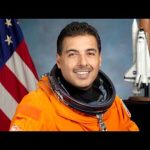
In recognition of Hispanic Heritage Month NASA hosted an event at the agency’s headquarters in Washington Tuesday, Oct. 4, called Aspira con NASA (Aspire with NASA). The event featured a video message from NASA Administrator Charles Bolden as well as presentations from guest speakers Diana Trujillo, mission lead for Mars Curiosity Rover, and former NASA astronaut José Hernández. Each shared stories of aspiration, inspiration and exploration.
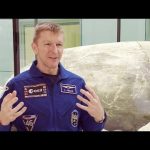
This interview with ESA astronaut Tim Peake was recorded in Cologne, Germany, one day after his return from a six-month stay on the International Space Station.
Tim Peake, NASA astronaut Tim Kopra and commander Yuri Malenchenko landed in the steppe of Kazakhstan on Saturday, 18 June in their Soyuz TMA-19M spacecraft at 09:15 GMT. The trio spent 186 days on the International Space Station.
The landing brings Tim Peake’s Principia mission to an end but the research continues. Tim is the eighth ESA astronaut to complete a long-duration mission in space. He was the third after Alexander Gerst and Andreas Mogensen to fly directly to ESA’s astronaut home base in Cologne, Germany, for medical checks and for researchers to collect more data on how Tim’s body and mind have adapted to living in space.

![Space Station tour with your guide Thomas Pesquet | 4K [in French with English subtitles available]](https://video.kidibot.ro/wp-content/uploads/2021/11/11271-space-station-tour-with-your-guide-thomas-pesquet-4k-in-french-with-english-subtitles-available-150x150.jpg)


![Enter the airlock with Thomas Pesquet [in French with English subtitles available]](https://video.kidibot.ro/wp-content/uploads/2025/04/21406-enter-the-airlock-with-thomas-pesquet-in-french-with-english-subtitles-available-150x150.jpg)