Our alien friend Paxi went to visit American astronaut Anne McClain on board the International Space Station. Anne shares some fun facts about the ISS with Paxi.
★ Subscribe: http://bit.ly/ESAsubscribe and click twice on the bell button to receive our notifications.
We are Europe’s gateway to space. Our mission is to shape the development of Europe’s space capability and ensure that investment in space continues to deliver benefits to the citizens of Europe and the world. Check out http://www.esa.int/ESA to get up to speed on everything space related.
“She always taught us that there’s no reason you can’t do these things.” NASA astronaut Dr. Jeanette Epps recalls who encouraged her to reach for the stars and talks about inspiring the #Artemis generation of young girls.
A budget for a new era of space exploration, do you have what it takes to be an astronaut? And Christina Koch reflects on her record-setting mission … a few of the stories to tell you about – This Week at NASA!
This video is available for download from NASA’s Image and Video Library: https://images.nasa.gov/details-NHQ_2020_0214_%20A%20Budget%20for%20a%20New%20Era%20of%20Space%20Exploration%20on%20This%20Week%20@NASA%20%E2%80%93%20February%2014,%202020
The Copernicus Sentinel-2 mission takes us over a beautiful heart-shaped geographical formation in the dramatic landscape of the southern highlands of Bolivia to celebrate Valentine’s Day, in this week’s edition of the Earth from Space programme.
We are Europe’s gateway to space. Our mission is to shape the development of Europe’s space capability and ensure that investment in space continues to deliver benefits to the citizens of Europe and the world. Check out http://www.esa.int/ESA to get up to speed on everything space related.
Matthew Bailey is the operations manager for the National Transonic Facility Complex at NASA’s Langley Research Center in Hampton, Virginia. Bailey began his career at NASA as an intern and now works in a management role. He oversees the operations at two cryogenic wind tunnels that specialize in high Reynolds number or flight Reynolds number testing – world’s best at matching scaling effects of aerodynamic problems. The facility is currently testing a model of the Space Launch System, the rocket that will send humans to the Moon by 2024.
As anticipated, Pine Island Glacier, known as PIG for short, in Antarctica has just spawned a huge iceberg. At over 300 sq km, about the size of Malta, this huge berg very quickly broke into many ‘piglet’ pieces the largest of which is dubbed B-49. Thanks to images the Copernicus Sentinel satellite missions, two large rifts in the glacier were spotted last year and scientists have been keeping a close eye on how quickly these cracks were growing. This animation uses 57 radar images captured by the Copernicus Sentinel-1 mission between February 2019 and February 2020 (the last frame is from yesterday, 10 February 2020) and shows just how quickly the emerging cracks grew and led to this calving event.
Pine Island Glacier, along with its neighbour Thwaites Glacier, connect the centre of the West Antarctic Ice Sheet with the ocean – together discharging significant quantities of ice into the ocean. These two glaciers have been losing ice over the last 25 years. Owing to their extremely remote location, satellites play a critical role in measuring and monitoring Antarctic glaciology – revealing the timing and pace of glacial retreat in Antarctica. Since the early 1990s, the Pine Island Glacier’s ice velocity has increased dramatically to values which exceed 10 m a day. Its floating ice front, which has an average thickness of approximately 500 metres, has experienced a series of calving events over the past 30 years, some of which have abruptly changed the shape and position of the ice front.
These changes have been mapped by ESA-built satellites since the 1990s, with calving events occurring in 1992, 1995, 2001, 2007, 2013, 2015, 2017, 2018, and now 2020.
Mark Drinkwater, senior scientist and cryosphere specialist remarked, “The Copernicus twin Sentinel-1 all-weather satellites have established a porthole through which the public can watch events like this unfold in remote regions around the world. What is unsettling is that the daily data stream reveals the dramatic pace at which climate is redefining the face of Antarctica.”
We are Europe’s gateway to space. Our mission is to shape the development of Europe’s space capability and ensure that investment in space continues to deliver benefits to the citizens of Europe and the world. Check out http://www.esa.int/ESA to get up to speed on everything space related.
Astronauts train all over the world, including at NASA’s Johnson Space Center in Houston, Texas. Here, they learn not just how to live in space, but also how to conduct science in microgravity. Astronauts serve as the eyes and hands of researchers while their experiments are aboard the space station, so they must be trained in everything from using a microscope, to maintaining the equipment for combustion experiments.
Follow along with #NASAExplorers as we go to class with NASA astronaut Mike Fincke.
See more NASA Explorers season 4 bonus content here: https://go.nasa.gov/2FKavmn
Stay up to date with ISS Research on Twitter: https://twitter.com/ISS_Research
#S4E3
Earth’s magnetic field protects life on Earth from the intense radiation and titanic amounts of energetic material our Sun blasts in every direction. However, astronauts and satellites in space, future explorers travelling to the Moon and Mars, and infrastructure on Earth such as power grids and communication systems remain vulnerable to these violent outbursts.
For this reason, ESA is planning to send a satellite to monitor the ‘side’ of our Sun, from a gravitationally stable position known as the fifth Lagrange point. From here, the Lagrange satellite will detect potentially hazardous solar events before they come into view from Earth, giving us advance knowledge of their speed, direction and chance of impact.
★ Subscribe: http://bit.ly/ESAsubscribe and click twice on the bell button to receive our notifications.
We are Europe’s gateway to space. Our mission is to shape the development of Europe’s space capability and ensure that investment in space continues to deliver benefits to the citizens of Europe and the world. Check out http://www.esa.int/ESA to get up to speed on everything space related.
A special “out of this world” episode of #AskNASA.
During her record-setting mission NASA astronaut Christina Koch answers key questions about her stay in space. Highlighting her contributions and scientific achievements while aboard the International Space Station.
Including her help to develop medicine in microgravity and collect data needed for longer missions.
Conducting the longest single spaceflight by any woman, Christina gives great insight into questions related to future missions to the Moon with the Artemis missions and future exploration of Mars.
Comment with your #AskNASA question and subscribe to learn more from our experts!
NASA is hiring astronauts. Do YOU have what it takes to join the next astronaut class?
To join the journey, astronaut candidates must have earned a master’s degree from an accredited institution in engineering, biological science, physical science, computer science or mathematics. The requirement for the master’s degree can also be met by:
• Two years (36 semester hours or 54 quarter hours) of work toward a Ph.D.
program in a related science, technology, engineering or math field;
• A completed doctor of medicine or doctor of osteopathic medicine degree;
• Completion (or current enrollment that will result in completion by June 2021) of a
nationally recognized test pilot school program.
Candidates also must have at least two years of related, progressively responsible professional experience, or at least 1,000 hours of pilot-in-command time in jet aircraft. Astronaut candidates must pass the NASA long-duration spaceflight physical.
Applications open March 2, 2020.
For more information about a career as a NASA astronaut, and application requirements, visit: http://www.nasa.gov/astronauts
This video is available for download from NASA’s Image and Video Library:
images-assets.nasa.gov/video/recruitment_final/recruitment_final~orig.mp4
NASA’s director of Astrobiology Institue, Penelope Boston, explains why caves are interesting to astrobiologists.
Caves are little studied areas and can resemble environments found on other planets. Caves exist on the Moon and Mars and could be used by astronauts for shelter when we explore our Solar System
Recorded during a workshop on astrobiology and caves in Sardinia, Italy in 2015.
ESA’s CAVES course – Cooperative Adventure for Valuing and Exercising human behaviour and performance Skills – is a two-week course that prepares astronauts to work safely and effectively in multicultural teams in an environment where safety is critical – in caves.
★ Subscribe: http://bit.ly/ESAsubscribe and click twice on the bell button to receive our notifications.
We are Europe’s gateway to space. Our mission is to shape the development of Europe’s space capability and ensure that investment in space continues to deliver benefits to the citizens of Europe and the world. Check out http://www.esa.int/ESA to get up to speed on everything space related.
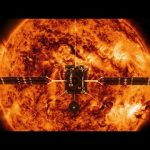
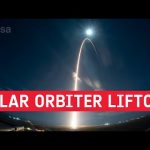
Highlights from the preparation and liftoff of ESA’s Sun-exploring mission Solar Orbiter.
Solar Orbiter lofted to space aboard the US Atlas V 411 rocket from NASA’s spaceport in Cape Canaveral, Florida at 04:03 GMT (05:03 CET) on 10 February 2020.
An ESA-led mission with strong NASA participation, Solar Orbiter carries a set of ten instruments for imaging the surface of the Sun and studying the environment in its vicinity. The spacecraft will travel around the Sun on an elliptical orbit that will take it as close as 42 million km away from the Sun’s surface, about a quarter of the distance between the Sun and Earth. The orbit will allow Solar Orbiter to see some of the never-before-imaged regions of the Sun, including the poles, and shed new light on what gives rise to solar wind, which can affect infrastructure on Earth.
We are Europe’s gateway to space. Our mission is to shape the development of Europe’s space capability and ensure that investment in space continues to deliver benefits to the citizens of Europe and the world. Check out http://www.esa.int/ESA to get up to speed on everything space related.
What have we accomplished and what’s ahead in our mission to explore the Moon, Mars and worlds beyond? On Feb. 10, NASA Administrator Jim Bridenstine unveils the “State of NASA” and shares details of the FY2021 Budget and more.
Bridenstine shared that “President Donald Trump’s Fiscal Year 2021 budget for NASA is worthy of 21st century exploration and discovery. The President’s budget invests more than $25 billion in NASA to fortify our innovative human space exploration program while maintaining strong support for our agency’s full suite of science, aeronautics, and technology work.”
“The budget proposed represents a 12 percent increase and makes this one of the strongest budgets in NASA history. The reinforced support from the President comes at a critical time as we lay the foundations for landing the first woman and the next man on the South Pole of the Moon by 2024. This budget keeps us firmly on that path.”
To learn more about NASA’s Fiscal Year 2021 budget, visit:
What have we accomplished and what’s ahead in our mission to explore the Moon, Mars and worlds beyond? On Monday, Feb. 10, 2020, NASA Administrator Jim Bridenstine spoke from the Stennis Space Center, giving a “State of NASA” update on the Artemis program and more.
This year, NASA is building momentum across the agency and across every mission. This is a year of action. With each milestone, NASA is preparing to go farther than ever before.
NASA is going to the Moon and on to Mars, in a measured, sustainable way. Working with U.S. companies and international partners, NASA will push the boundaries of human exploration forward to the Moon. NASA is working to establish a permanent human presence on the Moon within the next decade to uncover new scientific discoveries and lay the foundation for private companies to build a lunar economy. We inspire generations and change the course of history as we realize the next great scientific, economic and technical achievements in space.
Solar Orbiter, a collaboration between European Space Agency and NASA, is launching Sunday, Feb. 9, to study the inner workings of our nearest star. Tune in for launch coverage starting at 10:30 p.m. on Sunday, Feb. 9 to see liftoff, currently targeted for 11:03 p.m. EST.
ESA’s new Sun-exploring mission Solar Orbiter lofted to space aboard the US Atlas V 411 rocket from NASA’s spaceport in Cape Canaveral, Florida at 04:03 GMT (05:03 CET) on 10 February 2020.
Solar Orbiter, an ESA-led mission with strong NASA participation, carries a set of ten instruments for imaging the surface of the Sun and studying the environment in its vicinity. The spacecraft will travel around the Sun on an elliptical orbit that will take it as close as 42 million km away from the Sun’s surface, about a quarter of the distance between the Sun and Earth. The orbit will allow Solar Orbiter to see some of the never-before-imaged regions of the Sun, including the poles, and shed new light on what gives rise to solar wind, which can affect infrastructure on Earth.
We are Europe’s gateway to space. Our mission is to shape the development of Europe’s space capability and ensure that investment in space continues to deliver benefits to the citizens of Europe and the world. Check out http://www.esa.int/ESA to get up to speed on everything space related.
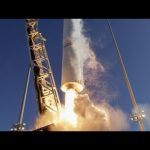
On Sun., Feb. 9 at 5:39 p.m. EST, Northrop Grumman Corporation’s Antares rocket and Cygnus spacecraft are scheduled to launch from NASA’s Wallops Flight Facility in Virginia. This launch will carry thousands of pounds of cargo to our orbiting laboratory, the International Space Station. This cargo will make dozens of science investigations possible, all aimed at improving life on Earth through space-based research. Don’t miss live coverage starting at 5 p.m. EST! 🚀
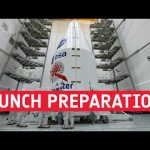
ESA’s Solar Orbiter satellite in a cleanroom at the Astrotech payload processing facility near Kennedy Space Centre, Florida. The spacecraft is seen being mounted onto the payload adaptor ring and encapsulated into a fairing, which will protect the satellite and the rocket upper stage during the turbulent ascent through Earth’s atmosphere.
We are Europe’s gateway to space. Our mission is to shape the development of Europe’s space capability and ensure that investment in space continues to deliver benefits to the citizens of Europe and the world. Check out http://www.esa.int/ESA to get up to speed on everything space related.
Investigations studying fire safety, bone loss and phage therapy will be launching, along with additional scientific experiments and supplies, to the International Space Station on a Northrop Grumman Cygnus spacecraft. The vehicle launches no earlier than Feb. 9 from NASA’s Wallops Flight Facility in Virginia. Learn more: https://go.nasa.gov/36DM9G3
ESA’s new Sun-explorer, Solar Orbiter, will capture close-up images of never before seen regions of our parent star, including the poles, and study the electromagnetic environment in its vicinity. The cutting-edge spacecraft will get as close as 42 million kilometres away from the Sun, about a quarter of the distance between the Sun and Earth, and face scorching temperatures of up to 500°C.
ESA has a long history of studying the Sun from space. Since the launch of Ulysses in 1990, the agency has led or cooperated on several Sun-exploring missions including SOHO, the Cluster quartet and Proba-2.
We are Europe’s gateway to space. Our mission is to shape the development of Europe’s space capability and ensure that investment in space continues to deliver benefits to the citizens of Europe and the world. Check out http://www.esa.int/ESA to get up to speed on everything space related.
Media had their first opportunity to ask questions of ESA astronaut Luca Parmitano in Europe on Saturday 8 February 2020 – just two days after he returned from 201 days in space.
This news conference at ESA’s European Astronaut Centre (EAC) started at 12:30 CET (11:30 GMT) with an introduction from the Head of EAC Frank De Winne, followed by statements from ESA Director General Jan Wörner and Director of Human and Robotic Exploration David Parker.
Luca then answered a range of questions about his recent mission, known as ‘Beyond’. Luca answers questions in Italian and others in English.
The entire conference was broadcast live on ESA Web TV.
Beyond was Luca’s second long-duration mission to the International Space Station. His first was Volare in 2013.
Luca was launched to the Station 20 July 2019 – the 50th anniversary of the first lunar landing – and returned 6 February 2020 in the Russian Soyuz MS-13 spacecraft.
During his Beyond mission he became the third European and first Italian in command of the Space Station, set the record for longest cumulative spacewalking time by a European astronaut, remotely controlled a rock-collecting rover in the Netherlands, supported over 50 European and 200 international experiments and welcomed the first Emirati astronaut Hazzaa Ali Almansoori among other mission highlights.
(Please note: There were some technical issues about 45-50 minutes into the press conference, in the replay there is some loss of audio quality and loss of audio/image sync.)
We are Europe’s gateway to space. Our mission is to shape the development of Europe’s space capability and ensure that investment in space continues to deliver benefits to the citizens of Europe and the world. Check out http://www.esa.int/ESA to get up to speed on everything space related.
ESA’s Solar Orbiter is getting ready for its launch on an Atlas V rocket provided by NASA and operated by United Launch Alliance from Cape Canaveral, Florida.
Once in space, and over the course of several years, the spacecraft will repeatedly use the gravity of Venus and Earth to raise its orbit above the poles of the Sun, providing new perspectives on our star, including the first images of the Sun’s polar regions.
All these operations will be controlled from the European Space Operations Centre (ESOC), Germany, where a dedicated team is currently working on simulations of the first moments in orbit, after separation from the launcher, but also all the delicate manoeuvres of the journey that will make Solar Orbiter mission possible.
We are Europe’s gateway to space. Our mission is to shape the development of Europe’s space capability and ensure that investment in space continues to deliver benefits to the citizens of Europe and the world. Check out http://www.esa.int/ESA to get up to speed on everything space related.
A record-setting astronaut returns safely to Earth, practicing for the first launch of Artemis, and honoring a member of a legendary group of aviators … a few of the stories to tell you about – This Week at NASA!
This video is available for download from NASA’s Image and Video Library: https://images.nasa.gov/details-NHQ_2020_0207_A%20Safe%20Return%20to%20Earth%20for%20a%20Record-Setting%20Astronaut%20on%20This%20Week%20@NASA%20%E2%80%93%20February%207,%202020
ESA astronaut Luca Parmitano returned from his second long-duration mission to the International Space Station, known as ‘Beyond’, on 6 February 2020. In this interview at ESA’s Astronaut Centre in Cologne, Germany, he shares some of his experiences and feelings after 201 days in orbit.
This interview was conducted late on the night Luca landed in Cologne, and is the first full interview with him in Europe since he touched down in Kazakhstan at 09:12 GMT (10:12 CET) Thursday 6 February.
Some of the highlights of Luca’s Beyond mission include becoming the third European and first Italian in command of the Space Station, leading three of four complex spacewalks to maintain the cosmic-ray-detecting Alpha Magnetic Spectrometer AMS-02, gaining the European record for most cumulative spacewalking time, remotely controlling a rock-collecting rover in the Netherlands, supporting over 50 European and 200 international experiments and sharing his experiences with those back on Earth through images and video links.
One of the main things Luca highlighted throughout his mission was the fragility of our planet and the need to act now for generations to come.
We are Europe’s gateway to space. Our mission is to shape the development of Europe’s space capability and ensure that investment in space continues to deliver benefits to the citizens of Europe and the world. Check out http://www.esa.int/ESA to get up to speed on everything space related.
L’astronauta dell’ESA Luca Parmitano è tornato dalla sua seconda missione di lunga durata sulla Stazione Spaziale Internazionale chiamata ‘Beyond’, il 6 febbraio 2020. In questa intervista al Centro astronauti dell’ESA di Colonia in Germania, condivide alcune delle sue esperienze e dei suoi sentimenti dopo 201 giorni in orbita.
Questa intervista è stata condotta nella tarda notte in cui Luca è atterrato a Colonia, ed è la prima intervista completa con lui in Europa da quando è atterrato in Kazakistan alle 09:12 GMT (10:12 CET) giovedì 6 febbraio.
Tra i momenti salienti della missione Beyond di Luca ci sono: diventare il terzo europeo e il primo italiano al comando della Stazione Spaziale, condurre tre delle quattro complesse passeggiate spaziali, ottenere il record europeo per la maggior parte del tempo trascorso durante le passeggiate spaziali, controllare a distanza un rover che raccoglie rocce nei Paesi Bassi, condurre oltre 50 esperimenti europei e 200 internazionali e condividere le sue esperienze attraverso immagini e collegamenti video.
Una delle cose principali che Luca ha evidenziato nel corso della sua missione è stata la fragilità del nostro pianeta e la necessità di agire ora per le generazioni a venire.
We are Europe’s gateway to space. Our mission is to shape the development of Europe’s space capability and ensure that investment in space continues to deliver benefits to the citizens of Europe and the world. Check out http://www.esa.int/ESA to get up to speed on everything space related.
The Copernicus Sentinel-1 mission takes us over part of the Dutch province of Flevoland – the newest province in the Netherlands and one of the largest land reclamation projects in the world, in this week’s edition of the Earth from Space programme.
We are Europe’s gateway to space. Our mission is to shape the development of Europe’s space capability and ensure that investment in space continues to deliver benefits to the citizens of Europe and the world. Check out http://www.esa.int/ESA to get up to speed on everything space related.
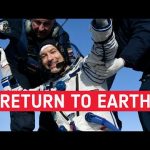
ESA astronaut Luca Parmitano touched down in the Kazakh Steppe at 09:12 GMT (10:12 CET), 6 February 2020 after his second six-month mission on the International Space Station. Luca returned to Earth in the Russian Soyuz MS-13 spacecraft alongside US astronaut Christina Koch and Russian cosmonaut Alexander Skvortsov.
During his second mission, known as ‘Beyond’, Luca served as the third European and first ever Italian in command of the International Space Station. Before leaving the Station, he handed this role over to Russian cosmonaut Oleg Skripocha in a traditional change of command ceremony.
While in orbit, Luca also performed four complex spacewalks to maintain the cosmic-ray-detecting Alpha Magnetic Spectrometer AMS-02, remotely operated a rock-collecting rover in the Netherlands, supported more than 50 European and over 200 international experiments, gained the European record for longest cumulative spacewalking time, and publicly shared countless images as he warned of the challenges facing our planet.
Luca will now return to ESA’s Astronaut Centre in Cologne, Germany where he will continue to work with researchers to gather baseline data and undertake an extensive programme of rehabilitation supported by ESA experts. The findings of this research and Luca’s work in space will help shape the future of space exploration and enhance technological developments on Earth.
We are Europe’s gateway to space. Our mission is to shape the development of Europe’s space capability and ensure that investment in space continues to deliver benefits to the citizens of Europe and the world. Check out http://www.esa.int/ESA to get up to speed on everything space related.
Three space travelers including record-setting astronaut Christina Koch return home from the International Space Station.
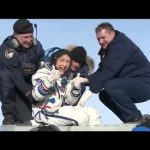
Christina Koch wrapped up a 328-day extended mission on her first spaceflight, having spent more time in space on a single mission than any other woman. Koch, along with station Commander Luca Parmitano of ESA (European Space Agency), and Soyuz commander Alexander Skvortsov of the Russian space agency Roscosmos departed the station in a Soyuz spacecraft that made a parachute-assisted landing at 4:12 a.m. EST southeast of Dzhezkazgan, Kazakhstan.
Koch’s extended mission will provide researchers the opportunity to observe effects of long-duration spaceflight on a woman, as we prepare for Artemis missions to the Moon and human exploration of Mars.
Putting your life’s work on top of a rocket may seem like a daunting task, but that’s exactly what scientists have been doing for decades as they launch their research to the International Space Station.
This season on #NASAExplorers, we’re exploring why we send science to space, and what it takes to get it there. Spoiler alert: you don’t have to be a rocket scientist to conduct research in microgravity. This week, meet a team of researchers who are launching an experiment to space for the first time.
See more NASA Explorers season 4 bonus content here: https://go.nasa.gov/2FKavmn
Stay up to date with ISS Research on Twitter: https://twitter.com/ISS_Research
#S4E2
Get a dose of #MorningMotivation from a 100-year-old Tuskegee Airman and one of our NASA Astronauts! 👨🏽🚀✈️
On Wednesday, Feb. 5 at 11:30 a.m. EST, retired Air Force Col. Charles McGee, who served during World War II, joins astronaut Alvin Drew, who logged more than 612 hours in space, to talk about their experiences and what it means to be a trailblazer. Tune in and be inspired to follow your dreams.
In the third episode of our ‘Fit for space’ training series, ESA astronaut Matthias Maurer explains how astronauts learn to survive on their own if ever a spacecraft lands away from its intended landing site.
Generally a spacecraft lands within a few kilometers of its landing site, but sometimes they return in a so-called ‘ballistic mode’ in a steeper entrance trajectory putting the astronauts under increased gravity loads, and landing with less precision – sometimes 400 km away from the intended landing area.
From winter survival to water survival, astronauts are prepared for anything, from building fires and shelters, to surviving cold waters and righting capsized life rafts.
The video includes footage from the Soyuz winter survival training, water survival training fire emergency training as well as Chinese sea survival training.
★ Subscribe: http://bit.ly/ESAsubscribe and click twice on the bell button to receive our notifications.
We are Europe’s gateway to space. Our mission is to shape the development of Europe’s space capability and ensure that investment in space continues to deliver benefits to the citizens of Europe and the world. Check out http://www.esa.int/ESA to get up to speed on everything space related.
Italian ESA astronaut Luca Parmitano will return to Earth 6 February 2020, following his second long-duration mission on the International Space Station (ISS).
Luca’s mission – known as ‘Beyond’ – began 20 July 2019, exactly 50 years after the first lunar landing. On this date, Luca was launched to the Space Station in a Russian Soyuz spacecraft alongside Roscosmos cosmonaut Alexander Skvortsov and NASA astronaut Andrew Morgan.
During Beyond, Luca supported over 50 European experiments in orbit. These included remotely operating a rover in the Netherlands to collect rock samples as instructed by scientists in Germany, and completing four complex spacewalks to repair the cosmic-ray-detecting Alpha Magnetic Spectrometer AMS-02. He also supported numerous international experiments and became the third European and first ever Italian commander of the International Space Station.
Science and research completed during Luca’s mission will help pave the way for farther exploration as ESA looks beyond the International Space Station to the Moon and Mars.
We are Europe’s gateway to space. Our mission is to shape the development of Europe’s space capability and ensure that investment in space continues to deliver benefits to the citizens of Europe and the world. Check out http://www.esa.int/ESA to get up to speed on everything space related.
A resupply mission wraps up at the space station, a new name for an Earth-observing satellite, and preparing for an unprecedented peek at the Sun … a few of the stories to tell you about – This Week at NASA!
This video is available for download from NASA’s Image and Video Library: https://images.nasa.gov/details-NHQ_2020_0131_TWAN_Resupply%20Mission%20Wraps%20Up%20at%20The%20Space%20Station%20on%20This%20Week%20@NASA%20%E2%80%93%20January%2031,%202020
Ahead of World Wetlands Day, celebrated internationally each year on 2 February, this week’s edition of the Earth from Space programme features a Copernicus Sentinel-2 image over Lake George in western Uganda. In 1988, Lake George was designated as Uganda’s first site under the Ramsar Convention – an international treaty for the conservation and sustainable use of wetlands.
We are Europe’s gateway to space. Our mission is to shape the development of Europe’s space capability and ensure that investment in space continues to deliver benefits to the citizens of Europe and the world. Check out http://www.esa.int/ESA to get up to speed on everything space related.
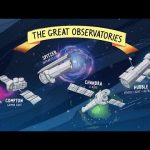
This is the animated storybook tale of the Spitzer spacecraft and its exploits as part of the space telescope superteam known as NASA’s Great Observatories, which also includes Hubble. With its special power to see infrared light, Spitzer revealed a whole side of the universe that had been hidden from our view.
Have you ever done a science experiment and wondered “What would this be like if it were HUGE?” Welcome to Science Max, the exciting new series that turbocharges all the science experiments you’ve done at home.
The High Definition Earth-Viewing (HDEV) experiment on the International Space Station has experienced a loss of data, and ground computers are no longer receiving communications from the payload. A team of engineers are reviewing the available health and status information from HDEV to identify what may have occurred. Additional updates will be published as they become available.
Things behave a bit differently aboard the International Space Station, thanks to microgravity.
Sure, floating looks like fun, but it could also unlock new scientific discoveries.
Microgravity makes the station the perfect place to perform research that is changing the lives of people on Earth, and preparing us to go deeper into space. This season on #NASAExplorers, we are following science into low-Earth orbit and seeing what it takes to do research aboard the space station.