A new parking spot for future flights to the International Space Station, the sixth meeting of the National Space Council, and work in Ohio on our Moon to Mars effort … a few of the stories to tell you about – This Week at NASA!
This video is available for download from NASA’s Image and Video Library: https://images.nasa.gov/details-NHQ_2019_0823_A%20Parking%20Spot%20for%20Future%20Commercial%20Flights%20to%20the%20Space%20Station%20on%20This%20Week%20@NASA%20%E2%80%93%20August%2023,%202019.html
Jexi — In theaters October 11, 2019. Adam Devine, Alexandra Shipp, Ron Funches, Charlyne Yi, Wanda Sykes, Justin Hartley, Kid Cudi, Michael Peña, Rose Byrne.
From the writers of The Hangover and the writing/directing team behind Bad Moms comes the new comedy JEXI.
Phil (Adam Devine) has a major dependency issue – he’s addicted to his phone. He has no friends, he has a job writing pop culture “Top 10” lists, and his love life is non-existent. But his Facebook status is about to change. When he is forced to upgrade his phone, the latest model comes with an unexpected feature…Jexi (Rose Byrne) – an A.I. life coach, virtual assistant and cheerleader. With her help, Phil begins to get a real life. But as he becomes less dependent on his phone, Jexi’s artificial intelligence morphs into a tech nightmare determined to keep Phil all to herself, even if it means ruining his chances of finding success.
Have you ever done a science experiment and wondered “What would this be like if it were HUGE?” Welcome to Science Max, the exciting new series that turbocharges all the science experiments you’ve done at home.
Engineers, pilots, researchers and scientists convened in Bordeaux, France, for ESA’s 71st parabolic flight campaign. Over the course of three days they flew on a specially-fitted commercial aircraft, testing equipment and running research as the pilots put the plane through repeated parabolas, giving the passengers and their experiments brief bouts of microgravity.
ESA’s project coordinator Neil Melville introduces the experiments that flew on this campaign, from plasma to granular physics and heat pipes.
Parabolic flights are one of many platforms ESA offers for European researchers to run experiments for spaceflight. These flights are one of the few that allow the researchers to interact with their own experiments “hands-on” in a weightless environment. Send a proposal through our continuously open research announcements and you could be flying on the next campaign.
We are Europe’s gateway to space. Our mission is to shape the development of Europe’s space capability and ensure that investment in space continues to deliver benefits to the citizens of Europe and the world. Check out http://www.esa.int/ESA to get up to speed on everything space related.
The ExoMars mission will see Rosalind Franklin the rover and its surface platform Kazachok land on the Red Planet in 2021. From fine-grained soil to large boulders and slopes, the rover has to be able to move across many types of terrain, collect samples with a 2 m-long drill and analyse them with instruments in its onboard laboratory.
This second episode about ExoMars features the challenges of leaving the surface platform, overcoming obstacles and walking on dunes.
ESA, Roscosmos, Thales, Airbus and RUAG engineers put a full-sized model through a series of tests to fine-tune how the rover will move from its landing platform onto the martian terrain.
Rovers on Mars have previously been caught in sand, and turning the wheels dug them deeper – just like a car stuck in mud or snow. To avoid this, Rosalind the rover has a unique locomotion mode called ‘wheel walking’.
We are Europe’s gateway to space. Our mission is to shape the development of Europe’s space capability and ensure that investment in space continues to deliver benefits to the citizens of Europe and the world. Check out http://www.esa.int/ESA to get up to speed on everything space related.
An update on development of a human lunar landing system, the final four sites selected for our first asteroid sample return mission, and our Parker Solar Probe prepares for another close encounter … a few of the stories to tell you about – This Week at NASA!
This video is available for download from NASA’s Image and Video Library: https://images.nasa.gov/details-NHQ_2019_0816_Marshall%20to%20Lead%20Human%20Landing%20System%20Development%20on%20This%20Week%20@NASA%20%E2%80%93%20August%2016,%202019.html
Have you ever done a science experiment and wondered “What would this be like if it were HUGE?” Welcome to Science Max, the exciting new series that turbocharges all the science experiments you’ve done at home.
Where do we come from? Where are we going? Why are things the way they are? Space science and exploration are entering an ambitious new era, spanning the hunt for extraterrestrial planets and detecting the fundamental nature of our Universe to roving on Mars and returning to the Moon. However, we’re not simply acquiring new knowledge – we’re helping bring the benefits of these discoveries to European industry, through commercialisation in Earth orbit, integration with new space actors and cooperation on a global scale.
★ Subscribe: http://bit.ly/ESAsubscribe and click twice on the bell button to receive our notifications.
We are Europe’s gateway to space. Our mission is to shape the development of Europe’s space capability and ensure that investment in space continues to deliver benefits to the citizens of Europe and the world. Check out http://www.esa.int/ESA to get up to speed on everything space related.
A critical test of the “powerhouse” for our Orion spacecraft, Curiosity is still going strong after seven Earth years on Mars, and Hubble’s new portrait of Jupiter … a few of the stories to tell you about – This Week at NASA!
This video is available for download from NASA’s Image and Video Library: https://images.nasa.gov/details-NHQ_2019_0809_Testing%20Orion%E2%80%99s%20%E2%80%9CPowerhouse%E2%80%9D%20on%20This%20Week%20@NASA%20-%20August%209,%202019.html
Have you ever done a science experiment and wondered “What would this be like if it were HUGE?” Welcome to Science Max, the exciting new series that turbocharges all the science experiments you’ve done at home.
An detailed introduction to https://machinelearningforkids.co.uk – a free tool for school children to learn about artificial intelligence and machine learning by making their own machine learning-powered projects.
I demonstrate some of the projects that children have made, and describe the lessons they learned through making them.
This is an updated version of a video I recorded a couple of years ago (https://www.youtube.com/watch?v=2drwelVD4Qw) – updated to reflect things like:
– changes in the tool’s UI
– move from Scratch 2 to Scratch 3
– support for sound machine learning models
– support for Python projects
– MIT App Inventor integration
– support for using the site without registration
During ESA astronaut Alexander Gerst’s second mission to the International Space Station he supported over 60 European experiments and became Europe’s second ever Space Station Commander. This clip shares a few highlights from Alexander’s Horizons mission and gives a glimpse into life on the Station.
Alexander was launched to the International Space Station from the Baikonur Cosmodrome in Kazakhstan on 6 June 2018. He travelled to the Station with NASA astronaut Serena Auñón-Chancellor and Russian cosmonaut Sergei Prokopyev in a Russian Soyuz MS-09 spacecraft, spent just over six months in orbit and returned to Earth on 20 December 2018.
Watch this journey from launch to landing for a snapshot of memorable moments.
★ Subscribe: http://bit.ly/ESAsubscribe and click twice on the bell button to receive our notifications.
We are Europe’s gateway to space. Our mission is to shape the development of Europe’s space capability and ensure that investment in space continues to deliver benefits to the citizens of Europe and the world. Check out http://www.esa.int/ESA to get up to speed on everything space related.
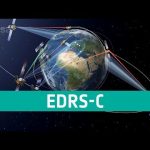
Kourou, French Guiana, at Europe’s spaceport the EDRS-C satellite is being prepared for launch. Soon this second node of the European Data Relay system will join the EDRS-A node already in orbit, as the first dedicated EDRS satellite. EDRS has been designed to enable fast and reliable optical data transfer from low earth orbiting satellites to the ground. To achieve this the EDRS system uses state-of-the art laser link communication terminals and in combination with the longer data transmission offered EDRS, much more data can be transferred to the ground in Quasi Real Time, thus creating a real SpaceDataHighway
★ Subscribe: http://bit.ly/ESAsubscribe and click twice on the bell button to receive our notifications.
We are Europe’s gateway to space. Our mission is to shape the development of Europe’s space capability and ensure that investment in space continues to deliver benefits to the citizens of Europe and the world. Check out http://www.esa.int/ESA to get up to speed on everything space related.
The moment to ask all your questions about space has come!
Join one of the European Space Talks happening in your country to learn how space contributes to your daily life and helps to solve some of humankind’s greatest challenges.
We are Europe’s gateway to space. Our mission is to shape the development of Europe’s space capability and ensure that investment in space continues to deliver benefits to the citizens of Europe and the world. Check out http://www.esa.int/ESA to get up to speed on everything space related.
C’est le moment de poser toutes vos questions sur l’espace !
Inscrivez-vous à un European Space Talk près de chez vous et découvrez l’impact de l’espace dans nos vies quotidiennes et comment il contribue à résoudre les plus grands enjeux de l’humanité.
We are Europe’s gateway to space. Our mission is to shape the development of Europe’s space capability and ensure that investment in space continues to deliver benefits to the citizens of Europe and the world. Check out http://www.esa.int/ESA to get up to speed on everything space related.
Jetzt kannst Du alle Deine Fragen zum Thema Weltraum und Raumfahrt stellen!
Nimm an einem der Europäischen Space Talks in Deinem Land teil und erfahre, wie die Raumfahrt deinen Alltag beeinflusst und dazu beiträgt, einige der großen Fragen der Menschheit zu beantworten.
We are Europe’s gateway to space. Our mission is to shape the development of Europe’s space capability and ensure that investment in space continues to deliver benefits to the citizens of Europe and the world. Check out http://www.esa.int/ESA to get up to speed on everything space related.
The latest opportunity for payload delivery services to the Moon, new partnerships to help advance the commercial space business, and a “hat trick” for one of our planet-hunting spacecraft … a few of the stories to tell you about – This Week at NASA!
This video is available for download from NASA’s Image and Video Library: https://images.nasa.gov/details-NHQ_2019_0802_A%20New%20Opportunity%20to%20Deliver%20Payloads%20to%20the%20Moon%20on%20This%20Week%20@NASA%20%E2%80%93%20August%202,%202019.html
Have you ever done a science experiment and wondered “What would this be like if it were HUGE?” Welcome to Science Max, the exciting new series that turbocharges all the science experiments you’ve done at home.
Throughout the series, you heard memories of the first Moon landing from people all over the world. In this bonus episode, we share a few more stories: a trip to Rome, a girl with binoculars and a reel-to-reel tape recorder.
Elizabeth Tammi (GSFC Interns): Producer
Katie Atkinson (GSFC Interns): Narrator
Katie Atkinson (GSFC Interns): Producer
Haley Reed (ADNET): Producer
Micheala Sosby (NASA/GSFC): Producer
Aaron E. Lepsch (ADNET): Technical Support
Music by Lee Rosevere and Daniel Wytanis
This video is public domain and along with other supporting visualizations can be downloaded from the Scientific Visualization Studio at: https://svs.gsfc.nasa.gov/13204
What happened to the lost data from the Apollo era? Get to know the “data detectives” who are tracking it down. The science experiments the Apollo astronauts conducted from the surface of the Moon provide a long-term data record that’s crucial to understanding our Moon as a complete system. Today’s scientists are looking forward to future human exploration of the Moon and the discoveries to follow.
Ketan from Sugarland, Texas, tells us about his childhood in Mumbai, India, and how his father made sure his children got a firsthand look at the Moon landing.
This video is public domain and along with other supporting visualizations can be downloaded from the Scientific Visualization Studio at: https://svs.gsfc.nasa.gov/13204
Meet the scientists who are making big discoveries by studying some very tiny rocks. The women of NASA’s Mid-Atlantic Noble Gas Research Laboratory (MNGRL) are getting ready to analyze never-before-seen Moon samples. These samples, collected by Apollo astronauts and brought back to Earth, have been carefully preserved for half a century so they could be studied by future generations of scientists.
Sophie, a 13-year-old from Athens, Greece, shares how lunar exploration inspires her to become an astrophysicist.
This video is public domain and along with other supporting visualizations can be downloaded from the Scientific Visualization Studio at: https://svs.gsfc.nasa.gov/13204
Lunar exploration runs in the family for the Petros. NASA lunar scientist Noah Petro interviews his father, Denis, about his work as an Apollo program engineer. In a heartfelt conversation, Noah and his dad examine the human impact of the momentous Apollo 11 mission and their shared passion for science and learning.
Ginny from Danville, Kentucky, tells a story about celebrating the Moon landing with her childhood friends and a secret lemonade stand.
This video is public domain and along with other supporting visualizations can be downloaded from the Scientific Visualization Studio at: https://svs.gsfc.nasa.gov/13204
Who better than the people who spend their days thinking about space, to share their passion with the world? European space professionals have a responsibility to let people know how space activities impact their daily lives and will affect tomorrow’s world.
If you are a space professional, find out more about organising your own European Space Talk, here: https://spacetalks.net/
We are Europe’s gateway to space. Our mission is to shape the development of Europe’s space capability and ensure that investment in space continues to deliver benefits to the citizens of Europe and the world. Check out http://www.esa.int/ESA to get up to speed on everything space related.
Before ESA astronaut Luca Parmitano was launched to the International Space Station for his second space mission ‘Beyond’ on 20 July 2019, we asked Twitter followers what they would like to #AskLuca. In this video, he answers a few of those questions:
0:00 – Intro 0:08 – Have you been specifically trained for the visit (yet to be confirmed) of US commercial crew vehicles? 0:41 – Do you have a music playlist to listen to and a list of pieces you would like to practice on the guitar during your mission? 1:25 – What was the biggest sacrifice you made to become an astronaut? 2:04 – Have you missed the space station since your last mission? 2:10 – What is one aspect of preparation you did very differently this time compared to the first time? 2:44 – What is your favourite science-fiction quote? 2:52 – What is the biggest challenge of your Beyond mission? 3:03 – Is it harder or easier to head off to space for the second time? 3:34 – Quali sono le differenze tra preparare una prima missione e una seconda? E cosa cambia nell’addestramento per un Comandante della ISS? 4:25 – Ti capita di annoiarti nel corso del tuo addestramento? E quanto è dura svolgere il lavoro dell’astronauta? 5:15 – Ti stai preparando a puntino per la Luna?
We are Europe’s gateway to space. Our mission is to shape the development of Europe’s space capability and ensure that investment in space continues to deliver benefits to the citizens of Europe and the world. Check out http://www.esa.int/ESA to get up to speed on everything space related.
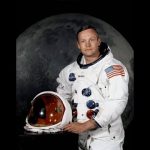
The primary objective of Apollo 11 was to complete a national goal set by President John F. Kennedy on May 25, 1961: perform a crewed lunar landing and return to Earth. The success of the mission was celebrated globally and united all humankind. This video shows the parades that celebrated the successful return of Neil Armstrong, Michael Collins and Buzz Aldrin.
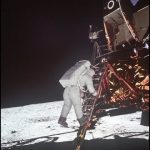
Neil Armstrong and Buzz Aldrin spent more than two hours outside their spacecraft on the Moon. They studied the surface. They collected rocks. After almost a day, they blasted off. They docked with Michael Collins in orbit around the Moon.
On July 20, 1969, humans walked on another world for the first time in history, achieving the goal that President John F. Kennedy had set in 1961, before Americans had even orbited the Earth. After a landing that included dodging a lunar crater and boulder field just before touchdown, Apollo 11 astronauts Neil Armstrong and Buzz Aldrin explored the area around their lunar landing site for more than two hours.
When the lunar module landed at 4:17 p.m EDT, only 30 seconds of fuel remained. Armstrong radioed “Houston, Tranquility Base here. The Eagle has landed.” Mission control erupted in celebration as the tension breaks, and a controller tells the crew “You got a bunch of guys about to turn blue, we’re breathing again.”
Foams are ubiquitous in our daily lives: they are used to produce food, detergents and plastics. Foams are inherently unstable in gravity, because the liquid between the bubbles is pulled downwards bursting the bubbles in the process. Experiments on the International Space Station have shown that foams are more stable in microgravity because they remain wet. It has even been possible to make foams from pure water.
Foam research in microgravity allows researchers to better understand the processes and calculate models in the most optimal conditions. This is leading to better production and assembly of products containing foams as well as more effective foam-suppression agents.
Many industrial applications benefit from foam research and development in space: cleaning products, cosmetics, fire-fighting and medicines are just some examples. The quality, texture, taste and shelf-life of food and beverages can be enhanced – from the supermarket to the consumers’ fridge.
“It is a game change for our business” says Cécile Gehin-Delval, from Nestlé Research Laboratories in Orbe, Switzerland.
The step to space research is closer than you might think. Get involved with spaceflight research via www.esa.int/spaceflightAO. Find out about our commercial partnerships and opportunities in human and robotic exploration via www.esa.int/explorationpartners to run your research in microgravity as well.
★ Subscribe: http://bit.ly/ESAsubscribe and click twice on the bell button to receive our notifications.
We are Europe’s gateway to space. Our mission is to shape the development of Europe’s space capability and ensure that investment in space continues to deliver benefits to the citizens of Europe and the world. Check out http://www.esa.int/ESA to get up to speed on everything space related.
Seeking ideas for landing systems to return humans to the Moon, showcasing our aeronautics research efforts, and the science connection to Apollo 11’s splashdown … a few of the stories to tell you about – This Week at NASA!
This video is available for download from NASA’s Image and Video Library: https://images.nasa.gov/details-NHQ_2019_0726_Seeking%20Landers%20to%20Return%20Humans%20to%20the%20Moon%20on%20This%20Week%20@NASA%20%E2%80%93%20July%2026,%202019.html
Copernicus Sentinel-2 takes us over the largest lake in central Europe: Lake Balaton in Hungary, in this week’s edition of the Earth from Space programme.
We are Europe’s gateway to space. Our mission is to shape the development of Europe’s space capability and ensure that investment in space continues to deliver benefits to the citizens of Europe and the world. Check out http://www.esa.int/ESA to get up to speed on everything space related.
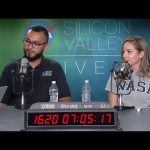
Ever wanted to intern at NASA? Join us today on #NationalInternDay for a new episode of NASA in Silicon Valley Live and learn how to get an internship at NASA. Watch as experts answer questions and hear from current interns. Tune in at 7pm ET:
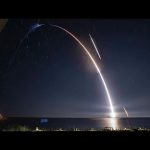
SpaceX’s 18th Commercial Resupply Services mission to the International Space Station lifted off on Thursday, July 25, at 6:01 p.m. EDT from Space Launch Complex 40 at Cape Canaveral Air Force Station, next to NASA’s Kennedy Space Center in Florida. The Dragon spacecraft will deliver more than 5,000 pounds of research and supplies to the orbiting laboratory. Replay the countdown and liftoff!
Our alien friend Paxi went to visit American astronaut Anne McClain on board the International Space Station. Anne explains some of the mental challenges of being an astronaut on the ISS.
★ Subscribe: http://bit.ly/ESAsubscribe and click twice on the bell button to receive our notifications.
We are Europe’s gateway to space. Our mission is to shape the development of Europe’s space capability and ensure that investment in space continues to deliver benefits to the citizens of Europe and the world. Check out http://www.esa.int/ESA to get up to speed on everything space related.
Have you ever done a science experiment and wondered “What would this be like if it were HUGE?” Welcome to Science Max, the exciting new series that turbocharges all the science experiments you’ve done at home.
“As a result of what you have done, the world’s never been closer together …. We can reach for the stars just as you have reached so far for the stars,” said President Richard Nixon to the #Apollo50th crew who had a successful voyage to land and walk on the Moon. Tune in on Wednesday, July 24 starting at 12:45 p.m. EDT as we broadcast historic footage of this moment
A European drill and sample analysis package will search for water ice and other chemicals under the lunar surface onboard the Russian-led Luna-27 mission to the South Polar region of the Moon.
Operating at temperatures of less than –100 °C and drilling over one metre down, Prospect first needs to penetrate the lunar surface. This video features a series of drilling tests carried out at the Leonardo facilities in Italy in 2019.
Prospect includes a miniature laboratory called ProSPA which will analyse the soil samples retrieved by the drill. Precise measurements will help unearth the secrets of the Moon’s history and indicate whether future explorers could use lunar resources on their missions to help set up a lunar base.
The lunar south polar region is of great interest to lunar researchers and explorers because the low angle of the Sun over the horizon leads to areas of partial or even complete shadow. These shadowed areas and permanently dark crater floors, where sunlight never reaches, are believed to hide water ice and other frozen substances that could be analysed to better understand the natural processes that formed them, and used to produce resources such as oxygen and propellant in the future.
We are Europe’s gateway to space. Our mission is to shape the development of Europe’s space capability and ensure that investment in space continues to deliver benefits to the citizens of Europe and the world. Check out http://www.esa.int/ESA to get up to speed on everything space related.