What does a half-century of lunar science sound like? Join Moon data expert Ernie Wright on a musical time-traveling journey through the Apollo program and the exploration era of today. We explore what we knew about the Moon before Apollo, what we discovered because of it and the mysteries today’s scientists are working to solve.
Elena, from Nantes, France, shares her memory of watching the Apollo 11 landing from a friend’s house in Seattle.
Data sonification by SYSTEM Sounds/Matt Russo and Andrew Santaguida
Music by Lee Rosevere and Daniel Wyantis
This video is public domain and along with other supporting visualizations can be downloaded from the Scientific Visualization Studio at: https://svs.gsfc.nasa.gov/13204
NASA Explorers: Apollo is an audio series that tells stories of the Moon and the people who explore it. During the Apollo program, the Moon became a part of the human domain. Twelve astronauts walked on the lunar surface, conducted research there and collected Moon rocks to bring back to Earth for study. Fifty years after humanity’s first steps on the Moon, today’s lunar scientists are searching for answers to the big questions: How did the Moon form? How did our solar system evolve? Did the Moon help life on Earth get its start?
Meet a Moon detective, scientists who study space rocks and people from all over the world whose lives were shaped by the epic adventures of the Apollo program. You can listen to NASA Explorers: Apollo on Apple Podcasts, SoundCloud, Google Play and Facebook Watch.
Kaliah Hobbs (GSFC Interns): Lead Producer
Haley Reed (ADNET): Lead Producer
Katie Atkinson (GSFC Interns): Narrator
Katie Atkinson (GSFC Interns): Producer
Micheala Sosby (NASA/GSFC): Producer
Aaron E. Lepsch (ADNET): Technical Support
Music credits: “Tycho’s Daydream” by Daniel Wyantis
This video is public domain and along with other supporting visualizations can be downloaded from the Scientific Visualization Studio at: https://svs.gsfc.nasa.gov/13204
The latest about our Artemis program, an astronaut shares her story with students, and another record-breaking maneuver by one or our spacecraft … a few of the stories to tell you about – This Week at NASA!
This video is available for download from NASA’s Image and Video Library: https://images.nasa.gov/details-NHQ_2019_0614_Administrator%20Bridenstine%20Discusses%20Our%20Artemis%20Program%20on%20This%20Week%20@NASA%20%E2%80%93%20June%2014,%202019.html
We are Europe’s gateway to space. Our mission is to shape the development of Europe’s space capability and ensure that investment in space continues to deliver benefits to the citizens of Europe and the world. Check out http://www.esa.int/ESA to get up to speed on everything space related.
Have you ever done a science experiment and wondered “What would this be like if it were HUGE?” Welcome to Science Max, the exciting new series that turbocharges all the science experiments you’ve done at home.
Thanks to new signage, visitors to NASA Headquarters in Washington, D.C. will be reminded of the contributions of the “hidden figures” essential to the success of early spaceflight. The renaming honors Katherine Johnson, Dorothy Vaughan, and Mary Jackson, who were featured in Margot Lee Shetterly’s book – and the movie – Hidden Figures, as well as all women who honorably serve their country, advancing equality, and contributing to the United States space program. News release: https://go.nasa.gov/HiddenFiguresWay
On June 12, Administrator Jim Bridenstine joined U.S. Senator Ted Cruz of Texas, D.C. Council Chairman Phil Mendelson and author Margot Lee Shetterly for the renaming of the street in front of NASA Headquarters in Washington – E Street SW – to “Hidden Figures Way.”
Overview of the Heracles mission. We are leading an alliance of international space agencies to prepare a robotic mission to the Moon to retrieve samples and return them to Earth.
The video shows a launch on an Ariane 6 rocket, separation from the rocket boosters over Earth and a transfer to the Moon.
The Heracles lander will target a previously unexplored region near the lunar South Pole as an interesting area for researchers. A lander with a rover inside and ascent module on top will land there.
Monitored and controlled from the lunar Gateway, the rover will scout the terrain in preparation for the future arrival of astronauts, and collect samples.
The ascent module will take off from the surface and fly to the Gateway with the samples taken by the rover.
When the ascent module carrying the sample container arrives, the Gateway’s robotic arm will capture it and extract the sample container. The sample container will be received by the astronauts via a science airlock and pack it in NASA’s Orion spacecraft that is powered by the European Service Module.
Orion will fly to Earth with astronauts and land with the Heracles lunar samples for analysis in the best laboratories on Earth.
Other goals of the mission include testing new hardware, demonstrating technology and gaining experience in operations while strengthening international partnerships in exploration. Its development will provide an Ariane 64-based lunar cargo lander available for commercialisation by European and partners’ industry.
Heracles is an international programme to use the Gateway to the fullest and deliver samples to scientists on Earth using new technology that is more capable and lighter than previous missions.
Credits: ESA – Ducros – ATG/medialab
★ Subscribe: http://bit.ly/ESAsubscribe and click twice on the bell button to receive our notifications.
We are Europe’s gateway to space. Our mission is to shape the development of Europe’s space capability and ensure that investment in space continues to deliver benefits to the citizens of Europe and the world. Check out http://www.esa.int/ESA to get up to speed on everything space related.
The International Space Station is open for commercial business, another space station resupply mission successfully completed, and making a virtual landing on the Moon … a few of the stories to tell you about – This Week at NASA!
This video is available for download from NASA’s Image and Video Library: https://images.nasa.gov/details-NHQ_2019_0607_Opening%20the%20International%20Space%20Station%20for%20Commercial%20Business%20on%20This%20Week%20@NASA%20%E2%80%93%20June%207,%202019.html
NASA has a unique and important view of hurricanes around the planet. Satellites and aircraft watch as storms form, travel across the ocean and sometimes, make landfall. After the hurricanes have passed, the satellites and aircraft see the aftermath of hurricanes, from downed forests to mass power loss. Complete transcript available.
Music credit: “Northern Breeze” by Denis Levaillant [SACEM], “Stunning Horizon” by Maxime Lebidois [SACEM], Ronan Maillard [SACEM], “Magnetic Force” by JC Lemay [SACEM] from Killer Tracks
This video is public domain and along with other supporting visualizations can be downloaded from the Scientific Visualization Studio at: http://svs.gsfc.nasa.gov/13216
We strive for the future of Europe in space and key to this endeavour is maintaining access to space.
This objective is accomplished by supporting the development of new launch vehicles and next year will be an important year: Vega-C and Ariane 6 will fly for the first time.
Vega-C is an enhanced version of Europe’s current Vega, with increased power and capacity.
Ariane 6 is Europe’s next heavy-lift launcher which will replace Ariane 5. With Ariane 6 the approach is evolving for the assembly and production processes, and also in the sharing of responsibilities between us and Industry.
In parallel to preparing a new generation of launchers, we are also working on its first reusable spacecraft, Space Rider, that will fly on top of a Vega-C and which should be confirmed at Space19+, the Ministerial Conference in Seville in November 2019.
Already, the future of European Space transportation is clearly visible in Kourou where Vega-C and Ariane 6 are step-by-step becoming a reality.
★ Subscribe: http://bit.ly/ESAsubscribe and click twice on the bell button to receive our notifications.
We are Europe’s gateway to space. Our mission is to shape the development of Europe’s space capability and ensure that investment in space continues to deliver benefits to the citizens of Europe and the world. Check out http://www.esa.int/ESA to get up to speed on everything space related.
Have you ever done a science experiment and wondered “What would this be like if it were HUGE?” Welcome to Science Max, the exciting new series that turbocharges all the science experiments you’ve done at home.
This animation shows the launch of our reusable lifting body called Space Rider atop Vega-C.
On reaching low-Earth orbit, Space Rider will serve as an unmanned high-tech space laboratory operating for periods longer than two months. It offers an array of orbit altitudes and inclinations for a large variety of experiments and demonstrations in microgravity.
After each mission Space Rider will return to Earth to land on ground to return its cargo before minimal refurbishment for its next mission.
We are Europe’s gateway to space. Our mission is to shape the development of Europe’s space capability and ensure that investment in space continues to deliver benefits to the citizens of Europe and the world. Check out http://www.esa.int/ESA to get up to speed on everything space related.
#NASAExplorers come in all ages! In this week’s bonus episode, we headed back to Alaska to check in with some of our tiniest Explorers. They’re following in the scientists’ footsteps, working with NASA’s GLOBE program to measure when and where snow and ice are freezing. Plus, stick around for a thank you message from our scientists to the young Explorers collecting their data.
Learn more about GLOBE and the work of student scientists around the planet: https://www.globe.gov/
Enjoy this sped-up Earth view, captured by the Expedition 59 astronauts currently onboard the International Space Station. The station orbits the Earth every 90 minutes — meaning this sunset you see is actually one of 16 the station residents see each day!
In this video, our scientists Paul McNamara and Matteo Guainazzi explain how we could combine the observing power of two of our future missions, LISA and Athena, to study these cosmic clashes and their mysterious aftermath for the first time.
LISA, the Laser Interferometer Space Antenna, will be the first space-borne observatory of gravitational waves – fluctuations in the fabric of spacetime produced by the acceleration of cosmic objects with very strong gravity fields, like pairs of merging black holes. Athena, the Advanced Telescope for High-ENergy Astrophysics, will be the largest X-ray observatory ever built, investigating some of the hottest and most energetic phenomena in the cosmos with unprecedented accuracy and depth. Currently in the study phase, both missions are scheduled for launch in the early 2030s.
Credits: Event Horizon Telescope Collaboration (black hole image); NASA, ESA and F. Summers, STScI (Hubble Ultra Deep Field flythrough and galaxy merger); Simulating eXtreme Spacetimes Project (gravitational waves and merging black holes); NASA’s Goddard Space Flight Centre (spiralling supermassive black holes); AEI/Milde Science Communication/exozet (LISA orbit sequence); ESA/Hubble, NASA, M. Kornmesser
★ Subscribe: http://bit.ly/ESAsubscribe and click twice on the bell button to receive our notifications.
We are Europe’s gateway to space. Our mission is to shape the development of Europe’s space capability and ensure that investment in space continues to deliver benefits to the citizens of Europe and the world. Check out http://www.esa.int/ESA to get up to speed on everything space related.
FILM SYNOPSIS: The iMom will change your life! Well, at least that’s what the ads claim. But when a mother leaves her kids under the supervision of the family’s iMom, an unexpected connection is formed.
Subscribe and watch more CGI, Comedy, Sci Fi, Comedy, Scary Short Films: http://bit.ly/1QO2b6p
FILM CREDITS: Film Written and Directed by Ariel Martin. CAST: iMom MATILDA BROWN, Mother MARTA DUSSELDORP, Sam KARL BEATTIE, Grace INDIA ROSEAREE NAMPETCH, iMom Presenter CURT BONNEM , iMom Testimonials, TOM KIESCHE, ERIN MATTHEWS, AVI ROTHMAN, LARA EVERLY, VALENTINE MIELE, MICHELLE GUNN with GRACE GUNN, IMom Model EMMACAM
Did you like the film? Tell us what you thought, leave a comment and get featured on THE RECAP SHOW!
WANT TO GET FEATURED? Submit here → http://bit.ly/1lBtIuI
WANT TO SEE MORE FILMS? See our Genre Playlists:
————————————————
All films are uploaded with written and extended permission from copyright owners and or are part of the Creative Commons https://creativecommons.org/licenses/by/4.0/legalcode license. While we do our best to verify copyrights, we receive online submissions via to showcase videos. If you believe this video should not be broadcasted or you wish to dispute it was used without appropriate permission contact madartistpublishing@gmail.com .
Copyright Disclaimer Under Section 107 of the Copyright Act 1976, allowance is made for “fair use” for purposes such as criticism, comment, news reporting, teaching, scholarship, and research.
All trademarks, logos and copyrights are property of their respective owners. Used for educational purposes, no harm is meant to the owners of productions. For licensing of content or production quotes email
The first commercial robotic lunar landers to support our Artemis program, discussing our exploration goals, and a breakdown of the Apollo Moon landings … a few of the stories to tell you about – This Week at NASA!
This video is available for download from NASA’s Image and Video Library: https://images.nasa.gov/details-NHQ_2019_0531_The%20First%20Commercial%20Moon%20Landing%20Service%20Providers%20on%20This%20Week%20@NASA%20%E2%80%93%20May%2031,%202019.html
Introducing the first American companies who will deliver the science, technology and research that will set the stage for humanity’s return to the Moon by 2024. News release: https://go.nasa.gov/2Xd4zJL
Have you ever done a science experiment and wondered “What would this be like if it were HUGE?” Welcome to Science Max, the exciting new series that turbocharges all the science experiments you’ve done at home.
Copernicus Sentinel-2 takes us over El Salvador, the smallest and most densely populated country in Central America, in this week’s edition of the Earth from Space programme.
We are Europe’s gateway to space. Our mission is to shape the development of Europe’s space capability and ensure that investment in space continues to deliver benefits to the citizens of Europe and the world. Check out http://www.esa.int/ESA to get up to speed on everything space related.
This time-lapse video taken by NASA astronaut Nick Hague squeezes a 30-minute International Space Station trip over a cloudy Earth into 60 seconds, covering the Pacific to the Atlantic.
In fiecare vineri, de la ora 19:00, Digi World, “Jurnalul de stiinte”
Reluare: sambata, de la ora 15:30, Digi24
In fiecare joi, de la ora 13:20, Radio Romania Cultural, “Stiinta in cuvinte potrivite”
The ExoMars rover’s Analytical Laboratory Drawer (ALD) was integrated into the rover at Airbus, Stevenage, UK in May 2019. The video is shown at 18 times real speed; in reality the sequence of events took around 11.5 minutes.
The ExoMars rover, named Rosalind Franklin, will be the first of its kind to both roam the Mars surface and to study it at depth. Rosalind Franklin will drill down to two metres into the surface to sample the soil, analyse its composition and search for evidence of past – and perhaps even present – life hidden underground. A miniature laboratory inside the rover – the ALD – will analyse the samples with three different instruments, with some baked in the onboard oven to release gases for analysis, a technique used to search for traces of organic compounds.
The rover will relay its data back to Earth via the ExoMars Trace Gas Orbiter, which is already conducting its science mission from Mars orbit.
The ExoMars programme is a joint endeavour between ESA and Roscosmos.
We are Europe’s gateway to space. Our mission is to shape the development of Europe’s space capability and ensure that investment in space continues to deliver benefits to the citizens of Europe and the world. Check out http://www.esa.int/ESA to get up to speed on everything space related.
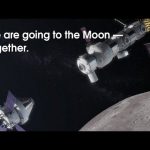
We are building a coalition of nations that can help us get to the Moon quickly and sustainably. Together.
We have a bold vision to go back to the Moon by 2024. As we work towards this goal, we welcome a growing list of international and commercial partners.
It is the partnerships over the last 60 years that have ensured the steady progress. With Mars on the horizon, together we can explore more of our solar system and share in the advances and the knowledge that will come.
A key milestone for our lunar Gateway, “rolling out” for a critical Orion safety test, and a chance to send your name to Mars … a few of the stories to tell you about – This Week at NASA!
This video is available for download from NASA’s Image and Video Library: https://images.nasa.gov/details-NHQ_2019_0524_A%20New%20Partnership%20to%20Power%20The%20Lunar%20Gateway%20on%20This%20Week%20@NASA%20%E2%80%93%20May%2024,%202019.html
NASA’s Chief Scientist, Jim Green, talks with some of the world’s top lunar experts.
Listen: https://www.nasa.gov/gravity-assist Subscribe: https://go.nasa.gov/30Hfpd1
What’s so special about our Moon? This season of Gravity Assist dives into the Moon’s history and mysteries, as well as NASA’s plans to send astronauts there by 2024. New episodes on Thursdays.
Have you ever done a science experiment and wondered “What would this be like if it were HUGE?” Welcome to Science Max, the exciting new series that turbocharges all the science experiments you’ve done at home.
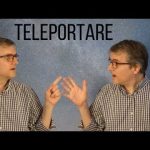
Teleportarea este inca un vis. Pentru cat timp? La inceput discutam despre teleportarea clasica, apoi despre transferul in raze de lumina si teleportarea cuantica. La sfarsit ne permitem sa visam cu un aparat de teleportare inventat de scriitorul Douglas Adams.
In fiecare vineri, de la ora 19:00, Digi World, “Jurnalul de stiinte”
Reluare: sambata, de la ora 15:30, Digi24
In fiecare joi, de la ora 13:20, Radio Romania Cultural, “Stiinta in cuvinte potrivite”
Did you know there are six humans living in space, and you can see their home from your home? NASA astronaut Nick Hague shares how you can use https://spotthestation.nasa.gov/ to find out when the International Space Station will be visible from your town!
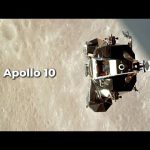
Fifty years ago, Apollo 10 launched from Cape Kennedy on May 18, 1969. The Apollo 10 mission encompassed all aspects of an actual crewed lunar landing, except the landing. It was the first flight of a complete, crewed Apollo spacecraft to operate around the Moon. The crew members were Commander Thomas Stafford, Command Module Pilot John Young and Lunar Module Pilot Eugene Cernan. Objectives included a scheduled eight-hour lunar orbit of the separated lunar module, or LM, and descent to about nine miles off the moon’s surface before ascending for rendezvous and docking with the command and service module, or CSM, in about a 70-mile circular lunar orbit. Pertinent data to be gathered in this landing rehearsal dealt with the lunar potential, or gravitational effect, to refine the Earth-based crewed spaceflight network tracking techniques, and to check out LM programmed trajectories and radar, and lunar flight control systems. Twelve television transmissions to Earth were planned. All mission objectives were achieved.
In this week’s edition of the Earth from Space programme from the Living Planet Symposium in Milan, we feature a Copernicus Sentinel-2 image of the Po Valley.
We are Europe’s gateway to space. Our mission is to shape the development of Europe’s space capability and ensure that investment in space continues to deliver benefits to the citizens of Europe and the world. Check out http://www.esa.int/ESA to get up to speed on everything space related.
Have you ever done a science experiment and wondered “What would this be like if it were HUGE?” Welcome to Science Max, the exciting new series that turbocharges all the science experiments you’ve done at home.