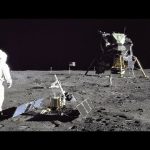
Original Mission Video as aired in July 1969 depicting the Apollo 11 astronauts conducting several tasks during extravehicular activity (EVA) operations on the surface of the moon. The EVA lasted approximately 2.5 hours with all scientific activities being completed satisfactorily. The Apollo 11 (EVA) began at 10:39:33 p.m. EDT on July 20, 1969 when Astronaut Neil Armstrong emerged from the spacecraft first. While descending, he released the Modularized Equipment Stowage Assembly on the Lunar Module’s descent stage. A camera on this module provided live television coverage of man’s first step on the Moon. On this, their one and only EVA, the astronauts had a great deal to do in a short time. During this first visit to the Moon, the astronauts remained within about 100 meters of the lunar module, collected about 47 pounds of samples, and deployed four experiments. After spending approximately 2 hours and 31 minutes on the surface, the astronauts ended the EVA at 1:11:13 a.m. EDT on July 21.
Author: kidibot
-
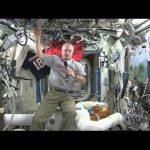
NASA Space Station Commander Discusses Life And Work Floating In Space with Denver Media
Aboard the International Space Station, Expedition 40 Commander Steve Swanson of NASA discussed life and research on the orbital outpost during an in-flight interview July 17 with KDVR-TV in Denver. Swanson, who is a native of Steamboat Springs, Colorado, arrived on the station in late March, became station commander in May and will remain in orbit until mid-September when he will return to Earth in a Russian Soyuz spacecraft.
-

The Journeys of Apollo
The Journeys of Apollo is a previously produced documentary narrated by Actor Peter Cullen that relives the 40th Apollo Anniversary and mission to explore Earths neighbor, the moon.
-
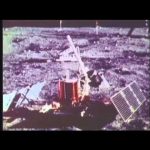
The Flight of Apollo 11
The story of the first Moon landing in July 1969. Depicts the principal events of the mission, from the launching through the post recovery activities of astronauts Armstrong, Aldrin, and Collins. Through television, motion pictures, and still photography, the program provides an “eyewitness” perspective of the Apollo 11 mission.
-

Inseparable Books – Sick Science! #199
See the full experiment here: http://www.stevespanglerscience.com/lab/experiments/inseparable-books
Notebooks are a necessity in every science setting. Graphs, observations, procedures… all of science falls by the wayside without a way of recording the information. Here’s a fun fact: two notebooks are even better than one! When you intertwine two notebooks, page by page, they become Inseparable Books! Check out this hands-on activity and see if you can overpower the friction between the books!
Want more experiments like this? Check out http://www.stevespanglerscience.com/product/naked-eggs-and-flying-potatoes
Sick Science™ is a trademark of Steve Spangler, inc.
© 2014 Steve Spangler Science all rights reserved
-
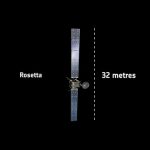
How big is Rosetta compared with the comet?
This short animation explains the relative sizes of the Rosetta spacecraft and comet 67P/Churyumov–Gerasimenko.
Rosetta is 32 m from tip to tip of the solar wings. Assuming the comet measures about 4 km across, that’s 125 times the width of Rosetta.
Unlike typical artist’s impressions, this image is scaled to convey the vast difference in size between Rosetta and the comet, even when the spacecraft is in a close 10 km orbit, as depicted here.
Rosetta arrives at the comet at an altitude of 100 km in the first week of August, and will move progressively closer over the following two months, with the intention to orbit at an altitude of just 10 km, depending on the comet’s activity. For Philae’s deployment in November, Rosetta will come to within a few kilometres of the surface.
The comet depicted in this animation is an artist’s impression.
#Rosettaarewethereyet
Credits: ESA
-
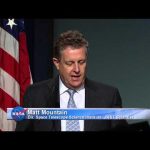
Space Experts Discuss the Search for Life in the Universe at NASA
NASA space-based observatories are making unprecedented new discoveries and revealing worlds never before seen. During a televised panel discussion of leading science and engineering experts at NASA Headquarters on Monday, July 14, a scientific and technological roadmap to lead to the discovery of potentially habitable worlds among the stars was addressed. The agency’s next step, the James Webb Space Telescope (Webb telescope), was featured as a new tool that will continue to help scientists rewrite scientific textbooks long after its scheduled launch in 2018.
-
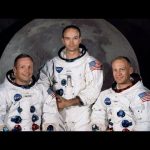
NASA Administrator Charles Bolden Apollo 11 45th Anniversary Message
Building on Apollo 11 for the Next Giant Leap
This month, our nation will mark the 45th anniversary of the Apollo 11 landing on the moon – a remarkable American accomplishment and a “giant leap” for humankind. Today, at NASA, we’re working on the next giant leap – a human mission to Mars, standing on the shoulders of astronauts Neil Armstrong, Buzz Aldrin and Michael Collins.
As I near the end of my fifth year as NASA administrator, I take great pride in the many amazing things our nation’s space program continues to accomplish. From an incredible five Earth science missions heading to space this year, to the first flight test of the Orion spacecraft that will one day carry astronauts to Mars and the continued success of our commercial partners in their missions to the International Space Station (ISS), we’re building on the Apollo program’s legacy to test and fly transformative, cutting-edge technologies today for tomorrow’s missions.
Around this 45th anniversary, we look ahead on our path to Mars and the milestones within our grasp. We’re treading that path with a stepping stone approach that takes the extraordinary work our crews have been doing aboard the Space Station for more than 13 years preparing us to travel farther into our solar system. Technology drives exploration, and we’ll be testing new technologies in the proving ground of deep space on our mission to an asteroid, eventually becoming Earth independent as we reach Mars.
Just this past week we were pleased that one of our private sector partners, Orbital Sciences, once again successfully launched a cargo mission to the ISS from U.S. soil. Along with another commercial partner, SpaceX, they’ve demonstrated with their Cygnus and Dragon spacecraft, respectively, that American industry can help us reach low Earth orbit and create good jobs and value for NASA at the same time. Later this year, we plan to award commercial contracts for transporting our astronauts to space from American soil by 2017, ending our reliance on others to get into space and freeing up scarce resources to focus on our even bolder Mars mission.
Our science missions also continue to turn science fiction into science fact. Today in Washington, we are hosting a public event, “The Search for Life in the Universe,” about our work on one of the most fundamental questions in exploration, “Are we alone?” Top scientists will share insights on how close we are to answering that question, what we know today from NASA missions and what we may find out soon.
In September, MAVEN arrives at Mars to study the planet’s upper atmosphere even as Curiosity and Opportunity continue to rove the surface and help prepare us for human missions to the Red Planet. Next year New Horizons arrives at Pluto and the year after, Juno arrives at Jupiter, even as we prepare our next Great Observatory, the James Webb Space Telescope, for launch in 2018 to peer back at the oldest light in the cosmos.
You can see that today’s astronauts, scientists and engineers continue to be inspired by the Apollo 11 mission. I’m proud and privileged to head a space agency that is accomplishing so much today with the legacy of the Apollo 11 crew and the thousands of ground support personnel who facilitated their success. As the world’s leader in exploration, we have so much to look forward to in the coming years.
Below is a link to a video I recorded about my personal remembrances of the first moon landing. I’m sure every one of you who was old enough also remembers exactly where you were at the time.
In the spirit of this brave crew, we look forward to a new generation of NASA achievements in space.
-
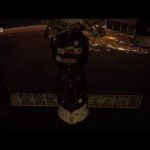
Space timelapse over Brazil
ESA astronaut Alexander Gerst recorded this timelapse from the International Space Station as it flew over Brazil and the Atlantic Ocean at speeds of 28 800 km/h, 400 km above our planet.
Read more about the Blue Dot:
http://www.esa.int/bluedotConnect with Alexander Gerst:
http://alexandergerst.esa.int -
Aquarius maps soil moisture on This Week @NASA
Data from NASA’s Aquarius instrument has helped researchers create worldwide maps of soil moisture, showing how the wetness of the land fluctuates with the seasons and weather phenomena. Soil moisture, the water contained within soil particles, is an important player in Earth’s water cycle. When it launched in June 2011, the primary science objective of the Aquarius mission was to study the salt content of ocean surface waters. But investigators have since developed a method to retrieve soil moisture data from the instrument’s microwave radiometer. Also, SLS Core Preliminary Design Review, JWST update and Dry ice gullies on Mars.
-
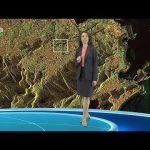
Earth from Space: Rio
Earth from Space is presented by Kelsea Brennan-Wessels from the ESA Web-TV virtual studios. In the one-hundred-eleventh edition we examine a Sentinel-1 radar image over Rio de Janeiro and the site of this year’s World Cup final.
See also http://www.esa.int/spaceinimages/Images/2014/07/Rio_de_Janeiro_Brazil to download the image.
-
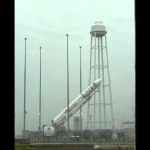
Antares Rocket Raised on Launch Pad
The Orbital Sciences Corporation Antares rocket, with the Cygnus spacecraft onboard, is seen in this time-lapse movie as it is raised at launch Pad-0A, Thursday, July 10, 2014, at NASA’s Wallops Flight Facility in Virginia. The Antares will launch with the Cygnus spacecraft filled with over 3,000 pounds of supplies for the International Space Station, including science experiments, experiment hardware, spare parts, and crew provisions. The Orbital-2 mission is Orbital Sciences’ second contracted cargo delivery flight to the space station for NASA. Photo Credit: (NASA/Bill Ingalls)
-
Are we there yet?
After a 10-year journey, Rosetta and Philae are impatient to arrive at their destination!
In July 2014, the public were invited to join the “Rosetta, are we there yet?” campaign, a photo contest to support the last leg of the spacecraft’s epic 10-year voyage to comet 67P/Churyumov–Gerasimenko.
This video is also available in the following languages:
German: https://youtu.be/MbsJ04OF4K8
Spanish: https://youtu.be/caHYr3m-QLc
French: https://youtu.be/7Xuxy0s6QEY
Italian: https://youtu.be/z_qN3HdLPzMMore videos in the series are available in this playlist:
https://www.youtube.com/playlist?list=PLbyvawxScNbui_Ncl9uQ_fXLOjS4sNSd8Credits: ESA/Design & Data
#Rosettaarewethereyet
-

NASA Flight Controller talks space with students
From NASA’s Mission Control in Houston, TX, International Space Station Flight Controller, Brion Au, answered questions from students at the Museum of Flight in Washington who are in the Washington Aerospace Scholars program, during a NASA Digital Learning Network (DLN) interactive broadcast.
NASA DLN broadcasts are connecting students around the country with the live mission operations being done by the International Space Station Flight Control Team. ISS flight controllers, astronauts and scientists answer student’s questions about living and working in space, how the Houston mission control center operates, and a wealth of other topics related to Science, Technology, Engineering, and Mathematics.
-

Sun Sensitive Fabric – Sick Science! #198
See the full experiment here: http://www.stevespanglerscience.com/lab/experiments/sun-sensitive-fabric
Photographic paper has long been a popular warm weather activity for kids and adults, but did you know that you can use fabric, too? With Sun Sensitive Fabric, just lay objects on the UV reactive cloth and expose it to the sun’s rays. After ten minutes, rinse the fabric with water and lock the images in place. You even have multiple colors to choose from! Try making images from red, green, or even yellow fabric. Get out in the sun and enjoy Sun Sensitive Fabric!
Want more experiments like this? Check out http://www.stevespanglerscience.com/product/naked-eggs-and-flying-potatoes
Sick Science™ is a trademark of Steve Spangler, inc.
© 2014 Steve Spangler Science all rights reserved
-
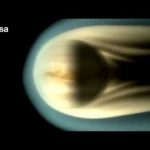
Venus Express plunging into the atmosphere
After eight years in orbit, ESA’s Venus Express has completed routine science observations and is preparing for a daring plunge into the planet’s hostile atmosphere.
Venus Express was launched on 9 November 2005, and arrived at Venus on 11 April 2006.
It has been orbiting Venus in an elliptical 24-hour loop that takes it from a distant 66 000 km over the south pole — affording incredible global views — to an altitude of around 250 km above the surface at the north pole, close to the top of the planet’s atmosphere.
With a suite of seven instruments, the spacecraft has provided a comprehensive study of the ionosphere, atmosphere and surface of Venus.
This video includes interviews in English with Håkan Svedhem, ESA mission scientist and Patrick Martin, ESA Venus Express mission manager
-
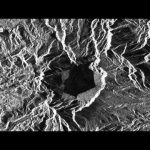
Earth from Space: Pinatubo
Earth from Space is presented by Kelsea Brennan-Wessels from the ESA Web-TV virtual studios. This week’s image from the Sentinel-1A radar satellite shows part of the Philippine island of Luzon with Mount Pinatubo.
See alsohttp://www.esa.int/spaceinimages/Images/2014/07/Mount_Pinatubo_Philippines the image.
-
Carbon Observing Mission Launches on This Week @NASA
NASA’s Orbiting Carbon Observatory-2 mission is underway. Launched from California’s Vandenberg Air Force Base, OCO-2 will help track our impact on the amount of carbon dioxide in the atmosphere and help us better understand the various human-made and natural sources of CO-2. This is one of five Earth-observing missions scheduled in 2014 — the most Earth-focused missions launched in a single year, in more than a decade. Also, Saucer-shaped vehicle tested, Cygnus Orb-2 launch update, Space Launch System model tests and 10 years exploring Saturn.
-
Working @NASA 50 Years After The Civil Rights Act Willis Chapman
In recognition of the 50th anniversary of the Civil Rights Act of 1964, this series of short videos features NASA employees discussing their experiences and recollections related to the Civil Rights Movement, the civil rights progress of the last 50 years and the challenges that still confront us. The Civil Rights Act was signed into law July 2, 1964 by President Lyndon Baines Johnson — the namesake of NASA’s Johnson Space Center.
-

Dropship offers safe landings for Mars rovers
The dramatic conclusion to ESA’s latest StarTiger project: a ‘dropship’ quadcopter steers itself to lower a rover gently onto a safe patch of the rocky martian surface. StarTiger’s Dropter project was tasked with developing and demonstrating a European precision-landing capability for Mars and other targets.
Starting from scratch for the eight-month project, the Dropter team was challenged to produce vision-based navigation and hazard detection and avoidance for the dropship. It has to identify a safe landing site and height before winching down its passenger rover on a set of cables. Flight testing took place at Airbus Defence and Space’s Trauen test site in northern Germany.
Read more: http://www.esa.int/Our_Activities/Technology/Dropship_offers_safe_landings_for_Mars_rovers
Credit:
Deutsches Forschungszentrum für Künstliche Intelligenz, DFKI
Spin.Works
Poznañ University of Technology/Institute of Control and Information Engineering, IAII
Airbus Defence & Space -
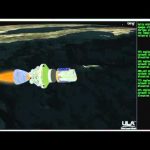
NASA’s Orbiting Carbon Observatory-2 (OCO-2) Launch From Vandenberg Air Force Base
NASA’s first spacecraft dedicated to studying carbon dioxide in Earth’s atmosphere was successfully launched from Vandenberg Air Force Base, California. OCO-2 will be collecting a great number of high-resolution measurements, which will provide a greater spatial distribution of CO2 over the entire globe, in short, a bigger, clearer, more complete picture of global CO2. These measurements will be combined with data from the ground-based network to provide scientists with the information that they need to better understand the processes that regulate atmospheric CO2 and its role in the carbon cycle.
-
Smoke Bomb Smoke Ring Launcher – Sick Science! #197
GET THE 4th OF JULY EXPERIMENT eBOOK HERE: http://www.stevespanglerscience.com/fourth-of-july-experiment-guide.html
See the full experiment here: http://www.stevespanglerscience.com/lab/experiments/smoke-bomb-smoke-rings
You’ve seen Steve use a giant smoke ring launcher made from a modified trash can, but there’s a way you can construct a smaller version at home! Using an empty coffee container and a smoke bomb, you’ll be creating swirling vortexes of smoke in under 10 minutes. In addition to the awesome smoke ring launcher you’ll have, you will also gain a new understanding of the movement of air and vortexes!
Want more experiments like this? Check out http://www.stevespanglerscience.com/product/naked-eggs-and-flying-potatoes
Sick Science™ is a trademark of Steve Spangler, inc.
© 2014 Steve Spangler Science all rights reserved
-

Women at NASA Monica Bowie
Growing up, Monica Bowie dreamed of becoming a lawyer for the Department of Justice. After 23 years of working for NASA, she is delighted that the life she planned for herself was not what actually happened. Ms. Bowie started at NASA as a Clerk Typist and has worked her way up to serving as NASA’s Lead for International Guest Operations. She supports international guests attending Shuttle and Expendable Launch Vehicle events at NASA Centers, serving as the international lead coordinator for 22 Shuttle launches and landings. She established a unique process for supporting NASA’s international guests and became the recognized expert Agency-wide and around the world. Recently, she supported Office of International and Interagency Relations International Program Specialists in developing international agreements.
Ms. Bowie assisted in the negotiation and renewal of the NASA-ESA Spacelab Loan Agreement. She renewed the University of British Columbia Loan Agreement. She assisted with the coordination of the Exchange of Notes between the Government of the United States of America and the Government of Australia. She also coordinates Astronauts post-flight international visits. Ms. Bowie realizes that not everyone at NASA has the opportunity to associate with astronauts. Her work with this special group is priceless and creates memories that she will forever cherish.
-

Earth from Space: How dry Iran
Earth from Space is presented by Kelsea Brennan-Wessels from the ESA Web-TV virtual studios. A Ramsar wetland of international importance located in southern Iran is featured in the one-hundred-ninth edition.
See also http://www.esa.int/spaceinimages/Images/2014/06/Rud-e-Gaz_and_Rud-e-Hara_wetlands to download the image.
-
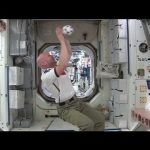
Space gooooooaaaal
In true World Cup spirit ESA astronaut Alexander Gerst and NASA astronauts Reid Wiseman and Steve Swanson play a friendly game of football, celebrating their goals as only they can while living in the International Space Station.
Recorded during their time-off over the weekend the astronaut-footballers enjoyed some weightless football fun.
During Alexander’s six-month Blue Dot mission on the Space Station he will run over 100 experiments that cannot be done anywhere else on Earth – just like these celebrations.
Credit: NASA
-
NASA celebrates 50 years of Civil Rights progress
The Civil Rights Act of 1964 was signed into law July 2, 1964 by President Lyndon Baines Johnson, the namesake of NASA¹s Johnson Space Center.
NASA employees and retirees from around the Nation join together to share their stories as they remember the past, discuss diversity and look forward to future progress. -
NASA LGBT Pride Month Profile – Amy Stalker, Glenn Research Center
Amy Stalker is a mechanical engineer in the structural mechanics branch at Glenn Research Center.
-
Comet 67P/C-G in Rosetta’s navigation camera
Animation using a sequence of raw NAVCAM frames from 8 May to 22 June. The NAVCAM has a 5-degree field of view and takes 1024 x 1024 12-bit per pixel images.
Read more in the Rosetta blog:
http://blogs.esa.int/rosetta/2014/06/25/comet-67pc-g-in-rosettas-navigation-camera/Credit: ESA/Rosetta/NAVCAM
-

Oil Spill Polymer – Sick Science! #196
See the full experiment here: http://www.stevespanglerscience.com/lab/experiments/oil-spill-polymer
Just imagine if the solution to an oil spill was this simple: Sprinkle a small amount of a non-toxic powder onto the layer of oil and in seconds the powder bonds to the oil, forming a sponge-like material that can be easily removed from the surface of the water. It’s more than just a dream… a new form of superabsorbent polymer technology is changing the way environmental scientists approach oil spills and waste management problems. The results are amazing!
Want more experiments like this? Check out http://www.stevespanglerscience.com/product/naked-eggs-and-flying-potatoes
Sick Science™ is a trademark of Steve Spangler, inc.
© 2014 Steve Spangler Science all rights reserved
-
Exploring Europa – Ocean Worlds of the Outer Solar System
Where is the best place to find living life beyond Earth? It may be a small, ice-covered moon of Jupiter or Saturn that harbors some of the most habitable real estate in our Solar System. Life loves liquid water and these moons have lots of it! Dr.Kevin Hand, Deputy Chief Scientist for Solar System Exploration at NASA’s Jet Propulsion Laboratory explains the science behind how these oceans exist and what we know about the conditions on these worlds. Dr. Hand focuses on Jupiter’s moon Europa, which is a top priority for future NASA missions and shows how the exploration of Earth’s ocean is helping our understanding of the potential habitability of worlds.
-

NASA Announces Latest Progress, Upcoming Milestones in Hunt for Asteroids
NASA is on the hunt for an asteroid to capture with a robotic spacecraft, redirect to a stable orbit around the moon, and send astronauts to study in the 2020s — all on the agency’s human Path to Mars. Agency officials announced on Thursday recent progress to identify candidate asteroids for its Asteroid Redirect Mission (ARM), increase public participation in the search for asteroids, and advance the mission’s design.
NASA plans to launch the ARM robotic spacecraft in 2019 and will make a final choice of the asteroid for the mission about a year before the spacecraft launches. NASA is working on two concepts for the mission: the first is to fully capture a very small asteroid in open space, and the second is to collect a boulder-sized sample off of a much larger asteroid. The agency will choose between these two concepts in late 2014 and further refine the mission’s design.NASA’s Spitzer Space Telescope made recent observations of an asteroid, designated 2011 MD, which bears the characteristics of a good candidate for the full capture concept. While NASA will continue to look for other candidate asteroids during the next few years as the mission develops, astronomers are making progress to find suitable candidate asteroids for humanity’s next destination into the solar system.
-
Earth from Space: Special edition
Discover more about our planet with the Earth from Space video programme.
In this special edition, Nils Olsen from DTU Space joins the show to discuss the latest measurements of Earth’s magnetic field and changes observed over the last six months by ESA’s Swarm mission.
-

Popping Boba Balls – Cool Science Experiment
It’s a popular topping at your local frozen yogurt store… popping boba balls. But how to do make them? Our science guy, Steve Spangler, introduces us to a kind of food science that is sweeping trendy restaurants throughout the country.
Want more experiments like this? Check out http://www.stevespanglerscience.com/experiments
© 2014 Steve Spangler, Inc. all rights reserved About Steve Spangler Science…
Steve Spangler is a celebrity teacher, science toy designer, speaker, author and an Emmy award-winning television personality. Spangler is probably best known for his Mentos and Diet Coke geyser experiment that went viral in. Spangler is the founder of www.SteveSpanglerScience.com, a Denver-based company specializing in the creation of science toys, classroom science demonstrations, teacher resources and home for Spangler’s popular science experiment archive and video collection. Spangler is a frequent guest on the Ellen DeGeneres Show and Denver 9 News where he takes classroom science experiments to the extreme. For teachers, parents or DIY Science ideas – check out other sources of learning:
Join the Science Club and check out other cool science experiments at – http://www.SteveSpanglerScience.com
Sign up to receive a FREE Experiment of the Week- http://www.stevespanglerscience.com/experiment-of-the-week
Attend a Spangler Hands-on Science Workshop for Teachers – http://www.stevespanglerscience.com/training
Watch Steve on Local and National Media Appearances on YouTube at: https://www.youtube.com/user/SpanglerScienceTV
-
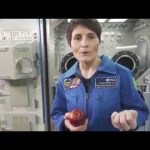
Avamposto42, si inizia
Benvenuti all’avamposto42, questo e’ il primo messaggio di Samantha Cristoforetti, dal centro di addestramento EAC a Colonia, dove si sta preparando per la sua partenza verso la Stazione Spaziale Internazionale. Samantha e’ la prossima astronauta italiana ad affrontare una missione spaziale di lunga durata dove sara’ in contatto con noi per tutto il tempo grazie al suo avamposto, a mezza via tra la Terra e lo Spazio.
-

Inertia Ring – Sick Science! #195
BUY INERTIA RINGS HERE: http://www.stevespanglerscience.com/yellow-rings.html
See the full experiment here: http://www.stevespanglerscience.com/lab/experiments/inertia-ring
Do you think you can successfully perform the Steve Spangler Science inertia challenge? Balance a yellow ring on the mouth of an empty 1 or 2 liter bottle and place a hex nut or other heavy object on top of the ring. When the yellow ring is removed, the hex nut will drop straight into the bottle. It might take a little bit of practice, but you’ll get it. Inertia rings are a perfect tool for introducing students to physics, motion, and inertia.
Want more experiments like this? Check out http://www.stevespanglerscience.com/product/naked-eggs-and-flying-potatoes
Sick Science™ is a trademark of Steve Spangler, inc.
© 2014 Steve Spangler Science all rights reserved
-
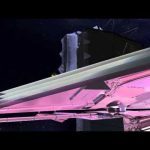
The James Webb Space Telescope described by Peter Cullen
Voice actor Peter Cullen, known for bringing to film and television numerous characters including Optimus Prime of “Transformers”,
Disney’s Eeyore and many more, describes NASA’s next generation space telescope. -
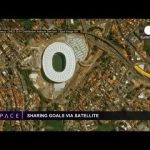
ESA Euronews: Gol via satellite
I Mondiali di calcio sono in corso e milioni le immagini dal Brasile arriveranno in tutto il mondo grazie alla tecnologia spaziale. Migliaia di fan vi assisteranno personalmente, ma si stima che più di 3,2 miliardi di persone (ovvero quasi la metà della popolazione del pianeta) ne seguiranno almeno una parte in tv. La Coppa del Mondo viene diffusa con quella che gli operatori satellitari come SES, qui in Lussemburgo, chiamano trasmissione per ‘uso occasionale’. Si tratta della banda supplementare adibita alla copertura di eventi speciali in diretta. Ed è uno spazio molto affollato. “Indipendentemente da quale sia la tecnologia usata nelle case per ricevere la tv” afferma Xavier Lobao, dell’ESA “si utilizzano i satelliti.”
Credits: ESA/Euronews
-
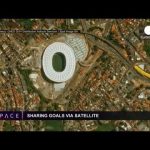
ESA Euronews: Partilhando golos via satélite
Com a chegada do Mundial o planeta irá recorrer à tecnologia espacial para reproduzir os acontecimentos em direto, a partir do Brasil. Milhares de adeptos testemunharão o evento ao vivo, mas são muitos mais os que irão assistir a tudo através da televisão. Estima-se que mais de 3,2 mil milhões de pessoas acompanhem a cobertura televisiva – quase metade da população do planeta terra. O Campeonato do Mundo é transmitido através do que os operadores de satélite chamam de transmissão de “uso ocasional.” É esse o nome para largura de banda alocada juntamente com transmissões regulares para cobrir eventos especiais em direto. O período de duração do Mundial será atarefado. “Independentemente da tecnologia usada nas casas para receber sinal de televisão, os satélites serão utilizados”, sublinha Xavier Lobao, chefe de Projetos de Telecomunicações Futuras na Agência Espacial Europeia.
Credits: ESA/Euronews
-

NASA Spinoff with Seth Green
Actor Seth Green discusses products and technology derived from NASA research, often called “spinoffs”, that are being used to improve life on Earth.
A spinoff is a commercialized product that incorporates NASA technology or NASA “know how” and benefits the public.
Spinoffs promote commercial activity, encourages economic growth, and stimulates innovation in business and commerce.www.spinoff.nasa.gov
