Author: kidibot

  • ESA Euronews: La fábrica de cohetes

    ESA Euronews: La fábrica de cohetes

    Paso a paso y pieza a pieza, los ingenieros construyen en este inmenso edificio en los alrededores de París aparatos que pronto pondrán rumbo al espacio.

    Cada lanzamiento es un complejo reto técnico en el que todo debe estar perfectamente calibrado. Es el resultado de un largo y cuidadoso trabajo de concepción y construcción que empieza en plantas como la que se encuentra en los alrededores de París, donde se fabrican los componentes del Ariane 5.

    Un aparato como éste tiene un tamaño aproximado de 55 metros y un peso de 775
    toneladas en el momento de su lanzamiento. La capacidad de carga útil alcanza
    las diez toneladas, lo que da una idea de lo que cuesta lanzar, transportar y poner en órbita una nave similar.

    En estos momentos hay tres cohetes europeos. El Ariane 5 es el mayor, es capaz de levantar diez toneladas de peso y ponerlas en órbita. El Soyuz ruso sólo soporta tres toneladas. Y el Vega, el nuevo cohete europeo, ha sido diseñado para transportar satélites de tonelada y media.

    Los expertos de la ESA trabajan también en una actualización de su buque insignia, el Ariane 5ME o Midlife Evolution, más flexible y con una capacidad de carga de hasta 12 toneladas. El hecho de tener mayores prestaciones le permite transportar un satélite de comunicaciones comercial y otro científico.

    El siguiente paso será el Ariane 6, que incluirá un motor de reignición. La Agencia Espacial Europea espera así satisfacer a los clientes comerciales sin descuidar la carrera espacial. Su lanzamiento está previsto para 2020.
  • ESA Euronews: No interior da fábrica de foguetes

    ESA Euronews: No interior da fábrica de foguetes

    O lançamento de um foguete é o culminar de um longo e minucioso processo de fabrico e construção que começa em enormes fábricas de foguetes como aquela que existe nos arredores de Paris.
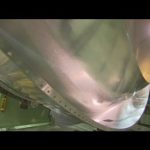
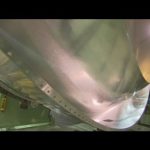
    É aqui que o foguete Ariane 5 é literalmente talhado a partir de alumínio sólido e, aos poucos, vai ganhando forma.
    “A fim de dar uma ideia da escala, o impulso na descolagem de um foguete como
    o Ariane é igual à potência de duas centrais nucleares, e a bomba turbo que alimenta o motor do foguete tem a mesma potência que um comboio TGV”, afirma Michel Freuchet, Director de Foguetes, Astrium.

    O que sai desta fábrica de foguetes é uma combinação entre potência, escala e engenharia de precisão. Cada lançamento a partir de Kourou na Guiana francesa é cronometrado ao milésimo de segundo.

    Neste momento existem três foguetes europeus preparados para voarem para o espaço.

    O maior é o Ariane 5, capaz de transportar 10 toneladas para órbita; o Soyuz é o “burro de carga” russo que leva uma carga de 3 toneladas enquanto o Vega é o novo foguete europeu, concebido para transportar uma tonelada e meia de satélites para a órbita terrestre.

    No entanto, o Ariane está a ser remodelado – o Ariane 5ME ou Midlife Evolution, vai torná-lo mais flexível devido à capacidade para transportar 12 toneladas.

    A capacidade de lançar dois satélites em duas órbitas diferentes é a principal inovação do Ariane 5ME – que conta com uma nova unidade de propulsão na secção superior.

    A evolução central ao nível do design foi a criação de uma parte superior com propulsão própria que pode ser ativada já no espaço.

    Os engenheiros espaciais que trabalham nos foguetes europeus têm que cumprir as expectativas dos clientes ao planearem designs futuros. O mercado dos foguetes enfrenta uma concorrência crescente do Extremo Oriente assim como de empresas privadas nos Estados Unidos.
    Olhando para o futuro, daqui a 10 anos, alguma da nova tecnologia que vemos no Ariane 5, tal como a secção superior com propulsão própria, será incluída no seu sucessor, o Ariane 6.

    A Agência Espacial Europeia vê esta evolução como uma fase estratégica para fazer face às necessidades dos clientes comerciais e científicos.

  • ESA Euronews: Viaggio nella fabbrica dei razzi spaziali

    ESA Euronews: Viaggio nella fabbrica dei razzi spaziali

    Ogni lancio spaziale e’ una conquista tecnologica sorprendente. Ma come avviene un lancio spaziale e quali sono le ultime innovazioni nel settore dei lanciatori?
    Con Cina ed Estremo Oriente che spingono la competizione e le imprese spaziali private statunitensi in cerca del “prossimo Space Shuttle” lo scenario e’ alquanto vivace.

    Alla periferia di Parigi, nella fabbrica di lanciatori di Astrium, azienda spaziale tra le piu’ importanti, si costruiscono i vettori Ariane 5 a partire da una lastra di alluminio.
    Questo lanciatore e’ alto all’incirca 55 metri, il suo peso al decollo e’ di 775 tonnellate e di solito il carico utile che puo’ essere trasportato in orbita e’ di circa 10 tonnellate.

    Il Progetto europeo Ariane e’ nato nel 1970 . IL primo Ariane 1 fu lanciato nel 1979 seguito da Ariane 4 nel 1988 e Ariane 5 nel 1996.

    Attualmente ci sono tre principali lanciatori europei, pronti per le missioni spaziali. Il piu’ grande e’ Ariane 5, in grado di portare in orbita 10 tonnellate. Il Soyuz e’ il cavallo di battaglia russo la cui capacita’ e’ di 3 tonnellate di carico utile, mentre Vega e’ il nuovo vettore Europeo, ideato per trasportare satelliti di 1 tonnellata e mezzo nella bassa orbita
    terrestre.
    Anche Ariane pero’ e’ in fase di ammodernamento con il modello Ariane 5ME, Midlife Evolution, piu’ flessibile, potra’ portare un carico doppio con capacita’ aumentata fino a 12 tonnellate.

    La capacita’ di sganciare due satelliti in orbita, in due diverse posizioni, e’ la principale innovazione di Ariane 5ME che sara’ dotato di un nuovo motore a razzo a combustibile liquido per lo stadio superiore, riaccendibile.
    L’Agenzia Spaziale Europea conta su questo lanciatore per portare avanti missioni che siano sia commerciali che scientifiche.
    Nel frattempo per agevolare il mercato Ariane 6 dovrebbe portare la tecnologia un passo oltre consentendo lanci di un singolo carico utile.

  • ESA Euronews: Les coulisses de la construction des fusées

    ESA Euronews: Les coulisses de la construction des fusées

    Moment ultime, chaque lancement est une consécration. Il clot un long processus de conception et de production. Dans le hall d’assemblage d’Astrium près de Paris, les ingénieurs donnent vie au lanceur Ariane 5. Ils le taillent dans l’aluminium et le construisent, pièce après pièce, étage après étage.

    Tout l’enjeu est de réussir à doser puissance, démesure et ingéniérie. “La poussée au décollage d’une fusée comme Ariane correspond environ à la puissance de deux centrales nucléaires – deux tranches de centrale nucléaire – et la turbo-pompe qui alimente ce moteur a la puissance d’un TGV,” souligne Michel Freuchet, directeur du programme des lanceurs chez Astrium.
    Chaque lancement depuis Kourou en Guyane française est calibrée à la perfection pour faire face à des contraintes de taille. “Le lanceur mesure environ 55 mètres, son poids au décollage fait 775 tonnes et typiquement, la masse de charge utile amenée en orbite est de l’ordre de 10 tonnes,” explique Louis Laurent, directeur des programmes d’Arianespace ; “donc vous voyez le ratio entre la masse utile et la masse qu’il est nécessaire de mettre en oeuvre pour emporter cette charge utile vers l’orbite de transfert
    géostationnaire.”

    Au sol, le corps central d’Ariane 5 est construit à partir d’immenses plaques d’aluminium de haute qualité. L’aluminium a été choisi pour sa meilleure résistance aux températures extrêmement basses de l’hydrogène et de l’oxygène liquides.

    A l’heure actuelle, on compte trois principaux lanceurs : le plus gros, Ariane 5 est capable de mettre dix tonnes sur orbite ; son confrère russe Soyouz a lui une charge utile de 3 tonnes tandis que Vega, la nouvelle fusée européenne, est conçue pour placer sur orbite basse, des satellites d’une tonne et demi.

    Mais aujourd’hui, Ariane s’apprête à évoluer avec une nouvelle version baptisée 5ME. Sa principale innovation : son étage supérieur sera doté d’un moteur qui pourra être réallumé une fois dans l’espace.
    A l’horizon 2020, certaines technologies d’Ariane 5ME comme le moteur réallumable prendront place à bord de sa petite soeur : Ariane 6.

  • ESA Euronews: The rocket factory

    ESA Euronews: The rocket factory

    The launch of a rocket is the crowning moment, the culmination of a long process of careful machining and construction. What comes out of a rocket factory is a unique blend of power, scale and engineering skill.

    “To give you an idea of scale, the thrust at liftoff of a rocket like Ariane is like the power of two units of a nuclear power station, and the turbo pump that feeds the rocket engine has the power of a TGV train,” says Michel Freuchet, Head of Launchers at Astrium, near Paris, where the Ariane 5 launcher was born.

    Piece by piece, it is hewn from solid aluminium and brought to life. The central structure of Ariane 5 is made from huge sheets of top-grade aluminium. Aluminium is used because it is best suited to withstand the extremely low temperatures of the liquid hydrogen and oxygen propellants. One by one, the panels are machined into shape — with many areas as thin as two milimetres. More than 90% of the aluminium is removed and recycled, leaving behind the perfect central part of each panel.

    There are three main European launchers ready to rocket into space.

    Ariane 5 is the biggest, capable of lifting 10 tonnes into orbit. Soyuz is the Russian workhorse, with a three-tonne payload capacity, while Vega is the European Space Agency’s new rocket, designed to take 1.5 tonne satellites into low orbit.

    Faced with increased competition from the Far East and private companies in the US, the European Space Agency is treating Ariane to a make-over. The Ariane 5 ME, or Midlife Evolution, will be able to combine the launch of communication satellites and scientific missions.

    Looking ahead a decade, some of the new technology in Ariane 5 ME will be included in its successor Ariane 6. The European Space Agency sees the evolution as a strategic move to meet the demands of both commercial and scientific customers.

  • Pop Rocks Expander – Sick Science! #125

    Pop Rocks Expander – Sick Science! #125

    Find out what makes the balloon expand here http://www.stevespanglerscience.com/experiment/poprocks

    If you are a candy enthusiast, like a lot of the people at Spangler Labs, you know that not all candies are created equal. And, if we’re being honest, Pop Rocks are one of the greatest candies of all time! You dump a few of the tiny pebbles onto your tongue and, in an instant, they begin fizzing, popping, and snapping about in your mouth. What’s going on here? Being scientists, we devised a way to figure out the popping secret behind the famous candy. Are you ready to expand your mind (as well as a few balloons)?

    Want more experiments like this? Check out http://www.stevespanglerscience.com/product/naked-eggs-and-flying-potatoes

    Sick Science™ is a trademark of Steve Spangler, inc.

    © 2013 Steve Spangler Science all rights reserved

  • NASA: Reaching for New Heights

    NASA: Reaching for New Heights

    At NASA, we’ve been a little busy: landing on Mars, developing new human spacecraft, going to the space station, working with commercial partners, observing the Earth and the Sun, exploring our solar system and understanding our universe. And that’s not even everything.

  • Sink or Swim – Sick Science! # 124

    Sink or Swim – Sick Science! # 124

    Mystery liquid revealed here http://www.stevespanglerscience.com/experiment/sink-or-swim-surface-tension
    There are times in science where changing one variable can be the difference between fire and smoke, conducting and insulating, and in this case, sinking and swimming. In the Sink or Swim experiment, you’ll learn how adding one variable to water will change the amount of surface tension the water has. You’ll see that anything you add to water can quickly affect whether something sinks or swims.

    Want more experiments like this? Check out http://www.stevespanglerscience.com/product/naked-eggs-and-flying-potatoes

    Sick Science™ is a trademark of Steve Spangler, inc.

    © 2013 Steve Spangler Science all rights reserved

  • NASA’s Floats in Presidential Inaugural Parade

    NASA’s Floats in Presidential Inaugural Parade

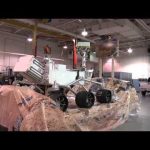
    Video of full-size models of the Curiosity Mars rover and Orion, the multi-purpose capsule that will take our astronauts farther into space than ever, as they appeared in the Washington, D.C. parade on Jan. 21. Accompanying the vehicles were members of the Curiosity team from NASA’s Jet Propulsion Laboratory, and current and former astronauts Alvin Drew, Serena Aunon, Kate Rubins, Mike Massimino, Lee Morin and Kjell Lindgren, as well as Leland Melvin, NASA’s associate administrator for Education, and John Grunsfeld, NASA’s associate administrator for Science.

  • NASA Star Party Helps Celebrate Inauguration

    NASA Star Party Helps Celebrate Inauguration

    Video of a NASA star gazing “party” at the David M. Brown Planetarium in Arlington, Va. on Jan. 19. Free and open to the public, the event featured astronomers, astronauts, and other experts answering questions about the night sky. Telescopes were provided; planetarium shows were also held.

  • NASA Preps for Inaugural Parade

    NASA Preps for Inaugural Parade

    Video of preparations at the Joint Base Anacostia Bolling in Washington, D.C. on Jan. 19 for the two NASA floats scheduled to appear in Monday’s Presidential Inaugural Parade. The floats will feature full-scale models of NASA’s Orion, the multi-purpose capsule that will take our astronauts farther into space than ever, and the Curiosity rover now on Mars.

  • Inauguration Weekend on This Week @NASA

    Inauguration Weekend on This Week @NASA

    Two Open Houses at Headquarters in Washington kicked off NASA’s participation in the city’s Presidential Inaugural activities. Public visitors to the James Webb Auditorium could hear from Administrator Charles Bolden, Deputy Administrator Lori Garver and other agency officials about NASA’s current and future plans, programs and missions. Also, Bigelow’s BEAM; ESA and Orion; Curiosity Update; Robotic Refueling; Next ISS Mission; Monitoring Air Quality; Draper Medal Winner; and more!

  • NASA’s Mars Curiosity Rover Report – January 18, 2013

    NASA’s Mars Curiosity Rover Report – January 18, 2013

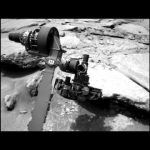
    A NASA Mars Curiosity rover team member gives an update on developments and status of the planetary exploration mission. The Mars Science Laboratory spacecraft delivered Curiosity to its target area on Mars at 1:31:45 a.m. EDT on Aug. 6, 2012 which includes the 13.8 minutes needed for confirmation of the touchdown to be radioed to Earth at the speed of light. The rover will conduct a nearly two-year prime mission to investigate whether the Gale Crater region of Mars ever offered conditions favorable for microbial life.

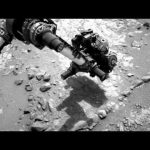
    Curiosity carries 10 science instruments with a total mass 15 times as large as the science payloads on NASA’s Mars rovers Spirit and Opportunity. Some of the tools, such as a laser-firing instrument for checking rocks’ elemental composition from a distance, are the first of their kind on Mars. Curiosity will use a drill and scoop, which are located at the end of its robotic arm, to gather soil and powdered samples of rock interiors, then sieve and parcel out these samples into the rover’s analytical laboratory instruments.

  • NASA, ESA Agree on New Orion Service Module

    NASA, ESA Agree on New Orion Service Module

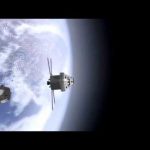
    This animation shows NASA’s Orion spacecraft as it will appear on its Exploration Mission-1 in 2017, complete with a service module to be provided by the European Space Agency. After Orion blasts off atop a Space Launch System rocket, the ESA-provided service module will fuel and propel the capsule on its journey through space. Exploration Mission-1 in 2017 will be the first mission to incorporate both the Orion vehicle and NASA’s new Space Launch System. It will follow the upcoming Exploration Flight Test-1 in 2014, in which an uncrewed Orion will launch atop a Delta IV Heavy rocket and fly 3,600 miles above Earth’s surface, farther than a human spacecraft has gone in 40 years.

  • The Huygens experience

    The Huygens experience

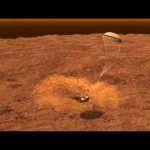
    A new rendering of Huygens descent and touchdown created using real data recorded by the probe’s instruments as it descended to the surface of Titan, Saturn’s largest moon, on 14 January 2005.
    The animation takes into account Titan’s atmospheric conditions, including the Sun and wind direction, the behaviour of the parachute (with some artistic interpretation only on the movement of the ropes after touchdown), and the dynamics of the landing itself. Even the stones immediately facing Huygens were rendered to match the photograph of the landing site returned from the probe, which is revealed at the end of the animation.
    Split into four sequences, the animation first shows a wide-angle view of the descent and landing followed by two close-ups of the touchdown from different angles, and finally a simulated view from Huygens itself — the true Huygens experience.
    This animation was released on the eighth anniversary of Huygen’s touchdown on Titan as a Space Science Image of the Week feature.

    Animation: ESA–C. Carreau/Schröder, Karkoschka et al (2012). Image from Titan’s surface: ESA/NASA/JPL/University of Arizona

  • ESA – Space to Relax / Earth & Mars: 2 Planets, 1 Blueprint

    ESA – Space to Relax / Earth & Mars: 2 Planets, 1 Blueprint

    Watch landscapes easily blend from one world to the other in this gallery of Earth and Mars images taken from space.

    Images: ESA/DLR/FU Berlin
    Music: Crystals licensed by Ambient Music Garden.

  • Fire Resistant Water Balloon – Sick Science! #122

    Fire Resistant Water Balloon – Sick Science! #122

    Find out how this is possible at http://www.stevespanglerscience.com/experiment/fire-water-balloon

    Common sense tells you that it’s impossible to boil water in a paper bag, but this classic parlor trick was a favorite of Victorian magicians. The real difficulty in performing this effect is making it look harder than it is! As you might imagine, the secret lies in yet another amazing property of water. Instead of using a paper bag, this modern day version of the demonstration uses an ordinary balloon, some water, and a candle. It’s a combination that’s guaranteed to make people stand back.

    Want more experiments like this? Check out http://www.stevespanglerscience.com/product/naked-eggs-and-flying-potatoes

    Sick Science™ is a trademark of Steve Spangler, inc.

    © 2013 Steve Spangler Science all rights reserved

  • How to Make a Folding Egg – Sick Science! #121

    How to Make a Folding Egg – Sick Science! #121

    Mystery liquid revealed at http://www.stevespanglerscience.com/experiment/how-to-make-a-folding-egg
    The Folding Egg activity is actually an extension of the classic Rubber Egg experiment with a really fun twist. Just imagine the look on your friends’ faces when you show them an egg and then proceed to fold it in half several times until it forms a small white ball! Wait… it gets better. Just bounce the “folded egg” between your hands and the egg reappears!

    Want more experiments like this? Check out http://www.stevespanglerscience.com/product/naked-eggs-and-flying-potatoes

    Sick Science™ is a trademark of Steve Spangler, inc.

    © 2013 Steve Spangler Science all rights reserved

  • NASA’s Mars Curiosity Rover Report #18 — December 21, 2012

    NASA’s Mars Curiosity Rover Report #18 — December 21, 2012

    A NASA’s Mars Curiosity rover team member gives an update on developments and status of the planetary exploration mission. The Mars Science Laboratory spacecraft delivered Curiosity to its target area on Mars at 1:31:45 a.m. EDT on Aug. 6, which includes the 13.8 minutes needed for confirmation of the touchdown to be radioed to Earth at the speed of light. The rover will conduct a nearly two-year prime mission to investigate whether the Gale Crater region of Mars ever offered conditions favorable for microbial life.

  • Leak-Proof Bag – Sick Science! – #120

    Leak-Proof Bag – Sick Science! – #120

    Read the full experiment at http://www.stevespanglerscience.com/experiment/leak-proof-bag
    Who would have ever thought that a plastic bag, some water, and a few pencils would frighten the thunder out of Mom? Learn how to poke a hole in a plastic bag filled with water and reseal it like magic. The secret has to do with a better understanding of the chemistry of polymers.

    Want more experiments like this? Check out http://www.stevespanglerscience.com/product/naked-eggs-and-flying-potatoes

    Sick Science™ is a trademark of Steve Spangler, inc.

    © 2012 Steve Spangler Science all rights reserved

  • Further Up Yonder: A Message from ISS to All Humankind

    Further Up Yonder: A Message from ISS to All Humankind

    NASA Television shares this inspiring production by Italian videomaker, Giacomo Sardelli, about the International Space Station, its inhabitants, and its role in space exploration. Sardelli writes of the video, “I’m not the first one to use NASA’s pictures taken from the International Space Station to craft a Timelapse video. You can find many of them on the Internet, that’s where my inspiration came from. What I wanted to do, though, was to look beyond the intrinsic beauty of those pictures, and use them to tell a story and share the messages sent by the astronauts who worked on the station in the last 11 years.”

  • Happy Holidays, NASA TV Style!

    Happy Holidays, NASA TV Style!

    Our wish for a happy holiday season, and a healthy and prosperous 2013!

  • ESA Euronews: Volare in assenza di gravità

    ESA Euronews: Volare in assenza di gravità

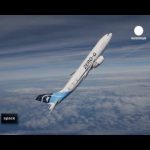
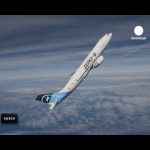
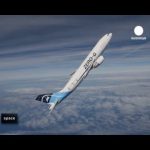
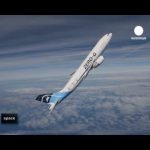
    In questa puntata viviamo l’esperienza del volo parabolico, ossia in assenza di gravità. Un normale aereo di linea segue una curva a campana, in orbita all’interno dell’atmosfera. Nel punto massimo della curva parabolica si comincia a fluttuare in assenza di forza gravitazionale, come se si fosse nello spazio. Abbiamo seguito un gruppo di ricercatori, francesi e tedeschi, decollati dall’aeroporto di Bordeaux a bordo dello Zero G della società Novespace.

    Tra gli scienziati decollati da Bordeaux, quelli dell’università dello sport di Colonia, desiderosi di studiare il funzionamento del cervello, per capire se la redistribuzione del volume del sangue possa avere un impatto negativo sull’attività della corteccia cerebrale.

    Una squadra di ricercatori di Monaco di Baviera osserva invece le posizioni che assume il corpo umano quando non è sotto l’influenza della gravità. Il team di ricercatori francesi esamina il trasferimento del calore nei liquidi in ebollizione. Novespace effettua diversi voli parabolici all’anno per clienti come l’Agenzia Spaziale Europea. Non ci sono solo i voli in assenza di gravità, ma anche quelli che riproducono la gravità di altri pianeti.

  • ESA Euronews: Voos parabólicos: no Espaço por alguns segundos

    ESA Euronews: Voos parabólicos: no Espaço por alguns segundos

    Os voos parabólicos são uma das melhores maneiras de simular o ambiente espacial. Os passageiros são cientistas que estudam a microgravidade.

    Para estarem a bordo do avião Novespace ZERO-G, os investigadores tiveram de provar que as suas experiências são cientificamente sólidas e que passar por rigorosos controlos de segurança.

    Os passageiros de um voo parabólico têm 22 segundos para girar, sem as amarras da gravidade.

  • ESA Euronews: Bienvenido a la ingravidez

    ESA Euronews: Bienvenido a la ingravidez

    Es un avión de pasajeros convencional y se llama Flying Zero-G. Pero realiza
    vuelos parabólicos para conseguir durante unos pocos segundos la ingravidez.
    Un breve espacio de tiempo que los científicos aprovechan para hacer sus
    experimentos.

    Tienen tres oportunidades. Tres vuelos en cada uno de los cuales el avión traza 31 parábolas para simular que se está en el espacio. Y ése es el momento para hacer experimentos con nuestro cuerpo o para ver cómo quedan patas arriba las leyes de la física.

  • ESA Euronews: Zero-G fliegen

    ESA Euronews: Zero-G fliegen

    Für wenige Sekunden fühlt man sich wie im Weltall: Bei einem Parabelflug ist man für 22 Sekunden von der Schwerkraft befreit. Als Flugzeug genügt eine normale Verkehrsmaschine. Flügel, Rumpf und Triebwerke brauchen nicht verändert werden.

    Die Flugbahn ist eine glockenförmige Kurve. Die Maschine wird sozusagen in die Luft geworfen. Nach einem Steigflug von 40 Grad geht die Maschine in etwa 6000 m Höhe in den Sinkflug über. Es ist der magische Moment: Wenn die Passagiere in null g schweben, berühren Sie weder Wände noch Boden. Sie sind von der Schwerkraft befreit wie im Space Shuttle oder in der Internationalen Raumstation.

    Der Parabelflug ist eines der besten Mittel, um die Verhältnisse im All zu simulieren. Wissenschaftler mit ganz verschiedenen Interessen nehmen daran teil. Das Flugzeug ist für sie ein fliegendes Versuchslabor. Die Crew wird mit ihnen 31 Parabeln fliegen – also die Forscher und ihre Versuchspersonen und Apparaturen 31 mal in die Schwerelosigkeit versetzen.

  • ESA Euronews: Flying Zero-G

    ESA Euronews: Flying Zero-G

    If you fly a plane in the right way at the right speed, you can be weightless for a few seconds. By throwing the aircraft into an orbit-like path within Earth’s atmosphere, you can enter the wonderful world of weightlessness.
    It is one of the best ways to simulate the environment of space, and a valuable experimental tool for scientists with a special interest in microgravity. If they want to find out how the brain works, study the natural posture of humans in space, or how water boils in a weightless environment, this is the way to do it.
    Take a journey into a free-floating world of the parabola in this edition of Space.

  • NASA Seeks to Debunk Doomsday Prophecy

    NASA Seeks to Debunk Doomsday Prophecy

    As 2012 draws to a close, many websites, books and cable
    television shows are erroneously predicting the end of the world. These claims range from fears that a rogue planet is heading toward Earth, to solar flares torching our planet. David Morrison, a senior scientist and astrobiologist at NASA’s Ames Research Center is working to inform the public that each of the claims are false and there is no reason that December 21, 2012 will be different from any other day on Earth.

  • “NASA Johnson Style” (“Gangnam Style” Parody)

    “NASA Johnson Style” (“Gangnam Style” Parody)

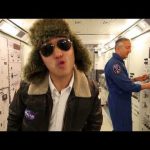
    NASA astronauts and scientists are among those in this educational parody of Psy’s popular music video. “NASA Johnson Style” was created, written and produced by the Houston center’s co-op students who volunteered for the project ” to inform the public about the amazing work going on at NASA and the Johnson Space Center.”

    “NASA Johnson Style” lyrics:

    NASA Johnson Style
    Johnson Style

    Welcome to NASA’s Johnson Space Center
    We are coming in hot so don’t burn up as we enter
    We do science everyday that affects your daily life
    Throw them up for manned space flight

    Science everywhere
    As we engineer the marvels
    That fly though the air
    And take us way beyond earth’s levels

    Science everywhere
    Because we engineer the marvels
    That fly though the air
    Flys us through the air

    Control the mission out of Johnson
    This is ground, hey!
    And this is space, hey!
    Tell me Houston what’s the problem
    It’s okay!
    It’s okay!
    Because there’s flight controllers on the job today

    NASA Johnson STYLE!
    Johnson STYLE!
    NA, NA, NA, NA NASA Johnson STYLE!
    Johnson STYLE!
    NA, NA, NA, NA NASA Johnson STYLE!
    EYYYYYY science daily!
    NA, NA, NA, NA, NASA STYLE!
    EYYYYYY it’s amazing!
    NA, NA, NA, NA ey ey ey ey ey ey!!
    Orbiting earth, international space station
    Where we work and live in space with a crew from several nations
    Got Japanese, and Russians, that European charm
    Throw them up, like the Canada Arm

    Kicking out research
    29k cubic feet, revolves around the earth
    Science microgravity, revolves around the earth
    Columbus, JEM, and Destiny
    Kicking out research
    Kicking out research

    Train the astronauts at Johnson
    To go to space, hey!
    To go to space, hey!
    Cause the missions of tomorrow
    Start today, hey!
    Start today, hey!
    As we engineer the future day by day

    NASA Johnson STYLE!
    Johnson STYLE!
    NA, NA, NA, NA NASA Johnson STYLE!
    Johnson STYLE!
    NA, NA, NA, NA NASA Johnson STYLE!
    EYYYYYY science daily!
    NA, NA, NA, NA, NASA STYLE!
    EYYYYYY it’s amazing!
    NA, NA, NA, NA ey ey ey ey ey ey!!

    Orion or SLS, MPCV
    We cannot feel the floor, cause the lack gravity
    The destinations are an asteroid, mars, or moon
    We are blasting off start the countdown soon
    [Sound clip: launch countdown]

    EYYYYYY science daily!
    NA, NA, NA, NA, NASA STYLE!
    EYYYYYY it’s amazing!
    NA, NA, NA, NA ey ey ey ey ey ey!!
    NASA Johnson Style

    Special thanks to astronauts Tracy Caldwell Dyson, Mike Massimino and Clay Anderson
    Special thanks to Mr. Mike Coats, Dr. Ellen Ochoa, and all supporting senior staff members

    • Category
    Science & Technology
    • License
    Standard YouTube License

  • Teflon Tape Secret Message – Sick Science! #119

    Teflon Tape Secret Message – Sick Science! #119

    Read the full experiment at http://www.stevespanglerscience.com/experiment/teflon-tape-secret-messages
    Plumbers use Teflon Tape to form a water-tight seal and prevent leaking on pipes. Turns out, this plumber’s tool is also a pretty cool example of a polymer that gets lots of use in everyday situations.
    Want more experiments like this? Check out http://www.stevespanglerscience.com/product/naked-eggs-and-flying-potatoes

    Sick Science™ is a trademark of Steve Spangler, inc.

    © 2012 Steve Spangler Science all rights reserved

  • ESA 2012 Highlights

    ESA 2012 Highlights

    2012 has been a very busy and fruitful year for ESA.

    In particular it will remain as a historical year for European launchers since it saw the successful qualification flight of the new Vega from Kourou and the birth of Ariane 6 which was decided at the Ministerial Council in Napoli last November.

    This video proposes to look back at 2012 with an overview of ESA missions and events.

  • This Year @ NASA, 2012

    This Year @ NASA, 2012

    Curiosity Has Landed, Flight of the Dragon, Antares Rolls and so much more…

  • Countdown to Launch on This Week @NASA

    Countdown to Launch on This Week @NASA

    With their launch from Kazakhstan to the International Space Station fast approaching, Expedition 34/35 Soyuz Commander Roman Romanenko, Flight Engineer Tom Marshburn of NASA and Flight Engineer Chris Hadfield of the Canadian Space Agency continue to train and finalize plans for the December 19 flight. Also, Orion taking shape; Mars field trip: GRAIL’s impact; FASTSat’s finale; “Big Wind”; rocket holiday; and more!

  • ESA astronauts training for ISS

    ESA astronauts training for ISS

    ESA astronauts training for International Space Station

    ESA’s human spaceflight programme is gaining experience with long­-duration missions on the International Space Station.

    A new generation of European astronauts will conduct scientific experiments and enjoy orbiting Earth in 2013 and 2014.

    ESA astronaut Luca Parmitano will fly from Baikonur, Russia, next May for six months, followed by ESA astronauts Alexander Gerst and Samantha Cristoforetti in 2014.

    This video shows them training at the Johnson Space Centre in Houston, USA
    and Star City in Moscow, Russia.

    More information can be found on: http://www.esa.int/Our_Activities/Human_Spaceflight

  • Balancing Nails – Sick Science! – #118

    Balancing Nails – Sick Science! – #118

    GET THE KIT HERE: http://www.stevespanglerscience.com/collections/sick-science.html

    Check out the full experiment at http://www.stevespanglerscience.com/experiment/balancing-nails-trick
    The object of the challenge is to balance all of the nails on the head of a single nail. All of the nails have to be balanced at the same time and cannot touch anything but the top of the nail that is stuck in the base. If you’re really ambitious, you can try your luck at our large-scale version using landscape nails and a friend as the base. Enough of this idle chatter… get balancing!

    Want more experiments like this? Check out http://www.stevespanglerscience.com/product/naked-eggs-and-flying-potatoes

    Sick Science™ is a trademark of Steve Spangler, inc.

    © 2012 Steve Spangler Science all rights reserved

  • NASA’s Mars Curiosity Rover Report #17 — December 7, 2012

    NASA’s Mars Curiosity Rover Report #17 — December 7, 2012

    A NASA’s Mars Curiosity rover team member gives an update on developments and status of the planetary exploration mission. The Mars Science Laboratory spacecraft delivered Curiosity to its target area on Mars at 1:31:45 a.m. EDT on Aug. 6, which includes the 13.8 minutes needed for confirmation of the touchdown to be radioed to Earth at the speed of light. The rover will conduct a nearly two-year prime mission to investigate whether the Gale Crater region of Mars ever offered conditions favorable for microbial life.

  • Light Relight – Sick Science! #117

    Light Relight – Sick Science! #117

    Read the full experiment at http://www.stevespanglerscience.com/experiment/flame-light-relight
    There’s a lot of chemistry behind the simple lighting or extinguishing of a flame. Would you believe us if we told you that you could extinguish a flame just by placing it partway into a graduated cylinder? What if we told you that you could relight the fire without a match or lighter? Both propositions seem unlikely, if not downright impossible. With the Flame Light Relight experiment, however, you’ll see how a few household items can mix together and create a fire-based experience you have to see to believe.

    Want more experiments like this? Check out http://www.stevespanglerscience.com/product/naked-eggs-and-flying-potatoes

    Sick Science™ is a trademark of Steve Spangler, inc.

    © 2012 Steve Spangler Science all rights reserved

  • NASA National Native American Heritage Month Profile — Kody Ensley

    NASA National Native American Heritage Month Profile — Kody Ensley

    Kody Ensley works at Johnson Space Center as a software engineer for the Robotics Systems Technology Branch of NASA’s Software, Robotics, and Simulation Division. He works to develop software for Robonaut 2, the humanoid robot currently residing aboard the International Space Station. Ensley is a graduate of Salish Kootenai College in Pablo Montana, where he completed a four-year pilot program in computer engineering for Native American students, which was established through coordination with JSC employees. Ensley completed two internships at JSC and held a co-op position before being hired by the Robotics Systems Technology Branch in July 2012.

  • NASA’s Mars Curiosity Rover Report #16 — November 29, 2012

    NASA’s Mars Curiosity Rover Report #16 — November 29, 2012

    A NASA’s Mars Curiosity rover team member gives an update on developments and status of the planetary exploration mission. The Mars Science Laboratory spacecraft delivered Curiosity to its target area on Mars at 1:31:45 a.m. EDT on Aug. 6, which includes the 13.8 minutes needed for confirmation of the touchdown to be radioed to Earth at the speed of light. The rover will conduct a nearly two-year prime mission to investigate whether the Gale Crater region of Mars ever offered conditions favorable for microbial life.

  • Earth from Space: Special edition

    Earth from Space: Special edition

    Discover more about our planet with the Earth from Space video programme. In this special edition, Andrew Shepherd from the University of Leeds and Erik Ivins from NASA’s Jet Propulsion Laboratory join the show to discuss our planet’s polar ice sheets.

    Their new research shows that melting of the Antarctic and Greenland ice sheets has contributed 11.1 millimetres to global sea levels since 1992.

    For more information, see article Clearest evidence yet of polar ice losses at http://www.esa.int/esaEO/SEMFN0EQZ9H_index_0.html