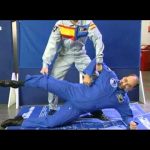
While on board the ISS, Pedro Duque was filmed conducting demonstrations explaining Newton’s Three Laws of Motion – the subject of ISS DVD Lesson 1.
Author: kidibot
-
Mission 1: Newton in Space
While on board the ISS, Pedro Duque was filmed conducting demonstrations explaining Newton’s Three Laws of Motion – the subject of ISS DVD Lesson 1.
-
Mission 1: Newton in Space (Deutsch)
While on board the ISS, Pedro Duque was filmed conducting demonstrations explaining Newton’s Three Laws of Motion – the subject of ISS DVD Lesson 1.
-

Mission 2: Body Space (Italiano)
During the DELTA Mission, André Kuipers performed a number of physiology demonstrations showing the effects of weightlessness on the human body – the theme of DVD Lesson 2.
-

Asteroid News from NASA’s WISE Satellite Headlines the Latest Episode of This week at NASA
Also: Deputy Administrator Lori Garver delivers keynote at Space Launch System Industry Day; flight teams compete for the title, most fuel-efficient aircraft in the world, James Webb Space Telescope gets a new coat; President Obama visit Ames’ Moffett Field; Casualty Drills at Wallops; Dryden honors shuttle workers; Profile: Astronomer Rosa Diaz, and three 135 crew members visit Glenn.
-

Shrinking Head Illusion – Sick Science! #057
For years, Steve has taught people how to shrink and grow heads without actually, you know, permanently changing the size of their head. In addition to being temporary, it’s also an extremely fun optical illusion. In mere moments, you’ll go from staring at a black and white spiral, to a state of shock with this stunning illusion.
Learn more at http://www.stevespanglerscience.com/experiments
Want more experiments like this? Check out http://www.stevespanglerscience.com/product/naked-eggs-and-flying-potatoes
Sick Science™ is a trademark of Steve Spangler, inc.
© 2011 Steve Spangler Science all rights reserved
-

Growing Head Illusion – Sick Science! #056
Learn more at http://www.stevespanglerscience.com/experiments For years, Steve has taught people how to shrink and grow heads without actually, you know, permanently changing the size of their head. In addition to being temporary, it’s also an extremely fun optical illusion. In mere moments, you’ll go from staring at a black and white spiral, to a state of shock with this stunning illusion.
Want more experiments like this? Check out http://www.stevespanglerscience.com/product/fire-bubbles-exploding-toothpaste-book
Sick Science™ is a trademark of Steve Spangler, inc.
© 2011 Steve Spangler Science all rights reserved
-

ESA Euronews: La storia di un satellite
Tutto ha una fine. Per gli uomini ma anche per i satelliti. Dopo sedici anni di fedele servizio, il satellite d’osservazione ERS 2 è condannato a trasformarsi in luce e calore. È l’argomento di questa puntata di Space.
-
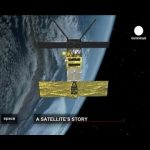
ESA Euronews: La Agencia Espacial Europea se despide de una de sus mejores creaciones
Nada dura eternamente. Eso es igual para las personas como para los satélites. Después de 16 años de un precioso y preciso trabajo, el satélite de observación terrestre ERS 2 está condenado a convertirse en polvo y fuego. En Space.
-
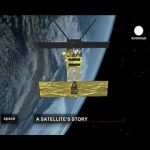
ESA Euronews: A satellite’s story
Everything must come to an end — including satellites. After 16 years of loyal service observing Earth, the ERS-2 satellite has retired.
This edition of Space tells the life story of the venerable satellite. -
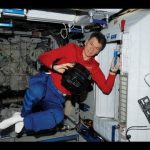
Visit the ISS in 3D with Paolo Nespoli
Paolo Nespoli spent 6 months on-board the International Space Station from Dec 2010 through to May 2011.
In this video he shot using ESA’s Erasmus Recording Binocular (ERB-2) stereoscopic camera during various phases of his MagISStra mission, he caught some moments that depict the work astronauts carry out on the ISS: from educational activities, to scientific experiments and physical training, also demonstrating the way astronauts move in weightlessness through the various modules. ERB-2 is the first camera to transmit 3D images live from space.ESA would like to thank all the astronauts featured in the film: NASA astronauts Catherine (Cady) Coleman, Ron Garan, Scott Kelly and the united ISS Expedition 26-27 and STS-134 crew including ESA astronaut R. Vittori.
-
ESA – Space to Relax / Earth view by Envisat
Images in HD quality taken by the optical and radar instruments on board ESA’s Envisat Satellite orbiting 800 km above the Earth are set to relaxing music.
Originally produced for Lufthansa inflight entertainment (released December 2010). -
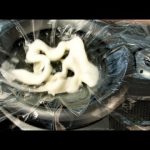
Cornstarch Monster – Sick Science! #055
Learn more at http://www.stevespanglerscience.com/experiment/the-force-of-sound-sick-science If you’ve ever watched an action movie in a theater, you’ve seen and felt an onscreen explosion. Did you know that what you were feeling was actually waves of sound from the theater’s speaker system? We’ll show you how you can visualize the sound vibrations and explain why, even though you can’t always see it, you can feel sound.
Want more experiments like this? Check out http://www.stevespanglerscience.com/product/naked-eggs-and-flying-potatoes
Sick Science™ is a trademark of Steve Spangler, inc.
© 2011 Steve Spangler Science all rights reserved
-
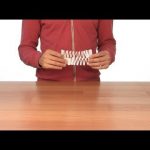
How to Step Through an Index Card – Sick Science! #054
Learn more at http://www.stevespanglerscience.com/experiment/index-card-tricks-sick-science What if we told you that you can fit a quarter through a dime-sized hole in an index card? Would you believe it was possible? It is possible, and we can even show you how to fit your entire body through an index card. Don’t believe us? Try it for yourself!
Want more experiments like this? Check out http://www.stevespanglerscience.com/product/fire-bubbles-exploding-toothpaste-book
Sick Science™ is a trademark of Steve Spangler, inc.
© 2011 Steve Spangler Science all rights reserved
-
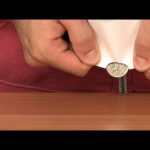
Coin Through Index Card Magic – Sick Science! #053
Learn more at http://www.stevespanglerscience.com/experiment/index-card-tricks-sick-science What if we told you that you can fit a quarter through a dime-sized hole in an index card? Would you believe it was possible? It is possible, and we can even show you how to fit your entire body through an index card. Don’t believe us? Try it for yourself!
Want more experiments like this? Check out http://www.stevespanglerscience.com/product/naked-eggs-and-flying-potatoes
Sick Science™ is a trademark of Steve Spangler, inc.
© 2011 Steve Spangler Science all rights reserved
-
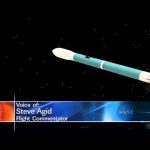
NASA’s GRAIL Spacecraft Launches on Lunar Mission
NASA’s GRAIL spacecraft launched to the moon aboard a United Launch Alliance Delta II rocket on Sept. 10, 2011, from Cape Canaveral Air Force Station, Fla.
GRAIL’s primary science objectives are to determine the structure of the lunar interior, from crust to core, and to advance understanding of the thermal evolution of the moon.
-
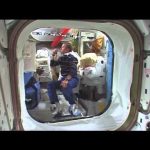
Sept. 11, 2001 Video From the International Space Station
On Sept. 11, 2001, NASA astronaut, Frank Culbertson, was the lone American not on the planet. Culbertson and two Russian cosmonauts were orbiting the Earth aboard the International Space Station as members of the Expedition 3 crew. Included is video captured by Culbertson and crew as they flew over New York City just after the attacks on the World Trade Center. Included is additional footage aboard the ISS, as well as interview excerpts of Culbertson’s recollections ten years later.
-

Water Whistle – Sick Science! #052
Learn more at http://www.stevespanglerscience.com/experiment/water-whistle-sick-science People have told us that we do things to our own tune around Steve Spangler Science. At first we didn’t know what they meant, but then we decided that they had to be talking about our Water Whistle experiment. We’ve created an instrument out of nothing more than a drinking straw and a glass of water. It’s musical and fun as well as a great lesson in vibration, sound, and pitch.
Want more experiments like this? Check out http://www.stevespanglerscience.com/product/fire-bubbles-exploding-toothpaste-book
Sick Science™ is a trademark of Steve Spangler, inc.
© 2011 Steve Spangler Science all rights reserved
-
Magic Rollback Can – Sick Science! #051
Learn more at http://www.stevespanglerscience.com/experiment/magic-rollback-can-sick-science In our long line of “magical” science, we introduce the Magic Rollback Can. The Magic Rollback Can appears to be a normal can of coffee or oats, but after you roll it along the ground a little ways and watch it come back, you’ll be wondering just how it works.
Want more experiments like this? Check out http://www.stevespanglerscience.com/product/naked-eggs-and-flying-potatoes
Sick Science™ is a trademark of Steve Spangler, inc.
© 2011 Steve Spangler Science all rights reserved
-
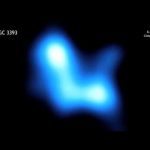
NASA’s Chandra Finds “Nearby” Black Holes
Astronomers using NASA’s Chandra X-ray Observatory have discovered the first pair of supermassive black holes in a spiral galaxy similar to the Milky Way. Approximately 160 million light years from Earth, the pair is the nearest known such phenomenon. The black holes are located near the center of the spiral galaxy NGC 3393. Separated by only 490 light years, the black holes are likely the remnant of a merger of two galaxies of unequal mass a billion or more years ago.
-
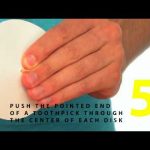
Mysterious Appearing Colors – Sick Science! #050
http://www.stevespanglerscience.com/content/experiment/mysterious-appearing-colors We’ve mixed our share of colors here at Steve Spangler Science. We know that red and blue make purple, blue and yellow make green, and that yellow and red make orange. Most of all, we know that when you mix black and white you get…um…a rainbow.
Want more experiments like this? Check out http://www.stevespanglerscience.com/product/fire-bubbles-exploding-toothpaste-book
Sick Science™ is a trademark of Steve Spangler, inc.
© 2011 Steve Spangler Science all rights reserved
-

First-ever live 3D video stream from space
An ESA-developed camera transmitted live-streaming 3D images for the first time in the history of space travel. On 6 August, NASA astronaut Ron Garan operated the Erasmus Recording Binocular (ERB-2) camera in Europe’s Columbus laboratory, showing the International Space Station as never before in high-definition quality . While talking about the work on board the Station, he enhances the sense of depth and presence by playing with an inflatable Earth globe.
http://www.esa.int/esaCP/SEMWLEOT9RG_index_0.htmlUse red/blue 3D glasses to experience the full 3D experience of this clip.
-
Disappearing Money – Sick Science! #049
Magicians have made money appear from behind ears and out of nostrils for years. And you’ve seen Steve set a $100 bill on fire without harming Mr. Franklin. That’s all well and good, but we want to take your money… er… teach you a trick that uses science to make money “appear” as if it has disappeared.
Learn more at http://www.stevespanglerscience.com/experiment/disappearing-money-sick-science
Want more experiments like this? Check out http://www.stevespanglerscience.com/product/naked-eggs-and-flying-potatoes
Sick Science™ is a trademark of Steve Spangler, inc.
© 2011 Steve Spangler Science all rights reserved
About Steve Spangler…
Steve Spangler is a celebrity teacher, science toy designer, speaker, author and an Emmy award-winning television personality. Spangler is probably best known for his Mentos and Diet Coke geyser experiment that went viral in. Spangler is the founder of www.SteveSpanglerScience.com, a Denver-based company specializing in the creation of science toys, classroom science demonstrations, teacher resources and home for Spangler’s popular science experiment archive and video collection. Spangler is a frequent guest on the Ellen DeGeneres Show and Denver 9 News where he takes classroom science experiments to the extreme. For teachers, parents or DIY Science ideas – check out other sources of learning:
Join the Science Club and check out other cool science experiments at – http://www.SteveSpanglerScience.com
Sign up to receive a FREE Experiment of the Week- http://www.stevespanglerscience.com/experiment-of-the-week
Attend a Spangler Hands-on Science Workshop for Teachers – http://www.stevespanglerscience.com/training
Watch Steve on Local and National Media Appearances on YouTube at: https://www.youtube.com/user/SpanglerScienceTV
-
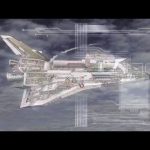
Tribute to the Space Shuttle from the European astronauts
Space Shuttle is perhaps the most complex technological system ever built. In 30 years, it has flown 135 times and helped humankind to dispatch and partially even return many satellites and deep-space probes, to build the International Space Station and to conduct out-of-this-world science. The Shuttle has transported also 24 European astronauts to Earth orbit on 25 missions.
This video highlights these flights with European flavour – from STS-9 in 1983 to STS-134 in last May. -
Opportunity Rover Reaches Martian Crater on This Week @NASA
NASA’s Mars Rover Opportunity has reached its next destination. Three years after climbing out of Victoria crater, Opportunity has completed an eleven-mile trek to the rim of Endeavour crater at a spot informally named “Spirit Point” after the rover’s decommissioned twin.
At 14 miles in diameter, Endeavour has ridges along its western rim that expose rock outcrops older than any Opportunity has seen so far. Also, Future Forum; shuttles nose-to-nose; hydro basin; women of WISH; STEM forum; and engineering interns. Plus, NASA Art! -
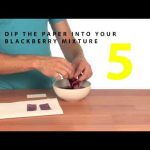
Berry pH Paper – Sick Science! #048
Learn more at http://www.stevespanglerscience.com/experiment/berry-ph-paper-sick-science No longer must you search for specialty litmus paper. Here at Steve Spangler Science, we’ve come up with a formula that will allow you to create your own acid and base detecting litmus paper using little more than a bit of fruit.
Want more experiments like this? Check out http://www.stevespanglerscience.com/product/fire-bubbles-exploding-toothpaste-book
Sick Science™ is a trademark of Steve Spangler, inc.
© 2011 Steve Spangler Science all rights reserved
-
Juno to Jupiter on This Week @NASA
The successful liftoff of the Juno spacecraft from the Kennedy Space Center begins a five-year cruise to the planet Jupiter to investigate the planet’s structure, atmosphere and magnetosphere.
It will also provide detailed images of Jupiter’s surface and capture the first high-resolution views of its poles. Also, possible Martian water flows; Vesta’s new look; oxygen in space; and, Columbia debris. Plus, HQ crew visit; Russians spacewalk; SOFIA ambassadors; new Apollo 15 book; and dunk tank for food. -
Juno Mission Launches to Jupiter
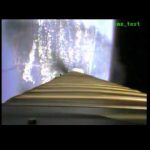
NASA’s Juno spacecraft is on its way to Jupiter after being launched aboard an Atlas V rocket from the Cape Canaveral Air Force Station, Florida on August 5 at 11:25 a.m. Eastern. The solar-powered spacecraft will arrive at Jupiter in July 2016 and orbit its poles 33 times to find out more about the gas giant’s interior, atmosphere and aurora. Scientists believe Jupiter holds the key to better understanding the origins of our solar system.
-
NASA’s MRO Sees Possible Martian Water Flows
Observations from NASA’s Mars Reconnaissance Orbiter, MRO, have revealed possible flowing water during the warmest months on Mars. Scientists discuss the findings at a NASA Headquarters news briefing held August 4, 2011.
Dark, finger-like features appear and extend down some Martian slopes during late spring through summer, fade in winter, and return during the next spring. Repeated observations have tracked the seasonal changes in these recurring features on several steep slopes in the middle latitudes of Mars’ southern hemisphere. -
Match Levitation – Sick Science! #047
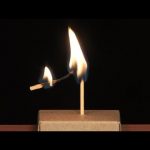
Learn more at http://www.stevespanglerscience.com/experiment/match-levitation-sick-science Whether watching that movie about wizards or catching up on our magic tricks, we love it when things mysteriously rise into the air. We are especially fond of levitation when there are no strings or trickery attached… stuff just starts lifting off of the ground. That’s what happens with the Match Levitation experiment. Truly, there’s nothing up our sleeves. Try it and you’ll see for yourself!
Want more experiments like this? Check out http://www.stevespanglerscience.com/product/fire-bubbles-exploding-toothpaste-book
Sick Science™ is a trademark of Steve Spangler, inc.
© 2011 Steve Spangler Science all rights reserved
-

Falling Ring Catch – Sick Science! #046
Check out http://www.stevespanglerscience.com/experiment/falling-ring-catch-sick-science to learn more about this experiment and to see other cool science experiments. Is it possible to catch a falling ring with a loop of string? Sure it is! It’s going to take a bit of experimentation and trial and error, but you’ll get the hang of it in no time! You’ll see how motion and force can sometimes create unexpected results.
Want more experiments like this? Check out http://www.stevespanglerscience.com/product/naked-eggs-and-flying-potatoes
Sick Science™ is a trademark of Steve Spangler, inc.
© 2011 Steve Spangler Science all rights reserved
-
Atlantis’s Final Landing at Kennedy Space Center
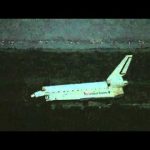
After more than 30 years, the space shuttle era has come to a close. Space shuttle Atlantis and the STS-135 crew landed safely on runway 15 at 5:57 a.m. EDT at Kennedy Space Center’s Shuttle Landing Facility in Florida, ending a 13-day journey of more than five million miles. It was the final and 133rd landing in shuttle history. The STS-135 crew consisted of Commander Chris Ferguson, Pilot Doug Hurley, Mission Specialists Sandra Magnus and Rex Walheim.
-

Desktop Catapult – Sick Science! #045
Want more experiments like this? Check out http://www.stevespanglerscience.com/product/naked-eggs-and-flying-potatoes
Sick Science™ is a trademark of Steve Spangler, inc.
© 2011 Steve Spangler Science all rights reserved
-
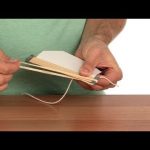
Buzzing Noise Maker – Sick Science! #044
Learn more at http://www.stevespanglerscience.com/experiment/buzzing-noise-maker-sick-science Are you the type that craves attention? Want to make a ton of noise? The Buzzing Noise Maker experiment is perfect for you! The greatest aspect of the Buzzing Noise Maker is that, while you’re attracting all that attention and making all that noise, you can explain it by saying, “Hey! Steve Spangler is teaching me about science.”
Want more experiments like this? Check out http://www.stevespanglerscience.com/product/fire-bubbles-exploding-toothpaste-book
Sick Science™ is a trademark of Steve Spangler, inc.
© 2011 Steve Spangler Science all rights reserved
-
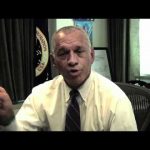
NASA’s Increase of Awesome to Continue
Wondering what’s up post-shuttle, popular Internet vlogger Hank Green of Vlogbrothers gets the straight skinny from Charlie Bolden and others at NASA about the agency’s plans for future human space exploration.
-

STS-135: Final Launch of the Space Shuttle Program
Space shuttle Commander Chris Ferguson and crewmates Pilot Doug Hurley, and Mission Specialists Sandy Magnus and Rex Walheim are on their way to the International Space Station after launching from NASA’s Kennedy Space Center at 11:29 a.m. EDT on Friday, July 8. STS-135 is the final mission of NASA’s Space Shuttle Program.
The 12-day mission will deliver the Raffaello multi-purpose logistics module filled with more than 8,000 pounds of supplies and spare parts to sustain space station operations after the shuttles are retired. STS-135 is the 135th shuttle flight, the 33rd flight for Atlantis and the 37th shuttle mission dedicated to station assembly and maintenance, -
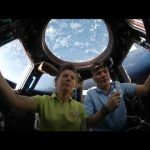
The Journey Continues for NASA’s Human Space Exploration
The crew of STS-135, the final space shuttle mission, talks about the vibrancy of the International Space Station as a stepping stone for NASA’s plans for future human exploration beyond low-Earth orbit.
-
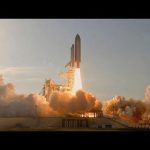
ESA Euronews: Transbordador espacial: el último viaje
Un capítulo de la aventura espacial se cierra con el lanzamiento de la nave estadounidense Atlantis, con el que se pone punto y final a las misiones del transbordador. Ha pervivido durante 30 años, una historia de momentos felices y trágicos.
-
ESA Euronews: Addio, Space Shuttle
Si chiude un capitolo dell’epopea spaziale, con il lancio della navetta americana Atlantis che segna la fine delle missioni dello Space Shuttle. Una storia lunga trent’anni che ha conosciuto i suoi momenti di gloria e le sue tragedie.
-
ESA Euronews: Letzter Flug für das Space Shuttle
Mit dem letzten Start der Weltraumfähre “Atlantis” geht zugleich ein Kapitel in der Geschichte der Weltraumfahrt zuende. Denn der 135. Space-Shuttle-Flug ist der Letzte seiner Art. Zurück liegen drei Jahrzehnte mit ihren Höhepunkten sowie mit ihren Tragödien. Mehr darüber in unserer Rubrik Space.