Chief scientist Waleed Abdalati is among the panelists who talk and answer questions about upcoming NASA science missions.
Author: kidibot
-
Solving Aviation’s Challenges Through NASA Innovation
Ed Waggoner, director of the Integrated Systems Research Program, and John Cavolowsky, director of the Airspace Systems Program, discuss what’s next for NASA in the field of aeronautics research during a briefing to the news media at NASA’s Kennedy Space Center.
-

CD Hovercraft – Sick Science! #043
Check out the experiment at http://www.stevespanglerscience.com/experiment/cd-hovercraft-sick-science We used to think that building our own hovercraft was going to take a couple of trips to NASA. We quickly realized that it was a little iffy having jet engines and ultra-lightweight material anywhere near Steve. We had to develop our own design using everyday materials, and that’s exactly what we did. Using a CD, a balloon, and a few other household items you can create a working hovercraft, too!
Want more experiments like this? Check out http://www.stevespanglerscience.com/product/fire-bubbles-exploding-toothpaste-book
Sick Science™ is a trademark of Steve Spangler, inc.
© 2011 Steve Spangler Science all rights reserved
-
The Space Shuttle (Narrated by William Shatner)
An idea born in unsettled times becomes a feat of engineering excellence. The most complex machine ever built to bring humans to and from space and eventually construct the next stop on the road to space exploration.
-
Spinning Disk Illusion – Sick Science! #042
Download the free templates at http://www.stevespanglerscience.com/diskspinners You might have heard the term, “Faster than the human eye.” But is there really something that can happen so fast that a normal human eye can’t register it? Believe it or not, it’s absolutely possible and the Spinning Disc Illusion is a great way to learn how easily your eyes can be beaten.
Want more experiments like this? Check out http://www.stevespanglerscience.com/product/naked-eggs-and-flying-potatoes
Sick Science™ is a trademark of Steve Spangler, inc.
© 2011 Steve Spangler Science all rights reserved
-
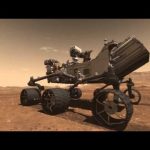
Mars Science Laboratory Curiosity Rover Animation
This 11-minute animation depicts key events of NASA’s Mars Science Laboratory mission, which will launch in late 2011 and land a rover, Curiosity, on Mars in August 2012. A shorter 4-minute version of this animation, with narration, is also available on our youtube page.
-

Homemade Ice Cream – Sick Science! #041
Check out http://www.stevespanglerscience.com/experiment/homemade-ice-cream-sick-science to learn more about this experiment. With 4th of July just around the corner why not have some summer fun and make your own homemade ice cream!
Want more experiments like this? Check out http://www.stevespanglerscience.com/product/fire-bubbles-exploding-toothpaste-book
Sick Science™ is a trademark of Steve Spangler, inc.
© 2011 Steve Spangler Science all rights reserved
-
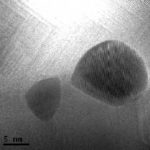
Watch Atoms of Gold on FeO Move Under an Electron Microscope
Watch as atoms of gold particles move under elevated temperatures in a TEM using a Protochips Aduro holder. Near the end 2 gold particles actually merge to form 1.
-
Black Holes and Mercury on This Week @NASA
New pictures and data about the growth of supermassive black holes in galaxies of the early universe join new findings about the planet Mercury are highlighted, along with a look ahead to the final shuttle flight and other NASA events, programs and projects of interest.
-
NASA’s MESSENGER Delivers New Pix, Data from Mercury
NASA reveals new images and science findings from the first spacecraft to orbit Mercury. The MErcury Surface, Space ENvironment, GEochemistry, and Ranging, or MESSENGER spacecraft conducted more than a dozen laps through the inner solar system for six years prior to achieving the historic orbit insertion on March 17.
-
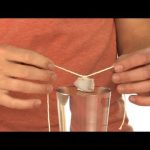
Ice Cube Rope – Sick Science! #040
Learn more at http://www.stevespanglerscience.com/experiment/ice-cube-rope-sick-science Most normal people won’t put effort into trying to catch a solid chunk of ice with a rope. Luckily, we aren’t most people… and we certainly are not normal. Steve and his freeze-ologists wondered if it was possible to pick up an ice cube by using a rope. Seems simple enough. But here’s the catch… you can’t tie the rope around the ice cube! Believe it or not, it is possible!
Want more experiments like this? Check out http://www.stevespanglerscience.com/product/fire-bubbles-exploding-toothpaste-book
Sick Science™ is a trademark of Steve Spangler, inc.
© 2011 Steve Spangler Science all rights reserved
-
Steve Spangler Science Video Rewind
Learn more about Steve at https://www.stevespanglerscience.com/ Through the years, a lot has happened at Steve Spangler Science. We set a Guinness World Record, took 100 teachers on an Alaskan cruise, gave 700 people the experience of laying on a bed of nails, started a war with potato guns, and even had the police called on us… a few times! Here is a look at a few of the fun moments we’ve had!
-

Steve Spangler – Making Science Fun!
Learn more about Steve at http://www.stevespanglerscience.com/ or http://www.stevespangler.com/
About Steve Spangler Science…
Steve Spangler is a celebrity teacher, science toy designer, speaker, author and an Emmy award-winning television personality. Spangler is probably best known for his Mentos and Diet Coke geyser experiment that went viral in 2005 and prompted more than 1,000 related YouTube videos. Spangler is the founder of www.SteveSpanglerScience.com, a Denver-based company specializing in the creation of science toys, classroom science demonstrations, teacher resources and home for Spangler’s popular science experiment archive and video collection. Spangler is a frequent guest on the Ellen DeGeneres Show where he takes classroom science experiments to the extreme. Check out his pool filled with 2,500 boxes of cornstarch!
Cool Science Toys – http://www.SteveSpanglerScience.com
Sign up for the Experiment of the Week – http://www.stevespanglerscience.com/experiment-of-the-week
Watch Spangler’s Science Videos – http://www.stevespanglerscience.com/video/
Attend a Spangler Hands-on Science Workshop for Teachers – http://www.stevespanglerscience.com/teacher_training/
Visit Spangler’s YouTube Channel – http://www.youtube.com/stevespanglerscienceJoin the conversation on Steve Spangler’s blog – http://www.SteveSpangler.com
Additional Information:
On the education side, Spangler started his career as a science teacher in the Cherry Creek School district for 12 years. Today, Steve travels extensively training teachers in ways to make learning more engaging and fun. His hands-on science boot camps and summer institutes for teachers inspire and teach teachers how to prepare a new generation for an ever-changing work force. Over the last 15 years, he has also made more than 500 television appearances as an authority on hands-on science and inquiry-based learning.
On the business side, Spangler is the founder and CEO of Steve Spangler Science, a Denver-based company specializing in the creation of educational toys and kits and hands-on science training services for teachers. The companys unique business strategies and viral creations have been featured in the Wall Street Journal, Inc. Magazine, Wired and TIME Magazine where online readers voted Steve Spangler #18 in the Top 100 Most Influential People of the Year for 2006 (what were they thinking?). You’ll find more than 140 Spangler created products available online at SteveSpanglerScience.com and distributed to toy stores and mass-market retailers worldwide.
Spangler joined NBC affiliate 9News in 2001 as the science education specialist. His weekly experiments and science segments are designed to teach viewers creative ways to make learning fun. His now famous Mentos Geyser experiment, turning 2-liter bottles of soda into erupting fountains, became an Internet sensation in September 2005 when thousands of people started posting their own Mentos explosions on YouTube.com.
As founder of SteveSpanglerScience.com, Spangler and his design team have developed more than 140 educational toys and science-related products featured by mass-market retailers like Target, Wal-Mart, Toys R’ Us, Discovery Channel Stores and over 1,400 independent specialty toy stores. His educational science catalog and on-line business offers more than a thousand science toys and unique learning resources. Recently, Spangler has been featured in the Wall Street Journal, Inc. Magazine, WIRED, the History Channel, Food Network and TIME Magazine where on-line readers voted Steve Spangler #18 in the Top 100 Most Influential People of the Year for 2006.
His recent appearances on the Ellen DeGeneres Show have taught viewers how to blow up their food, shock their friends, create mountains of foam, play on a bed of nails, vanish in a cloud of smoke and how to turn 2,500 boxes of cornstarch and a garden hose into a swimming pool of fun.
-
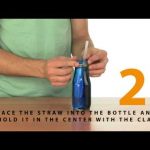
Water Thermometer – Sick Science! #039
Is it possible to make a thermometer out of water? Absolutely! The best part about our Water Thermometer experiment is that you have all the materials you need in your own home. That’s right, you’ll be measuring temperature with this amazing homemade tool in no time.
Want more experiments like this? Check out http://www.stevespanglerscience.com/product/naked-eggs-and-flying-potatoes
Sick Science™ is a trademark of Steve Spangler, inc.
© 2011 Steve Spangler Science all rights reserved
-
Final Shuttle Rollout on This Week @NASA
The final rollout of the Space Shuttle Program has brought Atlantis from the Vehicle Assembly Building to Launch Pad 39A at the Kennedy Space Center for the liftoff of STS-135 targeted for July 8. Mated to its external tank and solid rocket boosters, the orbiter traveled the 3.4-miles atop a crawler-transporter at a top speed of less than a mile an hour. Also, farewell to Spirit; cave research; lunabotics, and aviation history revisited.
-

Balloon Expansion – Sick Science! #038
Is there a way to see air changing? Sure, there are clouds and fog, but those are particles of water. Does anything happen to air when it gets cooled or heated? We’ve come up with a great way to see how air changes when it gets hotter and colder… and you can do it all with just a few things you probably already have in your house!
Want more experiments like this? Check out http://www.stevespanglerscience.com/product/fire-bubbles-exploding-toothpaste-book
Sick Science™ is a trademark of Steve Spangler, inc.
© 2011 Steve Spangler Science all rights reserved
-
STS-134: Space Shuttle Endeavour’s last Mission
The best of the best, it’s a compilation of the featured moments captured by NASA Television during the mission of Endeavour and its six-man crew to the International Space Station.
-

Light Writer – Sick Science! #037
Have you ever tried writing in the dark? Even something as simple as your own name might turn out looking like you were writing in an earthquake. We knew there had to be a better way, and after giving Steve and his team a bit of time they came up with a beautiful and amazing solution – Light Writer. It’s a phenomenal trip into the world of optics, photography, and fun.
Want more experiments like this? Check out http://www.stevespanglerscience.com/product/naked-eggs-and-flying-potatoes
Sick Science™ is a trademark of Steve Spangler, inc.
© 2011 Steve Spangler Science all rights reserved
-

Weather and Science Day 2011 – Steve Spangler
Learn more about the event at http://www.stevespangler.com/special-science-event/weather-and-science-day-2011-erupting-clouds-giant-smoke-rings-and-exploding-trash-cans-captivate-huge-audience/
Steve Spangler along with his Demo Team and 9News Meteorologist Kathy Sabine, put on the 2nd annual Weather and Science Day at Coors Field in Colorado on May 17th, 2011. Thanks to Colle McVoy, Steve was able to borrow the worlds largest smoke ring launcher to fire 9′ smoke rings into the crowd. 10,000 people showed up for the pre-game event and using Boom Whackers, created the biggest drum circle ever seen… or heard!
-

Welcome home, Paolo!
ESA astronaut Paolo Nespoli landed back on Earth this morning to conclude his 159-day mission to the International Space Station.
Paolo had been serving as the flight engineer for Expeditions 26 and 27 since December. Paolo’s MagISStra mission, the third long mission by a European astronaut on the Station, came to end at 04:27 CEST (02:27 GMT) on the steppes of Kazakhstan as the Soyuz TMA-20 spacecraft fired its retrorockets for a soft landing.
ESA astronaut Paolo Nespoli landed back on Earth this morning to conclude his 159-day mission to the International Space Station.
Paolo had been serving as the flight engineer for Expeditions 26 and 27 since December. Paolo’s MagISStra mission, the third long mission by a European astronaut on the Station, came to end at 04:27 CEST (02:27 GMT) on the steppes of Kazakhstan as the Soyuz TMA-20 spacecraft fired its retrorockets for a soft landing.
Paolo and crewmates Soyuz Commander Dmitri Kondratyev and NASA’s Cady Coleman boarded the Soyuz on Monday night and undocked from the Station’s nadir
Rassvet port at 23:35 CEST (21:35 GMT). -
Aquarius Nears on This Week @NASA
Scientists from Argentina, Brazil, Canada, France and Italy were at NASA Headquarters in Washington to discuss their upcoming international spacecraft mission, Aquarius/SAC-D. Scheduled to launch June 9th, the spacecraft’s primary instrument will scan the world’s oceans to measure surface salinity, important to ocean circulation and climate. Also, Atlantis’ final rollover; Bolden checks out Juno; lowering the booms; astronauts as aquanauts; Houston’s hero; a new STORRM on station; Goddard open house; and remembering JFK’s challenge to America.
-
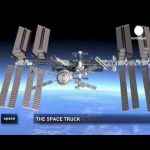
ESA Euronews: El camión del espacio
El vehículo de carga europeo ATV es el vehículo más complejo jamás construido para abastecer la Estación espacial Internacional. Pudiendo llevar cerca de 8 toneladas de carga, el ATV es capaz de realizar maniobras que requieren cierta inteligencia artificial. El camión del Espacio y su posible evolución, esta semana en « Space. »
-
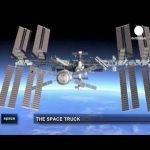
ESA Euronews: Il camion dello spazio
Il cargo spaziale europeo ATV è il veicolo piu’ complesso mai concepito per rifornire la Stazione Spaziale Internazionale. Potendo stivare 8 tonnellate di carico è capace di manovre gestite da una speciale intelligenza artificiale. Il camion dello spazio e le sue evoluzioni, è il tema di questa edizione di Space.
-

ESA Euronews: Der Lastwagen des Weltraums
Der europäische Raumfrachter ATV ist ein hochkomplexes Fahrzeug, das die Internationale Raumstation ISS versorgt. Der ATV-Transporter kann bis zu acht Tonnen Fracht ins All bringen und dank künstlicher Intelligenz selbstständig manövrieren. Der Lastwagen des Weltraums und seine Entwicklung, in dieser Ausgabe von Space.
-
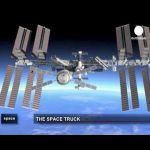
ESA Euronews: The Space Truck
The European cargo spacecraft ATV is the most complex vehicle ever built to re-supply an International Space Station.
It can take nearly eight tonnes of cargo and uses artificial intelligence to accomplish some of its more complicated manoeuvres.
The Space Truck and its possible developments are the theme of this episode of ‘Space’. -
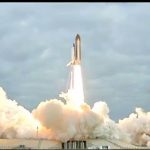
“Endeavour” roars up to sky with Roberto Vittori and AMS-02
Space Shuttle “Endeavour” was launched to space at 14:56 CEST (12:56 GMT) on 16 May from Kennedy Space Center in Florida.
The 16-day-long STS-134 mission will deliver AMS-02, a big cosmological instrument to the Space Station and its crew includes ESA’s Italian astronaut Roberto Vittori. This is the last flight of “Endeavour”. -
STS-134 Gets New Launch Date on This Week @NASA
The launch of space shuttle Endeavour on STS-134 has been rescheduled for May 16th. Launch is scheduled for 8:56 a.m. Eastern. Also, NASA’s Gravity Probe B mission confirms two aspects of Albert Einstein’s theory of general relativity. Plus, two Mercury explorers honored; Young innovators recognized; ISS honored; NextGen Day; rotocraft research; FIRST finals; and HQ Cyber Café.
-
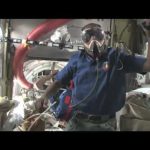
STS-133: Discovery’s Farewell
Join Commander Steve Lindsey and his crew of Pilot Eric Boe, and Mission Specialists Alvin Drew, Steve Bowen, Mike Barratt and Nicole Stott as they journey to and from the International Space Station. Set to music, the video celebrates the final mission of space shuttle Discovery as it logs the last of its 365 days in flight.
-
Einstein Passes Tests by NASA’s Gravity Probe B
NASA’s Gravity Probe B (GP-B) spacecraft has confirmed two key predictions derived from Albert Einstein’s general theory of relativity. Launched in 2004, GP-B was designed to test Einstein using four ultra-precise gyroscopes to measure the hypothesized geodetic effect, which is the warping of space and time around a gravitational body, and frame-dragging, which is the amount a spinning object pulls space and time with it as it rotates. (News briefing held May 4, 2011 at NASA Headquarters in Washington.)
-
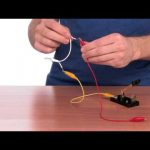
Making a Circuit – Sick Science! #036
Ever wonder how light switches really work? Using some christmas lights, a couple alligator clips, a battery, and a switch, you can build your own circuit at home.
Want more experiments like this? Check out http://www.stevespanglerscience.com/product/fire-bubbles-exploding-toothpaste-book
Sick Science™ is a trademark of Steve Spangler, inc.
© 2011 Steve Spangler Science all rights reserved
-
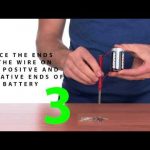
Homemade Magnet – Sick Science! #035
With nothing more than a battery, a nail, and a little wire, you can make your very own magnet.
Want more experiments like this? Check out http://www.stevespanglerscience.com/product/naked-eggs-and-flying-potatoes
Sick Science™ is a trademark of Steve Spangler, inc.
© 2011 Steve Spangler Science all rights reserved
-
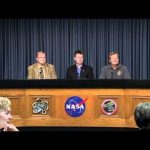
NASA Delays Shuttle Launch; No New Date Set
Briefing held at NASA’s Kennedy Space Center on Sunday, May 1, during which shuttle program officials outline work remaining to resolve an electronics problem that scrubbed Friday’s launch try. A new date for space shuttle Endeavour’s launch on STS-134 has not yet been set.
-
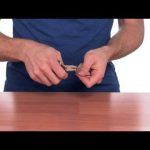
World’s Simplest Motor Version 01 – Sick Science! #034
When it comes to creating something out of nothing, Steve Spangler takes the cake. The Steve Spangler Science team recently challenged Steve to create a simple homopolar motor by using objects that he could find around his home. The trick to homopolar motors is the use of electromagnets and a lack of polarity change. It’s complicated, so we were sure that Steve would have trouble. Much to the surprise of everyone, Steve not only accomplished the (what we thought to be) impossible, but he did it twice. Steve was so proud that he wanted to give both of his designs to you. It’s a Sick Science 2-for-1 with the Electromagnetic Motor.
Want more experiments like this? Check out http://www.stevespanglerscience.com/product/fire-bubbles-exploding-toothpaste-book
Sick Science™ is a trademark of Steve Spangler, inc.
© 2011 Steve Spangler Science all rights reserved
-
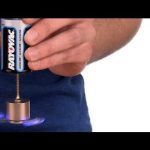
World’s Simplest Motor Version 02 – Sick Science! #033
When it comes to creating something out of nothing, Steve Spangler takes the cake. The Steve Spangler Science team recently challenged Steve to create a simple homopolar motor by using objects that he could find around his home. The trick to homopolar motors is the use of electromagnets and a lack of polarity change. It’s complicated, so we were sure that Steve would have trouble. Much to the surprise of everyone, Steve not only accomplished the (what we thought to be) impossible, but he did it twice. Steve was so proud that he wanted to give both of his designs to you. It’s a Sick Science 2-for-1 with the Electromagnetic Motor.
Want more experiments like this? Check out http://www.stevespanglerscience.com/product/naked-eggs-and-flying-potatoes
Sick Science™ is a trademark of Steve Spangler, inc.
© 2011 Steve Spangler Science all rights reserved
-
NASA Awards to Develop Commercial Crew Transport
A briefing at the Kennedy Space Center details NASA’s recent awards of more than $269 million for the continued development of commercial transportation systems to carry astronauts to and from low-Earth orbit. Four U.S. companies received the awards in the second round of NASA’s Commercial Crew Development, or CCDev, effort. Commercial crew transport will free NASA to concentrate on developing and building new technologies for human exploration beyond low-Earth orbit.
-

GOCE: Geoid
Launched on 17 March 2009, ESA’s Gravity field and steady-state Ocean Circulation Explorer (GOCE) is bringing about a whole new level of understanding of one of Earth’s most fundamental forces of nature: the gravity field. Dubbed the ‘Formula 1’ of satellites, GOCE is mapping Earth’s gravity field in unprecedented detail.
This has given rise to a unique model of the ‘geoid’, which is the surface of an hypothetical global ocean in the absence of tides and currents, shaped only by gravity. It is a crucial reference for measuring ocean circulation and sea-level change, which are affected by climate change.
The colours in the image represent deviations in height ( -100 m to + 100 m) from an ideal geoid. The blue colours represent low values and the reds/yellows represent high values.
See also: Earth’s gravity revealed in unprecedented detail at: http://www.esa.int/esaCP/SEM1AK6UPLG_index_0.html
-
NASA: Increasing the Awesome
Contemplating the ritual of sending Washington a check every April 15, popular Internet vlogger Hank Green of Vlogbrothers explains why he believes NASA is worth every .45 penny of your hard-earned tax dollar.
-
Film Canister Explosion – Sick Science! #032
What happens when you have a build-up of gas? Don’t answer that question! The gas in question is carbon dioxide and the explosion is nothing short of fun. Warning: It’s impossible to do this activity just once. It is addicting and habit-forming. Proceed at your own risk!
Want more experiments like this? Check out http://www.stevespanglerscience.com/product/fire-bubbles-exploding-toothpaste-book
Sick Science™ is a trademark of Steve Spangler, inc.
© 2011 Steve Spangler Science all rights reserved
-
Endeavour Ready to Go on This Week @NASA
April 29 is the official launch date for space shuttle Endeavour on STS-134. That announcement came at the conclusion of the mission’s Flight Readiness Review, where shuttle managers expressed satisfaction with the preparations for the program’s next-to-last flight. Launch is scheduled for 3:47 p.m. Eastern. Also, developing new ways to low-Earth orbit; putting the freeze on Webb’s mirror; Hubble turns 21; NASA’s Earth Day; soaring student rockets; do the Logo Motion; and Yuri’s Night at Langley.
-
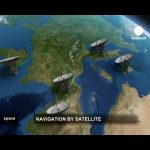
ESA Euronews: la Navegación por Satélite
En nuestros días el GPS es una herramienta muy útil. Los europeos han querido afinar su pecisión desarrollando el sistema EGNOS, precursor de la Constelación Galileo. En esta edición de “Space” podrá descubrir cómo funciona la navegación por satélite y sus aplicaciones.