Our Artemis I mega Moon rocket is rolled to the launch pad, the astronauts of our Crew-2 mission come to Washington, and investigating the impact of dust on our climate … a few of the stories to tell you about – This Week at NASA!
In this week’s edition of the Earth from Space programme, the Copernicus Sentinel-1 mission takes us over Singapore, the only city-island-nation and one of the busiest ports in the world.
We are Europe’s gateway to space. Our mission is to shape the development of Europe’s space capability and ensure that investment in space continues to deliver benefits to the citizens of Europe and the world. Check out https://www.esa.int/ to get up to speed on everything space related.
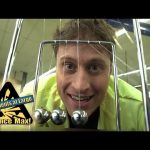
Newton’s Craddle’s are lots of fun, but do you know what’s more fun? A GIANT Newton’s Cradle! Check out this maxed out demonstration of Newton’s 3rd Law!
Have you ever done a science experiment and wondered “What would this be like if it were HUGE?” Welcome to Science Max, the exciting new series that turbocharges all the science experiments you’ve done at home.
Integritatea academică este înțeleasă, în sens larg, ca un cod moral aplicabil spațiului universitar, dar și angajamentul membrilor comunității academice față de un comportament onest și moral. La polul opus, lipsa de onestitate academică se poate manifesta prin orice acțiune sau comportament care urmărește obținerea unui avantaj academic nemeritat sau denaturarea rezultatelor evaluării studenților și, implicit, ierarhizarea și clasificarea acestora. _____________ Despre invitată: Emilia Șercan este jurnalist de investigație cu o experiență de 25 de ani și lector la Facultatea de Jurnalism și Științele Comunicării din cadrul Universității din București. Deține titlul de doctor în Științele comunicării, obținut în anul 2013, iar în 2015 și-a publicat teza de doctorat sub titlul „Cultul secretului. Mecanismele de cenzură în presa comunistă”, la Editura Polirom. A lucrat în presă centrală la Curierul Național, Evenimentul zilei și Grupul Realitatea-Cațavencu, iar de șase ani colaborează cu PressOne, unde publică anchete despre plagiat și învățământul academic. Până în prezent a expus zeci de cazuri de plagiat în tezele de doctorat ale mai multor politicieni sau persoane publice și a publicat peste 4.000 de investigații jurnalistice, interviuri, analize, editoriale și știri. În 2017 a publicat cartea „Fabrica de doctorate sau cum se surpă fundamentele unei nații”, iar anul acesta a lansat cartea „Cazul Ponta. Reconstituirea celui mai infam plagiat din istoria României”, ambele apărute la Editura Humanitas. A câștigat mai multe burse, atât ca profesor, cât și ca jurnalist: bursier al Departamentului de Stat al SUA la Universitatea din Ohio (2016); bursier al statului francez la Universitatea Standhal Grenoble 3 (2012 – 2013); bursier Freedom House în SUA (2004).
De asemenea, a fost distinsă cu mai multe premii profesionale și academice: Jurnalistul anului (2016), Premiul pentru libertatea de exprimare (2016), Premiul pentru jurnalism „Ion Rațiu” (2016), Profesorul Anului (2017), Premiul „Nicolae Iorga” al Societății Române de Științe Istorice, Premiul European Network for Academic Integrity (ENAI) (2019), Premiul Grupului pentru Dialog Social (2019), premiul Asociației Inițiativa pentru Cultură Democratică Europeană (2020) și premiul International Anti-Corruption Day din partea Ambasadei SUA în România (2020).
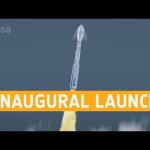
This animated preview of flight VV21 illustrates gantry rollout and liftoff from Europe’s Spaceport in French Guiana, stage and fairing separations, and deployment of the Italian Space Agency’s LARES-2 scientific payload and six research CubeSats. Vega-C represents a dramatic capability boost compared to its predecessor, Vega, which has flown since 2012. With new first and second stages and an uprated fourth stage, Vega-C increases performance from Vega’s 1.5 t to about 2.2 t in a reference 700 km polar orbit and handles larger payloads.
We are Europe’s gateway to space. Our mission is to shape the development of Europe’s space capability and ensure that investment in space continues to deliver benefits to the citizens of Europe and the world. Check out https://www.esa.int/ to get up to speed on everything space related.
Satellite images of our planet have become essential to our survival, offering a new outlook of our world. With rising seas being one of the biggest threats to society, satellite altimeter missions such as Copernicus Sentinel-6 are essential in monitoring global and regional changes in sea level.
Unbeknown to many, the island of Crete, Greece, plays an important role in the Copernicus satellite altimetry constellation and on an international stage. Satellite altimetry data have to be continuously monitored at the ESA’s Permanent Facility for Altimetry Calibration where different techniques have pioneered the use of transponders to provide the best measurements to validate satellite altimeters in space soon after launch.
This documentary explains how measurements are taken from the top of the White Mountains to make sure users get the best data on sea height from satellite altimetry.
It features interviews with Craig Donlon, Head of ESA’s Earth Surfaces and Interior Earth and Mission Science Division and Stelios Mertikas, Director of Laboratory of Geodesy & Geomatics Engineering at the @Technical University of Crete.
We are Europe’s gateway to space. Our mission is to shape the development of Europe’s space capability and ensure that investment in space continues to deliver benefits to the citizens of Europe and the world. Check out https://www.esa.int/ to get up to speed on everything space related.
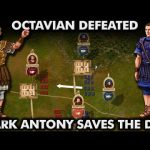
🚩 The climactic battle in the war that followed the assassination of Julius Caesar in 44 BCE, the Battle of Philippi’s bloody outcome would decide the future of the Rome. Will the 500-year old Republic survive or will Rome become a monarchy in all but name?
An important target date for the James Webb Space Telescope, an update about the next generation of spacesuits, and testing our lunar-roving robot … a few of the stories to tell you about – This Week at NASA!
We are Europe’s gateway to space. Our mission is to shape the development of Europe’s space capability and ensure that investment in space continues to deliver benefits to the citizens of Europe and the world. Check out https://www.esa.int/ to get up to speed on everything space related.
This Pride Month, NASA celebrates the significant contributions of LGBTQ+ employees, respects the individuality of our employees, and recognizes their contributions to advance NASA’s priorities.
We support the positive movement to promote self-affirmation, dignity, equal rights, build community and create awareness for diversity and gender variance.
At NASA, we support our employees’ authenticity in the workplace and treat authenticity with integrity. This includes pronoun usage and the shift to foster a culture based on the employee’s identification and build an inclusive workplace with pronoun usage as the rule for everyone. In an environment that promotes safety in being one’s whole self, employees can be seen, respected, and valued, which elevates collaboration, innovation, and performance.
Despite the obstacles in achieving full acceptance and protections for the LGBTQ+ community, the progress made over the past decades has been significant, yet the work continues. Together we rise to achieve our goals as one NASA.
Pe de altă parte, cum poate contribui educația la pregatirea viitorului? Educația nu este o anexă a economiei ; ea nu trebuie judecată doar în funcție de calitatea și de eficiența cu care formează forța de muncă pentru economia viitorului. Educația trebuie să contribuie major la construirea identității (individuale sau de grup), la dezvoltarea plenară a personalității umane. Identitatea este cel puțin la fel de importantă ca și angajabilitatea. Ce competențe trebuie formate azi în educație pentru ca să ne fie bine în economia de mâine? Este foarte greu să știm ce competențe concrete sunt necesare. Toți cei care propun un set de competențe au in minte un anumit tip de viitor. Iar daca el nu are loc, toata construcția e un eșec. Putem să stabilim un set de meta-competențe, adică un tip special de competențe care pot genera ad hoc competențele adecvate în funcție de cum se configurează viitorul, atunci când se configurează. În opinia noastră, acestea sunt următoarele: autodisciplina, antreprenoriatul, gândirea de designer și autonomia. ________________ Despre invitat Mircea Miclea este absolvent al Universității „Babeș-Bolyai” din Cluj-Napoca. Din 1995, este doctor în psihologie al aceleiași universități. S-a perfecționat, urmând cursuri postuniversitare la Colegiul Noua Europă (1998-1999) și ca bursier la Netherlands Institute of Advanced Studies (1999-2000). În anul 2004, a absolvit un Masterat în Administrarea Afacerilor, la Universitatea Babeș-Bolyai din Cluj-Napoca. În perioada 2001-2004, a deținut funcția de cancelar general al Universității Babeș-Bolyai din Cluj-Napoca. Mircea Miclea a fost Ministru al Educației și Cercetării și a elaborat mai multe strategii și rapoarte naționale în domeniul educației. Este psiholog principal cu experiență vastă de practician și formator în psihoterapie, fiind titular la mai multe discipline de specialitate (ex. Modificări cognitiv-comportamentale, Psihoterapie cognitiv-comportamentală) și formator pentru alte cursuri acreditate de Colegiul Psihologilor din România (ex. Metode online de prevenție și psihoterapie a anxietății).
Mircea Miclea este directorul unui centru de cercetare-dezvoltare în domeniul psihologiei, Cognitrom, unde a coordonat dezvoltarea mai multor platforme inovatoare de evaluare și intervenție psihologică computerizată pentru copii, adolescenți și adulți utilizate la nivel național, în instituții publice și private. Prof. Miclea este autor și coautor la numeroase lucrări științifice publicate în jurnale naționale și internaționale și membru fondator al jurnalului științific „Cognition, Brain, Behavior: An Interdisciplinary Journal”. Este laureatul Premiului Elisabeth Pilkington Rațiu pentru Sănătate Mintală 2017, o recunoaștere pentru „contribuția la dezvoltarea și promovarea intensivă a cercetării în domeniul Psihologiei, susținând avansarea cunoașterii precum și formarea tinerilor cercetători și specialiști.
Live from Johnson Space Center in Houston, we’ll announce the company, or companies, that will move forward in developing the next generation of spacesuits for the International Space Station and for Artemis missions at the Moon.
Teams are developing new spacesuits to unlock new spacewalk capabilities outside the International Space Station and allow humans to explore the lunar surface. Under Artemis, new exploration spacesuits, together with human surface mobility systems, the Space Launch System rocket, the Orion Spacecraft, ground systems, Gateway, and human landing systems, will enable NASA to establish a long-term presence at the Moon and to eventually explore Mars.
Interview with ESA astronaut Matthias Maurer after the conclusion of his 177-day mission on the International Space Station. During his time in orbit, Matthias supported over 35 European experiments and even more international experiments on board. The outcomes of these experiments will advance our knowledge in areas ranging from human health to materials science, benefiting life on Earth and the future of space exploration. Other highlights included his spacewalk to improve and maintain the Space Station.
We are Europe’s gateway to space. Our mission is to shape the development of Europe’s space capability and ensure that investment in space continues to deliver benefits to the citizens of Europe and the world. Check out https://www.esa.int/ to get up to speed on everything space related.
🚩 With the decline of the Byzantine Empire, the Bulgarian and Serbian states were gradually losing their power, while the young Ottoman state began its conquest of the Balkan lands. Clashes between Ottomans and Serbs, beginning from the 1350’s, led to the gory Battle of Maritsa on 26 September 1371. Some of the powerful Serbian Principalities became vassals of the Ottoman State, while other rallied under the banner of Prince Lazar to stop the Ottomans in the battle of Kosovo…
A commercial crew spacecraft’s historic test mission, recognizing the leadership of our James Webb Space Telescope team, and a small spacecraft prepares for a unique mission around the Moon … a few of the stories to tell you about – This Week at NASA!
Producer: Andre Valentine Editor: Sonnet Apple Music: Universal Production Music
0:00 Introduction 0:15 Boeing’s CST-100 Starliner’s Historic Test Mission 1:28 NASA’s Webb Program Director Named to TIME100 List 2:01 CAPSTONE CubeSat Prepares for Lunar Flight 2:41 NASA-Supported Solar Sail Could Take Science to New Heights 3:09 Ingenuity Mars Helicopter Captures Video of Record Flight
Earth’s oceans are huge heat stores, soaking up 93% of the excess heat from human activity over the past 70 years. Ocean currents redistribute heat around the planet, from the Equator to the poles. Where this ocean heat goes influences weather patterns and regional climate. As well as absorbing heat, oceans are a natural carbon sink, absorbing a quarter of carbon dioxide emissions from human activity. This has led to the acidification of ocean water, threatening marine life.
The amount of heat and carbon dioxide absorbed depends on a number of ocean variables, all of which can be measured from space.
We are Europe’s gateway to space. Our mission is to shape the development of Europe’s space capability and ensure that investment in space continues to deliver benefits to the citizens of Europe and the world. Check out https://www.esa.int/ to get up to speed on everything space related.
Watch the landing of Boeing’s uncrewed Starliner, targeted at 6:49 p.m. EDT (22:49 UTC) at White Sands Space Harbor at the U.S. Army’s White Sands Missile Range in New Mexico. This return to Earth will wrap up the six-day Orbital Flight Test-2, which will provide valuable data toward NASA certifying Boeing’s crew transportation system for regular flights with astronauts to and from the International Space Station.
Boeing’s Starliner launched to the space station on Thursday, May 19 aboard a United Launch Alliance Atlas V rocket, and docked to the orbiting laboratory on Friday, May 20. The crew opened Starliner’s hatch on Saturday, May 21. The spacecraft will return home with more than 600 pounds of cargo, including Nitrogen Oxygen Recharge System reusable tanks that provide breathable air to station crew members. The tanks will be refurbished on Earth and sent back to station on a future flight.
UNDE SCRIE? Pot scrie chiar orice pe Facebook sau pe Insta? Pățesc ceva dacă distribui un clip porno pe whatsapp? Au voie părinții să controleze mesajele copiilor din telefon? De la ce vârstă am voie să merg cu bicicleta sau trotineta electrică pe stradă? Unde reclam când văd pe cineva că este bătut? Ce se întâmplă dacă sun aiurea la 112? Poate fi obligat elevul de către profesor să deschidă camera video la o lecţie online? Ce se întâmplă cu minorul în caz de divorț al părinților? Mă pot angaja fără contract de muncă? Unde reclam că un produs cumpărat este defect? Care e diferența dintre judecător și procuror? Ce este o percheziție? Cum pot autoritățile să asculte o convorbire telefonică? Chiar sunt toate legile obligatorii? Ce înseamnă că sunt citat la tribunal? Câte legi există în România și unde le găsesc?
REALITATEA ÎN CIFRE: A crescut alarmant numărul minorilor implicați în litigii judiciare. Dacă este să ne referim doar la cauzele penale, statisticile ne arată că în fiecare an aproximativ 4.000 de copii sunt victimele unor răufăcători și alți 3.500 de copii sunt ei înșiși infractori. Mai exact, în fiecare zi în România este trimis în judecată câte un inculpat care omoară un copil; un altul care agresează sexual un minor; încă unul care fură bunuri de la un minor sau îl tâlhăreşte. În fiecare an înregistrăm 200 de dosare cu minori care sunt loviţi sau răniţi fizic în mod grav. Anual, 100 de adulţi sunt trimişi în judecată pentru producerea de fotografii sau filme pornografice cu minori. În faţa instanţelor ajung anual peste 300 de dosare privind minori traficaţi. Părinţii divorţaţi evită plata pensiei de întreţinere datorată minorilor în peste 500 de situații anual care devin cazuri judiciare. Zilnic sunt trimişi în judecată cinci minori pentru comiterea infracţiunilor de furt, alţii doi pentru tâlhărie și încă un minor care comite o lovire sau vătămare corporală. O dată la fiecare trei zile un minor este adus în faţa judecătorului pentru că a comis un act sexual cu privire la un alt minor şi un altul pentru că a comis un viol. O dată la patru zile un minor este trimis în judecată pentru că a omorât o altă persoană. În fiecare an sunt acuzați penal peste 100 de minori care sunt prinşi la volan fără permis.
SOLUȚIA? Educație juridică pentru elevi și tineri, cât mai devreme: -non-formal, prin proiecte de educație juridică desfășurate de magistrați, avocați, studenți la drept. Cel mai vechi și cel mai cunoscut program este cel inițiat de asociația VeDem Just, fondată de un grup de juriști, profesori și elevi. – formal, prin educația juridică ca opțional, cu ajutorul profesorilor instruiți de asociația VeDem Just.
Inițiatorul proiectului: CRISTI DANILEȚ: judecător din 1998, specializat în justiție juvenilă, doctor în drept, fost consilier al ministrului justiției și fost membru ale al CSM. Este militant pentru independența justiției și responsabilitatea magistraților. Este autorul ghidului „Elevul și Legea” și al aplicației pentru mobil „Lege-n-Dar”, instructor legal pentru cadre didactice în proiectul „Profu` de juridică” și mentor al adolescenților în proiectul „Summer Legal Academy”. Comunică cu vârstnicii pe blog și Facebook, iar cu tinerii pe Insta și TikTok. Tatăl a două tinere, în vârstă de 24 și 21 de ani.
Using information from ESA’s Swarm satellite mission, scientists have discovered a completely new type of magnetic wave that sweeps across the outermost part of Earth’s outer core every seven years. This fascinating finding opens a new window into a world we can never see. This mysterious wave oscillates every seven years and propagates westward at up to 1500 kilometres a year.
We are Europe’s gateway to space. Our mission is to shape the development of Europe’s space capability and ensure that investment in space continues to deliver benefits to the citizens of Europe and the world. Check out https://www.esa.int/ to get up to speed on everything space related.
Cercetare sau industrie? Care este viitorul tinerilor pasionați de fizică? Asociația Studenților Fizicieni organizează prima ediție Argo, festivalul ce-și propune promovarea științei în rândul Clujenilor și nu numai. Tinerii Bogdan Teodorescu si Mihnea Moruz abordează această temă în cadrul unei discuții cu fizicianul Cristian Presură
🚩 Play Call of War for FREE on PC or Mobile: 💥 https://callofwar.onelink.me/q5L6/HistoryMarche Receive an Amazing New Player Pack, only available for the next 30 days! Thanks to Call of War for sponsoring this video! 👇 Push down for more cool stuff 👇
🚩 After the defeat at Dara the year prior, the Sassanian King of Kings Kavad I was eager to regain the initiative in the war against the Eastern Roman Empire. His plan was to send an army along the Euphrates and strike deep into Syria, with the ultimate objective being to capture Antioch and cut the Romans off from Palestine and Egypt. But the local Roman garrisons spotted the Persian army and relayed the message to Belisarius, who made way to intercept Kavad’s army in Syria.
The next commercial crew test mission to the space station, outlining the agency’s objectives for deep space exploration, and covering the total lunar eclipse on Earth and from space … a few of the stories to tell you about – This Week at NASA!
Watch as astronaut Thomas Marshburn reads out loud from the children’s book “Goodnight Moon” by Margaret Wise Brown while floating in microgravity aboard the International Space Station. Also, Astronaut Mark Vande Hei joins Thomas to answer questions sent to them. This video was featured as a part of the Crayola and Harper Kids “Read Along, Draw Along” event to commemorate the 75th anniversary of the book’s publication. Astronauts will return to the Moon as part of the Artemis program. Artemis I will be an important step in NASA’s goal to land the first woman and the first person of color on the Moon, and establish long-term lunar exploration. This mission will be the first flight test of the integrated Orion spacecraft and Space Launch System rocket.
Watch as astronaut Thomas Marshburn reads out loud from the children’s book “Goodnight Moon” by Margaret Wise Brown while floating in microgravity aboard the International Space Station. This video was featured as a part of the Crayola and Harper Kids “Read Along, Draw Along” event to commemorate the 75th anniversary of the book’s publication. Astronauts will return to the Moon as part of the Artemis program. Artemis I will be an important step in NASA’s goal to land the first woman and the first person of color on the Moon, and establish long-term lunar exploration. This mission will be the first flight test of the integrated Orion spacecraft and Space Launch System rocket.
ESA’s Juice mission has entered its final phase of development, with the spacecraft moving to an @Airbus Defence and Space facility in Toulouse, France, for the next round of testing. The spacecraft has been fully integrated, and these tests will be done in full flight configuration, as Juice is scheduled for launch from Europe’s Spaceport in Kourou, French Guiana, in April 2023.
The Juice mission is a perfect example of collaboration between several national space agencies and European industry. Its objective is to explore the gas giant Jupiter, its environment, and three of its moons: Europa, Callisto and Ganymede. By studying this planetary system, ESA hopes to learn more about the icy worlds around Jupiter and the origins and possibility of life in our Universe
We are Europe’s gateway to space. Our mission is to shape the development of Europe’s space capability and ensure that investment in space continues to deliver benefits to the citizens of Europe and the world. Check out https://www.esa.int/ to get up to speed on everything space related.
This week’s edition of the Earth from Space programme features a Copernicus Sentinel-2 image of Bonn, one of the oldest cities in Germany, where ESA’s Living Planet Symposium 2022 (https://lps22.esa.int/frontend/index.php?folder_id=4254&page_id=) will take place on 23–27 May.
We are Europe’s gateway to space. Our mission is to shape the development of Europe’s space capability and ensure that investment in space continues to deliver benefits to the citizens of Europe and the world. Check out https://www.esa.int/ to get up to speed on everything space related.
Have you ever done a science experiment and wondered “What would this be like if it were HUGE?” Welcome to Science Max, the exciting new series that turbocharges all the science experiments you’ve done at home.
An informative and creative trip into lunar geology using a very special cheesecake recipe in the context of ESA’s Moon Bread recipe challenge. Planetary scientist and ESA Young Graduate Trainee Xiaochen Zhang explains how the Moon formed and evolved using live baking examples.
ESA invites all bakers to try out a special banana bread recipe that contains the main chemical elements found on the Moon. The social media initiative is set to heat up ovens across Europe in the countdown to the first Artemis mission to lunar orbit – one that gets its temperature and power under control by the European Service Module.
We are Europe’s gateway to space. Our mission is to shape the development of Europe’s space capability and ensure that investment in space continues to deliver benefits to the citizens of Europe and the world. Check out https://www.esa.int/ to get up to speed on everything space related.
Solar Orbiter is a space mission of international collaboration between ESA and @NASA.
Solar Orbiter’s closest approach to the Sun, known as perihelion, took place on 26 March. The spacecraft was inside the orbit of Mercury, at about one-third the distance from the Sun to the Earth, and its heatshield was reaching around 500°C. But it dissipated that heat with its innovative technology to keep the spacecraft safe and functioning.
Emisiune realizată de Ciprian Mihali și Cristian Presură
#ciprianmihali, #cristianpresura
Invitat: Oleg Serebrian, viceprim-ministru al Republicii Moldova
Războiul ruso-ucrainean a schimbat din temelie peisajul geopolitic din regiunea Mării Negre. Conflicte aflate în „amorțire” de ani buni, ori chiar decenii – în Republica Moldova, dar și în Caucazul de Sud – suscită un interes tot mai mare din partea comunității internaționale, dar și o îngrijorare crescândă a locuitorilor din regiunile vizate. Mai mulți experți militari și politici consideră posibilă o escaladare a tensiunilor, o „dezghețare” a acestor dosare conflictuale. În cadrul discuției vom face o analiză a situației actuale din regiunea transnistreană a Republicii Moldova, vom vorbi despre conexiuni vizibile și mai puțin evidente ale conflictului din această zonă cu războiul ruso-ucrainean. De asemenea, vom analiza situația curentă din Abhazia, Osetia de Sud și Karabah, dosare conflictuale a căror geneză, ca și a problemei transnistrene, se trage din procesele de dezintegrare a URSS. ____________________________________ Despre invitat Oleg Serebrian s-a născut în anul 1969 în orașul Ocnița, Republica Moldova (la acea vreme URSS). A obținut licența în istorie și drept la Universitatea ”Ion Creangă” din Chișinău (1991) și un master în relații internaționale la Institutul European din Nisa (1993), după care a susținut și o teză de doctor în științe politice (1998). Între 1998-1999 a fost purtătorul de cuvânt al ministrului de externe al Republicii Moldova și, totodată, șeful Direcției Generale Informații și Analiză Politică a MAE al Republicii Moldova. În 1999-2005 a fost prorectorul Universității Libere din Moldova. În 2005-2010 a fost deputat în Parlamentul Republicii Moldova, vicepreședinte al grupului parlamentar al Partidului Democrat din Moldova. În 2010-2015 a fost ambasadorul Republicii Moldova în Franța și delegat permanent pe lângă UNESCO. În 2015-2022 a fost ambasadorul Republicii Moldova în Germania, iar din ianuarie 2022 este Viceprim-Ministru al Republicii Moldova (responsabil de procesul de reintegrare).
We reached 10 million subscribers on YouTube! NASA would like to thank all of YOU. Thank you for supporting us, subscribing and embracing your love of science.
So whether you’re interested in launches, flight innovations, climate science, investigating the wonders of the universe or sending humans to the Moon and Mars, we will continue to create the content you crave.
Join us as we explore the secrets of the universe for the benefit of ALL. https://nasa.gov
Video Producer: Sonnet Apple Music: Universal Production Music Credit: NASA
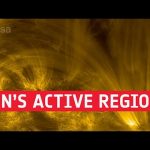
The Extreme Ultraviolet Imager (EUI) on the ESA/NASA Solar Orbiter spacecraft captured this movie on 17 March 2022. It shows the Sun’s appearance at a wavelength of 17 nanometers. This is an extreme ultraviolet wavelength of light that is emitted by the upper atmosphere of the Sun. Known as the corona, this layer of the Sun’s atmosphere exists at a temperature of around one million degrees. EUI takes both full disc images using the Full Sun Imager (FSI) telescope, as well as detailed images of a smaller region using the High Resolution Imager (HRIEUV) telescope.
On 17 March, Solar Orbiter was at roughly a third of the Earth’s distance from the Sun (0.378 AU), and heading for a close approach on 26 March, placing its payload closer to the Sun than any previous solar telescope.
This movie shows FSI’s view of the Sun before zooming in on an active region with HRIEUV. Active regions are where the Sun’s magnetic field bursts out from its interior in loops that rise into the atmosphere. As gas flows around the loops and cools back down on its way to the surface it creates the phenomenon called coronal rain.
Another intriguing feature of this image is the bright gas that makes delicate, lace-like patterns across the Sun. This is called coronal ‘moss’. It usually appears around the footprints, referred to by solar physicists as footpoints, of large coronal loops that are too hot to be seen in the EUI images.
The colour on this image has been artificially added because the original wavelength detected by the instrument is invisible to the human eye.
Credit: ESA & NASA/Solar Orbiter/EUI Team
★ Subscribe: http://bit.ly/ESAsubscribe and click twice on the bell button to receive our notifications.
We are Europe’s gateway to space. Our mission is to shape the development of Europe’s space capability and ensure that investment in space continues to deliver benefits to the citizens of Europe and the world. Check out https://www.esa.int/ to get up to speed on everything space related.
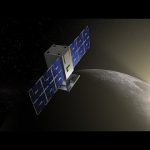
How can a satellite the size of a microwave oven help shape human missions to the Moon and beyond?
CAPSTONE will fly in a unique, halo-shaped orbit around the Moon before the orbit is used by Gateway, NASA’s future lunar outpost for our Artemis program. The CAPSTONE mission, short for Cislunar Autonomous Positioning System Technology Operations and Navigation Experiment, will validate navigation technologies and orbital dynamics for Gateway, which will one day serve as a staging area for missions to the Moon and potentially as a jumping point for missions to Mars.
The CubeSat will come within 1,000 miles of one lunar pole on its near pass and 43,500 miles from the other pole at its peak every seven days, requiring less propulsion capability for spacecraft flying to and from the Moon’s surface than other circular orbits. It’s a six-month mission that will help launch a new era of exploration.
CAPSTONE will lift off aboard a Rocket Lab Electron rocket from New Zealand. The mission is targeted to launch no earlier than June 25, 2002.
Set to lift off on May 19, 2022, Starliner will launch on NASA’s Boeing Orbital Flight Test-2 (OFT-2) headed for the International Space Station. OFT-2 will test end-to-end capabilities of the Starliner spacecraft and Atlas V rocket from launch to docking to a return to Earth in the desert of the western United States.
Starliner is expected to arrive at the space station for docking about 24 hours after launch with about 500 pounds of NASA cargo and crew supplies. After a successful docking, Starliner will spend five to 10 days aboard the orbiting laboratory before returning to Earth. The spacecraft will return with nearly 600 pounds of cargo, including reusable Nitrogen Oxygen Recharge System (NORS) tanks that provide breathable air to station crew members.
Following a successful completion of OFT-2, NASA and Boeing will determine a launch window for NASA’s Boeing Crew Flight Test, Starliner’s first flight with astronauts aboard.
This is the second uncrewed flight test of the company’s CST-100 Starliner spacecraft for NASA’s Commercial Crew Program.
ESA invites all bakers to try out a special banana bread recipe courtesy of Sens’Astro that contains the main chemical elements found on the Moon with a social media challenge inspired by World Baking Day, celebrated on 17 May.
Bakers of all ages are invited to share their results with pictures or videos on social media using the hashtag #ESABakes. The deadline for pastry chefs to submit their cakes is 24 May 2022.
Here are the ingredients: – 3 bananas – 2 eggs – 1 yoghurt (125 ml) – 80 g wheat flour – 30 g oat flour – 40 g almond powder – 100 g chocolate chips – 2 tablespoons maple syrup – 1 teaspoon vanilla extract – 1 teaspoon baking powder – 1 pinch of salt – 1 handful of nuts
We are Europe’s gateway to space. Our mission is to shape the development of Europe’s space capability and ensure that investment in space continues to deliver benefits to the citizens of Europe and the world. Check out https://www.esa.int/ to get up to speed on everything space related.
Luni 16 mai, ora 19:00, va invit la o discutie cu Gaia Vince, o cunoscută jurnalistă și realizatoare de emisiuni dedicate științei, despre noua sa carte, aparuta la Editura Humanitas: https://humanitas.ro/humanitas/carte/focul-limbajul-frumusetea-timpul Discutia va fi tradusa si in limba romana si va putea fi urmarita atat pe Facebook cat si pe Youtube.
Go outside with NASA and watch the total lunar eclipse! On the evening of May 15, Earth will pass between the Sun and the Moon, blocking sunlight and casting a shadow on the lunar surface. Starting at 9:32 p.m. EDT (1:32 UTC on May 16), people with clear skies in the Americas, Europe, and parts of Africa will begin to see the Moon get bathed in the red glow of every sunrise and sunset refracted through Earth’s atmosphere. Totality will occur at 12:12 a.m. EDT on May 16 (4:12 UTC).
Join NASA experts to learn about this incredible natural phenomenon, look through telescope views across the world, and hear about plans to return humans to the lunar surface with the Artemis program. Have questions? Ask them in our live chat.