Hot and Cold. A home-made hot air balloon gets turned into a giant floating monstrosity! Plus: dry ice, the coldest temperature possible and Phil wears a suit of blubber and gets into a tub of ice water.
Have you ever done a science experiment and wondered “What would this be like if it were HUGE?” Welcome to Science Max, the exciting new series that turbocharges all the science experiments you’ve done at home.
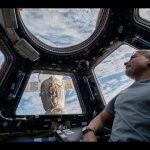
Join ESA astronaut Matthias Maurer and @NASA astronaut Kayla Barron as they discuss electron microscopes, antimicrobial spoons and other materials science topics aboard the International Space Station.
Matthias starts by explaining an experiment, which saw crew members eat meals with special spoons made of stainless steel and copper. These spoons are part of an investigation into the antimicrobial properties of laser-structured surfaces.
Principal investigators Ralf Möller of the Institute of Space Medicine, @DLR, Cologne and Frank Mücklich from the Institute for Functional Materials, @Universität des Saarlandes have been jointly investigating the antimicrobial effect of laser-structured surfaces for use during space travel since 2017. Though the antimicrobial effect of some metals has been known for a while, modern laser surface structuring is thought to result in up to 80% less bacterial adhesion and could significantly reduce the transmission of harmful germs both in space and here on Earth.
Following this discussion, the astronauts consider potential applications of a scanning electron microscope that is currently in the technology demonstration phase. This could be used to investigate small parts and biological samples aboard the Station.
Matthias and Kayla flew to the Station together in November 2021 as mission specialists for Crew-3. They are expected to return to Earth with NASA colleagues Raja Chari and Thomas Marshburn in April 2022 after approximately six months of science and operations in orbit.
We are Europe’s gateway to space. Our mission is to shape the development of Europe’s space capability and ensure that investment in space continues to deliver benefits to the citizens of Europe and the world. Check out https://www.esa.int/ to get up to speed on everything space related.
📜 Sign up for a 14-day free trial and enjoy all the amazing features MyHeritage has to offer. If you decide to continue your subscription, you’ll get a 50% discount. https://bit.ly/HistoryMarche_HM
🚩 In Part 3 the war spreads to Anatolia, as Brutus and Cassius attempt to subdue Rhodes and Lycia. The events trigger the formation of the Second Triumvirate…
Sâmbătă 2 aprilie 2022. Masa rotundă 2: Pseudoștiința – noul val
Invitați: Dana Jalobeanu, Cristian Român, Alex Bogdan Doppelgänger
Moderator: Lucian Mîndruță
Organizatori:
„Challenging Pseudoscience” – Group at the Royal Institution of Great Britain „Confront Eugenics” (Oxford) – www.confront-eugenics.org Centrul de Filosofie Aplicată al Universității „Babeș-Bolyai” Cluj-Napoca
What the President’s budget means for NASA, a record-setting astronaut returns safely to Earth, and the next Commercial Crew mission to the space station … a few of the stories to tell you about – This Week at NASA!
Producer: Andre Valentine Editor: Sonnet Apple Music: Universal Production Music
0:00 Introduction 0:14 The President’s Budget and the State of NASA 1:21 Record-Setting U.S. Astronaut Returns to Earth 1:47 NASA Previews SpaceX Crew-4 Mission 2:16 Final Test Ahead of Artemis I Moon Mission 2:43 Hubble Spots Farthest Star Ever Seen
Vineri, 1 aprilie 2022, 16.00-18.00 – Noua dezordine informațională
Invitați: Alina Bârgăoanu, Ciprian Mihali, Marius Turda
Moderator: Bianca Pădurean
Organizatori:
„Challenging Pseudoscience” – Group at the Royal Institution of Great Britain „Confront Eugenics” (Oxford) – www.confront-eugenics.org Centrul de Filosofie Aplicată al Universității „Babeș-Bolyai” Cluj-Napoca
This week’s edition of the Earth from Space programme features a Copernicus Sentinel-2 image of Barranquilla, the capital of the Atlántico department in northwest Colombia.
We are Europe’s gateway to space. Our mission is to shape the development of Europe’s space capability and ensure that investment in space continues to deliver benefits to the citizens of Europe and the world. Check out https://www.esa.int/ to get up to speed on everything space related.
Wheeled, tracked and walking rovers competed to survey a shadowy analogue of the polar lunar surface for useable resources during the first field test of the ESA-ESRIC Space Resources Challenge. Some 12 teams from across Europe and Canada took part in the field test in the Netherlands, with five winners going on to the next phase of the contest.
The Space Resources Challenge – supported by ESA and the European Space Resources Innovation Centre (ESRIC) in Luxembourg – asked European (and Canadian) researchers and institutions to develop and demonstrate a system of one or more vehicles capable of prospecting resources on the Moon in the near future.
Working inside a former aircraft hangar, the competition organisers spread 200 tons of lava rock across an area equivalent to seven tennis courts, landscaping it into a Moon-like environment, including the main crater of interest. Then they scattered rocks, including a hundred simulated boulders larger than a metre across, whose positions were precisely geo-referenced.
These measurements served as the basis of a map provided to the rover teams. The idea was to give them the equivalent level of local information from satellite imagery, while still leaving smaller-scale surprises. Once complete, the moonscape was kept concealed from the rover groups behind black curtains, so they would see it only through the cameras of their rovers. The 12 teams each made their prospecting attempt one at a time.
The competing rovers had to navigate and map the whole test environment to prospect for useable resources – meaning first of all to track down their location, identify the best and safest passages and then to gather information about the characteristics and the composition of the rocks they located.
Credit: ESA
★ Subscribe: http://bit.ly/ESAsubscribe and click twice on the bell button to receive our notifications.
We are Europe’s gateway to space. Our mission is to shape the development of Europe’s space capability and ensure that investment in space continues to deliver benefits to the citizens of Europe and the world. Check out https://www.esa.int/ to get up to speed on everything space related.
Vibration is the idea behind a shaky vibrobot – one maxed out enough so Phil can ride it! Plus: spinning an 8-foot coin, suspending water in mid-air and lasers!
Have you ever done a science experiment and wondered “What would this be like if it were HUGE?” Welcome to Science Max, the exciting new series that turbocharges all the science experiments you’ve done at home.
Află ce spun cercetări de top realizate în România, sub coordonarea lui Mihai Ciubotaru, directorul Laboratorului de imunulogie moleculară din cadrul Spitalului Colentina și cercetător al Institutului de Fizică Nucleară de la Măgurele, despre interacțiunea dintre biologia omului și fizica mediului, despre felul în care medicina modernă poate folosi „foarfeci” la nivelul moleculelor cu care să „croiască” soluții personalizate. Urmărește LIVE discuția moderată împreună cu Ada Roseti joi de la ora 21.00, aici https://www.youtube.com/watch?v=K0-qpmPTau8. Dacă ai curiozități, pune o întrebare aici și, dacă întrebarea va primi răspuns în cadrul emisiunii, poți câștiga o carte de la Editura Humanitas.
Vande Hei and two Roscosmos cosmonauts, Anton Shkaplerov and Pyotr Dubrov, are scheduled to end their mission aboard the International Space Station and return to Earth on Wednesday, March 30.
Vande Hei broke the record for longest single spaceflight by an American astronaut, previously held at 340 days. He will wrap up his second spaceflight with a total of 523 days in space.
Despre invitat Viorel Isticioaia-Budura este ambasador de carieră din anul 2004, prin decret prezidențial. Născut la Oradea în 1952, absolvent al Facultății de Filozofie-Istorie a Universității București și al Facultății de Limba și literatura chineză, Universitatea Nankai, orașul Tianjin, R.P. Chineză. Diplomat în MAE (1978-2019), ambasador al României în Republica Coreea (2000-2002), în R.P. Chineză și Mongolia (2002-2011), șef al Departamentului Asia-Pacific în Serviciul European de Acțiune Externă (2011-2014), ambasador al UE în Japonia (2014-2018). Pensionar din 2019.
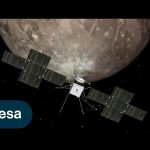
ESA’s Jupiter Icy Moons Explorer, Juice, is set to embark on an eight-year cruise to Jupiter starting April 2023. The mission will investigate the emergence of habitable worlds around gas giants and the Jupiter system as an archetype for the numerous giant planets now known to orbit other stars.
This animation depicts Juice’s journey to Jupiter and highlights from its foreseen tour of the giant planet and its large ocean-bearing moons. It depicts Juice’s journey from leaving Earth’s surface in a launch window 5–25 April 2023 and performing multiple gravity assist flybys in the inner Solar System, to arrival at Jupiter (July 2031), flybys of the Jovian moons Europa, Callisto and Ganymede, orbital insertion at Ganymede (December 2034), and eventual impact on this moon’s surface (late 2035).
An Ariane 5 will lift Juice into space from Europe’s Spaceport in Kourou. A series of gravity assist flybys of Earth, the Earth-Moon system and Venus will set the spacecraft on course for its July 2031 arrival at Jupiter. These flybys are shown here in order – Earth-Moon (August 2024), Venus (August 2025), Earth (September 2026, January 2029) – interspersed by Juice’s continuing orbits around the Sun. Juice’s flyby of the Earth-Moon system, known as a Lunar-Earth gravity assist (LEGA), is a world first: by performing this manoeuvre – a gravity assist flyby of the Moon followed just 1.5 days later by one of Earth – Juice will save a significant amount of propellant on its journey.
Juice will start its science mission about six months prior to entering orbit around Jupiter, making observations as it approaches its destination. Once in the Jovian system, a gravity assist flyby of Jupiter’s largest moon Ganymede – also the largest moon in the Solar System – will help Juice enter orbit around Jupiter, where the spacecraft will spend four years observing the gas giant and three of its moons: Ganymede, Callisto and Europa.
Juice will make two flybys of Europa (July 2032), which has strong evidence for an ocean of liquid water under its icy shell. Juice will look at the moon’s active zones, its surface composition and geology, search for pockets of liquid water under the surface, and study the plasma environment around Europa, also exploring the moon’s tiny atmosphere and hunting for plumes of water vapour (as have been previously detected erupting to space).
A sequence of Callisto flybys will be used to study this ancient, cratered world that may too harbour a subsurface ocean, also changing the angle of Juice’s orbit with respect to Jupiter’s equator, making it possible to explore Jupiter’s higher latitudes (2032–2034).
A sequence of Ganymede and Callisto flybys will adjust Juice’s orbit – properly orienting it while minimising the amount of propellant expended – so that it can enter orbit around Ganymede in December 2034, making it the first spacecraft to orbit another planet’s moon. Juice’s initial elliptical orbit will be followed by a 5000 km-altitude circular orbit, and later a 500 km-altitude circular orbit.
Ganymede is the only moon in the Solar System to have a magnetosphere. Juice will investigate this phenomenon and the moon’s internal magnetic field, and explore how its plasma environment interacts with that of Jupiter. Juice will also study Ganymede’s atmosphere, surface, subsurface, interior and internal ocean, investigating the moon as not only a planetary object but also a possible habitat.
Over time, Juice’s orbit around Ganymede will naturally decay due to lack of propellant, and it will make a grazing impact onto the surface (late 2035).
The Juice launch itself will be a historical milestone for more reasons than one. It will be the final launch for Ariane 5, ending the launcher’s nearly three-decade run as one of the world’s most successful heavy-lift rockets. Its duties are being taken over by Ariane 6.
We are Europe’s gateway to space. Our mission is to shape the development of Europe’s space capability and ensure that investment in space continues to deliver benefits to the citizens of Europe and the world. Check out https://www.esa.int/ to get up to speed on everything space related.
Phil tries to make the strongest electromagnet he can. Plus: playing with ferro-fluid. Wizards! And Phil tries to make it to the North Pole using a compass.
Have you ever done a science experiment and wondered “What would this be like if it were HUGE?” Welcome to Science Max, the exciting new series that turbocharges all the science experiments you’ve done at home.
NASA benefits all humanity and our workforce is key to making this happen. Take a look at the universe of NASA missions and projects made possible by our commitment to teamwork, collaboration, equity and inclusiveness.
Our exploration of the universe, our technology development, our work to help understand climate change, and the opportunities the agency creates make our nation more prosperous, stronger, more inclusive and inspired. NASA furthers the nation’s goals to address climate change, advance space exploration, promote equity and diversity and provide educational STEM opportunities. NASA keeps the United States at the forefront of innovation.
What’s new at NASA? Join us live from our Kennedy Space Center in Florida as NASA Administrator Bill Nelson delivers the #StateOfNASA address for 2022. Learn about our plans to explore the Moon and Mars, address climate change, promote racial and economic equity, and drive economic growth while sustaining U.S. leadership in aviation and aerospace innovation.
It’s the first mission of its kind, set to monitor our active and unpredictable Sun and help protect us from its violent outbursts – and it has a new name.
Once known as “Lagrange,” ESA’s upcoming space weather mission needed a new name that would reflect its vital role: helping to protect Earth’s infrastructure, satellites, inhabitants and space explorers from unpredictable but violent solar events like solar flares and ‘coronal mass ejections’.
During the Name The Mission campaign, 5422 entries were submitted from across Europe and indeed around the world – and after weeks of deliberation, countless spreadsheets, three diverse and expert judges and a lively debate – a new name has been selected for our upcoming space weather mission: ESA Vigil.
“We are thrilled with our mission’s new name,” explains Juha-Pekka Luntama, ESA’s Head of Space Weather.
“When I first heard it, I thought it was just spot on. That is exactly what we do, we keep a vigilant watch and guard Earth”.
In Latin, ‘vigilis exceptus’ means sentry, or guard, while ‘vigilia’ means wakefulness and the act of keeping a devoted watch, which resonates with the mission’s role – a devoted guardian, keeping constant watch over the Sun, for Earth.
Protecting modern life, and life itself
Solar storms can damage power grids, disrupt telecommunications and threaten satellites and the vital services they provide. At the same time, as we launch ever-more satellites into orbit we are creating increasing amounts of debris – dramatically increasing the risks of collision for current and future missions.
These satellites have changed our lives and enlarged our perspective on Earth, but they – and the technologies they make possible on which modernity relies – are vulnerable.
The protection of space assets is at the heart of ESA’s Vision for the future. To do this, the new Protect ‘accelerator’ proposes the development of ‘air traffic control for space’, as well as an early warning system to help us prepare for hazardous solar activity.
We are Europe’s gateway to space. Our mission is to shape the development of Europe’s space capability and ensure that investment in space continues to deliver benefits to the citizens of Europe and the world. Check out https://www.esa.int/ to get up to speed on everything space related.
ESA astronaut Matthias Maurer is currently living and working aboard the International Space Station for his first space mission, Cosmic Kiss. Recently, he experimented with water in microgravity. In this water experiments video series, Matthias demonstrates the different behavior of water in weightlessness and how this research is applied to life on Earth.
In part 5, Matthias explains how studying the behavior of water and other liquids on the International Space Station is important for numerous applications on Earth, such as in industry or food technology.
Matthias will live and work in orbit for approximately six months for his Cosmic Kiss mission. During this time, he will conduct and support more than 35 European and numerous other international experiments in microgravity.
We are Europe’s gateway to space. Our mission is to shape the development of Europe’s space capability and ensure that investment in space continues to deliver benefits to the citizens of Europe and the world. Check out https://www.esa.int/ to get up to speed on everything space related.
Cumpara cartea “Care e diferenta dintre un copil si un laptop?” de aici: https://bit.ly/36NNobe Sambata 2 aprilie ora 13:30, voi fi prezent standul Humanitas de la Bookfest Timisoara, unde voi vorbi despre cartile mele
Upgrade work continues outside the space station, an updated strategy for landing Artemis astronauts on the Moon, and unsealing pieces of the past … a few of the stories to tell you about – This Week at NASA!
🎨 Skip the waitlist and invest in blue-chip art for the very first time by signing up for Masterworks: https://masterworks.art/historymarche Purchase shares in great masterpieces from artists like Pablo Picasso, Banksy, Andy Warhol, and more.
🚩 On a late November morning in the year 1095, the rousing sermon of Pope Urban II reverberated across Europe. Thousands of knights and ordinary people took the cross and marched East. Over the next two hundred years the Christian armies attempted to recover Palestine from Islamic rule. But conquering these lands was easier than keeping them. What were the strategic methods employed by the Crusader states to keep hold of the Holy Land?
The Smithsonian’s National Air and Space Museum held its Michael Collins Trophy award ceremony March 24 at the museum’s Steven F. Udvar-hazy Center in Chantilly, VA. The 2022 recipients were Wally Funk for Lifetime Achievement and the Mars Ingenuity Helicopter Team for Current Achievement.
Ingenuity rode to the surface of Mars attached to the belly of the Perseverance rover on Feb 18, 2021. And several weeks later, on April 19, the rotorcraft achieved the very first powered, controlled flight on another planet.
While Ingenuity arrived on Mars as a technology demonstration, NASA has extended flight operations through September. The historic rotorcraft has successfully completed 23 flights and counting and will continue supporting the Perseverance rover’s upcoming science campaign exploring the ancient river delta of Jezero Crater. Along the way, it will continue pushing its own capabilities to help inform the design of future Mars aerial vehicles.
Lifetime Achievement recipient, Wally Funk and 12 other women pilots underwent spaceflight training in the ’60s as part of an unofficial program – even outperforming the men – but were denied the chance to fly.
Wally never abandoned her dream of going to space and at 82-years-old that dream came true when she launched aboard the FIRST crewed suborbital mission of Blue Origin’s New Shepard capsule.
ESA astronaut Matthias Maurer is currently living and working aboard the International Space Station for his first space mission, Cosmic Kiss. Recently, he experimented with water in microgravity. In this water experiments video series, Matthias demonstrates the different behavior of water in weightlessness and how this research is applied to life on Earth.
In part 4 of this video series, Matthias takes a closer look at the lens effect and surface tension of water.
Matthias will live and work in orbit for approximately six months for his Cosmic Kiss mission. During this time, he will conduct and support more than 35 European and numerous other international experiments in microgravity.
We are Europe’s gateway to space. Our mission is to shape the development of Europe’s space capability and ensure that investment in space continues to deliver benefits to the citizens of Europe and the world. Check out https://www.esa.int/ to get up to speed on everything space related.
In this week’s edition of the Earth from Space programme, the Copernicus Sentinel-2 mission takes us over Carrara – an Italian city known especially for its world-famous marble.
We are Europe’s gateway to space. Our mission is to shape the development of Europe’s space capability and ensure that investment in space continues to deliver benefits to the citizens of Europe and the world. Check out https://www.esa.int/ to get up to speed on everything space related.
When Apollo astronauts began bringing samples from the Moon to Earth over 50 years ago, NASA chose to keep some samples unopened and untouched for future scientists to study. Now, NASA has opened the final pristine core sample of the Moon from the Apollo 17 mission to be studied in state-of-the-art laboratories with the most up-to-date technologies. Have questions? Join NASA experts Thursday, March 24 at 3:00pm ET for an inside look at how decades-old Moon samples are opened and what we hope to learn.
Meet the Experts:
Dr. Juliane Gross is the Deputy Apollo sample curator. In this role she takes care of the Moon rocks, makes sure they are kept safe and provides assistance with selecting samples to help scientists carry out the best research. Dr. Gross’ favorite part about her job at NASA is working with the lunar curation team, helping other scientists and cool special projects like processing samples cold inside a freezer. In her free time, Dr. Gross loves being active and being outdoors and enjoys hiking, rock climbing, running, biking and traveling.
Andrea Mosey is the Apollo sample principal scientist. In this role she manages the day-to-day activities in the Lunar Curatorial Laboratory as directed by the Apollo Sample Curator. Andrea’s favorite part about working at NASA is being able to touch history, each and every day performing an amazing job as one who oversees the 842 pounds of Apollo lunar samples. In her free time Andrea enjoys spending time with family and friends, watching movies and engaging with students in science.
Dr. Jacob Bleacher is NASA’s Chief Exploration Scientist. In this role, Dr. Bleacher works between NASA’s human exploration and the science mission programs to find ways to do the best science as astronauts explore the Moon and space. He loves working with such a diverse workforce and seeing the innovation and creativity that is needed to tackle tough challenges. In his free time, Dr. Bleacher enjoys hiking and camping with his family and friends.
Joy Ng is your host for this episode. When she’s not hosting episodes of NASA Science Live, Joy creates videos about NASA’s research about the Sun and its impact across the solar system. Her favorite part about working at NASA is getting to learn from the world’s experts on space science. In her free time, Joy enjoys riding motorcycles and baking pastries.
Just how much power can be generated by one human being? Phil tries to find out. Plus: How a generator works, make your own wind turbine and a solar panel described with a bathtub and ping-pong balls!
Have you ever done a science experiment and wondered “What would this be like if it were HUGE?” Welcome to Science Max, the exciting new series that turbocharges all the science experiments you’ve done at home.
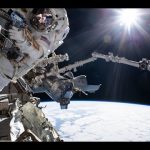
NASA astronaut Raja Chari and European Space Agency (ESA) astronaut Matthias Maurer are conducting a spacewalk on Wednesday, March 23 to install new hoses on the International Space Station’s Radiator Beam Valve Module, which helps regulate the station’s temperature. Chari and Maurer will also install a power and data cable on the station’s Bartolomeo science platform, replace an external camera, and conduct other upgrades to station hardware.
Wednesday’s spacewalk is expected to begin around 8:50 a.m. EDT (12:50 UTC) and take about six-and-a-half hours. This spacewalk will be the second of Chari’s career and the first for Maurer.
ESA astronaut Matthias Maurer is currently living and working aboard the International Space Station for his first space mission, Cosmic Kiss. Recently, he experimented with water in microgravity. In this water experiments video series, Matthias demonstrates the different behavior of water in weightlessness and how this research is applied to life on Earth.
In this second clip in the series, Matthias blows air into a floating water sphere and looks at what happens when he tries to mix it with olive oil.
Matthias will live and work in orbit for approximately six months for his Cosmic Kiss mission. During this time, he will conduct and support more than 35 European and numerous other international experiments in microgravity.
We are Europe’s gateway to space. Our mission is to shape the development of Europe’s space capability and ensure that investment in space continues to deliver benefits to the citizens of Europe and the world. Check out https://www.esa.int/ to get up to speed on everything space related.
ESA astronaut Matthias Maurer is currently living and working aboard the International Space Station for his first space mission, Cosmic Kiss. Recently, he has been experimenting with water in microgravity.
In this water experiments video series, Matthias demonstrates the different behavior of water in weightlessness and how this research is applied to life on Earth.
In Part 1, Matthias lets water spheres float inside the Columbus module of the Space Station and wets a paddle with a hydrophobic surface to take a closer look at the viscosity and surface tension of water.
Matthias will live and work in orbit for approximately six months for his Cosmic Kiss mission. During this time, he will conduct and support more than 35 European and numerous other international experiments in microgravity.
We are Europe’s gateway to space. Our mission is to shape the development of Europe’s space capability and ensure that investment in space continues to deliver benefits to the citizens of Europe and the world. Check out https://www.esa.int/ to get up to speed on everything space related.