A new look at a “star factory,” practicing Moonwalks here on Earth, and an Earthly assist for a NASA spacecraft … a few of the stories to tell you about – This Week at NASA!
We are Europe’s gateway to space. Our mission is to shape the development of Europe’s space capability and ensure that investment in space continues to deliver benefits to the citizens of Europe and the world. Check out https://www.esa.int/ to get up to speed on everything space related.
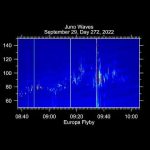
In this video, measurements collected by the Waves instrument aboard NASA’s Juno spacecraft during its close flyby of Jupiter’s moon Europa on Sept. 29, 2022 have been converted to an audible frequency. As the white line moves across the spectrogram, which is a visual way of representing signal strength over time, the variation of frequency of the plasma waves observed near Europa can be heard as the plasma density varies. The video shows data collected over approximately 1.5 hours during the Europa flyby.
Enjoy a meteor shower with our tips: 1. Allow your eyes to adjust to the dark. 2. Use a red flashlight to preserve night vision. 3. Wear warm clothes. 4. Lie on a deck chair or mattress. 5. Enjoy the cosmic show!
★ Subscribe: http://bit.ly/ESAsubscribe and click twice on the bell button to receive our notifications.
We are Europe’s gateway to space. Our mission is to shape the development of Europe’s space capability and ensure that investment in space continues to deliver benefits to the citizens of Europe and the world. Check out https://www.esa.int/ to get up to speed on everything space related.
This Ariane 6 combined tests model will be used to validate the entire launch system during its ground phase in readiness for the inaugural launch of the first Ariane 6 rocket.
We are Europe’s gateway to space. Our mission is to shape the development of Europe’s space capability and ensure that investment in space continues to deliver benefits to the citizens of Europe and the world. Check out https://www.esa.int/ to get up to speed on everything space related.
Are hurricanes getting stronger? Although we’ll never see a Category 6 hurricane, data does show that more hurricanes are becoming more severe. Hurricane and climate expert Mara Cordero-Fuentes of NASA’s Goddard Space Flight Center tells us more about the connection between climate change and tropical cyclones.
What hobbies do you take part in during your free time? ⏳
ESA astronaut Samantha Cristoforetti’s day onboard the #ISS usually starts at around 7:00 GMT. During a typical day, she will run experiments and maintenance, exercise, and participate in daily task meetings. Once all the work is done, she gets free time to relax. Find out what she likes to do in her free time.
We are Europe’s gateway to space. Our mission is to shape the development of Europe’s space capability and ensure that investment in space continues to deliver benefits to the citizens of Europe and the world. Check out https://www.esa.int/ to get up to speed on everything space related.
The image depicts the fragmented coast, part of the Indus River Delta. A river delta forms when sediment carried from the river enters a stagnant body of water, creating an alluvial fan, which in this case extends 150 km along the coastline. The Indus River, visible on the right, veers through the Sindh Province and is one of the longest rivers in the world, rising in Tibet and flowing around 3000 km before emptying into the Arabian Sea.
We are Europe’s gateway to space. Our mission is to shape the development of Europe’s space capability and ensure that investment in space continues to deliver benefits to the citizens of Europe and the world. Check out https://www.esa.int/ to get up to speed on everything space related.
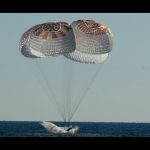
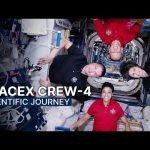
The astronauts of Crew-4 have undocked from the International Space Station and are on their way home to Earth. Watch live with NASA as the Dragon spacecraft Freedom reenters the atmosphere and splashes down off the coast of Florida. Splashdown is targeted for 4:55 p.m. EDT (2055 UTC), Friday, Oct. 14.
NASA astronauts Kjell Lindgren, Jessica Watkins, Bob Hines, and ESA (European Space Agency) astronaut Samantha Cristoforetti spent five and a half months living and working aboard the orbiting laboratory. During their stay, they contributed to a number of experiments to expand our understanding of space while benefitting life on Earth: https://go.nasa.gov/3yCDeW0
The results of our DART planetary defense test, astronauts return safely from the space station, and more new imagery from the Webb Space Telescope … a few of the stories to tell you about – This Week at NASA!
Watch live as the Dragon Freedom spacecraft undocks with the four crew members of NASA’s SpaceX Crew-4 mission aboard: NASA astronauts Kjell Lindgren, Bob Hines, and Jessica Watkins, as well as ESA (European Space Agency) astronaut Samantha Cristoforetti.
Undocking from the International Space Station (ISS) is targeted for Friday, Oct. 14. Splashdown is targeted several hours later at 4:55 p.m. EDT (2055 UTC) Friday off the coast of Florida.
During their stay of nearly six months on the ISS, Crew-4 members contributed to ongoing and new scientific investigations and technology demonstrations, work that is helping to prepare humans for future space exploration missions and generating innovations and benefits for humanity on Earth: https://youtu.be/J61Y5AJ-Kog
This week’s edition of the Earth from Space programme features a Copernicus Sentinel-1 radar image of the Mississippi River, one of the longest rivers in North America.
We are Europe’s gateway to space. Our mission is to shape the development of Europe’s space capability and ensure that investment in space continues to deliver benefits to the citizens of Europe and the world. Check out https://www.esa.int/ to get up to speed on everything space related.
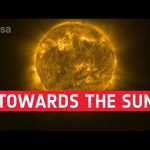
This sequence was taken by Solar Orbiter’s Extreme Ultraviolet Imager using the Full Sun Imager telescope, and shows the Sun at a wavelength of 17 nanometers. This wavelength is emitted by gas in the Sun’s atmosphere with a temperature of around one million degrees. The colour on this image has been artificially added because the original wavelength detected by the instrument is invisible to the human eye.
Credit: ESA & @NASA /Solar Orbiter/EUI Team
★ Subscribe: http://bit.ly/ESAsubscribe and click twice on the bell button to receive our notifications.
We are Europe’s gateway to space. Our mission is to shape the development of Europe’s space capability and ensure that investment in space continues to deliver benefits to the citizens of Europe and the world. Check out https://www.esa.int/ to get up to speed on everything space related.
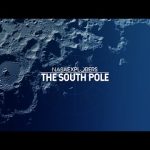
When Artemis astronauts land on the Moon, they’ll travel to sites never before visited by humans. Namely, they’ll explore the South Pole region, home to the Moon’s largest crater, areas of near-constant light and deep shadows, and some of the coldest temperatures in the solar system.
Exploring the South Pole will teach us more about the Moon’s history, as well as the history of our solar system. It’s home to frozen water, which is crucial for living sustainably on the lunar surface and exploring deeper into the solar system.
Artemis astronauts will explore the Moon on behalf of all of us and bring back lunar rocks and soil for analyses by generations of scientists who will help us gain unimaginable insights into our cosmic history.
Series Executive Producers: Katy Mersmann/Lauren Ward Season Producers: Lonnie Shekhtman/Stephanie Sipila/James Tralie/Molly Wasser
Explorers: Jose Aponte/Natalie Curran/Julie Mitchell/Adam Naids/Noah Petro/Kelsey Young/Jessica Watkins
Music:
a. “Daylight Falls” by Jay Price b. “Good Omens” by Count Zero and Rohan Stevenson c. “Lightspeed” by Gresby Race Nash d. “Wonders of Life” by Enrico Cacace and Lorzeno Castellarin e. “Hold Still” by Enrico Cacace f. “We Shall Overcome” by Laurent Couson
At Europe’s Spaceport in French Guiana, a test model of the Ariane 6’s central core has been assembled for the first time. Ariane 6 is the first Ariane rocket to be assembled horizontally, which is simpler and less costly than more traditional vertical assembly. One of the P120C boosters can be seen from different angles during installation, before the rocket’s central core is moved to its launchpad and placed upright in its mobile gantry. With the central core and boosters in place, combined tests validate compatibility between all components of the complete launch system.
★ Subscribe: http://bit.ly/ESAsubscribe and click twice on the bell button to receive our notifications.
We are Europe’s gateway to space. Our mission is to shape the development of Europe’s space capability and ensure that investment in space continues to deliver benefits to the citizens of Europe and the world. Check out https://www.esa.int/ to get up to speed on everything space related.
After months aboard the International Space Station, the astronauts of NASA’s SpaceX Crew-4 mission are returning home.
Traveling back to Earth inside a SpaceX Dragon capsule are NASA astronauts Kjell Lindgren, Robert Hines, and Jessica Watkins, along with ESA (European Space Agency) astronaut Samantha Cristoforetti. During their time aboard the orbiting laboratory, these crew members contributed to ongoing and new scientific investigations and technology demonstrations, work that is helping to prepare humans for future space exploration missions and generating innovations and benefits for humanity on Earth.
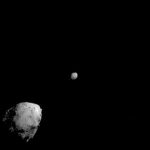
Experts discuss early results of the NASA’s Double Asteroid Redirection Test (DART) mission and its intentional collision with its target asteroid, Dimorphos.
On Monday, Sept. 26, DART successfully impacted its asteroid target in the world’s first planetary defense technology demonstration. As a part of NASA’s overall planetary defense strategy, DART’s impact with the asteroid Dimorphos will help to determine whether asteroid deflection using a kinetic impactor spacecraft is a viable mitigation technique for protecting the planet from an Earth-bound asteroid or comet, if one were discovered. Johns Hopkins APL manages the DART mission for NASA’s Planetary Defense Coordination Office as a project of the agency’s Planetary Missions Program Office. Neither DART’s target asteroid, Dimorphos, nor its larger asteroid parent, Didymos, poses a hazard to Earth.
Participants include:
• NASA Administrator Bill Nelson • Italian Space Agency President Giorgio Saccoccia
DART update panel: • Lori Glaze, director of the Planetary Science Division at NASA Headquarters in Washington • Tom Statler, DART program scientist at NASA Headquarters • Nancy Chabot, DART coordination lead at the Johns Hopkins Applied Physics Laboratory (APL) in Laurel, Maryland
Back in July we tested a new capability for the Space Station. Filled with dry trash & foam, this big trash bag was jettisoned from a depressurised airlock on the #ISS & it burned up harmlessly in the Earth’s atmosphere.
Credits: Samantha Cristoforetti/ESA
★ Subscribe: http://bit.ly/ESAsubscribe and click twice on the bell button to receive our notifications.
We are Europe’s gateway to space. Our mission is to shape the development of Europe’s space capability and ensure that investment in space continues to deliver benefits to the citizens of Europe and the world. Check out https://www.esa.int/ to get up to speed on everything space related.
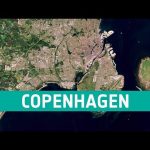
The Copenhagen-Malmö Port stretches 10 km between Zealand and Amager and 7 km along the Sound. Adjacent to the modern port facilities a star-shaped fortification, known as Kastellet, can be seen. A relic of Copenhagen’s past, this fortress is more than 340 years old.
We are Europe’s gateway to space. Our mission is to shape the development of Europe’s space capability and ensure that investment in space continues to deliver benefits to the citizens of Europe and the world. Check out https://www.esa.int/ to get up to speed on everything space related.
Launching a new crew to the space station, the plan moving forward for Artemis I, and Webb’s new look at a pair of galaxies … a few of the stories to tell you about – This Week at NASA!
In this week’s edition of the Earth from Space programme, the Copernicus Sentinel-2 mission takes us over the department of Bouches-du-Rhône in southern France. It is from here where the first Meteosat Third Generation Imager satellite set sail on its journey to Europe’s Spaceport in French Guiana.
We are Europe’s gateway to space. Our mission is to shape the development of Europe’s space capability and ensure that investment in space continues to deliver benefits to the citizens of Europe and the world. Check out https://www.esa.int/ to get up to speed on everything space related.
ESA astronaut Samantha Cristoforetti will soon complete her second mission to the International Space Station, Minerva.
She was launched from Kennedy Space Center in late April, and since then has supported many European and international science experiments, as well as taken responsibility for all operations within the US Orbital Segment. In July 2022 she performed her first spacewalk, during which she carried out work in the Russian segment to bring the European Robotic Arm into operation.
This report provides a summary of the Minerva Mission, which will end shortly with Samantha’s return to Earth.
We are Europe’s gateway to space. Our mission is to shape the development of Europe’s space capability and ensure that investment in space continues to deliver benefits to the citizens of Europe and the world. Check out https://www.esa.int/ to get up to speed on everything space related.
Before Jessica Watkins was an astronaut, she was a geologist. Now working on the International Space Station, Jessica and her fellow astronauts are preparing to explore the Moon and beyond.
But collecting and investigating rocks on other worlds is very different from digging dirt here on Earth. That’s where tools engineer Adam Naids comes in. Tools designed for Earth geologists may not work in the lower gravity and extreme temperatures of the Moon, and that’s before you bring in the bulky spacesuits! NASA Explorers come together at space school to train astronauts to conduct science on the Moon.
Series Executive Producers: Katy Mersmann/Lauren Ward Season Producers: Lonnie Shekhtman/Stephanie Sipila/James Tralie/Molly Wasser
Explorers: Jessica Watkins/Adam Naids/Kelsey Young
Music: a. “Iced Planet” by Anthony Edwin Phillips and Samuel Karl Bohn b. “The Deep” by Paul Werner c. “Carpe Diem” by Michael James Burns d. “State of Matter” by Markus Gleissner e. “A Grand Enterprise” by Daniel Marantz and Dave Carr f. “Optimistic Attitude 1″ by Joel Goodman and Vicente Julio Ortiz Gimeno g. “Dawn Beauty” Laurent Dury h. “Take it Lightly” by Carl David Harms i. “Imaginary Travel” by Claude Pelouse and Olivier Grim
Our #Crew5 mission to the International Space Station is targeted for liftoff at noon EDT (1600 UTC) Wednesday, Oct. 5, 2022, from Launch Complex 39A at NASA’s Kennedy Space Center in Florida.
NASA astronauts Nicole Mann and Josh Cassada, as well as JAXA (Japan Aerospace Exploration Agency) astronaut Koichi Wakata and Roscosmos cosmonaut Anna Kikina, will launch aboard their Dragon Endurance spacecraft atop a SpaceX Falcon 9 rocket. For the latest updates: https://blogs.nasa.gov/commercialcrew/
Keeping fit and doing daily exercise is very important for astronauts on the ISS. Check out ESA astronaut Samantha Cristoforetti’s video of what exercise she did in space today. What kind of exercise have you completed on Earth today?
We are Europe’s gateway to space. Our mission is to shape the development of Europe’s space capability and ensure that investment in space continues to deliver benefits to the citizens of Europe and the world. Check out https://www.esa.int/ to get up to speed on everything space related.
There may not be any humans aboard NASA’s #Artemis I flight test, but there will be a special canine: Snoopy! Learn why Astronaut Snoopy is flying to space when Artemis launches on its historic mission around the Moon and back.
Artemis I is the first integrated flight test of the Space Launch System rocket that will send the uncrewed Orion spacecraft around the Moon and back to Earth. The mission will check out all spacecraft systems for the first time before crew fly aboard Artemis II. It’s one more step toward taking the next giant leap: sending the first astronauts to Mars. Get all the info on this historic mission: https://nasa.gov/specials/artemis-i
Shanghai, China is a significant global financial centre and it is also the site of one of the worlds busiest container ports because of its strategic location on the Yangtze River delta.
We are Europe’s gateway to space. Our mission is to shape the development of Europe’s space capability and ensure that investment in space continues to deliver benefits to the citizens of Europe and the world. Check out https://www.esa.int/ to get up to speed on everything space related.
The world’s first-ever planetary defense test is a big hit, a major hurricane spotted from space, and moving our mega Moon rocket back inside ahead of that storm … a few of the stories to tell you about – This Week at NASA!
Listen up! From long form interviews with astronauts and engineers to narrative shows that take you on a tour of the galaxy, NASA podcasts let you experience the thrill of space exploration without ever leaving Earth. Find your new favorite podcast at https://www.nasa.gov/podcasts.
Producer/Editor: Lacey Young Music: Universal Music Production Credit: NASA
The final pre-launch preparations for the first Meteosat Third Generation (MTG) satellite are underway. The first satellite, called MTG-I1, built by a European industrial consortium led by Thales Alenia Space carries two imagers: an advanced Flexible Combined Imager and, in a first for Europe, a Lightning Imager that will allow the earlier detection of storms and extreme weather events, as well as improve aviation safety.
Building on the long-standing partnership between ESA and Eumetsat, the MTG-I1 will be one of six satellites operating in a fleet, of three at a time, to ensure the continuity of data from the previous Meteosat satellites over the next 20 years. The first Meteosat was launched in 1977 and this third generation of spacecraft will be the most advanced yet, with improved image resolution and providing close to real time data for users, or ‘nowcasting’ of fast-developing, high-impact weather.
The launch is currently scheduled for the end of 2022.
The film includes soundbites from ESA Director of Earth Observation Programmes: Simonetta Cheli, ESA Meteosat Programme Manager: Paul Blythe, ESA Meteosat Third Generation Payload Manager: Donny Aminou and EUMETSAT, Meteosat Third Generation Programme Manager: Alexander Schmid.
★ Subscribe: http://bit.ly/ESAsubscribe and click twice on the bell button to receive our notifications.
We are Europe’s gateway to space. Our mission is to shape the development of Europe’s space capability and ensure that investment in space continues to deliver benefits to the citizens of Europe and the world. Check out https://www.esa.int/ to get up to speed on everything space related.
This week’s edition of the Earth from Space programme features a Copernicus Sentinel-2 image of melt ponds in the province of Avannaata in West Greenland.
We are Europe’s gateway to space. Our mission is to shape the development of Europe’s space capability and ensure that investment in space continues to deliver benefits to the citizens of Europe and the world. Check out https://www.esa.int/ to get up to speed on everything space related.
Our astronaut Samantha Cristoforetti has become the new commander of the @iss, taking over from fellow Expedition 67 crew member @olegmks.
Samantha is the fifth European commander of the Space Station, following in the footsteps of our previous astronauts Frank De Winne, Alexander Gerst, Luca Parmitano and Thomas Pesquet. She‘s also the first European female to occupy the position.
We are Europe’s gateway to space. Our mission is to shape the development of Europe’s space capability and ensure that investment in space continues to deliver benefits to the citizens of Europe and the world. Check out https://www.esa.int/ to get up to speed on everything space related.
Meet NASA’s rock detectives. Using tiny samples of lunar rock brought back by Apollo astronauts, these NASA Explorers are looking into the origins of our Moon, our planet, and ourselves. They might be among the first scientists to study samples from the Moon’s South Pole that will be delivered to Earth by Artemis astronauts. In episode 2 of “NASA Explorers: Artemis Generation,” we’re joining scientists like Natalie Curran and Jose Aponte, who are looking at clues buried in Moon rocks.
Series Executive Producers: Katy Mersmann/Lauren Ward Season Producers: Lonnie Shekhtman/Stephanie Sipila/James Tralie/Molly Wasser
Explorers: Natalie Curran/Jose Aponte
Music: 1. “Darwin’s Extraordinary Journey” by Laurent Dury 2. “From Small Beginnings” by Jay Price 3. “Life Eternal” by Enrico Cacace and Lorenzo Castellarin 4. “All is Good” by Anders Niska and Klas Johan Wahl 5. “Hyperion” by Gresby Race Nash
These spectacular images feature the spiral galaxy IC 5332, taken by the @NASA/ESA Hubble Space Telescope and the NASA/ESA/ @Canadian Space Agency James Webb Space Telescope. The images display the powerful capabilities that both world-leading space telescopes provide, especially when combining their data.
We are Europe’s gateway to space. Our mission is to shape the development of Europe’s space capability and ensure that investment in space continues to deliver benefits to the citizens of Europe and the world. Check out https://www.esa.int/ to get up to speed on everything space related.
The night of 26 September 2022 will make space history – as the moment when @NASA’s DART spacecraft impacts the Dimorphos asteroid in an attempt to divert its course – humankind’s first planetary defence test. Next, in 2024, ESA launches its Hera spacecraft to investigate the post-impact asteroid. In fact, Hera is not one spacecraft but three: it carries with it ESA’s first deep-space CubeSats to make extra observations of its target.
With the Hera mission, ESA is assuming even greater responsibility for protecting our planet and ensuring that Europe plays a leading role in the common effort to tackle asteroid risks.
In this video, Ian Carnelli, Hera mission manager, and members of the Hera team, reflect on the DART impact and introduce Hera and its Milani and Juventas CubeSats.
★ Subscribe: http://bit.ly/ESAsubscribe and click twice on the bell button to receive our notifications.
We are Europe’s gateway to space. Our mission is to shape the development of Europe’s space capability and ensure that investment in space continues to deliver benefits to the citizens of Europe and the world. Check out https://www.esa.int/ to get up to speed on everything space related.
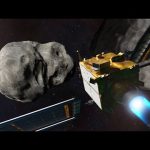
NASA’s Double Asteroid Redirection Test (DART) mission has attempted humanity’s first-ever test of planetary defense! The DART spacecraft intentionally crashed into asteroid Dimorphos at 7:14 p.m. EDT on Monday, September 26, 2022 to see if kinetic force can change its orbit. Why? If this test is successful, the same technique could be used to deflect an Earth-threatening asteroid in the future, should one ever be discovered. The #DARTMission’s target asteroid is NOT a threat to Earth before, during or after the impact event.
DART is a joint mission between NASA and the Johns Hopkins University Applied Physics Laboratory.
Countdown to impact as NASA’s Double Asteroid Redirection Test (DART) attempts humanity’s first-ever test of planetary defense! The DART spacecraft will intentionally crash into asteroid Dimorphos at 7:14 p.m. ET on Monday, September 26, 2022 to see if kinetic force can change its orbit. Why? If this test is successful, the same technique could be used to deflect an Earth-threatening asteroid in the future, should one ever be discovered.
The #DARTMission’s target asteroid is NOT a threat to Earth before, during or after the impact event.
NASA’s Double Asteroid Redirection Test (DART) has one single instrument onboard – the Didymos Reconnaissance and Asteroid Camera for Optical Navigation, aka the DRACO camera. DRACO serves as the spacecraft’s eye and will guide DART to its final destination: impact with asteroid Dimorphos. The stream you’re watching is a real-time feed from the DART spacecraft enabled through the DRACO camera sending one image per second to Earth. For the DART impact broadcast with commentary, watch: https://youtu.be/4RA8Tfa6Sck
In the hours before impact, the screen will appear mostly black, with a single point of light. That point is the binary asteroid system Didymos which is made up of a larger asteroid named Didymos and a smaller asteroid that orbits around it called Dimorphos. As the 7:14 p.m. EDT (23:14 UTC) impact of asteroid Dimorphos nears closer, the point of light will get bigger and eventually detailed asteroids will be visible.
At 7:14 p.m., the DART spacecraft is slated to intentionally crash into asteroid Dimorphos. This stream will be delayed due to the time it takes the images to arrive at Earth, plus additional time for feeding the images to various platforms. For the most up-to-date DRACO camera feed, please tune into the NASA DART Impact Broadcast here: https://youtu.be/4RA8Tfa6Sck
After impact, the feed will turn black – due to a loss of signal. After about 2 minutes, this stream will turn into a replay – showing the final moments leading up to impact. That replay file will also become available on NASA websites and social media accounts.
DART is a spacecraft designed to impact an asteroid as a test of technology. DART’s target asteroid is NOT a threat to Earth. This asteroid system is a perfect testing ground to see if intentionally crashing a spacecraft into an asteroid is an effective way to change its course, should an Earth-threatening asteroid be discovered in the future.
All eyes are looking up as @NASA intentionally crashes the 550 kg DART spacecraft into an orbiting asteroid at high speed. Our Estrack network of ground stations, Europe’s ‘eyes on the sky’, will be particularly focused on the humanmade impactor, keeping track as it closes in on the 160-metre-wide moving target in the world’s first test of asteroid deflection.
We are Europe’s gateway to space. Our mission is to shape the development of Europe’s space capability and ensure that investment in space continues to deliver benefits to the citizens of Europe and the world. Check out https://www.esa.int/ to get up to speed on everything space related.