
Did Mars ever look like Earth? We think it did! Ancient Mars may have been wetter and warmer — similar to our home planet. So what happened? Scientists like Dr. Becky McCauley Rench are trying to find out. Keep up with our Martian exploration efforts: www.nasa.gov/Mars
Category: Astronomie
-

Webb arrives in French Guiana for launch on Ariane 5
The James Webb Space Telescope, a once in a generation space mission, arrived safely at Pariacabo harbour in French Guiana on 12 October 2021, ahead of its launch on an Ariane 5 rocket from Europe’s Spaceport.
Webb was packed in a 30 m long container with additional equipment. It arrived from California on board the MN Colibri which sailed the Panama Canal to French Guiana on a 16-day voyage. The shallow Kourou river was specially dredged to ensure a clear passage and the vessel followed high tide to safely reach port.
The MN Colibri, like its sister vessel the MN Toucan, were built to ship Ariane 5 rocket parts from Europe to French Guiana. They were specifically designed to carry a complete set of Ariane 5 parts across the Atlantic, while having a low enough draft to enable them to follow a route along the shallow Kourou river to the Pariacabo harbour.
Webb will be the largest, most powerful telescope ever launched into space. As part of an international collaboration agreement, ESA is providing the telescope’s launch service using the Ariane 5 launch vehicle. Working with partners, ESA was responsible for the development and qualification of Ariane 5 adaptations for the Webb mission and for the procurement of the launch service by @arianespace.
Webb is an international partnership between @NASA, ESA and the @Canadian Space Agency.
Learn more about Webb: https://bit.ly/ESAWebb
Copyright: ESA/ @CNES/Arianespace
★ Subscribe: http://bit.ly/ESAsubscribe and click twice on the bell button to receive our notifications.
Check out our full video catalog: http://bit.ly/SpaceInVideos
Follow us on Twitter: http://bit.ly/ESAonTwitter
On Facebook: http://bit.ly/ESAonFacebook
On Instagram: http://bit.ly/ESAonInstagram
On Pinterest: https://bit.ly/ESAonPinterest
On Flickr: http://bit.ly/ESAonFlickrWe are Europe’s gateway to space. Our mission is to shape the development of Europe’s space capability and ensure that investment in space continues to deliver benefits to the citizens of Europe and the world. Check out https://www.esa.int/ to get up to speed on everything space related.
Copyright information about our videos is available here: https://www.esa.int/ESA_Multimedia/Terms_and_Conditions
#ESA
#Webb
#WebbFliesAriane -

Are robots our friends? with Maarten Steinbuch | Space Bites
Computing power doubles every two years, an observation known as Moore’s Law. Prof Maarten Steinbuch, a high-tech systems scientist, entrepreneur and communicator, from Eindhoven University of Technology, discussed how this exponential rate of change enables accelerating developments in sensor technology, AI computing and automotive machines, to make products in modern factories that will soon be smart and self-learning. Cars will become like an iPad on wheels. The questions are, when will they be better than humans? Will humans still be necessary? And what does the future of schools and universities look like?
★ Subscribe: http://bit.ly/ESAsubscribe and click twice on the bell button to receive our notifications.
Check out our full video catalog: http://bit.ly/SpaceInVideos
Follow us on Twitter: http://bit.ly/ESAonTwitter
On Facebook: http://bit.ly/ESAonFacebook
On Instagram: http://bit.ly/ESAonInstagram
On Pinterest: https://bit.ly/ESAonPinterest
On Flickr: http://bit.ly/ESAonFlickrWe are Europe’s gateway to space. Our mission is to shape the development of Europe’s space capability and ensure that investment in space continues to deliver benefits to the citizens of Europe and the world. Check out https://www.esa.int/ to get up to speed on everything space related.
Copyright information about our videos is available here: https://www.esa.int/ESA_Multimedia/Terms_and_Conditions
#ESA
#SpaceBites
#Robots -
![Space food | Mission Alpha [in French with English subtitles]](https://video.kidibot.ro/wp-content/uploads/2021/10/11052-space-food-mission-alpha-in-french-with-english-subtitles-150x150.jpg)
Space food | Mission Alpha [in French with English subtitles]
ESA astronaut Thomas Pesquet is on his second mission to the International Space Station called Alpha. In this video Thomas talks about his crew preference food that arrived on SpaceX CRS-22 supply spacecraft, the video was recorded on 19 June 2021 in the Zvezda module of the Space Station.
Astronauts’ full space menu comprise of a range of food designed to meet nutritional and operational requirements on board.
Because of the two hours of exercise they perform every day on the Station and a full schedule of science and operations, astronauts are expected to consume approximately 3000 calories per day in space. For ESA astronauts such as Thomas, two thirds of this calorie intake come from the basic food supply that is preselected and prepacked by @NASA for the entire space mission.The final third of their calories comes from ‘crew choice meals’ – food that the astronauts choose for themselves, either from the US menu or a range of European, Russian and Japanese options.
Before any mission to the Space Station, the astronauts participate in several space food tasting sessions to help determine what dishes will be included in the basic food supply. During a training course they test a range of different food and drink items and rate each of them in a questionnaire. This information is then provided to NASA’s food lab which determines the final food package.
Over 200 experiments are planned during Thomas’ time in space, with 40 European ones and 12 new experiments led by the French space agency @CNES.
Follow Thomas: http://bit.ly/ThomasPesquetBlog
★ Subscribe: http://bit.ly/ESAsubscribe and click twice on the bell button to receive our notifications.
Check out our full video catalog: http://bit.ly/SpaceInVideos
Follow us on Twitter: http://bit.ly/ESAonTwitter
On Facebook: http://bit.ly/ESAonFacebook
On Instagram: http://bit.ly/ESAonInstagram
On Pinterest: https://bit.ly/ESAonPinterest
On Flickr: http://bit.ly/ESAonFlickrWe are Europe’s gateway to space. Our mission is to shape the development of Europe’s space capability and ensure that investment in space continues to deliver benefits to the citizens of Europe and the world. Check out https://www.esa.int/ to get up to speed on everything space related.
Copyright information about our videos is available here: https://www.esa.int/ESA_Multimedia/Terms_and_Conditions
#ESA
#SpaceFood
#MissionAlpha -
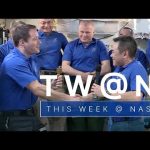
A Change of Command Aboard the Space Station on This Week @NASA – October 8, 2021
A change of command aboard the space station, getting curious for World Space Week, and expanding commercial opportunities in space … a few of the stories to tell you about – This Week at NASA!
Download Link:
https://images.nasa.gov/details-A%20Change%20of%20Command%20Aboard%20the%20Space%20Station%20on%20This%20Week%20@NASA%20–%20October%208,%202021 -
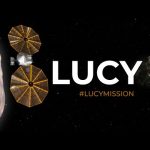
Launching Lucy, NASA’s First Mission to the Trojan Asteroids
On Oct. 16, 2021, our Lucy spacecraft will begin its journey to visit a record-breaking number of asteroids. The 12-year mission starts from NASA’s Kennedy Space Center where it’ll launch aboard a United Launch Alliance Atlas V 401 rocket. From there, Lucy will be the first spacecraft to visit a record number of destinations in independent orbits around the sun – one main belt asteroid and seven of Jupiter’s Trojan Asteroids. Like the mission’s namesake – the fossilized human ancestor, “Lucy,” whose skeleton provided unique insight into humanity’s evolution – Lucy will revolutionize our knowledge of planetary origins and the formation of the solar system.
Lucy’s first launch attempt in its 21-day launch window is scheduled for 5:34 a.m. EDT on Oct. 16. Launch coverage starts at 5 a.m. EDT on NASA TV, the NASA app, and @NASA social media. Be a part of Lucy’s historic launch day by using the hashtag #LucyMission!
Producer/Editor: Lacey Young
Music: Universal Production Music -

Earth from Space: Budapest, Hungary
The Copernicus Sentinel-2 takes us over Budapest, the capital and most populous city in Hungary, in this edition of the Earth from Space programme.
Download the image: https://www.esa.int/ESA_Multimedia/Images/2021/10/Budapest_Hungary
★ Subscribe: http://bit.ly/ESAsubscribe and click twice on the bell button to receive our notifications.
Check out our full video catalog: http://bit.ly/SpaceInVideos
Follow us on Twitter: http://bit.ly/ESAonTwitter
On Facebook: http://bit.ly/ESAonFacebook
On Instagram: http://bit.ly/ESAonInstagram
On Pinterest: https://bit.ly/ESAonPinterest
On Flickr: http://bit.ly/ESAonFlickrWe are Europe’s gateway to space. Our mission is to shape the development of Europe’s space capability and ensure that investment in space continues to deliver benefits to the citizens of Europe and the world. Check out https://www.esa.int/ to get up to speed on everything space related.
Copyright information about our videos is available here: https://www.esa.int/ESA_Multimedia/Terms_and_Conditions
#ESA
#EarthFromSpace
#Budapest -

NASA Celebrates Hispanic Heritage: El Ayer y El Mañana
Join host and award-winning journalist Soledad O’Brien for NASA’s “Hispanic Heritage: El Ayer y El Mañana” (The Past and the Future) event, a conversation about the upcoming Smithsonian National Museum of the American Latino, NASA’s influence on Hispanic-American culture, and the pioneering spirit of Latinos.
Participants include Dr. Ellen R. Stofan, under secretary for Science and Research at the Smithsonian Institution, and Dr. Marla Pérez-Davis, director of NASA’s Glenn Research Center. NASA astronauts Frank Rubio and Joe Acaba join other voices from across the agency, and Administrator Bill Nelson delivers closing remarks.
00:00-00:15 Show open
00:15-2:15 Host Soledad O’Brien’s opening remarks
2:15-12:13 Conversation with Smithsonian’s Dr. Ellen R. Stofan about the National Museum of the American Latino
12:13-17:27 Remarks from Dr. Marla Pérez-Davis, Center Director at NASA Glenn Research Center
17:27-22:50 Remarks from Debbie Martínez, Marlyn Andino, Miguel Alvarez, Gaudy Bezos-O’Connor, and George Altamirano at NASA Langley Research Center
22:50-27:03 Remarks from Sandra Cauffman, Earth Science Deputy Director
27:03-30:47 Remarks from Gisela Muñoz, Crew Systems Astronaut Instructor at NASA Johnson Space Center
30:47-34:22 Continued conversation about the National Museum of the American Latino
34:22-42:24 Conversation with NASA astronauts Dr. Frank Rubio and Joe Acaba
42:24-46:09 Continued conversation about the National Museum of the American Latino
46:09-50:35 Workforce remarks from Liliana Villarreal at NASA Kennedy Space Center, Elio Morillo at NASA Jet Propulsion Laboratory, and Cesar Acosta at NASA Ames Research Center
50:35-52:33 Continued conversation about the National Museum of the American Latino
52:33-54:29 Host Soledad O’Brien’s closing remarks
54:25-55:44 Closing remarks from NASA’s Hispanic Outreach and Leadership Alliance
55:44-57:32 Closing remarks from NASA Administrator Bill NelsonProducers: Lacey Young, David Anderson
Editor: David Anderson
Music: Universal Production Music -

Space workout anyone?🦵 #shorts
ESA astronaut Thomas Pesquet is sharing scenes from life on board the International Space Station during his second mission “Alpha”. He shared this video on social media with the caption:
“Space workout anyone? The Advanced Resistive Exercise Device or ARED is called this for a reason, it uses pressurized air in two cylinders and complicated machinery to allow us to weightlift in space: squats, deadlifts, bench press, shoulder press, biceps curl, etc, we can do it all… but we do a lot of squats: these muscles don’t do much work during our normal day. We never skip exercise on the International Space Station. Every. Single. Day. I miss having a shower, and I miss the rain, and I miss fresh food, but secretly I also miss having a day without having to exercise. Don’t tell my flight surgeon!”
Over 200 experiments are planned during Thomas’ time in space, with 40 European ones and 12 new experiments led by the French space agency @CNES.
Follow Thomas: http://bit.ly/ThomasPesquetBlog
★ Subscribe: http://bit.ly/ESAsubscribe and click twice on the bell button to receive our notifications.
Check out our full video catalog: http://bit.ly/SpaceInVideos
Follow us on Twitter: http://bit.ly/ESAonTwitter
On Facebook: http://bit.ly/ESAonFacebook
On Instagram: http://bit.ly/ESAonInstagram
On Pinterest: https://bit.ly/ESAonPinterest
On Flickr: http://bit.ly/ESAonFlickrWe are Europe’s gateway to space. Our mission is to shape the development of Europe’s space capability and ensure that investment in space continues to deliver benefits to the citizens of Europe and the world. Check out https://www.esa.int/ to get up to speed on everything space related.
Copyright information about our videos is available here: https://www.esa.int/ESA_Multimedia/Terms_and_Conditions
#ESA
#Workout
#MissionAlpha -

Vice President Kamala Harris and an Astronaut? What A Day! | Get Curious with Vice President Harris
In honor of World Space Week, we’re visiting the Naval Observatory in Washington to talk to none other than Vice President Kamala Harris about the National Space Council. We also hear from NASA astronaut Shane Kimbrough, who joins us from the International Space Station – that’s right, from space! Plus, we’re building a DIY telescope that you can make yourself at home.
To learn more about space-related educational activities, head over to nasa.gov/stem.
-

What are Lagrange Points? We Asked a NASA Scientist
Lagrange points are places around a planet where the pull of its gravity, the Sun’s gravity and the motion of the orbit are balanced. Things at these points take very little energy to stay in place. NASA’s Lucy mission will visit Lagrange points where “Trojan asteroids” have been trapped for billions of years, holding clues to the formation of our solar system. NASA’s Dr. Adriana Ocampo has more.
Learn more about Lagrange Points: https://go.nasa.gov/3jzTNti
All about the Lucy mission: nasa.gov/lucy
All about the James Webb Space Telescope: https://webb.nasa.gov/Credits: NASA
Producer: Scott Bednar
Producer/Editor: Jessica Wilde -
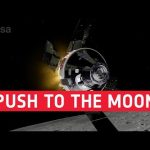
European push to the Moon
The European Space Agency is playing a vital role in humankind’s return to the Moon. In a few months @NASA will launch Artemis I from the Kennedy Space Center. The uncrewed mission will carry NASA’s Orion spacecraft incorporating ESA’s European Service Module (ESM-1), built and tested by Airbus Bremen, in Germany, with the help of 10 European nations. ESM-1’s main engine and 32 thrusters will propel Orion into orbit around the Moon and return it to Earth.
As Artemis I prepares for launch, the second European Service Module (ESM-2) is about to ship to the US with ESM-3 also currently under construction. The second Artemis mission, however, has a crucial difference: it will carry four astronauts for a lunar flyby. ESM-2 will provide propulsion, power, oxygen, water and life support as well as controlling the temperature in the orbiting crew module. ESM-3 will go one step further and put the first person on the Moon for 50 years.
Learn more about Orion: https://bit.ly/ESAsOrion
★ Subscribe: http://bit.ly/ESAsubscribe and click twice on the bell button to receive our notifications.
Check out our full video catalog: http://bit.ly/SpaceInVideos
Follow us on Twitter: http://bit.ly/ESAonTwitter
On Facebook: http://bit.ly/ESAonFacebook
On Instagram: http://bit.ly/ESAonInstagram
On Pinterest: https://bit.ly/ESAonPinterest
On Flickr: http://bit.ly/ESAonFlickrWe are Europe’s gateway to space. Our mission is to shape the development of Europe’s space capability and ensure that investment in space continues to deliver benefits to the citizens of Europe and the world. Check out https://www.esa.int/ to get up to speed on everything space related.
Copyright information about our videos is available here: https://www.esa.int/ESA_Multimedia/Terms_and_Conditions
#ESA
#Orion
#Artemis -
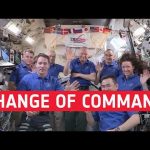
Thomas becomes Space Station commander
On 4 October 2021 ESA astronaut Thomas Pesquet became commander of the International Space Station, taking over from @JAXA | 宇宙航空研究開発機構 astronaut and fellow Crew-2 member Akihiko Hoshide. Thomas will hold this role until shortly before Crew-2 return to Earth in November. Thomas officially accepted his new position during a traditional ceremony, broadcast live from the International Space Station, where a symbolic handover of a key from Aki to Thomas denoted the change of command. The full title of this role is International Space Station crew commander. While overall command of the Station lies with ground-based flight directors, unless there is an emergency on board, the role of crew commander is vital to mission success. Aki became commander on 27 April 2021 when he took over from @NASA astronaut Shannon Walker. In September Aki and Thomas conducted the first spacewalk without a Russian or US astronaut.
Follow Thomas: http://bit.ly/ThomasPesquetBlog
★ Subscribe: http://bit.ly/ESAsubscribe and click twice on the bell button to receive our notifications.
Check out our full video catalog: http://bit.ly/SpaceInVideos
Follow us on Twitter: http://bit.ly/ESAonTwitter
On Facebook: http://bit.ly/ESAonFacebook
On Instagram: http://bit.ly/ESAonInstagram
On Pinterest: https://bit.ly/ESAonPinterest
On Flickr: http://bit.ly/ESAonFlickrWe are Europe’s gateway to space. Our mission is to shape the development of Europe’s space capability and ensure that investment in space continues to deliver benefits to the citizens of Europe and the world. Check out https://www.esa.int/ to get up to speed on everything space related.
Copyright information about our videos is available here: https://www.esa.int/ESA_Multimedia/Terms_and_Conditions
#ESA
#ISS
#MissionAlpha -
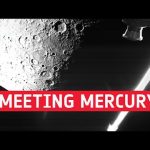
Meeting Mercury
A beautiful sequence of 53 images taken by the monitoring cameras on board the ESA/JAXA BepiColombo mission as the spacecraft made its first close flyby of its destination planet Mercury on 1 October 2021.
The compilation includes images from two of the three Monitoring Cameras (MCAM) onboard the Mercury Transfer Module, which provides black-and-white snapshots at 1024 x 1024 pixel resolution. It is not possible to image with the high-resolution camera suite during the cruise phase. The MCAMs also capture parts of the spacecraft: MCAM-2 sees the medium-gain antenna and magnetometer boom, while the high-gain antenna is in the MCAM-3 field-of-view.
The sequence opens with the closest images acquired by MCAM-2 and MCAM-3, taken at a distance of around 1000 km from the surface of the planet. Closest approach at 199 km took place about five minutes earlier, at 23:34:41 UTC.
During the half hour following the close approach, imaging alternated between the two cameras. In general, MCAM-2 pointed towards the northern hemisphere of Mercury, while MCAM-3 pointed towards the southern hemisphere. Thus the subsequent images show a set of complementary views from each camera in turn, ranging from a distance of about 2420 km to 6140 km from the surface of Mercury. In these relatively close images, it is possible to identify prominent impact craters, scarps, and other geological features that BepiColombo will study in more detail once in orbit around the planet at the end of 2025.
The final part of the compilation illustrates BepiColombo’s departure from Mercury as the spacecraft changed attitude along its trajectory, giving the impression Mercury’s apparent movement changes direction. The final image was taken at 03:03:49 UTC on 2 October from a distance of approximately 93 thousand kilometres. The final departure sequence has been speeded up by a factor of about 900.
Several different exposure times were used throughout the imaging sequence in order to try and capture the rapidly-varying brightness of Mercury, and in some cases the spacecraft and/or the planet are overexposed, particularly in the final departure sequence. Optical and electronic artefacts are also visible in some images.
The gravity assist manoeuvre was the first at Mercury and the fourth of nine flybys overall. During its seven-year cruise to the smallest and innermost planet of the Solar System, BepiColombo makes one flyby at Earth, two at Venus and six at Mercury to help steer it on course to arrive in Mercury orbit in 2025. The Mercury Transfer Module carries two science orbiters: ESA’s Mercury Planetary Orbiter and JAXA’s Mercury Magnetospheric Orbiter. They will operate from complementary orbits to study all aspects of mysterious Mercury from its core to surface processes, magnetic field and exosphere, to better understand the origin and evolution of a planet close to its parent star.
Credit: ESA/BepiColombo/MTM, CC BY-SA 3.0 IGO; Music composed and performed by Anil Sebastian and Ingmar Kamalagharan.
★ Subscribe: http://bit.ly/ESAsubscribe and click twice on the bell button to receive our notifications.
Check out our full video catalog: http://bit.ly/SpaceInVideos
Follow us on Twitter: http://bit.ly/ESAonTwitter
On Facebook: http://bit.ly/ESAonFacebook
On Instagram: http://bit.ly/ESAonInstagram
On Pinterest: https://bit.ly/ESAonPinterest
On Flickr: http://bit.ly/ESAonFlickrWe are Europe’s gateway to space. Our mission is to shape the development of Europe’s space capability and ensure that investment in space continues to deliver benefits to the citizens of Europe and the world. Check out https://www.esa.int/ to get up to speed on everything space related.
Copyright information about our videos is available here: https://www.esa.int/ESA_Multimedia/Terms_and_Conditions
#ESA
#BepiColombo
#Mercury -
NASA Science Live: Landsat – A Legacy of Seeing Earth from Space
Earth is changing, and these changes can be seen from space. A series of satellites built by NASA and operated by the U.S. Geological Survey (USGS) have been monitoring and tracking changes across our planet for almost 50 years. Adding to this legacy circling the globe every 99 minutes and collecting images of the Earth landscapes and coastal regions, Landsat 9 will continue to answer the many questions we have about Earth’s climate change, population growth and even your very own food supply. Join experts on #NASAScience Live Thursday, Sept. 30 at 3:00 p.m. ET to learn more. Submit your questions by using #Landsat
Meet the experts:
Your host for this episode is Jacob Richmond, the Earth Science Communications Manager at NASA’s Goddard Space Flight Center. Jacob joined NASA after retiring from the Air Force after 20 years of service. In his spare time he loves to hike and travel with his family.Dr. Liz Hoy is a Senior Scientist at NASA Goddard and is our fire expert for this episode. Dr. Hoy started her graduate studies in remote sensing science where she went to Alaska, hiked around and took tree and soil measurements to compare them with NASA satellite observations. She really enjoys working with a group of scientists all focused on the same goal – to better study the Earth system. In her spare time, Dr. Hoy enjoys outdoor activities – hiking, biking, boating, swimming, and taking her dog for a walk.
Ms. Nikki Tulley is a Research Assistant with NASA’s Wester Water Applications Office (WWAO). Her time at NASA began when she was selected for a summer internship with the WWAO Navajo Nation Drought Severity Evaluation Tool (DSET) project in 2020. In this role, Ms. Tulley was able to create important connections to the community where DSET would be used through developing language connections through the Navajo Language. Her favorite part of working with NASA is that she gets to break down stereotypes and let people know how accessible data is to help their communities. In her spare time and every chance she gets, Ms. Tulley travels home back to the Navajo Nation.
-
A New Earth-Observing Mission Launches to Space on This Week @NASA – October 1, 2021
A new Earth-observing mission launches to space, a move to make room aboard the space station, and some valuable space station science returns to Earth … a few of the stories to tell you about – This Week at NASA!
Download Link: https://images.nasa.gov/details-A%20New%20Earth-Observing%20Mission%20Launches%20to%20Space%20on%20This%20Week%20@NASA%20%E2%80%93%20October%201,%202021
Video Credits:
Producer/Writer: Andre Valentine
Editor: Amy Leniart -

Earth from Space: Mackenzie River, Canada
In this week’s edition of the Earth from Space programme, the Copernicus Sentinel-1 mission takes us over the Mackenzie River, a major river system in the Canadian boreal forest.
Download the image: https://www.esa.int/ESA_Multimedia/Images/2021/10/Mackenzie_River_Canada
★ Subscribe: http://bit.ly/ESAsubscribe and click twice on the bell button to receive our notifications.
Check out our full video catalog: http://bit.ly/SpaceInVideos
Follow us on Twitter: http://bit.ly/ESAonTwitter
On Facebook: http://bit.ly/ESAonFacebook
On Instagram: http://bit.ly/ESAonInstagram
On Pinterest: https://bit.ly/ESAonPinterest
On Flickr: http://bit.ly/ESAonFlickrWe are Europe’s gateway to space. Our mission is to shape the development of Europe’s space capability and ensure that investment in space continues to deliver benefits to the citizens of Europe and the world. Check out https://www.esa.int/ to get up to speed on everything space related.
Copyright information about our videos is available here: https://www.esa.int/ESA_Multimedia/Terms_and_Conditions
#ESA
#EarthFromSpace
#Canada -

We Asked a NASA Scientist: What are the Trojan Asteroids?
What are the Trojan asteroids? These mysterious space rocks have been gravitationally trapped in Jupiter’s orbit around the Sun for billions of years and hold clues to the formation of our solar system. NASA’s Lucy mission will be the first spacecraft to study these ancient relics up close. Scientist Audrey Martin at Northern Arizona University has the details.
Learn more about Lucy’s mission to the Trojans, launching Oct. 16:
Producers: Jessica Wilde & Scot Bednar
Editor: Matthew Schara -

New experiment possibilities for Astro Pi Mission Space Lab
The European Astro Pi Challenge offers young people from age 7 up to 19 years the chance to run their code in space. This year students can take their codes for Mission Space Lab to the next level thanks to two brand new Astro Pi computers offering new experiment capabilities.
More info: https://astro-pi.org/mission-space-lab/
★ Subscribe: http://bit.ly/ESAsubscribe and click twice on the bell button to receive our notifications.
Check out our full video catalog: http://bit.ly/SpaceInVideos
Follow us on Twitter: http://bit.ly/ESAonTwitter
On Facebook: http://bit.ly/ESAonFacebook
On Instagram: http://bit.ly/ESAonInstagram
On Pinterest: https://bit.ly/ESAonPinterest
On Flickr: http://bit.ly/ESAonFlickrWe are Europe’s gateway to space. Our mission is to shape the development of Europe’s space capability and ensure that investment in space continues to deliver benefits to the citizens of Europe and the world. Check out https://www.esa.int/ to get up to speed on everything space related.
Copyright information about our videos is available here: https://www.esa.int/ESA_Multimedia/Terms_and_Conditions
#ESA
#AstroPi
#RaspberryPi -
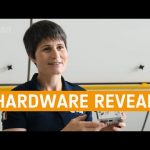
Astro Pi 2021 hardware reveal
After 7 years of operation on the International Space Station, it’s time to upgrade the Astro Pi computers. In this video ESA astronaut Samantha Cristoforetti reveals the new Astro Pi computers and their specs. The new units will launch to the International Space Station later this year.
More info on Astro Pi: https://astro-pi.org/
★ Subscribe: http://bit.ly/ESAsubscribe and click twice on the bell button to receive our notifications.
Check out our full video catalog: http://bit.ly/SpaceInVideos
Follow us on Twitter: http://bit.ly/ESAonTwitter
On Facebook: http://bit.ly/ESAonFacebook
On Instagram: http://bit.ly/ESAonInstagram
On Pinterest: https://bit.ly/ESAonPinterest
On Flickr: http://bit.ly/ESAonFlickrWe are Europe’s gateway to space. Our mission is to shape the development of Europe’s space capability and ensure that investment in space continues to deliver benefits to the citizens of Europe and the world. Check out https://www.esa.int/ to get up to speed on everything space related.
Copyright information about our videos is available here: https://www.esa.int/ESA_Multimedia/Terms_and_Conditions
#ESA
#AstroPi
#RaspberryPi -
![Node 3 | Space Station 360 [in French with English subtitles available]](https://video.kidibot.ro/wp-content/uploads/2025/06/21958-node-3-space-station-360-in-french-with-english-subtitles-available-150x150.jpg)
Node 3 | Space Station 360 [in French with English subtitles available]
ESA astronaut Thomas Pesquet takes you on a tour of the International Space Station like no other. Filmed with a 360 camera, the Space Station 360 series lets you explore for yourself alongside Thomas’s explanation – episode six is NASA’s Node-3, also known as Tranquility.
Node 3 has cylindrical hull 4.5 m in diameter with a shallow conical section enclosing each end. It is almost 7 m long and, together with the Space Station’s observatory Cupola, weighed over 13.5 tonnes at launch. Built in Europe, Node 3 houses the life-support equipment, the toilet and equipment racks.
Follow Thomas: http://bit.ly/ThomasPesquetBlog
★ Subscribe: http://bit.ly/ESAsubscribe and click twice on the bell button to receive our notifications.
Check out our full video catalog: http://bit.ly/SpaceInVideos
Follow us on Twitter: http://bit.ly/ESAonTwitter
On Facebook: http://bit.ly/ESAonFacebook
On Instagram: http://bit.ly/ESAonInstagram
On Pinterest: https://bit.ly/ESAonPinterest
On Flickr: http://bit.ly/ESAonFlickrWe are Europe’s gateway to space. Our mission is to shape the development of Europe’s space capability and ensure that investment in space continues to deliver benefits to the citizens of Europe and the world. Check out https://www.esa.int/ to get up to speed on everything space related.
Copyright information about our videos is available here: https://www.esa.int/ESA_Multimedia/Terms_and_Conditions
#ESA
#ISSTour
#MissionAlpha -
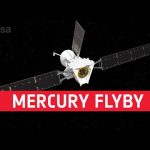
BepiColombo first Mercury flyby
Visualisation of BepiColombo flying by Mercury on 1 October 2021. The spacecraft makes nine gravity assist manoeuvres (one of Earth, two of Venus and six of Mercury) before entering orbit around the innermost planet of the Solar System.
The closest approach is at 23:34 UTC on 1 October (01:34 CEST 2 October) at a distance of about 200 km.
BepiColombo is an international collaboration between #ESA and #JAXA.
Credit: ESA/ATG medialab
★ Subscribe: http://bit.ly/ESAsubscribe and click twice on the bell button to receive our notifications.
Check out our full video catalog: http://bit.ly/SpaceInVideos
Follow us on Twitter: http://bit.ly/ESAonTwitter
On Facebook: http://bit.ly/ESAonFacebook
On Instagram: http://bit.ly/ESAonInstagram
On Pinterest: https://bit.ly/ESAonPinterest
On Flickr: http://bit.ly/ESAonFlickrWe are Europe’s gateway to space. Our mission is to shape the development of Europe’s space capability and ensure that investment in space continues to deliver benefits to the citizens of Europe and the world. Check out https://www.esa.int/ to get up to speed on everything space related.
Copyright information about our videos is available here: https://www.esa.int/ESA_Multimedia/Terms_and_Conditions
#ESA
#BepiColombo
#Mercury -
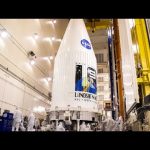
Launch of the Landsat 9 Earth-Observing Satellite
🚀 Watch the newest #Landsat satellite lift off! This joint NASA-U.S. Geological Survey mission will contribute to the longest data record of Earth’s landscapes taken from space. Landsat 9 continues the nearly 50-year legacy of the Landsat Program: observing our changing home planet, monitoring its land and coastal regions, helping us manage its essential resources, and providing free, publicly available images and data.
Landsat 9 will launch Mon., Sept. 27 at 2:12 p.m. EDT (18:12 UTC) aboard a United Launch Alliance Atlas V rocket from Space Launch Complex 3 at Vandenberg Space Force Base in California. Landsat 9 will join its sister satellite, Landsat 8, in orbit in collecting images from across the planet every eight days.
-

China to Korea at night timelapse
Timelapse video made during ESA astronaut Thomas Pesquet’s second mission to the International Space Station, “Alpha”. The camera is setup to take pictures at intervals of two a second, and the pictures are then edited into this video that plays at 25 pictures a second. The video is around 12 times faster than real speed.
Thomas shared this video on social media with the caption:
“A night #timelapse over South-East Asia. Green lights of squid fishing, bright city lights of Hong Kong and Shanghai followed by Seoul until the border of the Korean peninsula closes on a pitch black DPRK.”Over 200 experiments are planned during Thomas’ time in space, with 40 European ones and 12 new experiments led by the French space agency #CNES.
Latest updates on the Alpha mission can be found via @esaspaceflight on Twitter, with more details on ESA’s exploration blog via thomaspesquet.esa.int.
Background information on the Alpha mission is available at www.esa.int/MissionAlpha with a brochure at www.esa.int/AlphaBrochure.
★ Subscribe: http://bit.ly/ESAsubscribe and click twice on the bell button to receive our notifications.
Check out our full video catalog: http://bit.ly/SpaceInVideos
Follow us on Twitter: http://bit.ly/ESAonTwitter
On Facebook: http://bit.ly/ESAonFacebook
On Instagram: http://bit.ly/ESAonInstagram
On Pinterest: https://bit.ly/ESAonPinterest
On Flickr: http://bit.ly/ESAonFlickrWe are Europe’s gateway to space. Our mission is to shape the development of Europe’s space capability and ensure that investment in space continues to deliver benefits to the citizens of Europe and the world. Check out https://www.esa.int/ to get up to speed on everything space related.
Copyright information about our videos is available here: https://www.esa.int/ESA_Multimedia/Terms_and_Conditions
#ESA
#MissionAlpha
#Timelapse -

Positioning the Agency for Future Success on This Week @NASA – September 24, 2021
Positioning the agency for future success, a lunar landing site selected for a robotic explorer, and highlighting diversity on the Moon … a few of the stories to tell you about – This Week at NASA!
Download Link: https://images.nasa.gov/details-Positioning%20the%20Agency%20for%20Future%20Success%20on%20This%20Week%20@NASA%20%E2%80%93%20September%2024,%202021
Producer: Andre Valentine
Editor: Sonnet Apple
Music: Universal Production Music -

NASA Science Live: Moon to Mars Ice and Prospecting Challenge
NASA Science Live is back and we’re LIVE from the Moon to Mars Ice & Prospecting Challenge. Ten teams from across the country have been tasked with one goal: to extract ice beneath a simulated lunar or Martian surface. As we look forward to NASA’s Artemis program to the Moon and even one-day crewed missions to Mars, ideas from challenges like this will be essential in creating technology to access resources like water for humans to survive on other worlds. Join us on Sept 24th at 3:00 p.m. to hear from NASA experts and the teams.
Meet the experts
Alejandro Pensado is an Aerospace Engineer at NASA Langley Research Center. In 2018, Alejandro joined the Space Mission Analysis Branch at NASA Langley, working on in-situ resource utilization, propulsion, and Moon and Mars mission architectures. He says he loves the variety of his work and enjoys collaborating with creative and talented people which makes his job more fun. In his spare time, he loves photography, cooking, and traveling.Shelley Spears is the National Institute of Aerospace Director of Education and Outreach. As one of the organizers of the competition, Shelley says she loves the magnitude of impact her work has on society and its contribution to American competitiveness. In her spare time she loves boating, golfing, bird hunting with her dogs, traveling, staying fit, as well as cooking and entertaining with family and friends.
Christopher Jones is a Senior Aerospace Engineer at NASA Langley Research Center. Ever since he was a young boy, Christopher always dreamt of working for NASA. Soon his opportunity came as he joined the Space Mission Analysis Branch at NASA Langley. He says he loves working on the diverse mix of projects that all support improving life on Earth through space. Outside of work, he spends his time playing racquetball, cooking, playing board games, and writing.
-

We Asked a NASA Technologist – Is There Oxygen on Mars?
Is there oxygen on Mars? Technically yes, but it’s nothing like the amount we have on Earth. So breathing is out of the question. However, there IS a lot of carbon dioxide (CO2) on Mars. Now a new technology — MOXIE — has proven that we can convert Martian CO2 into oxygen for use by future explorers. NASA engineer Asad Aboobaker tells us more. Learn more about MOXIE: https://go.nasa.gov/37ujwOl
Producers: Jessica Wilde & Scott Bednar
Editor: Matthew Schara -
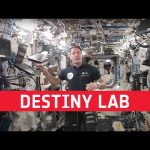
Destiny laboratory – a day in the life of Thomas Pesquet
ESA astronaut Thomas Pesquet is sharing scenes from life on board the International Space Station during his second mission “Alpha”. He shared this video moving through NASA’s Destiny laboratory, detailing the elements of a normal day in the research module.
From the exercise bike to the robotics workstation and all the research facilities, Thomas shows how astronauts work in the US space laboratory.
Over 200 experiments are planned during Thomas’ time in space, with 40 European ones and 12 new experiments led by the French space agency @CnesFrance.
Follow Thomas: http://bit.ly/ThomasPesquetBlog
★ Subscribe: http://bit.ly/ESAsubscribe and click twice on the bell button to receive our notifications.
Check out our full video catalog: http://bit.ly/SpaceInVideos
Follow us on Twitter: http://bit.ly/ESAonTwitter
On Facebook: http://bit.ly/ESAonFacebook
On Instagram: http://bit.ly/ESAonInstagram
On Pinterest: https://bit.ly/ESAonPinterest
On Flickr: http://bit.ly/ESAonFlickrWe are Europe’s gateway to space. Our mission is to shape the development of Europe’s space capability and ensure that investment in space continues to deliver benefits to the citizens of Europe and the world. Check out https://www.esa.int/ to get up to speed on everything space related.
Copyright information about our videos is available here: https://www.esa.int/ESA_Multimedia/Terms_and_Conditions
#ESA
#ISSTour
#ThomasPesquet -

The Future of NASA
NASA’s future will continue to be a story of human exploration, science, engineering and technology. Working together, we define the future, achieve the impossible and discover the unknown.
With our Artemis missions, NASA will land the first woman and first person of color on the Moon, using innovative technologies to explore more of the lunar surface than ever before. We will collaborate with commercial and international partners and establish the first long-term presence on the Moon. Then, we will use what we learn on and around the Moon to take the next giant leap: sending the first astronauts to Mars.
We will continue to nurture the development of a vibrant low-Earth orbit economy that builds on the work done to date by the International Space Station. Commercial companies will play an increasing role in the space industry: launching rockets and satellites, transporting cargo and crew, building infrastructure in low-Earth orbit.
NASA research and missions are essential to the future of Earth. The unique vantage point of space allows us to better understand Earth’s systems and use that knowledge to live sustainably on our home planet, protect life around the world, and adapt to natural and human-caused changes. Our data and observations will help protect our home planet.
Our James Webb Space Telescope will peer farther into the Universe than ever before. Our scientists will work to increase an understanding of our planet, our solar system and our place in the universe. We will continue to try to answer the question, “Are we alone?”
Download Link: https://images.nasa.gov/details-The%20Future%20of%20NASA
Video Credits:
Producer/Editor: Amy Leniart -
NASA Town Hall on Human Spaceflight
Tune in to hear NASA Administrator Bill Nelson and other senior leaders provide updates about our human spaceflight programs, projects, and activities.
-

Back to school with ESA astronaut Matthias Maurer
Kick off the 2021-22 school year with ESA school projects. ESA astronaut Matthias Maurer introduces the wide range of space-based STEM projects available to primary and secondary students:
– Moon Camp: https://mooncampchallenge.org/
– Climate Detectives: https://climatedetectives.esa.int/
– Astro Pi: https://astro-pi.org/
– CanSat: https://cansat.esa.int/
– Mission X: https://trainlikeanastronaut.org/Learn more: https://www.esa.int/Education/Teachers_Corner/2021-22_school_projects2
★ Subscribe: http://bit.ly/ESAsubscribe and click twice on the bell button to receive our notifications.
Check out our full video catalog: http://bit.ly/SpaceInVideos
Follow us on Twitter: http://bit.ly/ESAonTwitter
On Facebook: http://bit.ly/ESAonFacebook
On Instagram: http://bit.ly/ESAonInstagram
On Pinterest: https://bit.ly/ESAonPinterest
On Flickr: http://bit.ly/ESAonFlickrWe are Europe’s gateway to space. Our mission is to shape the development of Europe’s space capability and ensure that investment in space continues to deliver benefits to the citizens of Europe and the world. Check out https://www.esa.int/ to get up to speed on everything space related.
Copyright information about our videos is available here: https://www.esa.int/ESA_Multimedia/Terms_and_Conditions
#ESA
#AstroPi
#ESAEducation -
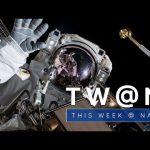
Preparing the Space Station for a Future Power Boost on This Week @NASA – September 17, 2021
Preparing the space station for a future power boost, a mission extension for a couple of station crew members, and a spaceflight first for one of our commercial partners … a few of the stories to tell you about – This Week at NASA!
Download Link: https://images.nasa.gov/details-Preparing%20the%20Space%20Station%20for%20a%20Future%20Power%20Boost%20on%20This%20Week%20@NASA%20%E2%80%93%20September%2017,%202021
Producer: Andre Valentine
Editor: Lacey Young
Music: Universal Production Music -

We Asked a NASA Scientist – Does NASA Know About All the Asteroids?
Does NASA know about ALL the asteroids? We know about the vast majority of larger ones and none of those pose a threat, but space is big, so we’re always on the lookout. NASA asteroid expert Dr. Amy Mainzer explains. Learn more: nasa.gov/planetarydefense
Producer: Scott Bednar
Producer/Editor: Jessica Wilde -
![Quest airlock | Space Station 360 [in French with English subtitles available]](https://video.kidibot.ro/wp-content/uploads/2021/11/11319-quest-airlock-space-station-360-in-french-with-english-subtitles-available-150x150.jpg)
Quest airlock | Space Station 360 [in French with English subtitles available]
ESA astronaut Thomas Pesquet takes you on a tour of the International Space Station like no other. Filmed with a 360 camera, the Space Station 360 series lets you explore for yourself alongside Thomas’s explanation – episode four is @NASA’s Quest airlock.
The Quest airlock is the Station’s smallest module, but it is vital for going on spacewalks. This is where the astronauts suit up into their spacesuits, prepare for the spacewalk and enter the airlock to go outside for maintenance, installing new equipment or science experiments.
Follow Thomas: http://bit.ly/ThomasPesquetBlog
★ Subscribe: http://bit.ly/ESAsubscribe and click twice on the bell button to receive our notifications.
Check out our full video catalog: http://bit.ly/SpaceInVideos
Follow us on Twitter: http://bit.ly/ESAonTwitter
On Facebook: http://bit.ly/ESAonFacebook
On Instagram: http://bit.ly/ESAonInstagram
On Pinterest: https://bit.ly/ESAonPinterest
On Flickr: http://bit.ly/ESAonFlickrWe are Europe’s gateway to space. Our mission is to shape the development of Europe’s space capability and ensure that investment in space continues to deliver benefits to the citizens of Europe and the world. Check out https://www.esa.int/ to get up to speed on everything space related.
Copyright information about our videos is available here: https://www.esa.int/ESA_Multimedia/Terms_and_Conditions
#ESA
#ISSTour
#MissionAlpha -
![Kibo | Space Station 360 [in French with English subtitles available]](https://video.kidibot.ro/wp-content/uploads/2025/04/21442-kibo-space-station-360-in-french-with-english-subtitles-available-150x150.jpg)
Kibo | Space Station 360 [in French with English subtitles available]
ESA astronaut Thomas Pesquet takes you on a tour of the International Space Station like no other. Filmed with a 360 camera, the Space Station 360 series lets you explore for yourself alongside Thomas’s explanation – this is the Kibo module.
Kibo is the Japanese module, also known as the Japanese Experiment Module or JEM. Thomas takes you through the hardware available for the astronauts and researchers on Earth and the unique airlock and storage space in Kibo.
The video is part of a series with Thomas showing each module in full 360 surround video.
Click and drag with your mouse or move your smartphone around to see different angles and feel like you are in space with Thomas.Follow Thomas: http://bit.ly/ThomasPesquetBlog
★ Subscribe: http://bit.ly/ESAsubscribe and click twice on the bell button to receive our notifications.
Check out our full video catalog: http://bit.ly/SpaceInVideos
Follow us on Twitter: http://bit.ly/ESAonTwitter
On Facebook: http://bit.ly/ESAonFacebook
On Instagram: http://bit.ly/ESAonInstagram
On Pinterest: https://bit.ly/ESAonPinterest
On Flickr: http://bit.ly/ESAonFlickrWe are Europe’s gateway to space. Our mission is to shape the development of Europe’s space capability and ensure that investment in space continues to deliver benefits to the citizens of Europe and the world. Check out https://www.esa.int/ to get up to speed on everything space related.
Copyright information about our videos is available here: https://www.esa.int/ESA_Multimedia/Terms_and_Conditions
#ESA
#ISSTour
#MissionAlpha -
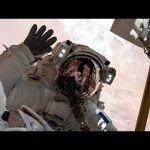
Spacewalk Outside the International Space Station
Does your weekend include any home improvements? Ours does! On Sun. Sept. 12 at 8:30 a.m. EDT (12:30 UTC), watch Japan Aerospace Exploration Agency astronaut Akihiko Hoshide and European Space Agency astronaut Thomas Pesquet venture outside the International Space Station to perform upgrades to the orbiting lab.
The duo will spend approximately 6.5 hours in the vacuum of space preparing the space station for the installation of its third new roll-up solar array.
NASA TV coverage starts at 7 a.m. EDT (11:00 UTC). Set a reminder to watch live!
-
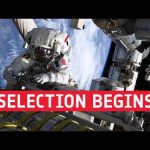
Selection begins | ESA’s next astronauts
Work is under way to sort and assess applications from more than 22 500 ESA astronaut hopefuls. The rigorous selection process will take around 18 months. Initial screening to ensure that basic criteria are met will be followed by medical and psychological tests, exercises and interviews.
ESA plans to recruit 4-6 new astronauts through this 2021-22 selection round to support the future of European space exploration. This is likely to include missions to the International Space Station as well as the Moon. As part of the selection process, ESA is also assessing the feasibility of flying an astronaut with a physical disability.
More information about the ESA Astronaut Selection is available online at https://esa.int/YourWayToSpace
★ Subscribe: http://bit.ly/ESAsubscribe and click twice on the bell button to receive our notifications.
Check out our full video catalog: http://bit.ly/SpaceInVideos
Follow us on Twitter: http://bit.ly/ESAonTwitter
On Facebook: http://bit.ly/ESAonFacebook
On Instagram: http://bit.ly/ESAonInstagram
On Flickr: http://bit.ly/ESAonFlickrWe are Europe’s gateway to space. Our mission is to shape the development of Europe’s space capability and ensure that investment in space continues to deliver benefits to the citizens of Europe and the world. Check out https://www.esa.int/ to get up to speed on everything space related.
Copyright information about our videos is available here: https://www.esa.int/ESA_Multimedia/Terms_and_Conditions
#ESA
#YourWaytoSpace
#ESArecruits -
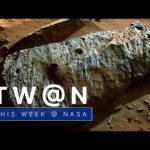
An Historic Milestone for Perseverance on This Week @NASA – September 10, 2021
An historic milestone for Perseverance, a busy week of activity at the space station, and a target launch date for the Webb Space Telescope … a few of the stories to tell you about – This Week at NASA!
Download Link:
https://images.nasa.gov/details-An%20Historic%20Milestone%20for%20Perseverance%20on%20This%20Week%20@NASA%20–%20September%2010,%202021 -

Priming NASA’s Artemis I for Launch to the Moon
Every element of NASA’s Orion spacecraft, Space Launch System rocket, and ground systems is now at Kennedy Space Center — the final stop on planet Earth before the uncrewed Artemis I mission around the Moon. These critical components are being primed for flight through final assembly, stacking, and fueling operations. The first in a series of increasingly complex missions, the Artemis I flight test will provide a foundation for human deep space exploration, and demonstrate our commitment and capability to extend human existence to the Moon and beyond.
For more information, check out: https://www.nasa.gov/artemis/
Producer: Barb Zelon, Aly Lee, and Lisa Allen
Writer & Director: Paul Wizikowski
Editor: Phil Sexton
Music by: Eric Land -

Earth from Space: Danube Delta
The Copernicus Sentinel-2 takes us over the second largest river delta in Europe, in this edition of the Earth from Space programme.
Download the image: https://www.esa.int/ESA_Multimedia/Images/2021/09/Danube_Delta
★ Subscribe: http://bit.ly/ESAsubscribe and click twice on the bell button to receive our notifications.
Check out our full video catalog: http://bit.ly/SpaceInVideos
Follow us on Twitter: http://bit.ly/ESAonTwitter
On Facebook: http://bit.ly/ESAonFacebook
On Instagram: http://bit.ly/ESAonInstagram
On Flickr: http://bit.ly/ESAonFlickrWe are Europe’s gateway to space. Our mission is to shape the development of Europe’s space capability and ensure that investment in space continues to deliver benefits to the citizens of Europe and the world. Check out https://www.esa.int/ to get up to speed on everything space related.
Copyright information about our videos is available here: https://www.esa.int/ESA_Multimedia/Terms_and_Conditions
#ESA
#EarthFromSpace
#DanubeDelta