Choose your player! NASA is holding a naming contest beginning Wednesday, June 16 for the manikin that will fly on an upcoming mission around the Moon.
As NASA gears up for the Artemis I mission around the Moon that will pave the way to send the first woman and the first person of color to the lunar surface, we have an important task for you (yes, you!). Artemis I will be an uncrewed flight test of the Space Launch System rocket and the Orion spacecraft ahead of the first flight with crew on Artemis II. We want your help to select a name for the suited manikin, or Moonikin in this case, that will fly aboard Orion to help gather data before missions with astronauts!
We have eight names to choose from, but only one can win. Every other day starting Wednesday, June 16, we will be asking you on @NASAArtemis Twitter, Facebook, and Instagram, to vote between one of two names. The winners of each bracket compete with one another until the final showdown on Monday, June 28.
The final name of the Moonikin will be announced on Tuesday, June 29!
For more information, go to: nasa.gov/namethemoonikin
William Shatner, Star Trek’s Captain Kirk, reads Ray Bradbury’s poem ‘Witness and Celebrate NASA’s Future.’ The poem was written by Bradbury in 2000 for the NASA Art Program.
Editor: Lacey Young Music: Universal Production Music
Making progress on our Artemis Moon rocket, images from a close encounter with a Jovian moon, and a ring of fire for our Moon … a few of the stories to tell you about – This Week at NASA!
We are Europe’s gateway to space. Our mission is to shape the development of Europe’s space capability and ensure that investment in space continues to deliver benefits to the citizens of Europe and the world. Check out https://www.esa.int/ to get up to speed on everything space related.
Teams across the country have been competing for years to be the first to engineer functional human tissue in a lab. Now, scientists have accomplished this medical feat by creating thick vascularized human organ tissue, which could have profound implications both on Earth and off. Join us LIVE on Wednesday, June 9 at 3:00 p.m. ET, as we announce the official winner of NASA’s Vascular Tissue Challenge. Have questions? Use #askNASA
NASA is more than astronauts. We are scientists, engineers, IT specialists, human resources specialists, accountants, writers, technicians, and many other kinds of people working together to break barriers to achieve the seemingly impossible.
Meet Hera, our very own asteroid detective. Together with two CubeSats – Milani the rock decoder and Juventas the radar visionary – Hera is off on an adventure to explore Didymos, a double asteroid system that is typical of the thousands that pose an impact risk to planet Earth.
Suitable for kids and adults alike, this episode of ‘The Incredible Adventures of Hera’ takes you on a fun and informative journey to visit Didymos together with Hera. Along the way, you will discover who the main characters are, why this mission is so important, what ESA hopes to achieve with Hera and much more.
We are Europe’s gateway to space. Our mission is to shape the development of Europe’s space capability and ensure that investment in space continues to deliver benefits to the citizens of Europe and the world. Check out https://www.esa.int/ to get up to speed on everything space related.
A detailed concept for a lunar habitat, created by one of the world’s leading architectural firms with ESA technical support, is currently on show at the Biennale in Venice. Skidmore, Owings & Merrill, originator of many of the world’s tallest skyscrapers, worked with ESA on a semi-inflatable habitat design which could be part of a long-term vision for an international Moon settlement.
The resulting design is on show at the 17th International Architecture Exhibition of La Biennale di Venezia (@BiennaleChannel). While the theme of the overall exhibition is ‘How will we live together?’, the SOM installation is called ‘Life Beyond Earth’, peering beyond our post-COVID-19 planet to show how human life can be sustained in the hostile space environment. The installation encompasses two large-scale, physical models and this film, bringing Biennale visitors on a journey from Earth to the Moon’s surface.
SOM designed a semi-inflatable shell structure to offer the highest possible volume to mass ratio. Once inflated on the lunar surface, it would reach approximately double its original internal volume.
A lot of work went into the four-storey habitat interior, in terms of lighting conditions, reconfigurable features, and a high floor to ceiling space, to allow crew members to take advantage of lunar one-sixth g using grabbing bars and other simple aids.
Its chosen site has been described as the most desirable real estate in the Solar System: the rim of Shackleton crater beside the lunar South Pole. Avoiding the crippling temperature extremes of the Moon’s two-week days and nights, this location offers near-continuous sunlight for solar power, an ongoing view of Earth and access to lunar water ice deposits in adjacent permanently-shadowed craters.
Credit: SOM
★ Subscribe: http://bit.ly/ESAsubscribe and click twice on the bell button to receive our notifications.
We are Europe’s gateway to space. Our mission is to shape the development of Europe’s space capability and ensure that investment in space continues to deliver benefits to the citizens of Europe and the world. Check out https://www.esa.int/ to get up to speed on everything space related.
Learn about two new future missions to Venus and other reasons why the State of NASA is strong and exciting, launching supplies to the space station, and more good news for OSIRIS-REx … a few of the stories to tell you about – This Week at NASA!
NASA is introducing the Earth System Observatory – an array of satellites, instruments and missions that are going to collect a series of critical observations. These observations will better inform us of how our planet is changing with greater precision on unimaginable scales – from entire continents down to individual trees.
Each mission in itself will deliver important environmental measurements. Taken together, as a single Observatory, we will have a holistic, 3-dimensional understanding of our Earth’s systems – how they work together, how one change can influence another.
We are Europe’s gateway to space. Our mission is to shape the development of Europe’s space capability and ensure that investment in space continues to deliver benefits to the citizens of Europe and the world. Check out https://www.esa.int/ to get up to speed on everything space related.
Venus, our planetary neighbor, is a hot, hellish unforgiving world. Its toxic atmosphere and sweltering surface make it a challenging place to study, and it’s been over 3 decades since NASA visited Earth’s evil twin…until now! NASA is sending two bold new missions to study this inferno-like world: DAVINCI+ and VERITAS. Join mission experts Thursday, June 3 at 3:00 p.m. ET on #NASAScience Live and submit your questions for them to answer using #askNASA.
Meet the experts: Dr. James Garvin is the Principal Investigator for the DAVINCI+ mission. His lifelong passion for Venus began in the Fall of 1979 and he says having the DAVINCI+ mission selected is a dream come true. Dr. Garvin is looking forward to exploring many exciting areas of Venus but says that it will be epic to see the Venus mountains at human scales in 3D with DAVINCI+. When he’s not dreaming about going to Venus, Dr. Garvin loves taking walks with his wife and their dog Glenda and watching ice hockey.
Dr. Susanne Smrekar is the Principal Investigator for the VERITAS mission. She was first hooked on the incredible intrigue of Venus when she was ‘in the room’ with the great minds of geology and geophysics, watching data arrive from the Magellan mission over 30 years ago. It has been her lifelong quest to understand how Earth and Venus have diverged. In her free time, she loves to mountain bike, run, hike and be outside.
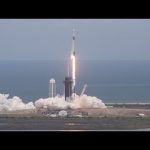
Starting at 1 p.m. EDT (17:00 UTC), Thurs., June 3, tune in for coverage of the 22nd SpaceX cargo resupply mission to the International Space Station. Liftoff is scheduled at 1:29 p.m. EDT (17:29 UTC) for the Falcon 9 rocket and Cargo Dragon spacecraft from Launch Complex 39A at Kennedy Space Center in Florida.
What’s on board? Science heading to the space station includes an experiment that could help develop better treatments for kidney disease on Earth, and a study of cotton root systems that could identify varieties of plants that require less water and pesticides. A study of bobtail squid will examine the effects of spaceflight on interactions between beneficial microbes and their animal hosts, while another will examine the adaptation of microscopic tardigrades (water bears) to conditions in low-Earth orbit, which could help us better understand stress factors affecting humans in space.
Dragon’s unpressurized trunk section will deliver the first two of six new roll-out solar arrays, based on a design tested on the station in 2017. A robotic arm will extract them and astronauts will install them during a series of spacewalks this summer.
ESA astronaut Samantha Cristoforetti and ESA Director of Human and Robotic Exploration, David Parker, had a quick video call to answer some questions concerning the upcoming International Space Station mission of Samantha.
As a member of Crew-4, Samantha will be launched with @NASA astronauts Kjell Lindgren and Bob Hines to the Station from Florida, USA, on a @SpaceX Crew Dragon spacecraft in 2022. This will be Samantha’s second space mission and the experience she brings will stand her in good stead as Europe’s first female in command of a Station expedition.
★ Subscribe: http://bit.ly/ESAsubscribe and click twice on the bell button to receive our notifications.
We are Europe’s gateway to space. Our mission is to shape the development of Europe’s space capability and ensure that investment in space continues to deliver benefits to the citizens of Europe and the world. Check out https://www.esa.int/ to get up to speed on everything space related.
On June 2 at 3 p.m. EDT, join NASA Administrator Bill Nelson to learn about our plans for future climate science missions, a robotic and human return to the Moon through our Artemis program, and more during a #StateOfNASA event. Following his remarks, Nelson and other senior leaders provide updates about human exploration and operations, aeronautics research, space technology, science, and mission support.
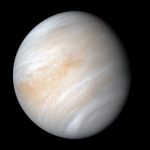
Venus, our planetary neighbor, is a hot, hellish unforgiving world and NASA has selected two bold new missions to study this inferno-like planet: DAVINCI+ and VERITAS. Are Venus and Earth fundamentally unique worlds? Or are the differences between these ‘twins’ only cosmetic? Answering this question is key to understanding what makes other rocky planets habitable and, ultimately, emerge with life.
James Webb Space Telescope – the largest, most powerful telescope to be sent into space is getting ready for launch in autumn 2021!
Watch the replay of the media presentation and Q&A with representatives from Webb’s partners ESA, @NASA and the @Canadian Space Agency, as well as ESA’s partner @arianespace, to hear more about it and its upcoming launch. Following in the footsteps of the Hubble Space Telescope as the next great space science observatory, the International James Webb Space Telescope is designed to help answer outstanding questions about the Universe and make breakthrough discoveries in all fields of astronomy.
We are Europe’s gateway to space. Our mission is to shape the development of Europe’s space capability and ensure that investment in space continues to deliver benefits to the citizens of Europe and the world. Check out https://www.esa.int/ to get up to speed on everything space related.
The release of NASA’s budget request, a new set of Earth-focused missions, and new research findings about Jupiter’s moon Europa … a few of the stories to tell you about – This Week at NASA!
We are Europe’s gateway to space. Our mission is to shape the development of Europe’s space capability and ensure that investment in space continues to deliver benefits to the citizens of Europe and the world. Check out https://www.esa.int/ to get up to speed on everything space related.
An addition to a future Commercial Crew mission, our administrator discusses the budget request for NASA, and NASA’s deputy administrator nominee appears before the Senate … a few of the stories to tell you about – This Week at NASA!
NASA spacecraft deliver stunning visual imagery of the cosmos, but we can also experience that data by turning it into sound. Kim Arcand at the Chandra X-Ray Observatory has helped develop many different sonifications including from galaxies, black holes, nebulae and more. Kim chats with NASA’s Chief Scientist Jim Green about her process of choosing instruments to represent different kinds of light, and plays a few examples of these cosmic sounds. Kim developed these sonifications in collaboration with astrophysicist Matt Russo and musician Andrew Santaguida, both of the SYSTEM Sound project. Check out the full series of sonifications at chandra.si.edu/sound and listen to the rest of this Gravity Assist podcast episode at nasa.gov/gravityassist.
Each May, NASA commemorates #AAPIHeritageMonth to recognize the significant contributions of the Asian and Pacific Islander community.
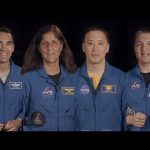
This year, NASA Administrator Sen. Bill Nelson and NASA astronauts Raja Chari, Jonny Kim, Kjell Lindgren, and Sunita Williams bring their perspectives around this year’s theme of Advancing Leaders Through Purpose-Driven Service. Hear their stories of resilience, leading with values, and making a difference by serving others and focusing on a bigger mission to make the world a better place.
The Copernicus Sentinel-2 mission takes us over Los Cabos – a municipality on the southern tip of Mexico’s Baja California Peninsula, in this edition of the Earth from Space programme.
We are Europe’s gateway to space. Our mission is to shape the development of Europe’s space capability and ensure that investment in space continues to deliver benefits to the citizens of Europe and the world. Check out https://www.esa.int/ to get up to speed on everything space related.
This video is a summary compilation of the questions and answers sessions held during the ESA Astronaut Careers Fair on 22 April 2021. The ESA speakers are Florence Loustalot, Talent Acquisition Specialist; Antonella Costa, HR Business Partner; Dagmar Boos, Head of HR Competence and Policy Centre; and Guillaume Weerts, Space Medicine Team Leader.
See the astronaut vacancy notice and other opportunities to work at ESA at https://jobs.esa.int
★ Subscribe: http://bit.ly/ESAsubscribe and click twice on the bell button to receive our notifications.
We are Europe’s gateway to space. Our mission is to shape the development of Europe’s space capability and ensure that investment in space continues to deliver benefits to the citizens of Europe and the world. Check out https://www.esa.int/ to get up to speed on everything space related.
We are Europe’s gateway to space. Our mission is to shape the development of Europe’s space capability and ensure that investment in space continues to deliver benefits to the citizens of Europe and the world. Check out https://www.esa.int/ to get up to speed on everything space related.
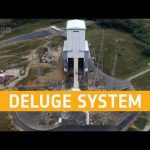
The water deluge system, which is activated at liftoff, was put to the test on the Ariane 6 launch pad at Europe’s Spaceport in April 2021. This is one of the qualification tests to prepare for the arrival of Ariane 6, Europe’s next generation heavy-lift launch vehicle.
Spraying huge volumes of water on the launch pad and beneath the launch table protects both the launch vehicle and its payloads by absorbing and deflecting the tremendous acoustic energy generated at liftoff. Shockwaves created as engine exhaust gases exceed the speed of sound and collide with ambient air cause noise levels to reach 180 decibels.
Three areas are deluged with water during launch, this is done in sequence.
At 20 seconds before liftoff, water sprays over the steel deflector 25 metres below the launch table. This deflector channels the engine exhaust into the two trenches.
At 6 seconds before liftoff, the exhaust tunnel under the launch table is deluged. This channels the engine exhaust below the launch table and into the underground trenches leading away from the launch pad.
Finally, as Ariane 6 lifts off the ground four arrays of pipes around the sides of the launch table will flood the launch pad.
This water also serves to cool and protect the ground installations, mainly the steel launch table.
About 700 cubic metres of water will be released during launch. This comes from the nearby tower which holds 1200 cubic metres of water. After launch it is refilled with water from a nearby lake.
After launch, any remaining water below the launch table is pumped away.
Credits: ESA- @CNES – @arianespace
★ Subscribe: http://bit.ly/ESAsubscribe and click twice on the bell button to receive our notifications.
We are Europe’s gateway to space. Our mission is to shape the development of Europe’s space capability and ensure that investment in space continues to deliver benefits to the citizens of Europe and the world. Check out https://www.esa.int/ to get up to speed on everything space related.
Samples of an asteroid are headed back to Earth, a key prelaunch milestone for the Webb space telescope, and adding a third dimension to some cool imagery … a few of the stories to tell you about – This Week at NASA!
This video summarises advice given by ESA astronauts during the ESA Astronaut Careers Fair on 22 April 2021. Samantha Cristoforetti, Thomas Reiter and André Kuipers have all flown in space as ESA astronauts and offer their perspectives on the selection process and the work and life of an astronaut.
See the astronaut vacancy notice and other opportunities to work at ESA at https://jobs.esa.int
★ Subscribe: http://bit.ly/ESAsubscribe and click twice on the bell button to receive our notifications.
We are Europe’s gateway to space. Our mission is to shape the development of Europe’s space capability and ensure that investment in space continues to deliver benefits to the citizens of Europe and the world. Check out https://www.esa.int/ to get up to speed on everything space related.
This timelapse was filmed under the stars on the Ariane 6 launch base at Europe’s Spaceport in French Guiana.
Preparations are under way for the arrival of Ariane 6, Europe’s next-generation launch vehicle. Imagine yourself stepping out of the launcher assembly building or standing on the launch pad in front of the 90-metre high mobile gantry, to look at the stars.
Ariane 6, developed by ESA, has two versions depending on the required performance. This rocket will be capable of a wide range of missions to guarantee independent access to space for Europe and continue four decades of the Ariane adventure.
Credits: ESA – @CNES – @arianespace
★ Subscribe: http://bit.ly/ESAsubscribe and click twice on the bell button to receive our notifications.
We are Europe’s gateway to space. Our mission is to shape the development of Europe’s space capability and ensure that investment in space continues to deliver benefits to the citizens of Europe and the world. Check out https://www.esa.int/ to get up to speed on everything space related.
A record-breaking spaceflight for the Crew-1 mission, swearing-in NASA’s new administrator, and the anniversary of the first American in space … a few of the stories to tell you about – This Week at NASA!
Join us live at 4 p.m. EDT, Mon., May 10, as our OSIRIS-REx mission bids farewell to near-Earth asteroid Bennu. At 4:16 p.m., the spacecraft will fire its main thrusters and start its long journey home, carrying precious asteroid material that it will return to Earth in 2023.
Watch the countdown to engine burn, as mission team members reflect on the challenges and success of studying and sampling Bennu. Members of the science team will also provide a look ahead to retrieving the sample of Bennu, and what it might tell us about the history of the solar system and our own origins.
The Copernicus Sentinel-2 mission takes us over Morbihan – a French department in the south of Brittany, in this edition of the Earth from Space programme.
We are Europe’s gateway to space. Our mission is to shape the development of Europe’s space capability and ensure that investment in space continues to deliver benefits to the citizens of Europe and the world. Check out https://www.esa.int/ to get up to speed on everything space related.
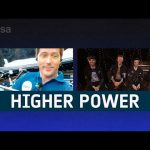
To celebrate the premiere of @Coldplay’s latest single ‘Higher Power’, the band linked up for an extraterrestrial video chat with French ESA astronaut Thomas Pesquet, who is currently on a six-month mission on board the International Space Station. A specially recorded performance of Higher Power – featuring dancing alien holograms – was beamed up to Thomas, who gave the track its very first play on board the Station. The song’s premiere followed a conversation which took in similarities between life on tour and life on the Space Station, how planet Earth looks from space and its fragility; and how Thomas listens to music in microgravity.
We are Europe’s gateway to space. Our mission is to shape the development of Europe’s space capability and ensure that investment in space continues to deliver benefits to the citizens of Europe and the world. Check out https://www.esa.int/ to get up to speed on everything space related.
NASA’s SpaceX Crew-1 astronauts will answer questions at 3:45 p.m. EDT (19:45 UTC) Thursday, May 6, about their historic mission on the International Space Station and their return to Earth.
NASA astronauts Michael Hopkins, Victor Glover, and Shannon Walker, along with Japan Aerospace Exploration Agency (JAXA) astronaut Soichi Noguchi, returned to Earth at 2:56 a.m. EDT (6:56 UTC) on May 2 under the parachutes of their Crew Dragon Resilience spacecraft.
The successful launch of Crew-1 in November 2020 was the first flight of a NASA-certified commercial human spacecraft system in history. Crew-1 is the first of six crewed missions NASA and SpaceX will fly as part of NASA’s Commercial Crew Program, which worked with the U.S. aerospace industry to return launches with astronauts on American rockets and spacecraft from American soil.
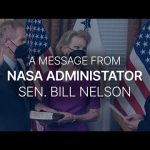
NASA’s new administrator Sen. Bill Nelson shares his vision for NASA’s future.
Nelson has an extensive history of working with NASA and has been integral to the agency’s current successes. Prior to his nomination, was a member-at-large on NASA’s advisory council. From 2001 to 2019, Nelson represented Florida in the U.S. Senate, where he served as ranking member of the Committee on Commerce, Science and Transportation and led its Subcommittee on Science and Space.
Previously, Nelson represented Florida’s 9th and 11th districts in the U.S. House of Representatives. While chair of the House space subcommittee, Nelson flew aboard the space shuttle Columbia as a payload specialist on the STS-61C mission in 1986. The mission also included Bolden, as pilot.
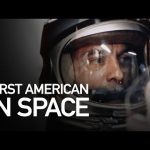
Sixty years ago, on May 5, 1961, NASA astronaut Alan Shepard Jr. launched on the Freedom 7 mission, powered by a Mercury-Redstone rocket to become the first American in space. Shepard’s flight lasted 15 minutes, 22 seconds. He later made it to the Moon on Apollo 14.
There’s a huge amount of variety among exoplanets – planets outside our solar system. There are water worlds, lava planets, egg-shaped worlds, planets with multiple suns, and even planets with no sun at all! What can we learn from all this weird, wondrous variety? What does it tell us about both the exoplanets themselves and our own home planet?
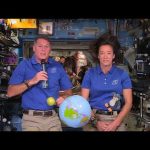
NASA astronauts Shane Kimbrough and Megan McArthur share a special message during Teacher Appreciation Week while aboard the International Space Station, orbiting 200 miles above the Earth’s surface.
Producer/Editor: Lacey Young Music: Universal Production Music
On April 19, the Ingenuity Mars helicopter became the first spacecraft to achieve powered, controlled flight on another world. This historic flight on Mars has implications for how we will explore other worlds. Join experts from the Ingenuity Mars Helicopter team and upcoming Dragonfly mission to learn about the future of extraterrestrial flight. Have questions? Use #askNASA.
Meet the guests:
Mr. Johnny Lam is an Ingenuity Mars Helicopter pilot at NASA’s Jet Propulsion Laboratory. Mr. Lam always had an interest in math and science growing up, and enjoys getting to work on one-of-a-kind missions that are helping us to learn more about the universe. He is an avid frisbee player and has a family that is expecting their second baby soon. Mr. Lam has an exciting vision for how aerial vehicles could be used for exploration in the future. Watch the show to hear more about it!
Mr. Nishant Mehta is the Deputy Lead for the Dragonfly Mobility System at Johns Hopkins University’s Applied Physics Laboratory. Mr. Mehta grew up surrounded by science fiction through books and television, these stories reinforced the notion that possibilities are endless with science. His favorite part of his job is knowing that he is working on something that will ultimately be on another planet to help humanity understand our universe better than before.
Ms. Jia-Rui Cook is the News Events & Projects Supervisor at NASA’s Jet Propulsion Laboratory and will be your host for this episode. As the child of immigrants, she has always been interested in American history and asking the question, “What does it mean to be American?” Working for NASA’s news and media team means she gets a front-row seat at this history in the making. In her role in the media office, she gets to help figure out how stories about first-of-their-kind accomplishments are told. When it comes to the Ingenuity Mars Helicopter, Ms. Cook is amazed that the team could build something so light and powerful at the same time.
Europe’s new launch vehicle, Vega-C, is near completion. Elements will soon be shipped to Kourou for assembly and preparation for Vega-C’s inaugural flight.
This new launcher improves its Vega predecessor by offering more power and versatility at similar cost. This new design allows Vega-C to transport larger and heavier payloads into space making it a world-class competitor on the global launcher market while ensuring Europe’s independent access to space.
We are Europe’s gateway to space. Our mission is to shape the development of Europe’s space capability and ensure that investment in space continues to deliver benefits to the citizens of Europe and the world. Check out https://www.esa.int/ to get up to speed on everything space related.