A Theodore von Kármán Lecture Series talk, held November 6 and 7 at NASA’s Jet Propulsion Laboratory in Pasadena, California, addressed the key aspects of the agency’s Asteroid Redirect Robotic Mission (ARRM) concept, which seeks to rendezvous with, capture, and redirect to translunar space a near-Earth asteroid.
Category: Astronomie
-
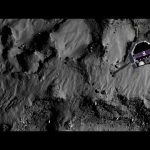
Philae’s descent: closing in on the landing site
The final steps of Philae’s descent towards Comet 67P/Churyumov–Gerasimenko on 12 November 2014, as seen by a hypothetical observer close to the landing site on the comet.
The background image was taken by Rosetta’s OSIRIS narrow-angle camera on 14 September 2014 from a distance of about 30 km.
Philae was provided by a consortium led by DLR, MPS, CNES and ASI.
Credit: ESA/ATG medialab; background image: ESA/Rosetta/MPS for OSIRIS Team MPS/UPD/LAM/IAA/SSO/INTA/UPM/DASP/IDA
-
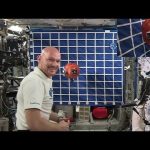
Demonstrating Rosetta’s Philae lander on the Space Station
ESA astronaut Alexander Gerst performs a demonstration of how ESA’s Rosetta mission will attempt to put a lander, called ‘Philae’ on the surface of comet 67P/Churyumov–Gerasimenko.
Alexander narrates the story of the Rosetta mission and performs a demonstration that visualises the difficulties of landing on an object that has little gravitational pull. Using the weightless environment of the Space Station, Alexander attempts to land ‘Philae’ (an ear plug) onto the surface of the ‘comet’ (an inactive SPHERES robot) with increasing levels of difficulty: a rotating comet that is not moving to one that is both rotating and moving.
This video is one of the six experiments and demonstrations in the Flying Classroom, Alexander will use small items to demonstrate several principles of physics in microgravity to students aged 10–17 years.
The Rosetta mission’s lander, Philae, will be deployed on 12 November at 08:35 GMT/09:35 CET from a distance of 22.5 km from the centre of the comet. It will land about seven hours later, with confirmation expected to arrive at Earth at around 16:00 GMT/17:00 CET.
More about the Rosetta mission: http://rosetta.esa.int
More about ESA Education: http://www.esa.int/educationCredit: ESA
-
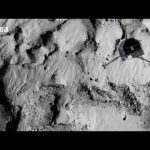
Rosetta: landing on a comet
Rosetta will release its Philae lander when approximately 22 kilometres from the centre of the comet. A signal confirming the separation will arrive at ground stations on Earth 28 minutes and 20 seconds later while the lander’s descent to the surface will take seven hours. On the way down, Philae will take a series of images and onboard instruments will sample the dust, gas and plasma close to the comet’s surface and measure any magnetic field.
Philae’s three lander legs will absorb the momentum of impact and use it to drive an ice screw in each foot into the surface. At the same time two harpoons will fire to lock the probe onto the surface and a small thruster on top will counteract the impulse. Once anchored to the nucleus, Philae will begin its primary science mission, based on its initial battery lifetime of 64 hours.
The SESAME experiment – which contains three instruments – includes one called CASSE, located in the lander’s feet. Harald KRUEGER, Principal Investigator of Rosetta’s SESAME experiment, explains how CASSE will use acoustic waves to determine properties of the comet’s soil.
Within hours of landing, we also hope to see the first ever images of a comet from its surface.
More about the Rosetta mission: http://rosetta.esa.int
-

3D-printing a lunar base
Could astronauts one day be printing rather than building a base on the Moon? In 2013 ESA, working with industrial partners, proved that 3D printing using lunar material was feasible in principle. Since then, work continues to investigate the technique. The shielding against radiation provided by a 3D-printed block of simulated lunar regolith was measured, providing important inputs for next-stage designs… Soon the Agency is due to investigate another lunar 3D printing method, harnessing concentrated sunlight to melt regolith rather than using a binding liquid.
But how might lunar 3D printing one day be used in practice? Foster+Partners, contributing architectural concepts for the original study, put together this outline of a hypothetical mission to 3D-print an entire a lunar base, illustrating the design factors that steered them in their work. The rim of Shackleton Crater at the lunar south pole was chosen for the base location. The Moon’s rotation is such that the Sun only grazes its poles at low angles. The result is a near-constant ‘peak of eternal light’ along the rim of Shackleton Crater, beside regions of permanent shadow. Building in the vicinity of such a site would offer plentiful solar power, and relief from the extremes of heat and cold found across the rest of the Moon.
In reality any lunar base remains firmly on the drawing board, but each small step forward in research makes future lunar colonisation a little more feasible. In October 2014 more than 350 experts came together for a two-day Additive Manufacturing for Space Applications workshop at ESA’s ESTEC technical centre in Noordwijk, the Netherlands. They discussed the potential of 3D printing – also known as Additive Manufacturing – to transform the way the space industry operates and begin preparing common standards for its use.
More info: http://www.esa.int/Our_Activities/Technology/Building_a_lunar_base_with_3D_printing
Credit: Foster+Partners
-
Rosetta’s journey
A summary of Rosetta’s journey – from its launch on 2 March 2004 – to the planned landing on comet 67P/Churyumov-Gerasimenko on 12 November 2014. The journey has included four gravitational assists from Mars and the Earth, flybys with asteroids Steins and Lutetia, and the spacecraft’s temporary hibernation and successful wake up on 20 January 2014.
In May Rosetta put on the brakes and performed rendezvous manoeuvres for several months. During this period, images from the onboard cameras revealed the comet’s unusual ‘space duck’ shape.
Rosetta arrived at its destination on 6 August and became the first spacecraft to orbit a comet. The primary landing site was announced in September and Rosetta is now on schedule to release its Philae lander onto the comet’s surface in November.
-
Preparing for #CometLanding
After a ten-year journey, Rosetta and Philae had finally reached their destination, Comet 67P/Churyumov–Gerasimenko. Rosetta spent many weeks studying the comet, sending lots of information back to Earth. But where was Philae going to land? Eventually the scientists on Earth found the best place on the comet for Philae to land. Soon it was time to make the final preparations for Philae’s great adventure. Both spacecraft couldn’t wait any longer. The whole world would be watching as Rosetta and Philae prepared for their biggest challenge yet…
This video is also available in the following languages:
Italian: http://youtu.be/pNwPY5__SNw
French: http://youtu.be/KeCse_mA2cs
German: http://youtu.be/afbfA3HaCxc
Spanish: http://youtu.be/sEexOXkazWsOther videos in the series are available in this playlist:
https://www.youtube.com/playlist?list=PLbyvawxScNbui_Ncl9uQ_fXLOjS4sNSd8Credit: ESA
-
Preparing for #CometLanding (German)
Nach einer 10-jährigen Reise haben Rosetta und Philae endlich ihr Ziel erreicht. Den Kometen 67P/Churyumov-Gerasimenko. Rosetta verbrachte mehrere Wochen damit, die Oberfläche des Kometen zu studieren und schickte viele Informationen zurück zur Erde. Aber wo würde Philae wohl landen können? Die Wissenschaftler überlegten lang und intensiv. Letztendlich fanden sie die beste Landestelle für Philae. Beide Raumsonden konnten es nicht mehr erwarten. Die ganze Welt würde zusehen, wenn sich Rosetta und Philae für ihre bisher größte Herausfordung bereit machen…
-
Four ESA astronauts training at Star City
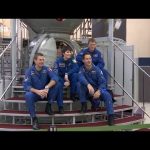
With ESA astronaut Alexander Gerst due to return on 10 November after six months onboard the ISS, Samantha Cristoforetti is set to fly to the station for a long-duration mission on 24 November. She will launch from Baikonur in Kazakhstan, and is currently joined at Star City by three other ESA astronauts – whose first missions are scheduled for 2015 and 2016.
-
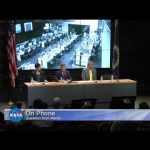
NASA Holds News Conference Following Orbital Launch Mishap
NASA held a news conference Tuesday October 28 following the mishap that occurred at NASA’s Wallops Flight Facility in Virginia during the attempted launch of Orbital Sciences Corp’s Antares rocket and Cygnus cargo spacecraft to the International Space Station. Briefing participants were, Bill Gerstenmaier, associate administrator of NASA’s Human Exploration and Operations Mission Directorate, Frank Culbertson, Executive Vice President and General Manager of Advanced Programs Group at Orbital Sciences Corp, Bill Wrobel, director of NASA’s Wallops Flight Facility, and Mike Suffredini, NASA’s International Space Station Program Manager.
-

2014 NASA Halloween Animated Greetings
There might be more Trick than Treat at this house. Can you spot the ISS as it darts past this dark and for foreboding scene? Happy Halloween from NASA.
-

Actor Eddie Redmayne on Stephen Hawking’s Links to NASA
Stephen Hawking, one of the most prominent cosmologists of our time, has given voice to the great heights humanity can achieve. Recently, actor Eddie Redmayne, who plays Professor Hawking in the film “The Theory of Everything,” took time to explain the inspirational relationship between Professor Hawking and NASA’s mission and programs.
-
Images From Comet’s Mars Flyby On This Week @NASA- October 24, 2014
Several Mars-based NASA spacecraft had prime viewing positions for comet Siding Spring’s October 19 close flyby of the Red Planet. Early images included a composite photo from NASA’s Hubble Space Telescope that combined shots of Mars, the comet, and a star background to illustrate Siding Spring’s distance from Mars at closest approach. Also, images from the Mars Reconnaissance Orbiter’s HiRISE camera, which represent the highest-resolution views ever acquired of a comet that came from the Oort Cloud, at the outer fringe of the solar system. The comet flyby – only about 87,000 miles from Mars – was much closer than any other known comet flyby of a planet. Also, Partial solar eclipse, Space station spacewalk, Preparing to release Dragon, Cygnus launch update, Welding begins on SLS, Astronaut class visits Glenn and more!
-
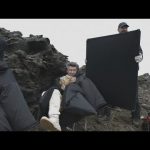
The making of ‘Ambition’
The making of the short film Ambition, a collaboration between Platige Image and ESA. Directed by Tomek Bagiński and starring Aidan Gillen and Aisling Franciosi, Ambition was filmed on location in Iceland, produced in Poland, and screened on 24 October 2014 during the British Film Institute’s celebration of Sci-Fi: Days of Fear and Wonder, at the Southbank, London.
More information:
Rosetta: the ambition to turn science fiction into science fact: http://www.esa.int/Our_Activities/Space_Science/Rosetta/Rosetta_the_ambition_to_turn_science_fiction_into_science_factCredits: ESA/Platige Image
-
Ambition the film
Ambition is a collaboration between Platige Image and ESA. Directed by Tomek Bagiński and starring Aidan Gillen and Aisling Franciosi, Ambition was filmed on location in Iceland, and screened on 24 October 2014 during the British Film Institute’s celebration of Sci-Fi, at the Southbank, London.
More information.
Rosetta: the ambition to turn science fiction into science fact: http://www.esa.int/Our_Activities/Space_Science/Rosetta/Rosetta_the_ambition_to_turn_science_fiction_into_science_factThe Ambition soundtrack is available here:
http://www.atanasvalkov.com/2014/12/ambition-soundtrack-premiere-15-01-2015/The ‘Making of Ambition’ is available here:
http://youtu.be/Ud9ON2CzYYMCredits: ESA/Platige Image
-

ESA Euronews: The challenge of reentry
Re-entry is the make or break moment for spacecraft. It’s the time when satellites burn up and astronauts hold on for the ride of their lives. A new ESA spacecraft, called IXV Intermediate eXperimental Vehicle, will be launched into space in November 2014 in a bid to feed precious new data to engineers as they try to master the difficult transition between space and planet Earth. In this episode of Space, IXV programme manager Giorgio Tumino shows us around the spacecraft, while rarely-seen archive footage brings the heat, drama and danger of re-entry to life.
This video is also available in the following languages:
French: http://youtu.be/s7x6p9prDfY
German: http://youtu.be/mYECBYWPE8A
Italian: http://youtu.be/QEEFS8E3VLU
Portuguese: http://youtu.be/2uYmr113h3A
Spanish: http://youtu.be/RG8OZt44Ya8
Hungarian: http://youtu.be/2I0uXM8PTdU
Greek: http://youtu.be/EIaW4xeMhlU:More about IXV on the ESA website:
http://www.esa.int/Our_Activities/Launchers/IXVConnect with the IXV project on Twitter:
https://twitter.com/esa_ixv -
ESA Euronews: IXV: O Desafio da Reentrada na Atmosfera
Subir até ao espaço é considerado normalmente o cerne da questão. Mas e o regresso à Terra? A reentrada na atmosfera é, na verdade, um dos maiores desafios da aventura espacial. Por isso, os europeus criaram uma nave chamada IXV que irá testar novas possibilidades precisamente no reencontro com o nosso planeta. É uma viagem única, até porque é impossível de recriar artificialmente a experiência. As aprendizagens têm sido feitas através de descidas efetivas. E é precisamente isso que a mais recente nave da Agência Espacial Europeia (ESA) vai fazer em novembro, como explica o coordenador de projeto, Giorgio Tumino: “O objetivo da missão do IXV é o de passar a controlar aquelas zonas cinzentas que desconhecemos acerca da reentrada atmosférica.”
-
ESA Euronews: La navicella IXV sfida il rientro
Il rientro dallo spazio è pericoloso per le navicelle spaziali e i loro passeggeri. Una nuovo veicolo dell’ESA, la European Space Agency, chiamato “IXV”, sarà lanciato nello spazio a novembre per affrontare in modo diretto la sfida del rientro. Gli ingegneri vogliono dominare la difficile transizione tra lo spazio e il pianeta terra.
-
ESA Euronews: IXV : le défi de la rentrée dans l’atmosphère
Pour les véhicules spatiaux, la rentrée dans l’atmosphère, c’est le moment où – pourrait-on dire – ça passe ou ça casse. C’est la phase où les satellites s’enflamment et où les astronautes retiennent leur souffle.
Un nouveau vaisseau de l’ESA baptisé IXV sera lancé dans l’espace en novembre 2014 dans l’objectif de fournir de nouvelles données aux ingénieurs alors qu’ils tentent de maîtriser cette délicate transition entre l’espace et la planète Terre.
Dans cette édition de Space sur euronews, le manager du programme IXV Giorgio Tumino nous présente le véhicule. Nous abordons aussi, images rares à l’appui, les conditions et les risques de cette rentrée atmosphérique.
-
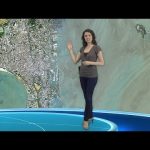
Earth from Space: Mumbai
Earth from Space is presented by Kelsea Brennan-Wessels from the ESA Web-TV virtual studios. Explore the city of Mumbai in the one hundred twenty-first edition.
See also http://www.esa.int/spaceinimages/Images/2014/10/Mumbai_India to download the image.
-
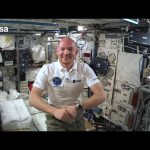
ESA astronaut Alexander Gerst sends greeting to Euro-Space-Day
ESA astronaut Alexander Gerst sends his greetings to the Euro-Space-Day in Saarbrücken, Germany. The tri-national (FR-LU-DE) event will bring together students, scientific institutions and space industry.
-
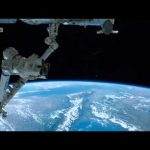
Timelapse over Europe
This timelapse video shows two passes over Europe taken by ESA astronaut Alexander Gerst as he flew overhead on the International Space Station at around 400 km altitude.
The International Space Station travels at 28 800 km/h meaning that it only takes 90 minutes to circle Earth completely. Each orbit the Station moves around 2200 km to the West in relation to 90 minutes before.
Astronauts often use normal consumer digital cameras to take pictures of Earth through Europe’s observatory module Cupola in their spare time. Setting the camera to take an image every few seconds and then playing the images back quickly create this timelapse effect.
Alexander worked as a geophysicist and volcanologist before he was chosen as an ESA astronaut in 2009. His Blue Dot mission includes an extensive scientific programme of experiments in physical science, biology, and human physiology as well as radiation research and technology demonstrations. All experiments chosen make use of the out-of-this-world laboratory to improve life on Earth or prepare for further human exploration of our Solar System.
-
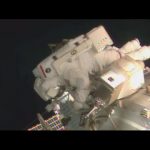
Power Spacewalk on This Week @NASA – October 17, 2014
During an October 15 spacewalk outside the International Space Station – the second U.S. spacewalk in as many weeks – Expedition 41 Flight Engineers Reid Wiseman and Barry Wilmore of NASA, replaced a failed voltage regulation device to restore the station’s electrical power output to full capacity. The pair also relocated camera and TV equipment as part of a major reconfiguration to accommodate new docking adapters for use by U.S. commercial crew spacecraft in the next few years. Also, MAVEN’s “First Light”, Hubble finds extremely distant galaxy, Possible bonus destination for New Horizons, New information about volcanic activity on our moon and more!
-

Delivering oxygen to the Space Station
ESA astronaut Alexander Gerst is responsible for unloading all the cargo from ESA’s Automated Transfer Vehicle (ATV) Georges Lemaître to the International Space Station. This includes the 100 kg of oxygen stored in ATV’s tanks. Here Alexander recorded the process of opening the valves and checking the pressure.
Georges Lemaître bought 6602 kg of freight, including 2680 kg of dry cargo and 3922 kg of water, propellants and gases to the Station.
Find out more about ESA’s largest spacecraft on the ATV blog: http://blogs.esa.int/atv/
Follow Alexander’s Blue Dot mission via alexandergerst.esa.int
-
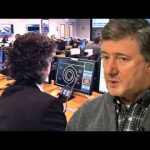
Working in the Concurrent Design Facility
Massimo Bandecchi speaks about the work being done in ESA’s Concurrent Design Facility (CDF). The CDF is a state-of-the-art facility equipped with a network of computers, multimedia devices and software tools, which allows a team of experts from several disciplines to apply the concurrent engineering method to the design of future space missions.
Interested to work here as a trainee? Vacancy posts for Young Graduate Trainees (YGTs) go online once a year in mid-November, and stay open for one month. About 80 YGT job offers will open, aimed at engineers, physicists, biologists or medical graduates, but also business graduates and lawyers.
More information on our Careers website:
http://www.esa.int/About_Us/Careers_at_ESA/Young_Graduate_Trainees -
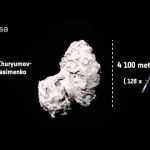
How big is Rosetta compared with the comet?
This short animation explains the relative sizes of the Rosetta spacecraft and comet 67P/Churyumov–Gerasimenko. Rosetta is 32 m from tip to tip of the solar wings. The comet measures 4.1 km along its longest length, 128 times the width of Rosetta.
Unlike typical artist’s impressions, this image is scaled to convey the vast difference in size between Rosetta and the comet, even when the spacecraft is in a close 10 km orbit, as depicted here.
Rosetta reached 10 km distance from the comet centre by October 2014.
Credits: ESA
-
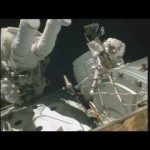
NASA Astronauts Conduct Space Walk To Make Important Repairs On International Space Station
Outside the International Space Station, Expedition 41 Flight Engineers Reid Wiseman and Barry Wilmore of NASA replaced a voltage regulation device and relocated camera and television equipment during a spacewalk Oct. 15, the second excursion outside the Quest airlock by station astronauts in U.S. spacesuits in as many weeks. The voltage regulator, called a Sequential Shunt Unit, failed in May, taking down one of eight power channels for station systems. Its replacement brought the station’s electrical output back to full capacity. The repositioning of the camera and television equipment was the first step in a major reconfiguration of station systems and modules to accommodate next year’s delivery of new docking adapters that will be used by commercial crew vehicles later this decade. The spacewalk was the 183rd in support of station assembly and maintenance, the second by Wiseman and the first for Wilmore.
-
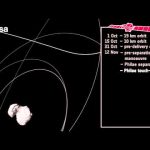
Rosetta: close orbits to lander deployment (annotated)
Animation showing Rosetta’s orbit in the lead up to, during and after lander separation.
The animation begins on 1 October 2014, when Rosetta is orbiting about 19 km from Comet 67P/Churyumov–Gerasimenko (all distances refer to the comet’s centre). The animation shows the transition to the close 10 km orbit by mid-October, and then the steps taken to move onto the pre-separation trajectory.
On the day of landing, 12 November, Rosetta makes a further manoeuvre 2–3 hours before separation to move to 22.5 km from the comet centre to deploy the lander, Philae. While Philae descends to the surface over a period of seven hours, Rosetta makes another manoeuvre to maintain visibility with the lander. A series of ‘relay phase’ manoeuvres then move Rosetta out to a distance of about 50 km, before moving first to a 30 km orbit and later to an orbit at about 20 km by early December.
The speed of the animation slows during the separation and lander phase to better highlight these events. The comet shape and rate of rotation is real – the comet rotates with a period of about 12.4 hours.
Credits: ESA
-
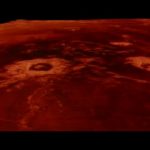
Venus close-up
Launched in 2005, ESA’s Venus Express spacecraft has been observing Earth’s so called ‘sister’ planet from a unique point of view: in orbit around Venus itself. This mission is providing scientists with detailed information about the Venusian atmosphere and in the course of these studies many surprises have emerged.
-
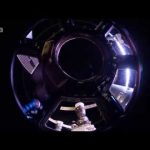
Nighttime fisheye timelapse
This timelapse video from space was taken by ESA astronaut Alexander Gerst from the Cupola observatory module on the International Space Station as it orbited Earth at around 400 km altitude. As the Space Station passes over Earth at night we can see city lights and lightning.
The International Space Station travels at 28 800 km/h meaning that it only takes 90 minutes to circle Earth completely. Each orbit the Station moves around 2200 km to the West in relation to 90 minutes before.
Astronauts often use normal consumer digital cameras to take pictures of Earth through Europe’s observatory module Cupola in their spare time. Setting the camera to take an image every few seconds and then playing the images back quickly create this timelapse effect.
Alexander worked as a geophysicist and volcanologist before he was chosen as an ESA astronaut in 2009. His Blue Dot mission includes an extensive scientific programme of experiments in physical science, biology, and human physiology as well as radiation research and technology demonstrations. All experiments chosen make use of the out-of-this-world laboratory to improve life on Earth or prepare for further human exploration of our Solar System.
-
ESA-ESTEC Open Day 2014
Sunday 5 October saw thousands of visitors converge on the European Space Agency’s technical heart for its annual Open Day. Touring across the site, they met astronauts, viewed spacecraft and inspected test facilities – and came face to face with a spectacular new world.
-
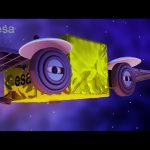
ESA presents… Clean Space
Clean Space is the European Space Agency’s initiative to safeguard the terrestrial and orbital environments, while boosting the innovation and competitiveness of Europe’s space sector. This animated guide follows a newly-launched satellite as it first enters orbit, in the process explaining the various branches of the Clean Space effort and the different future Clean Space aims to build.
Now with English, French, German, Dutch, Italian, Greek, Romanian and Swedish subtitles. More languages will be added as they become available.
-
NASA Prepares to Eye Comet’s Flyby of Mars
During an October 9 press briefing at NASA headquarters, panelists discussed the Earth and space-based assets that will be in position to observe the October 19 flyby of Mars by comet C/2013 A1, also known as comet Siding Spring. These assets include NASA’s iconic Hubble Space Telescope and spacecraft orbiting and roving Mars.
During the once-in-a-lifetime flyby, Siding Spring will pass within about 88,000 miles (139,500 kilometers) of the Red Planet — less than half the distance between Earth and our moon and less than one-tenth the distance of any known comet flyby of Earth. This proximity will provide an unprecedented opportunity for researchers to gather data on both the comet and its effect on the Martian atmosphere.
-
NASA Premieres ‘Trial By Fire’ video on Orion’s Flight Test
As the flight test of NASA’s Orion spacecraft nears, the agency released Oct. 8 a video detailing the spacecraft’s test and the critical systems engineers will evaluate during the Dec. 4 flight. Orion is in the final stages of preparation for the uncrewed flight test that will take it 3,600 miles above Earth on a 4.5-hour mission to test many of the systems necessary for future human missions into deep space. After two orbits, Orion will reenter Earth’s atmosphere at almost 20,000 miles per hour, and reach temperatures near 4,000 degrees Fahrenheit, before its parachute system deploys to slow the spacecraft for a splashdown in the Pacific Ocean.
On future missions, the Orion spacecraft will carry astronauts farther into the solar system than ever before, including to an asteroid and Mars.
-

NASA Astronauts Conduct Spacewalk on ISS
Clad in U.S. spacesuits, Expedition 41 Flight Engineers Reid Wiseman of NASA and Alexander Gerst of the European Space Agency conducted a spacewalk outside the International Space Station Oct. 7 to relocate a failed cooling pump and to install a power cable device designed to provide backup electrical capability to the station’s rail car system. The spacewalk was the 182nd in support of station assembly and maintenance and the first for both Wiseman and Gerst.
-
Lightning, aurora and sunrise timelapse
This timelapse video from space has it all: an orbit of Earth with lightning and aurora, followed by a space sunrise and daytime views of our cloudy planet. The images were taken by ESA astronaut Alexander Gerst as he orbited Earth on the International Space Station at around 400 km altitude. The nighttime video shows a Soyuz spacecraft that ferries the astronauts to the outpost. At the end of the video green aurora can be seen as Earth’s interacts with solar radiation.
The International Space Station travels at 28 800 km/h meaning that it only takes 90 minutes to circle Earth completely. Each orbit the Station moves around 2200 km to the West in relation to 90 minutes before.
Astronauts often use normal consumer digital cameras to take pictures of Earth through Europe’s observatory module Cupola in their spare time. Setting the camera to take an image every few seconds and then playing the images back quickly create this timelapse effect.
Alexander worked as a geophysicist and volcanologist before he was chosen as an ESA astronaut in 2009. His Blue Dot mission includes an extensive scientific programme of experiments in physical science, biology, and human physiology as well as radiation research and technology demonstrations. All experiments chosen make use of the out-of-this-world laboratory to improve life on Earth or prepare for further human exploration of our Solar System.
-

ESA Euronews: Close encounters with Venus
Venus is our mysterious neighbour, a strange world where the Sun rises in the west and sets in the east, and a day lasts longer than a year. ESA’s Venus Express mission has spent the last eight years gathering data to offer science a fresh insight into the atmosphere and climate of the planet, including a daring aerobraking manœuvre this summer that revealed previously unknown waves in the upper atmosphere.
This video is also available in the following languages:
French http://youtu.be/I0uD82RfGHI
German: http://youtu.be/tXgiaR_5kPM
Italian: http://youtu.be/vs3OxPoF80o
Portuguese: http://youtu.be/N7Y_jU7e_FU
Spanish: http://youtu.be/luPHUdRhF1s
Greek: http://youtu.be/xQmFD44gV_w
Hungarian: http://youtu.be/1-hDeyd5ISQ -
ESA Euronews: Találkozások Vénusszal
A Vénusz a Föld legközelebbi szomszédja, amelyről ehhez képest elég keveset tudunk. Különleges világ, ahol a Nap Nyugaton kel és Keleten megy le, egy nap pedig tovább tart, mint egy év. Az Európai Űrügynökség – az ESA Vénusz Expressz missziója az elmúlt évben nagy mennyiségű adatot gyűjtött össze, a bolygó légköréről és klímájáról. Egy kockázatos légfékezési manőverrel pedig korábban ismeretlen hullámzást fedeztek fel a bolygó sűrű atmoszférájának felső rétegeiben.
-
ESA Euronews: Στενές επαφές τρίτου τύπου με την Αφροδίτη
Η Αφροδίτη είναι ο μυστηριώδης γείτονάς μας. Ένας παράξενος κόσμος, όπου ο ήλιος ανατέλλει στη Δύση, δύει στην Ανατολή και μία ημέρα διαρκεί περισσότερο από ένα έτος. Η αποστολή “Venus Express” του Ευρωπαϊκού Οργανισμού Διαστήματος συγκεντρώνει τα τελευταία οκτώ χρόνια στοιχεία, που προσφέρουν μία ανανεωμένη εικόνα για την ατμόσφαιρα και το κλίμα στον πλανήτη Αφροδίτη. Η τολμηρή αεροπέδηση αποκαλύπτει άγνωστα κύματα στα ανώτερα στρώματα της ατμόσφαιρας.
-
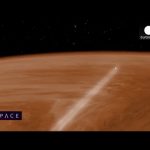
ESA Euronews: Acercándose a Venus
Venus, un misterioso vecino. Un extraño mundo donde el Sol sale por el oeste y se oculta por el este y el día dura más de un año terrestre. La misión de la ESA Venus Express ha pasado 8 años recogiendo datos sobre la atmósfera y el clima de este planeta tan singular. Gracias a la técnica del “aerobraking”, la nave pudo acercarse a la atmósfera de Venus revelando la existencia de olas desconocidas hasta ahora.