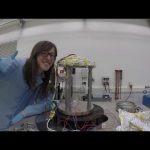
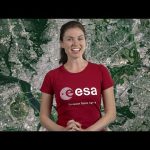
Aleksandra, 24, from Latvia, shares her experience as an ESA YGT. In this video, the Aerospace Engineer speaks about her work in the thermal analysis and verification section, working with measurements at cryogenic temperatures. Aleks also shows her experiment set up in the Mechanical Systems Laboratory (MSL).
Have you ever done a science experiment and wondered “What would this be like if it were HUGE?” Welcome to Science Max, the exciting new series that turbocharges all the science experiments you’ve done at home.
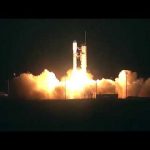
Early on the morning of Saturday, Nov. 18, NASA successfully launched for the National Oceanic and Atmospheric Administration (NOAA) the first in a series of four advanced polar-orbiting satellites, equipped with next-generation technology and designed to improve the accuracy of U.S. weather forecasts out to seven days. The Joint Polar Satellite System-1 (JPSS-1) lifted off on a United Launch Alliance Delta II rocket from Vandenberg Air Force Base on California’s central coast. JPSS-1 data will improve weather forecasting and help agencies involved with post-storm recovery by visualizing storm damage and the geographic extent of power outages.
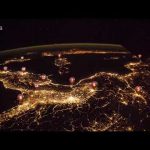
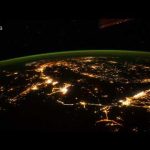
It’s time to test your geography skills! Can you name one or more cities in this night timelapse over Europe?
If yes, go and write your answers on Paolo’s social media accounts (Twitter, Facebook or Instagram) as a comment or a reply to his video using the hashtag #timelapsechallenge. Stay tuned for the answers!
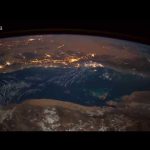
A series of nighttime photos were taken by ESA astronaut Paolo Nespoli to create this time-lapse of the Earth as seen from the Space Station.
ESA astronaut Paolo Nespoli in currently working and living on board the International Space Station as part of the Italian Space Agency’s long-duration VITA mission.
Earth from Space is presented by Kelsea Brennan-Wessels from the ESA Web-TV virtual studios. In the 248th edition, discover Chile’s largest salt flat in the Atacama Desert.
A series of night-time photos were taken by ESA astronaut Paolo Nespoli on 5 November around 22:33 GMT, here shown in a time-lapse with a 1-second interval, while the Space Station was flying from the southern Atlantic Ocean over to Kazakhstan.
Paolo was lucky enough to capture a fast fireball falling to Earth over the Atlantic Ocean, off the South Africa west coast — look closely between 00:07 and 00:08 seconds at upper right in this video.
A fireball is basically a very bright meteoroid — a small bit of natural “space rock” — entering Earth’s atmosphere and burning brighter than the background stars. This particular meteoroid was moving much faster than typical, with an estimated speed of around 40 km/s, according to experts working on near-Earth objects (NEOs) in ESA’s Space Situational Awareness Programme.
“This speed is actually quite fast for meteoroids, which typically enter the atmosphere at around 20 km/s,” says Rüdiger Jehn, SSA NEO segment co-manager.
ESA astronaut Paolo Nespoli in currently working and living on board the International Space Station as part of the Italian Space Agency’s long-duration VITA mission.
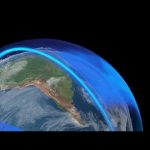
The ozone layer protects life on Earth from ultraviolet radiation but it is also a powerful greenhouse gas. Satellites can provide measurements of atmospheric ozone and monitor distribution changes with the seasons.
Credit: ESA/CCI Ozone and Aerosol teams/Planetary Visions
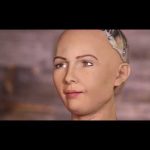
Produced in association with Arm, this short and thoughtful film looks at the role robots powered by Artificial Intelligence (AI) may be set to play in our lives: from becoming our friends and keeping us company; to helping children with autism communicate; or assisting a rapidly ageing population. Jem Davies, Fellow and General Manager for Machine Learning at Arm, joins other experts from industry and academia to offer their perspective on the future possibilities for companion robots and AI.
Written and directed by: Colin Ramsay and James Uren
Producer: Colin Ramsay
Executive Producer: Beth Singler
A Little Dragon Films production
Co-funded by the Faraday Institute for Science and Religion
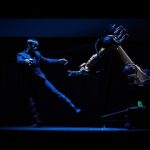
Harmoniously weaving together the art of dance and the science of mechanical engineering, Huang Yi performs a man-machine dance duet with KUKA — a robot he conceptualized and programmed — set to stirring cello by Joshua Roman.
The TED Talks channel features the best talks and performances from the TED Conference, where the world’s leading thinkers and doers give the talk of their lives in 18 minutes (or less). Look for talks on Technology, Entertainment and Design — plus science, business, global issues, the arts and more.
A series of nighttime photos were taken by ESA astronaut Paolo Nespoli to create this time-lapse of the Earth from the Black Sea to Oman as seen from the International Space Station.
ESA astronaut Paolo Nespoli in currently working and living on board the International Space Station as part of the Italian Space Agency’s long-duration VITA mission.
Have you ever done a science experiment and wondered “What would this be like if it were HUGE?” Welcome to Science Max, the exciting new series that turbocharges all the science experiments you’ve done at home.
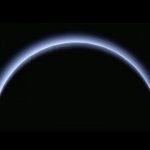
European scientists are learning more about Pluto’s mysteries from NASA’s New Horizons mission, even as the spacecraft continues its summer hibernation. Data sent back from the spacecraft reveals a dynamic planet filled with unusual features that are helping scientists understand this unusually dynamic and icy world.
Discover more about our planet with the Earth from Space video programme. This special edition celebrates three years of successful operations of the Copernicus Sentinel-1 constellation.
This film is adapted from Kelly Lane’s new book, When Computers Become Human: A Kid’s Guide to the Future of Artificial Intelligence (MSAC Philosophy Group, Mt. San Antonio College, 2017). Covers some of the history of computing and the digital future. Narrated by Kelly Lane, a 11 year old middle school student.
Have you ever done a science experiment and wondered “What would this be like if it were HUGE?” Welcome to Science Max, the exciting new series that turbocharges all the science experiments you’ve done at home.
Breathable air is necessary to sustain humans both on Earth as well as in space.
NASA is working with the Robert Wood Johnson Foundation (RWJF) to sponsor the Earth and Space Air Prize competition for a solution that could improve air quality and health in space and on Earth. This project is a technology innovation challenge to promote development of robust, durable, inexpensive, efficient, lightweight, and easy-to-use aerosol sensors for space and Earth environments. The competition asks teams or individuals to design and develop specialized sensor technology that has the potential to be useful in spaceflight as well as on Earth anywhere outdoors in a community where people may be exposed to airborne particles.
To learn more about the rules and to register for the competition please visit www.earthspaceairprize.org
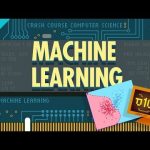
So we’ve talked a lot in this series about how computers fetch and display data, but how do they make decisions on this data? From spam filters and self-driving cars, to cutting edge medical diagnosis and real-time language translation, there has been an increasing need for our computers to learn from data and apply that knowledge to make predictions and decisions. This is the heart of machine learning which sits inside the more ambitious goal of artificial intelligence. We may be a long way from self-aware computers that think just like us, but with advancements in deep learning and artificial neural networks our computers are becoming more powerful than ever.
What makes a brain or machine conscious? Will robots become more conscious than we are? One theory, which can actually calculate consciousness, is beginning to provide some answers.
Subscribe: http://youtube.com/whatthephysics?sub_confirmation=1
↓Want more info?↓
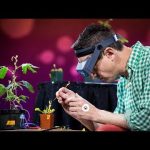
Neuroscientist Greg Gage takes sophisticated equipment used to study the brain out of graduate-level labs and brings them to middle- and high-school classrooms (and, sometimes, to the TED stage.) Prepare to be amazed as he hooks up the Mimosa pudica, a plant whose leaves close when touched, and the Venus flytrap to an EKG to show us how plants use electrical signals to convey information, prompt movement and even count.
The TED Talks channel features the best talks and performances from the TED Conference, where the world’s leading thinkers and doers give the talk of their lives in 18 minutes (or less). Look for talks on Technology, Entertainment and Design — plus science, business, global issues, the arts and more.
Filmed with a RED Dragon camera aboard the International Space Station by ESA astronaut Paolo Nespoli on 29 August 2017, the video is shown in real time as the ISS flew over Italy.
Background song “Daylight” by Roob Sebastian.
ESA astronaut Paolo Nespoli in currently working and living aboard the International Space Station as part of the Italian Space Agency long duration VITA mission.
A series of day-time photos were taken by ESA astronaut Paolo Nespoli to create this time-lapse of Africa as seen from the Space Station.
ESA astronaut Paolo Nespoli in currently working and living aboard the International Space Station as part of the Italian Space Agency long duration VITA mission.
Science Max – Phil starts with a balloon powered hover disc, then tries to make a maxed out version big enough to ride. In fact, why not make two and then race them! Phil also tries to use the power of friction to climb the walls and even to fly!
Have you ever done a science experiment and wondered “What would this be like if it were HUGE?” Welcome to Science Max, the exciting new series that turbocharges all the science experiments you’ve done at home.
In season 1, join Phil as he builds rocket cars, uses elastic energy to hurl pumpkins on a giant catapult, builds a bridge out of pasta that can hold a human, find magnets powerful enough to float Phil off the ground, and many more experiments taken to the MAX!
Join us November 15 for the debut of the new NASA podcast, “Gravity Assist,” hosted by Dr. Jim Green, NASA’s director of planetary science. Gravity Assist is a virtual tour of the solar system and beyond with the top scientists in the world as your guides. The weekly podcast kicks off with a special 10-part series on the solar system that begins with the Sun, and takes you outward to Pluto and beyond.
This video is available for download from NASA’s Image and Video Library: https://images.nasa.gov/#/details-NHQ_2017_1027_NASA%E2%80%99s%20New%20%E2%80%9CGravity%20Assist%E2%80%9D%20Podcast%20Debuts%20Nov.15.html
On Oct. 26, Vice President Mike Pence joined our Associate Administrator for Science, Thomas Zurbuchen for a close-up view of the agency’s Mars InSight spacecraft, during a visit to the Littleton, Colorado facilities of Lockheed Martin. InSight is being prepped for a May 2018 launch to the Red Planet, with landing targeted for next November. The mission will study the deep interior of Mars, with a primary goal of helping scientists understand how rocky planets – including Earth – formed and evolved. The vice president also visited a Virtual Reality lab that featured demos of the company’s human exploration efforts, including our Orion spacecraft. Orion will launch on the agency’s Space Launch System rocket, and take humans farther into the solar system than ever before. Also, Interstellar Visitor from Beyond the Solar System, Space Station Crew Talks with Pope Francis, Dawn Finds Possible Ancient Ocean Remnants at Ceres, and Take a Walk on Mars!
This video is available for download from NASA’s Image and Video Library: https://images.nasa.gov/#/details-NHQ_2017_1027_Pence%20Visits%20Mars%20InSight%20Facility%20on%20This%20Week%20@NASA%20%E2%80%93%20October%2027,%202017.html
Hot Wheels® Ai brings your favorite racing video game to life with authentic sounds, voices and hazards from Nintendo’s Mario Kart™ game! Experience the most immersive Hot Wheels® system ever and customize your Smart Car with premium Mario and Yoshi car body shells and wheel covers. Take it to the next level by inserting the customized cartridge into your Gaming Controller (sold separately) to unlock authentic Mario Kart™ sounds and reactions! Ai uses computer enhanced Artificial Intelligence to put you in total control of the racing action! Use the premium Mario and Yoshi car body shells and wheel covers to transform your vehicle and enter a whole new racing world! Includes one Smart Car body and 4 wheel covers.
Paxi przybywa na Planetę Ziemia. Razem z nim dowiedz się więcej o obiegu wody w przyrodzie. W tym filmie, przeznaczonym dla dzieci w wieku 6-12 lat, Paxi tłumaczy jak działa obieg wody.
Earth from Space is presented by Kelsea Brennan-Wessels from the ESA Web-TV virtual studios. Explore the US capital with Sentinel-2 in the 245th edition.
When someone mentions autism, Hollywood movies like Mozart and the Whale or Rain Man, may come to mind. The actors in these movies do depict autistic characteristics but they are often dramatised. For instance, they are portrayed as high-functioning, possessing advanced math skills and having photographic memory – while completely lacking any social skills. While some people suffering from autism do have extraordinary skills, many are of just above average or even average intelligence.
Read more: https://www.richardvanhooijdonk.com/en/advances-artificial-intelligence-robots-help-children-autism-reach-full-potential/
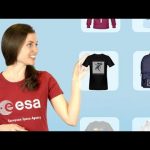
If you’re looking for the perfect gift for a space enthusiast, the ESAshop is for you. From clothing and accessories to phone cases and backpacks, you’ll find a wide range of products to suit all ages.
The store offers three different product lines: classic, design and United Space in Europe.
Children are soon set to have their own product line featuring ESA mascot Paxi. Ordering is easy: simply click on the items you want, choose the colour and size, then head to the checkout.
All items are printed on demand and delivered to your door, wherever you are in the world.
For the first time, NASA scientists have detected light tied to a gravitational-wave event. The gravitational wave – caused by an explosive merger of two neutron stars, about 130 million light-years from Earth – produced a gamma-ray burst and a rarely seen flare-up called a “kilonova”. The phenomenon was captured by our Fermi, Swift, Hubble, Chandra and Spitzer missions, along with dozens of NASA-funded ground-based observatories. Also, Trio of Station Spacewalks Completed, Fresh Findings from Cassini, and Test of SLS RS-25 Flight Engine!
Science Max – Phil starts with a Popsicle stick catapult. Then he uses everything he knows about elastic energy to build a full-size catapult that hurls pumpkins! Plus, a maxed out paddle wheel boat and a historical re-enactment (sort of) of how catapults were used in medieval days.
Have you ever done a science experiment and wondered “What would this be like if it were HUGE?” Welcome to Science Max, the exciting new series that turbocharges all the science experiments you’ve done at home.
In season 1, join Phil as he builds rocket cars, uses elastic energy to hurl pumpkins on a giant catapult, builds a bridge out of pasta that can hold a human, find magnets powerful enough to float Phil off the ground, and many more experiments taken to the MAX!
Intel, in an attempt to gain relevance in the quickly growing artificial-intelligence and machine-learning markets, is rolling out a new product family called Nervana.
Engineers at NASA’s Stennis Space Center in Mississippi on Oct. 19 completed a hot-fire test of RS-25 rocket engine E2063, a flight engine for NASA’s new Space Launch System (SLS) rocket. Engine E2063 is scheduled to help power SLS on its Exploration Mission-2 (EM-2), the first flight of the new rocket to carry humans.
This video is available for download from NASA’s Image and Video Library: https://images.nasa.gov/#/details-NASA%20Tests%20RS-25%20Flight%20Engine%20for%20Space%20Launch%20System.html