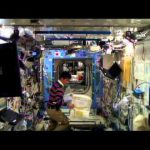
Kick back to images and videos captured by ESA astronaut Alexander Gerst during his Blue Dot mission on the ISS. An ESA for Lufthansa inflight film.
Music Space by Borisov. Images: ESA/NASA.
Kick back to images and videos captured by ESA astronaut Alexander Gerst during his Blue Dot mission on the ISS. An ESA for Lufthansa inflight film.
Music Space by Borisov. Images: ESA/NASA.
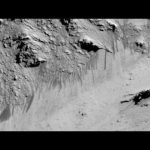
A major scientific discovery was announced by NASA at a Sept. 28 news conference. From its vantage point high above the Martian surface, NASA’s Mars Reconnaissance Orbiter (MRO) spacecraft has found the strongest evidence yet, that under certain circumstances, liquid water has been found on Mars. Researchers say an imaging spectrometer on MRO detected signatures of hydrated minerals on slopes where downhill streaks, known as Recurring Slope Lineae (RSL) are seen. In the past, RSL flows have been described as possibly related to liquid water. But the new findings of hydrated minerals is key evidence. Hydrated salts can lower the freezing point of liquid brine – and produce liquid water. Also, Life beyond Earth in the next decade?, “The Martian” screening event, Cargo ship departs space station, New cargo ship delivers to space station, Rare double celestial treat and Espacio a Tierra!
ESA astronaut Samantha Cristoforetti photographs stunning Earth images of Lufthansa worldwide destinations during her Futura mission onboard the ISS. An ESA for Lufthansa inflight film.
Music by Jeff Woodall.
Images: ESA/NASA.
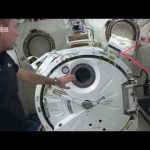
ESA astronaut Andreas Mogensen, the first astronaut from Denmark, explains the deployment of the student-built AAUSAT5 CubeSat – the first ESA student CubeSat mission launched from space and the pilot project of ESA’s ‘Fly Your Satellite from the ISS!’ education programme.
AAUSAT5, a CubeSat entirely built by a university team with ESA’s support, was launched to the International Space Station aboard the Japanese HTV-5 cargo vehicle 19 August 2015. Andreas gives a brief tour of the Japanese cargo vehicle’s storage space, where AAUSAT5 was housed during its flight to the Station. AAUSAT5 was taken to the Japanese Kibo Laboratory, put in a Nanoracks deployer, and placed into the airlock to be launched into space.
AAUSAT5 will be deployed into orbit 5 October 2015. Aalborg University will host a special event in Aalborg, Denmark entitled “ESA CubeSats from the Space Station: a new path for education and technology” to celebrate the deployment.
Credits: ESA/NASA

On 30 September 2015, Ariane 5 flight VA226 lifted off from Europe’s Spaceport in French Guiana and delivered two telecom satellites, Sky Muster and Arsat-2, into their planned orbits.
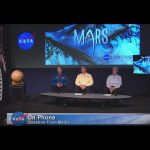
During a news conference at NASA headquarters, agency scientists and officials discussed new findings from the Mars Reconnaissance Orbiter (MRO) that provide the strongest evidence yet that liquid water flows intermittently on present-day Mars. Using an imaging spectrometer on MRO, researchers detected signatures of hydrated minerals on slopes where mysterious streaks are seen on the Red Planet. These downhill flows, known as recurring slope lineae (RSL), often have been described as possibly related to liquid water.
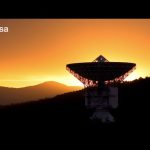
“11,2 km/s” is the official theme music for ESA’s Estrack ground station network. It was composed by Gautier Acher, a 17-year-old student living in Paris, France, and entered in the 2015 Tracking Station Music Contest, which celebrated the 40th anniversary of the Estrack network.
Gautier’s top-ranked entry was selected from a field 117 submissions received from over a dozen countries.
Gautier wrote: This track is a triptych that shows space is vast, but is full of interesting things, such as humankind, stars, comets, planets… It describes great achievements, in the past, and in the future.
While only three entrants could win prizes in the music contest, and only 10 could be at the top, the ESA judging panel praised all 117 submissions.
Judges commented that, “We heard some marvellous stuff created by people who are passionate, motivated and imaginative in their pursuit of music that reflects the central themes of exploration into our Universe, technological excellence and the dreams of humanity’s journeys into space.”
In 1975, the ground station at Villafranca in Spain became the kernel of the ESA tracking network, which now comprises 10 stations in seven countries and in 2015 celebrates four decades of providing links to space for ESA’s science, Earth, observatory and exploration missions.
Since inception, Estrack has expanded worldwide and today employs cutting-edge technology to link mission controllers with spacecraft orbiting Earth, voyaging deep in our Solar System and anywhere in between (more information in our Estrack web site http://www.esa.int/estrack).
Congratulations the top 10 entrants as well as the top three prize winners: http://www.esa.int/Our_Activities/Operations/Estrack/Music_contest_winners
Special congratulations to Gautier Acher https://soundcloud.com/gautier-acher
Tweet at us! @pbsspacetime
Facebook: facebook.com/pbsspacetime
Email us! pbsspacetime [at] gmail [dot] com
Comment on Reddit: http://www.reddit.com/r/pbsspacetime
Support us on Patreon! http://www.patreon.com/pbsspacetime
Help translate our videos! http://www.youtube.com/timedtext_cs_panel?tab=2&c=UC7_gcs09iThXybpVgjHZ_7g
SPACETIME IS BACK! And with this episode we welcome in Matt O’Dowd as the new host to rigorously take you through the mysteries of space, time, and the nature of reality. We’re starting off this new season with perhaps one of the most mysterious things of all — DARK MATTER. What is it? Where does it come from? And is it even real? Watch this episode of Space Time to find out!
—————————————-———
Comment Links
SafetySkull
https://www.youtube.com/watch?v=vNaEBbFbvcY&lc=z13zunhjrov4sdl2n22zjlq5fsumsbib304
Agen0000
https://www.youtube.com/watch?v=vNaEBbFbvcY&lc=z132eztqnvzoft4qb04ccpnyglqmfhm5hu40k
—————————————-———
Let us know what topics you want to learn more about:http://bit.ly/spacetimepoll
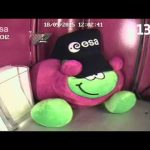
ESA Education mascot Paxi was placed in a Large Diameter Centrifuge gondola which normally houses researchers’ and students’ experiments at ESA’s ESTEC establishment. As the centrifuge starts spinning, the relative g-levels within the gondola increase and this causes Paxi’s weight to increase. At 20 g, Paxi weighs 20 times what he normally does on Earth. As the centrifuge spins down, the g levels decrease and eventually when the centrifuge stops, return to normal.
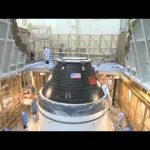
Sept. 15 marked the halfway point in the yearlong mission on the International Space Station with NASA astronaut Scott Kelly and Russian cosmonaut Mikhail Kornienko. An event the day before at the National Press Club in Washington included a discussion about the biomedical research conducted on the station, to help formulate future human missions to Mars. Kelly participated from the space station. His identical twin, retired NASA astronaut Mark Kelly, and NASA astronaut Terry Virts, who served as commander of Expedition 43, participated from the press club. Also, I spy the space station: Live!, Expedition 43 post-flight visit, Key milestone for Orion spacecraft, Global ocean on Enceladus, Connecting space to village and more!

We recently surpassed 100 000 subscribers on our YouTube channel and are proud to have received a Silver Play Button to mark this achievement. Of course being the European Space Agency, we needed to make sure the Silver Play Button was fit for space…
Thanks to all our subscribers for helping us to achieve this milestone!
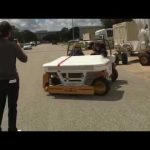
Mackenzie Davis and Sebastian Stan, stars of 20th Century Fox’s Film “The Martian”, got a tour from Johnson Space Center Director Ellen Ochoa. News media followed the tour taking a peek at what NASA’s “Real Martians” are working on.
For more videos of the visit:
Space Station Crew Members Talk to Cast of The Martian
https://youtu.be/hD4WX-X0hBc
“The Martian” Visits JSC
https://youtu.be/edUI6xqFTMM
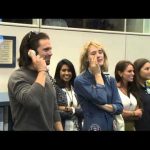
Aboard the International Space Station, Expedition 45 Commander Scott Kelly and Flight Engineer Kjell Lindgren of NASA took time out of their work schedule to talk to Sebastian Stan and Mackenzie Davis, cast members of the new movie “The Martian”, during a visit they made to Mission Control at the Johnson Space Center, Houston Sept. 15. They were joined by JSC Director Ellen Ochoa. Kelly is at the midway point of a year-long mission aboard the orbital laboratory with Russian cosmonaut Mikhail Kornienko of the Russian Federal Space Agency (Roscosmos), gathering valuable biomedical data that will be used in the formulation of a future human mission to Mars. Lindgren, who is a medical doctor, is beginning the third month of a five-month mission on the outpost.
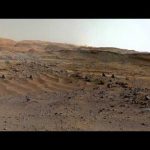
Ridley Scott, director of the 20th Century Fox film “The Martian”, based on author Andy Weir’s book of the same name, reflects on the long-term personal and wide-ranging human fascination with Mars and how NASA’s exploration of the Red Planet is helping to turn science fiction into science fact.
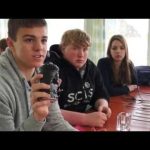
Sequences extracted from the 2012 European CanSat campaign at Andøya Rocket Range in Norway.
Credit: ESA
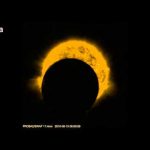
ESA’s Earth-orbiting Proba-2 satellite observed three partial solar eclipses on the morning of 13 September 2015 along with an additional passage of the Moon close to the edge of the Sun. The image was taken with Proba-2’s SWAP imager, which views the solar disc at extreme ultraviolet wavelengths to capture the turbulent surface of the Sun and its swirling corona, which can clearly be seen in between eclipses in this movie. The Sun’s rotation can also be seen.
Time is shown in GMT
Credit: ESA/ESA/Royal Observatory of Belgium
Aboard the International Space Station, the Expedition 45 crew – including new Commander Scott Kelly and Kjell Lindgren of NASA, said goodbye to Gennady Padalka of the Russian Federal Space Agency, Andreas Mogensen of ESA (European Space Agency) and Aidyn Aimbetov of the Kazakh Space Agency (Kazcosmos) as the trio climbed aboard their Soyuz spacecraft for the return trip to Earth. The Soyuz landed safely in Kazakhstan on Sept. 11 Eastern time, Sept. 12 in Kazakhstan — closing out a 168-day mission for Padalka and an 8-day stay on the station for Mogensen and Aimbetov. Also, First Orion crew module segments welded, SLS Launch Vehicle Stage Adapter, New Ceres imagery, New Horizons update, 9/11 tribute and National Preparedness Month!
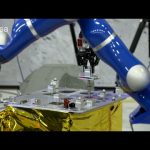
Putting a round peg in a round hole is not hard to do by someone standing next to it. But on 7 September 2015 ESA astronaut Andreas Mogensen did this while orbiting 400 km up aboard the International Space Station, remotely operating a rover and its robotic arm on the ground.
Andreas used a force-feedback control system developed at ESA, letting him feel for himself whenever the rover’s flexible arm met resistance.
These tactile sensations were essential for the success of the experiment, which involved placing a metal peg into a round hole in a ‘task board’ that offered less than a sixth of a millimetre of clearance. The peg needed to be inserted 4 cm to make an electrical connection.
Andreas managed two complete drive, approach, park and peg-in-hole insertions, demonstrating precision force-feedback from orbit for the very first time in the history of spaceflight.
The Interact Centaur rover used in the experiment was based at ESA’s technical centre ESTEC in Noordwijk, the Netherlands. It was designed and built by ESA’s Telerobotics & Haptics Laboratory in collaboration with graduate students from Delft University of Technology.
The Interact experiment is a first step towards developing robots that provide their operators with much wider sensory input than currently available. In this way, ESA is literally ‘extending human reach’ down to Earth from space.
Read more on the ESA Portal:
http://www.esa.int/Our_Activities/Space_Engineering_Technology/Slam_dunk_for_Andreas_in_space_controlling_rover_on_ground
A composite day at ESTEC, the European space research and technology centre, as depicted in time-lapse format.
Located in Noordwijk, the Netherlands, ESTEC is Europe’s largest place for space, the technical heart of the European Space Agency. For almost all European space missions, the path to space leads through ESTEC.
Around 2700 people arrive here for work every day, working on a broad range of space activities from scientific exploration to telecommunications, Earth observation to navigation, robotics to human spaceflight.
A suite of unique laboratories probe every aspect of the space environment, applying decades of hard-won expertise. Seen here is preparation for testing materials in simulated space conditions as well as atomic force microscopy, employing a nanometer-wide tip like a stylus across a record player to reveal surface topography down to the atomic scale.
Full-scale testing of satellites takes place in the ESTEC Test Centre, including the Maxwell Chamber, kept isolated from the external world for precision electromagnetic testing, and the Large Space Simulator, Europe’s largest vacuum chamber used to reproduce the airlessness and temperature extremes encountered in space. The chamber uses large quantities of liquid nitrogen to mimic the chill of deep space.
Erasmus is ESTEC’s human spaceflight facility, supporting researchers in the design and performance of experiments in microgravity conditions. Also based there is ESTEC’s Telerobotics lab – developing methods of remotely controlling robots using force feedback, extending the human sense of touch to space. The lab team are putting the finishing touches to the Interact Centaur rover, a robot designed to be operated remotely by astronauts in orbit.
Want to see more? You can on Sunday 4 October, with your own eyes – register to attend the 2015 ESTEC Open Day! http://www.esa.int/About_Us/ESTEC/See_spacecraft_and_meet_astronauts_at_ESA_s_technical_heart
Credit: ESA–S. Verzier
The European Space Agency’s ARTES programme for Advanced Research in Telecommunications Systems, helps to create products, services and infrastructures that benefit millions of people worldwide and make a major contribution to the European economy.
The economic engine of the space industry is satellite communications, generating over $140 billion a year in global revenues. The ARTES programme exists to support innovation, helping to transform research and development into commercial products and services.
ESA’s telecom programmes often take the form of public–private partnerships. ESA joins forces with industry to share the cost and risk, resulting in faster and more innovative technological advances than if either undertook the project alone.
The most recent high-profile telecom programmes are Alphasat, the largest European telecom satellite ever built and the European Data Relay System, a groundbreaking space and ground infrastructure that uses laser links to send data at unprecedented speeds.
ARTES also promotes the use of satellites in new and imaginative ways. Satellite communications can be applied in areas as diverse as healthcare, education, transport and security to deliver services and improve daily life.
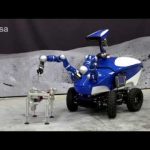
This is the Interact Centaur rover that ESA astronaut Andreas Mogensen will be operating from orbit aboard the International Space Station, to drive into position and then perform an operation requiring sub-millimetre precision.
Developed by ESA’s Telerobotics and Haptics Laboratory, the Interact Centaur is a 4×4 wheeled rover combining a camera head on a neck system, a pair of highly advanced force sensitive robotic arms designed for remote force-feedback-based operation and a number of proximity and localisation sensors.
As demonstrated here, Andreas will first attempt to guide the robot to locate an ‘operations task board’ and then to remove and plug a metal pin into it, which has a very tight mechanical fit and tolerance of only about 150 micrometres, less than a sixth of a millimetre.
As currently scheduled, Monday 7 September should see the Interact rover driven around the grounds of ESA’s ESTEC technical centre in Noordwijk, the Netherlands, from the extremely remote location of Earth orbit, 400 km up.
Signals between the crew and the robot must travel a total distance of approximately ninety thousand kilometres, via a satellite constellation located in geostationary orbit. Despite this distance, Andreas will exactly feel what the robot does on the surface – with only a very slight lag.
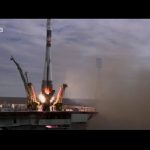
ESA astronaut Andreas Mogensen, commander Sergei Volkov and Aidyn Aimbetov were launched into space this morning 2 September at 04:37:43 GMT (06:37:43 CEST) from Baikonur cosmodrome, Kazakhstan.
The launch marks the start of ESA’s 10-day ‘iriss’ mission that will focus on testing new technologies and ways of running complex space missions.
The astronaut’s Soyuz TMA-18M spacecraft was pushed into Earth orbit as planned accelerating 50 km/h on every second for the first nine minutes of their launch.
The spacecraft separated from the Soyuz launcher at 04:46 GMT (06:46 CEST)
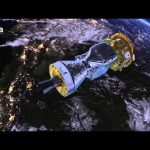
Artist’s impression of the launch of LISA Pathfinder, ESA’s technology demonstration mission that will pave the way for future gravitational-wave observatories in space.
Scheduled to lift off on a Vega rocket from Europe’s Spaceport in French Guiana in late 2015, LISA Pathfinder will operate at the Lagrange point L1, 1.5 million km from Earth towards the Sun. After launch, the spacecraft will take about eight weeks to reach its operational orbit around L1.
The Vega rocket is designed to take small payloads into low-Earth orbit. The animation shows the rocket shortly after launch, rising above our planet and releasing the fairing.
Vega will place the spacecraft onto an elliptical orbit with perigee at 200 km, apogee at 1540 km and angled at about 6.5° to the equator. Then, LISA Pathfinder will continue on its own, using its separable propulsion module to perform a series of six manoeuvres and gradually raise the apogee of the initial orbit.
Eventually, LISA Pathfinder will cruise towards its final orbiting location, discarding the propulsion system along the way, one month after the last burn. Once in orbit around L1, the spacecraft will begin its six months of operations devised to demonstrate key technologies for space-based observation of gravitational waves.
More about LISA Pathfinder:
http://www.esa.int/Our_Activities/Space_Science/LISA_Pathfinder_overview
Credit: ESA/ATG medialab
It was a busy week for the crew aboard the International Space Station. The Japanese Aerospace Exploration Agency’s fifth H-II Transfer Vehicle, or HTV-5 arrived on Aug. 24 with more than 8,000 pounds of equipment, supplies and experiments in its pressurized cargo compartment. The delivery included an investigation that will search for signatures of dark matter, as well as enough additional food and supplies to last through 2015. Also, Soyuz relocated to Zvezda, Orion parachute drop test, Rising Seas, Hurricane Katrina remembrance, Tail first crash test, Webb telescope’s backplane arrives and Hubble’s double black hole!
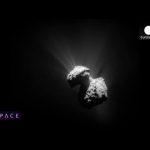
The Rosetta Mission has been writing a new chapter in what we know about the formation of life. The ESA teams involved are now preparing for the last part of this amazing journey.
Comet Churyumov-Gerasimenko has recently reached the perihelion – that’s the closest point to the Sun in its six and a half year orbit. It’s an important scientific step – as increasing solar energy warms the comet’s frozen ices, turning them to gas and dust. To stay safe, Rosetta has been forced to move further from the comet.
The Rosetta mission has been extended by nine months – until September next year. It’s hoped this will further boost the enormous amount of data that’s already been collected.
This video is also available in the following languages:
Spanish https://www.youtube.com/watch?v=1S7lYxNMbUU
Portuguese https://www.youtube.com/watch?v=9jrEaaFOo18
German https://www.youtube.com/watch?v=ah774y94sEA
French https://www.youtube.com/watch?v=j49w_F9O1Fc
Italian https://www.youtube.com/watch?v=pjI4-DbCCtk
Greek https://www.youtube.com/watch?v=eSVZtTADnmc
Hungarian https://www.youtube.com/watch?v=gFc-W4xE0Z0
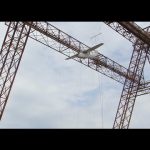
Using a Cessna 172 dropped from a height of 100 feet, NASA’s Search and Rescue Mission Office simulated a severe but survivable plane accident Wednesday, Aug. 26 at the agency’s Langley Research Center to test emergency locator transmitters (ELTs). The devices are installed on general aviation and commercial planes to transmit a location signal in the event of a crash. On this third and final test in the series the plane was dropped from 100 feet, tail down into the ground.
NASA Television captured some happy moments while producing agency videos. NASA is ranked the best place to work in the federal government.

On 20 August 2015, Ariane 5 flight VA225 lifted off from Europe’s Spaceport in French Guiana and delivered two telecom satellites, Eutelsat-8 West B and Intelsat-34, into their planned orbits.
Credit: Arianespace
The fourth of ESA’s ‘Class of 2009’ astronauts to fly, Andreas Mogensen from Denmark will soon undertake a ten day mission to the International Space Station. With a background in aerospace engineering, he has spent the last six years training with the Station’s international partners for his inaugural spaceflight, taking part in a wide variety of activities to prepare him for the mission.
Matt Damon talks about science, NASA and the collaboration with Andy Weir on this “…Love letter to science” known as “The Martian” during a visit to NASA’s Mars Mission Control Center at the Jet Propulsion Laboratory in Pasadena, California.
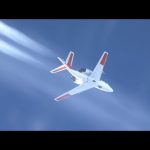
A little more than a century ago, on March 3, 1915, congress created the National Advisory Committee for Aeronautics, the organization from which NASA was created in 1958.
Now, on National Aviation Day, we celebrate 100 years of aviation research, and we’re planning for the next 100 years!
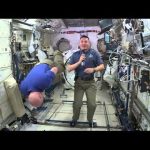
Aboard the International Space Station, Expedition 44 Flight Engineers Scott Kelly and Kjell Lindgren of NASA discussed their life and research aboard the orbital outpost in an in-flight interview Aug. 17 with the CBS Radio Network. Kelly is completing the fifth month of his year-long mission on the station with Russian cosmonaut Mikhail Kornienko to gather valuable biomedical data that will be used to formulate a human mission to Mars, while Lindgren is completing the first month of a five-month mission on the laboratory.
A Google hangout with Rosetta mission experts to celebrate perihelion – the closest point to the Sun along the comet’s orbit – which occurred on the morning of on 13 August 2015.
Joining our host Emily Baldwin (ESA Space Science Editor) were:
Nico Altobelli – Acting Rosetta Project Scientist, ESAC
Michael Küppers – Rosetta Science Operations Coordinator, ESAC
Sylvain Lodiot – Rosetta Spacecraft Operations Manager, ESOC
Armelle Hubault – Rosetta spacecraft operations engineer, ESOC
Barbara Cozzoni – Philae Lander engineer, DLR
Holger Sierks – OSIRIS Principal Investigator, MPS
Joel Parker – Alice instrument Deputy-PI, SwRI
Colin Snodgrass – Professional ground-based observing campaign coordinator, Open University
Aurelie Moussi-Soffys – Science activities manager SONC (Philae)
Date: 13 August 2015
Time: 15:00-17:00 CEST (13:00-15:00 GMT)
Background info on perihelion: http://www.esa.int/Our_Activities/Space_Science/Rosetta/Rosetta_preparing_for_perihelion
#Perihelion2015 #Rosetta #hangoutsonair
On August 12, meteor experts from NASA’s Marshall Space Flight Center provided commentary during NASA Television’s live coverage of the annual Perseid meteor shower. The Perseids have been observed for at least 2,000 years and are associated with the comet Swift-Tuttle, which orbits the sun once every 133 years. Every August, the Earth passes through a cloud of the comet’s debris. This debris field consists of bits of ice and dust — most over 1,000 years old — and burns up in Earth’s atmosphere to create one of the best meteor showers of the year.

Full-orbit movies produced from Visual Monitoring Camera (VMC) images acquired as part of ESA’s #VMCSchools campaign. This clip includes images acquired by ESA’s Mars Express on 25 and 26 May 2015.
For the complete list of submitted school projects, access ESA’s Mars Express blog via http://wp.me/p2E5wN-lj
Credit: ESA/Mars Express/VMC – CC BY-SA IGO 3.0
Tweet at us! @pbsspacetime
Facebook: facebook.com/pbsspacetime
Email us! pbsspacetime [at] gmail [dot] com
Comment on Reddit: http://www.reddit.com/r/pbsspacetime
Support us on Patreon! http://www.patreon.com/pbsspacetime
Help translate our videos! http://www.youtube.com/timedtext_cs_panel?tab=2&c=UC7_gcs09iThXybpVgjHZ_7g
We all know tides have something to do with gravity from the Moon and Sun, but if gravity affects the motion of all objects equally, then how come oceans have large tides while other bodies of water don’t? It’s because your mental picture of the tides is probably WRONG!!! Join Gabe on this week’s episode of PBS Space Time as he sets the record straight on tidal force, gravitational differential and what role the moon actually plays in tides. Why don’t lakes have tides? Watch the episode to find out!
Emily Rice (NASA Space Apps Challenge talk on Exoplanet Atmospheres):
https://www.youtube.com/watch?v=rYGTZkueKWc&t=6s
https://about.me/emilyrice
Sean Carroll (lecture notes on general relativity):
http://ned.ipac.caltech.edu/level5/March01/Carroll3/Carroll4.html
For Additional Info on tides:
https://www.youtube.com/watch?v=gftT3wHJGtg https://www.youtube.com/watch?v=KlWpFLfLFBI
————————————————-
COMMENTS:
Johan ‘t Hart
https://www.youtube.com/watch?v=AwhKZ3fd9JA&lc=z13mz50oqu2liptvs22qv5vjunjvv3ctp
Marcos MH
https://www.youtube.com/watch?v=AwhKZ3fd9JA&lc=z122splo5zukxlg5104cc11p5qm0yrtxojc
Campbell McLauchlan
https://www.youtube.com/watch?v=AwhKZ3fd9JA&lc=z12dzpx4ypz4yhap304cc1tz4n2jjxnw5us0k
Pedro Gusmão
https://www.youtube.com/watch?v=AwhKZ3fd9JA&lc=z13ghfv5uk33yxbgk04cidsxspyutv4wpek
Michael Winter
https://www.youtube.com/watch?v=AwhKZ3fd9JA&lc=z13jtluhgpqpzzzym04cjn0ytqf5tlyje3o
Anthony Englert (antenglert)
https://www.youtube.com/watch?v=AwhKZ3fd9JA&lc=z133y1ubnrisir5if04cijxqtnuadf3ixg0
Ciroluiro
https://www.youtube.com/watch?v=AwhKZ3fd9JA&lc=z13ngtg43pivcxqiy04cdjgilsjmfxoqivo0k
electrocat1
https://www.youtube.com/watch?v=AwhKZ3fd9JA&lc=z123xd3r3yv2ibcwz04cj5szrwi0hpcqpso0k
dligac
https://www.youtube.com/watch?v=AwhKZ3fd9JA&lc=z13asf4xanerxr1pq04cfvyzpufmvvmzdks0k
KRIGBERT
https://www.youtube.com/watch?v=AwhKZ3fd9JA&lc=z13bzh5zkqi1cdg3w22gz3qjaxj4enxuo
Mark G
https://www.youtube.com/watch?v=AwhKZ3fd9JA&lc=z13mhvy4xu3yz5tbi04cchkhnwv2wvbhgws0k
Arunabha D.
https://www.youtube.com/watch?v=AwhKZ3fd9JA&lc=z13scbwp5zqahb5p404cfh344tfjf3th2tk0k
Iwon’t tellmyname
https://www.youtube.com/watch?v=AwhKZ3fd9JA&lc=z12iwfmxxny2zfird04cep1pbyerjvx5wtw0k
————————————————-
Let us know what topics you want to learn more about:
http://bit.ly/spacetimepoll

Explore the Atlantis Chaos region of Mars, in the Red Planet’s southern hemisphere. The video showcases a myriad of features that reflect a rich geological history. The tour takes in rugged cliffs and impact craters, alongside parts of ancient shallow, eroded basins. See smooth plains scarred with wrinkled ridges, scarps and fracture lines that point to influence from tectonic activity. Marvel at ‘chaotic’ terrain – hundreds of small peaks and flat-topped hills that are thought to result from the slow erosion of a once-continuous solid plateau. This entire region may once have played host to vast volumes of water – look out for the evidence in the form of channels carved into steep-sided walls.
Read more about this region here: http://www.esa.int/spaceinvideos/Images/2015/07/Ancient_Atlantis
Credits: ESA/DLR/FU Berlin (CC BY-SA 3.0 IGA)
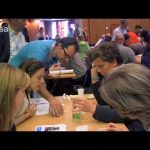
Every summer, ESA’s Education Office welcomes primary and secondary teachers from across Europe to ESA’s European Space Research and Technology Centre, The Netherlands. Over the course of three days, in the heart of ESA’s largest establishment, the teachers engage in a number of workshops about how space can be used as a context for teaching many subjects. Space experts, both from within ESA and outside, guide the teachers through mainly hands-on practical workshop sessions.
Credits: ESA