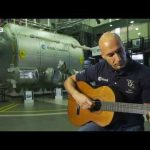
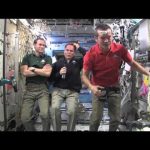
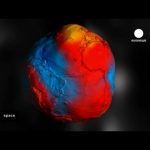
ESA astronaut Luca Parmitano plays one of his own compositions on guitar at ESA’s technical heart ESTEC in The Netherlands.
The song doesn’t have a name yet as playing the guitar is a way to relax for Luca after the extensive astronaut training he receives for his Volare mission to the International Space Station.
M&Ms have the slogan of melting in your mouth, but not in your hands. You wanna know something cool? The special melting property is totally scientific. The results are an amazing phenomenon that we call Floating Letters.
You’ve seen Steve Spangler use blow dryers or industrial-sized blowers to levitate ping pong balls, beach balls, and send toilet paper flying through the air. You can replicate this levitating object phenomenon on a smaller scale using objects that are right in your home! The Floating Ping Pong Ball trick uses amazing principles of air that are sure to amaze anyone, from your science teacher to your parents to your neighbors!
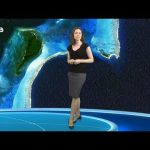
Earth from Space is presented by Kelsea Brennan-Wessels from the ESA Web-TV virtual studios.
In the sixty-third edition, we look at an underwater sinkhole in the Belize Barrier Reef.
Putting an item into an empty soda bottle is a piece of cake. Just drop the object through the mouth of the bottle, right? Well, we have a challenge for you. Place a small item in the mouth of a bottle and attempt to blow the object into the bottle using a straw. Not so easy, now is it?
Hard candies are known for their bright colors, delicious tastes, and, well, having a ton of sugar. While having a handful of candy every once in a while is definitely a good thing, we like conducting experiments with them! We especially love Gobstoppers. They have layers of colors that, when they dissolve into water, do something very peculiar…
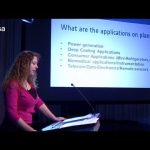
Lecture from Anastasiia Prytuliak, European Space Agency postdoctoral research fellow in the Institute Laue Langevin and European Radiation Synchrotron Facility in Grenoble, France about a project called “ThermoMag”, which is devoted to the research and development of energy-harvesting thermoelectric materials.
“ThermoMag” is a project co-funded by the 7th Framework Programme of the European Commission, coordinated by the European Space Agency.
Purchase DVD here: http://www.stevespanglerscience.com/product/sick-science-dvd-volume-1
If you’ve experienced our Sick Science!™ series before, you know that the videos are all about bringing science to life for young learners. The best part? The hands-on science exploration can be done using items found right in your own home or classroom! Each volume of the Sick Science DVD series features 10 experiments that leave young scientists with a question. Sometimes, they may be asked to figure out why the experiment works. Other times, they may be asked to determine a mystery component of the activity. The entire experience is designed to encourage investigation and inquiry… a sure-fire way to keep everyone engaged and wanting more.
Sick Science™ is a trademark of Steve Spangler, inc.
President Obama’s Fiscal Year 2014 budget request for NASA is a $17.7 billion investment in our nation’s future. NASA’s budget ensures the United States will remain the world’s leader in space exploration and scientific discovery for years to come, while making critical advances in aerospace and aeronautics to benefit the American people.
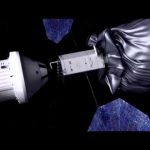
President Obama’s FY2014 budget request for NASA enables the agency to leverage capabilities in the Human Exploration and Operations, Science and Space Technology Mission Directorates to make significant yet affordable advances in our nation’s capabilities and achieve the space goals set by the Administration. NASA will improve detection and characterization of asteroids, pursue solar electric propulsion demonstration, develop a mechanism to capture an asteroid and redirect it to a stable orbit in the Earth-moon system and begin designing a mission to send humans to it using the Space Launch System rocket and Orion spacecraft.
Tissue paper is known for a few things. For example, tissue paper is soft and nice for blowing your nose. Tissue paper is not, however, known for its tensile strength. Most people wouldn’t be surprised if a common housefly could tear through a piece. In the Magic Tube – Strong Tissue Paper experiment, though, we’ll show you a way to make tissue paper nearly impenetrable.
NASA’s fleet of science satellites and research aircraft are at work around the world 24/7 helping scientists discover just how our living planet really works. Take a look at some of the insights and don’t forget to celebrate Earth Day on April 22!
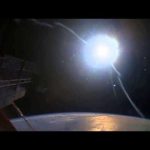
Take a look at the beauty and wonder of our home planet as seen from space by astronauts on the International Space Station. And don’t forget to celebrate Earth Day on April 22!
Micha Schmidt is a Spacecraft Operations Manager at ESA. In this video he talks about his involvement in the Herschel project and the many phases of development that exist in all ESA projects. Micha also talks about his fascination for space as a boy and what a great experience it has been to live in various European countries whilst working for ESA.
Elsa Montagnon is a Spacecraft Operations Manager for the BepiColombo project. Still in the development phase, BepiColombo should be launched in 2015 and hopes to provide more information about Mercury than ever before. In this video Elsa discusses her involvement in the mission, her studies and hobbies, as well as the passion people have at ESA for their projects.
The International Space Apps Challenge (http://spaceappschallenge.org) is a global collaboration of space explorers, held in cities around the world on April 20-21, 2013. In the style of a hackathon, citizen experts will collaborate with space agencies and other partners to further space technology, as well as use space data to solve Earth-bound challenges. Join us on Earth Day weekend!
Researchers have published the first findings of the Alpha Magnetic Spectrometer (AMS), a particle physics detector on the International Space Station that searches for various types of unusual cosmic matter. Scientists hope that by measuring cosmic rays, AMS will provide new data about the formation of the Universe, antimatter, and evidence of the mysterious dark matter believed to make up most of the Universe. Also, MATERIALS IN SPACE, OBSERVING EARTH, FARTHEST SUPERNOVA YET, BLOWING IN THE WIND, EARTH MONTH 2013 and more!
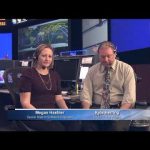
Students on NASA’s Digital Learning Network hear from NASA’s Megan Hashier about her role as software Engineer for the International Space Station. Host: Kyle Herring.
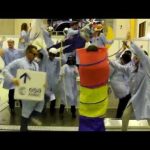
This version of the “Harlem Shake” video, called the “ESTEC Shake”, was filmed on a real ‘electrodynamic shaker’, normally used to test spacecraft at the European Space Agency’s technical centre, ESTEC, in Noordwijk, the Netherlands. One of the major risks faced by satellites stems from the high vibrations they experience during launch. It is essential to test spacecraft and their components under similar conditions on such shakers to make sure they will survive the violent ride into space.
ESA’s Test Centre is the largest centre of its kind in Europe, and one of the largest in the world.
The video was filmed by ESTEC volunteers, in their own time, at zero cost, while the shaker unit was being reconfigured. Strict safety, security and cleanroom procedures were followed during filming.
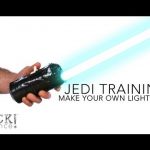
From Tatooine to Hoth, there is one legendary weapon that is regarded as the ultimate in Rebel and Empire warfare… the lightsaber. Ewoks, Wookies, Jawas, and droids all cower before the mighty lightsaber. Wanna make your own? Let us take you to a galaxy far, far away and teach you how you can build your own working lightsaber. Trust us, it works.
Steve Spangler is a celebrity teacher, science toy designer, speaker, author and an Emmy award-winning television personality. Spangler is probably best known for his Mentos and Diet Coke geyser experiment that went viral in. Spangler is the founder of www.SteveSpanglerScience.com, a Denver-based company specializing in the creation of science toys, classroom science demonstrations, teacher resources and home for Spangler’s popular science experiment archive and video collection. Spangler is a frequent guest on the Ellen DeGeneres Show and Denver 9 News where he takes classroom science experiments to the extreme. For teachers, parents or DIY Science ideas – check out other sources of learning:
NASA Flight Engineer Chris Cassidy and his Expedition 35/36 crewmates, Soyuz Commander Pavel Vinogradov, and Russian Flight Engineer Alexander Misurkin, are now safely aboard the International Space Station, where they’ll conduct scientific research through the summer. Also, Dragon’s back; Heatshield Hits Beantown; Stir Welding for SLS; Cassini Hot Spots; Hangout En Espanol; and more!
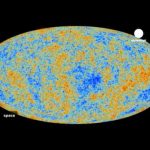
Scientists have traced a unique new map of the first light of the universe, and raised profound questions about the Big Bang.The image of the cosmic microwave background they have released was taken by ESA’s Planck satellite, and its results could have a significant impact on the field of cosmology.
“It turns that most of this image, most of this map, fits beautifully our very simple model. At the same time we find some strange things, and this is where it starts to get interesting, because we see some signs of things that do not fit,” explains ESA’s Planck Project Scientist Jan Tauber.
“Roughly speaking the things that we are finding that are not as we expect are features that are across the whole sky. When you look only at the large features on this map you find that that our best fitting model, our best theory has a problem fitting the data, there is a lack of signal that we would expect to see,” he says.
The news that the early universe is not quite as was thought has left the greatest minds in cosmology spinning with excitement.
George Efstathiou, Professor of Astrophysics, University of Cambridge, is a key member of the Planck Science Team.
“The idea that you can actually experimentally test what happened at the Big Bang still amazes me,” he says.
The Big Bang theory remains intact of course, but the concept of inflation could be put to test by the Planck data.
“We see these strange patterns that are not expected in inflationary theory, the simplest inflationary theories,” explains Efstathiou.
“So there’s a real possibility that we have an incomplete picture. It may be that we have been fooled, that inflation didn’t happen. It’s perfectly possible that there was some phase of the universe before the Big Bang actually happened where you can track the history of the universe to a pre-Big Bang period.”
The Planck mission could test ideas about how the early universe was formed.The puzzle is that at small scales the data fits the theoretical model very nicely, but at larger scales the signal from the cosmic microwave background is much weaker than expected.
Efstathiou is looking for answers: “Can we find a theoretical explanation that links together the different phenomena that we have seen, the different little discrepancies, with inflationary theory? That’s where there’s the potential for a paradigm shift, because at the moment there’s no obvious theoretical explanation that links together these anomalies that we have seen. But if you found a theory that links phenomena that were previously unrelated, then that’s a pointer to new physics.”
It appears that the audacious Planck mission really will shed new light on the dawn of time.
Acquired by ESA’s Planck space telescope, the most detailed map ever created of the cosmic microwave background — the relic radiation from the Big Bang — was released today, revealing the existence of features that challenge the foundations of our current understanding of the Universe.
A vacuum packer is an amazing device that vacuum packs food to seal in the freshness. At least that’s what those late night infomercials tell us. We’re more excited about using this fascinating device to explore amazing scientific properties. Fill the special storage container with marshmallows (we prefer those adorable yellow Peeps) and watch the incredible growing marshmallow trick!
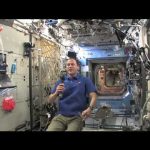
Aboard the International Space Station, Expedition 35 Flight Engineer Tom Marshburn of NASA discussed his mission, research activities and answered social media questions offered by lead singer Jared Leto of the musical rock group “30 Seconds to Mars” during a tour of Mission Control, Houston by the group March 18. The members of the Los Angeles-based group, which was originally formed in 1998, are huge space enthusiasts, and recently had a sample of their music flown to the station on the SpaceX/Dragon cargo ship for the crew’s listening pleasure.
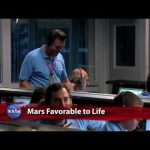
Analysis of the first ever sample of rock powder collected by the Mars Curiosity rover has proven that the Red Planet location it’s exploring once had everything needed to support microbial life including a lakebed filled with not salty or acidic but fresh water. Also, innovative space technology; students help space exploration; women aspiring, inspiring; IceBridge preps; SLS @ TennTech; career day; and more!
A NASA Mars Curiosity rover team member gives an update on developments and status of the planetary exploration mission. The Mars Science Laboratory spacecraft delivered Curiosity to its target area on Mars at 1:31:45 a.m. EDT on Aug. 6, 2012 which includes the 13.8 minutes needed for confirmation of the touchdown to be radioed to Earth at the speed of light. The rover will conduct a nearly two-year prime mission to investigate whether the Gale Crater region of Mars ever offered conditions favorable for microbial life.
Curiosity carries 10 science instruments with a total mass 15 times as large as the science payloads on NASA’s Mars rovers Spirit and Opportunity. Some of the tools, such as a laser-firing instrument for checking rocks’ elemental composition from a distance, are the first of their kind on Mars. Curiosity will use a drill and scoop, which are located at the end of its robotic arm, to gather soil and powdered samples of rock interiors, then sieve and parcel out these samples into the rover’s analytical laboratory instruments.
Who taught these noodles to dance, anyway? Go on – gather up some pasta noodles, turn up the music, and get ready for an old-fashioned pasta party. Just when you thought you were done at the dinner table… here is some kitchen science that will have you learning about volume and density in a brand new, hands-on way!
In less than three years, Luca has travelled between all five international partners’ training sites, gaining the knowledge and skills required for his mission. His tailored training has taken him to Houston, USA, Star City near Moscow, Russia, Tsukuba near Tokyo, Japan, Montreal, Canada, and the European Astronaut Centre in Cologne, Germany.
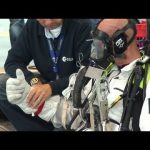
Critical tasks are trained over and over. As Soyuz flight engineer, Luca requires a great amount of ‘flying hours’ in the Russian spacecraft simulator, so he trained until he felt at home in the cockpit and can operate Soyuz flawlessly in any situation. During simulations, Luca had his hands at the controls of the spacecraft and wore the Russian Sokol flight suit.
Luca has been taught Space Station systems in full-size mockups, where he familiarised himself with the Station and learnt how everything works. He is trained in all systems and experiment operations scheduled for his mission. He has spent hours getting to know every corner of Europe’s Columbus laboratory, where most of the experiments in which he participates in take place.
Dressed in a spacesuit, Luca also trained to perform spacewalks in one of the largest swimming pools in the world on realistic mockups of the Space Station.
“For this trick, all you need is a bit of un-popped pop corn and a ball bearing.” It’s the perfect phrase to get all of the people around you excited for a bit of science magic. Many people don’t realize that pop corn and ball bearings have a remarkable chemical reaction that turns the ball bearing into a ping pong ball. In fact, when you perform the demonstration, your audience won’t believe their eyes.
In a briefing held Feb. 28 at the Johns Hopkins University’s Applied Physics Laboratory, scientists detail the finding by NASA’s Van Allen Probes of a previously-undetected third radiation belt around Earth.
Who needs a magic wand to create levitating objects when you have a balloon? In the Static Flyer experiment, we’ll teach you how understanding certain scientific ideas can result in a trick that would make Harry Potter, Gandalf the Grey, and even Merlin jealous.
Academic background series: Anne Pacros is a payload system engineer on the Solar Orbiter mission and finds working in a position where all the threads of the project come together fascinating.
Η βαρύτητα είναι μία θεμελιώδης δύναμη της φύσης, μία αόρατη έλξη που κυβερνά τον πλανήτη, κι αυτό την κάνει ζωτικής σημασίας. Μπορεί να μεταβάλλεται στο χρόνο λόγω της κίνησης της μάζας αλλά και να διαφοροποιείται από τόπο σε τόπο. Πρόκειται για ένα πραγματικό παζλ για τους επιστήμονες.
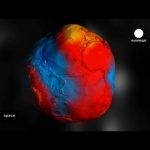
Η τιμή της βαρύτητας σε ένα μέρος μπορεί να εναλλάσσεται εξαιτίας της παλίρροιας. “Η δράση του φεγγαριού και του ήλιου αλλάζει το πεδίο βαρύτητας και η γη ανταποκρίνεται με ελαστικότητα σε αυτές τις αλλαγές και παραμορφώνεται”, λέει η ειδικός Κάρλα Μπρέιτενμπουργκ. Έτσι, εάν σαρώσει κανείς την γη με έναν ειδικό δορυφόρο για την βαρύτητα, το σχήμα της μοιάζει πραγματικά περίεργο.
“Εδώ και 20 χρόνια θα έλεγα ότι οι επιστήμονες ονειρεύονται μία αποστολή που να προσφέρει υψηλής ποιότητας ανάλυση της βαρύτητας”, τονίζει ο Βόλκερ Λίμπεγκ, διευθυντής του Προγράμματος Εξερεύνησης της γης της ESA.
Ο μόνος τρόπος για να έχουμε μία συνολική εικόνα του πεδίου βαρύτητας είναι να βρεθούμε στο διάστημα, κι αυτό ακριβώς κάνει η ESA με τους δύο δορυφόρους GRACE ανίχνευσης βαρύτητας. Με τα στοιχεία που μεταδίδουν, ειδικοί μπορούν να ανιχνεύσουν την δομή και την ιστορία της γης, ενώ μπορούμε να παρακολουθήσουμε και τις κλιματικές αλλαγές.
“Η μεγάλη καινοτομία του ανιχνευτή βαρύτητας είναι ότι για πρώτη φορά μπορούμε να έχουμε ένα καθολικό πεδίο που έχει την ακρίβεια και την ανάλυση που μας επιτρέπει να εντοπίζουμε τις αλλαγές της μάζας που συνδέονται με την γεωλογική δομή”, αναφέρει η Κάρλα Μπρέιτενμπουργκ.
Η κληρονομιά της αποστολής είναι μία άνευ προηγουμένου σφαιρική έρευνα για την βαρύτητα και την Γη.
March 1st is the targeted launch date for the next cargo resupply flight to the International Space Station. Liftoff of the SpaceX Dragon spacecraft’s second resupply mission to the ISS is scheduled for 10:10 a.m. Eastern from Cape Canaveral Air Force Station in Florida. Dragon will be loaded with about six tons of crew supplies and materials for science research. Also, Launch the Seedlings!; Curiosity Drills; ISS Social; Hangout with the Crew; Bolden Honored; Aerospace Days; Cady and the Chieftains; and more!
Aboard the International Space Station, Expedition 34 Commander Kevin Ford of NASA, Flight Engineer Tom Marshburn of NASA and Flight Engineer Chris Hadfield of the Canadian Space Agency fielded questions from social media during a Google Plus hangout February 22, the first for the station. The three astronauts answered questions from the online community who have been interested to watch and ask questions to astronauts both on orbit and on the ground. People from around the world were able to view the Hangout live on NASA’s YouTube channel and were invited to ask questions by uploading a video question to YouTube with the hashtag #askISS, as well as from followers on Google Plus or Twitter, who were able to ask a question in advance of or during the event using the hashtag #askNASA, or on NASA’s Facebook page.
In a first for the agency, NASA hosted a Google+ Hangout live with the International Space Station on Feb. 22, 2013 from 10:30 a.m EST to 11:30 a.m. EST. Google+ Hangouts allow people to chat face-to-face while thousands more can tune in to watch the conversation live on Google+ or YouTube. This unique opportunity connected you, our fans, with astronauts living and working on the orbiting laboratory 240 miles above the Earth.
During the event, several video questions were selected and answered by astronauts on the space station and on the ground. Additionally, NASA asked real-time questions submitted by our followers on Google+, Twitter, and Facebook. During the hangout, astronauts Kevin Ford, Chris Hadfield and Tom Marshburn will answer questions and provide insights about life aboard the station. Station crews conduct a variety of science experiments and perform station maintenance during their six-month stay on the outpost. Their life aboard the station in near-weightlessness requires unique approaches to everyday activities such as eating, sleeping and exercising.
La gravità è una delle forze fondamentali della natura, con la sua presa invisibile governa tutto il nostro pianeta: dalle rocce, alle profondità dei mari. Per noi è un punto di riferimento vitale.
Normalmente percepiamo la gravità come un’attrazione costante ma, se si aggiunge della massa extra in un punto, o se la si toglie, il segnale gravitazionale si altera in modo misurabile, seppur minimo. E per la scienza è un rompicapo. La gravità può infatti variare in modi diversi. Può variare nel tempo, a causa dei movimenti della massa, e può variare da un posto all’altro.
In questa puntata di Space siamo andati a Trieste, nel nord Italia, dove un gruppo di studenti è alle prese con la gravità. Sottoterra c’è una immensa caverna: la Grotta Gigante. Qui la forza di gravità si riduce sensibilmente il che significa che una massa minore sotto i nostri piedi corrisponde a un’attrazione inferiore verso la Terra.
Il nostro pianeta inoltre, se visto con gli occhi di un satellite in grado di scansionare la gravità, assume davvero una forma molto strana.
Per questo l’unico modo per avere un quadro globale del campo gravitazionale è andare nello spazio. Con questo obiettivo è nata la missione GOCE dell’Agenzia spaziale europea.
Un’opportunità relativamente nuova, quella di utilizzare satelliti per studiare la gravità. Fino al 1995 infatti il campo gravitazionale veniva studiato in alcuni centri come quello di Potzdam, in Germania, tramite pendoli ad alta precisione.