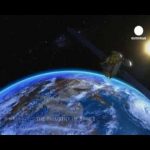
2012 has been a very busy and fruitful year for ESA.
In particular it will remain as a historical year for European launchers since it saw the successful qualification flight of the new Vega from Kourou and the birth of Ariane 6 which was decided at the Ministerial Council in Napoli last November.
This video proposes to look back at 2012 with an overview of ESA missions and events.
With their launch from Kazakhstan to the International Space Station fast approaching, Expedition 34/35 Soyuz Commander Roman Romanenko, Flight Engineer Tom Marshburn of NASA and Flight Engineer Chris Hadfield of the Canadian Space Agency continue to train and finalize plans for the December 19 flight. Also, Orion taking shape; Mars field trip: GRAIL’s impact; FASTSat’s finale; “Big Wind”; rocket holiday; and more!
ESA astronauts training for International Space Station
ESA’s human spaceflight programme is gaining experience with long-duration missions on the International Space Station.
A new generation of European astronauts will conduct scientific experiments and enjoy orbiting Earth in 2013 and 2014.
ESA astronaut Luca Parmitano will fly from Baikonur, Russia, next May for six months, followed by ESA astronauts Alexander Gerst and Samantha Cristoforetti in 2014.
This video shows them training at the Johnson Space Centre in Houston, USA
and Star City in Moscow, Russia.
Check out the full experiment at http://www.stevespanglerscience.com/experiment/balancing-nails-trick
The object of the challenge is to balance all of the nails on the head of a single nail. All of the nails have to be balanced at the same time and cannot touch anything but the top of the nail that is stuck in the base. If you’re really ambitious, you can try your luck at our large-scale version using landscape nails and a friend as the base. Enough of this idle chatter… get balancing!
A NASA’s Mars Curiosity rover team member gives an update on developments and status of the planetary exploration mission. The Mars Science Laboratory spacecraft delivered Curiosity to its target area on Mars at 1:31:45 a.m. EDT on Aug. 6, which includes the 13.8 minutes needed for confirmation of the touchdown to be radioed to Earth at the speed of light. The rover will conduct a nearly two-year prime mission to investigate whether the Gale Crater region of Mars ever offered conditions favorable for microbial life.
Read the full experiment at http://www.stevespanglerscience.com/experiment/flame-light-relight
There’s a lot of chemistry behind the simple lighting or extinguishing of a flame. Would you believe us if we told you that you could extinguish a flame just by placing it partway into a graduated cylinder? What if we told you that you could relight the fire without a match or lighter? Both propositions seem unlikely, if not downright impossible. With the Flame Light Relight experiment, however, you’ll see how a few household items can mix together and create a fire-based experience you have to see to believe.
Kody Ensley works at Johnson Space Center as a software engineer for the Robotics Systems Technology Branch of NASA’s Software, Robotics, and Simulation Division. He works to develop software for Robonaut 2, the humanoid robot currently residing aboard the International Space Station. Ensley is a graduate of Salish Kootenai College in Pablo Montana, where he completed a four-year pilot program in computer engineering for Native American students, which was established through coordination with JSC employees. Ensley completed two internships at JSC and held a co-op position before being hired by the Robotics Systems Technology Branch in July 2012.
A NASA’s Mars Curiosity rover team member gives an update on developments and status of the planetary exploration mission. The Mars Science Laboratory spacecraft delivered Curiosity to its target area on Mars at 1:31:45 a.m. EDT on Aug. 6, which includes the 13.8 minutes needed for confirmation of the touchdown to be radioed to Earth at the speed of light. The rover will conduct a nearly two-year prime mission to investigate whether the Gale Crater region of Mars ever offered conditions favorable for microbial life.
Discover more about our planet with the Earth from Space video programme. In this special edition, Andrew Shepherd from the University of Leeds and Erik Ivins from NASA’s Jet Propulsion Laboratory join the show to discuss our planet’s polar ice sheets.
Their new research shows that melting of the Antarctic and Greenland ice sheets has contributed 11.1 millimetres to global sea levels since 1992.
Stories about the fictional planet Nibiru and predictions of the end of the world in December 2012 have blossomed on the Internet. Contrary to some of the common beliefs out there, Dec. 21, 2012 won’t be the end of the world as we know, however, it will be another winter solstice.
Social media users joined NASA and other scientists for a lively discussion at 2:00 p.m. EST on Wednesday, November 28, 2012 to discuss the 2012 rumors propagated across the internet. We had a great panel of experts on hand including:
– David Morrison, astrobiologist from NASA’s Ames Research Center
– Don Yeomans, asteroid scientist from NASA’s Jet Propulsion Laboratory
– Mitzi Adams, solar/archaeoastronomer from NASA’s Marshall Space Flight Center
– Lika Guhathakurta, heliophysicist from NASA Headquarters
– Paul Hertz, astrophysicist from NASA Headquarters
– Andrew Fraknoi, science educator from Foothill College in Los Altos Hills, Calif.
Actor William Shatner, who portrayed “Star Trek’s” Captain James Kirk on TV and in film, hosts a video highlighting how NASA’s outstanding accomplishments in space are used to improve life on Earth. June Lockhart and Wil Wheaton, who also gained celebrity portraying space explorers, also host videos about how much of the technology we rely on daily was developed by NASA for space exploration and then adapted or enhanced for use here on Earth. This includes many technologies used in schools, homes, cars, computers and American industry.
Wil Wheaton, the actor who played Wesley Crusher on “Star Trek: The Next Generation,” is host of a new public service announcement about how much of the technology we rely on daily was developed by NASA for space exploration and then adapted or enhanced for use here on Earth. Similar PSAs are hosted by William Shatner and June Lockhart, both of whom also portrayed space explorers on TV and the silver screen. Wheaton, who also has a large social media following, explains how many of these technologies have found their way into our schools, homes, cars, computers and American industry.
Although this effect is presented with modern containers like plastic soda bottles, the original magic trick dates back thousands of years. The magician shows everybody two identical bottles of rice and two chopsticks. When the performer plunges a chopstick into the bottle of rice and lifts, the rice and bottle seem so light that they float upwards as the chopstick is raised. But, when a spectator is invited to do the same thing with the other bottle of rice and chopstick, it refuses to rise. Nothing changes when the performer and spectator exchange chopsticks — the performer’s bottle rises while the spectator’s does not. What is the secret? Read the full experiment to find out: http://www.stevespanglerscience.com/experiment/floating-rice-bottles
Raquel Redhouse is a mechanical engineer working in the Systems Definition & Communications Branch at NASA’s Glenn Research Center. She supports the Multi-Purpose Crew Vehicle (MPCV) Program Requirements Management Office (RMO). The RMO is responsible for the development, maintenance, and tracking of the Orion system and interface requirements. She is an active member of Glenn’s Advisory Group for Native Americans and the President of the local Lake Erie Professional Chapter of the American Indian Science & Engineering Society (AISES).
Are you on the go with your Smart Phone or Tablet? Want to know more about what’s happening at NASA and how it affects you? Then make sure you update or install the latest NASA App from Google Play or the Apple App store to your mobile device because there’s more “Space” in your life than you know. Get the NASA App at the App store and Android Market today.
Read the full experiment at http://www.stevespanglerscience.com/experiment/egg-drop-inertia-trick
The challenge sounds so simple… just get the egg into the glass of water, but there are a few obstacles. The egg is perched high above the water on a cardboard tube, and a pie plate sits between the tube and the water. Still think it’s easy? Sir Isaac Newton does.
La crisis económica y financiera que atraviesan la mayoría de los países europeos amenaza la inversión en algunos sectores estratégicos. El sector espacial responde a este escenario de fuertes turbulencias con el desarrollo de nuevas aplicaciones últiles para la vida cotidiana.
Die meisten europäischen Länder stecken in einer Wirtschafts- und Finanzkrise, die verschiedene Industriebranchen bedroht.Wie ist es in dieser Situation um die Raumfahrtbranche bestellt? Welche Zukunftsperspektiven hat sie? Einige Antworten auf diese Fragen in dieser Ausgabe von Space
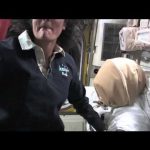
In her final days as Commander of the International Space Station, Sunita Williams of NASA recorded an extensive tour of the orbital laboratory and downlinked the video on Nov. 18, just hours before she, cosmonaut Yuri Malenchenko and Flight Engineer Aki Hoshide of the Japan Aerospace Exploration Agency departed in their Soyuz TMA-05M spacecraft for a landing on the steppe of Kazakhstan. The tour includes scenes of each of the station’s modules and research facilities with a running narrative by Williams of the work that has taken place and which is ongoing aboard the orbital outpost.
A NASA’s Mars Curiosity rover team member gives an update on developments and status of the planetary exploration mission. The Mars Science Laboratory spacecraft delivered Curiosity to its target area on Mars at 1:31:45 a.m. EDT on Aug. 6, which includes the 13.8 minutes needed for confirmation of the touchdown to be radioed to Earth at the speed of light. The rover will conduct a nearly two-year prime mission to investigate whether the Gale Crater region of Mars ever offered conditions favorable for microbial life.
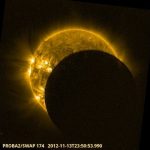
The total solar eclipse of 13-14 November 2012 was only visible to ground-based observers situated in northern Australia, while ESA’s Sun-watching satellite Proba-2 enjoyed three partial eclipses from its viewpoint in space. The constant change in viewing angle of Proba-2 as it orbits the Earth meant that the satellite passed through the Moon’s shadow a total of three times during the eclipse event. The video was produced from images taken by Proba-2’s SWAP imager, which snaps the Sun in ultraviolet light to reveal stormy active regions on the solar disc.
The apparent noise in the movie results from high energy particles hitting Proba-2’s electronics as the spacecraft passes through the South Atlantic Anomaly. The dimming in the movie is an effect as part of the satellite’s orbit passes through the shadow of the Earth.
You’ve probably learned or heard about DNA, but have you ever seen it? With the Strawberry DNA experiment, you’ll extract, isolate, and observe the DNA of a strawberry in a matter of minutes. It sounds impossible, but thanks to special characteristics of strawberries, it’s actually very possible… and simple. You don’t have to be a geneticist. You don’t need a microscope. It’s easy, fun, and all you need are some household materials.
Want more experiments like this? Check out http://www.stevespanglerscience.com/product/naked-eggs-and-flying-potatoes
Sick Science™ is a trademark of Steve Spangler, inc.
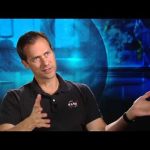
Expedition 34/35 Flight Engineer Tom Marshburn is interviewed about his upcoming stay aboard the International Space Station. Marshburn is scheduled to fly aboard a Soyuz spacecraft to the ISS in December and remain in space until May with crewmates Chris Hadfield and Roman Romanenko.
A NASA’s Mars Curiosity rover team member gives an update on developments and status of the planetary exploration mission. The Mars Science Laboratory spacecraft delivered Curiosity to its target area on Mars at 1:31:45 a.m. EDT on Aug. 6, which includes the 13.8 minutes needed for confirmation of the touchdown to be radioed to Earth at the speed of light. The rover will conduct a nearly two-year prime mission to investigate whether the Gale Crater region of Mars ever offered conditions favorable for microbial life.
You, together with your 500 million fellow citizens from ESA’s 20* European member nations, are the collective owners of one of the world’s leading space agencies.
The European Space Agency is an intergovernmental organisation, a cooperative coming together of its Member States in their national interest and common good.
This new video offers a quick introduction: Europe, meet ESA.
An animation of satellite observations from Oct. 21-30, 2012, shows the birth of Tropical Storm Sandy in the Caribbean Sea, the intensification and movement of Sandy in the Atlantic Ocean along the U.S. East Coast, and the landfall of Hurricane Sandy in New Jersey on Oct. 29. This visualization was created by the NASA GOES Project at NASA Goddard Space Flight Center, Greenbelt, Md., using observations from NOAA’s GOES-13 and GOES-15 satellites.
Halloween is our favorite time of year, and dry ice is the ultimate addition to any Halloween party! With a little dry ice, water, and dish soap, you will be able to make your own crystal ball bubble to gaze into the future and see what your Halloween has in store for you!
Earth’s magnetosphere is an invisible shield, protecting our planet from harmful solar radiation.
Many living organisms – from bacteria to insects or birds – seem to rely on Earth’s magnetic field to navigate. Man has been doing so for a thousand years since the invention of the compass.
But research shows the magnetic field is weakening and scientists are trying to understand why.
Some believe it signals a pole reversal in progress, not an uncommon phenomenon in the history of our planet.
As ground observatories fail to grasp the whole picture, we are sending magnetometers into orbit to try to measure the magnitude and the direction of the magnetic field.
With Halloween right around the corner, all you need to be the hit of the party is a little bit of dry ice, a touch of dish soap, and a bunch of time! Once you make these smoking bubbles, you won’t want them to stop… or maybe its that you can’t make them stop!
A NASA’s Mars Curiosity rover team member gives an update on developments and status of the planetary exploration mission. The Mars Science Laboratory spacecraft delivered Curiosity to its target area on Mars at 1:31:45 a.m. EDT on Aug. 6, which includes the 13.8 minutes needed for confirmation of the touchdown to be radioed to Earth at the speed of light. The rover will conduct a nearly two-year prime mission to investigate whether the Gale Crater region of Mars ever offered conditions favorable for microbial life.
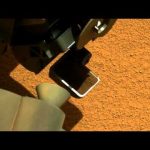
Curiosity carries 10 science instruments with a total mass 15 times as large as the science payloads on NASA’s Mars rovers Spirit and Opportunity. Some of the tools, such as a laser-firing instrument for checking rocks’ elemental composition from a distance, are the first of their kind on Mars. Curiosity will use a drill and scoop, which are located at the end of its robotic arm, to gather soil and powdered samples of rock interiors, then sieve and parcel out these samples into the rover’s analytical laboratory instruments.
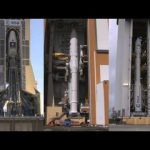
2012 has seen three launchers lift off from Europe’s Spaceport in French Guiana. The heavy Ariane 5, the medium Soyuz and the small Vega now provide Europe with a full range of launch services and capabilities. Watch this new video of the trio’s assembly, final preparations, rollout and liftoff.
In this introductory lecture, Dr. Gerda Horneck of the DLR Institute of Aerospace Medicine in Cologne describes Astrobiology as a newly emerging field of science.
Astrobiology comprises the study of the overall pattern of chemical evolution of potential precursors of life, in the interstellar medium, and on the planets and small bodies of our solar system. Astrobiology also consists of studying the history of life on Earth back to its roots, deciphering the environments of planets in our solar system and of their satellites and searching for other planetary systems in our Galaxy.
Hereby, Astrobiology provides clues to the understanding of the origin, evolution and distribution of life and its interaction with the environment, here on Earth and in the Universe.
Highlighters have a number of uses, from helping acknowledge important text to acting as brightly-colored markers in our favorite coloring book. Around Halloween, though, we’ve found an entirely different use for them. With the Black Light Secret Message experiment, you’ll see that certain highlighters aren’t just brightly-colored – they actually glow underneath a black light! The secret messages and floating images you’ll create with this experiment are sure to create screams of joy and shrieks of excitement.
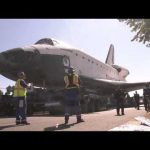
Space Shuttle Endeavour’s two-day trip from Los Angeles International Airport through the streets of Los Angeles to the California Science Center is underway. The planned transport route of NASA’s youngest orbiter takes it past several well-known L.A. landmarks.
A NASA’s Mars Curiosity rover team member gives an update on developments and status of the planetary exploration mission. The Mars Science Laboratory spacecraft delivered Curiosity to its target area on Mars at 1:31:45 a.m. EDT on Aug. 6, which includes the 13.8 minutes needed for confirmation of the touchdown to be radioed to Earth at the speed of light. The rover will conduct a n
If you’re a fan of Spangler Science, you know that we love exploding pumpkins… but we’ve also found that glowing pumpkins can be just as fun! Just add Glow Powder to your Halloween pumpkins and you’ll get a spooky Halloween display without all the mess of carving.