Blog

  • Orchestra plays an inspiring tribute to ESA’s André Kuipers

    Orchestra plays an inspiring tribute to ESA’s André Kuipers

    The 42-piece DSS Aarlanderveen orchestra played an inspiring tribute to André Kuipers at their annual ‘Wish concert’ on 11 February 2012. Each year the orchestra take ‘wish’ requests from Dutch celebrities, but this year the orchestra wanted to perform something very special for Wensconcert 2012, and uniquely decided to dedicate their ‘wish’ spot to André.
    They chose the Jupiter hymn from Holst’s ‘The Planets’ suite, one of
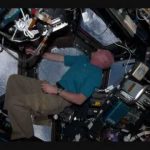
    André’s favourite pieces. Afterwards the audience was treated to a message received from the ISS, in which André said: “Oh how nice! I have this music up here with me. I’m very honoured to have such a beautiful piece dedicated to me. Warmest thanks for that.”

    The DSS Aarlanderveen orchestra is based in Aarlanderveen, near Alphen aan den Rijn, in the Netherlands. Leading the orchestra on the night was Danny Oosterman, a well-known Dutch conductor, cornet and trumpet player, and instructor at the Conservatorium van Amsterdam and the Utrechts Conservatorium.

  • ESA Euronews: The sounds of space

    ESA Euronews: The sounds of space

    There are many links between music and space. Astronauts like Frank De Winne take their favourite rock music with them to orbit, while musicians on Earth often take inspiration from the stars in their work. Some astrophysicists have transposed plasma waves and electron beams into audible sound.

  • Ancient Egypt: Crash Course World History #4

    Ancient Egypt: Crash Course World History #4

    In which John covers the long, long history of ancient Egypt, including the Old, Middle and New Kingdoms, and even a couple of intermediate periods. Learn about mummies, pharaohs, pyramids and the Nile with John Green.

    Crash Course World History is now available on DVD!
    http://store.dftba.com/products/crashcourse-world-history-the-complete-series-dvd-set

    Resources:

    Mummies!: https://goo.gl/BvAdmj

    Pyramids!: http://goo.gl/aCov2j

    Follow us!
    @thecrashcourse
    @realjohngreen
    @raoulmeyer
    @crashcoursestan
    @saysdanica
    @thoughtbubbler

    Like us! ‪http://www.facebook.com/youtubecrashcourse
    Follow us again! ‪http://thecrashcourse.tumblr.com
    Support CrashCourse on Patreon: https://www.patreon.com/crashcourse

  • NASA African-American History Month Profile- Rhonda Baker

    NASA African-American History Month Profile- Rhonda Baker

    Rhonda Baker is the Associate Director for Center Operations at Ames Research Center. She has been working in Federal government positions since the age of 16. She came to Ames as a procurement specialist in 1998, and worked in support of several research areas, including the NASA Astrobiology Institute (NAI). She is now the Associate Director for Center Operations at Ames Research Center.

  • Colorful Convection Currents – Sick Science! #075

    Colorful Convection Currents – Sick Science! #075

    Learn more at http://www.stevespanglerscience.com/content/experiment/colorful-convection-currents
    Convection is one of those words that we often hear used, but we may not completely understand its meaning. Weather forecasters show how convection currents are formed when warm and cold air masses meet in the atmosphere. Convection currents are responsible for warm water currents that occur in oceans. This activity demonstrates convection currents in a very colorful fashion.

    Want more experiments like this? Check out http://www.stevespanglerscience.com/product/naked-eggs-and-flying-potatoes

    Sick Science™ is a trademark of Steve Spangler, inc.

    © 2012 Steve Spangler Science all rights reserved

  • Succès pour le vol inaugural du nouveau lanceur Vega de l’ESA

    Succès pour le vol inaugural du nouveau lanceur Vega de l’ESA

    Vega, le nouveau lanceur de l’ESA, est désormais prêt pour son entrée en exploitation aux côtés d’Ariane-5 et de Soyouz, après le succès de son vol de qualification, effectué ce matin depuis le port spatial de l’Europe à Kourou (Guyane française).

    Avec Vega, qui vient compléter la famille des lanceurs disponibles à Kourou, l’Europe est désormais à même de répondre à toute la gamme des besoins de lancement, que ce soit pour mettre sur orbite des petits satellites scientifiques et d’observation de la Terre ou pour entreprendre des missions de vaste envergure comme l’envoi de véhicules ESA de ravitaillement à destination de la Station spatiale internationale (ISS).

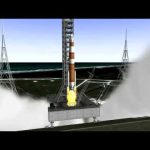
    Vega a décollé pour la première fois à 10h00 GMT (11h00 heure de Paris, 7h00 heure locale) de son nouveau pas de tir, et son vol de qualification s’est parfaitement déroulé.

  • ScienceCasts: Alien Matter in the Solar System

    ScienceCasts: Alien Matter in the Solar System

    “Alien matter” detected by a NASA spacecraft orbiting Earth shows that the chemical make-up of our solar system differs from that of the surrounding galaxy. Researchers discuss the possible meaning of this mismatch in this week’s ScienceCast video.
    Visit http://science.nasa.gov/ for more.

  • Do It Yourself Weather Vane – Sick Science! #074

    Do It Yourself Weather Vane – Sick Science! #074

    Learn more at http://www.stevespanglerscience.com/content/experiment/weather-vane Early weathermen and women didn’t use Doppler radar or computers to forecast the weather, they relied on tools that were much more simple. Take, for instance, the weather vane. You have probably seen weather vanes atop barns, houses, or mailboxes and they are used to show wind direction. Even though weather vanes are usually made of welded metal, you can make an equally functional weather vane using supplies in your own home!

    Want more experiments like this? Check out http://www.stevespanglerscience.com/product/fire-bubbles-exploding-toothpaste-book

    Sick Science™ is a trademark of Steve Spangler, inc.

    © 2012 Steve Spangler Science all rights reserved

  • Anti-Gravity Water – Sick Science! #073

    Anti-Gravity Water – Sick Science! #073

    Water in rivers, in a glass, or falling from clouds obeys gravity. It’s going to fall towards the ground because of the physical pull of the earth. But, what if we told you that you could turn a glass of water completely upside down and the water wouldn’t fall to the floor? That’s what happens in the Anti-Gravity Water demonstration. It’s a simple experiment that dramatically demonstrates the amazing physical properties of water.

    Learn more at http://www.stevespanglerscience.com/content/experiment/anti-gravity-water

    Want more experiments like this? Check out http://www.stevespanglerscience.com/product/naked-eggs-and-flying-potatoes

    Sick Science™ is a trademark of Steve Spangler, inc.

    © 2012 Steve Spangler Science all rights reserved

    About Steve Spangler Science…

    Steve Spangler is a celebrity teacher, science toy designer, speaker, author and an Emmy award-winning television personality. Spangler is probably best known for his Mentos and Diet Coke geyser experiment that went viral in. Spangler is the founder of www.SteveSpanglerScience.com, a Denver-based company specializing in the creation of science toys, classroom science demonstrations, teacher resources and home for Spangler’s popular science experiment archive and video collection. Spangler is a frequent guest on the Ellen DeGeneres Show and Denver 9 News where he takes classroom science experiments to the extreme. For teachers, parents or DIY Science ideas – check out other sources of learning:

    Join the Science Club and check out other cool science experiments at – http://www.SteveSpanglerScience.com

    Sign up to receive a FREE Experiment of the Week- http://www.stevespanglerscience.com/experiment-of-the-week

    Attend a Spangler Hands-on Science Workshop for Teachers – http://www.stevespanglerscience.com/training

    Watch Steve on Local and National Media Appearances on YouTube at: https://www.youtube.com/user/SpanglerScienceTV

  • ESA Euronews: A star rocket is born

    ESA Euronews: A star rocket is born

    The family of European rockets is growing. The next one is the youngest, called Vega, soon to be launched from Europe’s Spaceport in French Guiana.
    This new rocket complements the range that Europe already has to offer in the commercial market.

  • ESA Euronews: Nasce una stella tra i lanciatori spaziali europei

    ESA Euronews: Nasce una stella tra i lanciatori spaziali europei

    La famiglia dei vettori spaziali europei si allarga con il prossimo lancio di Vega dalla base europea della Guyana francese. Questo nuovo lanciatore va a completare l’offerta della gamma europea nell’ambito dei razzi commerciali. Ne parliamo nella rubrica Space.

  • PromISSe launch campaign – now in 3D!

    PromISSe launch campaign – now in 3D!

    Follow ESA astronaut André Kuipers and his crewmates, NASA astronaut Donald Pettit and Roscosmos cosmonaut Oleg Kononeko, on their journey from Baikonur cosmodrome, in Kazakhstan, up to their launch onboard a Soyuz TMA-03M spacecraft to the International Space Station (ISS).

    On 21 December 2011, André embarked on ESA’s fourth long-duration mission to the ISS, “PromISSe”. During his five months onboard this human outpost in space, Andre is serving as a flight engineer for Expedition 30.

    This exceptional 3D video shows some of the main events before launch, including: the city of Baikonur, the avenue of cosmonauts with the tree once planted by Yuri Gagarin, the Gagarin Museum, the roll-out of Soyuz in the early morning hours, the vertical erection of the rocket on the launch pad, the pre-launch press conference, the ready-to-fly report of the crew commander, and of course – the amazing light show of a night launch from the Gagarin launch pad in Baikonur.

    Stereoscopic 3D glasses are required to properly enjoy the full 3D effect of this footage.

    André and his fellow crew members will return to Earth by the end of May 2012.

  • Make Your Own Compass – Sick Science! #072

    Make Your Own Compass – Sick Science! #072

    Learn more at http://www.stevespanglerscience.com/experiment/homemade-compass There is one tool that is sure to give you guidance if you get lost, a compass. But what could you do if you forgot to pack this useful tool in your survival kit? Easy! Float a needle on top of a standing pool of water. Well, there’s a bit more to creating a compass out of a needle and some water, but you can do it right at home with just a few tools.

    Want more experiments like this? Check out http://www.stevespanglerscience.com/product/naked-eggs-and-flying-potatoes

    Sick Science™ is a trademark of Steve Spangler, inc.

    © 2012 Steve Spangler Science all rights reserved

  • M16, the Eagle Nebula

    M16, the Eagle Nebula

    This stunning movie shows the Eagle Nebula from the iconic 1995 Hubble image of the Pillars of Creation through to the latest multi-wavelength composite.

    Credits: far-infrared: ESA/Herschel/PACS/SPIRE/Hill, Motte, HOBYS Key Programme Consortium; ESA/XMM-Newton/EPIC/XMM-Newton-SOC/Boulanger; optical: MPG/ESO; near-infrared/VLT/ISAAC/McCaughrean & Andersen/AIP/ESO

  • Balloon Skewer – Sick Science! #071

    Balloon Skewer – Sick Science! #071

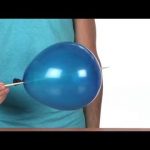
    Learn more at http://www.stevespanglerscience.com/experiment/skewer-through-balloon Some things in this world just don’t mix – dogs and cats, oil and water, needles and balloons. Everyone knows that a balloon’s worst fear is a sharp object…even a sharpened, wooden cooking skewer. With a little scientific knowledge about polymers you’ll be able to perform a seemingly impossible task… pierce a balloon with a wooden skewer without popping it. Suddenly piercing takes on a whole new meaning!

    Want more experiments like this? Check out http://www.stevespanglerscience.com/product/fire-bubbles-exploding-toothpaste-book

    Sick Science™ is a trademark of Steve Spangler, inc.

    © 2012 Steve Spangler Science all rights reserved

  • Erupting Volcano – Sick Science! #070

    Erupting Volcano – Sick Science! #070

    Learn more at http://www.stevespanglerscience.com/experiment/erupting-peroxide-volcano Volcanoes have shaped history and science since the dawn of time. From the ultra-destructive Mount Vesuvius to the more recent Eyjafjallajokull volcano in Iceland (good luck pronouncing that one), volcanic eruptions can dramatically alter the world with their massive blasts. Perhaps that’s why, for decades, students have been awed by the reproduction of volcanic eruptions by their teachers using vinegar and baking soda. We get that and have come up with a way that you can replicate a volcanic blast without the stench of vinegar in your nostrils.

    Want more experiments like this? Check out http://www.stevespanglerscience.com/product/naked-eggs-and-flying-potatoes

    Sick Science™ is a trademark of Steve Spangler, inc.

    © 2012 Steve Spangler Science all rights reserved

  • 2012 ESA Missions Preview

    2012 ESA Missions Preview

    This video presents the key events in 2012 for ESA.

    André Kuipers continues his PromISSe mission aboard the International Space Station until May, the 4th ESA long duration mission. During his stay the third European ATV cargo ship will bring food and supplies to the orbital outpost. Early in the year the new Vega launcher will make its qualifying flight from Europe’s Spaceport in French Guiana. The end of the year will be marked by an ESA Conference at Ministerial level, a major decision point for the future of Europe in Space.

    More backgroud information can be found on: www.esa.int

  • Walking On Eggs – Sick Science! #069

    Walking On Eggs – Sick Science! #069

    Learn more at http://www.stevespanglerscience.com/experiment/walking-on-eggshells
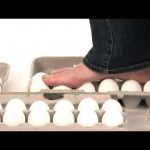
    The phrase “walking on eggshells” is an idiom that is often used to describe a situation in which people must tread lightly around a sensitive topic for fear of offending someone or creating a volatile situation. Literally walking on eggshells would require exceptional caution, incredible skill, and a sense of self-control that would be nothing short of amazing. But what if eggs were really much stronger than most of us imagine? What if nature’s design of the incredible edible egg was so perfect that the thin, white outer coating of an egg was strong enough to withstand the weight of your body? Wake the kids! Phone the neighbors! It’s time for the Walking on Eggshells challenge.

    Want more experiments like this? Check out http://www.stevespanglerscience.com/product/fire-bubbles-exploding-toothpaste-book

    Sick Science™ is a trademark of Steve Spangler, inc.

    © 2012 Steve Spangler Science all rights reserved

  • NASA’s GRAIL Twins to Welcome 2012 at Moon

    NASA’s GRAIL Twins to Welcome 2012 at Moon

    NASA’s two Gravity Recovery And Interior Laboratory (GRAIL) spacecraft are closing in on their quarry, the moon. The mission plans New Year’s Eve and New Year’s Day main engine burns to place the twin spacecraft in lunar orbit. http://www.nasa.gov/grail

  • Newspaper Tree – Sick Science! #068

    Newspaper Tree – Sick Science! #068

    Learn more at http://www.stevespanglerscience.com/experiment/how-to-make-a-newspaper-tree Newspapers are made from trees and trees grow… so it only makes sense that you should be able to grow a newspaper tree, right? What? You have doubts? Roll several sheets of newspaper into a tube, tear the tube in a few spots, and an eight foot tall tree suddenly appears!

    Want more experiments like this? Check out http://www.stevespanglerscience.com/product/naked-eggs-and-flying-potatoes

    Sick Science™ is a trademark of Steve Spangler, inc.

    © 2011 Steve Spangler Science all rights reserved

  • NASA’s GRAIL Twins to Welcome 2012 at Moon

    NASA’s GRAIL Twins to Welcome 2012 at Moon

    NASA’s two Gravity Recovery And Interior Laboratory (GRAIL) spacecraft are closing in on their quarry, the moon. The mission plans New Year’s Eve and New Year’s Day main engine burns to place the twin spacecraft in lunar orbit. http://www.nasa.gov/grail

  • Discovery, Innovation and New Destinations Highlight “This Year @NASA”

    Discovery, Innovation and New Destinations Highlight “This Year @NASA”

    From understanding our Earth, to new clues about possible life elsewhere. From fostering life-changing research in space, to sharing our vision of the future with those destined to journey there.
    From the end of one monumental mission, to the beginning of a new era in the human exploration of our solar system. “This Year @NASA” looks back at the stories that made 2011 — and help frame our path ahead.
  • NASA’s Orion: From Factory to Flight

    NASA’s Orion: From Factory to Flight

    NASA is making steady progress on building the Orion spacecraft, which will take astronauts deeper into space than ever before. Take a look at the latest achievements and milestones in “Orion: From Factory to Flight” as Orion gets ready for its first orbital test flight in 2014.

  • Secret Message – Sick Science #067

    Secret Message – Sick Science #067

    Learn more at http://www.stevespanglerscience.com/experiment/secret-message-heat-friction-ink Give that special someone a note that requires the heat of a romantic candle to decode the message. You won’t believe what the ink in this pen will do. Your message can appear or vanish on command… and most people don’t even know that the ink works this way.

    Want more experiments like this? Check out http://www.stevespanglerscience.com/product/fire-bubbles-exploding-toothpaste-book

    Sick Science™ is a trademark of Steve Spangler, inc.

    © 2011 Steve Spangler Science all rights reserved

  • ESA Euronews: Klein aber fein

    ESA Euronews: Klein aber fein

    Sie haben die Größe einer Waschmaschine, doch sie beschaffen wertvolle Informationen bei der Beobachtung der Erde und der Sonne. Die Rede ist von Mikrosatelliten mit dem Namen Proba.

  • New Crew Sets Sights on Station on “This Week @NASA”

    New Crew Sets Sights on Station on “This Week @NASA”

    At the Baikonour Cosmodrome in Kazakhstan, training continues for the next residents of the International Space Station. Expedition 30 Soyuz Commander Oleg Kononenko, NASA Flight Engineer Don Pettit and European Space Agency Flight Engineer Andre Kuipers, are reviewing flight procedures and making other preparations in advance of their upcoming launch to the orbiting laboratory scheduled for on Dec. 21. Also, next-gen tests; Dawn’s new orbit; and, Third Rock rolls out.Plus, Cleveland tech showcase; Explorer moves; “Sully” at the sim; FIRST Lego; “Operation Cookies,” and more.

  • ESA Application V2 for iPhone and iPad

    ESA Application V2 for iPhone and iPad

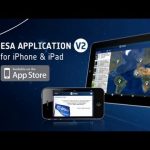
    ESA has updated its application for iPhone and iPad.
    With the launch of the ESA App V2, users can see ESA’s latest satellite imagery from Envisat in near-real time, complementing the latest news and discoveries in space exploration and Earth observation.
    Making full use of the iPhone and iPad touch features, ESA App V2 puts videos, images, facts and figures, ESA’s Twitter feeds, YouTube links and other information in a convenient mobile package.
    Download ESA App V2 here: http://itunes.apple.com/us/app/esa-european-space-agency/id441518639?mt=8

  • Borax Crystal Star – Sick Science! #066

    Borax Crystal Star – Sick Science! #066

    Learn more at http://www.stevespanglerscience.com/content/experiment/magic-crystal-snowflake
    Bringing real snowflakes inside individually is next to impossible. So, to work around this conundrum, we’ve come up with the Magic Crystal Snowflake. This special snowflake is just a beautiful and unique as a snowflake from the sky, but it won’t melt! The Magic Crystal Snowflake uses some fun hands-on chemistry and makes a perfect holiday experiment.

    Want more experiments like this? Check out http://www.stevespanglerscience.com/product/naked-eggs-and-flying-potatoes

    Sick Science™ is a trademark of Steve Spangler, inc.

    © 2011 Steve Spangler Science all rights reserved

  • NASA Future Forum Hosted by Seattle’s Museum of Flight

    NASA Future Forum Hosted by Seattle’s Museum of Flight

    The Dec. 9 event opens with an address by NASA Deputy Administrator, Lori Garver. (Part 1 of 4) Since 2008, the agency’s ongoing series of Future Forums have provided NASA leadership, technologists, scientists, and engineers an opportunity to join with local business, science, technology, and education leaders to discuss the future role of NASA in further advancing innovation, technology, science, engineering, education and the economy that benefits their community and the nation.

  • Magic Crystal Tree – Sick Science! #065

    Magic Crystal Tree – Sick Science! #065

    Learn more at http://www.stevespanglerscience.com/lab/experiments/magic-crystal-tree/ Impress your friends by creating a colorful Christmas tree out of salt crystals, cardboard, and a few other household items. Within a day, you’ll have a colorful snow-covered tree that seemed to magically sprout from nothing!

    Want more experiments like this? Check out http://www.stevespanglerscience.com/product/naked-eggs-and-flying-potatoes

    Sick Science™ is a trademark of Steve Spangler, inc.

    © 2011 Steve Spangler Science all rights reserved

  • Mars Rover Launches on This Week @NASA

    Mars Rover Launches on This Week @NASA

    The NASA Mars Science Laboratory launched from the Cape Canaveral Air Force Station in Florida, beginning its journey to the Red Planet. When it arrives at Gale Crater next August, Curiosity rover’s ten instruments will investigate whether that area of Mars could ever have sustained microbial life. Also, ISS spinoff; Bolden on tour: lander test; best of the feds; money saver; high-flying feast, and more.

  • Shrinking Styrofoam Cup

    Shrinking Styrofoam Cup

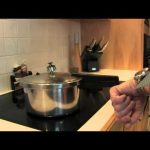
    Learn more at http://www.stevespanglerscience.com/experiment/pressure-cooker-shrinking-cup The pressure cooker is Mom’s secret weapon when it comes to making that savory stew in less than an hour. This amazing device is also the kitchen scientist’s favorite tool for subjecting ordinary things to high pressure to see what happens. For this experiment, our subject is a Styrofoam cup. Under extremely high pressure, will the cup expand, contract, melt or turn into a cute little puppy?

    Want more experiments like this? Check out http://www.stevespanglerscience.com/product/naked-eggs-and-flying-potatoes

    Sick Science™ is a trademark of Steve Spangler, inc.

    © 2011 Steve Spangler Science all rights reserved

  • NASA Spinoffs Benefit All of Us (Including Santa!)

    NASA Spinoffs Benefit All of Us (Including Santa!)

    Elf 6409EF from Sony Pictures new film, “Arthur Christmas,” cites how spinoffs of NASA-developed space technologies are making our lives better here on Earth.

  • NASA’s Mobile Launcher Moved to Launch Pad

    NASA’s Mobile Launcher Moved to Launch Pad

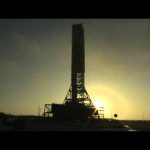
    The mobile launcher that’ll support NASA’s Space Launch System (SLS) has moved from the Vehicle Assembly Building to Launch Pad 39B at the Kennedy Space Center in Florida. The 355-foot-tall ML, which took about two years to construct, is
    being modified to support the heavy-lift rocket that will launch astronauts farther into space than ever before. SLS also will create high-quality jobs here at home, and provide the cornerstone for America’s future human space exploration efforts.

  • NASA Heroes Awarded Congressional Gold Medal

    NASA Heroes Awarded Congressional Gold Medal

    The Gold Medal, Congress’s highest expression of national appreciation for distinguished achievements and contributions, is presented to four storied NASA astronauts: John Glenn, Neil Armstrong, Michael Collins, and Buzz Aldrin. The Capitol Hill award ceremony was hosted by House and Senate leaders of both parties.

  • Diving Ketchup – Sick Science! #063

    Diving Ketchup – Sick Science! #063

    Cause a packet of ketchup to rise and fall on command in a bottle of water. People will think that you have the ability to move objects with your mind! Telekinesis? No, just cool science!

    Want more experiments like this? Check out http://www.stevespanglerscience.com/product/fire-bubbles-exploding-toothpaste-book

    Sick Science™ is a trademark of Steve Spangler, inc.

    © 2011 Steve Spangler Science all rights reserved

    About Steve Spangler…

    Steve Spangler is a celebrity teacher, science toy designer, speaker, author and an Emmy award-winning television personality. Spangler is probably best known for his Mentos and Diet Coke geyser experiment that went viral in. Spangler is the founder of www.SteveSpanglerScience.com, a Denver-based company specializing in the creation of science toys, classroom science demonstrations, teacher resources and home for Spangler’s popular science experiment archive and video collection. Spangler is a frequent guest on the Ellen DeGeneres Show and Denver 9 News where he takes classroom science experiments to the extreme. For teachers, parents or DIY Science ideas – check out other sources of learning:

    Join the Science Club and check out other cool science experiments at – http://www.SteveSpanglerScience.com

    Sign up to receive a FREE Experiment of the Week- http://www.stevespanglerscience.com/experiment-of-the-week

    Attend a Spangler Hands-on Science Workshop for Teachers – http://www.stevespanglerscience.com/training

    Watch Steve on Local and National Media Appearances on YouTube at: https://www.youtube.com/user/SpanglerScienceTV

  • What’s Up @NASA?

    What’s Up @NASA?

    NASA enters the next era of spaceflight that includes developing plans to build a new rocket to send astronauts beyond low Earth orbit.
    The Space Launch System, or SLS, will power the Orion spacecraft to whatever destination NASA chooses, whether it be a near-Earth asteroid, the moon, or Mars.

  • NASA Recruits New Astronauts Via Web

    NASA Recruits New Astronauts Via Web

    NASA unveils its new, online application process for those wishing to become NASA astronauts. In this video that appears on the application site, Administrator and former astronaut Charles Bolden urges candidates to join NASA’s astronauts Class of 2013 and be part of our nation’s future space exploration effort. To learn more: www.astronauts.nasa.gov

  • First Soyuz transfer and liftoff from French Guiana

    First Soyuz transfer and liftoff from French Guiana

    The Russian Soyuz vehicle lifted off for the first time from its new launch complex at Europe’s Spaceport in French Guiana on 21 October 2011. Flight VS01 carried the first two operational satellites of Europe’s Galileo navigation system into orbit.
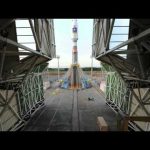
    This time-lapse movie shows the three-stage Soyuz transfer from the assembly and testing building to the launch pad where it is then raised to the vertical. Once in the Mobile gantry, the Upper Composite containing the satellites and Fregat-MT upper stage is hoisted into position on top of the vehicle. The gantry is then rolled back, clearing the way for Soyuz to lift off.

  • Straw Through Potato – Sick Science! #062

    Straw Through Potato – Sick Science! #062

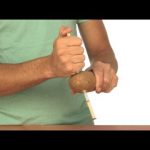
    Learn more at http://www.stevespanglerscience.com/lab/experiments/straw-through-a-potato/ Sometimes you have to stop and ask yourself, “Who comes up with this stuff?” No one ever uses a straw to eat a potato, but science nerds seem to like to find ways to poke straws through potatoes. There must be a deeper meaning… and there is!

    Want more experiments like this? Check out http://www.stevespanglerscience.com/product/naked-eggs-and-flying-potatoes

    Sick Science™ is a trademark of Steve Spangler, inc.

    © 2011 Steve Spangler Science all rights reserved