As part of her Summer Reading Challenge, Second Lady Usha Vance will host an event for children in grades K-8 on Monday, Aug. 4, at NASA’s Johnson Space Center in Houston.
NASA astronaut Suni Williams will join Ms. Vance to read a space-related book to children and participate in other space-related activities.
Water power! A home-made water-powered car gets maxed out to a 500 litre version. Plus: Phil flies on jets of water, and shows how to carve a pumpkin in 15 seconds with a pressure washer!
After lifting off from NASA’s Kennedy Space Center on Thursday, July 31, the crew members of NASA’s SpaceX Crew-11 mission are arriving at the International Space Station.
NASA astronauts Zena Cardman and Mike Fincke, JAXA (Japan Aerospace Exploration Agency) astronaut Kimiya Yui, and Roscosmos cosmonaut Oleg Platonov are scheduled to dock in their SpaceX Dragon spacecraft at approximately 2:30 a.m. EDT (0630 UTC) on Saturday, Aug. 2. Station crew will then open the hatches between Dragon and the station, to be followed by a welcome ceremony.
Cardman, Fincke, Yui, and Platonov will spend several months on the station, conducting research to help humans learn how to live in space while making life better on Earth. After Crew-11 arrives at the station, the four members of Crew-10 will depart the station following a brief handover period.
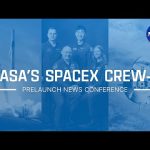
Following the successful launch of NASA’s SpaceX Crew-11 mission on Thursday, July 31, experts from NASA and our mission partners share updates and answer media questions in a postlaunch news conference.
Participants include: – Ken Bowersox, associate administrator, NASA’s Space Operations Mission Directorate – Steve Stich, manager, NASA’s Commercial Crew Program – Dana Weigel, manager, NASA’s International Space Station Program – Kazuyoshi Kawasaki, associate director general, Space Exploration Center/Space Exploration Innovation Hub Center, JAXA – Sarah Walker, director, Dragon Mission Management, SpaceX
NASA astronauts Zena Cardman and Mike Fincke, JAXA (Japan Aerospace Exploration Agency) astronaut Kimiya Yui, and Roscosmos cosmonaut Oleg Platonov lifted off from NASA’s Kennedy Space Center at 12:09 p.m. EDT (1609 UTC) for a long-term science mission aboard the International Space Station. Crew-11 is scheduled to dock with the station on Saturday, Aug. 2.
Galaxiile spirale dansează cosmic, iar discul torsionat reflectă forțele gravitaționale uriașe. Lumina centrală ascunde găuri negre supermasive. La 70 de milioane de ani-lumină, două galaxii colizionează, creând stele noi. Oare urmașii noștri vor explora vreodată acest spectacol cosmic uimitor? Privim viitorul universului!
Steve Spangler is a bestselling author, STEM educator and Emmy award-winning television personality with more than 2,100 television appearances to his credit. Steve appeared as a regular guest on the Ellen DeGeneres Show from 2007-2022 (27 appearances).
We’re sending a new crew to the International Space Station!
Watch with us as the four members of NASA’s SpaceX Crew-11 mission launch to the station from NASA’s Kennedy Space Center in Florida. Liftoff is targeted for 12:09 p.m. EDT (1609 UTC) on Thursday, July 31.
SpaceX’s Dragon spacecraft will carry NASA astronauts Zena Cardman and Mike Fincke, JAXA (Japan Aerospace Exploration Agency) astronaut Kimiya Yui, and Roscosmos cosmonaut Oleg Platonov to the orbiting laboratory for a science mission. This is the 11th crew rotation mission and the 12th human spaceflight mission for NASA to the space station supported by the Dragon spacecraft since 2020 as part of the agency’s Commercial Crew Program.
Crew-11 is scheduled to arrive at the station on Saturday, Aug. 2. After a brief handover period, NASA astronauts Anne McClain and Nichole Ayers, along with JAXA (Japan Aerospace Exploration Agency) astronaut Takuya Onishi and Roscosmos cosmonaut Kirill Peskov, will depart the station for a splashdown off the coast of California.
Mercur, planeta cea mai apropiată de Soare, surprinde prin extremele sale: ziua, 400°C, noaptea, -180°C. Suprafața sa plină de cratere colorate dezvăluie istoria impacturilor și câmpii vulcanice antice. La polul nord, ghețuri ascunse în umbre permanente adaugă mister acestei lumi fascinante.
I-am adus aici, pentru tine, pe o parte din fizicienii care recreează începutul Universului în laboratoare!
Proiectul ISSconALICE de la Institutul de Științe Spațiale – Filiala INFLPR contribuie la înțelegerea plasmei de cuarci și gluoni (QGP) prin analizarea corelațiilor unghiulare între particule rezultate din ciocniri de hadroni și nuclee în experimentul ALICE de la LHC. Director proiect: Dr. Alexandru Florin DOBRIN Membri: Dr. Cătălin Lucian RISTEA, Dr. Andrea DANU, Dr. Adrian SEVCENCO, Dr. Mădălin Ilie CHERCIU, Dr. Ionel STAN, Drd. Alexandru MANEA, Drd. Cătălina Diana BRANDIBUR, Maria LINC
Citiți mai multe detalii despre acest proiect în nr. 87 al revistei InHouse.
NASA and the agency’s partners preview the launch of NASA’s SpaceX Crew-11 mission. Participants include:
Ken Bowersox, associate administrator, NASA’s Space Operations Mission Directorate Steve Stich, manager, NASA’s Commercial Crew Program Dana Weigel, manager, NASA’s International Space Station Program William Gerstenmaier, vice president, Build and Flight Reliability, SpaceX Sergey Krikalev, executive director, Human Space Flight Program, Roscosmos Naoki Nagai, Program Manager of International Space Station, Human Spaceflight Technology Directorate, JAXA
NASA astronauts Zena Cardman and Mike Fincke, Roscosmos cosmonaut Oleg Platonov, and JAXA astronaut Kimiya Yui will launch to the International Space Station on the Dragon spacecraft powered by a Falcon 9 rocket no earlier than July 31.
Datorita unor probleme technice, am pierdut definitiv tot directorul unde a fost procesat filmul. Am recuperat doar o versiune .mp4 care insa mai contine niste greseli. Imi cer scuze, data viitoare mai multa atentie. Multumesc pentru orice distribuire si comentariu!
Join NASA and ISRO (the Indian Space Research Organisation) for the launch of our most advanced Earth-observing radar satellite, which will provide 3D views of land and ice surfaces in unprecedented detail.
The spacecraft is scheduled to launch at 8:10 a.m. EDT (1210 UTC) on Wednesday, July 30, aboard an ISRO Geosynchronous Launch Vehicle Mark II rocket from the Satish Dhawan Space Centre on India’s southeastern coast.
From orbit, the NISAR (NASA-ISRO Synthetic Aperture Radar) satellite will enable scientists to measure small shifts in Earth’s glaciers, volcanoes, forests, and other land and ice surfaces – all down to a fraction of an inch. This data will help communities prepare for natural hazards like landslides and earthquakes, plus respond to them more effectively. With NISAR’s global view, researchers will better understand what’s changing, where, and why.
NISAR’s radar will measure surfaces by transmitting a specific microwave signal to Earth and then detecting characteristics of the return signal. The instrument can “see” through clouds and light rain, both day and night, and will scan a given spot twice every 12 days.
Let’s learn something EPIC today! Join Phil as he shares some of the best kept science secrets. Nothing better than having fun while learning about how things work!
Have you ever done a science experiment and wondered “What would this be like if it were HUGE?” Welcome to Science Max, the exciting series that turbocharges all the science experiments you’ve done at home.
Steve Spangler is a bestselling author, STEM educator and Emmy award-winning television personality with more than 2,100 television appearances to his credit. Steve appeared as a regular guest on the Ellen DeGeneres Show from 2007-2022 (27 appearances).
Four crew members are preparing to launch to the International Space Station as part of NASA’s SpaceX Crew-11 mission to perform research, technology demonstrations, and maintenance activities aboard the orbiting laboratory.
NASA astronauts Zena Cardman and Mike Fincke, JAXA (Japan Aerospace Exploration Agency) astronaut Kimiya Yui, and Roscosmos cosmonaut Oleg Platonov will lift off no earlier than 12:09 p.m. EDT (1609 UTC) on Thursday, July 31, from Launch Complex 39A at NASA’s Kennedy Space Center in Florida.
Sonda Cassini a explorat Saturn timp de 13 ani, surprinzând imagini uimitoare ale inelelor subțiri și lunilor misterioase. Soarele eclipsat creează un halou strălucitor, iar Enceladus ascunde un ocean subteran posibil locuibil. Polul nord al planetei dezvăluie un curent hexagonal unic în Sistemul Solar.
Cea mai mare planetă din sistemul solar. Jupiter fascinează prin aurora sa ultravioletă și furtunile uriașe, alimentate de vânturi puternice și gaze încălzite. Atmosfera sa vibrantă conține nori de amoniac și vânturi de 430 km/h, în timp ce sateliții Europa și Io creează umbre și erupții spectaculoase.
Moving Air! A home-made stomp rocket gets maxed out into a giant version. Plus: Phil uses air pressure to break a piece of wood, makes a vortex cannon and vacuum-seals himself to the wall!
This video takes the viewer on a journey through space to the Sombrero Galaxy, also known as Messier 104 (M104).
The NASA/ESA/CSA James Webb Space Telescope recently imaged the Sombrero galaxy with its MIRI (Mid-InfraRed Instrument), resolving the clumpy nature of the dust along the galaxy’s outer ring.
The mid-infrared light highlights the gas and dust that are a feature of the star formation taking place among the Sombrero galaxy’s outer disc. The rings of the Sombrero galaxy produce less than one solar mass of stars per year, in comparison to the Milky Way’s roughly two solar masses a year. It’s not a particular hotbed of star formation.
The Sombrero galaxy is around 30 million light-years from Earth in the constellation Virgo.
📹 European Space Agency (ESA) 📸 NASA, ESA, CSA, STScI, ESO/IDA/Danish 1.5 m, DSS 2, The Hubble Heritage Team (STScI/AURA), N. Bartmann (ESA/Webb), R. Gendler and J.-E. Ovaldsen, E. Slawik, N. Risinger & M. Zamani (ESA/Webb)
🔔 Subscribe for more history 🚩 You may also like: The Lion Awakens! History of the Third Crusade ⚔ 1h 30m documentary https://youtu.be/OtrClsZy724
🚩 If you like what you see, consider supporting my work on Patreon and you get ad-free early access to my videos for as little as $1 https://www.patreon.com/historymarche — You can also show your support by subscribing to the channel and liking the video. Thank you for watching.
🚩 By the summer of 1214, the political map of Western Europe teetered on the edge of dramatic upheaval. Decades of dynastic rivalry, shifting alliances, and bitter feuds were converging toward a single, decisive confrontation: the Battle of Bouvines.
At the heart of the conflict stood King Philip II of France, known as Philip Augustus, a monarch whose ambitions had steadily eroded the Angevin Empire’s grip on its continental holdings. Opposing him was a formidable coalition: King John of England, desperate to reclaim lost territories and salvage his crown’s waning prestige; Emperor Otto IV of the Holy Roman Empire, whose fragile rule depended on checking French ascendancy; and rebellious nobles from Flanders and Boulogne, eager to shake off Capetian control.
The stakes were enormous. A French defeat could unravel the monarchy’s hard-won gains and plunge the kingdom into chaos. A loss for the coalition might doom the Angevin cause for good and leave the Emperor dangerously exposed. All of Europe watched and waited, holding its breath, as kings and emperors prepared to gamble their thrones on the fields of Bouvines.
📢 Narrated by David McCallion
🎼 Music: EpidemicSound Filmstro
📚 Sources: The Legend of Bouvines: War, Religion and Myth in the Middle Ages by Georges Duby (1990) 1214: The Battle of Bouvines (Epic Battles of History) – Anthony Holland (2023) Philip II’s “Eye of Command” and the Battle of Bouvines – Laurence W. Marvin (2024)
Steve Spangler is a bestselling author, STEM educator and Emmy award-winning television personality with more than 2,100 television appearances to his credit. Steve appeared as a regular guest on the Ellen DeGeneres Show from 2007-2022 (27 appearances).
Steve Spangler is a bestselling author, STEM educator and Emmy award-winning television personality with more than 2,100 television appearances to his credit. Steve appeared as a regular guest on the Ellen DeGeneres Show from 2007-2022 (27 appearances).
Steve Spangler is a bestselling author, STEM educator and Emmy award-winning television personality with more than 2,100 television appearances to his credit. Steve appeared as a regular guest on the Ellen DeGeneres Show from 2007-2022 (27 appearances).
Let’s learn something EPIC today! Join Phil as he shares some of the best kept science secrets. Nothing better than having fun while learning about how things work!
Have you ever done a science experiment and wondered “What would this be like if it were HUGE?” Welcome to Science Max, the exciting series that turbocharges all the science experiments you’ve done at home.
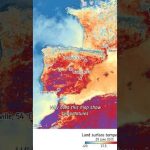
Satellites like Copernicus Sentinel-3 measure land surface temperature — that’s the heat coming directly from the ground, not the air above it. And yes, it’s often hotter in the summer than what your app tells you.
📹 European Space Agency (ESA) 📸 Contains modified Copernicus Sentinel data (2025), processed by ESA
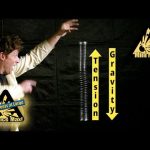
Here’s a quick experiment you can do at home. Hold up slinky by one end and drop it. What happens to the bottom of the slinky? Does it go down, up or stay where it is?
A powerful new satellite will soon provide insights into natural hazards, ecosystems, agriculture, and other fields of study that affect communities around the globe. The NISAR mission is a collaboration between NASA and ISRO (Indian Space Research Organisation) and will use radar to track Earth’s changing surface in fine detail.
Short for NASA-ISRO Synthetic Aperture Radar, NISAR features an advanced radar system with two instruments: one from ISRO and one built at NASA’s Jet Propulsion Laboratory in Southern California. Using radar enables NISAR to map Earth’s land and ice surfaces day or night, regardless of whether skies are cloudy or clear.
NISAR will launch from ISRO’s Satish Dhawan Space Centre in Sriharikota, India. Launch is targeted for July 2025. Follow https://science.nasa.gov/blogs/nisar for the latest updates.
View of Earth as seen by ESA project astronaut Sławosz Uznański-Wiśniewski inside the seven-windowed cupola, the International Space Station’s “window to the world”.
The European Space Agency-built Cupola is the favourite place of many astronauts on the International Space Station. It serves not only as a unique photo spot, but also for observing robotic activities of the Canadian Space Agency’s robotic arm Canadarm2, arriving spacecraft and spacewalks.
Sławosz was launched to the International Space Station on the Dragon spacecraft as part of Axiom Mission 4 on 25 June 2025. The 20-day mission on board is known as Ignis.
During the Ignis mission, Sławosz conducted 13 experiments proposed by Polish companies and institutions and developed in collaboration with ESA, along with three additional ESA-led experiments. These covered a broad range of areas including human research, materials science, biology, biotechnology and technology demonstrations.
The Ax-4 mission marks the second commercial human spaceflight for an ESA project astronaut. Ignis was sponsored by the Polish government and supported by ESA, the Polish Ministry of Economic Development and Technology (MRiT) and the Polish Space Agency (POLSA).
📹 European Space Agency (ESA) 📸 ESA – Sławosz Uznański-Wiśniewski
Moving Air! A home-made stomp rocket gets maxed out into a giant version. Plus: Phil uses air pressure to break a piece of wood, makes a vortex cannon and vacuum-seals himself to the wall!
Want to do real NASA science? You can. Right now, dozens of NASA projects need your help. From spotting asteroids to searching for planets beyond our solar system, and so much more, there are projects for everyone. And you don’t need a PhD to get involved, just your curiosity!
🚩 If you like what you see, consider supporting my work on Patreon and you get ad-free early access to my videos for as little as $1 https://www.patreon.com/historymarche — You can also show your support by subscribing to the channel and liking the video. Thank you for watching.
📚 Sources: Pax: War and Peace in Rome’s Golden Age – Tom Holland (2023) Campaigns of Germanicus, 13-16 AD – Ilkka Syvänne (2011) Dio Cassius, Roman History (1st century) Peter S. Wells, The Battle That Stopped Rome (2003) Teutoburg Forest 9 AD – Michael McNally (2007) Germanicus – Lindsay Powell (2013) The Annals – Tacitus (2nd century) In the name of Rome – Adrian Goldsworthy (2016) The Roman Barbarian Wars – The Era of Roman Conquest – Ludwig Heinrich Dyck (2015) Les Limites de L’Empire – Pierre Laederich (2001) The Annals – Tacitus (2nd century) Dynasty: The Rise and Fall of the House of Caesar – Tom Holland (2015) Roman Army of the Principate 27 BC – 117 AD – Nic Fields (2009) Roman Auxiliary Cavalryman AD 14 – 193 – Nic Fields (2006)
Steve Spangler is a bestselling author, STEM educator and Emmy award-winning television personality with more than 2,100 television appearances to his credit. Steve appeared as a regular guest on the Ellen DeGeneres Show from 2007-2022 (27 appearances).
Steve Spangler is a bestselling author, STEM educator and Emmy award-winning television personality with more than 2,100 television appearances to his credit. Steve appeared as a regular guest on the Ellen DeGeneres Show from 2007-2022 (27 appearances).
For years, astronomers believed the Milky Way and Andromeda were on a direct collision course in about 4.5 billion years. But new research using data from our Gaia mission and Hubble Space Telescope suggests the story isn’t so simple.
After running 100 000 simulations with the most precise data available, scientists now say there’s only a 50% chance the two galaxies will collide in the next 10 billion years.
The Large Magellanic Cloud, one of our satellite galaxies, could be tugging the Milky Way just enough to steer it away from Andromeda. Instead of crashing, the two galaxies might simply orbit each other in a slow cosmic dance.
So the fate of the Milky Way remains uncertain. And with the Sun expected to make Earth uninhabitable in about a billion years, a galaxy collision is low on our list of concerns.
📹 European Space Agency (ESA) 📸 NASA, ESA, STScI, Till Sawala (University of Helsinki), DSS, J. DePasquale (STScI)