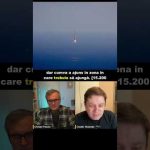
Laserul de la Măgurele transformă lumina în materie! Fizicienii incearca să separe particule virtuale din vidul cuantic, creând electroni și pozitroni reali. Această descoperire revoluționară deschide noi orizonturi în fizică, demonstrând cum energia luminii poate da naștere materiei palpabile. Fascinant și inovator!
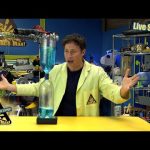
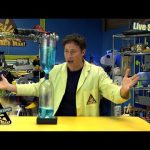
Steve Spangler is a bestselling author, STEM educator and Emmy award-winning television personality with more than 2,100 television appearances to his credit. Steve appeared as a regular guest on the Ellen DeGeneres Show from 2007-2022 (27 appearances).
Laserul de la Măgurele NU mai este cel mai puternic din lume! Cu toate acestea, recent, a obținut un rezultat remarcabil: primul pas pentru generarea materiei din lumină.
00:01:26 – Laserul de la Măgurele. Pe scurt 00:04:28 – Competiție stransă 00:15:15 – Ideea experimentului 00:23:04 – Particulele virtuale 00:27:00 – Mecanismul Breit-Wheeler 00:30:17 – Experimentul SLAC E144 00:35:13 – Laserul de la Măgurele. 00:38:49 – Accelerarea de particule cu laseri 00:44:50 – A doua etapă 00:48:13 – Concluzii
algoritm:”Laserul de la Măgurele, parte a infrastructurii europene ELI-NP, este un laser pulsatoriu ce furnizează 200 J în 20 fs, atingând 10 PW – o zecime din fluxul solar care cade pe Terra. Deşi energia totală nu poate topi tancuri, puterea instantanee şi densitatea de energie (≈10^23 W/cm²) îl plasează în topul mondial, rivalizat de laserul chinez SULF (12,8 PW) şi de proiecte încă în construcţie precum SEL-100 PW sau extinderea Vulcan.
Obiectivul central al echipei internaţionale de la Măgurele este demonstrarea transformării luminii în materie, extinzând un rezultat obţinut în 1997 la SLAC. Fenomenul foloseşte vidul cuantic, unde perechi electron–pozitron virtuale apar şi dispar; un câmp electromagnetic suficient de intens le poate „extrage” în realitate. Pragul teoretic (câmpul Schwinger, 1,3×10^18 V/m) corespunde unei densităţi de 10^29 W/cm², cu şase ordine de mărime peste capacităţile actuale, depăşirea lor necesitând mecanisme alternative, precum procesul multi-foton Breit-Wheeler şi o focalizare extremă a câmpului.
Lanţul experimental propus include trei paşi realizaţi exclusiv cu laserul: 1️⃣ Acceleraţia electronilor – Pulsul traversează un gaz ionizat, creând o „cuşcă” electrică (wakefield) ce accelerează electroni la 4 GeV (Apolon: 1,5 GeV). 2️⃣ Generarea fotonilor γ – Electronii rapizi trec printr-o foiţă de poliester; reflexia laserului pe plasma formată produce γ de până la 3 GeV prin efect Compton invers. 3️⃣ Crearea perechilor – Aceşti γ reinteracţionează cu fasciculul principal; densitatea fotonică de ~10^6 ori mai mare decât la SLAC ar trebui să genereze un flux măsurabil de electroni-pozitroni.
Densitatea, nu puterea brută, contează pentru declanşarea proceselor cuantice, iar focalizarea precisă conferă ELI-NP avantaje de top. Calibrarea opticii şi creşterea cristalelor de amplificare rămân provocări tehnice majore. Succesul ar valida calea către surse compacte de particule şi radiaţii extreme.
Articolul recent, semnat de cercetători din România, Franţa, Portugalia, Suedia, SUA şi Israel, evidenţiază colaborarea transnaţională necesară. Complexul nu este exclusiv românesc: laserul a fost construit de Thales, iar „beam time” se acordă competitiv echipelor internaţionale. Dincolo de superlative, valoarea ELI-NP constă în rolul de platformă frontieră, aptă de studii fundamentale cu potenţial de Nobel şi de aplicaţii viitoare în fizica nucleară, medicină, tehnologii avansate şi industriale.” #stiinta #fizica #science #tehnologie #technology #cristianpresura#uvt
After 20 days in space, ESA project astronaut Sławosz Uznański-Wiśniewski and his Axiom Mission 4 crewmates returned safely to Earth on 15 July 2025.
#Ignis mission highlights:
🌍 230 orbits around Earth 📏 + 13 million km travelled 🧪+ 20 science experiments (13 led by Poland) 💯 All mission objectives fulfilled ⏰ 105 hours of orbital work 📈 + 25% extra activities completed
📹 European Space Agency (ESA) 📸 Axiom Space/SpaceX
Tune in on Tuesday, 15 July, from 09:30 BST (10:30 CEST), to watch ESA project astronaut Sławosz Uznański-Wiśniewski and crew splash down off the coast of California, USA at 10:31 BST (11:31 CEST).
During the Ignis mission, Sławosz conducted 13 experiments proposed by Polish companies and institutions and developed in collaboration with ESA, along with three additional ESA-led experiments. These covered a broad range of areas including human research, materials science, biology, biotechnology and technology demonstrations.
Ax-4 marks the second commercial human spaceflight mission for an ESA project astronaut. Sponsored by the Polish government and supported by ESA, the Polish Ministry of Economic Development and Technology (MRiT) and the Polish Space Agency (POLSA), the mission featured an ambitious programme of technological and scientific research.
We are Europe’s gateway to space. Our mission is to shape the development of Europe’s space capability and ensure that investment in space continues to deliver benefits to the citizens of Europe and the world. Check out https://www.esa.int/ to get up to speed on everything space related.
În voi pulsează o esență irepetabilă, neasemuit de prețioasă, ce aduce prospețime Universului. Viața voastră depășește propriile granițe: poartă o responsabilitate adâncă, indiferent de convingeri. Trăiți cu autenticitate, luați-vă existența în serios și transformați fiecare zi într-o declarație de sens și valoare.
Tune in on Monday, 14 July, from 11:45 BST (12:45 CEST), to watch ESA project astronaut Sławosz Uznański-Wiśniewski depart from the International Space Station, bringing the Ignis mission to a close after nearly three weeks in orbit.
During the Ignis mission, Sławosz conducted 13 experiments proposed by Polish companies and institutions and developed in collaboration with ESA, along with three additional ESA-led experiments. These covered a broad range of areas including human research, materials science, biology, biotechnology and technology demonstrations.
Ax-4 marks the second commercial human spaceflight mission for an ESA project astronaut. Sponsored by the Polish government and supported by ESA, the Polish Ministry of Economic Development and Technology (MRiT) and the Polish Space Agency (POLSA), the mission featured an ambitious programme of technological and scientific research.
We are Europe’s gateway to space. Our mission is to shape the development of Europe’s space capability and ensure that investment in space continues to deliver benefits to the citizens of Europe and the world. Check out https://www.esa.int/ to get up to speed on everything space related.
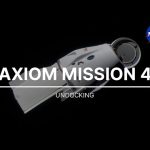
Watch as the Axiom Mission 4 crew – Peggy Whitson, former NASA astronaut and director of human spaceflight at Axiom Space, ISRO (Indian Space Research Organisation) astronaut Shubhanshu Shukla, ESA (European Space Agency) project astronaut Sławosz Uznański-Wiśniewski of Poland, and HUNOR (Hungarian to Orbit) astronaut Tibor Kapu of Hungary – begin final preparations for their return to Earth aboard the SpaceX Dragon spacecraft, currently targeted for Monday, July 14.
After the four-member astronaut crew enters the SpaceX Dragon spacecraft, the hatch will close at 4:55 a.m. EDT (0855 UTC). The spacecraft is scheduled to undock at 7:05 a.m. EDT (1105 UTC).
Jean-Paul Sartre vorbește despre două forme de existență: „în-sine” – obiectele pasive, captive în legi fizice imuabile – și „pentru-sine” – ființele conștiente, libere, cu propria lor subiectivitate. Iar faptul că putem suferi arată că realitatea umană depășește simpla materie pe care o descrie fizicalismul.
Jupiter has super strong winds and massive storms, including the iconic Great Red Spot, a storm bigger than Earth! At the poles, winds can reach up to 1440 km/h.
Saturn is even windier! It has some of the fastest, but not the fastest winds in our Solar System blow. Winds here can reach 1800 km/h.
Venus has super-rotating winds that race around the planet up to 60x faster than Venus itself spins. That’s way faster than Earth’s winds, which top out at 10–20% of our planet’s rotation speed.
Mars has a thin atmosphere, so winds are usually gentle. But during dust storms, they can kick up to around 100 km/h.
Neptune holds the record for the fastest winds in the Solar System, blowing at over 2000 km/h!
For context: the fastest wind ever recorded on Earth? 408 km/h—during a massive tornado in Australia.
📹 European Space Agency (ESA) 📸 ESA/Voyager 2, NASA, NSSDC Photo Gallery ID P-34709C
Hot and Cold. A home-made hot air balloon gets turned into a giant floating monstrosity! Plus: dry ice, the coldest temperature possible and Phil wears a suit of blubber and gets into a tub of ice water.
Let’s learn something EPIC today! Join Phil as he shares some of the best kept science secrets. Nothing better than having fun while learning about how things work!
Have you ever done a science experiment and wondered “What would this be like if it were HUGE?” Welcome to Science Max, the exciting series that turbocharges all the science experiments you’ve done at home.
Watch Axiom Mission 4 begin the journey home from the International Space Station. Peggy Whitson, former NASA astronaut and director of human spaceflight at Axiom Space, ISRO (Indian Space Research Organisation) astronaut Shubhanshu Shukla, ESA (European Space Agency) project astronaut Sławosz Uznański-Wiśniewski of Poland, and HUNOR (Hungarian to Orbit) astronaut Tibor Kapu of Hungary return to Earth aboard their SpaceX Dragon spacecraft. Undocking is scheduled at 7:05 a.m. EDT (1105 UTC).
Let’s learn something EPIC today! Join Phil as he shares some of the best kept science secrets. Nothing better than having fun while learning about how things work!
Have you ever done a science experiment and wondered “What would this be like if it were HUGE?” Welcome to Science Max, the exciting series that turbocharges all the science experiments you’ve done at home.
Steve Spangler is a bestselling author, STEM educator and Emmy award-winning television personality with more than 2,100 television appearances to his credit. Steve appeared as a regular guest on the Ellen DeGeneres Show from 2007-2022 (27 appearances).
🚩 If you like what you see, consider supporting my work on Patreon and you get ad-free early access to my videos for as little as $1 https://www.patreon.com/historymarche — You can also show your support by subscribing to the channel and liking the video. Thank you for watching.
🚩 In the mid-6th century, the Eastern Roman Empire under Emperor Justinian I launched the Gothic War with the aim of reclaiming Italy from Ostrogothic control. After early successes under General Belisarius, including the capture of Ravenna, the Byzantine campaign stalled due to political complications and renewed Gothic resistance. By the late 540s, the Ostrogoths had regrouped under a dynamic and capable new king: Totila.
Totila revitalized Gothic fortunes, recapturing much of Italy and even threatening Byzantine positions in the south. His combination of military prowess and efforts to win over the Italian population posed a serious challenge to Justinian’s ambitions. In response, Justinian appointed a new commander—Narses, a trusted eunuch general known more for his strategic acumen than battlefield experience. With imperial backing and a diverse army of Byzantine regulars and barbarian auxiliaries, Narses marched towards Italy…
📢 Narrated by David McCallion
🎼 Music: EpidemicSound Filmstro
📚 Sources: The Byzantine Wars – John Haldon (2008) Narses and the Battle of Taginae (Busta Gallorum) 552: Procopius and sixth century warfare – Philip Rance (2005) 50 Battles That Changed the World: The Conflicts That Most Influenced the Course of History – William Weir (2004) Justinian’s Wars: Belisarius, Narses, and the reconquest of the West – Roy Boss (1993)
John McFall is part of our astronaut reserve. Following a motorcycle accident that resulted in the amputation of his right leg at the age of 19, John learnt to run again. He became a professional track and field athlete in 2005, going on to represent Great Britain and Northern Ireland as a @paralympics sprinter.
In November 2022, John was selected as a member of the ESA astronaut reserve and to take part in ESA’s feasibility study “Fly!” to improve our understanding of, and overcome, the barriers space flight presents for astronauts with a physical disability.
📹 European Space Agency (ESA) 📸 Novespace/N. Courtioux
Steve Spangler is a bestselling author, STEM educator and Emmy award-winning television personality with more than 2,100 television appearances to his credit. Steve appeared as a regular guest on the Ellen DeGeneres Show from 2007-2022 (27 appearances).
Steve Spangler is a bestselling author, STEM educator and Emmy award-winning television personality with more than 2,100 television appearances to his credit. Steve appeared as a regular guest on the Ellen DeGeneres Show from 2007-2022 (27 appearances).
Steve Spangler is a bestselling author, STEM educator and Emmy award-winning television personality with more than 2,100 television appearances to his credit. Steve appeared as a regular guest on the Ellen DeGeneres Show from 2007-2022 (27 appearances).
Space is huge and essential to humankind, fuelling knowledge, supporting our economies and driving global prosperity. None of this would be possible without reliable access to space.
Since 1979, Europe has relied on the Ariane rockets and Vega series to launch its missions. Today, with Ariane 6 and Vega-C, ESA ensures Europe’s autonomous and independent access to space. But we are also looking ahead. With the Ariane Smart Transfer and Release In-orbit Ship (ASTRIS), Phoebus, P160C boosters, the MR-10 engine and more, ESA is enhancing its rockets with new innovations that improve cost, performance, capability and sustainability.
ESA is also leading the way in developing new propulsion systems to power the European launchers of the future. In collaboration with industry, ESA is supporting the development of new technologies to be used on rocket, boosters, upper stages, landers and spacecraft.
Initiates like Boosters for European Space Transportation (BEST!), Technologies for High-thrust Re-Usable Space Transportation (THRUST!) and Future Innovation and Research in Space Transportation programme (FIRST!), are advancing key technologies for reusable boosters, engines and other innovations crucial for the future of space exploration. ESA’s Space Rider is a reusable spacecraft and robotic laboratory, designed to stay in low Earth-orbit for two months and return payloads to Earth. Themis is a prototype for testing reusable rocket technologies, including vertical takeoff, landing and reuse, powered by the Prometheus engine.
The future of space transport extends beyond Earth launches, with in-orbit operations, transportation systems to support satellite servicing, orbital refuelling, and payload transfers between orbits.
To support all of this, ESA is upgrading its ground support and Europe’s Spaceport in French Guiana, to accommodate more launches.
Through programmes like ‘Boost!’ ESA is empowering the European Space Industry, supporting innovative companies which are creating new launch services. The European Launcher Challenge is shaping a competitive European launch sector for the future, strengthening Europe’s autonomous access to space.
We are Europe’s gateway to space. Our mission is to shape the development of Europe’s space capability and ensure that investment in space continues to deliver benefits to the citizens of Europe and the world. Check out https://www.esa.int/ to get up to speed on everything space related.
algoritm:” Exoplanetele sunt planete care orbitează în jurul unei stele, alta decât Soarele. Descoperirea și studiul lor se bazează pe metode diverse, dintre care metoda tranzitului este cea mai utilizată. Atunci când o planetă trece prin fața stelei, lumina acesteia scade ușor. Prin analizarea acestei variații de strălucire, astronomii pot determina mărimea și orbita planetei.
Instrumente precum TESS (Transiting Exoplanet Survey Satellite) contribuie la descoperirea de noi exoplanete, iar telescopul James Webb Space Telescope permite studierea atmosferelor acestora. În special, planetele stâncoase mici, similare cu Pământul, aflate în zona locuibilă, sunt candidate importante în căutarea vieții extraterestre. Zona locuibilă este regiunea din jurul unei stele unde temperatura permite existența apei lichide.
Printre cele mai comune exoplanete descoperite se numără superpământurile și sub-Neptunii, planete cu dimensiuni între Pământ și Neptun. În funcție de radiația primită de la stea, aceste planete pot fi fie gazoase, fie stâncoase, uneori pierzându-și complet atmosfera.
O categorie interesantă este a planetelor din așa-numitul „deșert al Neptunilor fierbinți” – regiune în care, teoretic, planetele gazoase n-ar trebui să existe din cauza temperaturii ridicate. Totuși, au fost descoperite astfel de planete, precum 55 Cancrii e, care păstrează o atmosferă densă, posibil generată de activitate vulcanică internă.
Descoperirea unor planete cu atmosferă, dioxid de carbon sau SO₂ ridică întrebări despre formarea și compoziția acestora. Relația dintre planete mari precum Jupiter și cele terestre mai mici este esențială în înțelegerea evoluției sistemelor planetare și a potențialului de viață.
Cercetările continuă, iar viitorul promite descoperiri care ne vor aduce mai aproape de răspunsul la întrebarea: suntem singuri în Univers? “
We don’t usually consider what sound “looks like” but with this experiment we can see how the vibrations of the sound can change the way the salt vibrates on the plate.
Steve Spangler is a bestselling author, STEM educator and Emmy award-winning television personality with more than 2,100 television appearances to his credit. Steve appeared as a regular guest on the Ellen DeGeneres Show from 2007-2022 (27 appearances).
After lifting off from Baikonur Cosmodrome in Kazakhstan on Thursday, July 3, a Roscosmos cargo spacecraft, delivering approximately three tons of food, fuel, and supplies, is scheduled to arrive at the International Space Station on Saturday, June 5.
The unpiloted spacecraft will dock autonomously to the space-facing port of the orbiting laboratory’s Poisk module at 5:27 p.m. EDT (2127 UTC) on Saturday, July 5.
The Progress 92 spacecraft will remain docked to the space station for approximately six months before departing for re-entry into Earth’s atmosphere to dispose of trash loaded by the crew.
Vibration is the idea behind a shaky vibrobot – one maxed out enough so Phil can ride it! Plus: spinning an 8-foot coin, suspending water in mid-air and lasers!
🚩 In 1513, one of the bloodiest battles between England and Scotland unfolded at Flodden. This video breaks down the causes, events, and aftermath of the Battle of Flodden, where King James IV of Scotland led a doomed campaign against the English forces under Thomas Howard, Earl of Surrey. Discover why Flodden marked a turning point in Tudor-era warfare, the political tensions behind the battle, and how this clash shaped Anglo-Scottish relations for generations.
🚩 If you like what you see, consider supporting my work on Patreon and you get ad-free early access to my videos for as little as $1 https://www.patreon.com/historymarche — You can also show your support by subscribing to the channel and liking the video. Thank you for watching.
📢 Narrated by David McCallion
🎼 Music: EpidemicSound Filmstro
📚 Sources: Flodden 1513: Scotland’s Greatest Defeat (2006), by John Sadler. Osprey Publishing Ltd. ISBN: 1 84176 959 2. Fatal Rivalry: Flodden 1513 (2014), by George Goodwin. First Published by Weidenfeld and Nicolson. ISBN: 978-0-2978-6740-1.
A Roscosmos cargo spacecraft, delivering approximately three tons of food, fuel, and supplies to the Expedition 73 crew aboard the International Space Station, is launching on a Soyuz rocket from the Baikonur Cosmodrome in Kazakhstan on Thursday, July 3. Liftoff is scheduled for 3:32 p.m. EDT (1932 UTC).
After a two-day journey to the station, the unpiloted spacecraft will dock autonomously to the space-facing port of the orbiting laboratory’s Poisk module at 5:27 p.m. EDT (2127 UTC) on Saturday, July 5.
The Progress 92 spacecraft will remain docked to the space station for approximately six months before departing for re-entry into Earth’s atmosphere to dispose of trash loaded by the crew.
Aboard the International Space Station, NASA astronauts Nichole Ayers, Anne McClain, and Jonny Kim share a Fourth of July message and extend their best wishes to those back on Earth in a video recorded on June 16, 2025.