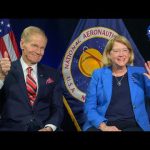
NASA Acting Administrator Sean Duffy speaks on America’s mission to lead in space travel:
“We’re going back to the Moon. And this time, when we plant our flag, we stay!”
Through the Artemis campaign, NASA is returning astronauts to the lunar surface – advancing science, testing new technology, and learning how to live and work on another world. These missions prepare us for our next giant leap: sending humans to Mars.
Administrator Bill Nelson and Deputy Administrator Pam Melroy share a farewell message to the extraordinary NASA workforce.
Sen. Nelson was sworn in as the 14th NASA Administrator on May 3, 2021, and Col. Melroy as Deputy Administrator on June 21, 2021. Under Nelson and Melroy’s leadership, the agency made leap after giant leap to explore, discover, and inspire – leading the world into a golden age of space-driven exploration, innovation, and collaboration – all while bringing real, tangible, and substantial benefits to the American people and to all of humanity.
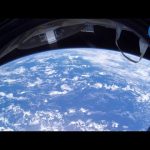
NASA Administrator Bill Nelson speaks to the power of NASA’s climate-related data to help the world understand climate change and take action.
“The challenge of the climate crisis is here and now. Let’s answer it—from above.”
Most of what humanity knows about our changing planet comes from NASA’s more than two-dozen satellites and instruments—and from the agency’s observations for over 60 years.
For more information about how NASA in conjunction with the rest of the federal government studies our changing planet, visit https://earth.gov/
Credit: NASA Producer: Daniel Lauchu Music: Universal Production Music
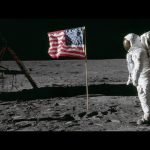
“Space can unite a troubled country in troubled times. And no moment united the country quite like when the Eagle landed, as all of planet Earth watched from below.”
For the 55th anniversary of the Apollo 11 Moon landing, and in the midst of times that recall the era when the Moon landing took place, NASA Administrator Bill Nelson shares a message on the special power of space to bring people together—and the hope that this anniversary will be a time for reflection and healing.
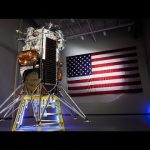
Intuitive Machines’ IM-1 mission made history on Feb. 22, with the first successful Moon landing by a company. NASA Administrator, Bill Nelson congratulates everyone involved in this great and daring quest.
NASA science and technology demonstrations now are gathering data on the lunar surface. The mission is expected to continue through the end of the month.
NASA innovates for the benefit of humanity, and with its Artemis CLPS (Commercial Lunar Payload Services) initiative, the agency is working with commercial companies to achieve rapid flights to the Moon. By sending research that advances capabilities for science, exploration, and commercial development of the Moon, CLPS is another example of how NASA is supporting long-term lunar exploration by enabling commercial services on the Moon.
NASA Administrator Bill Nelson has announced that the Ingenuity Mars Helicopter has come to an end. The Ingenuity Mars Helicopter made history by achieving the first powered, controlled flight on another planet on April 19, 2021. Despite initial plans for up to five flights, the helicopter has exceeded expectations and executed an impressive 72 flights on the Red Planet. NASA pays tribute to its accomplishments, which have far exceeded what was thought possible and have paved the way for future flights in our solar system.
NASA Administrator Bill Nelson delivers the State of NASA address for 2023. Learn about our plans to explore the Moon and Mars, monitor and protect the planet, sustain U.S. leadership in aviation and aerospace innovation, drive economic growth and promote equity and diversity within the agency and across the nation, while inspiring the next generation of explorers for the benefit of humanity.
Administrator Bill Nelson speaks about the Artemis I flight test. The launch director halted today’s Artemis I launch attempt at approximately 8:34 a.m. EDT. The Space Launch System rocket and Orion spacecraft remain in a safe and stable configuration.
For the latest updates about Artemis, visit: blogs.nasa.gov/artemis
What’s new at NASA? Join us live from our Kennedy Space Center in Florida as NASA Administrator Bill Nelson delivers the #StateOfNASA address for 2022. Learn about our plans to explore the Moon and Mars, address climate change, promote racial and economic equity, and drive economic growth while sustaining U.S. leadership in aviation and aerospace innovation.
A look back at Administrator Jim Bridenstine’s time at NASA and all the incredible things accomplished during his tenure. From introducing the Artemis Generation to renaming NASA headquarters after hidden figure Mary W. Jackson, there have been so many highlights to appreciate.
Producer/Editor: David Anderson Music: Universal Production Music
The latest about our Artemis program, an astronaut shares her story with students, and another record-breaking maneuver by one or our spacecraft … a few of the stories to tell you about – This Week at NASA!
This video is available for download from NASA’s Image and Video Library: https://images.nasa.gov/details-NHQ_2019_0614_Administrator%20Bridenstine%20Discusses%20Our%20Artemis%20Program%20on%20This%20Week%20@NASA%20%E2%80%93%20June%2014,%202019.html
NASA Administrator Jim Bridenstine delivered a keynote address April 9 during the 35th Space Symposium in Colorado Springs, Colorado. During his speech, Bridenstine outlined NASA’s accelerated plans to send American astronauts to the Moon’s South Pole by 2024. The president’s direction from Space Policy Directive-1 galvanizes NASA’s return to the Moon and builds on progress on the Space Launch System rocket and Orion spacecraft, collaborations with U.S industry and international partners, and knowledge gained from current robotic assets at the Moon and Mars.
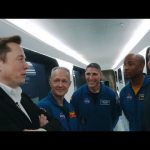
On the latest Watch this Space, NASA Administrator Jim Bridenstine chats with SpaceX CEO and Chief Designer Elon Musk during a tour of Launch Complex 39A just before the Demo-1 launch at the Kennedy Space Center in Florida. The historic Demo-1 mission launched at 2:49 a.m. EDT on Saturday, March 2 and was the first launch of a commercially built and operated American spacecraft and space system designed for humans as part of NASA’s Commercial Crew Program.
On the latest Watch This Space, NASA administrator Jim Bridenstine looks back at 15 years of discoveries by our Opportunity rover on Mars, and forward to new commercial partnerships for missions to the Moon. Learn how we’ll work with American companies to design and develop human lunar landers and reusable systems so we can return to the Moon — to stay.
This video is available for download from NASA’s Image and Video Library: https://images.nasa.gov/details-NHQ_2019_0221_Watch%20This%20Space%20with%20NASA%20Administrator%20Jim%20Bridenstine%20with%20the%20latest%20from%20the%20Moon%20and%20Mars.html
In this episode of “Watch this Space,” NASA Administrator Jim Bridenstine discusses NASA’s recent selection of U.S. companies to potentially deliver science payloads to the lunar surface. He also visits the Jet Propulsion Laboratory in California, where he discusses the Mars InSight landing and plans for Mars 2020.
The NASA Administrator sends the agency’s workforce a message to observe Veterans Day 2018.
This video is available for download from NASA’s Image and Video Library: https://images.nasa.gov/details-NASA%20Administrator%20Jim%20Bridenstine%20Veterans%20Day%20Message.html
NASA’s newest class of astronaut trainees joined agency Administrator Jim Bridenstine Sept. 27 at NASA headquarters, to talk about their experiences in the training program, hopes for future missions, and more, in a live episode of “Watch This Space”.
Astronaut candidates Zena Cardman, Jasmin Moghbeli, Jonny Kim, Frank Rubio, Matthew Dominick, Warren Hoburg, Kayla Barron, Bob Hines, Raja Chari, Loral O’ Hara and Jessica Watkins were joined by Canadian Space Agency astronaut candidates Joshua Kutryk and Jenni Sidey-Gibbons. The first U.S. astronauts, the “Original Seven,” were selected in 1959. Since then, NASA has selected 21 more groups of astronauts. This latest class, announced on June 7, 2017, includes a physician, biologist, geologist, military pilots and engineers.
Once their training is complete, they may be assigned to any of a variety of missions, including: performing research on the International Space Station, launching from American soil on spacecraft built by U.S. commercial companies, and departing for deep space missions on NASA’s new Orion spacecraft and Space Launch System rocket.
This video is available for download from NASA’s Image and Video Library:https://images.nasa.gov/details-NASA%20Administrator%20Talks%20Training,%20Future%20Missions%20with%20Newest%20Astronaut%20Class.html
Our administrator chats with astronaut Nick Hague, OSIRIS-REx “brakes” for a certain asteroid, and what landing site is right for our next mission to Mars? A few of the stories to tell you about – This Week at NASA!
This video is available for download from NASA’s Image and Video Library: https://images.nasa.gov/details-NHQ_2018_1019_Administrator%20Bridenstine%20chats%20with%20astronaut%20Nick%20Hague%20on%20This%20Week%20@NASA%20%E2%80%93%20October%2019,%202018.html
NASA Administrator Jim Bridenstine talks via satellite with astronaut Nick Hague in Houston. Hague and Russian crewmate Alexey Ovchinin safely made a ballistic landing in Kazakhstan on Oct. 11, when the launch of their Soyuz spacecraft to the International Space Station was aborted due to an anomaly.
Several NASA instruments see their first light, another active week for our administrator, and discover just how much space is in our daily lives … a few of the stories to tell you about – This Week at NASA!
This video is available for download from NASA’s Image and Video Library: https://images.nasa.gov/details-A%20Festival%20of%20%E2%80%9CFirst%20Lights%E2%80%9D%20on%20This%20Week%20@NASA%20%E2%80%93%20September%2021,%202018.html
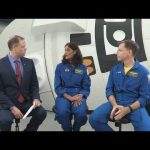
During a recent visit to Johnson Space Center, NASA Administrator Jim Bridenstine sat down with astronauts Chris Ferguson and Sunita “Suni” Williams for an informal Q&A session about the Commercial Crew Program.
NASA’s Commercial Crew Program has worked with several American aerospace industry companies to facilitate the development of U.S. human spaceflight systems since 2010. Both Ferguson and Williams were selected to fly on the Boeing CST-100 Starliner for the Commercial Crew Program – marking the first time that American astronauts will launch to the International Space Station from American soil on American-made spacecraft since the Space Shuttle Program ended in 2011.
To watch specific portions of the Q&A about the future of human space exploration, click a timestamp:
2:30 – Astronaut Chris Ferguson talks about what he has been doing since it was announced that he is a member of the Commercial Crew Program
3:30 – Astronaut Chris Ferguson explains why his flight suit says Boeing and not NASA
4:27 – Astronaut Suni Williams talks about what a day in the life of an astronaut is like and what she has been up to since she was selected for the Commercial Crew program
6:30 – Astronaut Chris Ferguson talks about how the Starliner is different from the Space Shuttle
7:30 – Astronaut Suni Williams talks about how is the Starliner is similar to and different from the Soyuz
8:32 – Astronaut Chris Ferguson talks about how many people the Starliner will be able to carry to the International Space Station
9:20 – Administrator Jim Bridenstine talks about the future of space exploration for NASA
10:58 – Astronaut Suni Williams talks about her previous spaceflights and how her Commercial Crew flight will be different
12:20 – Astronaut Suni Williams talks about their experience landing in space vehicles
15:20 – Administrator Jim Bridenstine and astronaut Chris Ferguson discuss thermal protection to keep astronauts safe
17:30 – Administrator Jim Bridenstine talks about the components of the Space Launch System and how it compares to technology for avionics
18:55 – Astronaut Chris Ferguson discusses how flying tests in the U.S. Navy prepared them for their upcoming missions
20:28 – Astronaut Chris Ferguson discusses what it’s like to dock the Starliner
21:30 – Astronaut Suni Williams talks about training, automation and providing input to Boeing about the Starliner
22:30 – Astronauts Chris Ferguson and Suni Williams talk about the team of individuals who make human spaceflight possible
24:45 – Administrator Jim Bridenstine talks about the preparations that go into space exploration missions
25:46 – Administrator Jim Bridenstine talks about NASA’s launch capabilities
26:52 – Astronauts Chris Ferguson and Suni Williams provide guidance to Administrator Jim Bridenstine as he docks the Boeing Starliner simulator
On Aug. 26, as part of NASA’s celebration of Katherine Johnson’s 100th birthday, agency employees received a special message from administrator Jim Bridenstine to mark the occasion. With slide rules and pencils, Katherine, a legendary NASA mathematician – and the other human computers who worked at the agency – helped our nation’s space program get off the ground, but it was their confidence, bravery and commitment to excellence that broke down racial and social barriers that continue to inspire to this day. To learn more about Katherine and other trailblazing ‘human computers,’ visit: https://www.nasa.gov/modernfigures
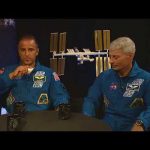
During a recent visit to NASA headquarters astronauts Joe Acaba and Mark Vande Hei sat down for an informal Q&A session with Administrator Jim Bridenstine – and responded to questions from the agency’s social media followers.
The astronauts, who returned from the International Space Station in late February, talked about the station’s role as a platform to help us live and work in space. The cutting-edge research and technology development on the station is helping prepare our astronauts to take the next giant leap in human space exploration. The agency plans to return to the Moon and eventually send humans to Mars and destinations beyond.
This video is available for download from NASA’s Image and Video Library: https://images.nasa.gov/details-NHQ_2018_0725_NASA%20Administrator%20Bridenstine%20Chats%20with%20Astronauts%20Acaba%20and%20Vande%20Hei.html
NASA Administrator Jim Bridenstine recently sat down with Nobel Prize winner John Mather and the agency’s Associate Administrator for Science, Thomas Zurbuchen for a conversation about NASA’s James Webb Space Telescope. They talked about the challenges of building the world’s premier space telescope and why it’s all worth it. Webb is the first telescope of its kind, an unprecedented feat of engineering, and is at the very leading edge of technological innovation and development. Webb will find the first galaxies that formed in the early universe and peer through dusty clouds to see stars forming planetary systems.
This video is available for download from NASA’s Image and Video Library: https://images.nasa.gov/details-NASA%20Administrator%20Bridenstine%20Talks%20Webb%20Science%20with%20Nobel%20Laureate.html
NASA Administrator Jim Bridenstine discusses the findings of the Independent Review Board on one of our flagship missions, the James Webb Space Telescope. Despite Webb’s major challenges during the final testing and integration phase, the board and NASA unanimously agreed that Webb will achieve mission success with the implementation of the board’s recommendations, many of which are already underway.
The third meeting of the National Space Council, seeking a partnership to power our Gateway, and – an educational activity that’s quite a blast … a few of the stories to tell you about – This Week at NASA!
This video is available for download from NASA’s Image and Video Library: https://images.nasa.gov/details-NHQ_2018_0622_Administrator%20Bridenstine%20Attends%20National%20Space%20Council%20Meeting%20on%20This%20Week%20@NASA%20%E2%80%93%20June%2022,%202018.html
Acting NASA Administrator Robert Lightfoot discussed the agency’s Fiscal Year 2018 budget request on May 23, during an agencywide town hall State of NASA address at NASA Headquarters in Washington. The address also was broadcast on NASA Television and streamed on the agency’s homepage and mobile apps.
Acting NASA Administrator Robert Lightfoot recognizes the 2017 National Small Business Week; a time to celebrate the critical contributions of America’s entrepreneurs and small business owners. NASA honors its 2016 Agency Small Business Advocate Award winners and acknowledges the contributions made by NASA civil servant personnel throughout the Agency. The Agency 2016 Small Industry Award winners are also highlighted and they recognize the outstanding Small Business Prime Contractor, Small Business Subcontractor, Large Business Prime Contractor, and Mentor-Protégé Agreement that support NASA in achieving its mission.
The following is a statement from NASA acting Administrator Robert Lightfoot on President Trump signing Tuesday the National Aeronautics and Space Administration Transition Authorization Act of 2017.
“We would like to thank President Trump for his support of the agency in signing the National Aeronautics and Space Administration Transition Authorization Act of 2017.
“We also want to express our gratitude to a bipartisan Congress for its thoughtful consideration of the agency’s path forward. We are grateful for the longstanding support and trust of the American people, which enables our nation’s space, aeronautics, science, and technology development programs to thrive.
“Our workforce has proven time and again that it can meet any challenge, and the continuing support for NASA ensures our nation’s space program will remain the world’s leader in pioneering new frontiers in exploration, innovation, and scientific achievement.”
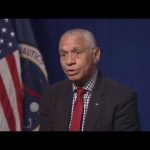
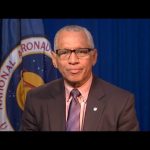
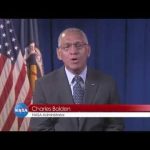
NASA Administrator Charles Bolden shared his thoughts on the life and legacy of Gemini and Apollo astronaut Gene Cernan, who passed away on Jan. 16 at the age of 82.
Cernan flew on three separate space missions. He was the second American to walk in space as the pilot on Gemini IX; ventured to the moon on Apollo 10, the pathfinder for the first lunar landing; and as commander of Apollo 17, Cernan holds the distinction of being the last person to leave his footprints on the surface of the moon.
On Tuesday, Feb. 9, as part of the rollout of President Barack Obama’s Fiscal Year 2017 budget proposal for NASA, Administrator Charles Bolden delivered a “State of NASA” speech at the agency’s Langley Research Center, in Hampton, Va. During the speech, Bolden highlighted key work and advancements by the agency during the last few years and discussed some of the future goals the agency continues to work toward, including exploration of Mars and elsewhere in our solar system and beyond, aeronautics research, development of technology to enable humans to explore deep space, and research aboard the International Space Station for the benefit of life on Earth and for astronauts on long duration space missions.
NASA is on a Journey to Mars and commercial space is a key component of our strategy to send American astronauts to the Red Planet in the 2030s.
In 2010 when President Obama laid out his vision for space exploration, it may have been hard to believe that six years later we’d be regularly transporting cargo to the International Space Station on commercial spacecraft, or that we’d be on the verge of returning launches of American astronauts to the Station from U.S. soil on the spacecraft built by American companies.
Today, that’s our reality.
SpaceX and Orbital ATK are the first commercial space companies to deliver cargo to the ISS.
We’ve also ordered the first missions from SpaceX and The Boeing Company — the first American companies that will carry American astronauts to space. The first astronauts are now training for test flights aboard commercial spacecraft in preparation for those missions.
We are closer than ever before to sending American astronauts to Mars. We’re “insourcing” American jobs and empowering American entrepreneurs and innovators to expand the new commercial market in low-earth orbit.
Today, we’re marking another significant milestone. We are announcing the companies that will continue our successful commercial cargo program until at least 2024. This phase of the program will allow us to continue using the Space Station as our springboard to the rest of the solar system and a test bed for human health in space.
Our investment in commercial space is creating jobs and it’s bringing us closer to sending American astronauts to Mars. With the commercial cargo successes to date and our announcement today – I am very confident that commercial space will continue to propel our nation into the future – we’ll continue to Launch America.
During his “State of NASA” speech from Kennedy Space Center on Feb. 2, Administrator Charles Bolden touched on the agency’s scientific and technological achievements and the exciting work ahead as NASA pushes farther into the solar system and continues to lead the world in a new era of exploration.
Aboard the International Space Station, Expedition 42 Commander Barry Wilmore and Flight Engineer Terry Virts of NASA discussed their mission and life and research on the complex during an in-flight chat Jan. 21 with NASA Administrator Charles Bolden, officials of the White House Office of Science and Technology Policy and middle and high school students. The unique discussion was part of the third annual State of Science Technology, Engineering and Math event (SoSTEM), a type of science fair that included students from schools in Maryland, Virginia and Washington.
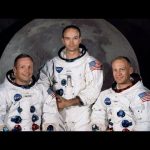
This month, our nation will mark the 45th anniversary of the Apollo 11 landing on the moon – a remarkable American accomplishment and a “giant leap” for humankind. Today, at NASA, we’re working on the next giant leap – a human mission to Mars, standing on the shoulders of astronauts Neil Armstrong, Buzz Aldrin and Michael Collins.
As I near the end of my fifth year as NASA administrator, I take great pride in the many amazing things our nation’s space program continues to accomplish. From an incredible five Earth science missions heading to space this year, to the first flight test of the Orion spacecraft that will one day carry astronauts to Mars and the continued success of our commercial partners in their missions to the International Space Station (ISS), we’re building on the Apollo program’s legacy to test and fly transformative, cutting-edge technologies today for tomorrow’s missions.
Around this 45th anniversary, we look ahead on our path to Mars and the milestones within our grasp. We’re treading that path with a stepping stone approach that takes the extraordinary work our crews have been doing aboard the Space Station for more than 13 years preparing us to travel farther into our solar system. Technology drives exploration, and we’ll be testing new technologies in the proving ground of deep space on our mission to an asteroid, eventually becoming Earth independent as we reach Mars.
Just this past week we were pleased that one of our private sector partners, Orbital Sciences, once again successfully launched a cargo mission to the ISS from U.S. soil. Along with another commercial partner, SpaceX, they’ve demonstrated with their Cygnus and Dragon spacecraft, respectively, that American industry can help us reach low Earth orbit and create good jobs and value for NASA at the same time. Later this year, we plan to award commercial contracts for transporting our astronauts to space from American soil by 2017, ending our reliance on others to get into space and freeing up scarce resources to focus on our even bolder Mars mission.
Our science missions also continue to turn science fiction into science fact. Today in Washington, we are hosting a public event, “The Search for Life in the Universe,” about our work on one of the most fundamental questions in exploration, “Are we alone?” Top scientists will share insights on how close we are to answering that question, what we know today from NASA missions and what we may find out soon.
In September, MAVEN arrives at Mars to study the planet’s upper atmosphere even as Curiosity and Opportunity continue to rove the surface and help prepare us for human missions to the Red Planet. Next year New Horizons arrives at Pluto and the year after, Juno arrives at Jupiter, even as we prepare our next Great Observatory, the James Webb Space Telescope, for launch in 2018 to peer back at the oldest light in the cosmos.
You can see that today’s astronauts, scientists and engineers continue to be inspired by the Apollo 11 mission. I’m proud and privileged to head a space agency that is accomplishing so much today with the legacy of the Apollo 11 crew and the thousands of ground support personnel who facilitated their success. As the world’s leader in exploration, we have so much to look forward to in the coming years.
Below is a link to a video I recorded about my personal remembrances of the first moon landing. I’m sure every one of you who was old enough also remembers exactly where you were at the time.
In the spirit of this brave crew, we look forward to a new generation of NASA achievements in space.
NASA Administrator Charlie Bolden visited aeronautics and space research facilities at Ames Research Center on March 17, including the laboratory for the volleyball-sized satellites called SPHERES, which are used onboard the International Space Station for space robotics and spacecraft navigation experiments. He also saw the high-fidelity airport control tower simulator called, “Future Flight Central”, used by NASA, the Federal Aviation Administration and other industry partners for joint research on next-generation air traffic management. Also, Rocket for Orion’s flight test highlighted, Future explorer celebrated at KSC, NASA’s new Chief Technologist, Coastal Flooding Challenge, Next space station crews , Hubble 24th anniversary image and more!
NASA Administrator Charlie Bolden visited Marshall Space Flight Center to see work being done on the avionics and flight software for NASA’s Space Launch System rocket. Marshall’s System Integration Lab conducts flight simulations of the avionics system — including hardware, software and operating systems — that will guide the launch vehicle, to see how the SLS will perform during launch. Also, Dream Chaser agreement expanded, ISS crew returns safely, Senate Youth Program, More high marks for Morpheus, Asteroid Data Hunter challenge, SXSW Interactive and more!