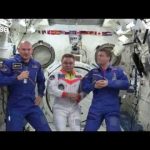
Russian ISS commander, cosmonaut Maxim Suraev, NASA astronaut Reid Wiseman and ESA astronaut Alexander Gerst send a peace message from space. They remind us that the International Space Station serves as a shining example of how people can live and work together for the benefit of all humankind. It’s the hallmark of international cooperation – a milestone in human history.
Tag: Alexander Gerst
-
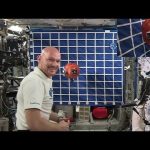
Demonstrating Rosetta’s Philae lander on the Space Station
ESA astronaut Alexander Gerst performs a demonstration of how ESA’s Rosetta mission will attempt to put a lander, called ‘Philae’ on the surface of comet 67P/Churyumov–Gerasimenko.
Alexander narrates the story of the Rosetta mission and performs a demonstration that visualises the difficulties of landing on an object that has little gravitational pull. Using the weightless environment of the Space Station, Alexander attempts to land ‘Philae’ (an ear plug) onto the surface of the ‘comet’ (an inactive SPHERES robot) with increasing levels of difficulty: a rotating comet that is not moving to one that is both rotating and moving.
This video is one of the six experiments and demonstrations in the Flying Classroom, Alexander will use small items to demonstrate several principles of physics in microgravity to students aged 10–17 years.
The Rosetta mission’s lander, Philae, will be deployed on 12 November at 08:35 GMT/09:35 CET from a distance of 22.5 km from the centre of the comet. It will land about seven hours later, with confirmation expected to arrive at Earth at around 16:00 GMT/17:00 CET.
More about the Rosetta mission: http://rosetta.esa.int
More about ESA Education: http://www.esa.int/educationCredit: ESA
-
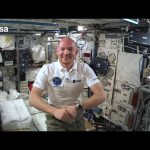
ESA astronaut Alexander Gerst sends greeting to Euro-Space-Day
ESA astronaut Alexander Gerst sends his greetings to the Euro-Space-Day in Saarbrücken, Germany. The tri-national (FR-LU-DE) event will bring together students, scientific institutions and space industry.
-
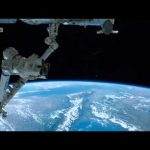
Timelapse over Europe
This timelapse video shows two passes over Europe taken by ESA astronaut Alexander Gerst as he flew overhead on the International Space Station at around 400 km altitude.
The International Space Station travels at 28 800 km/h meaning that it only takes 90 minutes to circle Earth completely. Each orbit the Station moves around 2200 km to the West in relation to 90 minutes before.
Astronauts often use normal consumer digital cameras to take pictures of Earth through Europe’s observatory module Cupola in their spare time. Setting the camera to take an image every few seconds and then playing the images back quickly create this timelapse effect.
Alexander worked as a geophysicist and volcanologist before he was chosen as an ESA astronaut in 2009. His Blue Dot mission includes an extensive scientific programme of experiments in physical science, biology, and human physiology as well as radiation research and technology demonstrations. All experiments chosen make use of the out-of-this-world laboratory to improve life on Earth or prepare for further human exploration of our Solar System.
-

Delivering oxygen to the Space Station
ESA astronaut Alexander Gerst is responsible for unloading all the cargo from ESA’s Automated Transfer Vehicle (ATV) Georges Lemaître to the International Space Station. This includes the 100 kg of oxygen stored in ATV’s tanks. Here Alexander recorded the process of opening the valves and checking the pressure.
Georges Lemaître bought 6602 kg of freight, including 2680 kg of dry cargo and 3922 kg of water, propellants and gases to the Station.
Find out more about ESA’s largest spacecraft on the ATV blog: http://blogs.esa.int/atv/
Follow Alexander’s Blue Dot mission via alexandergerst.esa.int
-
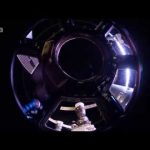
Nighttime fisheye timelapse
This timelapse video from space was taken by ESA astronaut Alexander Gerst from the Cupola observatory module on the International Space Station as it orbited Earth at around 400 km altitude. As the Space Station passes over Earth at night we can see city lights and lightning.
The International Space Station travels at 28 800 km/h meaning that it only takes 90 minutes to circle Earth completely. Each orbit the Station moves around 2200 km to the West in relation to 90 minutes before.
Astronauts often use normal consumer digital cameras to take pictures of Earth through Europe’s observatory module Cupola in their spare time. Setting the camera to take an image every few seconds and then playing the images back quickly create this timelapse effect.
Alexander worked as a geophysicist and volcanologist before he was chosen as an ESA astronaut in 2009. His Blue Dot mission includes an extensive scientific programme of experiments in physical science, biology, and human physiology as well as radiation research and technology demonstrations. All experiments chosen make use of the out-of-this-world laboratory to improve life on Earth or prepare for further human exploration of our Solar System.
-
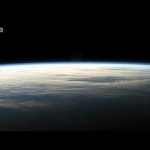
Lightning, aurora and sunrise timelapse
This timelapse video from space has it all: an orbit of Earth with lightning and aurora, followed by a space sunrise and daytime views of our cloudy planet. The images were taken by ESA astronaut Alexander Gerst as he orbited Earth on the International Space Station at around 400 km altitude. The nighttime video shows a Soyuz spacecraft that ferries the astronauts to the outpost. At the end of the video green aurora can be seen as Earth’s interacts with solar radiation.
The International Space Station travels at 28 800 km/h meaning that it only takes 90 minutes to circle Earth completely. Each orbit the Station moves around 2200 km to the West in relation to 90 minutes before.
Astronauts often use normal consumer digital cameras to take pictures of Earth through Europe’s observatory module Cupola in their spare time. Setting the camera to take an image every few seconds and then playing the images back quickly create this timelapse effect.
Alexander worked as a geophysicist and volcanologist before he was chosen as an ESA astronaut in 2009. His Blue Dot mission includes an extensive scientific programme of experiments in physical science, biology, and human physiology as well as radiation research and technology demonstrations. All experiments chosen make use of the out-of-this-world laboratory to improve life on Earth or prepare for further human exploration of our Solar System.
-
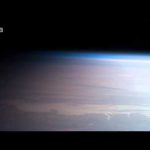
Day and night
It takes 90 minutes for an astronaut on the International Space Station to circle Earth completely, passing from daytime to nighttime and back again. This video taken by ESA astronaut Alexander Gerst shows the view from space in under one minute. Each orbit the Station moves around 2200 km to the West in relation to 90 minutes before.
Astronauts often use normal consumer digital cameras to take pictures of Earth through Europe’s observatory module Cupola in their spare time. Setting the camera to take an image every few seconds and then playing the images back quickly create this timelapse effect.
Alexander worked as a geophysicist and volcanologist before he was chosen as an ESA astronaut in 2009. His Blue Dot mission includes an extensive scientific programme of experiments in physical science, biology, and human physiology as well as radiation research and technology demonstrations. All experiments chosen make use of the out-of-this-world laboratory to improve life on Earth or prepare for further human exploration of our Solar System.
Read more about his mission at http://www.esa.int/Our_Activities/Human_Spaceflight/Blue_dot
Follow Alexander here: http://alexandergerst.esa.int/
-

Flying through an Aurora
This timelapse was created from photographs taken from on board the International Space Station by the Expedition 40 crew.
ESA astronaut Alexander Gerst commented: “We flew right through a massive aurora after last week’s solar mass ejection.”
Credit: ESA/NASA
-
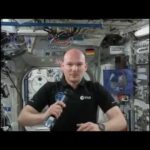
Inflight call with Alexander Gerst for #callAlex
Replay of an inflight call with ESA astronaut Alexander Gerst on the International Space Station. Forty of his social media followers were invited to the European Astronaut Centre in Cologne, Germany, for a SocialSpace event to watch the call to the ISS live. A handful of the participants also got to ask a question to Alexander.
-
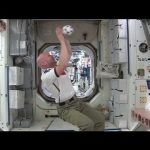
Space gooooooaaaal
In true World Cup spirit ESA astronaut Alexander Gerst and NASA astronauts Reid Wiseman and Steve Swanson play a friendly game of football, celebrating their goals as only they can while living in the International Space Station.
Recorded during their time-off over the weekend the astronaut-footballers enjoyed some weightless football fun.
During Alexander’s six-month Blue Dot mission on the Space Station he will run over 100 experiments that cannot be done anywhere else on Earth – just like these celebrations.
Credit: NASA
-
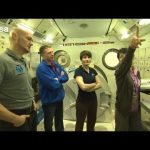
ESA astronauts training in Japan
ESA astronauts have to train with all International Space Station partners: we often see images of them training at Star City in Russia or in Houston, in the US, but they also have to go to Japan during the preparations for their mission.
ESA astronauts Alexander Gerst and Samantha Cristoforetti were recently in Tsukuba, at the Japanese Aerospace Exploration Centre.
-
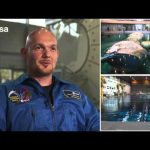
Training for Blue Dot
ESA astronaut Alexander Gerst recounts his training for his Blue Dot mission to the International Space Station in May 2014. Alexander spent over four years learning science, survival techniques, new languages, robotic operations and Space Station systems to prepare for his mission.
Alexander discusses basic training, overseeing docking of ESA’s Automated Transfer Vehicle space freighter, spacewalk training in swimming pools, the merits of US and Russian spacesuits and the scientific experiments he will conduct.
Alexander will spend six months on the Space Station performing experiments and maintaining the weightless laboratory. He is part of Expedition 40/41 to be launched May 2014 on a Soyuz spacecraft with cosmonaut commander Maxim Surayev and NASA astronaut Reid Wiseman.
-
How to become an astronaut
‘How do I become an astronaut?’ is a question that Frank Danesy has been asked many, many times. In this video Frank talks about the qualities needed to become an astronaut, the selection campaigns and the rigorous training involved for the lucky few who are eventually chosen.