Tag: Artemis

  • Protecting Artemis and lunar explorers from space radiation ☢️ #shorts

    Protecting Artemis and lunar explorers from space radiation ☢️ #shorts

    Cosmic radiation is considered to be the main health hazard for humans on exploration missions. Far away from the protection of Earth’s magnetic field, the radiation doses could be up to 700 times higher than on our planet.

    For long-term human activity at the Moon, we need to monitor the lunar radiation environment directly.

    Two sources of radiation are of concern: galactic cosmic radiation from outside the galaxy and the unpredictable but virulent charged particles coming from our own Sun.

    Cosmic radiation is always there, and it is also the main source of radiation for increasing the crew’s risk of cancer in missions to the Moon and Mars. The solar events deliver a high amount of radiation in a short period of time, leading to radiation sickness, with symptoms such as nausea and fatigue.

    ★ Subscribe: http://bit.ly/ESAsubscribe and click twice on the bell button to receive our notifications.

    Check out our full video catalog: http://bit.ly/SpaceInVideos
    Follow us on Twitter: http://bit.ly/ESAonTwitter
    On Facebook: http://bit.ly/ESAonFacebook
    On Instagram: http://bit.ly/ESAonInstagram
    On LinkedIn: https://bit.ly/ESAonLinkedIn
    On Pinterest: https://bit.ly/ESAonPinterest
    On Flickr: http://bit.ly/ESAonFlickr

    We are Europe’s gateway to space. Our mission is to shape the development of Europe’s space capability and ensure that investment in space continues to deliver benefits to the citizens of Europe and the world. Check out https://www.esa.int/ to get up to speed on everything space related.

    Copyright information about our videos is available here: https://www.esa.int/ESA_Multimedia/Terms_and_Conditions

    #ESA
    #Artemis
    #Radiation
  • NASA’s Artemis I ‘Passengers’

    NASA’s Artemis I ‘Passengers’

    There may not be any humans traveling on Artemis I but that doesn’t mean there aren’t any travelers aboard NASA’s Orion Spacecraft! Meet the three “passengers” that are collecting data to help us keep future NASA astronauts safe and understand what they will be experiencing on upcoming Artemis missions to the Moon. https://go.nasa.gov/3TDjPx5

    The Artemis I mission consists of the Space Launch System rocket that is sending the uncrewed Orion spacecraft around the Moon and back to Earth to check out spacecraft systems before crew fly aboard on Artemis II. The Artemis I mission is one more step toward taking the next giant leap: sending the first astronauts to Mars.

    Keep up with this historic mission: https://nasa.gov/specials/artemis-i

    Credits:
    Producers: Jessica Wilde, Sami Aziz, Scott Bednar

  • Artemis I Distant Lunar Orbit Insertion Burn

    Artemis I Distant Lunar Orbit Insertion Burn

    At 4:52 p.m. EST (21:52 UTC), the Orion spacecraft will perform a burn burn to enter a distant retrograde orbit around the Moon, an orbit that is high altitude from the surface of the Moon and opposite the direction of the Moon travels around Earth. Live coverage will begin at 4:30 p.m. EST (21:30 UTC).

    At 1:47 a.m. EST (6:47 UTC) on November 16, NASA’s Orion spacecraft launched aboard the Space Launch System (SLS), the world’s most powerful rocket, from historic Launch Complex 39B at NASA’s Kennedy Space Center on a path to the Moon, officially beginning the Artemis I mission. This mission is the first integrated test of NASA’s deep space exploration systems: the Orion spacecraft, the SLS rocket, and Kennedy Space Center ground systems.
    More: nasa.gov/specials/artemis-i

  • NASA’s Artemis I Launch Rocket Camera Footage

    NASA’s Artemis I Launch Rocket Camera Footage

    Raw NASA camera footage, taken from the Space Launch System’s (SLS) core stage, shows the SLS separation of the solid rocket boosters two minutes and 11 seconds after liftoff.

    At 1:47 am EST (6:47 UTC) on November 16, NASA’s Orion spacecraft launched aboard the SLS rocket from historic Launch Complex 39B at NASA’s Kennedy Space Center on a path to the Moon, officially beginning the Artemis I mission.
    This mission is the first integrated test of NASA’s deep space exploration systems: the Orion spacecraft, the SLS rocket, and Kennedy Space Center ground systems.
    More: https://nasa.gov/specials/artemis-i

    Credits: NASA

  • Artemis I Close Flyby of the Moon

    Artemis I Close Flyby of the Moon

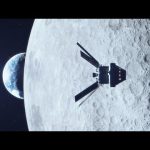
    Watch live as NASA’s Orion spacecraft performs a close approach of the lunar surface on its way to a distant retrograde orbit, a highly stable orbit thousands of miles beyond the Moon. During the Artemis I flight test, launched on Nov. 16, Orion will travel 280,000 miles (450,000 km) from Earth and 40,000 miles (64,000 km) beyond the far side of the Moon, carrying science and technology payloads to expand our understanding of lunar science, technology developments, and deep space radiation.

    Through Artemis missions, NASA will land the first woman and the first person of color on the Moon, paving the way for a long-term lunar presence and serving as a steppingstone to send astronauts to Mars. We are going.

    More: https://www.nasa.gov/artemis

  • Artemis I Launches to the Moon (Official NASA Recap)

    Artemis I Launches to the Moon (Official NASA Recap)

    NASA’s Artemis I mission lifted off on Nov. 16, 2022, from Kennedy Space Center’s Launch Complex 39B. This video includes highlights from the event.

    With 8.8 million pounds of thrust, the Space Launch System (SLS), is NASA’s most powerful rocket. It will send the uncrewed Orion spacecraft beyond the Moon, 280,000 miles from Earth, farther than any human-rated spacecraft has ever flown.

    After 26 days and a total distance of over a million miles, Orion will return home faster and hotter than any spacecraft has before.

    The primary goals for Artemis I are to demonstrate Orion’s systems in a spaceflight environment and ensure a safe re-entry, descent, splashdown, and recovery prior to the first flight with crew on Artemis II.

    The first in a series of increasingly complex missions, Artemis I will demonstrate our commitment and capability to build a long-term human presence at the Moon for decades to come.

    Learn more at: https://www.nasa.gov/specials/artemis-i/

    Download Link:
    https://images.nasa.gov/details-Artemis%20I%20Launches%20to%20the%20Moon%20(Official%20NASA%20Recap)

    Video Producer: Sonnet Apple
    Music: Universal Production Music
    Credit: NASA

  • Artemis I Trajectory Burn en Route to the Moon

    Artemis I Trajectory Burn en Route to the Moon

    Watch live as NASA’s Orion spacecraft completes its first outbound trajectory burn on the way to the Moon after having launched aboard the Space Launch System (SLS) rocket and began the Artemis I mission. During Artemis I, Orion will travel 280,000 miles (450,000 km) from Earth and 40,000 miles (64,000 km) beyond the far side of the Moon, carrying science and technology payloads to expand our understanding of lunar science, technology developments, and deep space radiation.

    Through Artemis missions, NASA will land the first woman and the first person of color on the Moon, paving the way for a long-term lunar presence and serving as a steppingstone to send astronauts to Mars. We are going.

    More: https://www.nasa.gov/artemis

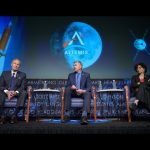
  • Artemis I Post-Launch News Conference (Nov. 16, 2022)

    Artemis I Post-Launch News Conference (Nov. 16, 2022)

    Leaders from across NASA discuss the successful launch of #Artemis I flight test to the Moon.

    The Space Launch System (SLS) rocket and Orion spacecraft launched Wednesday, Nov. 16 at 1:47 a.m. EST (0647 UTC) for its 26 day mission around the Moon.

    The post-launch mission update will begin onWednesday, Nov. 16, 2022, at no earlier than 5 a.m. EST (1000 UTC). Participants include:

    Bill Nelson, NASA administrator 
    Mike Sarafin, Artemis mission manager, NASA Headquarters
    Charlie Blackwell-Thompson, Artemis launch director, Exploration Ground Systems Program, Kennedy
    Emily Nelson, chief flight director, NASA Johnson
    Melody Lovin, weather officer, U.S. Space Launch Delta 45

    For more information about Artemis, visit www.nasa.gov/specials/artemis/

    Credit: NASA

  • Artemis I launch

    Artemis I launch

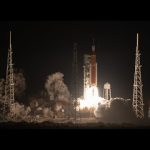
    The Space Launch System (SLS) rocket with the Orion spacecraft aboard lifted off at 07:47 CET from @NASA’s Kennedy Space Center in Florida, USA on 16 November 2022.

    The most powerful rocket ever built sent NASA’s Orion spacecraft and ESA’s European Service Module (ESM) to a journey beyond the Moon and back. No crew will be on board Orion this time, and the spacecraft will be controlled by teams on Earth.

    ESM provides for all astronauts’ basic needs, such as water, oxygen, nitrogen, temperature control, power and propulsion.

    Much like a train engine pulls passenger carriages and supplies power, the European Service Module will take the Orion capsule to its destination and back.

    Learn more about Artemis I: https://www.esa.int/Science_Exploration/Human_and_Robotic_Exploration/Orion/Artemis_I

    ★ Subscribe: http://bit.ly/ESAsubscribe and click twice on the bell button to receive our notifications.

    Check out our full video catalog: http://bit.ly/SpaceInVideos
    Follow us on Twitter: http://bit.ly/ESAonTwitter
    On Facebook: http://bit.ly/ESAonFacebook
    On Instagram: http://bit.ly/ESAonInstagram
    On LinkedIn: https://bit.ly/ESAonLinkedIn
    On Pinterest: https://bit.ly/ESAonPinterest
    On Flickr: http://bit.ly/ESAonFlickr

    We are Europe’s gateway to space. Our mission is to shape the development of Europe’s space capability and ensure that investment in space continues to deliver benefits to the citizens of Europe and the world. Check out https://www.esa.int/ to get up to speed on everything space related.

    Copyright information about our videos is available here: https://www.esa.int/ESA_Multimedia/Terms_and_Conditions

    #ESA
    #Orion
    #Artemis

  • NASA’s Artemis I Launch Set to Make History

    NASA’s Artemis I Launch Set to Make History

    A quick recap of NASA’s history in space exploration segueing to Artemis serves as the opening video for the launch broadcast for the agency’s Artemis I mission. The broadcast originates from Kennedy Space Center in Florida, where NASA’s Space Launch System rocket and Orion spacecraft will lift off from Launch Complex 39B no earlier than November 16 on a mission beyond the Moon and back to Earth.

    Credits:
    Music Courtesy of Gothic Storm Music
    Produced and Edited by Oxcart and Sami Aziz

  • An Update on Our Artemis I Moon Mission on This Week @NASA – November 4, 2022

    An Update on Our Artemis I Moon Mission on This Week @NASA – November 4, 2022

    An update on our Artemis I Moon mission, the right moves for a small satellite mission, and a bright idea to search for water ice on the Moon … a few of the stories to tell you about – This Week at NASA!

    Download Link:
    https://images.nasa.gov/details-An%20Update%20on%20Our%20Artemis%20I%20Moon%20Mission%20on%20This%20Week%20@NASA%20–%20November%204,%202022

    Producer: Andre Valentine
    Editor: Sonnet Apple
    Music: Universal Production Music
    Credit: NASA

  • NASA Explorers: The Artemis Generation

    NASA Explorers: The Artemis Generation

    It’s not rockets and satellites that make NASA soar. It’s people. On season 5 of #NASAExplorers, “Artemis Generation,” meet the scientists and engineers who are studying Moon rocks, building tools, working aboard NASA’s International Space Station, and training astronauts in preparation for landing humans on the surface of the Moon through NASA’s Artemis missions. #S5E0

    Join the NASA Explorers community and access bonus content: https://www.facebook.com/NASAExplorersSeries

  • Artemis I Launch Attempt News Update (Sept. 3, 2022)

    Artemis I Launch Attempt News Update (Sept. 3, 2022)

    NASA leads provide a news update on the Sept. 3 launch attempt of the #Artemis I flight test.

    The launch director waived off the launch at approximately 11:17 a.m. EDT (15:17 UTC). Teams encountered a liquid hydrogen leak while loading the propellant into the core stage of the Space Launch System rocket. Engineers are continuing to gather additional data. Briefing participants include:

    NASA Administrator Bill Nelson
    Jim Free, associate administrator for Exploration Systems Development Mission Directorate, NASA Headquarters
    Mike Sarafin, Artemis mission manager, NASA Headquarters

    Artemis I is the first integrated flight test of the Space Launch System (SLS) and Orion spacecraft that will return humanity to the Moon. As NASA’s most powerful rocket ever built, SLS will launch the uncrewed Orion spacecraft on a six-to-eight-week mission around the Moon and back to Earth. Orion will travel 280,000 miles (450,000 km) from Earth and 40,000 miles (64,000 km) beyond the far side of the Moon, carrying science and technology payloads to expand our understanding of lunar science, technology developments, and deep space radiation.

    For more information about Artemis, visit https://nasa.gov/artemis

  • An Update on Our Artemis I Moon Mission on This Week @NASA – September 2, 2022

    An Update on Our Artemis I Moon Mission on This Week @NASA – September 2, 2022

    An update on our Artemis I Moon mission, a first for our James Webb Space Telescope, and a new target launch date for the next commercial crew mission … a few of the stories to tell you about – This Week at NASA!

    Download Link:
    https://images.nasa.gov/details-An%20Update%20on%20Our%20Artemis%20I%20Moon%20Mission%20on%20This%20Week%20@NASA%20%E2%80%93%20September%202,%202022

    Producer: Andre Valentine
    Editor: Lacey Young
    Music: Universal Production Music
    Credit: NASA

  • LIVE lansare ARTEMIS 1, spre Lună!

    LIVE lansare ARTEMIS 1, spre Lună!

    Vom transmite LIVE lansarea ARTEMIS 1 de la ora 20:45
    Invitati: Dumitru Prunariu, Claudiu Tanaselia, Danivers, Cristian Roman, Alexandru Mironov, Dragos Alexandru Paun

  • Artemis I Launch Attempt News Update (Aug. 29, 2022)

    Artemis I Launch Attempt News Update (Aug. 29, 2022)

    At 1 p.m. EDT on Monday, Aug. 29, NASA leaders gave an update on the launch of the Artemis I flight test. Following tanking operations, engineers were troubleshooting an issue conditioning one of the RS-25 engines (engine 3) on the bottom of the rocket’s core stage. All engines must reach a proper temperature range before they can be started. Teams are poring through the data and will set a new launch date and time.

    Artemis I is the first integrated flight test of the Space Launch System (SLS) and Orion spacecraft that will return humanity to the Moon. As NASA’s most powerful rocket ever built, SLS will launch the uncrewed Orion spacecraft on a six-to-eight-week mission around the Moon and back to Earth. Orion will travel 280,000 miles (450,000 km) from Earth and 40,000 miles (64,000 km) beyond the far side of the Moon, carrying science and technology payloads to expand our understanding of lunar science, technology developments, and deep space radiation.

    For more information about Artemis, visit https://nasa.gov/specials/artemis

  • 10 facts about the European Service Module | Artemis #shorts

    10 facts about the European Service Module | Artemis #shorts

    The European Service Module is ESA’s contribution to @NASA’s Orion spacecraft that will send astronauts to the Moon and beyond. It provides electricity, water, oxygen and nitrogen as well as keeping the spacecraft at the right temperature and on course.

    Learn more about the European Service Module: https://www.esa.int/Science_Exploration/Human_and_Robotic_Exploration/Orion/Orion_European_Service_Module_media_kit

    ★ Subscribe: http://bit.ly/ESAsubscribe and click twice on the bell button to receive our notifications.

    Check out our full video catalog: http://bit.ly/SpaceInVideos
    Follow us on Twitter: http://bit.ly/ESAonTwitter
    On Facebook: http://bit.ly/ESAonFacebook
    On Instagram: http://bit.ly/ESAonInstagram
    On LinkedIn: https://bit.ly/ESAonLinkedIn
    On Pinterest: https://bit.ly/ESAonPinterest
    On Flickr: http://bit.ly/ESAonFlickr

    We are Europe’s gateway to space. Our mission is to shape the development of Europe’s space capability and ensure that investment in space continues to deliver benefits to the citizens of Europe and the world. Check out https://www.esa.int/ to get up to speed on everything space related.

    Copyright information about our videos is available here: https://www.esa.int/ESA_Multimedia/Terms_and_Conditions

    #ESA
    #ESM
    #Artemis

  • Our Artemis I Flight Test is “Go for Launch” on This Week @NASA – August 26, 2022

    Our Artemis I Flight Test is “Go for Launch” on This Week @NASA – August 26, 2022

    Our Artemis I flight test is “go for launch,” the first deep-space long-duration biology test, and the Webb Space Telescope captures new images of Jupiter … a few of the stories to tell you about – This Week at NASA!

    Download Link:
    https://images.nasa.gov/details-Our%20Artemis%20I%20Flight%20Test%20is%20%E2%80%9CGo%20for%20Launch%E2%80%9D%20on%20This%20Week%20@NASA%20%E2%80%93%20August%2026,%202022

  • Artemis I Path to the Pad: Roll to the Pad

    Artemis I Path to the Pad: Roll to the Pad

    Before our Space Launch System (SLS) rocket and Orion spacecraft can launch our nation into a new era of spaceflight, the duo must first undergo a wet dress rehearsal at the launch pad prior to liftoff.

    Watch SLS and Orion continue on their path to the pad as they travel to Kennedy Space Center’s Launch Pad 39B for a full countdown rehearsal – an operation involving hundreds of engineers stationed all across the nation.

    All about Artemis I: https://www.nasa.gov/specials/artemis-i/

    Credits:
    Writer: Danielle Sempsrott
    Editor: Francisco Martin
    Producers: John Sackman, Michael Justice & Madison Tuttle
    Music courtesy of Gothic Storm Music
    Credit: NASA

  • Artemis I: We Are Ready

    Artemis I: We Are Ready

    The journey of half a million miles – the first flight of the Artemis Generation – is about to begin. The uncrewed Artemis I mission will jump-start humanity’s return to the Moon with the thunderous liftoff of NASA’s powerful new Space Launch System rocket and Orion spacecraft. This critical flight test will send Orion farther than any human-rated spacecraft has ever flown, putting new systems and processes to the test and lighting the way for the crew missions to come. Artemis I is ready for departure – and, together with our partners around the world, we are ready to return to the Moon, with our sights on Mars and beyond.

    Learn more: https://nasa.gov/specials/artemis-i

    Producer: Lisa Allen, Barbara Zelon, Alysia Lee
    Writer & Director: Paul Wizikowski

  • Media briefing: Artemis I getting ready for launch

    Media briefing: Artemis I getting ready for launch

    The Artemis I mission is almost ready for launch: it will send an uncrewed spacecraft beyond the Moon and back. Join this virtual Q&A to learn more about Europe’s contribution to the mission: ESA is overseeing the development of the European Service Module, that provides air, electricity and propulsion to the spacecraft. Participants to this media briefing include Josef Aschbacher, ESA Director General ; David Parker, ESA Director for Human and Robotic Exploration ; Jean-Marc Nasr, @Airbus EVP Space Systems and Marc Steckling, Airbus Head of Space Exploration.

    Learn more about Artemis I: https://www.esa.int/Science_Exploration/Human_and_Robotic_Exploration/Orion/Artemis_I

    ★ Subscribe: http://bit.ly/ESAsubscribe and click twice on the bell button to receive our notifications.

    Check out our full video catalog: http://bit.ly/SpaceInVideos
    Follow us on Twitter: http://bit.ly/ESAonTwitter
    On Facebook: http://bit.ly/ESAonFacebook
    On Instagram: http://bit.ly/ESAonInstagram
    On LinkedIn: https://bit.ly/ESAonLinkedIn
    On Pinterest: https://bit.ly/ESAonPinterest
    On Flickr: http://bit.ly/ESAonFlickr

    We are Europe’s gateway to space. Our mission is to shape the development of Europe’s space capability and ensure that investment in space continues to deliver benefits to the citizens of Europe and the world. Check out https://www.esa.int/ to get up to speed on everything space related.

    Copyright information about our videos is available here: https://www.esa.int/ESA_Multimedia/Terms_and_Conditions

    #ESA
    #Orion
    #Artemis

  • Artemis I Path to the Pad: The Spacecraft

    Artemis I Path to the Pad: The Spacecraft

    Named after one of the largest constellations in the night sky, Orion is the name given to the spacecraft that will carry the first woman and first person of color to the Moon. But before we fly astronauts aboard, the spacecraft, powered by our Space Launch System rocket, will travel tens of thousands of miles on a flight test around the Moon. Watch as teams at NASA’s Kennedy Space Center prepare Orion for that journey, outfitting the spacecraft with its necessary components as it moves along its path to the pad.

    All about Artemis I: https://www.nasa.gov/specials/artemis-i/

    Writer: Danielle Sempsrott
    Editor: Francisco Martin
    Producers: John Sackman, Michael Justice & Madison Tuttle
    Music courtesy of Gothic Storm Music
    Credit: NASA

  • Artemis I – European Service Module perspective

    Artemis I – European Service Module perspective

    The Orion spacecraft with European Service Module will fly farther from Earth than any human-rated vehicle has ever flown before. This video gives an overview of the first mission – without astronauts – for Artemis, focussing on ESA’s European Service Module that powers the spacecraft.

    The spacecraft will perform a flyby of the Moon, using lunar gravity to gain speed and propel itself 70 000 km beyond the Moon, almost half a million km from Earth – further than any human has ever travelled, where it will inject itself in a Distant Retrograde Orbit around the Moon.

    On its return journey, Orion will do another flyby of the Moon before heading back to Earth.

    The total trip will take around 20 days, ending with a splashdown in the Pacific Ocean without the European Service Module – it separates and burns up harmlessly in the atmosphere.

    The second Artemis mission will have a simplified flight plan with only a flyby of the Moon but with four astronauts. The third Artemis mission will see astronauts taken to the lunar surface.

    The European Service Module is ESA’s contribution to @NASA’s Orion spacecraft that will send astronauts to the Moon and beyond. It provides electricity, water, oxygen and nitrogen as well as keeping the spacecraft at the right temperature and on course.

    The European Service Module has 33 thrusters, 11 km of electrical wiring, four propellant and two pressure tanks that all work together to supply propulsion and everything needed to keep astronauts alive far from Earth – there is no room for error.

    ★ Subscribe: http://bit.ly/ESAsubscribe and click twice on the bell button to receive our notifications.

    Check out our full video catalog: http://bit.ly/SpaceInVideos
    Follow us on Twitter: http://bit.ly/ESAonTwitter
    On Facebook: http://bit.ly/ESAonFacebook
    On Instagram: http://bit.ly/ESAonInstagram
    On Flickr: http://bit.ly/ESAonFlickr

    We are Europe’s gateway to space. Our mission is to shape the development of Europe’s space capability and ensure that investment in space continues to deliver benefits to the citizens of Europe and the world. Check out https://www.esa.int/ to get up to speed on everything space related.

    Copyright information about our videos is available here: https://www.esa.int/ESA_Multimedia/Terms_and_Conditions

    #ESA
    #Orion
    #Artemis

  • Artemis I Path to the Pad: The Rocket

    Artemis I Path to the Pad: The Rocket

    Have you ever wondered what it takes to assemble the most powerful rocket NASA has ever built? Watch documentary footage of our Space Launch System (SLS) rocket’s transformation into the over-300-foot-tall launch vehicle that will return humanity to the Moon.

    Starting with manufacturing and ending with stacking operations inside NASA Kennedy Space Center’s Vehicle Assembly Building, this is only the beginning of SLS’s path to the pad.

    All about Artemis I: https://www.nasa.gov/specials/artemis-i

    Writer: Danielle Sempsrott
    Editor: Francisco Martin
    Producers: John Sackman, Michael Justice & Madison Tuttle
    Music courtesy of Gothic Storm Music
    Credit: NASA

    #Artemis #NASA #KennedySpaceCenter #Moon #Space #Orion #PathToThePad

  • Artemis I Launch to the Moon (Official NASA Broadcast) – Date & Time TBD

    Artemis I Launch to the Moon (Official NASA Broadcast) – Date & Time TBD

    Watch live as our mega Moon rocket launches an uncrewed Orion spacecraft on a six-week mission around the Moon and back to Earth. During #Artemis I, Orion will lift off aboard the Space Launch System (SLS) rocket, and travel 280,000 miles (450,000 km) from Earth and 40,000 miles (64,000 km) beyond the far side of the Moon, carrying science and technology payloads to expand our understanding of lunar science, technology developments, and deep space radiation.

    Through Artemis missions, NASA will land the first woman and the first person of color on the Moon, paving the way for a long-term lunar presence and serving as a steppingstone to send astronauts to Mars. We are going.

    More: https://www.nasa.gov/artemis

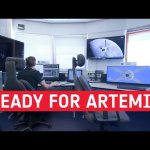
  • Europe ready for Artemis

    Europe ready for Artemis

    ESA and NASA are working hand in hand before the first Artemis mission to the Moon through a series of joint mission simulations. Teams based at the Erasmus Support Facility (ESF) at ESA’s ESTEC facility in The Netherlands, the German Space Operations Centre at ESA’s Columbus Control Centre in Oberphfaffenhofen and NASA’s Johnson Space Center in Houston are combining their expertise in a series of exercises to ensure a successful launch.

    When it comes to simulations, it’s important that not everything goes perfectly right as it recreates – in real time – different stages of the mission to monitor the spacecraft’s position, propulsion, power, avionics and thermal properties. The European team, consisting of 40 people from ESA and industry, apply their considerable expertise from working on the European Service Module (ESM) to any unexpected problems. The ESM will provide power for the Orion spacecraft and propel it along its orbit to the Moon.

    Learn more about Artemis: https://bit.ly/Artemis1ESA

    ★ Subscribe: http://bit.ly/ESAsubscribe and click twice on the bell button to receive our notifications.

    Check out our full video catalog: http://bit.ly/SpaceInVideos
    Follow us on Twitter: http://bit.ly/ESAonTwitter
    On Facebook: http://bit.ly/ESAonFacebook
    On Instagram: http://bit.ly/ESAonInstagram
    On Flickr: http://bit.ly/ESAonFlickr

    We are Europe’s gateway to space. Our mission is to shape the development of Europe’s space capability and ensure that investment in space continues to deliver benefits to the citizens of Europe and the world. Check out https://www.esa.int/ to get up to speed on everything space related.

    Copyright information about our videos is available here: https://www.esa.int/ESA_Multimedia/Terms_and_Conditions

    #ESA
    #Orion
    #Artemis

  • Artemis I Path to the Pad: NASA Series Trailer

    Artemis I Path to the Pad: NASA Series Trailer

    Through Artemis, NASA will once again land humans on the Moon. But before that can happen, we must first launch our Space Launch System (SLS) rocket—the most powerful rocket we’ve ever built—and Orion spacecraft on a flight test around the Moon. Join us as we document this moment in history and watch as we follow SLS and Orion on their path to the pad. The first episode of this series will premiere here on Aug. 12, 2022.

    All about Artemis I: https://www.nasa.gov/specials/artemis-i/

    Writer: Danielle Sempsrott
    Editor: Francisco Martin
    Producers: John Sackman, Michael Justice & Madison Tuttle
    Credit: NASA

    #Artemis #NASA #KennedySpaceCenter #Moon #Space #Orion #PathToThePad

  • Artemis I Briefing with NASA Leadership

    Artemis I Briefing with NASA Leadership

    Mission briefing for NASA’s Artemis I mission around the Moon, launching no earlier than Aug. 29, 2022. An uncrewed Orion spacecraft will be tested on Artemis I and travel 40,000 miles past the Moon, farther than any spacecraft built for humans has gone before. Briefing participants are:

    • NASA Administrator Bill Nelson
    • Bhavya Lal, associate administrator for technology, policy, and strategy, NASA Headquarters
    • Mike Sarafin, Artemis I mission manager, NASA Headquarters
    • Charlie Blackwell-Thompson, Artemis I launch director, NASA’s Kennedy Space Center in Florida
    • John Honeycutt, Space Launch System program manager, NASA’s Marshall Space Flight Center in Huntsville, Alabama
    • Howard Hu, Orion program manager, NASA’s Johnson Space Center in Houston

  • NASA Previews Artemis I Mission to the Moon (Official NASA Broadcast)

    NASA Previews Artemis I Mission to the Moon (Official NASA Broadcast)

    Mission experts for NASA’s #Artemis I mission around the Moon go over the details and mission timeline—from pre-launch to splashdown—of the four-to-six-week flight test that will demonstrate the capabilities of the Space Launch System (SLS) Moon rocket and Orion capsule. Briefing participants:

    • Debbie Korth, Orion program deputy manager, NASA Johnson
    • Rick LaBrode, lead Artemis I flight director, NASA Johnson
    • Judd Frieling, Artemis I ascent/entry flight director, NASA Johnson
    • Melissa Jones, Artemis I recovery director, NASA Kennedy
    • Reid Wiseman, chief astronaut, NASA Johnson
    • Philippe Deloo, Orion European Service Module program manager, ESA (European Space Agency)

    Currently targeted to launch no earlier than Monday, Aug. 29, the SLS rocket will send the uncrewed Orion spacecraft around the Moon and back to Earth to check out spacecraft systems before crew fly aboard on Artemis II. The Artemis I mission is one more step toward taking the next giant leap: sending the first astronauts to Mars.

    Get all the info on this historic mission: https://nasa.gov/specials/artemis-i

    Select music courtesy of Gothic Storm Publishing

  • Artemis I Launching to the Moon: Official NASA Launch Trailer

    Artemis I Launching to the Moon: Official NASA Launch Trailer

    NASA’s Artemis I mission is targeted to launch no earlier than Aug. 29, 2022.

    Artemis I will be the first integrated test of NASA’s deep space exploration systems: the Orion spacecraft, Space Launch System (SLS) rocket and the ground systems at Kennedy Space Center in Cape Canaveral, Florida. The first in a series of increasingly complex missions, Artemis I will be an uncrewed flight test that will provide a foundation for human deep space exploration, and demonstrate our commitment and capability to extend human existence to the Moon and beyond.

    During this flight, the spacecraft will launch on the most powerful rocket in the world and fly farther than any spacecraft built for humans has ever flown. It will travel 280,000 miles from Earth, thousands of miles beyond the Moon over the course of about a four to six-week mission. Orion will stay in space longer than any ship for astronauts has done without docking to a space station and return home faster and hotter than ever before.

    Learn more here: https://www.nasa.gov/artemis-1

    Video Producer: Sonnet Apple
    Music: Universal Production Music
    Credit: NASA

  • Artemis I: We Are Capable

    Artemis I: We Are Capable

    Twin solid rocket boosters that will produce a combined 7.2 million pounds of thrust at liftoff, a towering core stage, and the only human-rated spacecraft in the world capable of deep space travel – together, NASA’s Space Launch System rocket and Orion spacecraft stand ready to usher in a new chapter of exploration. Now fully assembled at Kennedy Space Center in Florida, SLS and Orion will soon launch on the uncrewed Artemis I mission around the Moon, paving the way for astronauts. Artemis I represents a new generation of spaceflight capabilities and partnerships that will take humans back to the Moon and beyond.

    Producer: Lisa Allen, Alysia Lee
    Writer & Director: Paul Wizikowski

    Learn more: https://www.nasa.gov/specials/artemis-i/

  • Our Artemis I Mega Moon Rocket is Rolled to the Launch Pad on This Week @NASA – June 10, 2022

    Our Artemis I Mega Moon Rocket is Rolled to the Launch Pad on This Week @NASA – June 10, 2022

    Our Artemis I mega Moon rocket is rolled to the launch pad, the astronauts of our Crew-2 mission come to Washington, and investigating the impact of dust on our climate … a few of the stories to tell you about – This Week at NASA!

    Subscribe to our weekly NASA Newsletter for more space in your inbox: https://nasa.gov/subscribe

  • Bake the Moon at home 🌝 #shorts

    Bake the Moon at home 🌝 #shorts

    ESA invites all bakers to try out a special banana bread recipe courtesy of Sens’Astro that contains the main chemical elements found on the Moon with a social media challenge inspired by World Baking Day, celebrated on 17 May.

    Bakers of all ages are invited to share their results with pictures or videos on social media using the hashtag #ESABakes. The deadline for pastry chefs to submit their cakes is 24 May 2022.

    Here are the ingredients:
    – 3 bananas
    – 2 eggs
    – 1 yoghurt (125 ml)
    – 80 g wheat flour
    – 30 g oat flour
    – 40 g almond powder
    – 100 g chocolate chips
    – 2 tablespoons maple syrup
    – 1 teaspoon vanilla extract
    – 1 teaspoon baking powder
    – 1 pinch of salt
    – 1 handful of nuts

    Have fun and enjoy a nutritious Moon!

    Get all the details: https://blogs.esa.int/exploration/bake-the-moon/

    ★ Subscribe: http://bit.ly/ESAsubscribe and click twice on the bell button to receive our notifications.

    Check out our full video catalog: http://bit.ly/SpaceInVideos
    Follow us on Twitter: http://bit.ly/ESAonTwitter
    On Facebook: http://bit.ly/ESAonFacebook
    On Instagram: http://bit.ly/ESAonInstagram
    On LinkedIn: https://bit.ly/ESAonLinkedIn
    On Pinterest: https://bit.ly/ESAonPinterest
    On Flickr: http://bit.ly/ESAonFlickr

    We are Europe’s gateway to space. Our mission is to shape the development of Europe’s space capability and ensure that investment in space continues to deliver benefits to the citizens of Europe and the world. Check out https://www.esa.int/ to get up to speed on everything space related.

    Copyright information about our videos is available here: https://www.esa.int/ESA_Multimedia/Terms_and_Conditions

    #WorldBakingDay

  • Racheta NASA e gata pentru Lună!  Buletin cosmic cu Claudiu Tănăselia

    Racheta NASA e gata pentru Lună! Buletin cosmic cu Claudiu Tănăselia

    Joi, ora 21.00, avem BULETIN COSMIC LIVE cu Claudiu Tanaselia (www.parsec.ro) aici : https://www.youtube.com/watch?v=nf-DV2wu9pE Din subiecte:

    1. Efectele războiului asupra programelor spațiale:
    – scandalul OneWeb
    – retragerea parteneriatului cu Arianespace
    – suspendarea misiunii ExoMars (https://youtu.be/sfgoePffOhs)
    – anularea misiunii Venera-D
    – suspendarea participării europene în Spektrum-RG
    – revenirea pe Pământ a astronautului american cu o capsulă Soiuz (https://youtu.be/a-flzdifn54)
    – culorile costumelor noilor cosmonauți ajunși pe ISS (https://youtu.be/snU5BGwBN6c)
    – rachete americane cu motoare rusești: Atlas V, Antares (https://youtu.be/EmJt3Hj2pZY?t=1610) />
    2. Viitoare misiune americano-europeană spre Marte

    3. SLS pe rampa de lansare (https://youtu.be/mtsWDWCCSG0)

    4. Semnarea de România a acordurilor Artemis

    5. Starship

    6. JWST

    7. Program lansări spațiale cu echipaj, în perioada următoare

    8. Lansare reușită din Iran

    9. Două activități extravehiculare recente

    10. Să vedem ce anunț face NASA diseară (miercuri) cu privire la landerele lunare.

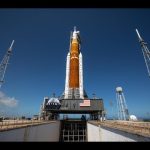
  • First Rollout of NASA’s Artemis I Moon Rocket (Official NASA Broadcast)

    First Rollout of NASA’s Artemis I Moon Rocket (Official NASA Broadcast)

    Watch as the rocket and spacecraft for our Artemis I mission around the Moon move to their launchpad at Kennedy Space Center.

    The integrated Orion capsule and Space Launch System rocket will take a 4-mile journey from the Vehicle Assembly Building to launch pad 39B, with the full travel time expected to last from six to 12 hours. This step is in preparation for a prelaunch test known as wet dress rehearsal, which includes loading the rocket’s propellant tanks and conducting a launch countdown.

    For more information about Artemis I, visit https://go.nasa.gov/3JnayUA

  • “Invincible” by Eddie Vedder, featuring NASA’s Artemis I Moon Mission (Official Video)

    “Invincible” by Eddie Vedder, featuring NASA’s Artemis I Moon Mission (Official Video)

    Grammy-award winning artist Eddie Vedder’s “Invincible” video collaboration with NASA is inspired by our Artemis I Moon mission.

    The Space Launch System rocket and Orion spacecraft – the only human-rated spacecraft in the world capable of deep-space travel – are planned to lift off from Launch Pad 39B at NASA’s Kennedy Space Center for the uncrewed Artemis I mission around the Moon. Through the Artemis missions, NASA will land the first woman and the first person of color on the Moon, paving the way for a long-term lunar presence, and serving as a steppingstone on the way to Mars. This video includes footage of various prelaunch tests, along with animations of launch, the orbit around the Moon, and the return to Earth.

    Explore the mission: https://www.nasa.gov/specials/artemis-i/
    Submit your name to fly aboard Artemis I: https://nasa.gov/wearegoing

    Music: Eddie Vedder – “Invincible”
    Video: NASA

    Producer: Sami Aziz
    Editor: Lacey Young

  • Artemis: crawling towards launch

    Artemis: crawling towards launch

    One of the many milestones in the leadup to the launch of Artemis is its rollout: this is when a crawler will carry the SLS rocket with Orion and ESM from the Vehicle Assembly Building to launchpad 39B. @NASA’s John Giles gives us a tour of the crawler and explains the adaptations made to this “wonderful piece of machinery” since it was first built for the Apollo programme in the 1960s. ESA is playing a key role in NASA’s Artemis programme, which will bring astronauts back to the Moon. The European Service Module – or ESM – will provide propulsion, power and thermal control for the Orion spacecraft.

    Learn more: https://bit.ly/Artemis1ESA

    Video credits: European Space Agency
    Thumbnail image credits: NASA/Leif Heimbold

    ★ Subscribe: http://bit.ly/ESAsubscribe and click twice on the bell button to receive our notifications.

    Check out our full video catalog: http://bit.ly/SpaceInVideos
    Follow us on Twitter: http://bit.ly/ESAonTwitter
    On Facebook: http://bit.ly/ESAonFacebook
    On Instagram: http://bit.ly/ESAonInstagram
    On Flickr: http://bit.ly/ESAonFlickr

    We are Europe’s gateway to space. Our mission is to shape the development of Europe’s space capability and ensure that investment in space continues to deliver benefits to the citizens of Europe and the world. Check out https://www.esa.int/ to get up to speed on everything space related.

    Copyright information about our videos is available here: https://www.esa.int/ESA_Multimedia/Terms_and_Conditions

    #ESA
    #Orion
    #Artemis

  • Artemis I Rollout Trailer

    Artemis I Rollout Trailer

    Twin solid rocket boosters that will produce a combined 7.2 million pounds of thrust at liftoff, a towering core stage, and the only human-rated spacecraft in the world capable of deep-space travel – together, NASA’s Space Launch System rocket and Orion spacecraft stand ready to usher in a new chapter of exploration. Now fully assembled at Kennedy Space Center in Florida, SLS and Orion will soon roll to the launch pad.

    Producer: Lisa Allen, Alysia Lee
    Writer & Director: Paul Wizikowski

  • People of Artemis

    People of Artemis

    The Moon has inspired and beckoned generations to explore. NASA’s Artemis I mission will forge a new path to the Moon, charting a course for a new, diverse generation of explorers. We’ll develop the cutting-edge technology we’ll need to venture even farther – to Mars and beyond. The Artemis I rocket and spacecraft are now combined and undergoing final testing at Kennedy Space Center in Florida, where it will soon launch on the first in a series of increasingly ambitious missions. Thanks to the daily efforts of NASA and its international and industry team members, our dreams are poised to take flight. We are going.

    Producer: Barbara Zelon, Alysia Lee
    Writer & Director: Paul Wizikowski
    Editor: Phil Sexton
    Sound Mix: Eric Land
    Lunar Photography: Andrew McCarthy
    Workforce Photography: NASA, ESA
    Narrator: NASA Astronaut Victor Glover