This video is a summary compilation of the questions and answers sessions held during the ESA Astronaut Careers Fair on 22 April 2021. The ESA speakers are Florence Loustalot, Talent Acquisition Specialist; Antonella Costa, HR Business Partner; Dagmar Boos, Head of HR Competence and Policy Centre; and Guillaume Weerts, Space Medicine Team Leader.
See the astronaut vacancy notice and other opportunities to work at ESA at https://jobs.esa.int
★ Subscribe: http://bit.ly/ESAsubscribe and click twice on the bell button to receive our notifications.
We are Europe’s gateway to space. Our mission is to shape the development of Europe’s space capability and ensure that investment in space continues to deliver benefits to the citizens of Europe and the world. Check out https://www.esa.int/ to get up to speed on everything space related.
This video summarises advice given by ESA astronauts during the ESA Astronaut Careers Fair on 22 April 2021. Samantha Cristoforetti, Thomas Reiter and André Kuipers have all flown in space as ESA astronauts and offer their perspectives on the selection process and the work and life of an astronaut.
See the astronaut vacancy notice and other opportunities to work at ESA at https://jobs.esa.int
★ Subscribe: http://bit.ly/ESAsubscribe and click twice on the bell button to receive our notifications.
We are Europe’s gateway to space. Our mission is to shape the development of Europe’s space capability and ensure that investment in space continues to deliver benefits to the citizens of Europe and the world. Check out https://www.esa.int/ to get up to speed on everything space related.
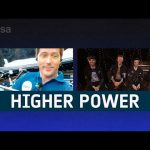
To celebrate the premiere of @Coldplay’s latest single ‘Higher Power’, the band linked up for an extraterrestrial video chat with French ESA astronaut Thomas Pesquet, who is currently on a six-month mission on board the International Space Station. A specially recorded performance of Higher Power – featuring dancing alien holograms – was beamed up to Thomas, who gave the track its very first play on board the Station. The song’s premiere followed a conversation which took in similarities between life on tour and life on the Space Station, how planet Earth looks from space and its fragility; and how Thomas listens to music in microgravity.
We are Europe’s gateway to space. Our mission is to shape the development of Europe’s space capability and ensure that investment in space continues to deliver benefits to the citizens of Europe and the world. Check out https://www.esa.int/ to get up to speed on everything space related.
Pentru prima dată, după mulți ani, ai șansa de a deveni astronaut! Tu poți fi prima femeie astronaut din România sau al doilea bărbat român care urcă în spațiu. Dacă ai un master în științele naturii (inginerie, matematică, etc.) sau științele medicale, ai profesat 3 ani (sau ești la doctorat) și cunoști limba engleză, înscrie-te în programul de astronauți ESA! Vor fi selectați aproximativ 15 astronauți, iar tu poți participa, deoarece Romania face parte din cele 20 de țări care contribuie la bugetul ESA: Mai mult, o poziție este deschisă pentru o persoană cu dizabilități. Aici este situl unde sunt detaliile și unde te poți înscrie: https://www.esa.int/About_Us/Careers_at_ESA/ESA_Astronaut_Selection
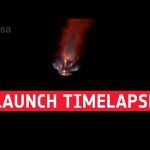
A timelapse from various angles of the launch of @SpaceX Falcon 9 with Crew Dragon Endeavour leaving Earth from Kennedy Space Center in Florida, USA.
The rocket lifted off at 10:49 BST (11:49 CEST, 05:49 local time) on 23 April 2021 from Launchpad 39A in Cape Canaveral with ESA astronaut Thomas Pesquet, @NASA astronauts Megan McArthur and Shane Kimbrough, and @JAXA | 宇宙航空研究開発機構 astronaut Akihiko Hoshide. On 24 April at 11:08 CEST the Crew-2 caught up with the International Space Station and docked with its Harmony module, marking the start of Thomas’ Alpha mission.
Thomas is the first ESA astronaut to fly in space in a vehicle other than the Russian Soyuz or the US Space Shuttle, and the first ESA astronaut to leave Earth from Florida, USA, in over a decade. This is his second flight, his first mission called Proxima saw Thomas fly to the Space Station on a Soyuz from Baikonur in Kazakhstan and his expedition broke records for amount of hours spent on research at the time.
We are Europe’s gateway to space. Our mission is to shape the development of Europe’s space capability and ensure that investment in space continues to deliver benefits to the citizens of Europe and the world. Check out https://www.esa.int/ to get up to speed on everything space related.
Highlights of the launch and first day in space of ESA astronaut Thomas Pesquet on the Alpha mission.
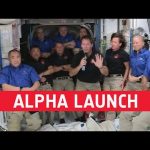
On 24 April at 11:08 CEST the Crew Dragon spacecraft with ESA astronaut Thomas Pesquet, @NASA astronauts Megan McArthur and Shane Kimbrough, and @JAXA | 宇宙航空研究開発機構 astronaut Akihiko Hoshide docked with the International Space Station’s Node-2 Harmony module, marking the start of ESA’s six-month mission Alpha.
The crew spent around 23 hours orbiting Earth and catching up with the International Space Station after their launch on 23 April at 10:49 BST (11:49 CEST, 05:49 local time). The launch to docking went smoothly in Crew Dragon Endeavour.
Thomas is the first ESA astronaut to fly in space in a vehicle other than the Russian Soyuz or the US Space Shuttle, and the first ESA astronaut to leave Earth from Florida, USA, in over a decade. This is his second flight, his first mission called Proxima saw Thomas fly to the Space Station on a Soyuz from Baikonur in Kazakhstan and his expedition broke records for amount of hours spent on research at the time.
We are Europe’s gateway to space. Our mission is to shape the development of Europe’s space capability and ensure that investment in space continues to deliver benefits to the citizens of Europe and the world. Check out https://www.esa.int/ to get up to speed on everything space related.
ESA Director General Josef Aschbacher congratulates the Dragon Crew 2 shortly after they enter the Space Station. ESA astronaut Thomas Pesquet, @NASA astronauts Megan McArthur and Shane Kimbrough, and @JAXA-HQ astronaut Akihiko Hoshide arrived at the Station one day after their launch on 23 April at 10:49 BST (11:49 CEST, 05:49 local time).
Thomas is the first ESA astronaut to fly in space in a vehicle other than the Russian Soyuz or the US Space Shuttle, and the first ESA astronaut to leave Earth from Florida, USA, in over a decade. This is his second flight, his first mission called Proxima saw Thomas fly to the Space Station on a Soyuz from Baikonur in Kazakhstan and his expedition broke records for amount of hours spent on research at the time.
We are Europe’s gateway to space. Our mission is to shape the development of Europe’s space capability and ensure that investment in space continues to deliver benefits to the citizens of Europe and the world. Check out https://www.esa.int/ to get up to speed on everything space related.
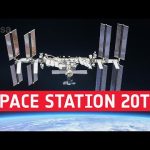
On 19 April, 2001, Umberto Guidoni was launched to the International Space Station, becoming the first European astronaut on board. In April 2021, ESA celebrates 20 years of European astronaut missions to this unique orbital outpost.
In this video, ESA astronauts past and present share their experiences of the International Space Station and spaceflight more generally. They identify some of their favourite moments and voice their hopes for the future of space exploration.
Here are the timestamps for each message:
0:00 – Intro 0:39 – Umberto Guidoni 3:31 – Claudie Haigneré 6:31 – Frank De Winnie 7:42 – Pedro Duque 10:36 – André Kuipers 11:38 – Thomas Reiter 14:38 – Christer Fuglesang 16:58 – Hans Schlegel 19:39 – Luca Parmitano 20:29 – Alexander Gerst 22:29 – Samantha Cristoforetti 28:20 –Thomas Pesquet 29:07 – Andreas Mogensen 30:05 – Tim Peake 31:02 – Matthias Maurer 32:57 – Jean François Clervoy 38:49 – Michel Tognini 42:23 – Reinhold Ewald
The International Space Station is humankind’s science laboratory in space. Its unique microgravity environment enables researchers to study phenomena and carry out experiments that would not be possible on Earth. Around 400 ESA investigations have been performed since the first module was launched and thousands more are led by the four other space agencies that work together to keep the Space Station aloft: @NASA, Russia’s @Роскосмос ТВ, Japan’s @JAXA | 宇宙航空研究開発機構, and the @Canadian Space Agency.
Scientific discoveries made on Station are applied widely from health to metallurgy, while the increased knowledge we gain about our solar system helps build a deeper understanding of Earth and life itself.
We are Europe’s gateway to space. Our mission is to shape the development of Europe’s space capability and ensure that investment in space continues to deliver benefits to the citizens of Europe and the world. Check out https://www.esa.int/ to get up to speed on everything space related.
In 2008, Thomas Pesquet applied to become an ESA astronaut. On 22 April 2021, he will fly his second mission to the International Space Station. In this video Thomas shares how he found his way to space, and encourages viewers to follow their passions as ESA seeks its next class of astronauts.
Nobody is perfect on their first attempt at a task, but Thomas says the only way to improve is to try and keep trying. Though becoming an astronaut seemed a distant dream when he was younger, by continuing to challenge himself and learn along the way he developed the skills he needed to put himself forward and become one of a small group who have travelled to space.
Whatever your passion, his advice is universal: try your best, and if you don’t succeed it doesn’t matter. What does matter is perseverance.
We are Europe’s gateway to space. Our mission is to shape the development of Europe’s space capability and ensure that investment in space continues to deliver benefits to the citizens of Europe and the world. Check out https://www.esa.int/ to get up to speed on everything space related.
Thomas Pesquet a postulé en 2008 pour devenir un astronaute de l’ESA. Le 22 avril 2021, il décollera à destination de la Station spatiale internationale pour sa deuxième mission. Thomas partage dans cette vidéo la manière dont il s’est frayé un chemin vers l’espace, et encourage son audience à suivre la passion qui les anime alors que l’ESA est à la recherche de sa prochaine classe d’astronautes.
Personne n’est parfait la première fois qu’il effectue une tâche, mais Thomas explique que la seule manière de s’améliorer, c’est d’essayer et de continuer à essayer. Même si devenir astronaute semblait un rêve lointain quand il était plus jeune, c’est en se mettant continuellement au défi et en apprenant au fil du temps qu’il a développé les compétences nécessaires pour se présenter et faire partie du petit groupe de personnes qui sont allées dans l’espace.
Son conseil s’applique quelle que soit votre passion : faites de votre mieux, et si vous ne réussissez pas, ce n’est pas grave. Ce qui importe, c’est la persévérance.
Rendez-vous sur le https://bit.ly/YourWayToSpace pour en savoir plus sur comment devenir un astronaute de l’ESA et découvrir les autres opportunités de carrière à l’ESA.
★ Subscribe: http://bit.ly/ESAsubscribe and click twice on the bell button to receive our notifications.
We are Europe’s gateway to space. Our mission is to shape the development of Europe’s space capability and ensure that investment in space continues to deliver benefits to the citizens of Europe and the world. Check out https://www.esa.int/ to get up to speed on everything space related.
We are Europe’s gateway to space. Our mission is to shape the development of Europe’s space capability and ensure that investment in space continues to deliver benefits to the citizens of Europe and the world. Check out https://www.esa.int/ to get up to speed on everything space related.
For the fourth time since 1978, ESA is recruiting new astronauts. Applications open 31 March and close 28 May 2021. Four new members of the European astronaut corps will be selected. Around 20 of the best remaining candidates will also be selected to a newly-established astronaut reserve, whose members may be called upon to fulfil specific missions. ESA’s last call for new astronauts was in 2008, when six candidates were appointed. They were joined by a further one candidate in 2015.
We are Europe’s gateway to space. Our mission is to shape the development of Europe’s space capability and ensure that investment in space continues to deliver benefits to the citizens of Europe and the world. Check out https://www.esa.int/ to get up to speed on everything space related.
Watch the replay of the virtual press event in which ESA astronaut Thomas Pesquet talks about his upcoming ‘Alpha’ mission to the International Space Station.
Set to launch on 22 April, Thomas will be the first ESA astronaut to fly on a @SpaceX Crew Dragon being launched on a Falcon 9 rocket from Florida, USA. In this event we will also hear from ESA ISS Utilisation Planning Team Leader Kirsten MacDonell, and Head of the ESA Human and Robotic Exploration Strategy & Coordination Group Didier Schmitt.
We are Europe’s gateway to space. Our mission is to shape the development of Europe’s space capability and ensure that investment in space continues to deliver benefits to the citizens of Europe and the world. Check out https://www.esa.int/ to get up to speed on everything space related.
Born in Rouen, France, aerospace engineer and commercial pilot Thomas Pesquet was selected for ESA’s Astronaut Corps in 2009. He was launched on his first flight to the International Space Station in November 2016, remaining in space until June 2017 as part of his Proxima mission. He will soon be launched for on his second long-duration mission to the International Space Station called Alpha. Thomas has been training with the Station’s international partners for the new mission, including learning about the Crew Dragon, he will be the first ESA astronaut to fly on this new commercial spacecraft.
We are Europe’s gateway to space. Our mission is to shape the development of Europe’s space capability and ensure that investment in space continues to deliver benefits to the citizens of Europe and the world. Check out https://www.esa.int/ to get up to speed on everything space related.
In preparation for his second mission to the International Space Station, ESA astronaut Thomas Pesquet is training for possible spacewalks at @NASA’s Johnson Space Center. His second six-month mission is called Alpha and will see Thomas launch as part Crew-2 on the @SpaceX Dragon spacecraft with NASA astronaut Megan Behnken and Shane Kimbrough and @JAXA | 宇宙航空研究開発機構 astronaut Aki Hoshide.
Watch this underwater spacewalk training session in 4K with audio from the astronauts and “mission control” recorded on 2 December 2020. Thomas is moved into position on a functional mockup of the International Space Station’s robotic arm to install hardware.
Astronauts practice spacewalks in NASA’s Neutral Buoyancy Laboratory. The training pool is the largest indoor swimming pool in the world, holding over 23 million litres of water, but it is still not large enough to hold the complete Space Station. Instead, specific parts of the Station structure are used as needed for training.
Training underwater is as close as it gets to experiencing weightlessness on Earth so spending time in a full spacesuit is used to practise techniques for spacewalks and neutral buoyancy is substituted for microgravity. Support and training divers are on hand to guide the astronauts during their tasks. In space, the astronauts are aided by mission control and colleague astronauts on the Station.
Extra Vehicular Activities (known as EVAs or spacewalks) are the most challenging tasks for an astronaut. When venturing from their spacecraft in a self-contained spacesuit to carry out repairs or install new equipment outside the International Space Station safety and efficiency are vital.
It might be relaxing and soothing to watch this underwater spacewalk at home, but spacewalks are marathons that require concentration and physical exertion for six hours at a time, with no food or bathroom breaks.
We are Europe’s gateway to space. Our mission is to shape the development of Europe’s space capability and ensure that investment in space continues to deliver benefits to the citizens of Europe and the world. Check out https://www.esa.int/ to get up to speed on everything space related.
French ESA astronaut Thomas Pesquet will soon begin his second mission to the International Space Station. Called Alpha, the mission will begin with the second operational flight of the SpaceX Crew Dragon, launched from Cape Canaveral in Florida, USA. Thomas will be the first ESA astronaut to fly in this spacecraft, which will remain docked to the Space Station for around six months before returning the crew to Earth.
We are Europe’s gateway to space. Our mission is to shape the development of Europe’s space capability and ensure that investment in space continues to deliver benefits to the citizens of Europe and the world. Check out https://www.esa.int/ to get up to speed on everything space related.
Watch the replay of the briefing to media representatives to learn more about the next spaceflight of ESA astronaut Samantha Cristoforetti.
During the event, Samantha was joined by ESA Director General Josef Aschbacher, ESA Director of Human and Robotic Exploration David Parker, and Italian space agency president Giorgio Saccoccia.
Samantha is a member of ESA’s astronaut class of 2009. During her firs mission ‘Futura’ in 2014t m–15, she spent 200 days in space, carrying out science and operations on the International Space Station as a flight engineer for Expeditions 42 and 43. She now looks forward to returning to the ISS, her “home away from home.”
★ Subscribe: http://bit.ly/ESAsubscribe and click twice on the bell button to receive our notifications.
We are Europe’s gateway to space. Our mission is to shape the development of Europe’s space capability and ensure that investment in space continues to deliver benefits to the citizens of Europe and the world. Check out https://www.esa.int/ to get up to speed on everything space related.
U.S. Vice President Kamala Harris placed a special phone call to space this week when she spoke with astronaut Victor Glover who is aboard the International Space Station.
Glover, a crew member of NASA’s SpaceX Crew-1 mission, is the first African American astronaut to fly on a commercial spacecraft, and the first African American to fly a long-term mission aboard the orbiting laboratory. This is his first spaceflight since being selected as a NASA astronaut in 2013.
For the first time in over a decade, the European Space Agency (ESA) is seeking new astronauts. This one-hour-long briefing with ESA experts and astronauts outlines the selection criteria and desirable traits for astronauts. It also provides further detail around the Parastronaut Feasibility Project and astronaut reserve, as well as ESA’s vision for the next 10 years of human and robotic exploration.
Participants: Matthias Maurer, ESA astronaut Fabio Favata, Head of Strategy, Planning and Coordination Office Sergi Vaquer Araujo, Senior Flight Surgeon Rosario Martin-Sanchez, Head of Social Security & Related Policies Unit
Moderator: Emmet Fletcher, Communication Department
We are Europe’s gateway to space. Our mission is to shape the development of Europe’s space capability and ensure that investment in space continues to deliver benefits to the citizens of Europe and the world. Check out https://www.esa.int/ to get up to speed on everything space related.
For the first time in over a decade, the European Space Agency (ESA) is seeking new astronauts. This one-hour-long briefing with ESA experts and astronauts outlines the selection criteria and desirable traits for astronauts. It also provides further detail around the Parastronaut Feasibility Project and astronaut reserve, as well as ESA’s vision for the next 10 years of human and robotic exploration.
Participants: Luca Parmitano, ESA astronaut Ersilia Vaudo-Scarpetta, Chief Diversity Officer Josef Aschbacher, future ESA Director General Sara Pastor, I-Hab Gateway module Team Leader Antonella Costa, Human Resources Business Partner
Moderator: Fabrizio L’Abbate, Communication Department
We are Europe’s gateway to space. Our mission is to shape the development of Europe’s space capability and ensure that investment in space continues to deliver benefits to the citizens of Europe and the world. Check out https://www.esa.int/ to get up to speed on everything space related.
For the first time in over a decade, the European Space Agency (ESA) is seeking new astronauts. This one-hour-long briefing with ESA experts and astronauts outlines the selection criteria and desirable traits for astronauts. It also provides further detail around the Parastronaut Feasibility Project and astronaut reserve, as well as ESA’s vision for the next 10 years of human and robotic exploration.
Participants: Samantha Cristoforetti, ESA astronaut Alexander Gerst, ESA astronaut Josef Aschbacher, future ESA Director General Chiara Manfletti, Head of Policy and Programme Coordination Department Rüdiger Seine, Space Training Team Leader Dagmar Boos, Head of Human Resources Competence and Policy Centre
Moderator: Jules Grandsire, Communication Department
We are Europe’s gateway to space. Our mission is to shape the development of Europe’s space capability and ensure that investment in space continues to deliver benefits to the citizens of Europe and the world. Check out https://www.esa.int/ to get up to speed on everything space related.
Voor het eerst in 11 jaar tijd is de Europese ruimtevaartorganisatie (ESA) op zoek naar nieuwe astronauten. De rekruten zullen aan de zijde van bestaande ESA astronauten werken, nu Europa een nieuw tijdperk van ruimteverkenning ingaat.
Sprekers zijn onder meer ESA-astronaut André Kuipers, Low Earth Orbit Exploration Group Leader, hoofd European Astronaut Centre Frank De Winne, Science Coordinator for Human Research, Human and Robotic Exploration Programme Angelique Van Ombergen, hoofd Talent Acquisition Section Lucy van der Tas.
We are Europe’s gateway to space. Our mission is to shape the development of Europe’s space capability and ensure that investment in space continues to deliver benefits to the citizens of Europe and the world. Check out https://www.esa.int/ to get up to speed on everything space related.
For the first time in over a decade, the European Space Agency (ESA) is seeking new astronauts. This one-hour-long briefing with ESA experts and astronauts outlines the selection criteria and desirable traits for astronauts. It also provides further detail around the Parastronaut Feasibility Project and astronaut reserve, as well as ESA’s vision for the next 10 years of human and robotic exploration.
Participants: Jan Wörner, ESA Director General Samantha Cristoforetti, ESA astronaut Tim Peake, ESA astronaut David Parker, ESA Director of Human and Robotic Exploration Frank De Winne, Head of the European Astronaut Centre Jennifer Ngo-Anh, ESA Research and Payloads Programme Coordinator Lucy van der Tas, ESA Head of Talent Acquisition
Moderator: Ninja Menning, Communication Department
We are Europe’s gateway to space. Our mission is to shape the development of Europe’s space capability and ensure that investment in space continues to deliver benefits to the citizens of Europe and the world. Check out https://www.esa.int/ to get up to speed on everything space related.
From the @Airbus integration halls in Bremen, Germany, this replay of a live event shows a sneak peek of the two European Service Modules that will power astronauts to the Moon and back as part of @NASA’s Orion spacecraft.
Orion is NASA’s next exploration spacecraft to send astronauts farther into space than ever before, beyond the Moon to asteroids and even Mars.
ESA has contracted and is overseeing the development of the European Service Module, the part of the Orion spacecraft that provides air, electricity and propulsion. Much like a train engine pulls passenger carriages and supplies power, the European Service Module will power the Orion crew module to its destination and back to Earth.
The programme includes Andreas Hammer, Head of @Airbus Defence and Space Exploration showing the European Service Modules in production, ESA Director General Jan Wörner announcing future developments, a statement by ESA’s head of European Service Module programme Philippe Deloo, a statement by Airbus head of European Service Module programme Didier Radola, a Moon missions overview with ESA astronaut Alexander Gerst and ESA’s head of Space Transportation Nico Dettmann on how ESA is building Orion with industry.
★ Subscribe: http://bit.ly/ESAsubscribe and click twice on the bell button to receive our notifications.
We are Europe’s gateway to space. Our mission is to shape the development of Europe’s space capability and ensure that investment in space continues to deliver benefits to the citizens of Europe and the world. Check out https://www.esa.int/ to get up to speed on everything space related.
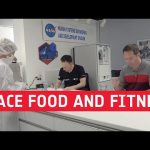
ESA astronaut Matthias Maurer is preparing for his mission to the International Space Station, scheduled for launch in late 2021. This mission is known as Cosmic Kiss.
In this video log from his current training base at NASA’s Johnson Space Center in Houston, Texas, USA, Matthias shows a space food tasting session and shares how astronauts maintain their fitness for a safe return to Earth.
Astronauts exercise for two hours a day, six days a week while on the International Space Station to combat muscle and bone loss caused by an extended stay in microgravity. Diet also plays an important role in maintaining physical and mental wellbeing.
Due to the current situation with COVID-19, all personnel are required to adhere to special safety precautions while training. These include wearing a mask – as seen in the clip.
Matthias will continue his training for Cosmic Kiss at partner agencies around the world over the next weeks and months. Stay tuned for further footage of his training and experiences.
We are Europe’s gateway to space. Our mission is to shape the development of Europe’s space capability and ensure that investment in space continues to deliver benefits to the citizens of Europe and the world. Check out https://www.esa.int/ to get up to speed on everything space related.
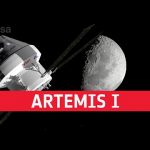
The Orion spacecraft with European Service Module will fly farther from Earth than any human-rated vehicle has ever flown before. This video gives an overview of the first mission – without astronauts – for Artemis, focussing on ESA’s European Service Module that powers the spacecraft.
The spacecraft will perform a flyby of the Moon, using lunar gravity to gain speed and propel itself 70 000 km beyond the Moon, almost half a million km from Earth – further than any human has ever travelled.
On its return journey, Orion will do another flyby of the Moon before heading back to Earth. The total trip will take around 20 days, ending with a splashdown in the Pacific Ocean without the European Service Module – it separates and burns up harmlessly in the atmosphere.
The second Artemis mission will have a similar flight plan but with astronauts. The third Artemis mission will see astronauts taken to the lunar surface.
The European Service Module is ESA’s contribution to NASA’s Orion spacecraft that will send astronauts to the Moon and beyond. It provides electricity, water, oxygen and nitrogen as well as keeping the spacecraft at the right temperature and on course.
The European Service Module has 33 thrusters, 11 km of electrical wiring, four propellant and two pressure tanks that all work together to supply propulsion and everything needed to keep astronauts alive far from Earth – there is no room for error.
★ Subscribe: http://bit.ly/ESAsubscribe and click twice on the bell button to receive our notifications.
We are Europe’s gateway to space. Our mission is to shape the development of Europe’s space capability and ensure that investment in space continues to deliver benefits to the citizens of Europe and the world. Check out https://www.esa.int/ to get up to speed on everything space related.
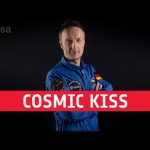
ESA astronaut Matthias Maurer from Germany has been assigned his first mission to the International Space Station. He is expected to fly to the Space Station in the autumn of 2021. The mission is called Cosmic Kiss and Maurer will spend six months in orbit, carrying out vital science and operations on behalf of researchers and international partners worldwide.
We are Europe’s gateway to space. Our mission is to shape the development of Europe’s space capability and ensure that investment in space continues to deliver benefits to the citizens of Europe and the world. Check out https://www.esa.int/ to get up to speed on everything space related.
In late 2019, ESA astronaut and geophysicist Alexander Gerst travelled to one of the harshest environments on Earth to learn more about our solar system, and to gather operational knowledge for missions to planetary surfaces such as the Moon. Travel with him to Antarctica and discover the many secrets held by meteorites in this documentary from the ice.
Since its inception in 1976, the US-led Antarctic Search for Meteorites (ANSMET) has recovered more than 22,000 specimens. These are rocks that fell from space, originating from several sources in our solar system, including the Moon and Mars. After each field season the newly recovered specimens are shipped (still frozen and sterile) to the Antarctic Meteorite laboratory at NASA’s Johnson Space Center in Houston, Texas. There they are thawed, dried, carefully examined, and shipped to planetary scientists world-wide. These rock fragments enable scientists to look beyond our planet, and Earth’s orbit, into the depths of space.
As a member of the 2019-2020 crew, Alexander gained and shared knowledge with his team mates and followed in the footsteps of great Antarctic explorers before him, spending weeks in a remote field camp, only a few hundred kilometres from the South Pole. The team recovered 346 meteorites during this season. His mission also shared many similarities with what astronauts will encounter when flying to the Lunar South Pole in the not-so-distant future – making it another valuable step in preparing for what might lie ahead.
We are Europe’s gateway to space. Our mission is to shape the development of Europe’s space capability and ensure that investment in space continues to deliver benefits to the citizens of Europe and the world. Check out https://www.esa.int/ to get up to speed on everything space related.
Monday 2 November, 2020 marks 20 years since the first crew took up residence on the International Space Station. Since then, 240 people including 18 ESA astronauts have lived and worked on the orbital outpost, carrying out essential research to benefit life on Earth.
In this clip, ESA astronauts Luca Parmitano, Alexander Gerst, Thomas Pesquet, Tim Peake, Andreas Mogensen, André Kuipers, Christer Fuglesang, Frank De Winne and Reinhold Ewald pay tribute to the Station. ESA Director General Jan Wörner and NASA Administrator Jim Bridenstine also speak about the Station’s significance for space exploration and international collaboration.
The next ESA mission to the International Space Station is set for 2021, when Thomas Pesquet will become the first European to fly on a SpaceX Crew Dragon spacecraft for his Alpha mission.
★ Subscribe: http://bit.ly/ESAsubscribe and click twice on the bell button to receive our notifications.
We are Europe’s gateway to space. Our mission is to shape the development of Europe’s space capability and ensure that investment in space continues to deliver benefits to the citizens of Europe and the world. Check out https://www.esa.int/ to get up to speed on everything space related.
ESA astronaut Thomas Pesquet has been assigned to the second operational flight of @SpaceX’s Crew Dragon spacecraft, launching to the International Space Station in 2021. Thomas’ second mission to the International Space Station will be called Alpha. This is after Alpha Centauri, the closest stellar system to Earth, following the French tradition to name space missions after stars or constellations.
We are Europe’s gateway to space. Our mission is to shape the development of Europe’s space capability and ensure that investment in space continues to deliver benefits to the citizens of Europe and the world. Check out http://www.esa.int/ESA to get up to speed on everything space related.
ESA astronaut Matthias Maurer has been training at @NASA’s Johnson Space Center in Houston, USA. In this video, he walks us through training for a spacewalk with NASA colleagues in the 12 m deep Neutral Buoyancy Facility (NBL).
Matthias travelled to Houston from Europe with fellow ESA astronaut Thomas Pesquet. Thomas has flown to the International Space Station before, while Matthias is training for his first Space Station mission. Mission dates are yet to be confirmed, but as the next two ESA astronauts in line for flights, the pair are working to ensure they fully trained and ready.
Due to the current situation with COVID-19, all personnel are required to adhere to special safety precautions while training. These include wearing a mask – as seen in the clip.
Matthias will continue his training in Houston over the next weeks and months. Stay tuned for further footage of his training and experiences.
We are Europe’s gateway to space. Our mission is to shape the development of Europe’s space capability and ensure that investment in space continues to deliver benefits to the citizens of Europe and the world. Check out http://www.esa.int/ESA to get up to speed on everything space related.
With around two and half hours set aside for exercise every day, skipping the gym is not an option for astronauts on the International Space Station. ESA’s team of astronaut trainers are responsible for developing specialised training programmes to prepare astronauts for spaceflight and combat the effects of microgravity on the body.Astronaut Fitness Expert, Dr. Nora Petersen, discusses training astronauts and how the programme may change for future missions to the Moon and Mars.
We are Europe’s gateway to space. Our mission is to shape the development of Europe’s space capability and ensure that investment in space continues to deliver benefits to the citizens of Europe and the world. Check out http://www.esa.int/ESA to get up to speed on everything space related.
** English and German subtitles are available for this clip under settings, subtitles/CC. **
ESA astronaut Matthias Maurer travelled to Houston, USA for training at NASA’s Johnson Space Center. In this video he shares his first few weeks of refresher training, with a glimpse behind the scenes.
Matthias travelled to Houston, USA from Europe with fellow ESA astronaut Thomas Pesquet. Thomas has flown to the International Space Station before, while Matthias is training for his first Space Station mission. Mission dates are yet to be confirmed, but as the next two ESA astronauts in line for flights, the pair are working to ensure they fully trained and ready.
Due to the current situation with COVID-19, all personnel are required to adhere to special safety precautions while training. These include wearing a mask – as seen in the clip.
Matthias will continue his training in Houston over the next weeks and months. Stay tuned for further footage of his training and experiences.
We are Europe’s gateway to space. Our mission is to shape the development of Europe’s space capability and ensure that investment in space continues to deliver benefits to the citizens of Europe and the world. Check out http://www.esa.int/ESA to get up to speed on everything space related.
NASA astronaut Bob Behnken is a native of Missouri and a veteran of two space shuttle flights. Behnken flew STS-123 in March 2008 and STS-130 in February 2010, logging more than 708 hours in space, and more than 37 hours during six spacewalks. Behnken is currently serving as Joint Operations Commander on the first crewed flight of the SpaceX Crew Dragon, the Demo-2 mission, which launched May 27, 2020. The SpaceX Crew Dragon, along with the Boeing CST-100 Starliner, will provide roundtrip crew transportation services to the International Space Station and return the ability to launch humans into space from United States soil as part of NASA’s Commercial Crew Program. After docking with the International Space Station on the second day of the mission, he also joined Expedition 63 as a flight engineer.
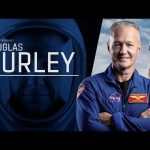
NASA astronaut Doug Hurley was the pilot on STS‐127 and STS‐135. Hurley holds a Bachelor of Science in Civil Engineering from Tulane University. Before joining NASA, he was a fighter pilot and test pilot in the U.S. Marine Corps. Hurley is currently serving as Spacecraft Commander on the first crewed flight of the SpaceX Crew Dragon, the Demo-2 mission, which launched May 27, 2020. The SpaceX Crew Dragon, along with Boeing’s CST-100 Starliner, will provide roundtrip crew transportation services to the International Space Station and return the ability to launch humans into space from United States soil as part of NASA’s Commercial Crew Program. After docking with the International Space Station on the second day of the mission, he also joined Expedition 63 as a flight engineer.
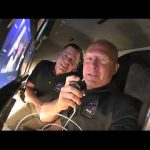
In this video, NASA astronauts Robert Behnken and Douglas Hurley take viewers on a tour of the SpaceX Crew Dragon spacecraft that will take them on a 19-hour-journey to their new home in orbit.
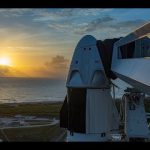
The SpaceX Falcon 9 rocket and Crew Dragon spacecraft successfully launched from Kennedy Space Center’s historic Launch Pad 39A at 3:22 p.m. EDT on May 30 with the astronauts aboard for a mission to the orbiting laboratory. Crew Dragon will perform a series of phasing maneuvers to gradually approach and autonomously dock with the International Space Station on Sunday, May 31, at approximately 10:29 a.m. EDT.
One day prior to NASA’s mission with SpaceX to launch American astronauts to the International Space Station aboard the Crew Dragon spacecraft, officials will talk about the mission live from NASA’s Kennedy Space Center in Florida.
NASA Administrator Jim Bridenstine, Kennedy Space Center Director Bob Cabana, and astronauts Kjell Lindgren and Nicole Mann will be on hand to talk about the upcoming mission to fly astronauts Douglas Hurley and Robert Behnken to the orbiting laboratory.
Teams are targeting 4:33 p.m. EDT Wednesday, May 27, for the launch of the mission, which will be the first time a commercially built and operated American rocket and spacecraft will carry humans to the space station.
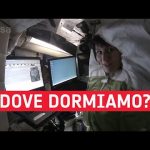
Unitevi all’astronauta ESA Samantha Cristoforetti per una visita guidata agli alloggi dell’equipaggio della Stazione Spaziale Internazionale – la camera da letto.
Dopo una giornata di lavoro ad eseguire esperimenti e a mantenere attivo il centro di ricerca in microgravità, gli astronauti possono ritirarsi nel proprio alloggio privato, che non è più grande di un un camerino. In questo piccolo spazio possono riporre oggetti personali, utilizzare un laptop per navigare in Internet e addormentarsi fluttuando nel proprio sacco a pelo.
We are Europe’s gateway to space. Our mission is to shape the development of Europe’s space capability and ensure that investment in space continues to deliver benefits to the citizens of Europe and the world. Check out http://www.esa.int/ESA to get up to speed on everything space related.
NASA astronaut and U.S. Navy SEAL Chris Cassidy sends a message from the International Space Station, thanking all on the front lines facing COVID-19, our invisible enemy. From doctors and nurses in our hospitals, law enforcement and firefighters who protect us, warehouse personnel and grocery store clerks who keep the shelves stocked and the economy going – you are an inspiration to all and we sincerely thank you.
Take a break with ESA astronauts Alexander Gerst, Samantha Cristoforetti, Luca Parmitano and Thomas Pesquet as they discuss living and working in space. In this video, our astronauts talk about their experiences of landing in a Russian Soyuz spacecraft upon returning from the International Space Station.
During a shared coffee break, Luca compares his first landing to his most recent landing – the second of which he found much softer than the first. Thomas finds humour in his experience of landing horizontally, while Alex describes a particularly high gravitational load on his return to Earth.
This clip is part of a series of four filmed in February 2020, following Luca’s return from the ISS mission on 6 February. It was filmed in the crew quarters of the German Aerospace Center DLR’s :envihab facility next to ESA’s European Astronaut Centre in Cologne, Germany.
For more about Luca’s Beyond mission and other ESA astronaut-related content, visit the Exploration blog: https://blogs.esa.int/exploration/
★ Subscribe: http://bit.ly/ESAsubscribe and click twice on the bell button to receive our notifications.
We are Europe’s gateway to space. Our mission is to shape the development of Europe’s space capability and ensure that investment in space continues to deliver benefits to the citizens of Europe and the world. Check out http://www.esa.int/ESA to get up to speed on everything space related.