Orbiting Earth once every 90 minutes, the International Space Station soars into 16 sunrises and sunsets every single day. Many of these sunrises occur while the crew is working or sleeping, but ESA astronaut Alexander Gerst captured this stunning timelapse of a sunrise to share with us here on Earth.
These photos were taken by Alexander at an interval of two per second and the video has been edited at 25 frames per second.
Music: First Survivors 4 by Los Angeles-based British composer, Luke Richards. Sourced from Audio Network Limited.
On 20 July 2018 around 21:50 local time, ESA astronaut Alexander Gerst welcomed the legendary electronic band Kraftwerk and 7500 visitors to the Jazz Open Festival on Stuttgart’s Schlossplatz – live from the International Space Station, where he will live and work until mid-December 2018. During the call with space, Kraftwerk founding member Ralf Hütter and Alexander played a special duet version of the track Spacelab, for which Alexander had a tablet computer configured with virtual synthesizers on board. With thanks to Kraftwerk for sharing this video footage.
————————————————————————————————————–
So begrüßte ESA-Astronaut Alexander Gerst am 20. Juli 2018 um 21:50 Uhr Ortszeit die legendären Elektro-Pioniere Kraftwerk sowie 7500 Besucherinnen und Besucher des Jazz Open-Festivals auf dem Stuttgarter Schlossplatz – und zwar live von der Internationalen Raumstation ISS, auf der er noch bis Mitte Dezember 2018 lebt und arbeitet.
Kraftwerk-Gründungsmitglied Ralf Hütter und Alexander Gerst spielten eine spezielle Version des Tracks Spacelab im Duett an, für das Gerst eigens einen mit virtuellen Synthesizern konfigurierten Tablet-Computer an Bord hatte.
Our alien friend Paxi, ESA Education’s mascot, went to visit American astronaut Mark Vande Hei on board the International Space Station. Vande Hei tells Paxi about how astronauts exercise in weightlessness, an important aspect of living on the ISS.
This unique video shows a full launch of the Soyuz MS-09: from liftoff to orbit.
Watch the launch from inside the crew capsule with first-ever shots from outside the spacecraft recorded by cameras fixed to the exterior of the Soyuz.
The intense launch lasts less than ten minutes whereby the Soyuz spacecraft is propelled 1640 km and gains 210 km altitude. Every second for nine minutes, the spacecraft accelerates 50 km/h on average as the rocket’s boosters burn their fuel and are discarded.
See the astronaut’s reactions and what the spacecraft looks like as the main steps are carried out to get into orbit:
-00:12 Launch command issued
-00:10 Engine turbopumps at flight speed
-00:05 Engines at maximum thrust
00:00 Launch
+1:54 Separation of emergency rescue system
+1:57 First stage separation
+2:38 Fairing separation
+4:48 Second stage separation
+4:58 Tail adapter separation
+8:45 Third stage engine cut off having arrived in orbit
+8:49 Soyuz separation, deploy solar arrays and antennae
The astronauts, from left to right, are NASA astronaut Serena Auñón-Chancellor, Roscosmos commander Sergei Prokopyev and ESA astronaut and flight engineer Alexander Gerst launched in the Soyuz MS-09 spacecraft from the Baikonur cosmodrome in Kazakhstan to the International Space Station on 6 June 2018. ESA astronaut Matthias Maurer and ESA television host Richard Hollingham provide commentary taken from the live event.
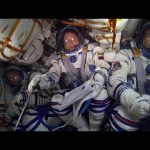
Hunched in their Sokol flight suits that offer protection in case of fire or depressurisation, the trio stay in the crew capsule of the Soyuz – the only module that is also designed to survive a return to Earth. The bags above their heads contain supplies for the International Space Station as every bit of space is used.
During a Soyuz launch astronauts typically experience forces of up to 4g – having to work while being pressed into their seats with a force that is four times more than the gravity felt on Earth. The Soyuz commander uses a stick to press buttons as they are too far away from the control panel.
The fluffy toys above the astronauts’ heads are mascots and good luck charms but also serve as a simple but effective test to see when the spacecraft is in orbit: when they start to float the spacecraft is weightless and orbiting Earth. Above Sergei is the mascot for the 2018 FIFA soccer World Cup held in Russia. Alexander took German children television icon “Die Maus” with him.
The launch went as planned as the 50-m tall Soyuz rocket propelled the astronauts to their cruising speed of around 28 800 km/h.
For this launch the astronauts took 34 orbits of Earth over two days to arrive at their destination spending their time in the cramped orbital module of the Soyuz that is no larger than a car. With limited communications and living space the astronauts had time to adapt to weightlessness and reflect on their mission ahead. They aligned their spacecraft with the International Space Station and approached the orbital outpost for docking on 8 June 2018. The files for this video were downloaded by the astronauts after arriving at the Space Station.
Alexander is a returning visitor to the International Space Station, the first of ESA’s 2009 class of astronauts to be sent into space for a second time. During the second part of his mission Alexander will take over as commander of the International Space Station, only the second time an ESA astronaut will take on this role so far.
Astronauts on the International Space Station get food that’s chosen for nutritional value and specially prepared and packaged to be accessible on orbit. Could the same food feed the needs of people stuck on planet Earth? We conducted an experiment to find out how well two regular people could get by eating only astronaut food for a full week—a week that included a holiday weekend feast, just to up the difficulty factor. Could they resist the lure of their favorite foods? Take a look at how they fared…
After orbiting Earth 34 times to catch up to the International Space Station, the car-sized spacecraft carrying ESA astronaut Alexander Gerst, NASA astronaut Serena Auñón-Chancellor and Roscosmos commander Sergei Prokopyev, arrived at the Station two days after launch.
The German astronaut is a returning visitor to the International Space Station, the first of ESA’s 2009 class of astronauts to be sent into space for a second time. During the second part of his mission Alexander will take over as commander of the International Space Station, only the second time an ESA astronaut will take on this role so far.
The mission is called Horizons as a symbol for the unknown and what lies beyond – reflecting on ESA’s strategy to extend human and robotic exploration beyond Earth orbit. While in space, Alexander will work on over 50 European experiments, including testing ways of operating and working with robots to develop techniques required for further human and robotic exploration of our Solar System.
At 11:12 GMT (13:12 CEST), 6 June 2018, ESA astronaut Alexander Gerst was launched into space alongside NASA astronaut Serena Auñón-Chancellor and Roscosmos commander Sergei Prokopyev in the Soyuz MS-09 spacecraft from Baikonur cosmodrome in Kazakhstan.
Our alien friend Paxi, ESA Education’s mascot, went to visit American astronaut Mark Vande Hei on board the International Space Station. Vande Hei shows Paxi the views outside of the Cupola, the biggest window on Earth in the International Space Station.
Our astronauts doing work outside the space station, an agencywide town hall with our new administrator, and old data provide new insight about Jupiter’s moon Europa – a few of the stories to tell you about – This Week at NASA!
This video is available for download from NASA’s Image and Video Library: https://images.nasa.gov/details-NHQ_2018_0518_Astronauts%20Working%20Outside%20the%20Space%20Station%20on%20This%20Week%20@NASA%20%E2%80%93%20May%2018,%202018.html
‘Horizons’ is the name of ESA astronaut Alexander Gerst’s second mission to the International Space Station.
The mission name evokes exploring our Universe, looking far beyond our planet and broadening our knowledge. Alexander would also like to make people realise that there is always a chance to go beyond their personal horizons.
Alexander will be launched on 6 June with US astronaut Serena Auñón-Chancellor and Russian cosmonaut Sergei Prokopyev from the Baikonur cosmodrome, Kazakhstan in the Soyuz MS-09 spacecraft.
Alexander will take over command of the International Space Station for the second half of his mission. Alexander Gerst is the 11th German citizen to fly into space.
The astronaut is now in the last stages of training for his challenging spaceflight. The science programme is packed with European research: more than 50 experiments will deliver benefits to people back on Earth and prepare for future space exploration.
Credits: ESA
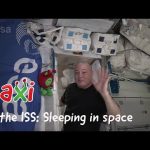
Our alien friend Paxi, ESA Education’s mascot, went to visit American astronaut Scott Tingle on board the International Space Station. Tingle tells Paxi about how astronauts sleep in weightlessness, an important aspect of living on the ISS.
Our astronauts at work outside the space station, preparing for launch of our next planet-hunting mission, and finding exploding stars – a few of the stories to tell you about, This Week at NASA!
This video is available for download from NASA’s Image and Video Library: https://images.nasa.gov/details-NHQ_2018_0330_Astronauts%20at%20Work%20Outside%20the%20Space%20Station%20on%20This%20Week%20@NASA%20%E2%80%93%20March%2030,%202018.html
From ESA astronaut Luca Parmitano’s hometown in Catania, Italy, Luca talks about the science he ran on the International Space Station.
The European laboratory Columbus was launched in 2008 and offers scientists a permanent place in space to conduct research that is out of this world.
Luca’s first spaceflight was in 2013 with Russian cosmonaut Fyodor Yurchikhin and NASA astronaut Karen Nyberg. He conducted over 20 experiments during the Volare mission as flight engineer for Expeditions 36 and 37 and he was the first of ESA’s new generation of astronauts to fly into space.
Luca talks about space research, being a human guinea pig, dieting to avoid bone disease osteoporosis, human physiology, using ultrasound remotely to diagnose back problems, measuring eye pressure and how his body and mind reacted to living in weightlessness.
Luca is set for a second mission to the International Space Station in 2019.
NASA astronauts Peggy Whitson and Jack Fischer, who returned to Earth on Sept. 2 after spending months aboard the International Space Station, discussed their mission during a news conference on Sept. 11 at the agency’s Johnson Space Center.
Although Whitson and Fischer returned to Earth together, they arrived at the space station separately. Whitson launched from the Baikonur Cosmodrome in Kazakhstan on Nov. 17 and spent more than nine months in space. She now holds the U.S. record for cumulative time in space, with 665 days in orbit during three long-duration missions. Fischer launched to the space station on April 20 and spent 136 days in orbit on his first space mission, during which he took part in two spacewalks that total just under seven hours.
ESA astronaut Paolo Nespoli on the International Space Station sends a video greeting to everyone at the European Space Operations Centre, ESA’s mission control centre in Darmstadt, Germany, on the occasion of its 50th anniversary celebration. The 8th day of September is a special date in the centre’s history: it’s the day in 1967 when it was inaugurated to serve as ‘mission control’ for what later became the European Space Agency. Today, it hosted 5000 visitors in an open house that included tours of the mission control facilities, presentations by ESA experts on a wide range of topics and a stage programme produced in cooperation with Hessischer Rundfunk (HR) radio and the Darmstädter Echo newspaper. The sold-out event also included numerous educational, informational and fun activities for all ages presented by DLR SchoolLab, the Astronomy and Space Technology Club of Darmstadt (AAW), the German Research Centre for Artificial Intelligence (DFKI) and the Berlin-based ‘new-space’ company Part-Time Scientists. The video greeting from the Space Station was shown during the stage programme and displayed for the visitors on screens around the centre. Paolo Nespoli is on a five-month mission to the Station, dubbed the #VITAmission, between July and December this year. Vita’s extensive scientific programme includes experiments in biology, human physiology as well as space environment monitoring, materials science and technology demonstrations. Learn more and follow Paolo in social media via http://paolonespoli.esa.int/More information on ESOC and its 50th anniversary year via #ESOC50
Matthias Maurer, ESA’s newest astronaut, has been training with Tim Peake at the Johnson Space Centre in Houston, Texas. During practical and theory classes they’ve learned skills necessary to perform a spacewalk, also known as EVA, or Extra Vehicular Activity – much of which is already familiar to Tim, who worked outside the Station in January 2016. They also spent time in the Neutral Buoyancy Lab, a pool housing replica International Space Station modules which allows astronauts to experience near weightless conditions.
After receiving a record-breaking number of applications to join an exciting future of space exploration, NASA has selected its largest astronaut class since 2000. Rising to the top of more than 18,300 applicants, NASA chose 12 women and men as the agency’s new astronaut candidates. Vice President Mike Pence joined Acting NASA Administrator Robert Lightfoot, Johnson Space Center Director Ellen Ochoa, and Flight Operations Director Brian Kelly to welcome the new astronaut candidates during an event June 7 at the agency’s Johnson Space Center in Houston. The astronaut candidates will return to Johnson in August to begin two years of training. Then they could be assigned to any of a variety of missions: performing research on the International Space Station, launching from American soil on spacecraft built by commercial companies, and departing for deep space missions on NASA’s new Orion spacecraft and Space Launch System rocket.
Four ESA astronauts have recently been training at NASA’s Johnson Space Centre (JSC) in Houston, Texas. For ESA’s newest astronaut Matthias Maurer, it was a chance to inspect a mock-up of NASA’s future space vehicle Orion alongside Tim Peake and Luca Parmitano, both experienced astronauts. Tim and Matthias have undergone spacewalk training in the neutral buoyancy pool. Alexander Gerst is also at JSC, training for his 2018 long-duration mission to the ISS.
Highlights from ESA astronaut Thomas Pesquet’s return to Earth at the end of his six-month Proxima mission to the International Space Station on 2 June 2017.
After farewells and hatch closure, Thomas and his Expedition 50/51 crewmate and Soyuz commander Oleg Novitsky undocked from the International Space Station at 12:47 CEST (10:47 GMT). Just a few hours later their spacecraft reentered Earth’s atmosphere, landing in the Kazakh Steppe at 16:10 CEST (14:10 GMT). Thomas and Oleg were helped out of the Soyuz by a recovery crew and, after medical checks, they were flown to Karaganda airport where they received the traditional welcoming ceremony. Thomas then flew directly from Karaganda to Cologne, in Germany, home to the European Astronaut Centre, to start post-flight testing.
Thomas and Oleg spent 196 days in space. Thomas took part in more than 60 experiments during his Proxima mission. His experiments are helping to understand the human brain, ocean currents and radiation in space, how atoms behave and tested new spacecraft materials. Other highlights included his two spacewalks to improve and maintain the Space Station.
On 28 May 2014, ESA astronaut Alexander Gerst and NASA astronaut Reid Wiseman under the command of Russian cosmonaut Maxim Suraev rocketed into space in a Soyuz spacecraft. This was their voyage.
For Alexander and Reid it was the first time they saw Earth from space.
Strapped atop 274 tonnes of rocket propellants delivering 26 million horsepower, it took only six hours to reach their destination, International Space Station.
Alexander worked as a geophysicist and volcanologist before he was selected as an ESA astronaut in 2009. His Blue Dot mission included an extensive scientific programme of experiments in physical science, biology, and human physiology as well as radiation research and technology demonstrations. All experiments make use of the out-of-this-world laboratory to improve life on Earth or prepare for further human exploration of our Solar System.
ESA astronaut Thomas Pesquet takes us on a six-minute tour of the International Space Station, recorded 23 March 2017 during his Proxima mission.
During his Proxima mission, Thomas will perform around 50 scientific experiments for ESA and France’s space agency CNES as well as take part in many research activities for the other Station partners.
The mission is part of ESA’s vision to use Earth-orbiting spacecraft as a place to live and work for the benefit of European society while using the experience to prepare for future voyages of exploration further into the Solar System.
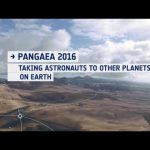
ESA is now training astronauts in identifying planetary geological features for future missions to the Moon, Mars and asteroids. This Pangaea course – named after the ancient supercontinent – will help astronauts to find interesting rock samples as well as to assess the most likely places to find traces of life on other planets.
This video was made during the second part of the Pangaea course held in Lanzarote, one of the Spanish Canary Islands in 2016 with ESA astronauts Luca Parmitano, Pedro Duque and Matthias Maurer and features interviews with the instructors and astronauts.
The students were tasked with interpreting geological features to understand the history of how the island formed. The goal is to help astronauts choose the best places to explore and collect rock samples.
This session put into practice a week’s training in Bressanone, Italy, where they learned about Earth and planetary geological processes as well as how to recognise rocks and meteorites.
The trio went on progressively difficult day trips, ending with a free exploration of the countryside searching for interesting samples while keeping in contact via radio with scientists at ‘mission control’.
Lanzarote was chosen for this course because of its geological similarity with Mars, such as a volcanic origin, mild sedimentary processes owing to a dry climate, hardly any vegetation and a well-preserved landscape.
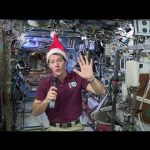
ESA astronaut Thomas Pesquet shares his Christmas plans and wishes on the International Space Station.
Flying 400 km above Earth, astronauts on the International Space Station have a unique experience and vision of our planet that they share in this video. Thomas recounts his memories growing up in Normany, France, and explains what Christmas means to him.
His end-of-year meal was prepared by French chefs – canned of course, there is no way to cook food on the Space Station and includes ox-tongue from his home-region prepared by Thierry Marx, chicken-supreme and for desert, apple gingerbread.
ESA astronaut Thomas Pesquet shares his Christmas plans and wishes on the International Space Station with Expedition 50 crewmates Shane Kimbrough and Peggy Whitson.
Flying 400 km above Earth, astronauts on the International Space Station have a unique experience and vision of our planet that they share in this video. Thomas recounts his memories growing up in Normany, France, and explains what Christmas means to him.
His end-of-year meal was prepared by French chefs – canned of course, there is no way to cook food on the Space Station and includes ox-tongue from his home-region prepared by Thierry Marx, chicken-supreme and for desert, apple gingerbread.
ESA astronaut Thomas Pesquet gives a guided tour of the International Space Station’s crew quarters – the bedrooms and only private areas for the six astronauts in the outpost.
After a day’s work running experiments and maintaining the weightless research centre astronauts can retreat to their private quarters that is no larger than a changing room. In this small space they can store personal items, use a laptop for internet and float to sleep in their sleeping bag.
Thomas Pesquet from France will shortly become the last member of ESA’s 2009 astronaut class to fly to the International Space Station.
He is scheduled to fly next November for a six-month stay in orbit, during which time he’ll carry out maintenance activities and a packed schedule of experiments.
He has been training at NASA’s Johnson Space Centre in Houston, Texas, alongside veteran ESA astronaut Paolo Nespoli from Italy, who will be going to the ISS for the third time after Thomas’s return to Earth.
This video shows new images of Thomas and Paolo training at Johnson Space Center in Houston, USA.
This interview with ESA astronaut Tim Peake was recorded in Cologne, Germany, one day after his return from a six-month stay on the International Space Station.
Tim Peake, NASA astronaut Tim Kopra and commander Yuri Malenchenko landed in the steppe of Kazakhstan on Saturday, 18 June in their Soyuz TMA-19M spacecraft at 09:15 GMT. The trio spent 186 days on the International Space Station.
The landing brings Tim Peake’s Principia mission to an end but the research continues. Tim is the eighth ESA astronaut to complete a long-duration mission in space. He was the third after Alexander Gerst and Andreas Mogensen to fly directly to ESA’s astronaut home base in Cologne, Germany, for medical checks and for researchers to collect more data on how Tim’s body and mind have adapted to living in space.
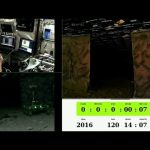
On 29 April 2016, ESA astronaut Tim Peake on the International Space Station took control of a rover, nicknamed ‘Bridget’, in the UK and over two hours drove it into a simulated cave and found and identified targets despite the dark and limited feedback information.
Before and after Tim came online from the orbiting Station, control of the rover was passed several times between engineers at the Airbus D&S ‘Mars Yard’ in Stevenage, UK, Belgium’s ISS User Support Centre in Brussels and ESA’s ESOC operations centre in Darmstadt, Germany. This complex real-time choreography was possible thanks to the ‘Internet in space’ – a network that tolerates disruptions – put in place by teams at ESOC. This network enables remote control of rovers or other devices in the difficult environment of space, with its long distances and frequent connection blackouts inevitable with orbital motion.
During the experiment, a representative mission scenario was set up in which the rover was commanded to go from a lit environment into a challenging dark location (simulating a cave or a shaded crater) and identified a number of science targets. The Mars yard (30 x 13 m) was split into two areas, one lit and one in the dark. From one end of the yard, Bridget was commanded from ESOC until it reached the edge of the shaded area. Then at the edge of the ‘cave’, control was passed to astronaut Tim Peake, on board the Station, who controlled Bridget to drive across the yard, avoiding obstacles and identifying potential science targets, which were marked with a distinctive ultraviolet fluorescent marker. Once the targets were identified and mapped, Tim drove the rover out of the shaded area and handed control back to ESOC, who drove the rover back to its starting point.
This video is a compressed extract that includes highlights of the experiment and includes scenes of the network control centre at ESOC, the Mars Yard at Stevenage and Tim Peake on the ISS. On audio, the voices of astronaut Time Peake, Lionel Ferra, the Eurocom ‘capcom’ controller at ESA’s Astronaut Centre in Cologne, Germany, and Kim Nergaard, the ground segment manager at ESOC, can be heard periodically.
‘A Beautiful Planet’ stars Earth as seen from space by astronauts and cosmonauts aboard the orbiting laboratory. Shooting spanned multiple expeditions with NASA astronauts Kjell Lindgren, Terry Virts, and Barry “Butch” Wilmore as well as former NASA astronaut Scott Kelly volunteering as filmmakers during their time on station.
Aboard the International Space Station, Expedition 47 Commander Tim Kopra and Flight Engineer Jeff Williams of NASA discussed the pace of research on the orbital lab and recent cargo vehicle deliveries in an in-flight interview April 7 with NBC News’ website Today.com. Kopra is in the second half of a six-month mission on the station while Williams, who is in his third long duration flight on the complex, is nearing the completion of the first month of his half-year stay on the outpost.
On 15 January ESA astronaut Tim Peake and NASA astronaut Tim Kopra stepped outside of the International Space Station to replace a failed power regulator and install cabling.
The meticulously planned and executed sortie was stopped early after Tim Kopra reported a small amount of water building up in his helmet. The two Tims worked in close cooperation with each other to return to the Space Station, with NASA commander Scott Kelly and cosmonaut Sergei Volkov waiting inside to help them out of their suits.
They left the confines of the weightless research laboratory at 12:48 GMT after their five-hour preparations to don their spacesuits and purge their bodies of nitrogen to avoid decompression sickness.
Tim Kopra went first to the far end of the Station’s starboard truss, with Tim Peake following with the replacement Sequential Shunt Unit. Swapping the suitcase-sized box was a relatively simple task but one that needed to be done safely while the clock was ticking.
With their main task complete, the Tims separated for individual jobs for the remainder of their time outside but was told by Mission Control to return to the airlock earlier than planned.
The 4 hour 43 minute spacewalk was the first for a British astronaut. The spacewalk officially ended at 17:31 GMT when the Tims began the repressurisation of the Quest airlock.
ESA astronaut Tim Peake, NASA astronaut Tim Kopra and commander Yuri Malenchenko were launched into space 15 Decemeber 11:03 GMT from Baikonur cosmodrome, Kazakhstan.The launch marks the start of Tim Peake’s six-month Principia mission on the International Space Station running over 30 scientific experiments for ESA.Follow Tim Peake viatimpeake.esa.int and follow the whole mission on ESA’sPrincipia blog.
On Dec. 11 aboard the International Space Station, NASA’s Kjell Lindgren, Russian cosmonaut Oleg Kononenko and Kimiya Yui of the Japan Aerospace Exploration Agency, bid farewell to crew members remaining on the station — including Commander Scott Kelly, NASA’s one-year mission astronaut. The returning members of Expedition 45 then climbed aboard their Soyuz spacecraft for the trip back to Earth. They safely touched down hours later in Kazakhstan – closing out a 141-day stay in space. Also, Next space station crew prepares for launch, Supply mission arrives at space station, Quantum computing lab and more!
Aboard the International Space Station, the Expedition 45 crew – including new Commander Scott Kelly and Kjell Lindgren of NASA, said goodbye to Gennady Padalka of the Russian Federal Space Agency, Andreas Mogensen of ESA (European Space Agency) and Aidyn Aimbetov of the Kazakh Space Agency (Kazcosmos) as the trio climbed aboard their Soyuz spacecraft for the return trip to Earth. The Soyuz landed safely in Kazakhstan on Sept. 11 Eastern time, Sept. 12 in Kazakhstan — closing out a 168-day mission for Padalka and an 8-day stay on the station for Mogensen and Aimbetov. Also, First Orion crew module segments welded, SLS Launch Vehicle Stage Adapter, New Ceres imagery, New Horizons update, 9/11 tribute and National Preparedness Month!
Join ESA astronaut Samantha Cristoforetti for a guided tour of the International Space Station’s crew quarters – the bedroom.
After a day’s work running experiments and maintaining the weightless research centre astronauts can retreat to their private quarters that is no larger than a changing room. In this small space they can store personal items, use a laptop for internet and float to sleep in their sleeping bag.
This NASA documentary celebrates 50 years of extravehicular activity (EVA) or spacewalks that began with the first two EVAs conducted by Russian Alexey Leonov in March 1965 and American astronaut Edward White in June 1965 . The documentary features interviews with NASA Administrator and astronaut, Charles Bolden, NASA Deputy Administrator and spacesuit designer, Dava Newman, as well as other astronauts, engineers, technicians, managers and luminaries of spacewalk history. They share their personal stories and thoughts that cover the full EVA experience– from the early spacewalking experiences, to spacesuit manufacturing, to modern day spacewalks aboard the International Space Station as well as what the future holds for humans working on a tether in space. “Suit Up,” is narrated by actor and fan of space exploration Jon Cryer. Cryer recently traveled to Star City, NASA Headquarters and the Johnson Space Center to film an upcoming Travel Channel documentary series.
On April 24, 1990, NASA’s Hubble Space Telescope rode to space aboard space shuttle Discovery – on a mission to do just that – discover. The results over the past 25 years have been nothing short of remarkable.
The storied and historic journey into the cosmos that Hubble’s eyes have taken us on, has led to groundbreaking discoveries, captivated imaginations and given humans a better understanding of our place in the universe. NASA celebrated Hubble’s Silver anniversary with a variety of events including the unveiling of the official Hubble 25th anniversary image at the Newseum in Washington and a gala at the Smithsonian’s National Air and Space Museum, during which many of the astronauts, scientists, engineers, technicians, educators, and others who have contributed to Hubble’s success were honored. Also, NASA celebrates Earth Day, 3-D printed copper engine part and more!
Russian ISS commander, cosmonaut Maxim Suraev, NASA astronaut Reid Wiseman and ESA astronaut Alexander Gerst send a peace message from space. They remind us that the International Space Station serves as a shining example of how people can live and work together for the benefit of all humankind. It’s the hallmark of international cooperation – a milestone in human history.