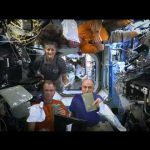
Aboard the International Space Station, NASA astronauts Nichole Ayers, Anne McClain, and Jonny Kim share a Fourth of July message and extend their best wishes to those back on Earth in a video recorded on June 16, 2025.
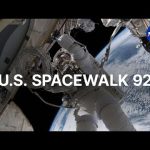
NASA astronauts Butch Wilmore and Suni Williams are taking a spacewalk outside the International Space Station on Thursday, Jan. 30, 2025, to maintain station hardware and collect samples of surface material for analysis from the Destiny laboratory and the Quest airlock. The spacewalk is expected to begin at approximately 8 a.m. EST (1300 UTC) and last for around six and a half hours.
Williams (wearing the suit with red stripes) and Wilmore (wearing the unmarked suit) arrived at the ISS last year and are both crew members of Expedition 72, which began on Sept. 23, 2024. This is Wilmore’s fifth spacewalk and the ninth for Williams.
NASA astronauts Nick Hague and Suni Williams are taking a spacewalk outside the International Space Station on Thursday, Jan. 16, 2025, to replace station hardware and repair the station’s NICER (Neutron star Interior Composition ExploreR) X-ray telescope. The spacewalk is expected to begin at approximately 8 a.m. EST (1300 UTC) and last for around six and a half hours.
Hague (wearing the suit with red stripes) and Williams (wearing the unmarked suit) arrived at the ISS last year and are both crew members of Expedition 72, which began on Sept. 23, 2024. This is Hague’s fourth spacewalk and the eighth for Williams.
On Wednesday, Jan. 8, at 1:25 p.m. EST (1825 UTC), NASA Administrator Bill Nelson and Deputy Administrator Pam Melroy will speak with NASA astronauts Nick Hague, Butch Wilmore, Suni Williams, and Don Pettit about their mission aboard the International Space Station.
The four astronauts are in the middle of a long-duration mission living and working aboard the microgravity laboratory. Hague, Wilmore, and Williams are scheduled to return to Earth in the spring of 2025 aboard SpaceX’s Crew-9 Dragon spacecraft, which is currently docked to the station.
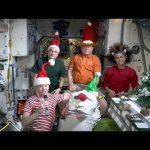
Aboard the International Space Station, NASA astronauts Suni Williams, Nick Hague, Butch Wilmore, and Don Pettit wish a merry Christmas and a happy holiday season to Earth in a message recorded on Dec. 23, 2024.
The four astronauts are in the middle of a long-duration mission living and working aboard the microgravity laboratory. The goal of their mission is to advance scientific knowledge and demonstrate new technologies for future human and robotic exploration missions as part of NASA’s Moon and Mars exploration approach, including lunar missions through NASA’s Artemis program.
Aboard the International Space Station, NASA Expedition 72 crew members Suni Williams, Nick Hague, Butch Wilmore, and Don Pettit wish a happy Thanksgiving to Earth. The crew shared their thoughts on the holiday, as well as their plans for their Thanksgiving meal.
The four astronauts are in the middle of a long-duration mission living and working aboard the microgravity laboratory. The goal of their mission is to advance scientific knowledge and demonstrate new technologies for future human and robotic exploration missions as part of NASA’s Moon and Mars exploration approach, including lunar missions through NASA’s Artemis program.
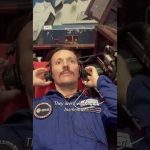
Human centrifuges simulate the gravitational forces, known as g-forces, experienced by astronauts during launch and return to Earth.
The g-forces in this centrifuge were directed from the chest to the back, reaching acceleration levels up to 6G (equivalent to 4.5 times Earth’s gravity).
The astronaut candidates reclined on their backs, reflecting the position astronauts assume in their launch vehicles.
Equipped with biomonitoring devices, they communicated with medical staff during the spin, describing the effects felt on their bodies.
NASA astronauts Mike Barratt, Matt Dominick, Tracy C. Dyson, Jeanette Epps, Butch Wilmore, and Suni Williams share a Fourth of July message and extend their best wishes to those back on Earth in a video recorded on June 28, 2024.
The crew members are currently living and working aboard the International Space Station. Their missions aim to advance scientific knowledge and test new technologies for future human and robotic missions to the Moon and Mars, including NASA’s Artemis lunar missions.
Astronaut training consists of three main phases: basic training, pre-assignment training and increment training.
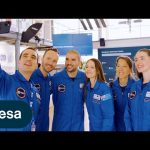
On the 22nd April, our astronaut candidates will have completed their basic training.
They will receive their certification at our European Astronaut Centre in Cologne, Germany, officially becoming fully fledged astronauts eligible for spaceflight.
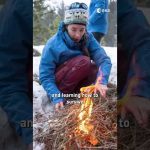
After their graduation, the astronauts will proceed to the next phases of pre-assignment and mission-specific training, where they’ll learn specific skills for their future missions to the International Space Station and beyond!
📸 ESA – European Space Agency 📹 ESA – European Space Agency
ESA’s newly graduated astronauts reach the end of one year of rigorous basic astronaut training. Discover the journey of Sophie Adenot, Rosemary Coogan, Pablo Álvarez Fernández, Raphaël Liégeois, Marco Sieber, and Australian Space Agency astronaut candidate Katherine Bennell-Pegg. Selected in November 2022, the group began their training in April 2023.
Basic astronaut training provides the candidates with an overall familiarisation and training in various areas, such as spacecraft systems, spacewalks, flight engineering, robotics and life support systems as well as survival and medical training. They received astronaut certification at ESA’s European Astronaut Centre on 22 April 2024.
Following certification, the new astronauts will move on to the next phases of pre-assignment and mission-specific training – paving the way for future missions to the International Space Station and beyond.
Credits: Video: ESA – European Space Agency ISS and EVA footage: ESA/NASA
Music: Scorekeepers
★ Subscribe: http://bit.ly/ESAsubscribe and click twice on the bell button to receive our notifications.
We are Europe’s gateway to space. Our mission is to shape the development of Europe’s space capability and ensure that investment in space continues to deliver benefits to the citizens of Europe and the world. Check out https://www.esa.int/ to get up to speed on everything space related.
Live from the International Space Station, NASA astronauts Jeanette Epps and Loral O’Hara are joined by NASA experts live at the South by Southwest conference in Austin, Texas. The panel of explorers in orbit and on Earth talk about how you can get involved with space station research and technology.
Find out how to fly a scientific experiment, move your business forward, or find inspiration from the explorers living and working in space, as well as how to spot the station when it flies over your part of the globe. Whether you’re an entrepreneur, a professional researcher, or just plain curious, this session is for you.
All astronauts go through a quarantine period before flying to space.
This period of isolation keeps them away from any germs or viruses that might make them sick. Quarantine is also important to minimise the risk of bringing an infectious disease with them to space.
Marcus Wandt entered quarantine two weeks ahead of his launch in Florida, USA, just a few kilometres away from the rocket that took him to the ISS as part of Axiom Mission 3.
Quarantine for astronauts does not mean a holiday – it is a busy period. Marcus spent around twelve hours a day preparing for the mission ahead. His schedule included physical exercise, refreshers of flight operations, the review of science and outreach activities, and even virtual reality simulations of the job awaiting him on the Space Station.
ESA astronaut Andreas Mogensen explains how two experiments involving virtual reality makes on International Space Station. The first is Virtual Assistance Mental Balance (VAMB) where Andreas gets to enjoy a calm setting in nature that helps him relax. The second one is VR for Exercise, where he cycles on the Space Station’s exercise bike and through different bike routes in Denmark on the VR headset, which has quickly become a favourite for Andreas.
Timestaps of the video: 00:00 – 00:09 Intro 00:10 – 02:13 First experiment 02:14 – 04:48 Second experiment 04:49 – 05:09 Outro
Credits: ESA/NASA
★ Subscribe: http://bit.ly/ESAsubscribe and click twice on the bell button to receive our notifications.
We are Europe’s gateway to space. Our mission is to shape the development of Europe’s space capability and ensure that investment in space continues to deliver benefits to the citizens of Europe and the world. Check out https://www.esa.int/ to get up to speed on everything space related.
NASA astronauts Jasmin Moghbeli and Loral O’Hara, currently aboard the International Space Station, talk about the similarities between training for space travel and training for the Big Game. Spoiler: It’s all about teamwork.
The crew aboard the orbiting laboratory are studying a variety of microgravity experiments that benefit people on Earth, including research in human heart health, cancer therapies, space manufacturing techniques, and technology demonstrations.
Here’s more information about some of the research happening every day in low Earth orbit: https://go.nasa.gov/3SQdDDF
On 28 November 1983, the first European-built Spacelab was launched from @NASAKennedy aboard Space Shuttle Columbia.
Also on board was Ulf Merbold, who became our first astronaut in space. The 10-day Spacelab-1 mission marked our entry into human spaceflight activities.
Under a cooperation agreement with @NASA, we were to build a modular research laboratory that would fit inside the Shuttle’s cargo bay.
In 17 years, European Spacelab equipment flew on 36 missions. The two Spacelab modules eventually made 16 flights with five different Shuttle Orbiters.
Many of Spacelab’s features live on in space hardware that is flying today. Europe’s Columbus laboratory on the Station evolved from Spacelab.
★ Subscribe: http://bit.ly/ESAsubscribe and click twice on the bell button to receive our notifications.
We are Europe’s gateway to space. Our mission is to shape the development of Europe’s space capability and ensure that investment in space continues to deliver benefits to the citizens of Europe and the world. Check out https://www.esa.int/ to get up to speed on everything space related.
Some Artemis II astronauts check out some flight hardware, a mission that will map millions of galaxies, and studying disturbances in the atmosphere … a few of the stories to tell you about – This Week at NASA!
Link to download this video: https://images.nasa.gov/details/Artemis%20II%20Astronauts%20Check%20Out%20Some%20Flight%20Hardware%20on%20This%20Week%20@NASA%20%E2%80%93%20November%2024,%202023
Video Producer: Andre Valentine Video Editor: Andre Valentine Narrator: Emanuel Cooper Music: Universal Production Music Credit: NASA
Train today, perform tomorrow. On September 20, 2023 the Artemis II astronauts practiced some of the pre-launch procedures they’ll perfect before their slated 2024 launch to the Moon. NASA Astronauts Reid Wiseman, Victor Glover, Christina Koch along with Canadian Space Agency astronaut Jeremy Hansen awoke at their crew quarters at NASA’s Kennedy Space Center and put on test versions of the Orion Crew Survival System spacesuits they will wear on launch day. They then departed to Launch Pad 39B in NASA’s new crew transportation fleet. Upon arrival at the pad, the crew headed onto the mobile launcher and proceeded up the tower to the white room inside the crew access arm. There was no Orion spacecraft or Space Launch System rocket on the pad today, but on launch day this is where the crew will take their final Earth-bound steps prior to their journey around the Moon. Credit: NASA
Space exploration presents unique health challenges for astronauts due to lack of gravity, isolation, and radiation exposure. ESA’s SciSpacE activities aim to comprehend these effects and their implications for human well-being during extended missions.
ESA collaborates with researchers to conduct experiments in microgravity and analogue environments, shedding light on the consequences of space stressors. One critical concern is muscle and bone atrophy. Despite daily exercise routines, astronauts face deterioration. ESA is investigating electrical stimulation as a potential countermeasure, with tests planned on board the International Space Station.
The “Muscle Stimulation” experiment is a centrepiece of this research. By applying controlled electric currents to leg muscles, the study aims to enhance muscle mass, strength, and recovery. Complementary assessments, including MRI scans, microcirculation analysis, and blood samples, will provide a comprehensive understanding of the efficacy.
Addressing these challenges could yield benefits on Earth too. The insights gained could translate to better healthcare for diverse populations, from the elderly to clinical patients and athletes.
ESA’s dedication to advancing space exploration while safeguarding astronauts’ physical health underscores its commitment to a sustainable and thriving space programme. Through research and innovative solutions, humanity edges closer to conquering the challenges of extended spaceflight and improving life on our home planet.
Credits: ESA – European Space Agency
★ Subscribe: http://bit.ly/ESAsubscribe and click twice on the bell button to receive our notifications.
We are Europe’s gateway to space. Our mission is to shape the development of Europe’s space capability and ensure that investment in space continues to deliver benefits to the citizens of Europe and the world. Check out https://www.esa.int/ to get up to speed on everything space related.
Huginn, ESA astronaut Andreas Mogensen’s second mission to the International Space Station, is now under way. Together with Crew-7, the ESA astronaut was launched on the Crew Dragon spacecraft Endurance on 26 August 2023, at 08:27 BST (09:27 CEST).
Alongside him are NASA’s Jasmin Moghbeli, Satoshi Furukawa from JAXA, and Konstantin Borisov from Roscosmos. The crew will spend approximately six months on the Space Station, 420 km above Earth.
This isn’t Andreas’s first journey into space. In 2015, he participated in the 10-day ‘iriss’ mission. However, Huginn marks his first launch from NASA’s Kennedy Space Center in Florida, USA, and his first flight with a Crew Dragon.
Watch the replay of pivotal moments such as the crew’s arrival at the Kennedy Space Center on 20 August, liftoff, as well as Andreas piloting Crew Dragon on its 11th crewed flight.
The journey also included a special passenger, who served as microgravity indicators. After approximately 30 hours, the Crew Dragon approached and docked with the Space Station, where Andreas and his colleagues were greeted by the resident astronauts.
We are Europe’s gateway to space. Our mission is to shape the development of Europe’s space capability and ensure that investment in space continues to deliver benefits to the citizens of Europe and the world. Check out https://www.esa.int/ to get up to speed on everything space related.
Join ESA astronaut Samantha Cristoforetti for a guided tour of the International Space Station’s crew quarters – the bedroom.
After a day’s work running experiments and maintaining the weightless research centre astronauts can retreat to their private quarters that is no larger than a changing room. In this small space they can store personal items, use a laptop for internet and float to sleep in their sleeping bag.
During Artemis I the European Service Module (ESM) surpassed expectations. Now, as we set our sights on Artemis II, the European Service Module is ready to once again serve as Orion’s primary power and propulsion component and keep the spacecraft at the right temperature and on course. And this time, with real astronauts on board.
ESM-2 stands as a testament to ESA’s contributions to NASA’s Orion spacecraft and the Artemis programme, ensuring the crew will have the essentials – from electricity to temperature control – in the vastness of space.
Next up, ESM-2 will be connected with the crew module to create the Artemis II vehicle. It will then be thoroughly tested before launch scheduled for next year.
ESA is committed to send astronauts beyond low-Earth orbit and ultimately to the surface of the Moon and beyond. ESM is a key contribution to this joint international endeavour.
This video features interviews with: – Philippe Berthe, ESA’s European Service Module Project Coordination manager – Kai Bergemann, Airbus deputy programme manager for Orion and the European Service Module – Jeremy Hansen, Canadian Space Agency Artemis II astronaut – Debbie Korth, NASA deputy programme manager for Orion
Credits: ESA – European Space Agency 📸 NASA/Kim Shiflett
★ Subscribe: http://bit.ly/ESAsubscribe and click twice on the bell button to receive our notifications.
We are Europe’s gateway to space. Our mission is to shape the development of Europe’s space capability and ensure that investment in space continues to deliver benefits to the citizens of Europe and the world. Check out https://www.esa.int/ to get up to speed on everything space related.
The Artemis II astronauts check out their ride to the Moon, practicing post-splashdown recovery operations for Artemis II, and the Webb Space Telescope checks out a record-breaking star … a few of the stories to tell you about – This Week at NASA!
Link to download this video: https://images.nasa.gov/details/The%20Artemis%20II%20Astronauts%20Check%20Out%20Their%20Ride%20to%20the%20Moon%20on%20This%20Week%20@NASA%20%E2%80%93%20August%2011,%202023
Video Producer: Andre Valentine Video Editor: Andre Valentine Narrator: Andre Valentine Music: Universal Production Music Credit: NASA
In the vast expanse of space, astronauts face a unique challenge – the need to share spacesuits during prolonged spacewalks. These suits, including their inner linings that come into direct contact with the astronauts’ skin, tend to accumulate bodily fluids over time. Drawing a rather relatable analogy, it’s akin to sharing underwear in space!
However, the practicality of washing these spacesuit interiors on lunar surfaces or beyond presents a significant hurdle. To counter this, a dedicated group of researchers is delving into innovative strategies to curb the growth of potentially harmful microbes within the inner layers of these suits.
Here’s where the solution gets intriguing: the world of microbiology offers a fascinating approach. Certain types of microbes possess ‘secondary metabolites’ that allow them to combat other microbes. These compounds are not only diverse in colour but also possess antibiotic properties. The ingenious idea involves integrating these microbial warriors into the very fabric of the spacesuit’s inner layer.
This pioneering research isn’t confined solely to the realm of spacesuits; its implications extend far beyond. The outcomes hold the potential to revolutionise the field of antimicrobial treatments and smart textile technologies right here on Earth. As we gear up for lunar expeditions and beyond, these microbial-fighting fabrics could play a pivotal role in ensuring astronauts’ health and well-being while opening new frontiers of innovation back home.
This is ESA WebTV, ESA’s digital channel, packed with original programmes on all things space related.
Stories about space and climate change, astronauts, rovers on faraway planets, space debris, new rockets, satellite operations, exploration of our universe, live launches – you name it, we’ve got it!
We are Europe’s gateway to space. Our mission is to shape the development of Europe’s space capability and ensure that investment in space continues to deliver benefits to the citizens of Europe and the world. Check out https://www.esa.int/ to get up to speed on everything space related.
NASA astronauts Steve Bowen and Warren “Woody” Hoburg are taking a spacewalk on Thursday, June 15, to add a new solar panel to the International Space Station.
Bowen and Hoburg are scheduled to install a second International Space Station Roll-Out Solar Array, or IROSA, on this spacewalk, after previously installing one on June 9. The new arrays will increase the power capacity of the orbiting laboratory.
The spacewalk is scheduled to begin at 8:55 a.m. EDT (1255 UTC) and last about six hours. This is Bowen’s tenth spacewalk and the second for Hoburg.
NASA astronauts Steve Bowen and Warren “Woody” Hoburg are taking a spacewalk on Friday, June 9, to add a new unrolling solar panel to the International Space Station.
Bowen and Hoburg are scheduled to install an International Space Station Roll-Out Solar Array, or IROSA, on today’s spacewalk, with a second one to be installed on June 15. The new arrays will increase the power capacity of the orbiting laboratory.
The spacewalk, known formally as U.S. EVA 87, is scheduled to begin at 9:15 a.m. EDT (1315 UTC) and last about six and a half hours. Bowen will wear a suit with red stripes and Hoburg will wear an unmarked suit. This is Bowen’s ninth spacewalk and the first for Hoburg.
This is ESA WebTV, ESA’s digital channel, packed with original programmes on all things space related.
Stories about space and climate change, astronauts, rovers on faraway planets, space debris, new rockets, satellite operations, exploration of our universe, live launches – you name it, we’ve got it!
We are Europe’s gateway to space. Our mission is to shape the development of Europe’s space capability and ensure that investment in space continues to deliver benefits to the citizens of Europe and the world. Check out https://www.esa.int/ to get up to speed on everything space related.
Watch as the four members of NASA’s SpaceX Crew-6 mission move their Dragon Endeavour spacecraft between docking ports on the International Space Station. Aboard are:
• NASA astronauts Steve Bowen and Woody Hoburg • UAE astronaut Sultan Alneyadi • Roscosmos cosmonaut Andrey Fedyaev
The crew will undock from the space-facing port of the station’s Harmony module at 7:10 a.m ET (1110 AM UTC), then dock at the station’s forward Harmony port at 7:53 a.m. ET (1153 UTC). Endeavour is relocating to make room for SpaceX’s 28th cargo resupply mission, currently scheduled to arrive in June.
Impressions from the new ESA astronaut candidates after their first month of training at the European Astronaut Training in Cologne, Germany.
TheESA astronaut candidates of the class of 2022 Sophie Adenot, Pablo Álvarez Fernández, Rosemary Coogan, Raphaël Liégeois and Marco Sieber started basic astronaut training on 3 April 2023 in preparation for future space missions. The five trainees were selectedfrom 22 500 applicants from across ESA Member States.
The candidates are trainedto the highest level of standards as specified by the International Space Station partners.Basic training includes learning about space exploration, technical and scientific disciplines, space systems and operations, as well as spacewalks and survival training. Once they receive theESA astronaut certification, they will move on to the next phases of pre-assignment and mission-specific training.
We are Europe’s gateway to space. Our mission is to shape the development of Europe’s space capability and ensure that investment in space continues to deliver benefits to the citizens of Europe and the world. Check out https://www.esa.int/ to get up to speed on everything space related.
The European Space Agency (ESA) is currently training five astronaut candidates for future missions to the International Space Station and beyond. Their training programme consists of three phases: The first phase is basic training, which covers medical exams, fitness assessments, and space programmes and systems. The second phase, the pre-assignment training, is advanced training in specific areas such as systems training, vehicle training, robotics and EVA-training. The third phase is mission-specific training, which is tailored to the tasks and experiments that astronauts will perform during their mission. ESA’s astronaut training programme also includes training for exploration of the lunar surface, as astronauts will need to apply their skills and knowledge to new challenges in future space missions beyond Earth orbit.
★ Subscribe: http://bit.ly/ESAsubscribe and click twice on the bell button to receive our notifications.
We are Europe’s gateway to space. Our mission is to shape the development of Europe’s space capability and ensure that investment in space continues to deliver benefits to the citizens of Europe and the world. Check out https://www.esa.int/ to get up to speed on everything space related.
NASA astronauts share their space station experience, our heavy-duty hauler crawls into the history books, and preparing for the return of some historic samples … a few of the stories to tell you about – This Week at NASA!
Video Producer: Andre Valentine Video Editor: Andre Valentine Music: Universal Production Music Credit: NASA
Astronauts with their sights on the Moon receive world-class geology training during the fifth edition of ESA’s Pangaea campaign.
ESA astronaut Alexander Gerst and NASA’s Stephanie Wilson joined the course to learn how to read a landscape, collect scientifically relevant rocks and effectively communicate their geological observations. From choosing landing sites for a future Artemis mission, to designing science operations for a moonwalk, the course challenges space explorers to become field scientists.
The astronauts gather a wealth of geological knowledge and learn how to be the eyes and ears of scientists on the ground through a balanced mix of theory and field trips across Europe. A crew of leading European planetary scientists and engineers make sure the trainees work in tandem using the best geology observation techniques.
The course began in September 2022 in the Italian Dolomites with lessons on martian geology and asteroids at the Bletterbach canyon.
During the second leg of the training, Alexander and Stephanie followed the footsteps of Apollo astronauts to study the Ries crater in Germany, one of the best-preserved impact craters on Earth, where American crews trained before their flight to the Moon.
The astronauts travelled to the Spanish Canary Island of Lanzarote for an intense week of training in November 2022, where they learned about the geological interactions between volcanic activity and water – two key factors in the search for life.
Follow the latest news about Pangaea training on Twitter, read all about it on the blog and watch their steps with our Flickr gallery.
We are Europe’s gateway to space. Our mission is to shape the development of Europe’s space capability and ensure that investment in space continues to deliver benefits to the citizens of Europe and the world. Check out https://www.esa.int/ to get up to speed on everything space related.
Astronauts Nicole Mann of NASA and Koichi Wakata of JAXA (Japan Aerospace Exploration Agency) are conducting a spacewalk on Thursday, Feb. 2, to continue preparations for the installation of new roll-out solar arrays, or iROSAs, outside the station later this summer. The new arrays will increase the orbiting laboratory’s power capacity.
The spacewalk is scheduled to begin at 8:15 a.m. EST (1315 UTC) and last about six and a half hours. This is the second spacewalk for both Mann and Wakata.
Astronauts Nicole Mann of NASA and Koichi Wakata of JAXA (Japan Aerospace Exploration Agency) will step outside the International Space Station for their first spacewalk to finish work preparing for solar array additions planned for this summer.
The spacewalk is scheduled to begin at 8:15 a.m. EST (1315 UTC) and will last up to seven hours.
At the start of 2023 the European Space Agency ESA is happily looking forward to another year filled with a host of thrilling new missions, cutting edge science and the continued effort to guarantee independent access to space for Europe. We will see the first images of the first Meteosat Third Generation satellite, the launch of the Jupiter Icy Moons Explorer, and of Euclid and another Sentinel-1 satellite launch. It will also be the year of Ariane 6 which will make its inaugural flight and the first Dane in space, Andreas Mogensen will return to the ISS as the new astronaut-candidates commence their training. Near the end of the year the second Space Summit will further cement ESA’s ambitions for Space in Europe.
★ Subscribe: http://bit.ly/ESAsubscribe and click twice on the bell button to receive our notifications.
We are Europe’s gateway to space. Our mission is to shape the development of Europe’s space capability and ensure that investment in space continues to deliver benefits to the citizens of Europe and the world. Check out https://www.esa.int/ to get up to speed on everything space related.
Just think about the amount of food and water that a crew of astronauts would need to go all the way to Mars, as well as all the mental, physiological, and, most importantly, radiation risk challenges. How about we avoid all of those issues by putting the astronauts to sleep?
The main problem is that humans don’t hibernate. Astronauts would have to take a drug to induce hibernation and enter sleeping pods, quiet environments with low lights, high humidity, kept at temperatures below 10°C.
Hibernation not only promises to benefit astronauts in space, but it may also offer new potential applications for patient care on Earth.
★ Subscribe: http://bit.ly/ESAsubscribe and click twice on the bell button to receive our notifications.
We are Europe’s gateway to space. Our mission is to shape the development of Europe’s space capability and ensure that investment in space continues to deliver benefits to the citizens of Europe and the world. Check out https://www.esa.int/ to get up to speed on everything space related.
Recently, Andreas Mogensen, now getting ready for his ‘Huginn’ mission to the ISS in 2023, stopped by ESA’s ESOC mission control centre in Darmstadt, Germany, to meet with some of the experts who keep our satellites flying.
Andreas usually works at NASA’s Johnson Space Center in Houston as an ISS ‘capcom’, and we don’t often see him in Europe. A few months back, while returning to Germany for some training at ESA’s Astronaut Centre in Cologne, we seized the opportunity to ask him if he’d like to stop over in Darmstadt for a look behind the scenes at mission control, and he immediately answered, ‘yes’!
Andreas’ studied aeronautical engineering with a focus on ‘guidance, navigation and control of spacecraft’ and we thought he’d be delighted to meet with the teams at mission control doing precisely that sort of work for our robotic missions.
We figured he’d also enjoy meeting colleagues from our Space Safety programme, especially the ones working on space debris and space weather, as these are crucial areas that influence the daily life of astronauts on the ISS.
Andreas met with Bruno Sousa and Julia Schwartz, who help keep Solar Orbiter healthy and on track on its mission to gather the closest-ever images of the Sun, observe the solar wind and our Star’s polar regions, helping unravel the mysteries of the solar cycle.
He also met with Stijn Lemmens, one of the analysts keeping tabs on the space debris situation in orbit, and Melanie Heil, a scientist helping ESA understand how space weather and our active Sun can affect missions in orbit and crucial infrastructure – like power grids – on ground.
We hope you enjoy this lively and informative day at mission control as much as Andreas and the teams at ESOC did!
★ Subscribe: http://bit.ly/ESAsubscribe and click twice on the bell button to receive our notifications.
We are Europe’s gateway to space. Our mission is to shape the development of Europe’s space capability and ensure that investment in space continues to deliver benefits to the citizens of Europe and the world. Check out https://www.esa.int/ to get up to speed on everything space related.
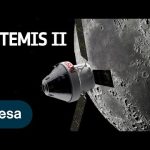
After the uncrewed Artemis I test flight, the Artemis II mission will have astronauts demonstrate what the Orion spacecraft – powered by a European Service Module – can do on its voyage around the Moon.
Two astronauts will fly on the second Artemis mission and take over controls to show how Orion handles at close-quarter flying. While in Earth orbit the spacecraft will detach from its second stage, fly away, turn around, approach the second stage and then fly away again – all using the European Service Module’s 33 thrusters.
Whereas in the first Artemis mission the second stage fired Orion into its lunar orbit, for the second mission it will be the European Service Module that will give the spacecraft its final push to its voyage around the Moon.
The crew will fly Orion to 8889 km beyond the Moon before completing a lunar flyby and returning to Earth. The mission will take a minimum of eight days and will collect valuable flight test data.
The European Service Module is one of ESA’s many contributions to NASA’s Orion spacecraft and the Artemis programme that will send astronauts to the Moon and beyond. It provides electricity, water, oxygen and nitrogen as well as keeping the spacecraft at the right temperature and on course.
The European Service Module has 33 thrusters, 11 km of electrical wiring, four propellant and two pressure tanks that all work together to supply propulsion and everything needed to keep astronauts alive far from Earth – there is no room for error.
★ Subscribe: http://bit.ly/ESAsubscribe and click twice on the bell button to receive our notifications.
We are Europe’s gateway to space. Our mission is to shape the development of Europe’s space capability and ensure that investment in space continues to deliver benefits to the citizens of Europe and the world. Check out https://www.esa.int/ to get up to speed on everything space related.
Get to know the ESA Astronaut Class of 2022 as they answer the following questions: – Why did you apply to become an astronaut? – Tell us about your background – How did you feel when you found out you would be part of ESA’s Astronaut Class of 2022? – What excites you most about human exploration, and how do you see yourself as part of this challenge? – What message do you have for young people today who are passionate about space and science?
00:00 – 00:02 – Intro 00:03 – 05:20 – Sophie Adenot from France 05:21 – 07:48 – Pablo Álvarez Fernández from Spain 07:49 – 11:33 – Meganne Christian from the United Kingdom 11:34 – 15:59 – Anthea Comellini from Italy 16:00 – 19:50 – Rosemary Coogan from the United Kingdom 19:51 – 23:45 – Sara García Alonso from Spain 23:46 – 27:10 – Raphaël Liégeois from Belgium 27:11 – 32:19 – John McFall from the United Kingdom 32:20 – 35:58 – Andrea Patassa from Italy 35:59 – 40:41 – Carmen Possnig from Austria 40:42 – 45:30 – Arnaud Prost from France 45:31 – 48:41 – Amelie Schoenenwald from Germany 48:42 – 54:05 – Marco Sieber from Switzerland 54:06 – 56:23 – Aleš Svoboda from Czech Republic 56:24 – 1:02:09 – Sławosz Uznański from Poland 1:02:10- 1:04:55 – Marcus Wandt from Sweden 1:04:56 – 1:08:47 – Nicola Winter from Germany
We are Europe’s gateway to space. Our mission is to shape the development of Europe’s space capability and ensure that investment in space continues to deliver benefits to the citizens of Europe and the world. Check out https://www.esa.int/ to get up to speed on everything space related.