On this episode of The Spangler Effect, Steve shares a few of his favorite science pranks to pull on April Fools Day! With a magnet, baby diaper, spray can and a Starbucks cup, you too can have your own fun on April 1st!
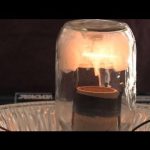
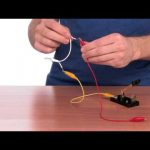
Read the full experiment at http://www.stevespanglerscience.com/content/experiment/build-a-light-bulb-circuit-science When you are conducting experiments and demonstrations using electricity, you’ll use the science of circuits. Amazing things are possible with circuits including alarms, radios, and lights. In the Build a Light Bulb experiment, you’ll use household items to construct a complete circuit that results in a homemade light bulb.
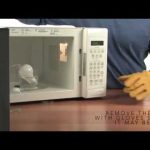
Read the full experiment at http://www.stevespanglerscience.com/experiment/microwave-lightbulb
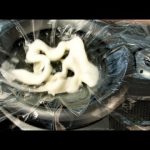
We love to see what microwaves do to common household items. We’ve shrunk potato chip bags and turned Ivory Soap into a fluffy soap souffle. What more could we want to do? We heard that it’s possible to actually make a lightbulb light-up if you do it right. And sure enough, we figured it out.
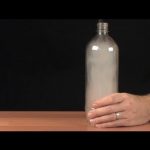
Learn more at http://www.stevespanglerscience.com/experiment/cloud-in-a-bottle-experiment Have you ever wondered how clouds form? Moist air rises in the atmosphere, cools, and water droplets form into clouds. Making your own cloud is a popular experiment in many science books, but it can be a little tricky. Sometimes the results are a little hard to see, but practice always makes perfect.
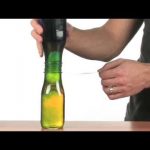
Learn more at http://www.stevespanglerscience.com/content/experiment/colorful-convection-currents
Convection is one of those words that we often hear used, but we may not completely understand its meaning. Weather forecasters show how convection currents are formed when warm and cold air masses meet in the atmosphere. Convection currents are responsible for warm water currents that occur in oceans. This activity demonstrates convection currents in a very colorful fashion.
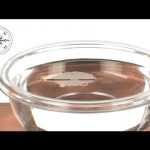
Learn more at http://www.stevespanglerscience.com/experiment/homemade-compass There is one tool that is sure to give you guidance if you get lost, a compass. But what could you do if you forgot to pack this useful tool in your survival kit? Easy! Float a needle on top of a standing pool of water. Well, there’s a bit more to creating a compass out of a needle and some water, but you can do it right at home with just a few tools.
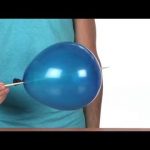
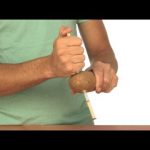
Learn more at http://www.stevespanglerscience.com/experiment/skewer-through-balloon Some things in this world just don’t mix – dogs and cats, oil and water, needles and balloons. Everyone knows that a balloon’s worst fear is a sharp object…even a sharpened, wooden cooking skewer. With a little scientific knowledge about polymers you’ll be able to perform a seemingly impossible task… pierce a balloon with a wooden skewer without popping it. Suddenly piercing takes on a whole new meaning!
Learn more at http://www.stevespanglerscience.com/experiment/erupting-peroxide-volcano Volcanoes have shaped history and science since the dawn of time. From the ultra-destructive Mount Vesuvius to the more recent Eyjafjallajokull volcano in Iceland (good luck pronouncing that one), volcanic eruptions can dramatically alter the world with their massive blasts. Perhaps that’s why, for decades, students have been awed by the reproduction of volcanic eruptions by their teachers using vinegar and baking soda. We get that and have come up with a way that you can replicate a volcanic blast without the stench of vinegar in your nostrils.
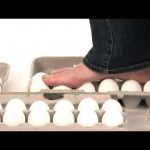
Learn more at http://www.stevespanglerscience.com/experiment/walking-on-eggshells
The phrase “walking on eggshells” is an idiom that is often used to describe a situation in which people must tread lightly around a sensitive topic for fear of offending someone or creating a volatile situation. Literally walking on eggshells would require exceptional caution, incredible skill, and a sense of self-control that would be nothing short of amazing. But what if eggs were really much stronger than most of us imagine? What if nature’s design of the incredible edible egg was so perfect that the thin, white outer coating of an egg was strong enough to withstand the weight of your body? Wake the kids! Phone the neighbors! It’s time for the Walking on Eggshells challenge.
Learn more at http://www.stevespanglerscience.com/experiment/how-to-make-a-newspaper-tree Newspapers are made from trees and trees grow… so it only makes sense that you should be able to grow a newspaper tree, right? What? You have doubts? Roll several sheets of newspaper into a tube, tear the tube in a few spots, and an eight foot tall tree suddenly appears!
Learn more at http://www.stevespanglerscience.com/content/experiment/magic-crystal-snowflake
Bringing real snowflakes inside individually is next to impossible. So, to work around this conundrum, we’ve come up with the Magic Crystal Snowflake. This special snowflake is just a beautiful and unique as a snowflake from the sky, but it won’t melt! The Magic Crystal Snowflake uses some fun hands-on chemistry and makes a perfect holiday experiment.
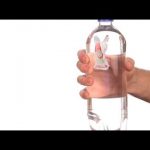
Cause a packet of ketchup to rise and fall on command in a bottle of water. People will think that you have the ability to move objects with your mind! Telekinesis? No, just cool science!
Steve Spangler is a celebrity teacher, science toy designer, speaker, author and an Emmy award-winning television personality. Spangler is probably best known for his Mentos and Diet Coke geyser experiment that went viral in. Spangler is the founder of www.SteveSpanglerScience.com, a Denver-based company specializing in the creation of science toys, classroom science demonstrations, teacher resources and home for Spangler’s popular science experiment archive and video collection. Spangler is a frequent guest on the Ellen DeGeneres Show and Denver 9 News where he takes classroom science experiments to the extreme. For teachers, parents or DIY Science ideas – check out other sources of learning:
Learn more at http://www.stevespanglerscience.com/lab/experiments/straw-through-a-potato/ Sometimes you have to stop and ask yourself, “Who comes up with this stuff?” No one ever uses a straw to eat a potato, but science nerds seem to like to find ways to poke straws through potatoes. There must be a deeper meaning… and there is!
This is a kid-safe version of the popular Elephant’s Toothpaste demonstration using common household materials. A child with a great adult helper can safely do this activity and the results are wonderful.
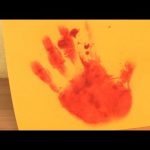
The term goldenrod is typically used to describe a color of paper – golden yellow. However, our goldenrod paper contains a special dye that turns bright red when exposed to solutions that are basic, like ammonia water or washing soda. We’ll show you how to use this special color-changing paper to develop a hidden message and make dripping, bleeding paper… complete with your own handprint marked in “blood.” It’s a great acid/base lesson for the Halloween season.
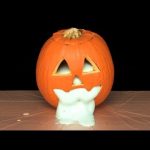
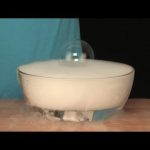
Exploration into the fascinating world of dry ice is never boring, and the same goes when you add in some bubbles! We’ve filled bubbles with dry ice smoke in our Boo Bubbles experiment, but did you know that bubbles will float on dry ice smoke like it was water? We’ll show you how to do it and, of course, teach you the amazing science behind this very cool trick.
For years, Steve has taught people how to shrink and grow heads without actually, you know, permanently changing the size of their head. In addition to being temporary, it’s also an extremely fun optical illusion. In mere moments, you’ll go from staring at a black and white spiral, to a state of shock with this stunning illusion.
Learn more at http://www.stevespanglerscience.com/experiments For years, Steve has taught people how to shrink and grow heads without actually, you know, permanently changing the size of their head. In addition to being temporary, it’s also an extremely fun optical illusion. In mere moments, you’ll go from staring at a black and white spiral, to a state of shock with this stunning illusion.
Learn more at http://www.stevespanglerscience.com/experiment/the-force-of-sound-sick-science If you’ve ever watched an action movie in a theater, you’ve seen and felt an onscreen explosion. Did you know that what you were feeling was actually waves of sound from the theater’s speaker system? We’ll show you how you can visualize the sound vibrations and explain why, even though you can’t always see it, you can feel sound.
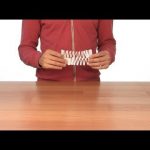
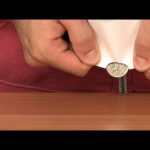
Learn more at http://www.stevespanglerscience.com/experiment/index-card-tricks-sick-science What if we told you that you can fit a quarter through a dime-sized hole in an index card? Would you believe it was possible? It is possible, and we can even show you how to fit your entire body through an index card. Don’t believe us? Try it for yourself!
Learn more at http://www.stevespanglerscience.com/experiment/index-card-tricks-sick-science What if we told you that you can fit a quarter through a dime-sized hole in an index card? Would you believe it was possible? It is possible, and we can even show you how to fit your entire body through an index card. Don’t believe us? Try it for yourself!
Learn more at http://www.stevespanglerscience.com/experiment/magic-rollback-can-sick-science In our long line of “magical” science, we introduce the Magic Rollback Can. The Magic Rollback Can appears to be a normal can of coffee or oats, but after you roll it along the ground a little ways and watch it come back, you’ll be wondering just how it works.
Magicians have made money appear from behind ears and out of nostrils for years. And you’ve seen Steve set a $100 bill on fire without harming Mr. Franklin. That’s all well and good, but we want to take your money… er… teach you a trick that uses science to make money “appear” as if it has disappeared.
Steve Spangler is a celebrity teacher, science toy designer, speaker, author and an Emmy award-winning television personality. Spangler is probably best known for his Mentos and Diet Coke geyser experiment that went viral in. Spangler is the founder of www.SteveSpanglerScience.com, a Denver-based company specializing in the creation of science toys, classroom science demonstrations, teacher resources and home for Spangler’s popular science experiment archive and video collection. Spangler is a frequent guest on the Ellen DeGeneres Show and Denver 9 News where he takes classroom science experiments to the extreme. For teachers, parents or DIY Science ideas – check out other sources of learning:
Learn more at http://www.stevespanglerscience.com/experiment/berry-ph-paper-sick-science No longer must you search for specialty litmus paper. Here at Steve Spangler Science, we’ve come up with a formula that will allow you to create your own acid and base detecting litmus paper using little more than a bit of fruit.
Check out http://www.stevespanglerscience.com/experiment/falling-ring-catch-sick-science to learn more about this experiment and to see other cool science experiments. Is it possible to catch a falling ring with a loop of string? Sure it is! It’s going to take a bit of experimentation and trial and error, but you’ll get the hang of it in no time! You’ll see how motion and force can sometimes create unexpected results.
Learn more at http://www.stevespanglerscience.com/experiment/buzzing-noise-maker-sick-science Are you the type that craves attention? Want to make a ton of noise? The Buzzing Noise Maker experiment is perfect for you! The greatest aspect of the Buzzing Noise Maker is that, while you’re attracting all that attention and making all that noise, you can explain it by saying, “Hey! Steve Spangler is teaching me about science.”
Check out the experiment at http://www.stevespanglerscience.com/experiment/cd-hovercraft-sick-science We used to think that building our own hovercraft was going to take a couple of trips to NASA. We quickly realized that it was a little iffy having jet engines and ultra-lightweight material anywhere near Steve. We had to develop our own design using everyday materials, and that’s exactly what we did. Using a CD, a balloon, and a few other household items you can create a working hovercraft, too!
Download the free templates at http://www.stevespanglerscience.com/diskspinners You might have heard the term, “Faster than the human eye.” But is there really something that can happen so fast that a normal human eye can’t register it? Believe it or not, it’s absolutely possible and the Spinning Disc Illusion is a great way to learn how easily your eyes can be beaten.
Learn more about Steve at https://www.stevespanglerscience.com/ Through the years, a lot has happened at Steve Spangler Science. We set a Guinness World Record, took 100 teachers on an Alaskan cruise, gave 700 people the experience of laying on a bed of nails, started a war with potato guns, and even had the police called on us… a few times! Here is a look at a few of the fun moments we’ve had!
Steve Spangler is a celebrity teacher, science toy designer, speaker, author and an Emmy award-winning television personality. Spangler is probably best known for his Mentos and Diet Coke geyser experiment that went viral in 2005 and prompted more than 1,000 related YouTube videos. Spangler is the founder of www.SteveSpanglerScience.com, a Denver-based company specializing in the creation of science toys, classroom science demonstrations, teacher resources and home for Spangler’s popular science experiment archive and video collection. Spangler is a frequent guest on the Ellen DeGeneres Show where he takes classroom science experiments to the extreme. Check out his pool filled with 2,500 boxes of cornstarch!
On the education side, Spangler started his career as a science teacher in the Cherry Creek School district for 12 years. Today, Steve travels extensively training teachers in ways to make learning more engaging and fun. His hands-on science boot camps and summer institutes for teachers inspire and teach teachers how to prepare a new generation for an ever-changing work force. Over the last 15 years, he has also made more than 500 television appearances as an authority on hands-on science and inquiry-based learning.
On the business side, Spangler is the founder and CEO of Steve Spangler Science, a Denver-based company specializing in the creation of educational toys and kits and hands-on science training services for teachers. The companys unique business strategies and viral creations have been featured in the Wall Street Journal, Inc. Magazine, Wired and TIME Magazine where online readers voted Steve Spangler #18 in the Top 100 Most Influential People of the Year for 2006 (what were they thinking?). You’ll find more than 140 Spangler created products available online at SteveSpanglerScience.com and distributed to toy stores and mass-market retailers worldwide.
Spangler joined NBC affiliate 9News in 2001 as the science education specialist. His weekly experiments and science segments are designed to teach viewers creative ways to make learning fun. His now famous Mentos Geyser experiment, turning 2-liter bottles of soda into erupting fountains, became an Internet sensation in September 2005 when thousands of people started posting their own Mentos explosions on YouTube.com.
As founder of SteveSpanglerScience.com, Spangler and his design team have developed more than 140 educational toys and science-related products featured by mass-market retailers like Target, Wal-Mart, Toys R’ Us, Discovery Channel Stores and over 1,400 independent specialty toy stores. His educational science catalog and on-line business offers more than a thousand science toys and unique learning resources. Recently, Spangler has been featured in the Wall Street Journal, Inc. Magazine, WIRED, the History Channel, Food Network and TIME Magazine where on-line readers voted Steve Spangler #18 in the Top 100 Most Influential People of the Year for 2006.
His recent appearances on the Ellen DeGeneres Show have taught viewers how to blow up their food, shock their friends, create mountains of foam, play on a bed of nails, vanish in a cloud of smoke and how to turn 2,500 boxes of cornstarch and a garden hose into a swimming pool of fun.
Is it possible to make a thermometer out of water? Absolutely! The best part about our Water Thermometer experiment is that you have all the materials you need in your own home. That’s right, you’ll be measuring temperature with this amazing homemade tool in no time.
Is there a way to see air changing? Sure, there are clouds and fog, but those are particles of water. Does anything happen to air when it gets cooled or heated? We’ve come up with a great way to see how air changes when it gets hotter and colder… and you can do it all with just a few things you probably already have in your house!
Have you ever tried writing in the dark? Even something as simple as your own name might turn out looking like you were writing in an earthquake. We knew there had to be a better way, and after giving Steve and his team a bit of time they came up with a beautiful and amazing solution – Light Writer. It’s a phenomenal trip into the world of optics, photography, and fun.
Steve Spangler along with his Demo Team and 9News Meteorologist Kathy Sabine, put on the 2nd annual Weather and Science Day at Coors Field in Colorado on May 17th, 2011. Thanks to Colle McVoy, Steve was able to borrow the worlds largest smoke ring launcher to fire 9′ smoke rings into the crowd. 10,000 people showed up for the pre-game event and using Boom Whackers, created the biggest drum circle ever seen… or heard!
Ever wonder how light switches really work? Using some christmas lights, a couple alligator clips, a battery, and a switch, you can build your own circuit at home.
When it comes to creating something out of nothing, Steve Spangler takes the cake. The Steve Spangler Science team recently challenged Steve to create a simple homopolar motor by using objects that he could find around his home. The trick to homopolar motors is the use of electromagnets and a lack of polarity change. It’s complicated, so we were sure that Steve would have trouble. Much to the surprise of everyone, Steve not only accomplished the (what we thought to be) impossible, but he did it twice. Steve was so proud that he wanted to give both of his designs to you. It’s a Sick Science 2-for-1 with the Electromagnetic Motor.
When it comes to creating something out of nothing, Steve Spangler takes the cake. The Steve Spangler Science team recently challenged Steve to create a simple homopolar motor by using objects that he could find around his home. The trick to homopolar motors is the use of electromagnets and a lack of polarity change. It’s complicated, so we were sure that Steve would have trouble. Much to the surprise of everyone, Steve not only accomplished the (what we thought to be) impossible, but he did it twice. Steve was so proud that he wanted to give both of his designs to you. It’s a Sick Science 2-for-1 with the Electromagnetic Motor.
What happens when you have a build-up of gas? Don’t answer that question! The gas in question is carbon dioxide and the explosion is nothing short of fun. Warning: It’s impossible to do this activity just once. It is addicting and habit-forming. Proceed at your own risk!
This experiment answers the age-old question, “Which came first, the rubber egg or the rubber chicken?” It’s easy to make a rubber egg if you understand the chemistry of removing the eggshell with vinegar. What you’re left with is a totally embarrassed naked egg and a cool piece of science.