ESA astronaut Matthias Maurer returned from his first mission to the International Space Station, known as ‘Cosmic Kiss’, on Friday 6 May 2022. Revisit some of the highlights of his first stay in orbit with us. During his mission, Matthias became the 600th person in space, conducted his first spacewalk, and supported over one hundred cutting-edge scientific experiments – the findings of which will improve life back here on Earth.
We are Europe’s gateway to space. Our mission is to shape the development of Europe’s space capability and ensure that investment in space continues to deliver benefits to the citizens of Europe and the world. Check out https://www.esa.int/ to get up to speed on everything space related.
The Crew Dragon capsule carrying ESA astronaut Matthias Maurer and @NASA astronauts Raja Chari, Thomas Marshburn and Kayla Barron home from the International Space Station splashed down off the coast of Florida, USA, on Friday 6 May 2022 at 05:43 BST/06:43 CEST.
Its return marks the end of Crew-3’s almost six-month stay in orbit and the end of Matthias’s first mission, known as Cosmic Kiss.
Crew-3 undocked from the International Space Station in Crew Dragon spacecraft Endurance at 06:20 BST/07:20 CEST Thursday 5 May.
When a Crew capsule splashes down, it is met by nearby ships with experts ready to bring it on board, open the hatch, and welcome the astronauts home. After initial medical checks, the crew is transported by helicopter to shore.
Now that his mission has come to an end, Matthias will return to ESA’s European Astronaut Centre in Cologne, Germany, where he will participate in post-flight debriefings, provide samples for scientific evaluation and readapt to Earth’s gravity with the support of ESA experts.
We are Europe’s gateway to space. Our mission is to shape the development of Europe’s space capability and ensure that investment in space continues to deliver benefits to the citizens of Europe and the world. Check out https://www.esa.int/ to get up to speed on everything space related.
Crew Dragon capsule Endurance, carrying ESA astronaut Matthias Maurer and @NASA astronauts Raja Chari, Thomas Marshburn and Kayla Barron, undocked from the International Space Station at 06:20 BST/07:20 CEST Thursday 5 May. The autonomous undocking marked the start of Crew-3’s return to Earth after almost six months in orbit.
Crew-3’s return will take approximately 23.5 hours. Their spacecraft will splash down off the coast of Florida, USA, where ships will be waiting to bring it aboard and welcome the astronauts home.
This return also marks the end of Matthias’s first space mission, Cosmic Kiss. During his time on Station, Matthias supported over 35 European and many more international experiments in microgravity. He also supported International Space Station operations and maintenance and performed a spacewalk with NASA astronaut Raja Chari on 23 March 2022.
After initial medical checks, Crew-3 crew members will be transported by helicopter to shore where a plane will be waiting to bring Matthias back to ESA’s European Astronaut Centre in Cologne, Germany, for his post-flight debriefings and rehabilitation.
We are Europe’s gateway to space. Our mission is to shape the development of Europe’s space capability and ensure that investment in space continues to deliver benefits to the citizens of Europe and the world. Check out https://www.esa.int/ to get up to speed on everything space related.
Get in line with ESA astronaut Matthias Maurer and his Expedition 66 crew mates to experience a reboost of the International Space Station from the inside. This video is sped up 8 times fast.
The International Space Station flies around Earth at around 400 km. It is reboosted periodically to maintain its orbit and overcome the effects of atmospheric drag created by molecules of the atmosphere, which causes the Station to lose about 100 m of altitude per day.
A Space Station reboost maneuver also optimizes phasing for future visiting vehicles arriving at the station. In March 2022 the ISS performed a reboost using Russia’s ISS Progress 79 cargo craft. By firing its engines for several minutes, the station was put at the proper altitude for a crew ship orbit rendezvous and landing operations.
During the manoeuvre, the astronauts inside the station keep flying at the same speed and direction. While it seems like the astronauts are moving inside the station, it is in fact the ISS that gets the boost and is moving around them.
We are Europe’s gateway to space. Our mission is to shape the development of Europe’s space capability and ensure that investment in space continues to deliver benefits to the citizens of Europe and the world. Check out https://www.esa.int/ to get up to speed on everything space related.
ESA astronaut Matthias Maurer gives a glimpse into his evening routine aboard the International Space Station during his Cosmic Kiss mission.
Matthias’s crew quarters, known as CASA (short for Crew Alternate Sleep Accommodation), is located within the European Columbus science laboratory module.
But before he floats into his sleeping bag in there for the night, Matthias takes a little detour to one of the three “bathrooms” currently on board the Space Station.
Separated from the work areas and installed in different modules of the USOS and Russian segments of the Station to allow them some privacy, the astronauts on board share these bathrooms to wash up, take a “shower” in space and brush their teeth.
We are Europe’s gateway to space. Our mission is to shape the development of Europe’s space capability and ensure that investment in space continues to deliver benefits to the citizens of Europe and the world. Check out https://www.esa.int/ to get up to speed on everything space related.
On 23 March 2022, ESA astronaut Matthias Maurer successfully performed his first extravehicular activity (EVA) alongside fellow @NASA astronaut Raja Chari. The spacewalk, dubbed “US EVA 80”, was carried out in support of assembly, refurbishment and maintenance work on the International Space Station.
In this video, Matthias Maurer answers questions and reports on his experiences, feelings and the challenges he faced during his almost seven-hour-long spacewalk.
00:00 – 01:56 What was it like to leave the ISS for the fist time? 01:57 – 04:07 Can you compare a spacewalk with underwater training? 04:08 – 05:37 What was your most difficult task? 05:38 – 08:17 There was a “problem” at the beginning. What happened? 08:18 – 10:21 Were you able to enjoy the view? 10:22 – 11:46 You flew over your homeland, Saarland, during the EVA. Were you able to see your home? 11:47 – 12:39 What surprised you the most and what did you not expect at all? 12:40 – 16:26 How did you feel afterwards and how did you sleep?
During his Cosmic Kiss mission, Matthias Maurer will live and work aboard the International Space Station for approximately six months, conducting and supporting more than 35 European and numerous other international experiments in orbit.
We are Europe’s gateway to space. Our mission is to shape the development of Europe’s space capability and ensure that investment in space continues to deliver benefits to the citizens of Europe and the world. Check out https://www.esa.int/ to get up to speed on everything space related.
ESA astronaut Matthias Maurer is currently living and working aboard the International Space Station for his first space mission, Cosmic Kiss. Recently, he experimented with water in microgravity. In this water experiments video series, Matthias demonstrates the different behavior of water in weightlessness and how this research is applied to life on Earth.
In part 5, Matthias explains how studying the behavior of water and other liquids on the International Space Station is important for numerous applications on Earth, such as in industry or food technology.
Matthias will live and work in orbit for approximately six months for his Cosmic Kiss mission. During this time, he will conduct and support more than 35 European and numerous other international experiments in microgravity.
We are Europe’s gateway to space. Our mission is to shape the development of Europe’s space capability and ensure that investment in space continues to deliver benefits to the citizens of Europe and the world. Check out https://www.esa.int/ to get up to speed on everything space related.
ESA astronaut Matthias Maurer is currently living and working aboard the International Space Station for his first space mission, Cosmic Kiss. Recently, he experimented with water in microgravity. In this water experiments video series, Matthias demonstrates the different behavior of water in weightlessness and how this research is applied to life on Earth.
In part 4 of this video series, Matthias takes a closer look at the lens effect and surface tension of water.
Matthias will live and work in orbit for approximately six months for his Cosmic Kiss mission. During this time, he will conduct and support more than 35 European and numerous other international experiments in microgravity.
We are Europe’s gateway to space. Our mission is to shape the development of Europe’s space capability and ensure that investment in space continues to deliver benefits to the citizens of Europe and the world. Check out https://www.esa.int/ to get up to speed on everything space related.
ESA astronaut Matthias Maurer is currently living and working aboard the International Space Station for his first space mission, Cosmic Kiss. Recently, he experimented with water in microgravity. In this water experiments video series, Matthias demonstrates the different behavior of water in weightlessness and how this research is applied to life on Earth.
In this second clip in the series, Matthias blows air into a floating water sphere and looks at what happens when he tries to mix it with olive oil.
Matthias will live and work in orbit for approximately six months for his Cosmic Kiss mission. During this time, he will conduct and support more than 35 European and numerous other international experiments in microgravity.
We are Europe’s gateway to space. Our mission is to shape the development of Europe’s space capability and ensure that investment in space continues to deliver benefits to the citizens of Europe and the world. Check out https://www.esa.int/ to get up to speed on everything space related.
ESA astronaut Matthias Maurer is currently living and working aboard the International Space Station for his first space mission, Cosmic Kiss. Recently, he has been experimenting with water in microgravity.
In this water experiments video series, Matthias demonstrates the different behavior of water in weightlessness and how this research is applied to life on Earth.
In Part 1, Matthias lets water spheres float inside the Columbus module of the Space Station and wets a paddle with a hydrophobic surface to take a closer look at the viscosity and surface tension of water.
Matthias will live and work in orbit for approximately six months for his Cosmic Kiss mission. During this time, he will conduct and support more than 35 European and numerous other international experiments in microgravity.
We are Europe’s gateway to space. Our mission is to shape the development of Europe’s space capability and ensure that investment in space continues to deliver benefits to the citizens of Europe and the world. Check out https://www.esa.int/ to get up to speed on everything space related.
Join ESA astronaut Matthias Maurer on a tour of Columbus, Europe’s science laboratory on the International Space Station.
Cosmic Kiss is Matthias’s first mission to the Space Station and the Columbus module is one of his main workplaces. It is also where he sleeps in his crew quarters known as CASA.
Columbus is Europe’s largest contribution to the orbital outpost and the first European laboratory for permanent, multidisciplinary research in space. It houses 16 standardised payload cabinets, known as racks, which host laboratory equipment and technical systems. This allows the facility to support research across a wide range of different scientific disciplines.
Work focuses on materials science, fluid physics, chemistry, remote sensing, biology, biotechnology, medicine and human physiology, as well as technology demonstrations to aid innovation on Earth. Once installed by an astronaut, many of the experiments that happen in Columbus can be remotely controlled and monitored by User Support Operations Centres on the ground.
Matthias will live and work in orbit for approximately six months for his Cosmic Kiss mission. During this time, he will conduct and support more than 35 European and numerous other international experiments in microgravity.
We are Europe’s gateway to space. Our mission is to shape the development of Europe’s space capability and ensure that investment in space continues to deliver benefits to the citizens of Europe and the world. Check out https://www.esa.int/ to get up to speed on everything space related.
Europe’s Columbus laboratory is a hive of activity in this 360° timelapse as ESA astronaut Matthias Maurer works on an experiment called Fluidics and his @NASA colleague Raja Chari carries out activity in the Veggie plant habitat.
Developed by French space agency @CNES and co-funded by @Airbus, the Fluidics experiment investigates how liquids behave in space. It was first run by ESA astronaut Thomas Pesquet in 2017 during his Proxima mission.
Made up of six small, transparent spheres housed in the black centrifuge seen here, the experiment studies two phenomena. The first is ‘sloshing’ or how liquids move in enclosed spaces. The second is wave turbulence.
Understanding the underlying physics of how liquids move in space will help improve the fuel economy of spacecraft and our knowledge of Earth’s oceans. By observing how surface forces behave in reduced gravity and singling out interactions, scientists aim to improve climate models for forecasting sea states and better understand wave formation on Earth.
Fluidics is just one of many European and international science experiments Matthias is supporting throughout his six-month Cosmic Kiss mission.
We are Europe’s gateway to space. Our mission is to shape the development of Europe’s space capability and ensure that investment in space continues to deliver benefits to the citizens of Europe and the world. Check out https://www.esa.int/ to get up to speed on everything space related.
Join ESA astronaut Matthias Maurer on a 360° fly-through of Europe’s Columbus laboratory, @JAXA | 宇宙航空研究開発機構’s Kibo Module and the Crew Dragon capsule on the International Space Station.
Matthias has been living and working on the International Space Station for around 100 days, following the launch of Crew-3 from @NASA’s Kennedy Space Center in Florida on 11 November 2021. He will spend approximately six months in orbit for his Cosmic Kiss mission. Much of this time is being spent inside the Columbus lab supporting European and international science.
Columbus is ESA’s single largest contribution to the International Space Station and was also the first permanent European research facility in space. In this video you can see the different experiment racks in the module as he flies through, including NASA’s Veggie greenhouses omitting a pink light.
We are Europe’s gateway to space. Our mission is to shape the development of Europe’s space capability and ensure that investment in space continues to deliver benefits to the citizens of Europe and the world. Check out https://www.esa.int/ to get up to speed on everything space related.
Immerse yourself in 360° of science with ESA astronaut Matthias Maurer as he prepares an experiment to examine how human cells behave in weightlessness.
The Cytoskeleton experiment is a biological study that aims to determine the changing function of RhoGTPases when in vitro cell cultures are exposed to weightlessness. It will run in the Biolab facility of Europe’s Columbus laboratory.
In this video, we see Matthias remove Cytoskeleton cell cultures from the Minus Eighty Lab Freezer ISS (MELFI) and prepare them in the Life Sciences Glovebox (LSG) before installing the experiment in Columbus’s BioLab.
Matthias was launched to the International Space Station for his current Cosmic Kiss mission on 11 November 2021. In his approximately six months on board, he will support over 35 European experiments and many more international experiments in orbit.
We are Europe’s gateway to space. Our mission is to shape the development of Europe’s space capability and ensure that investment in space continues to deliver benefits to the citizens of Europe and the world. Check out https://www.esa.int/ to get up to speed on everything space related.
ESA astronaut Thomas Pesquet takes you on a tour of the International Space Station like no other. Filmed with a 360 camera, the Space Station 360 series lets you explore for yourself alongside Thomas’s explanation – starting with Europe’s science laboratory, Columbus.
Columbus is not the Station’s largest module, but it is one of the best equipped. It is the place where European astronauts conduct most of their work on board and has an external platform that allows experiments to be exposed to the vacuum of space. In addition to science racks, Columbus offers storage space and even a new crew quarter for sleeping. Click and drag with your mouse or move your smartphone around see different angles and feel like you too are in space.
We are Europe’s gateway to space. Our mission is to shape the development of Europe’s space capability and ensure that investment in space continues to deliver benefits to the citizens of Europe and the world. Check out https://www.esa.int/ to get up to speed on everything space related.
Monday 2 November 2020 marks 20 years of continuous human presence on the International Space Station. Relive a few memorable moments from the unique orbital outpost in this clip covering 20 years of the International Space Station in 60 seconds.Since Crew One took up residence on 2 November, 240 people including 18 ESA astronauts have lived and worked on the orbital outpost, carrying out essential research to benefit life on Earth.The next ESA mission to the International Space Station is set for 2021, when Thomas Pesquet will become the first European to fly on a SpaceX Crew Dragon spacecraft for his Alpha mission.
ESA astronaut Luca Parmitano and NASA astronaut Drew Morgan take you on a unique tour of the International Space Station shot in one take with two cameras strapped together. Luca and Drew take it in turns to guide you through the modules and spacecraft docked to the orbital outpost.
Starting from the Soyuz MS-15 spacecraft that bought Drew to the Space Station, the duo show each module and spacecraft docked with the International Space Station at the time it was recorded around the New Year 2020. Passing colleagues include NASA astronaut Jessica Meir and Christina Koch exercising and Russian cosmonauts Alexander Skvortsov and Oleg Skripochka.
This is the first tour of the International Space Station with two astronauts presenting and the first done in a single take.
At the time of recording three supply vehicles were docked, the Russian Progress MS-13, Space-X’s Dragon-19 and Northrup Grumman’s Cygnus-12, as well as two astronaut vehicles the Soyuz MS-15 and Soyuz MS-13.
The map overlay graphic erroneously shows the future Nauka module instead of Pirs. The Russian Multipurpose Laboratory Module Nauka is planned for launch in the future and will replace Pirs, but we put it on the map already.
Skip to specific modules or features such as the toilets using the timestamps below:
00:00:06 Soyuz MS-15
00:04:53 Zvezda service module
00:08:01 Pirs
00:09:27 Mini Research Module-2 (MRM-2)
00:10:30 Soyuz MS-13
00:11:44 MRM-2
00:12:27 Progress
00:13:19 Functional Cargo Block (FGB)
00:07:12 Mini Research Module-1 (MRM-1)
00:19:36 Pressurised Mating Adapter
00:20:42 Node-1 Unity
00:22:46 Northrup Grumman Cygnus-12
00:27:32 Quest Airlock
00:29:27 Node-3 Tranquility
00:30:58 T2 Treadmill
00:31:17 Toilet
00:33:38 Cupola at night
00:34:11 Permanent Multipurpose Module Leonardo (PMM)
00:36:42 US laboratory Destiny
00:37:45 Robotics station for Canadarm2
00:38:40 Exercise bike
00:42:21 Node-2 Harmony
00:44:40 Space X Dragon
00:46:35 European laboratory Columbus
00:49:53 Japanese laboratory Kibo
00:56:17 Space Station fly through
01:00:43 Cupola daytime
01:04:27 Goodbye from Cupola
★ Subscribe: http://bit.ly/ESAsubscribe and click twice on the bell button to receive our notifications.
We are Europe’s gateway to space. Our mission is to shape the development of Europe’s space capability and ensure that investment in space continues to deliver benefits to the citizens of Europe and the world. Check out http://www.esa.int/ESA to get up to speed on everything space related.
From ESA astronaut Luca Parmitano’s hometown in Catania, Italy, Luca talks about the science he ran on the International Space Station.
The European laboratory Columbus was launched in 2008 and offers scientists a permanent place in space to conduct research that is out of this world.
Luca’s first spaceflight was in 2013 with Russian cosmonaut Fyodor Yurchikhin and NASA astronaut Karen Nyberg. He conducted over 20 experiments during the Volare mission as flight engineer for Expeditions 36 and 37 and he was the first of ESA’s new generation of astronauts to fly into space.
Luca talks about space research, being a human guinea pig, dieting to avoid bone disease osteoporosis, human physiology, using ultrasound remotely to diagnose back problems, measuring eye pressure and how his body and mind reacted to living in weightlessness.
Luca is set for a second mission to the International Space Station in 2019.
Looking at a decade of European science on the International Space Station with the Columbus laboratory.
Columbus houses as many disciplines as possible in a small volume, from astrobiology to solar science through metallurgy and psychology – more than 227 experiments have been carried out during this remarkable decade. Countless papers have been published drawing conclusions from experiments performed in Columbus.
From circadian rhythms and new temperature sensors to edible algae as astronaut food through running experiments to grow crystals and investigate processes in a pure environment without gravity interfering with the process – Columbus helping scientists push the boundaries of what is possible and increase our knowledge for life on Earth.
From building to liftoff and installation, these images show the making of European space lab Columbus and its daily use for out-of-this-world research.
Like the transatlantic voyages that Christopher Columbus made half a millennium ago, the Columbus module was meticulously planned, budgeted, scrapped and redesigned before getting the official blessing to build, ship and launch.
The laboratory ascended to orbit aboard Space Shuttle Atlantis from the Kennedy Space Center in Florida, USA on 7 February 2008. Nestling in the spaceplane’s cargo bay, Columbus was accompanied by a seven-man crew.
On 11 February, the crew on the International Space Station captured the new arrival. At that moment, Columbus became Europe’s first permanent human outpost in orbit and Europe became a full partner of the International Space Station.
Columbus houses as many disciplines as possible in a small volume, from astrobiology to solar science through metallurgy and psychology – more than 225 experiments have been carried out during this remarkable decade. Countless papers have been published drawing conclusions from experiments performed in Columbus.
On 7 February 2008, Space Shuttle Atlantis launched to the International Space Station. In its cargo bay, ESA’s laboratory module Columbus. Now for adecade Columbus has been a part of the ISS. It is the place where ESA astronauts have done countless experiments in microgravity and the scientific importance of the module can hardly be overstated.
Space vous emmène à Cologne découvrir la réplique terrestre de Columbus. Entretien avec des chercheurs et des astronautes.
Ce mois-ci, Space vous emmène au Centre Européen des Astronautes à Cologne, en Allemagne à la découverte de Columbus, le module européen de la Station spatiale internationale. Pendant ces dix dernières années il a été utilisé par les astronautes pour réaliser des expériences sur eux-mêmes, faire pousser des plantes et même développer de nouveaux métaux. Il y a dix ans, Columbus a pris une navette pour l’espace. Le premier laboratoire européen vola en orbite et fut soigneusement amarré à la Station Spatiale Internationale.
Está situado en la Estación Espacial Internacional (ISS) y los astronautas lo emplean para cultivar plantas, desarrollar nuevos materiales e influso para experimentar sobre sí mismos.
El módulo Columbus de la Estación Espacial Internacional que se encuentra en el Centro Europeo de Astronautas en Colonia es una réplica del laboratorio espacial europeo en órbita. El de Colonia se emplea como módulo de entrenamiento.
Columbus lleva 10 años en el espacio y los astronautas lo usan para llevar a cabo todo tipo de experimentos: cultivar plantas, desarrollar nuevos metales e incluso experimentar diferentes variables sobre ellos mismos.
Fue puesto en órbita el 7 de febrero de 2008 y fue acoplado cuidadosamente a la Estación Espacial Internacional.
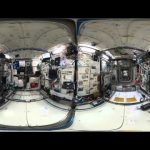
Explore Europe’s Columbus space laboratory with your mobile phone or VR headset in this panorama.
This 360° panorama lets you explore the International Space Station’s sixth module, Columbus. It was launched on 7 February 2008 on Space Shuttle Atlantis. The laboratory is ESA’s largest single contribution to the Station, and Europe’s first permanent research facility in space.
The state-of-the-art facility offers 75 cubic metres of workspace and contains a suite of research equipment. External platforms support experiments and applications in space science, Earth observation and technology.
Columbus offers European scientists full access to a weightless environment that cannot be duplicated on Earth.
Explore Columbus in Flickr, Facebook or YouTube format with your mobile phone and virtual-reality headset, or take the full tour including all Space Station modules with videos and extra information below. We will release a new Space Station module in 360° every week on Thursday.
ESA astronaut Andre Kuipers invites you to follow a guided tour of the complete International Space Station. Andre himself is the tour guide during this unique visit to the Station.
In the space of one hour Andre shows every module of the International Space Station and explains the ins and outs of living in the largest laboratory in space. This video gives a wonderful glimpse of how life is for an astronaut living in the Station. From science and maintenance to operating robotic arms and finding lost equipment, Andre takes you from the Japanese research module via the Station’s cellar and ‘garden’ to the Russian segment, ending his tour with breath-taking views of Earth from the European-built Cupola observation module.
This video was recorded during the end of ESA’s PromISSe mission. Andre spent a total of 193 days in space before returning to Earth on 1 July 2012.
An ESA-developed camera transmitted live-streaming 3D images for the first time in the history of space travel. On 6 August, NASA astronaut Ron Garan operated the Erasmus Recording Binocular (ERB-2) camera in Europe’s Columbus laboratory, showing the International Space Station as never before in high-definition quality . While talking about the work on board the Station, he enhances the sense of depth and presence by playing with an inflatable Earth globe. http://www.esa.int/esaCP/SEMWLEOT9RG_index_0.html
Use red/blue 3D glasses to experience the full 3D experience of this clip.
Frank De Winne is answering a few questions on the ISS submitted by the pupils of Class 7M from the Christian Morgenstern School in Hersching (Germany):
Question: – Jerome (13): How do you feel in orbit after 2 months? – Karina (13): How much time do you spend working outside the ISS? – Tamara: Do you have any real free time in the ISS, and how can you spend this time? How often do you contact your family? – Antoine (13): Have you ever felt scared in orbit? Has there ever been a moment that you wished to be back on Earth? – Regina (14): Has anything strange happened on the ISS that none of your colleagues have been able to explain? – Flavu: Which kind of education and qualification do you need for this kind of work?
In February 2008, the Columbus module was launched on the Space Shuttle Atlantis, creating space history when it was attached to the International Space Station as the first European laboratory dedicated to long-term research in microgravity.