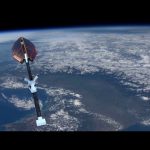
ESA astronaut Andreas Mogensen narrates this re-edited video on the inspiring endeavours of human spaceflight and how it changes our daily lives.
Andreas covers the first flight in Earth-orbit and the permanent inhabitation of space on the International Space Station to future exploration of our Solar System – and how these events inspired his work as an engineer and later astronaut.
The video touches on the amazing research done in space and for space and the technological impact this has making life on Earth better.
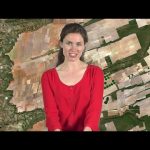
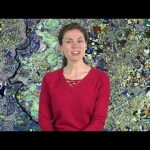
Earth from Space is presented by Kelsea Brennan-Wessels from the ESA Web-TV virtual studios. In this edition, Sentinel-2 takes us over Tunisia’s capital Tunis and surrounding wetlands.
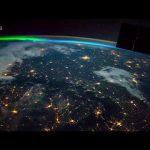
The astronauts and cosmonauts on the International Space Station take pictures of Earth out their windows nearly every day, and over a year that adds up to thousands of photos. The people at the Earth Science and Remote Sensing Unit at NASA’s Johnson Space Center in Houston had the enviable job of going through this year’s crop to pick their top 17 photos of Earth for 2017—here’s what they chose!
A series of daytime photos were taken by ESA astronaut Paolo Nespoli from on board the International Space Station flying from Africa, to Italy and Russia to create this time-lapse of Earth.
ESA astronaut Paolo Nespoli in currently working and living on board the International Space Station as part of the Italian Space Agency’s long-duration VITA mission.
Earth from Space is presented by Kelsea Brennan-Wessels from the ESA Web-TV virtual studios. In the 250th edition, the Sentinel-2A satellite takes us over northern Brazil where the Amazon River meets the Atlantic Ocean.
Earth from Space is presented by Kelsea Brennan-Wessels from the ESA Web-TV virtual studios. In the 248th edition, discover Chile’s largest salt flat in the Atacama Desert.
Discover more about our planet with the Earth from Space video programme. This special edition celebrates three years of successful operations of the Copernicus Sentinel-1 constellation.
Breathable air is necessary to sustain humans both on Earth as well as in space.
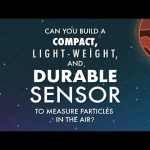
NASA is working with the Robert Wood Johnson Foundation (RWJF) to sponsor the Earth and Space Air Prize competition for a solution that could improve air quality and health in space and on Earth. This project is a technology innovation challenge to promote development of robust, durable, inexpensive, efficient, lightweight, and easy-to-use aerosol sensors for space and Earth environments. The competition asks teams or individuals to design and develop specialized sensor technology that has the potential to be useful in spaceflight as well as on Earth anywhere outdoors in a community where people may be exposed to airborne particles.
To learn more about the rules and to register for the competition please visit www.earthspaceairprize.org
Earth from Space is presented by Kelsea Brennan-Wessels from the ESA Web-TV virtual studios. Explore the US capital with Sentinel-2 in the 245th edition.
This remarkable footage shows the flyby of asteroid 2012 TC4 during the night of 11/12 October 2017. At the time this was recorded, the estimated 10-20 m-diameter asteroid was approaching Earth. It made its closest approach at 07:41 CEST on 12 October, just 43 782 km away – much closer than the Moon and inside the orbit of some satellites.
This was captured by astronomers Peter Schlatter and Dominik Bodenmann working at the ZIMLAT telescope at the Swiss Optical Ground Station and Geodynamics Observatory operated by the Astronomical Institute of the University of Bern (AIUB).
Discover more about our planet with the Earth from Space video programme. In this special edition, senior scientist at France’s Collecte Localisation Satellites, Marie-Hélène Rio, joins the show to discuss how data on ocean surface currents by the Sentinel-3 satellite mission are used by people working at sea.
On 12 September 2017, 710 photos were taken by ESA astronaut Paolo Nespoli to create this time-lapse of the Earth (from Africa to Russia) as seen from the International Space Station.
ESA astronaut Paolo Nespoli in currently working and living aboard the Station as part of his long duration Vita mission.
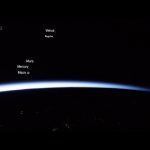
On 18 September 2017, ESA astronaut Paolo Nespoli shot this beautiful time-lapse showing the Moon rising above the Earth’s horizon together with Mercury, Mars, the star Regulus, and Venus.
ESA astronaut Paolo Nespoli is currently working and living on board the International Space Station as part of his long duration Vita mission.
Discover more about our planet with the Earth from Space video programme. In this special edition, Jean-Yves Le Gall, President of the CNES French Space Agency, and Josef Aschbacher, Director of ESA’s Earth Observation Programmes, join the show to discuss how cooperation will further benefit Earth observation and the Copernicus environmental monitoring programme.
Thomas Pesquet reflects on living on the International Space Station after his six-month Proxima mission. Beyond science and technology the voyage often reveals more than the destination. A message for all humans.
As Marcel Proust wrote in his book The Prisoner: “The only true voyage of discovery, … would be not to visit strange lands but to possess other eyes, to behold the universe through the eyes of another, of a hundred others, to behold the hundred universes that each of them beholds, that each of them is.”
The footage was shot with the Space Station’s highest resolution camera at resolutions between 4K and 6K and available here in Ultra High Definition (3840×2160 pixels). Download the full high-resolution file from ESA’s video archive: http://www.esa.int/spaceinvideos/Videos/2017/05/New_eyes
During Proxima, Thomas performed around 50 scientific experiments for ESA and France’s space agency CNES as well as take part in many research activities for the other Station partners.
The mission is part of ESA’s vision to use Earth-orbiting spacecraft as a place to live and work for the benefit of European society while using the experience to prepare for future voyages of exploration further into the Solar System.
Earth from Space is presented by Kelsea Brennan-Wessels from the ESA Web-TV virtual studios. In the 229th edition, Sentinel-2 takes us over the border of the US states Utah and Colorado.
Earth from Space is presented by Kelsea Brennan-Wessels from the ESA Web-TV virtual studios. Learn about land reclamation around Amsterdam in the 228th edition.
Earth is the largest rocky planet in our Solar System, and the only body we know of capable of supporting life. With so much news about exoplanets dominating the headlines, in this episode of Space we take a step back to take a look at Earth as a planet.
Four and a half billion years old and 149.6 million kilometres from the Sun, it’s not like anything else in the Solar System: “Planet Earth is quite a particular planet,” says Josef Aschbacher, Director of Earth Observation at ESA. “We have 70% of water, we have land masses which are actually moving over time. We have an atmosphere which is rich in oxygen, nitrogen, in water vapour. All of these are necessities in order to have life on a planet like this.”
Rome is a perfect spot to look at the defining characteristics of planet Earth, in particular the presence of liquid water. Our home planet has the right temperature and correct atmospheric pressure for water to flow on its surface, making it so hospitable to life.
A legnagyobb sziklás bolygó a Naprendszerben, egy igazán különleges hely: lássuk, milyen planéta tulajdonképpen a Föld.
Egy négy és fél milliárd éves szikla, nagyjából százötven millió kilométerre a Naptól. Az egyetlen általunk ismert bolygó, amelyen élet lehetséges. A Naprendszeren belül pedig egészen biztosan egyedülálló.
– A Föld egy különleges bolygó – szögezte le Josef Aschbacher, az Európai Űrügynökség (ESA) Föld-megfigyelési Központjának igazgatója. – A felszín 70 százalékát víz fedi, vannak nagy földtömegek, amelyek lassan mozognak. Van oxigénben, nitrogénben vízgőzben gazdag atmoszféra. Ezek mindegyikéhez szükség van ahhoz, hogy az élet fennmaradhasson egy ilyen bolygón.
A Föld felületén minden emlékeztet arra, hogy a folyékony víz mennyire fontos. A Marssal vagy a Vénusszal ellentétben a Földön a hőmérséklet és a légköri nyomás is megfelelő ahhoz, hogy folyékony víz legyen a felszínen.
Space debris – a journey to Earth (3D stereoscopic version) takes the audience on a journey from the outer solar system back to our home planet. The objects encountered along the way are manmade. Originally designed to explore the universe, these are now a challenge for modern space flight. An estimated number of 700,000 objects larger than 1 cm and 170 million objects larger than 1mm are expected to reside in Earth orbits.
The video gives a closer look at the different regions used for space flight and explains how mitigation and removal measures could preserve future usage of these orbits.
Two long-running NASA missions are providing new details about ocean bearing moons of Jupiter and Saturn – further heightening scientific interest in these and other “ocean worlds” in our solar system and beyond. The details – discussed during an April 13 NASA science briefing – include the announcement by the Cassini mission that a key ingredient for life has been found in the ocean on Saturn’s moon Enceladus. Meanwhile, researchers using the Hubble Space Telescope observed a probable plume erupting from the surface of Jupiter’s moon Europa, at the same location where Hubble saw evidence of a plume in 2014. Researchers say this could be circumstantial evidence of water erupting from the moon’s interior. Hubble’s monitoring of plume activity on Europa and Cassini’s long-term investigation of Enceladus are laying the groundwork for NASA’s Europa Clipper mission, which is being planned for launch in the 2020s. Also, Expedition 50 Returns Home Safely, Next Space Station Crew at Launch Site, Student Launch Event, Groundbreaking for New Lab, and Yuri’s Night, First Space Shuttle Mission Celebrated!
Earth from Space is presented by Kelsea Brennan-Wessels from the ESA Web-TV virtual studios. In the 225th edition, Sentinel-2 takes us over vast agricultural fields in Brazil.
Earth from Space is presented by Kelsea Brennan-Wessels from the ESA Web-TV virtual studios. In the 224th edition, Sentinel-2 takes us over northern Serbia to the region of Vojvodina.
After three years of collecting data, the highest resolution map of Earth’s lithospheric magnetic field from space to date has been released. The dataset combines measurements from ESA’s Swarm satellites with historical data from the German CHAMP satellite using a new modelling technique that allowed scientists to extract tiny magnetic signals from Earth’s outer layer. Red represents areas where the lithospheric magnetic field is positive, while blues show areas where it is negative.
Earth from Space is presented by Kelsea Brennan-Wessels from the ESA Web-TV virtual studios. In the 221st edition, Sentinel-2 takes us over the Rocky Mountains and Prairies of Canada’s Alberta province.
Earth from Space is presented by Kelsea Brennan-Wessels from the ESA Web-TVvirtual studios. Take a tour with Sentinel-2 to the Tian Shan mountains inChina in the 211th edition.
Earth from Space is presented by Kelsea Brennan-Wessels from the ESA Web-TV virtual studios. Part of Nepal including its capital city, Kathmandu, and the Himalayan foothills are featured in the 202nd edition.
Earth from Space is presented by Kelsea Brennan-Wessels from the ESA Web-TV virtual studios. The Chinese city of Shanghai is featured in the 200th edition.
Discover more about our planet with the Earth from Space video programme. During the Global Platform for Sustainable Cities working group meeting at ESA’s ESRIN establishment in Italy, four experts join the show to discuss how satellite data can be used to promote sustainable cities.
The four guests are Xiaomei Tan: Senior Climate Change Specialist, Global Environment Facility; Xueman Wang: Global Platform for Sustainable Cities Coordinator, World Bank; Gayatri Singh: Urban Development Specialist, World Bank City Planning Labs Initiative; Herman Pienaar: Director of City Transformation and Spatial Planning, City of Johannesburg.
Earth from Space is presented by Kelsea Brennan-Wessels from the ESA Web-TV virtual studios. In the one hundred ninety-ninth edition, explore Kazakhstan’s Alakol Lake.
Earth from Space is presented by Kelsea Brennan-Wessels from the ESA Web-TV virtual studios. Discover the southern Pacific Ocean island, Tongatapu, in the one hundred ninety-fourth edition.
Earth from Space is presented by Malì Cecere from the ESA Web-TV virtual studios. The one hundred ninety-third edition features a Sentinel-2 image of Sundarbans in Bangladesh.
Expedition 47 Commander Tim Kopra of NASA, Soyuz Commander Yuri Malenchenko of Roscosmos and Flight Engineer Tim Peake of ESA (European Space Agency) were greeted in a traditional ceremony in Kazakhstan June 18, a few hours after their safe return to Earth from a 186 day mission on the International Space Station.