YouTube Space Lab is a campaign initiated by YouTube, NASA, Space Adventures and Lenovo that challenges students around the world to design a science experiment for the International Space Station.
The winning experiments will be conducted in space on the International Space Station, making it the Universe’s largest science lesson, streamed live for the world to see via YouTube.
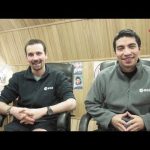
Micha Schmidt is a Spacecraft Operations Manager at ESA. In this video he talks about his involvement in the Herschel project and the many phases of development that exist in all ESA projects. Micha also talks about his fascination for space as a boy and what a great experience it has been to live in various European countries whilst working for ESA.
‘How do I become an astronaut?’ is a question that Frank Danesy has been asked many, many times. In this video Frank talks about the qualities needed to become an astronaut, the selection campaigns and the rigorous training involved for the lucky few who are eventually chosen.
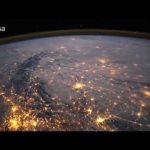
Western Europe in timelapse as seen from the International Space Station by ESA astronaut André Kuipers, during his long-duration mission to the ISS, PromISSe
The 42-piece DSS Aarlanderveen orchestra played an inspiring tribute to André Kuipers at their annual ‘Wish concert’ on 11 February 2012. Each year the orchestra take ‘wish’ requests from Dutch celebrities, but this year the orchestra wanted to perform something very special for Wensconcert 2012, and uniquely decided to dedicate their ‘wish’ spot to André. They chose the Jupiter hymn from Holst’s ‘The Planets’ suite, one of André’s favourite pieces. Afterwards the audience was treated to a message received from the ISS, in which André said: “Oh how nice! I have this music up here with me. I’m very honoured to have such a beautiful piece dedicated to me. Warmest thanks for that.”
The DSS Aarlanderveen orchestra is based in Aarlanderveen, near Alphen aan den Rijn, in the Netherlands. Leading the orchestra on the night was Danny Oosterman, a well-known Dutch conductor, cornet and trumpet player, and instructor at the Conservatorium van Amsterdam and the Utrechts Conservatorium.
There are many links between music and space. Astronauts like Frank De Winne take their favourite rock music with them to orbit, while musicians on Earth often take inspiration from the stars in their work. Some astrophysicists have transposed plasma waves and electron beams into audible sound.
Vega, le nouveau lanceur de l’ESA, est désormais prêt pour son entrée en exploitation aux côtés d’Ariane-5 et de Soyouz, après le succès de son vol de qualification, effectué ce matin depuis le port spatial de l’Europe à Kourou (Guyane française).
Avec Vega, qui vient compléter la famille des lanceurs disponibles à Kourou, l’Europe est désormais à même de répondre à toute la gamme des besoins de lancement, que ce soit pour mettre sur orbite des petits satellites scientifiques et d’observation de la Terre ou pour entreprendre des missions de vaste envergure comme l’envoi de véhicules ESA de ravitaillement à destination de la Station spatiale internationale (ISS).
Vega a décollé pour la première fois à 10h00 GMT (11h00 heure de Paris, 7h00 heure locale) de son nouveau pas de tir, et son vol de qualification s’est parfaitement déroulé.
The family of European rockets is growing. The next one is the youngest, called Vega, soon to be launched from Europe’s Spaceport in French Guiana.
This new rocket complements the range that Europe already has to offer in the commercial market.
La famiglia dei vettori spaziali europei si allarga con il prossimo lancio di Vega dalla base europea della Guyana francese. Questo nuovo lanciatore va a completare l’offerta della gamma europea nell’ambito dei razzi commerciali. Ne parliamo nella rubrica Space.
Follow ESA astronaut André Kuipers and his crewmates, NASA astronaut Donald Pettit and Roscosmos cosmonaut Oleg Kononeko, on their journey from Baikonur cosmodrome, in Kazakhstan, up to their launch onboard a Soyuz TMA-03M spacecraft to the International Space Station (ISS).
On 21 December 2011, André embarked on ESA’s fourth long-duration mission to the ISS, “PromISSe”. During his five months onboard this human outpost in space, Andre is serving as a flight engineer for Expedition 30.
This exceptional 3D video shows some of the main events before launch, including: the city of Baikonur, the avenue of cosmonauts with the tree once planted by Yuri Gagarin, the Gagarin Museum, the roll-out of Soyuz in the early morning hours, the vertical erection of the rocket on the launch pad, the pre-launch press conference, the ready-to-fly report of the crew commander, and of course – the amazing light show of a night launch from the Gagarin launch pad in Baikonur.
Stereoscopic 3D glasses are required to properly enjoy the full 3D effect of this footage.
André and his fellow crew members will return to Earth by the end of May 2012.
This stunning movie shows the Eagle Nebula from the iconic 1995 Hubble image of the Pillars of Creation through to the latest multi-wavelength composite.
This video presents the key events in 2012 for ESA.
André Kuipers continues his PromISSe mission aboard the International Space Station until May, the 4th ESA long duration mission. During his stay the third European ATV cargo ship will bring food and supplies to the orbital outpost. Early in the year the new Vega launcher will make its qualifying flight from Europe’s Spaceport in French Guiana. The end of the year will be marked by an ESA Conference at Ministerial level, a major decision point for the future of Europe in Space.
More backgroud information can be found on: www.esa.int
Sie haben die Größe einer Waschmaschine, doch sie beschaffen wertvolle Informationen bei der Beobachtung der Erde und der Sonne. Die Rede ist von Mikrosatelliten mit dem Namen Proba.
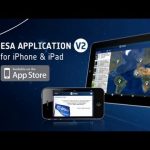
ESA has updated its application for iPhone and iPad.
With the launch of the ESA App V2, users can see ESA’s latest satellite imagery from Envisat in near-real time, complementing the latest news and discoveries in space exploration and Earth observation.
Making full use of the iPhone and iPad touch features, ESA App V2 puts videos, images, facts and figures, ESA’s Twitter feeds, YouTube links and other information in a convenient mobile package.
Download ESA App V2 here: http://itunes.apple.com/us/app/esa-european-space-agency/id441518639?mt=8
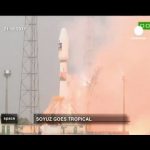
The Russian Soyuz vehicle lifted off for the first time from its new launch complex at Europe’s Spaceport in French Guiana on 21 October 2011. Flight VS01 carried the first two operational satellites of Europe’s Galileo navigation system into orbit. This time-lapse movie shows the three-stage Soyuz transfer from the assembly and testing building to the launch pad where it is then raised to the vertical. Once in the Mobile gantry, the Upper Composite containing the satellites and Fregat-MT upper stage is hoisted into position on top of the vehicle. The gantry is then rolled back, clearing the way for Soyuz to lift off.
ESA’s Mars500 crewmembers Diego Urbina and Romain Charles recorded 15 video diaries from all phases of their simulated mission to Mars, plus hundreds of photos and other video clips. Most of these are available on ESA’s Mars500 website (www.esa.int/Mars500), but here is a compilation of their YouTube videos.
Relive this great adventure with Romain and Diego!
Lançou o Sputnik e Gagarin para o espaço. O mítico foguetão russo Soyuz conta já com mais de 1700 voos. O lançamento do Porto Espacial Europeu, na Guiana Francesa, abre um novo capítulo na sua longa carreira.
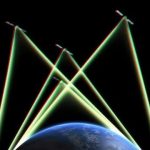
A 3D presentation of the Galileo satellite navigation system, a joint development by the European Union and European Space Agency. This constellation of satellites will allow users to pinpoint their location anywhere on Earth — their launches commencing on 20 October 2011.
Use red/blue 3D glasses to experience the full 3D experience of this clip.
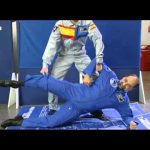
During the DELTA Mission, André Kuipers performed a number of physiology demonstrations showing the effects of weightlessness on the human body – the theme of DVD Lesson 2.
Tutto ha una fine. Per gli uomini ma anche per i satelliti. Dopo sedici anni di fedele servizio, il satellite d’osservazione ERS 2 è condannato a trasformarsi in luce e calore. È l’argomento di questa puntata di Space.
Nada dura eternamente. Eso es igual para las personas como para los satélites. Después de 16 años de un precioso y preciso trabajo, el satélite de observación terrestre ERS 2 está condenado a convertirse en polvo y fuego. En Space.
Everything must come to an end — including satellites. After 16 years of loyal service observing Earth, the ERS-2 satellite has retired. This edition of Space tells the life story of the venerable satellite.
Paolo Nespoli spent 6 months on-board the International Space Station from Dec 2010 through to May 2011. In this video he shot using ESA’s Erasmus Recording Binocular (ERB-2) stereoscopic camera during various phases of his MagISStra mission, he caught some moments that depict the work astronauts carry out on the ISS: from educational activities, to scientific experiments and physical training, also demonstrating the way astronauts move in weightlessness through the various modules. ERB-2 is the first camera to transmit 3D images live from space.
ESA would like to thank all the astronauts featured in the film: NASA astronauts Catherine (Cady) Coleman, Ron Garan, Scott Kelly and the united ISS Expedition 26-27 and STS-134 crew including ESA astronaut R. Vittori.
Images in HD quality taken by the optical and radar instruments on board ESA’s Envisat Satellite orbiting 800 km above the Earth are set to relaxing music.
Originally produced for Lufthansa inflight entertainment (released December 2010).
An ESA-developed camera transmitted live-streaming 3D images for the first time in the history of space travel. On 6 August, NASA astronaut Ron Garan operated the Erasmus Recording Binocular (ERB-2) camera in Europe’s Columbus laboratory, showing the International Space Station as never before in high-definition quality . While talking about the work on board the Station, he enhances the sense of depth and presence by playing with an inflatable Earth globe. http://www.esa.int/esaCP/SEMWLEOT9RG_index_0.html
Use red/blue 3D glasses to experience the full 3D experience of this clip.
Space Shuttle is perhaps the most complex technological system ever built. In 30 years, it has flown 135 times and helped humankind to dispatch and partially even return many satellites and deep-space probes, to build the International Space Station and to conduct out-of-this-world science. The Shuttle has transported also 24 European astronauts to Earth orbit on 25 missions.
This video highlights these flights with European flavour – from STS-9 in 1983 to STS-134 in last May.
Un capítulo de la aventura espacial se cierra con el lanzamiento de la nave estadounidense Atlantis, con el que se pone punto y final a las misiones del transbordador. Ha pervivido durante 30 años, una historia de momentos felices y trágicos.
Si chiude un capitolo dell’epopea spaziale, con il lancio della navetta americana Atlantis che segna la fine delle missioni dello Space Shuttle. Una storia lunga trent’anni che ha conosciuto i suoi momenti di gloria e le sue tragedie.
Mit dem letzten Start der Weltraumfähre “Atlantis” geht zugleich ein Kapitel in der Geschichte der Weltraumfahrt zuende. Denn der 135. Space-Shuttle-Flug ist der Letzte seiner Art. Zurück liegen drei Jahrzehnte mit ihren Höhepunkten sowie mit ihren Tragödien. Mehr darüber in unserer Rubrik Space.
ESA astronaut Paolo Nespoli landed back on Earth this morning to conclude his 159-day mission to the International Space Station.
Paolo had been serving as the flight engineer for Expeditions 26 and 27 since December. Paolo’s MagISStra mission, the third long mission by a European astronaut on the Station, came to end at 04:27 CEST (02:27 GMT) on the steppes of Kazakhstan as the Soyuz TMA-20 spacecraft fired its retrorockets for a soft landing.
ESA astronaut Paolo Nespoli landed back on Earth this morning to conclude his 159-day mission to the International Space Station.
Paolo had been serving as the flight engineer for Expeditions 26 and 27 since December. Paolo’s MagISStra mission, the third long mission by a European astronaut on the Station, came to end at 04:27 CEST (02:27 GMT) on the steppes of Kazakhstan as the Soyuz TMA-20 spacecraft fired its retrorockets for a soft landing.
Paolo and crewmates Soyuz Commander Dmitri Kondratyev and NASA’s Cady Coleman boarded the Soyuz on Monday night and undocked from the Station’s nadir
Rassvet port at 23:35 CEST (21:35 GMT).
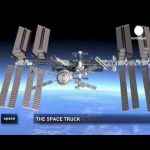
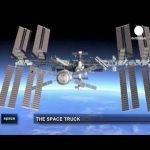
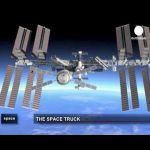
El vehículo de carga europeo ATV es el vehículo más complejo jamás construido para abastecer la Estación espacial Internacional. Pudiendo llevar cerca de 8 toneladas de carga, el ATV es capaz de realizar maniobras que requieren cierta inteligencia artificial. El camión del Espacio y su posible evolución, esta semana en « Space. »
Il cargo spaziale europeo ATV è il veicolo piu’ complesso mai concepito per rifornire la Stazione Spaziale Internazionale. Potendo stivare 8 tonnellate di carico è capace di manovre gestite da una speciale intelligenza artificiale. Il camion dello spazio e le sue evoluzioni, è il tema di questa edizione di Space.
Der europäische Raumfrachter ATV ist ein hochkomplexes Fahrzeug, das die Internationale Raumstation ISS versorgt. Der ATV-Transporter kann bis zu acht Tonnen Fracht ins All bringen und dank künstlicher Intelligenz selbstständig manövrieren. Der Lastwagen des Weltraums und seine Entwicklung, in dieser Ausgabe von Space.
The European cargo spacecraft ATV is the most complex vehicle ever built to re-supply an International Space Station.
It can take nearly eight tonnes of cargo and uses artificial intelligence to accomplish some of its more complicated manoeuvres.
The Space Truck and its possible developments are the theme of this episode of ‘Space’.
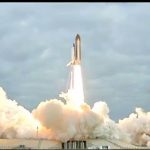
Space Shuttle “Endeavour” was launched to space at 14:56 CEST (12:56 GMT) on 16 May from Kennedy Space Center in Florida.
The 16-day-long STS-134 mission will deliver AMS-02, a big cosmological instrument to the Space Station and its crew includes ESA’s Italian astronaut Roberto Vittori. This is the last flight of “Endeavour”.