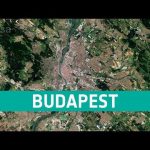
For half a century, the European Space Agency (ESA) has been serving Europe as its space agency and inspiring its citizens. On 30 May 1975, the ESA Convention was signed by 10 founding Member States and has since now expanded to 23 Member States, three Associate Members, four Cooperating States and a Cooperation Agreement with Canada. This anniversary year provides the opportunity to reflect not only on ESA’s past achievements, but even more so on its future perspectives.
Credits: European Space Agency (ESA)
*Correction: 1990, Launch of NASA/ESA Hubble Space Telescope*
We are Europe’s gateway to space. Our mission is to shape the development of Europe’s space capability and ensure that investment in space continues to deliver benefits to the citizens of Europe and the world. Check out https://www.esa.int/ to get up to speed on everything space related.
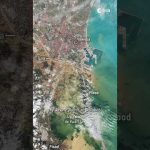
As recently reported by Copernicus ECMWF in its European State of the Climate Report, Europe experienced several climate extremes like glacier ice loss, severe floods, wildfires, and heatwaves. But the continent didn’t experience the same weather uniformly: data show a distinct east‑west contrast during 2024, with eastern areas generally sunny and warm while western areas were cloudier and wetter.
📹 European Space Agency (ESA) 📸 Contains modified CopernicusEU Sentinel data (2022 & 2024), processed by ESA CC BY-SA 3.0 IGO 📊 C3S/Copernicus ECMWF/KNMI
The Magyars have always fascinated me, especially after their settlement of the Carpathian basin post 895 to 905. Their raids over the next 55 years reached as far as the Pyrenees and were successful enough that the Byzantine Empire and several other kingdoms chose to pay off the Magyars to gain relief from invasion. Their raids were finally brought to an end in 955 at the Battle of Augsburg when King Otto I of Germany defeated the Magyars.
🚩 If you like what you see, consider supporting my work on Patreon and you get ad-free early access to my videos for as little as $1 https://www.patreon.com/historymarche — You can also show your support by subscribing to the channel and liking the video. Thank you for watching.
📢 Narrated by David McCallion
🎼 Music: EpidemicSound Filmstro
📚 Sources: Clifford R. Backman – The Worlds of Medieval Europe. Charles R. Bowlus – The Battle of Lechfield and its Aftermath, August 955 AD. Gerhard of Augsburg – Vita Sancti Uodalrici (Life of Saint Ulrich). Tom Holland – The Forge of Christendom: The End of Days and the Epic Rise of the West. Peter Heather – The Restoration of Rome. William Weir – 50 Battles that Changed the World. Widukind of Corvey – Res Gestae Saxonicae Sive Annalium Libri Tres (Deeds of the Saxons, the Three Books of Annals). The Complete Works of Luidprand of Cremona. Transl by Paolo Squatriti. The Catholic University of America Press, Washington D.C., 2007 Reuter, Timothy. Germany in the Early Middle Ages 800–1056. (1991) Balasz, György, and Karoly Szelényi. The Magyars: The Birth of a European Nation (1989) Bóna, István. The Hungarians and Europe in the 9th-10th centuries (2000) Edwards, Sean J. A., Swarming on the Battlefield: Past, Present, and Future (2000) The Battle of Lechfeld, 910 from Antapodosis, Book II (10th c.)
🥏 Visit https://80000hours.org/historymarche and start planning a career that is meaningful, fulfilling, and helps solve one of the world’s most pressing problems. Make your 80,000 hours count.
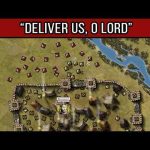
🚩 “Deliver us, O Lord, from the arrows of the Hungarians” – A hymn from Modena, Italy c.900 AD. Brenta was one of the earliest battles of the Magyar invasions of Europe. Between 860 and 970, the Magyars were the scourge of Europe. They devastated and pillaged a wide swath of territory, from Bremen in the north, to Otranto in the south, and Orleans in the west, with some raiding expeditions reaching over the Pyrenees Mountains into Iberia.
🚩 If you like what you see, consider supporting my work on Patreon and you get ad-free early access to my videos for as little as $1 https://www.patreon.com/historymarche — You can also show your support by subscribing to the channel and liking the video. Thank you for watching.
📢 Narrated by David McCallion
🎼 Music: EpidemicSound Filmstro Round drums – Kevin MacLeod
📚 Sources: The Complete Works of Luidprand of Cremona. Transl by Paolo Squatriti. The Catholic University of America Press, Washington D.C., 2007 Reuter, Timothy. Germany in the Early Middle Ages 800–1056. (1991) Balasz, György, and Karoly Szelényi. The Magyars: The Birth of a European Nation (1989) Bóna, István. The Hungarians and Europe in the 9th-10th centuries (2000)
🚩 If you like what you see, consider supporting my work on Patreon and you get ad-free early access to my videos for as little as $1 https://www.patreon.com/historymarche — You can also show your support by subscribing to the channel and liking the video. Thank you for watching.
📢 Narrated by David McCallion
🎼 Music: Epidemic Sound Filmstro
📚 Sources: Bellamy, Christopher (1990). The Evolution of Modern Land Warfare: Theory and Practice. Axworthy, Michael (2009). The Sword of Persia: Nader Shah, from Tribal Warrior to Conquering Tyrant. I.B.Tauris. Ghafouri, Ali (2008). History of Iran’s wars: from the Medes to now.
🚀 Have you ever wondered how we transport rockets?
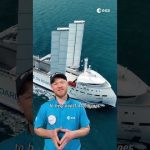
All the elements that make up Ariane 6 are manufactured in mainland Europe and then transported by this ship, named Canopée.
It is the first custom-built transporter to use sails, reducing emissions and saving on fuel by up to 30%, and on this trip, it travels for 10 days covering over 7000 km to reach Europe’s Spaceport in French Giuana.
The hybrid-propulsion vessel is 121 m long and has 37 m tall sails. Canopée rotates continuously between stop-offs to load each Ariane 6 stage and other parts and ship them across the Atlantic Ocean to Europe’s spaceport.
Europe’s new launcher, Ariane 6 uses liquid oxygen and hydrogen as fuel to lift it off the ground and into space. This fuel is chilled to -150°C which allows more propellant to be loaded into the rocket with more fuel from the engine.
But Ariane would not get far without the boosters that provide the most thrust by far.
In order to control the direction of Ariane 6 after launch, the nozzles on the boosters and main stage can swivel to keep it on course. This is no easy feat as Ariane 6 is 56 m tall and controlled at the bottom, so it is a careful balancing act.
Europe has a new rocket, and it’s set to launch soon 🚀
Europe’s next launch vehicle is the powerful Ariane 6. The rocket will be bigger, better, and more versatile than its predecessor.
Our daily life is becoming increasingly reliant on space to keep people and things connected for communication, banking, transport, weather forecasting and more!
Ariane 6 is ensuring Europe has continued independent and autonomous access to space.
We are Europe’s gateway to space. Our mission is to shape the development of Europe’s space capability and ensure that investment in space continues to deliver benefits to the citizens of Europe and the world. Check out https://www.esa.int/ to get up to speed on everything space related.
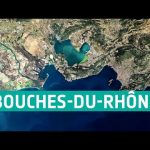
In this week’s edition of the Earth from Space programme, the Copernicus Sentinel-2 mission takes us over the department of Bouches-du-Rhône in southern France. It is from here where the first Meteosat Third Generation Imager satellite set sail on its journey to Europe’s Spaceport in French Guiana.
We are Europe’s gateway to space. Our mission is to shape the development of Europe’s space capability and ensure that investment in space continues to deliver benefits to the citizens of Europe and the world. Check out https://www.esa.int/ to get up to speed on everything space related.
This week’s edition of the Earth from Space programme features a Copernicus Sentinel-2 image of melt ponds in the province of Avannaata in West Greenland.
We are Europe’s gateway to space. Our mission is to shape the development of Europe’s space capability and ensure that investment in space continues to deliver benefits to the citizens of Europe and the world. Check out https://www.esa.int/ to get up to speed on everything space related.
In this week’s edition of the Earth from Space programme, the Copernicus Sentinel-2 mission takes us over Lake Trasimeno, the fourth largest lake in Italy.
We are Europe’s gateway to space. Our mission is to shape the development of Europe’s space capability and ensure that investment in space continues to deliver benefits to the citizens of Europe and the world. Check out https://www.esa.int/ to get up to speed on everything space related.
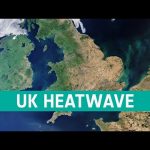
This week’s edition of the Earth from Space programme features a Copernicus Sentinel-3 image showing the scale of Britain’s heatwave as it baked in extreme temperatures in August.
We are Europe’s gateway to space. Our mission is to shape the development of Europe’s space capability and ensure that investment in space continues to deliver benefits to the citizens of Europe and the world. Check out https://www.esa.int/ to get up to speed on everything space related.
We are Europe’s gateway to space. Our mission is to shape the development of Europe’s space capability and ensure that investment in space continues to deliver benefits to the citizens of Europe and the world. Check out https://www.esa.int/ to get up to speed on everything space related.
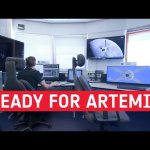
ESA and NASA are working hand in hand before the first Artemis mission to the Moon through a series of joint mission simulations. Teams based at the Erasmus Support Facility (ESF) at ESA’s ESTEC facility in The Netherlands, the German Space Operations Centre at ESA’s Columbus Control Centre in Oberphfaffenhofen and NASA’s Johnson Space Center in Houston are combining their expertise in a series of exercises to ensure a successful launch.
When it comes to simulations, it’s important that not everything goes perfectly right as it recreates – in real time – different stages of the mission to monitor the spacecraft’s position, propulsion, power, avionics and thermal properties. The European team, consisting of 40 people from ESA and industry, apply their considerable expertise from working on the European Service Module (ESM) to any unexpected problems. The ESM will provide power for the Orion spacecraft and propel it along its orbit to the Moon.
We are Europe’s gateway to space. Our mission is to shape the development of Europe’s space capability and ensure that investment in space continues to deliver benefits to the citizens of Europe and the world. Check out https://www.esa.int/ to get up to speed on everything space related.
This week’s edition of the Earth from Space programme features an impressive shot of the almost cloud-free Scandinavian Peninsula captured by the Copernicus Sentinel-3 mission.
We are Europe’s gateway to space. Our mission is to shape the development of Europe’s space capability and ensure that investment in space continues to deliver benefits to the citizens of Europe and the world. Check out https://www.esa.int/ to get up to speed on everything space related.
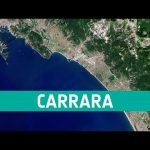
In this week’s edition of the Earth from Space programme, the Copernicus Sentinel-2 mission takes us over Carrara – an Italian city known especially for its world-famous marble.
We are Europe’s gateway to space. Our mission is to shape the development of Europe’s space capability and ensure that investment in space continues to deliver benefits to the citizens of Europe and the world. Check out https://www.esa.int/ to get up to speed on everything space related.
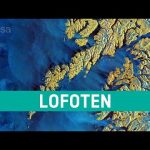
In this week’s edition of the Earth from Space programme, the Copernicus Sentinel-1 mission takes us over the archipelago of Lofoten in northern Norway.
We are Europe’s gateway to space. Our mission is to shape the development of Europe’s space capability and ensure that investment in space continues to deliver benefits to the citizens of Europe and the world. Check out https://www.esa.int/ to get up to speed on everything space related.
We are Europe’s gateway to space. Our mission is to shape the development of Europe’s space capability and ensure that investment in space continues to deliver benefits to the citizens of Europe and the world. Check out https://www.esa.int/ to get up to speed on everything space related.
We are Europe’s gateway to space. Our mission is to shape the development of Europe’s space capability and ensure that investment in space continues to deliver benefits to the citizens of Europe and the world. Check out https://www.esa.int/ to get up to speed on everything space related.
We are Europe’s gateway to space. Our mission is to shape the development of Europe’s space capability and ensure that investment in space continues to deliver benefits to the citizens of Europe and the world. Check out https://www.esa.int/ to get up to speed on everything space related.
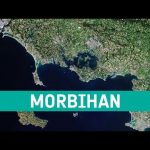
The Copernicus Sentinel-2 mission takes us over Morbihan – a French department in the south of Brittany, in this edition of the Earth from Space programme.
We are Europe’s gateway to space. Our mission is to shape the development of Europe’s space capability and ensure that investment in space continues to deliver benefits to the citizens of Europe and the world. Check out https://www.esa.int/ to get up to speed on everything space related.
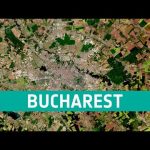
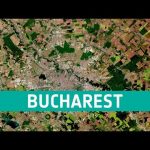
The Copernicus Sentinel-2 mission takes us over Bucharest – the capital and largest city of Romania, in this edition of the Earth from Space programme.
We are Europe’s gateway to space. Our mission is to shape the development of Europe’s space capability and ensure that investment in space continues to deliver benefits to the citizens of Europe and the world. Check out https://www.esa.int/ to get up to speed on everything space related.
The European Space Agency and NASA signed a Memorandum of Understanding (MoU) to take Europe to the Moon.
This historic agreement will see ESA Member States contribute a number of essential elements to the first human outpost in lunar orbit, known as the Gateway.
It confirms ESA’s commitment to delivering at least two European Service Modules that provide electricity, water, oxygen and nitrogen to NASA’s Orion spacecraft – with more to come. ESA will also receive three flight opportunities for European astronauts to travel to and work on the Gateway.
ESA’s head of the Legal Services, Marco Ferrazzani, explains how these agreements will take us forward to the Moon.
We are Europe’s gateway to space. Our mission is to shape the development of Europe’s space capability and ensure that investment in space continues to deliver benefits to the citizens of Europe and the world. Check out https://www.esa.int/ to get up to speed on everything space related.
ESA astronaut Thomas Pesquet gives us some advice on what to do during a period of social distancing like the one many of us have to endure during the COVID-19 outbreak.
* Turn CC on for English or French captions *
Credits: ESA/T. Pesquet
★ Subscribe: http://bit.ly/ESAsubscribe and click twice on the bell button to receive our notifications.
We are Europe’s gateway to space. Our mission is to shape the development of Europe’s space capability and ensure that investment in space continues to deliver benefits to the citizens of Europe and the world. Check out http://www.esa.int/ESA to get up to speed on everything space related.
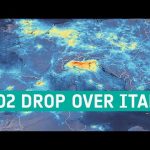
New data from the Copernicus Sentinel-5P satellite reveal the decline of air pollution, specifically nitrogen dioxide emissions, over Italy. This reduction is particularly visible in northern Italy which coincides with its nationwide lockdown to prevent the spread of the coronavirus.
The animation shows the fluctuation of nitrogen dioxide emissions across Europe from 1 January 2020 until 11 March 2020, using a 10-day moving average. These data are thanks to the Tropomi instrument on board the Copernicus Sentinel-5P satellite which maps a multitude of air pollutants around the globe.
Claus Zehner, ESA’s Copernicus Sentinel-5P mission manager, comments, “The decline in nitrogen dioxide emissions over the Po Valley in northern Italy is particularly evident.
“Although there could be slight variations in the data due to cloud cover and changing weather, we are very confident that the reduction in emissions that we can see, coincides with the lockdown in Italy causing less traffic and industrial activities.”
Josef Aschbacher, ESA’s Director of Earth Observation Programmes, says, “Copernicus Sentinel-5P Tropomi is the most accurate instrument today that measures air pollution from space. These measurements, globally available thanks to the free and open data policy, provide crucial information for citizens and decision makers.”
The coronavirus disease (COVID-19) was recently declared a pandemic by the World Health Organisation, with more than 125 000 current cases of the disease reported globally. In Italy, the number of coronavirus cases drastically soared making it the country with the largest number of cases outside of China.
In an attempt to reduce the spread of the disease, Italy’s Prime Minister Giuseppe Conte announced a lockdown of the entire country – closing schools, restaurants, bars, museums and other venues across the country.
The Sentinel-5 Precursor – also known as Sentinel-5P – is the first Copernicus mission dedicated to monitoring our atmosphere. The satellite carries the Tropomi instrument to map a multitude of trace gases such as nitrogen dioxide, ozone, formaldehyde, sulphur dioxide, methane, carbon monoxide and aerosols – all of which affect the air we breathe and therefore our health, and our climate.
Given the growing importance and need for the continuous monitoring of air quality, the upcoming Copernicus Sentinel-4 and Sentinel-5 missions, as part of the EU’s Copernicus programme, will monitor key air quality trace gases and aerosols. These missions will provide information on air quality, stratospheric ozone and solar radiation, as well as climate monitoring.
Credits: contains modified Copernicus Sentinel data (2020), processed by ESA, CC BY-SA 3.0 IGO
★ Subscribe: http://bit.ly/ESAsubscribe and click twice on the bell button to receive our notifications.
We are Europe’s gateway to space. Our mission is to shape the development of Europe’s space capability and ensure that investment in space continues to deliver benefits to the citizens of Europe and the world. Check out http://www.esa.int/ESA to get up to speed on everything space related.
A powerful space telescope, due for launch from Europe’s Spaceport in French Guiana on 17 December 2019, will give scientists a new insight into the nature of planets outside our Solar System.
Cheops, the ‘Characterising Exoplanet Satellite’, will study known exoplanets that are orbiting bright stars.
More than 4000 exoplanets have been discovered and Cheops will be targeting known planets between the size of Earth and Neptune, to find out more about their composition, internal structure and whether they might be able to support life.
Cheops’ mission is a partnership between ESA and Switzerland with additional contributions from Austria, Belgium, France, Germany, Hungary, Italy, Portugal, Spain, Sweden and the UK.
This film examines the nature of exoplanets, the challenge of exoplanet exploration and features the Cheops Science Operations Centre in Geneva, it includes interviews with Didier Queloz, Chair of the Cheops Science Team and 2019 Nobel Physics Laureate, University of Geneva; Willy Benz, Cheops Principal Investigator, University of Bern; and Matthias Beck, Cheops Ground Segment Manager, University of Geneva).
We are Europe’s gateway to space. Our mission is to shape the development of Europe’s space capability and ensure that investment in space continues to deliver benefits to the citizens of Europe and the world. Check out http://www.esa.int/ESA to get up to speed on everything space related.
ESA’s first mission dedicated to investigating planets outside our solar system is scheduled for launch on a Soyuz rocket from the European spaceport in French Guiana on 17 December 2019.
Cheops – Characterising ExOPlanet Satellite – will study known exoplanets that are orbiting bright stars. The aim is to obtain detailed information about these planets to find out more about their composition and internal structure.
The mission is a partnership between ESA and Switzerland with additional contributions from Austria, Belgium, France, Germany, Hungary, Italy, Portugal, Spain, Sweden and the UK.
We are Europe’s gateway to space. Our mission is to shape the development of Europe’s space capability and ensure that investment in space continues to deliver benefits to the citizens of Europe and the world. Check out http://www.esa.int/ESA to get up to speed on everything space related.
Featuring ECOPOTENTIAL, a European funded project that focuses on a set of internationally recognised protected areas, this video describes how the unprecedented availability of satellite data allow scientists to understand large scale changes in our environment and how best to protect it.
★ Subscribe: http://bit.ly/ESAsubscribe and click twice on the bell button to receive our notifications.
We are Europe’s gateway to space. Our mission is to shape the development of Europe’s space capability and ensure that investment in space continues to deliver benefits to the citizens of Europe and the world. Check out http://www.esa.int/ESA to get up to speed on everything space related.
Scientists at the Geneva Observatory in Switzerland will be processing data from Cheops, ESA’s Characterising Exoplanet Satellite, scheduled to launch soon to study planets orbiting stars outside our Solar System.
The Observatory has a rich history studying exoplanets. In 1995, Michel Mayor and Didier Queloz discovered the first exoplanet orbiting a Sun-like star. Now, over 4000 planets are known around stars other than the Sun.
By observing stars that are already known to host exoplanets, Cheops will make measure very precisely the sizes of planets in the super-Earth to Neptune size range. Combined with existing measurements of planet masses, the Cheops data will make it possible to determine the density of these planets, giving us vital clues about its composition and structure, indicating for example if it is predominantly rocky or gassy, or perhaps harbours significant oceans.
The Cheops mission is a partnership between ESA and Switzerland with important contributions from Austria, Belgium, France, Germany, Hungary, Italy, Portugal, Spain, Sweden, and the United Kingdom. The Cheops launch slot is scheduled for the last quarter of 2019. This film contains contributions from Didier Queloz, Chair of the Cheops Science Team (University of Geneva); Willy Benz, the Cheops Principal Investigator (University of Bern); and the Cheops Ground Segment Manager, Matthias Beck (University of Geneva).
We are Europe’s gateway to space. Our mission is to shape the development of Europe’s space capability and ensure that investment in space continues to deliver benefits to the citizens of Europe and the world. Check out http://www.esa.int/ESA to get up to speed on everything space related.
The moment to ask all your questions about space has come!
Join one of the European Space Talks happening in your country to learn how space contributes to your daily life and helps to solve some of humankind’s greatest challenges.
We are Europe’s gateway to space. Our mission is to shape the development of Europe’s space capability and ensure that investment in space continues to deliver benefits to the citizens of Europe and the world. Check out http://www.esa.int/ESA to get up to speed on everything space related.
C’est le moment de poser toutes vos questions sur l’espace !
Inscrivez-vous à un European Space Talk près de chez vous et découvrez l’impact de l’espace dans nos vies quotidiennes et comment il contribue à résoudre les plus grands enjeux de l’humanité.
We are Europe’s gateway to space. Our mission is to shape the development of Europe’s space capability and ensure that investment in space continues to deliver benefits to the citizens of Europe and the world. Check out http://www.esa.int/ESA to get up to speed on everything space related.
Who better than the people who spend their days thinking about space, to share their passion with the world? European space professionals have a responsibility to let people know how space activities impact their daily lives and will affect tomorrow’s world.
If you are a space professional, find out more about organising your own European Space Talk, here: https://spacetalks.net/
We are Europe’s gateway to space. Our mission is to shape the development of Europe’s space capability and ensure that investment in space continues to deliver benefits to the citizens of Europe and the world. Check out http://www.esa.int/ESA to get up to speed on everything space related.
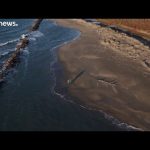
The most recent trends in sea level rise mean the low-lying Camargue region of southern France could be submerged by the sea by the end of the century.
The sea walls built along the coast in the 1980s have already been broken by the waves, as a combination of rising waters, slowly sinking landmass, and reduced amounts of sediment from the Rhone river spell trouble for this environment.
Anis Guelmami uses Copernicus Sentinel satellites to study wetlands like the Camargue, and he tells us the latest news from space.
ESA is Europe’s gateway to space. Our mission is to shape the development of Europe’s space capability and ensure that investment in space continues to deliver benefits to the citizens of Europe and the world. Check out http://www.esa.int/ESA to get up to speed on everything space related.
ESA is Europe’s gateway to space. Our mission is to shape the development of Europe’s space capability and ensure that investment in space continues to deliver benefits to the citizens of Europe and the world. Check out http://www.esa.int/ESA to get up to speed on everything space related.
The moment to ask all your questions about space has come!
Join one of the European Space Talks happening in your country to learn how space contributes to your daily life and helps to solve some of humankind’s greatest challenges.
ESA is Europe’s gateway to space. Our mission is to shape the development of Europe’s space capability and ensure that investment in space continues to deliver benefits to the citizens of Europe and the world. Check out http://www.esa.int/ESA to get up to speed on everything space related.
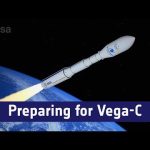
At the end of 2019 Vega-C will be launched from Europe’s Spaceport in French Guiana increasing performance from Vega’s current 1.5 t to about 2.2 t in its reference 700 km polar orbit, with no increase in launch costs.
Vega-C’s first stage is based on the P120, the largest single segment carbon fibre solid-propellant rocket motor ever built. It was successfully tested in July 2018. Its development relies on new technologies derived from Vega’s current first stage P80 motor. Two or four P120C motors will also be used for the liftoff boosters on Ariane 6.
Vega-C’s 3.3 m diameter fairing will accommodate larger payloads such as Earth observation satellites of more than two tonnes, and ESA’s Space Rider reentry vehicle.
The Vega launch pad and mobile gantry are being modified to accommodate Vega-C leading into a period when launch facilities will accommodate both vehicles.
ESA is Europe’s gateway to space. Our mission is to shape the development of Europe’s space capability and ensure that investment in space continues to deliver benefits to the citizens of Europe and the world. Check out http://www.esa.int/ESA to get up to speed on everything space related.
The date is fixed: you are invited to the annual ESA Open Day at ESTEC, ESA’s technical heart in the Netherlands, on Sunday, 7 October.
The theme this year is ‘A voyage through space with Europe’. We’ll have all ESA establishments represented on site, either with speakers giving talks or live link-ups to the different centres. You’ll be able to meet astronauts, scientists and engineers, plus some special guests. You’ll see how we design space missions, how we develop the technologies needed to go into space and how we simulate space on the ground. With the help of our colleagues from the other ESA centres, we’ll complete the life-cycle of a mission and see how it is launched and controlled once in space!
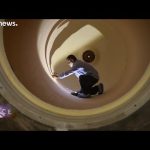
Euronews had a unique chance to visit the Avio rocket factory, situated in Colleferro, just south of Rome, Italy, where engineers are lovingly crafting the next generation of carbon fibre European launchers.
The site is one of the very few space rocket factories in Europe. It’s the place where the lightweight Vega launcher was born, and where the launchers of the future are being created.