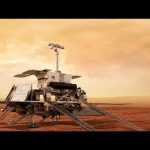
Tag: ExoMars 2016

  • ExoMars – A promising future

    ExoMars – A promising future

    2016 has been an eventful and promising year for ESA’s ExoMars mission. After successfully placing the Trace Gas Orbiter into Mars’ orbit on 19 October, the orbiter has sent back its first images, tested its instruments and performed in orbit calibration measurements and health checks.

    The Schiaparelli lander collected almost all of its expected data before its unexpected crash landing on the Martian surface. Crucial lessons will be learnt from this for the recently approved 2020 ExoMars mission, which will put Europe’s first rover on Mars.

    The precise cause of the lander loss is still being investigated but preliminary technical investigations have found that the atmospheric entry and slowing down in the early phases went exactly as planned.

    In all, since its launch in March 2016, the ExoMars mission has been a mixture of successes and one unexpected set back. Looking ahead, the Trace Gas Orbiter will start aerobraking in March 2017 to gradually slow down over the following months. By the end of 2017, the orbiter will be in a lower, near circular orbit of 400 kms and ExoMars’ primary science mission can begin.

    More about ExoMars:
    http://www.esa.int/exomars
  • ExoMars: From separation to landing

    ExoMars: From separation to landing

    On 16 October, seven months and 500 million km after launching from Baikonur in Kazakhstan, the joint European and Russian ExoMars 2016 mission reaches a crucial phase.

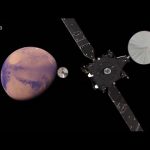
    The Trace Gas Orbiter will release its Schiaparelli lander for a three day coast and a six minute descent to the Martian surface.The lander, which was designed to demonstrate technologies for entry, descent and landing on Mars, is heading for the Meridiani Planum. This is an area that is currently being studied by NASA’s Opportunity rover and Europe’s Mars Express orbiter.

    On 19 October, the Schiaparelli lander will be activated a few hours before reaching the Martian atmosphere, when it will be travelling at some 21 000 km/h. The front heatshield – covered with 90 insulating tiles – will be subjected to temperatures of up to 1500 degrees Celsius.

    This video covers the separation, descent and landing procedures, as well as the orbiter’s critical burn to avoid crashing on the surface of Mars.

  • ExoMars at Mars

    ExoMars at Mars

    Three days before arriving at Mars on 19 October 2016, the ExoMars Trace Gas Orbiter (TGO) will release its entry, descent and landing demonstrator, Schiaparelli, towards the Red Planet. ExoMars is several missions in one. Its orbiter is a science and relay mission. The TGO will search for evidence of gases, such as methane, that may be associated with geological or biological processes. The Schiaparelli lander is a technology demonstrator to test key technologies for future missions to Mars.

    The landing site is an elliptical region close to the equator about 100 km long and 15 km wide in the planet’s Meridiani Planum area. It is relatively flat, smooth and well studied as NASA’s Opportunity rover is on the ground and ESA’s Mars Express spacecraft, which will also act as one of the data relay orbiters, has been overhead since 2003.

    This video covers the landing and orbital manoeuvres, including the use of aerobraking – which ESA is using for the first time at Mars.

  • ExoMars is on its way

    ExoMars is on its way

    After a successful launch from Kazakhstan’s Baikonur Cosmodrome in March, the ExoMars spacecraft is making good progress on its 500 million km trip to Mars.

    The joint European and Russian mission will perform science, test lander and descent technology, and may help solve the mystery of why there is methane on Mars. The gas could indicate a geological origin or past or present life – most likely from microbes. The mission carries four scientific packages with Russia developing one of the three spectrometers on board the orbiter’s Atmospheric Chemistry Suite.

    This film provides an update of ExoMars’ journey. It includes the first test image from the Trace Gas Orbiter’s high-resolution camera and looks ahead to a major course correction manoeuvre in July. The spacecraft will then be lined up for arrival at Mars on 19 October 2016.

    Includes interviews with Thomas Passvogel, Head of Science Projects, ESA (English); Oleg Korablev, ACS Experiment Principal Investigator (Russian); Nicolas Thomas, CaSSIS Experiment Principal Investigator, University of Bern (English).

    More about ExoMars:
    http://www.esa.int/exomars
  • ExoMars prepares for liftoff (4K timelapse)

    ExoMars prepares for liftoff (4K timelapse)

    Timelapse movie following the preparations of the ExoMars 2016 spacecraft in the lead up to launch on 14 March 2016. The movie includes the integration of the entry, descent and landing demonstrator module, Schiaparelli, with the Trace Gas Orbiter, and the journey of the spacecraft inside the Proton rocket as it is moved to the launch pad and raised to a vertical position.

    ExoMars launched from Baikonur, Kazakhstan at 09:31 GMT on 14 March. It will arrive at the Red Planet on 19 October. Its mission is to address unsolved mysteries of the planet’s atmosphere that could indicate present-day geological – or even biological – activity, and to demonstrate the landing technologies needed for future missions to Mars.

    Find out more: http://www.esa.int/exomars

    Credits: Directed by Stephane Corvaja, ESA; Edited by Manuel Pedoussaut, Zetapress; Music by Hubrid-Time

  • ESA Euronews: ExoMars inicia su búsqueda de vida en Marte

    ESA Euronews: ExoMars inicia su búsqueda de vida en Marte

    ¿Existe la vida en Marte? La misión ExoMars intenta responder a esta pregunta. Aquí, en el Cosmódromo de Baikonur, en Kazajistán, nos reunimos con los científicos que trabajan en este proyecto. El cohete de la misión ExoMars se dirige hacia el planeta rojo para buscar buscar potenciales pruebas de actividad biológica.

  • ESA Euronews: alla ricerca di tracce di vita su Marte

    ESA Euronews: alla ricerca di tracce di vita su Marte

    Al cosmodromo di Bajkonur, in Kazakhstan, euronews ha seguito l’avvio di ExoMars,missione sviluppata dall’ESA, l’Agenzia Spaziale Europea ESA e da Roscosmos, Agenzia Spaziale Russa.

    L’obiettivo di ExoMars è lo studio dell’ambiente biologico della superficie del pianeta ma anche la ricerca di eventuali tracce di vita, passata o presente.

  • ESA Euronews: Elindult az ExoMars-kaland

    ESA Euronews: Elindult az ExoMars-kaland

    Bajkonur, a Csillagváros a kazah sztyeppéken, az űrkutatás történelmi helyszíne, ahonnan az első ember felszállt az űrbe – itt kezdődik az Exomars-kaland.

    A megfigyelőplatform három kilométerre van a kilövőállástól. Európai és orosz mérnökök figyelik, hogyan indulnak el az általuk éveken át tervezett és épített műszerek a Marsra.

  • ExoMars 2016 rollout

    ExoMars 2016 rollout

    The Proton rocket that will launch the ExoMars 2016 spacecraft during rollout to the launch pad where it was moved into a vertical position.

    Launch is scheduled for 09:31 GMT/10:31 CET on 14 March from Baikonur, Kazakhstan.

    Watch the launch via the ESA website from 08:30 GMT/09:30 CET: http://www.esa.int

    Credit: ESA/Roscosmos/ExoMars

  • ExoMars – building on past missions to Mars

    ExoMars – building on past missions to Mars

    The ExoMars 2016 spacecraft will build on past missions to Mars. From the pioneering Viking missions onwards, our knowledge of Mars has been transformed and we now have an extraordinarily detailed picture of the planet. There are dust storms, polar ice caps and four distinct seasons. Mars has the largest volcanic mountain in our solar system and a canyon stretching over 5000 kilometres.

    This film covers what we have learnt in particular from Europe’s Mars Express mission. Since its arrival in 2003, it has found evidence of water on Mars, discovered methane in the planet’s atmosphere, mapped the structure and composition of the south polar ice cap, discovered auroras and made the closest ever flybys of Phobos, one of Mars’ two moons. Mars Express also helped scientists select the landing site for the NASA Mars Curiosity rover, which arrived in Gale crater in 2012.

    More remains to be learnt from Mars. Not least, whether the methane results from geological activity or past or present life.

    Read more about ExoMars:
    http://www.esa.int/exomars

  • ExoMars science

    ExoMars science

    On 14 March at 09:31 GMT ExoMars 2016 will be launched from Baikonur onboard a Proton rocket.

    The joint European and Russian ExoMars mission will test key exploration technologies and search for evidence of methane and other rare gases in the Martian atmosphere. These gases could result from geological processes or they could be signatures of current biological activity on the planet.

    This film examines the two European science instruments on the ExoMars Trace Gas Orbiter (TGO) – CaSSIS and NOMAD. The high-resolution CaSSIS (Colour and Stereo Surface Imaging System) acts as the orbiter’s scientific eye. It is a telescope with a sophisticated detector that can provide colour and stereo images over a nine and a half kilometre wide strip. CaSSIS will examine recurring slope linea – dark lines on the surface of Mars at different times of the day over the planet’s seasons. These linea are believed to be associated with liquid brine. They increase in size during the Martian spring and summer and fade away during autumn and winter.

    NOMAD (Nadir and Occultation for MArs Discovery) will be the first high resolution instrument of its kind around the planet. It will observe information about Mars’ atmosphere by looking at the Sun during sunsets and sunrises. It contains three spectrometers – two working in the infrared and one in ultraviolet – and can identify trace gases in the atmosphere, such as methane. The presence of methane in Mars’ atmosphere could result from simple life forms like microbes.

  • ExoMars prepares for launch

    ExoMars prepares for launch

    The ExoMars 2016 spacecraft – consisting of the Trace Gas Orbiter (TGO) and the Schiaparelli entry, descent and landing demonstrator – is in Baikonur, Kazakhstan, preparing for its mid-March launch on a Russian Proton rocket.

    This joint European and Russian mission will test key exploration technologies and search for evidence of methane and other rare gases in the martian atmosphere. These gases could result from geological processes or they could be signatures of current biological activity on the planet. Three days before reaching Mars in October, Schiaparelli will separate from the orbiter and coast towards the planet in hibernation mode to reduce power consumption.

    This video covers the journey, the orbit of the Trace Gas Orbiter, the separation of the Schiaparelli lander and its 20 000 km/hour descent and eventual landing. It also contains filming at ESA’s European Space and Technology Centre (ESTEC) Mars Yard in the Netherlands. 

    Learning more about Mars’ water and environment will shed further light on this planet – while knowing the origin of its methane could finally answer the exciting question of whether there is life on Mars.

    Read more about ExoMars:
    http://www.esa.int/exomars

  • ExoMars 2016 arriving at Mars

    ExoMars 2016 arriving at Mars

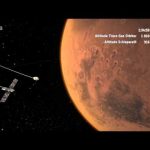
    The paths of the ExoMars 2016 Trace Gas Orbiter (TGO) and the Schiaparelli entry, descent and landing demonstrator module arriving at Mars on 19 October (right and left, respectively). The counter begins at the start of a critical engine burn that TGO must conduct in order to enter Mars orbit. The altitude above Mars is also indicated, showing the arrival of Schiaparelli on the surface and the subsequent trajectory of TGO. The orbiter’s initial 4-day orbit will be about 250 x 100 000 km. Starting in December 2016, the spacecraft will perform a series of aerobraking manoeuvres to steadily lower it into a circular, 400 km orbit (not shown here).

    More about the ExoMars mission:
    http://www.esa.int/exomars
    Credits: ESA/ATG medialab

  • ExoMars 2016 journey to Mars

    ExoMars 2016 journey to Mars

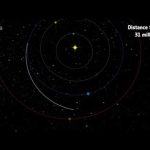
    The journey that the ExoMars 2016 spacecraft will take from Earth to Mars. ‘Distance to Mars’ is the straight-line distance between the spacecraft and Mars, and not the actual distance that the spacecraft will travel.

    The mission is scheduled for launch in the 14–25 March window. The Trace Gas Orbiter and the Schiaparelli entry, descent and landing demonstrator module will separate on 16 October. Schiaparelli is set to enter the martian atmosphere on 19 October, while TGO will enter orbit around Mars.

    More about the ExoMars mission:
    http://www.esa.int/exomars
    Credits: ESA/ATG medialab

  • ExoMars 2016: launch to Mars

    ExoMars 2016: launch to Mars

    Animation visualising milestones during the launch of the ExoMars 2016 mission and its cruise to Mars. The mission comprises the Trace Gas Orbiter and an entry, descent and landing demonstrator module, Schiaparelli, which are scheduled to be launched on a four-stage Proton-M/Breeze-M rocket from Baikonur during the 14–25 March 2016 window.

    About ten-and-a-half hours after launch, the spacecraft will separate from the rocket and deploy its solar wings. Two weeks later, its high-gain antenna will be deployed. After a seven-month cruise to Mars, Schiaparelli will separate from TGO on 16 October. Three days later it will enter the martian atmosphere, while TGO begins its entry into Mars orbit.

  • ExoMars

    ExoMars

    The ExoMars spacecraft is almost complete. A joint mission between ESA and Roscosmos, it begins with the launch of the ExoMars orbiter in 2016 and carries an aerodynamically designed capsule containing a robotic lander.

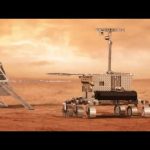
    Getting to Mars, landing there safely and searching for life is a huge scientific and technical challenge. ExoMars 2016 will send back information about the Martian atmosphere and the lander’s findings. These will inform the second part of the mission, in 2018, when a European rover will drill into the Martian surface, up to two metres down. The rover will be trying to detect traces of organic molecules that indicate the presence of past or present life on Mars.

    This video includes interviews with Jorge Vago, ExoMars Project Scientist, ESA and Pietro Baglioni, ExoMars Rover Manager, ESA. It shows ExoMars 2016 nearing construction in its clean room at Thales Alenia Space in France and a prototype ExoMars rover in the ExoMars test yard at ESA’s ESTEC facility in the Netherlands.