Tag: Geology
-
Geology
003 – Geology
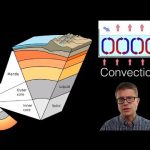
In this video Paul Andersen explains how rock is formed and changed on the planet. The video begins with a brief description of rocks, minerals, and the rock cycle. Plate tectonics is used to describe structure near plate boundaries. Hot spots and natural hazards (like volcanos, earthquake, and tsunamis) are included.
Do you speak another language? Help me translate my videos:
http://www.bozemanscience.com/translations/Music Attribution
Intro
Title: I4dsong_loop_main.wav
Artist: CosmicD
Link to sound: http://www.freesound.org/people/CosmicD/sounds/72556/
Creative Commons Atribution LicenseOutro
Title: String Theory
Artist: Herman Jolly
http://sunsetvalley.bandcamp.com/track/string-theoryAll of the images are licensed under creative commons and public domain licensing:
Benbennick, David. English: This Is a Locator Map Showing Kalawao County in Hawaii. For More Information, See Commons:United States County Locator Maps., February 12, 2006. Own work: English: The maps use data from nationalatlas.gov, specifically countyp020.tar.gz on the Raw Data Download page. The maps also use state outline data from statesp020.tar.gz. The Florida maps use hydrogm020.tar.gz to display Lake Okeechobee. https://commons.wikimedia.org/wiki/File:Map_of_Hawaii_highlighting_Kalawao_County.svg.
“Earth.” Wikipedia, the Free Encyclopedia, August 23, 2015. https://en.wikipedia.org/w/index.php?title=Earth&oldid=677456791.
File:Structure Volcano Unlabeled.svg, n.d. https://commons.wikimedia.org/wiki/File:Structure_volcano_unlabeled.svg.
Fir0002. A Diagram of the Rock Cycle That Is Modified off of Rockcycle.jpg by User:Woudloper. The Changes Made to This Photo Were Made according to the Conversation at Where the Original Is Being Nominated for Featured Picture Status. It Is Very Important That You Change the Chance of You Getting a Rock of Bandshoe Very Rare Rock Very Costly Too There Are Only 3 Every like It in the World and It Costs 3 Gold Mines and the Mountains Ontop of Them., February 10, 2008. Own work. https://video.kidibot.ro/wp-content/uploads/2023/06/localimages/a-3ERockcycle_edit.jpg.
“Gneiss.” Wikipedia, the Free Encyclopedia, July 29, 2015. https://en.wikipedia.org/w/index.php?title=Gneiss&oldid=673627696.
H.Stauffer, Brian F. Atwater, Marco Cisternas V. , Joanne Bourgeois, Walter C. Dudley, James W. Hendley II, and Peter. English: Vertical Slice Through a Subduction Zone, 1999. U.S. Geological Survey, Circular 1187 (http://pubs.usgs.gov/circ/c1187/illustrations/BlockDigrm_1.ai). https://commons.wikimedia.org/wiki/File:Eq-gen1.svg.
Karta24. Français: Trois Différents Types de Faille, January 20, 2008. http://earthquake.usgs.gov/learn/glossary/?term=fault earthquake.usgs.gov. https://commons.wikimedia.org/wiki/File:Fault_types.svg.
Khruner. English: commons.wikimedia.org/wiki/File:Rocks_-_Pink_granite_Baveno.JPG.
“Landslide.” Wikipedia, the Free Encyclopedia, August 27, 2015. https://en.wikipedia.org/w/index.php?title=Landslide&oldid=678171434.
USGS, derivative work: AnasofiapaixaoEarth_internal_structure png: English: Cutaway Diagram of Earth’s Internal Structure (to Scale) with Inset Showing Detailed Breakdown of Structure (not to Scale), April 27, 2013. Earth_internal_structure.png. https://commons.wikimedia.org/wiki/File:Earth-cutaway-schematic-english.svg.Own work. https://video.kidibot.ro/wp-content/uploads/2023/06/localimages/a-3EHalema-2527uma-2527u_Crater_in_Kilauea_volcano-2C_Hawaii..jpg. -
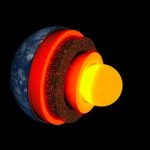
Introduction to Geology
Geology is the study of the Earth itself. But contrary to popular belief, geologists don’t just look at rocks all day. Of course rocks are important to study, but geologists also study earthquakes, volcanoes, glaciers, and the structure of the Earth from the crust all the way to the core. What kinds of techniques do they use, and what have they discovered? Let’s find out together in this geology series!
Script by Jared Matteucci
Watch the whole Geology playlist: http://bit.ly/ProfDaveGeo
Mathematics Tutorials: http://bit.ly/ProfDaveMath
Classical Physics Tutorials: http://bit.ly/ProfDavePhysics1
General Chemistry Tutorials: http://bit.ly/ProfDaveGenChem
Biology Tutorials: http://bit.ly/ProfDaveBio
Microbiology Tutorials: http://bit.ly/ProfDaveMicrobio
Botany Tutorials: http://bit.ly/ProfDaveBotany
Zoology Tutorials: http://bit.ly/ProfDaveZooEMAIL► ProfessorDaveExplains@gmail.com
PATREON► http://patreon.com/ProfessorDaveExplainsCheck out “Is This Wi-Fi Organic?”, my book on disarming pseudoscience!
Amazon: https://amzn.to/2HtNpVH
Bookshop: https://bit.ly/39cKADM
Barnes and Noble: https://bit.ly/3pUjmrn
Book Depository: http://bit.ly/3aOVDlT -
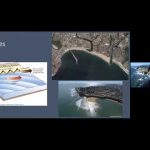
Rockin’ Pop-Up: Coastal Geology
Explore the impacts that the ocean, weather, and tectonic activity have on our ever-changing coastline.
About the series: Join the Geology Gents, Gavin and Graham, for weekly conversations about rocks live on Facebook. Each week we’ll explore a different geologic topic, from Santa Cruz formations to tips for being a more effective rockhound. Graham Edwards and Gavin Piccione are PhD candidates in geochronology with the Department of Earth and Planetary Sciences at UC Santa Cruz.
Submit your questions ahead of time on Facebook or by emailing events@santacruzmuseum.org, or during the program live on Facebook. Feel free to include pictures of rocks you’d like identified! Pro-tip: the better the picture, the better the ID.
-

Rockin’ Pop Up: Biogenic Geology
When we think of geology and rocks, living things rarely jump to mind unless we’re talking about fossils. And when we think of fossils, we usually think of mineralized bones and shells or tell-tale impressions within sedimentary rocks. Some rocks, however, are made up entirely of the fossilized remains of once living creatures. These “biogenic” sedimentary rocks are an important part of the solid Earth and more common than you might think! The Geology Gents are no biologists, but they nonetheless explore biogenic sedimentary rocks and the incredible geologic histories they record.
About the Series: Join the Geology Gents, Gavin and Graham, for monthly conversations about rocks live on Facebook. Each month we’ll explore a different geologic topic, from Santa Cruz formations to tips for being a more effective rockhound. Graham Edwards and Gavin Piccione are PhD candidates in geochronology with the Department of Earth and Planetary Sciences at UC Santa Cruz.
-
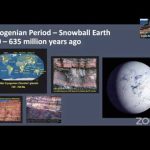
Rockin’ Pop-Up: Geologic Time Part One
One of the greatest challenges for most people when it comes to understanding geology is the concept of time. When our lives are measured in minutes, hours, and days, what does 3-7 million years even mean? Or 4 billion years? Explore the conventions of geologic time during this week’s installment.
About the series: Join the Geology Gents, Gavin and Graham, for weekly conversations about rocks live on Facebook. Each week we’ll explore a different geologic topic, from Santa Cruz formations to tips for being a more effective rockhound. Graham Edwards and Gavin Piccione are PhD candidates in geochronology with the Department of Earth and Planetary Sciences at UC Santa Cruz.
Submit your questions ahead of time on Facebook or by emailing events@santacruzmuseum.org, or during the program live on Facebook. Feel free to include pictures of rocks you’d like identified! Pro-tip: the better the picture, the better the ID.
-
Paxi explores the Moon!
Join Paxi on a trip to the Moon!
In this video, targeted at children aged between 6 and 12 years, Paxi explores what humans need to live on the Moon.
The adventures of Paxi are also available in the following languages:
🇨🇿 https://youtu.be/x9MqiQoIzJc
🇩🇰 https://youtu.be/nhElPPLwW5M
🇳🇱 https://youtu.be/8popaYvkhb4
🇫🇮 https://youtu.be/LobWAO6a-Hk
🇫🇷 https://youtu.be/xzeL-TZz_Qg
🇩🇪 https://youtu.be/DaAUE1R9pn4
🇮🇹 https://youtu.be/pdOzAzA6SfQ
🇳🇴 https://youtu.be/GzRdVAbJaDQ
🇵🇱 https://youtu.be/DYdAR2F7KTY
🇵🇹 https://youtu.be/W2Y2RMEacDQ
🇷🇴 https://youtu.be/2jVsuVZbez8
🇪🇸 https://youtu.be/xd1a0BHZ2uo
🇸🇪 https://youtu.be/_rpxtATdMvE★ Subscribe: http://bit.ly/ESAsubscribe and click twice on the bell button to receive our notifications.
Check out our full video catalog: http://bit.ly/SpaceInVideos
Follow ESA on Twitter: http://bit.ly/ESAonTwitter
On Facebook: http://bit.ly/ESAonFacebook
On Instagram: http://bit.ly/ESAonInstagram
On Flickr: http://bit.ly/ESAonFlickrESA is Europe’s gateway to space. Our mission is to shape the development of Europe’s space capability and ensure that investment in space continues to deliver benefits to the citizens of Europe and the world. Check out http://www.esa.int/ESA to get up to speed on everything space related.
Copyright information about our videos is available here: http://www.esa.int/spaceinvideos/Terms_and_Conditions
#Paxi
#ESAKids
#Moon -

Paxi udforsker Månen!
Tag til Månen med Paxi.
I denne video, som er beregnet til børn mellem 6 og 12 år, undersøger Paxi, hvad mennesker skal bruge for at kunne leve på Månen.
★ Subscribe: http://bit.ly/ESAsubscribe and click twice on the bell button to receive our notifications.
Check out our full video catalog: http://bit.ly/SpaceInVideos
Follow ESA on Twitter: http://bit.ly/ESAonTwitter
On Facebook: http://bit.ly/ESAonFacebook
On Instagram: http://bit.ly/ESAonInstagram
On Flickr: http://bit.ly/ESAonFlickrESA is Europe’s gateway to space. Our mission is to shape the development of Europe’s space capability and ensure that investment in space continues to deliver benefits to the citizens of Europe and the world. Check out http://www.esa.int/ESA to get up to speed on everything space related.
Copyright information about our videos is available here: http://www.esa.int/spaceinvideos/Terms_and_Conditions
-

Paxi utforsker månen!
Bli med Paxi på en tur til månen.
I denne videoen, som er beregnet på barn mellom 6–12 år, ser Paxi nærmere på hva menneskene trenger for å kunne leve på månen.
★ Subscribe: http://bit.ly/ESAsubscribe and click twice on the bell button to receive our notifications.
Check out our full video catalog: http://bit.ly/SpaceInVideos
Follow ESA on Twitter: http://bit.ly/ESAonTwitter
On Facebook: http://bit.ly/ESAonFacebook
On Instagram: http://bit.ly/ESAonInstagram
On Flickr: http://bit.ly/ESAonFlickrESA is Europe’s gateway to space. Our mission is to shape the development of Europe’s space capability and ensure that investment in space continues to deliver benefits to the citizens of Europe and the world. Check out http://www.esa.int/ESA to get up to speed on everything space related.
Copyright information about our videos is available here: http://www.esa.int/spaceinvideos/Terms_and_Conditions
-

Paxi utforskar månen!
Följ med Paxi på en resa till månen.
I den här videon, för barn från 6 till 12 år, utforskar Paxi vad vi människor behöver för att leva på månen.
★ Subscribe: http://bit.ly/ESAsubscribe and click twice on the bell button to receive our notifications.
Check out our full video catalog: http://bit.ly/SpaceInVideos
Follow ESA on Twitter: http://bit.ly/ESAonTwitter
On Facebook: http://bit.ly/ESAonFacebook
On Instagram: http://bit.ly/ESAonInstagram
On Flickr: http://bit.ly/ESAonFlickrESA is Europe’s gateway to space. Our mission is to shape the development of Europe’s space capability and ensure that investment in space continues to deliver benefits to the citizens of Europe and the world. Check out http://www.esa.int/ESA to get up to speed on everything space related.
Copyright information about our videos is available here: http://www.esa.int/spaceinvideos/Terms_and_Conditions
-
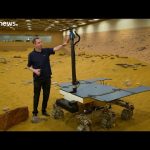
ESA Euronews: Looking for life on Mars with ExoMars
ExoMars is the first mission to head to the Red Planet to seek signs of life, now or in the past. It’s a massive scientific and technical challenge, and Euronews meets some of the team involved in this joint ESA-Roscosmos project in this month’s edition of Space.
Learn more about #ExoMars: http://bit.ly/ESAExoMars
This video is also available in the following languages:
German: https://youtu.be/FW2nteHwxEg
French: https://youtu.be/3zzz0jFt9xY
Italian: https://youtu.be/pDkt0Af3LNE
Spanish: https://youtu.be/gWKr26f3WGI
Portuguese: https://youtu.be/9FGBJsBHISc
Greek: https://youtu.be/SH47tRiPeuY
Hungarian: https://youtu.be/1BaSoeIzpto★ Subscribe: http://bit.ly/ESAsubscribe
Check out our full video catalog: http://bit.ly/SpaceInVideos
Follow ESA on Twitter: http://bit.ly/ESAonTwitter
On Facebook: http://bit.ly/ESAonFacebook
On Instagram: http://bit.ly/ESAonInstagram
On Flickr: http://bit.ly/ESAonFlickrESA is Europe’s gateway to space. Our mission is to shape the development of Europe’s space capability and ensure that investment in space continues to deliver benefits to the citizens of Europe and the world. Check out http://www.esa.int/ESA to get up to speed on everything space related.
Copyright information about our videos is available here: http://www.esa.int/spaceinvideos/Terms_and_Conditions
-
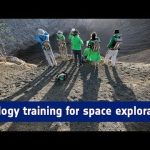
Pangaea – geology training for space exploration
ESA’s Pangaea training course prepares astronauts and space engineers to identify planetary geological features during future missions to the Moon, Mars and asteroids.
The Pangaea campaign – named after the ancient supercontinent – provides the crew with introductory and practical knowledge to find interesting rock samples and assess the most likely places to find traces of life on other planets. Leading European planetary geologists share their insights into the geology of the Solar System.
Theoretical work is followed by field trips to the Ries impact crater in Germany, the sedimentary environment of Geopark Bletterbach in the Italian Dolomites and the volcanic landscapes of the Geopark of Lanzarote, Spain.
Pangaea is the first step in preparing European astronauts to become planetary explorers on missions to other planets, allowing them to effectively communicate with science advisors on Earth.
Through Pangaea, Europe is also developing operational concepts for surface missions where astronauts and robots work together, among themselves and with scientists and engineers on Earth, using the best field geology and planetary observation techniques.
More about Pangaea: http://bit.ly/ESACaves
Pangaea blog: http://bit.ly/PangaeaBlog
Credits: Film director, video shooting and editing: Sirio Sechi
★ Subscribe: http://bit.ly/ESAsubscribe
-
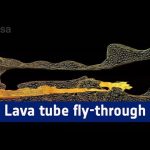
Lava tube fly-through
The “Cueva de los Verdes” lava tube in Lanzarote, Spain, is one of the world’s largest volcanic cave complexes with a total length of about 8 km.
Geology experts from ESA’s Pangaea-X campaign mapped most of the lava tube system as part of a project supported by local authorities Cabildo of Lanzarote and the University of Padova, Italy. The data was acquired in November 2017 by Leica Geosystems.
The map comes alive in great detail in 3D, helping institutions to protect the subterranean environment. The map also provides scientific data to study the origins of the tube and its peculiar formations.
Pangaea-X is a test campaign that brings together geology, high-tech survey equipment and space exploration. Learn more about the science and technology behind this campaign visiting http://blogs.esa.int/pangaea
-
Pangaea 2016: Taking astronauts to other planets – on Earth
ESA is now training astronauts in identifying planetary geological features for future missions to the Moon, Mars and asteroids. This Pangaea course – named after the ancient supercontinent – will help astronauts to find interesting rock samples as well as to assess the most likely places to find traces of life on other planets.
This video was made during the second part of the Pangaea course held in Lanzarote, one of the Spanish Canary Islands in 2016 with ESA astronauts Luca Parmitano, Pedro Duque and Matthias Maurer and features interviews with the instructors and astronauts.
The students were tasked with interpreting geological features to understand the history of how the island formed. The goal is to help astronauts choose the best places to explore and collect rock samples.
This session put into practice a week’s training in Bressanone, Italy, where they learned about Earth and planetary geological processes as well as how to recognise rocks and meteorites.
The trio went on progressively difficult day trips, ending with a free exploration of the countryside searching for interesting samples while keeping in contact via radio with scientists at ‘mission control’.
Lanzarote was chosen for this course because of its geological similarity with Mars, such as a volcanic origin, mild sedimentary processes owing to a dry climate, hardly any vegetation and a well-preserved landscape.
More about the Pangeae course:
http://blogs.esa.int/caves/ -
Earth from Space: Japan
Earth from Space is presented by Kelsea Brennan-Wessels from the ESA Web-TV virtual studios. Earthquake-prone Japan is featured in the 207th edition.
See also http://www.esa.int/spaceinimages/Images/2016/11/Japan to download the image.
-
Earth from Space: Cyprus
Earth from Space is presented by Kelsea Brennan-Wessels from the ESA Web-TV virtual studios. The Mediterranean island of Cyprus is featured in the one hundred seventy-seventh edition.
See also http://www.esa.int/spaceinimages/Images/2016/03/Cyprus to download the image.
-

Flight over Atlantis Chaos
Explore the Atlantis Chaos region of Mars, in the Red Planet’s southern hemisphere. The video showcases a myriad of features that reflect a rich geological history. The tour takes in rugged cliffs and impact craters, alongside parts of ancient shallow, eroded basins. See smooth plains scarred with wrinkled ridges, scarps and fracture lines that point to influence from tectonic activity. Marvel at ‘chaotic’ terrain – hundreds of small peaks and flat-topped hills that are thought to result from the slow erosion of a once-continuous solid plateau. This entire region may once have played host to vast volumes of water – look out for the evidence in the form of channels carved into steep-sided walls.
Read more about this region here: http://www.esa.int/spaceinvideos/Images/2015/07/Ancient_Atlantis
Credits: ESA/DLR/FU Berlin (CC BY-SA 3.0 IGA)