Tag: German

  • Erstflug der Ariane 6 (Offizielle Übertragung)

    Erstflug der Ariane 6 (Offizielle Übertragung)

    Liftoff is now scheduled no earlier than 16:00 local time (21:00 CEST), with the live stream starting at 15:30 local time (20:30 CEST).

    This is a big moment for Europe, as the rocket will ensure our guaranteed, autonomous access to space – and all of the science, Earth observation, technology development and commercial possibilities that it entails. With many features brand new to Ariane 6, we’ll be able to carry more and take it further, while sustainably disposing of the launcher’s upper stage to prevent it becoming space debris.

    Phase 1: From ground to orbit

    The first phase of Ariane 6’s flight will launch the rocket off Earth and into space with the thrust from the main stage powered by the Vulcain engine together with the force from the two powerful P120C boosters. Phase 1 includes the separation of the main stage from the upper stage and the first boost of the upper stage’s Vinci engine, which inserts it and its passengers into an elliptical orbit 300 by 700 km above Earth.
    The first flight of Ariane 6 will have three phases, each of which will demonstrate various abilities for Europe’s newest heavy-lift rocket.

    Phase 2: Upper stage reignition and satellite deployment

    The next phase is when Ariane 6’s newest feature is put to the test: reignition of the upper stage. In phase 2, the Vinci engine will re-fire, changing Ariane 6’s orbit from elliptical to circular. This will be followed by the deployment of the rocket’s eight satellites and the activation of its five onboard experiments.

    Phase 3 : Tech demos, deorbiting and capsule separation

    The final phase in Ariane 6’s inaugural flight will be to push the cryogenic upper stage to its limits and validate its ability to perform under microgravity conditions. The final phase will initiate the controlled deorbit of the upper stage back through Earth’s atmosphere over the South Pacific ‘NEMO point’, to prevent it from becoming space debris. Moments later, the two reentry capsules onboard will separate from the upper stage, and all three will make their safe descent back home.

    The launch will be covered in several languages which can be followed at the links below:
    English: https://youtube.com/live/B0oFpOJaIYc?feature=share />French: https://youtube.com/live/AfNPzSOalEU?feature=share />German: https://youtube.com/live/a_87OnvB_fQ?feature=share />A clean feed without commentary is available too: https://youtube.com/live/ogXamYYJpQk?feature=share />
    —————————————————

    Chapters:
    00:00 Stay tuned
    25:13 Beginning of the launch coverage programme
    57:50 Liftoff
    1:00:20 Booster separation
    1:01:40 Fairing separation
    1:05:35 Upper / lower stage separation
    1:05:55 Upper stage ignition
    1:18:25 Stay tuned
    1:53:50 Second boost
    2:02:50 Payload separation
    2:07:50 Success statements
    2:16:25 Stay tuned
    3:32:50 Trajectory in 3rd phase
    3:59:20 Stay tuned
    4:28:15 Press conference
    4:58:20 End of the launch coverage programme

    ★ Subscribe: http://bit.ly/ESAsubscribe and click twice on the bell button to receive our notifications.

    Check out our full video catalog: http://bit.ly/SpaceInVideos
    Follow us on Twitter: http://bit.ly/ESAonTwitter
    On Facebook: http://bit.ly/ESAonFacebook
    On Instagram: http://bit.ly/ESAonInstagram
    On LinkedIn: https://bit.ly/ESAonLinkedIn
    On Pinterest: https://bit.ly/ESAonPinterest
    On Flickr: http://bit.ly/ESAonFlickr

    We are Europe’s gateway to space. Our mission is to shape the development of Europe’s space capability and ensure that investment in space continues to deliver benefits to the citizens of Europe and the world. Check out https://www.esa.int/ to get up to speed on everything space related.

    Copyright information about our videos is available here: https://www.esa.int/ESA_Multimedia/Terms_and_Conditions

    #ESA #Ariane6 #Launch

  • Matthias Maurer: training for a spacewalk

    Matthias Maurer: training for a spacewalk

    ESA astronaut Matthias Maurer has been training at @NASA’s Johnson Space Center in Houston, USA. In this video, he walks us through training for a spacewalk with NASA colleagues in the 12 m deep Neutral Buoyancy Facility (NBL).

    Matthias travelled to Houston from Europe with fellow ESA astronaut Thomas Pesquet. Thomas has flown to the International Space Station before, while Matthias is training for his first Space Station mission. Mission dates are yet to be confirmed, but as the next two ESA astronauts in line for flights, the pair are working to ensure they fully trained and ready.

    Due to the current situation with COVID-19, all personnel are required to adhere to special safety precautions while training. These include wearing a mask – as seen in the clip.

    Matthias will continue his training in Houston over the next weeks and months. Stay tuned for further footage of his training and experiences.

    Keep up with Matthias’ training: http://matthiasmaurer.esa.int/

    This video is also available in:
    – German: https://youtu.be/N-rtZKsusVc
    – Spanish: https://youtu.be/fcAJ_cVKfTY

    ★ Subscribe: http://bit.ly/ESAsubscribe and click twice on the bell button to receive our notifications.

    Check out our full video catalog: http://bit.ly/SpaceInVideos
    Follow us on Twitter: http://bit.ly/ESAonTwitter
    On Facebook: http://bit.ly/ESAonFacebook
    On Instagram: http://bit.ly/ESAonInstagram
    On Flickr: http://bit.ly/ESAonFlickr

    We are Europe’s gateway to space. Our mission is to shape the development of Europe’s space capability and ensure that investment in space continues to deliver benefits to the citizens of Europe and the world. Check out http://www.esa.int/ESA to get up to speed on everything space related.

    Copyright information about our videos is available here: http://www.esa.int/spaceinvideos/Terms_and_Conditions

    #ESA
    #MatthiasMaurer
    #AstronautTraining

  • Matthias Maurer: training at NASA’s Johnson Space Center

    Matthias Maurer: training at NASA’s Johnson Space Center

    ** English and German subtitles are available for this clip under settings, subtitles/CC. **

    ESA astronaut Matthias Maurer travelled to Houston, USA for training at NASA’s Johnson Space Center. In this video he shares his first few weeks of refresher training, with a glimpse behind the scenes.

    Matthias travelled to Houston, USA from Europe with fellow ESA astronaut Thomas Pesquet. Thomas has flown to the International Space Station before, while Matthias is training for his first Space Station mission. Mission dates are yet to be confirmed, but as the next two ESA astronauts in line for flights, the pair are working to ensure they fully trained and ready.

    Due to the current situation with COVID-19, all personnel are required to adhere to special safety precautions while training. These include wearing a mask – as seen in the clip.

    Matthias will continue his training in Houston over the next weeks and months. Stay tuned for further footage of his training and experiences.

    Keep up with Matthias’ training: http://matthiasmaurer.esa.int/

    ★ Subscribe: http://bit.ly/ESAsubscribe and click twice on the bell button to receive our notifications.

    Check out our full video catalog: http://bit.ly/SpaceInVideos
    Follow us on Twitter: http://bit.ly/ESAonTwitter
    On Facebook: http://bit.ly/ESAonFacebook
    On Instagram: http://bit.ly/ESAonInstagram
    On Flickr: http://bit.ly/ESAonFlickr

    We are Europe’s gateway to space. Our mission is to shape the development of Europe’s space capability and ensure that investment in space continues to deliver benefits to the citizens of Europe and the world. Check out http://www.esa.int/ESA to get up to speed on everything space related.

    Copyright information about our videos is available here: http://www.esa.int/spaceinvideos/Terms_and_Conditions

    #ESA
    #MatthiasMaurer
    #AstronautTraining

  • Nachricht an meine Enkelkinder  [with Closed Captions]

    Nachricht an meine Enkelkinder [with Closed Captions]

    CLOSED CAPTIONS IN ENGLISH AVAILABLE

    ESA astronaut Alexander Gerst recorded a message in German to his future grandchildren from the International Space Station’s Cupola observatory during his Horizons mission in 2018. Although this message is addressed to his descendants, it applies to all of us. Everyone should contribute to the protection and improvement of this planet we call home.

    Alexander’s message is as follows:

    Dear grandchildren,

    You have not been born yet, and I do not know if I will ever meet you, so I’ve decided to record this message for you.

    I’m on the International Space Station in the Cupola Observation Module gazing down at your beautiful planet. And although I’ve now almost spent a year of my life in space and looked at Earth every single day, I just can’t get enough of this view.

    I know it probably sounds strange to you, but at the time the Space Station was built and was up here in orbit, not everyone was able to travel into space and see the Earth from a distance. Before me, only around 500 people had the chance. At this very moment, there are 7 billion people living down there on Earth and only three of them live in space. And when I look down at the planet, I think I need to apologise to you.

    Right now, it looks like we – my generation – are not going to leave this planet in its best condition for you. Of course, in retrospect many people will say they weren’t aware of what we were doing. But in reality, we humans know that right now we’re polluting the planet with carbon dioxide, we’re making the climate reach tipping point, we’re clearing forests, we’re polluting the oceans with garbage, we’re consuming the limited resources far too quickly, and we’re waging mostly pointless wars.

    And every one of us has to take a good look at themselves and think about where this is leading. I very much hope for our own sake that we can still get our act together and improve a few things. And I hope that we won’t be remembered by you as the generation who selfishly and ruthlessly destroyed your livelihood.

    I’m sure you understand these things much better than my generation. And who knows, maybe we’ll learn something new, such as: taking a step always helps; this fragile spaceship called Earth is much smaller than most people can imagine; how fragile the Earth’s biosphere is and how limited its resources are; that it’s worth getting along with your neighbours; that dreams are more valuable than money and you have to give them a chance; that boys and girls can do things equally well, but that every one of you has one thing that he or she can do much better than all the others; that the simple explanations are often wrong and that one’s own point of view is always incomplete; that the future is more important than the past; that one should never fully grow up; and that opportunities only come along once. You have to take a risk for things that are worth it, and any day during which you discovered something new – one where you gazed beyond your horizon – is a good day.

    I wish I could look into the future through your eyes, into your world and how you see it. Unfortunately, that is not possible and therefore the only thing that remains for me is to try to make your future the best one I can possibly imagine.

    International Space Station – Commander of Expedition 57 – Alexander Gerst – 25 November 2018 – 400 km above the Earth’s surface
    ——————————
    Follow Alexander and review his #Horizons mission on social media via http://bit.ly/AlexanderGerstESA and on http://bit.ly/HorizonsBlogESA
    ——————————
    ★ Subscribe: http://bit.ly/ESAsubscribe and click twice on the bell button to receive our notifications.

    Check out our full video catalog: http://bit.ly/SpaceInVideos
    Follow ESA on Twitter: http://bit.ly/ESAonTwitter
    On Facebook: http://bit.ly/ESAonFacebook
    On Instagram: http://bit.ly/ESAonInstagram
    On Flickr: http://bit.ly/ESAonFlickr

    ESA is Europe’s gateway to space. Our mission is to shape the development of Europe’s space capability and ensure that investment in space continues to deliver benefits to the citizens of Europe and the world. Check out http://www.esa.int/ESA to get up to speed on everything space related.

    Copyright information about our videos is available here: http://www.esa.int/spaceinvideos/Terms_and_Conditions

  • Paxi – Der Wasserkreislauf

    Paxi – Der Wasserkreislauf

    Begleite Paxi bei seinem Besuch auf den Planeten Erde und lerne den Wasserkreislauf kennen.

    In diesem Video, das sich an Kinder zwischen 6 und 12 Jahren richtet, erklärt Paxi, wie der Wasserkreislauf funktioniert.

  • ESA Euronews: Endspurt am Saturn

    ESA Euronews: Endspurt am Saturn

    Die Cassini-Huygens-Mission am Saturn startete vor zwanzig Jahren, 2004 schwenkte die Doppel-Sonde in ihre Umlaufbahn um den Saturn ein. Im Dezember 2004 koppelte der Lander Huygens von der Cassini-Sonde ab und setzte im Januar 2005 auf dem Titan auf. Die Mission entdeckte unter anderem ein Eismeer auf dem Saturn-Mond Enceladus und fliegt jetzt zwischen den Ringen des Saturn und dem Planeten selbst. Im September soll Cassini mangels Treibstoffvorräten in der Saturn-Atmosphäre verglühen.

    Die Saturn-Spezialisten des Mullard Space Science Laboratory (MSSL) in Südengland verfolgen die Mission und erforschen das Sonnensystem des pittoresken Planeten. Die Cassini-Sonde wird gerade auf ihre finale Umlaufbahn gebracht, um nächstmögliche Eindrücke vom Saturn zu gewinnen.

  • Paxi – Tag, Nacht und die Jahreszeiten

    Paxi – Tag, Nacht und die Jahreszeiten

    (German) Join Paxi as he explores why we have day and night, and learn why the Earth has seasons.

  • ESA Euronews: Der Blaue Planet

    ESA Euronews: Der Blaue Planet

    Space schaut diesmal nicht ins All, sondern auf unseren eigenen Planeten, die Erde. Der größte Gesteinsplanet in unserem Sonnensystem und ein wahrlich außergewöhnlicher Ort. 149,6 Millionen Kilometer von der Sonne entfernt, rund viereinhalb Milliarden Jahre alt. Mit einem Durchmesser von 12.700 Kilometern – ein bisschen größer als die Venus, etwa doppelt so groß wie der Mars. Und der einzige Planet, den wir bislang kennen, auf dem Leben möglich ist.

    Die Erde ist einzigartig im Sonnensystem, bekräftigt Josef Aschbacher, Leiter der Erdbeobachtung bei der Europäischen Weltraumorganisation ESA: “Der Planet Erde ist ein ganz besonderer, ein faszinierender Planet. Wir haben 70 Prozent Wasser, wir haben Landmassen, die sich über die Zeit verschieben, wir haben eine Atmosphäre, die reich an Sauerstoff, Stickstoff und Wasserdampf ist. Und all das sind die notwendigen Gegebenheiten, um Leben auf einem Planeten wie diesem haben zu können.”

    Auf der Oberfläche der Erde wird einem ständig in Erinnerung gerufen, wie wichtig Wasser für unseren Planeten ist. Anders als Mars oder Venus hat sie die richtige Temperatur und den passenden atmosphärischen Druck, dass Wasser auf ihr fließen kann.

  • The amazing adventures of Rosetta and Philae (German)

    The amazing adventures of Rosetta and Philae (German)

    Watch the amazing cartoon adventures of Rosetta and Philae, now back-to-back in one special feature-length production.

    Find out how Rosetta and Philae first got inspired to visit a comet, and follow them on their incredible ten-year journey through the Solar System to their destination, flying around planets and past asteroids along the way. Watch as Philae tries to land on the comet and deals with some unexpected challenges!

    Learn about the fascinating observations that Rosetta made as she watched the comet change before her eyes as they got closer to the Sun and then further away again. Finally, wish Rosetta farewell, as she, too, finishes her amazing adventure on the surface of the comet. Keep watching for one last surprise!

    This video is also available in
    English: https://www.youtube.com/watch?v=HD2zrF3I_II />Italian: https://www.youtube.com/watch?v=mOE1lt-t3JY />French: https://www.youtube.com/watch?v=t2qcopytSbQ />Spanish: https://www.youtube.com/watch?v=jfU09NXRnfI

  • Paxi – Gibt es Marsbewohner?

    Paxi – Gibt es Marsbewohner?

    Begleite Paxi auf seiner Reise zum Roten Planeten und du erfährst, ob es Marsmännchen wirklich gibt und welchen Zweck die ExoMars-Missionen der Europäischen Weltraumorganisation haben.

  • ESA Euronews: Bald ein Dorf auf dem Mond?

    ESA Euronews: Bald ein Dorf auf dem Mond?

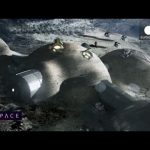
    Die Europäische Weltraumorganisation ESA will ein tollkühnes Projekt in Angriff nehmen: Sie will ein Dorf auf dem Mond bauen. Die permanente Station soll an dem Ort entstehen, an dem einst die Russen landeten und die Amerikaner erste Schritte machten. ESA-Chef Jan Woerner hat eine Vision: “Ich will eine permanente Mondstation bauen. Es wäre eine offene Station für mehrere Länder aus der ganzen Welt.”

    Die Apollo-Ära hat gezeigt, dass Träume Wirklichkeit werden können. Die Forscher damals hatten ein klares Ziel vor Augen: die Mondlandung. ESA-Astronaut Andreas Mogensen scheint zuversichtlich: “In den 1960er Jahren haben sie das innerhalb von zehn Jahren geschafft. Heute sind wir technologisch gesehen viel weiter. Wir können es also noch einmal machen.”

    Die Mondstation würde die Internationale Raumstation, ISS, ablösen. Sie wäre das neue gemeinsame Raumfahrt-Projekt, an dem alle teilnehmen könnten. “Die Amerikaner, die Russen, die Chinesen, die Inder und die Japaner werden mitmachen. Und andere Länder werden ebenfalls etwas beisteuern,” so Woerner.

  • Paxi – Rosetta und Kometen

    Paxi – Rosetta und Kometen

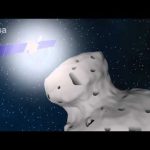
    Begleite Paxi an den Rand unseres Sonnensystems, entdecke das Reich der Kometen und lerne mehr über die erstaunliche Mission Rosetta zum Kometen 67P/Churyumov-Gerasimenko.

    In diesem Video, das sich an Kinder zwischen 6 und 12 Jahren richtet, nimmt Paxi Kinder mit auf die Reise um mehr über Kometen und die spektakuläre Mission „Rosetta“ zu lernen: Die Raumsonde der ESA, die um den Kometen 67P/Churyumov-Gerasimenko kreist und am 12 November 2014 versuchen wird ein Mini-Labor darauf zu landen.

    Dieses Video ist die dritte einer Serie von Animationen mit Paxi, dem Maskottchen von ESA-Education, in denen verschiedene Aspekte unseres Sonnensystems, das Universum, Geheimnisse des Planeten Erde und vieles andere thematisiert werden.

    Credit: ESA; produced by Science Office, illustrations by Kaleidoscope Design, NL

    Wer ist Paxi? http://youtu.be/-uXtNhRr060
    Paxi – Das Sonnensystem http://youtu.be/N7ezarEYKxk
    Paxi – Rosetta und Kometen http://youtu.be/QAxCiaUwY-U

    These videos are also available in the following languages:
    English: https://www.youtube.com/playlist?list=PLbyvawxScNbucdsnNdB9p89RmePmGv5cM
    Spanish: https://www.youtube.com/playlist?list=PLbyvawxScNbsiYWkwXlb3WMdm2IFWoMyc
    Dutch: https://www.youtube.com/playlist?list=PLbyvawxScNbs-7xR5B6QgJeEK89RtGdoK
    Italian: https://www.youtube.com/playlist?list=PLbyvawxScNbt11Hfg6Cww2ckfHnvXeOdv
    French: https://www.youtube.com/playlist?list=PLbyvawxScNbsiKIAXeo63bGr1QjYJ4QiL

  • Paxi – Das Sonnensystem

    Paxi – Das Sonnensystem

    Begleite Paxi auf seiner Reise durch unser Sonnensystem, von den felsigen inneren Planten in der Nähe der Sonne vorbei an den gigantischen Gasplaneten bis zum eiskalten äußeren Rand des Sonnensystems, der Heimat der Kometen.

    In diesem Video, das sich an Kinder zwischen 6 und 12 Jahren richtet, unternimmt Paxi eine Tour durch unser Sonnensystem und besucht dabei alle acht Planten sowie andere kleiner Himmelkörper wie Asteroiden, Kometen und den Zwergplanten Pluto.

    Dieses Video ist die zweite einer Serie von Animationen mit Paxi, dem Maskottchen von ESA-Education, in denen verschiedene Aspekte unseres Sonnensystems, das Universum, Geheimnisse des Planeten Erde und vieles andere thematisiert werden.

    Credit: ESA; produced by Science Office, illustrations by Kaleidoscope Design, NL

    Wer ist Paxi? http://youtu.be/-uXtNhRr060
    Paxi – Das Sonnensystem http://youtu.be/N7ezarEYKxk
    Paxi – Rosetta und Kometen http://youtu.be/QAxCiaUwY-U

    These videos are also available in the following languages:
    English: https://www.youtube.com/playlist?list=PLbyvawxScNbucdsnNdB9p89RmePmGv5cM
    Spanish: https://www.youtube.com/playlist?list=PLbyvawxScNbsiYWkwXlb3WMdm2IFWoMyc
    Dutch: https://www.youtube.com/playlist?list=PLbyvawxScNbs-7xR5B6QgJeEK89RtGdoK
    Italian: https://www.youtube.com/playlist?list=PLbyvawxScNbt11Hfg6Cww2ckfHnvXeOdv
    French: https://www.youtube.com/playlist?list=PLbyvawxScNbsiKIAXeo63bGr1QjYJ4QiL

  • Wer ist Paxi?

    Wer ist Paxi?

    Lerne das Maskottchen von ESA-Education kennen: Paxi. Erfahre wo er herkommt, warum er es so mag durch das Weltall zu reisen, wer seine Freunde sind …

    Dieses Video richtet sich an Kinder zwischen 6 und 12 Jahren und stellt PAXI vor, ein kleiner Außerirdischer vom Planeten Ally-O, der zur Erde gekommen ist um neue Freunde zu treffen sowie Kinder mit auf abenteuerliche Reisen zu nehmen und mit ihnen den Weltraum zu erkunden. Es ist die erste einer Serie von Animationen mit PAXI, dem Maskottchen von ESA-Education, in denen verschiedene Aspekte unseres Sonnensystems, das Universum, Geheimnisse des Planeten Erde und vieles andere thematisiert werden.

    Credit: ESA; produced by Science Office, illustrations by Kaleidoscope Design, NL

    Wer ist PAXI? http://youtu.be/-uXtNhRr060
    Paxi – Das Sonnensystem http://youtu.be/N7ezarEYKxk
    Paxi – Rosetta und Kometen http://youtu.be/QAxCiaUwY-U

    These videos are also available in the following languages:
    English: https://www.youtube.com/playlist?list=PLbyvawxScNbucdsnNdB9p89RmePmGv5cM
    Spanish: https://www.youtube.com/playlist?list=PLbyvawxScNbsiYWkwXlb3WMdm2IFWoMyc
    Dutch: https://www.youtube.com/playlist?list=PLbyvawxScNbs-7xR5B6QgJeEK89RtGdoK
    Italian: https://www.youtube.com/playlist?list=PLbyvawxScNbt11Hfg6Cww2ckfHnvXeOdv
    French: https://www.youtube.com/playlist?list=PLbyvawxScNbsiKIAXeo63bGr1QjYJ4QiL

  • ESA Euronews: Dunkle Materie und dunkle Energie

    ESA Euronews: Dunkle Materie und dunkle Energie

    Derzeit wissen wir nur wenig über dunkle Materie und fast nichts über dunkle Energie, aber all das könnte sich bald ändern. Physiker und Kosmologen versuchen mit Weltraumteleskop und Teilchenbeschleuniger der dunklen Energie und der dunklen Materie auf die Spur zu kommen.

    Das Kernforschungszentrum CERN in der Nähe von Genf beheimatet den großen Hadronenbeschleuniger. Vor drei Jahren entdeckte er das Higgs-Teilchen. Dieses Jahr hat er sich viel vorgenommen. Die Physiker hoffen mit ihm zum ersten Mal Partikel der dunklen Materie zu produzieren.

    Eine solche Entdeckung würde wahrhaft kosmische Folgen haben, denn alles – Planeten, Sterne und Galaxien – steht unter dem Einfluss von dunkler Materie und dunkler Energie. Die neuen Erkenntnisse werden wir nicht nur dem Hadronenbeschleuniger zu verdanken haben. Die Europäische Weltraumorganisation, ESA, baut Euclid, ein neues Weltraumteleskop. Es soll die Tiefen des Universums neu vermessen und beobachten, wie sich die Gravität der dunklen Materie auf die Galaxien auswirkt und wie die dunkle Energie unser Universum immer weiter ausdehnt.

    Was die Wissenschaftler bisher herausgefunden haben, ist unglaublich: normale Materie macht nur fünf Prozent des Universums aus. Rund 68 Prozent des Universums besteht aus dunkler Energie und 27 Prozent besteht aus dunkler Materie.

    Die Forscher machen stetig Fortschritte. Was die dunkle Materie anbelangt, sind sie sich ziemlich sicher, dass es sich um ein geheimnisvolles Teilchen handelt, das sie früher oder später identifizieren werden.

  • ESA Euronews: Tschuri, die himmlische Badeente

    ESA Euronews: Tschuri, die himmlische Badeente

    Die Rosetta-Sonde hat ihren Zielkometen Tschuri erreicht. Damit hat für die Wissenschaftler von der ESA, die Rosetta vor zehn Jahren ins All geschickt haben, ein Wettlauf gegen die Zeit begonnen. Denn nun müssen sie den Kometen kartografieren und Daten sammeln, bevor sie im November den Landeroboter aus Rosetta ausklinken und auf Tschuri landen lassen. Dafür muss nun eine geeignete Landestelle gefunden werden – keine leichte Aufgabe. In der aktuellen Ausgabe von euronews Space zeigen uns die Kometen-Jäger in Darmstadt, wie man um einen Kometen fliegt, wie Rosetta ihr Ziel “sieht” und welche Bedeutung das ganze Projekt für die Wissenschaft und das Team hat.