Steve Spangler is a bestselling author, STEM educator and Emmy award-winning television personality with more than 2,100 television appearances to his credit. Steve appeared as a regular guest on the Ellen DeGeneres Show from 2007-2022. Learn more about Steve at https://stevespangler.com/about-steve-spangler/
🚀 Have you ever wondered how we transport rockets?
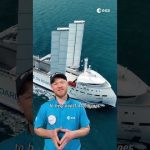
All the elements that make up Ariane 6 are manufactured in mainland Europe and then transported by this ship, named Canopée.
It is the first custom-built transporter to use sails, reducing emissions and saving on fuel by up to 30%, and on this trip, it travels for 10 days covering over 7000 km to reach Europe’s Spaceport in French Giuana.
The hybrid-propulsion vessel is 121 m long and has 37 m tall sails. Canopée rotates continuously between stop-offs to load each Ariane 6 stage and other parts and ship them across the Atlantic Ocean to Europe’s spaceport.
Europe’s new launcher, Ariane 6 uses liquid oxygen and hydrogen as fuel to lift it off the ground and into space. This fuel is chilled to -150°C which allows more propellant to be loaded into the rocket with more fuel from the engine.
But Ariane would not get far without the boosters that provide the most thrust by far.
In order to control the direction of Ariane 6 after launch, the nozzles on the boosters and main stage can swivel to keep it on course. This is no easy feat as Ariane 6 is 56 m tall and controlled at the bottom, so it is a careful balancing act.
Steve Spangler is a bestselling author, STEM educator and Emmy award-winning television personality with more than 2,100 television appearances to his credit. Steve appeared as a regular guest on the Ellen DeGeneres Show from 2007-2022. Learn more about Steve at https://stevespangler.com/about-steve-spangler/
Steve Spangler is a bestselling author, STEM educator and Emmy award-winning television personality with more than 2,100 television appearances to his credit. Steve appeared as a regular guest on the Ellen DeGeneres Show from 2007-2022. Learn more about Steve at https://stevespangler.com/about-steve-spangler/
Euclid, our dark Universe detective was struggling to see the faint light from distant galaxies thanks to a tiny villain: ice! Building up on its mirrors, it was blocking the crucial light Euclid needs to unlock some of the Universe’s biggest mysteries – dark matter and dark energy.
But fear not! Across Europe, a team of brilliant scientists and engineers joined forces. Months of research led to a delicate de-icing procedure, and with a touch of targeted warmth, they were able to restore Euclid’s sight.
This icy situation turned into a shining example of international collaboration and innovative thinking. And who knows what cosmic secrets Euclid will uncover now that its vision is restored.
A total solar eclipse will cross North America on Monday, April 8, 2024, and we want to help you prepare! Find out when and where to look up, learn how to safely view an eclipse and discover ways you can get involved with NASA during this celestial event! Join us live on Wednesday, March 20, at 3 p.m. EDT (1900 UTC) as we help you get ready for the last total solar eclipse to cross the contiguous United States for the next 20 years. Have questions? Submit them during our live chat.
European Space Agency astronaut Andreas Mogensen shared this video on social media with the caption:
“On the weekends, we have time off and and while I like to call my friends and family or sit in the Cupola and take pictures of Earth, I sometimes like to play around a bit. I recorded this video a few weeks ago and finally got around to sharing it with you.
The way a liquid, in this case orange juice, moves around on the Space Station is fascinating, rippling when I blow on it and how sticks to me as I drink it.”
According to the Food and Agriculture Organization (FAO), global agricultural production will need to increase by 60% by 2050 to meet the food demands of the growing global population.
A new satellite called Copernicus Hyperspectral Imaging Mission for the Environment, or CHIME, is being developed to support EU policies on the management of natural resources – ultimately helping to address the global issue of food security.
CHIME will carry a unique visible to shortwave infrared spectrometer to provide routine hyperspectral observations to support new and enhanced services for sustainable agricultural and biodiversity management, as well as soil property characterisation.
CHIME is one of six Copernicus Sentinel Expansion missions that ESA is developing on behalf of the EU. The missions will expand the current capabilities of the Copernicus Space Component – the world’s biggest supplier of Earth observation data.
This video features interviews with Marco Celesti, CHIME Mission Scientist and Jens Nieke, CHIME Project Manager.
Credits: ESA – European Space Agency
★ Subscribe: http://bit.ly/ESAsubscribe and click twice on the bell button to receive our notifications.
We are Europe’s gateway to space. Our mission is to shape the development of Europe’s space capability and ensure that investment in space continues to deliver benefits to the citizens of Europe and the world. Check out https://www.esa.int/ to get up to speed on everything space related.
🚩 Click https://betterhelp.com/historymarche for 10% off your first month of therapy with our sponsor BetterHelp. 🚩 Join over 4 million people who’ve met with a therapist on BetterHelp and started living a healthier, happier life.
📚 Sources: A.R. Disney – A History of Portugal and the Portuguese Empire: From Beginnings to 1807 (Volume 1) Luis Adao De Fonseca et. al. – The Aljubarrota Battle and its Contemporary Heritage Jean Froissart – Froissart’s Tales Ian Heath – Armies of the Middle Ages, Vol. 1 Afonso De Paca – The Battle of Aljubarrota (Journal of Antiquity, 37) John M.D. Pohl – Armies of Castile and Aragorn 1370-1516 Edgar Vigario – The Revolution of 1383 and the Battle of Aljubarrota
🚀Install Star Trek Fleet Command for FREE now https://t2m.io/HistoryMarche and enter the promo code WARPSPEED to unlock 10 Epic Shards of Kirk, enhancing your command instantly! How to easily redeem the promo code 👉 https://stfcgift.com/
🚩 The conquest of the Mamluks by Selim I was the largest military venture any Ottoman Sultan had ever attempted. Egypt proved extremely profitable for the empire as it produced more tax revenue than any other Ottoman territory and supplied about 25% of all food consumed. Meanwhile, Mecca and Medina officially made Selim and his descendants the Caliphs of the entire Muslim world until the early 20th century.
📢 Narrated by David McCallion
🎼 Music: Epidemic Sounds Filmstro
📚 Sources: God’s Shadow: the Ottoman Sultan Who Shaped the Modern World (2020), Mikhail, Alan. ISBN: 978-0-571-33192-5. The Knights of Islam: The Wars of the Mamluks (2021), Waterson, James. ISBN: 9781784387624. The Ottoman Empire: the Classical Age 1300-1600 (2013), Inalcik, Halil. ISBN: 978 1 7802 2699 6.
A team of university students from University College Dublin is taking Ireland to space, for the very first time. The story begins in 2017, when the team was accepted to ESA’s educational CubeSat programme, Fly Your Satellite! Over the course of six years, they have designed, built, and tested the satellite with the help of ESA experts and with access to ESA’s state-of-the-art spacecraft testing facilities. As the team prepares for launch and operations, hear more about their journey to this historic moment.
Credits: ESA – European Space Agency
★ Subscribe: http://bit.ly/ESAsubscribe and click twice on the bell button to receive our notifications.
We are Europe’s gateway to space. Our mission is to shape the development of Europe’s space capability and ensure that investment in space continues to deliver benefits to the citizens of Europe and the world. Check out https://www.esa.int/ to get up to speed on everything space related.
There is no point in sending human explorers on long voyages around the solar system if they arrive at their destination in poor physical shape. Long stays in zero gravity are not good for the human body.
We already know that astronauts lose bone mass at around 1% for every month they are in space; muscles – including heart muscles – atrophy despite hours of exercise; and there are a host of other problems.
Humans are adaptable beings. Wear glasses that turn your view of the world upside-down and within two weeks your brain will have adapted to the topsy-turvy world.
Researchers suspect that astronauts’ brains adapt to living in weightlessness by using previously untapped links between neurons. As the astronauts learn to float around in their spacecraft, left–right and up–down become second nature as these neuronal connections are activated.
To confirm this theory, up to 16 astronauts will be put through advanced Magnetic Resonance Imaging (MRI) scanners before and after their flights to study any changes in their brain structure. A control group on ground will undergo the same scans for further comparison.
The research is providing scientists on Earth clues where to look in the brains of people who suffer from disorders based on previous traumatic experiences such as vertigo.
Like every other living creature we know of, humans evolved at the bottom of a gravity well. We take the Earth’s tug for granted, and so do our bodies. So it’s not surprising that our bodies behave oddly in orbit. What is surprising is that humans turn out to adapt remarkably well to zero-g (more precisely, microgravity).
🚩 Skip the waitlist and invest in blue-chip art for the very first time by signing up for Masterworks: https://www.masterworks.art/historymarche Purchase shares in great masterpieces from artists like Pablo Picasso, Banksy, Andy Warhol, and more. 🚩 See important Masterworks disclosures: https://www.masterworks.com/cd
🚩 In the early 10th century, Britain was divided. Several Kings and Earls vied for land and power. King Athelstan brought together the Anglo-Saxons against a newly formed Celtic/Norse army. A defeat for Athelstan would cause the fledgling Kingdom of England to disintegrate. A victory, would ensure its survival.
🚩 Basil had successfully stabilized the empire after the civil war, exacerbated by the conflict with the Fatimids in Syria. Samuel of Bulgaria took advantage of the situation to invade the Byzantine Empire in the west. Meanwhile, the Fatimids were preparing to push Romans out of Syria. Emperor Basil now faced a fight on two fronts against two formidable opponents. In this episode we will show the Battle of Spercheios (997 AD) and the Battle of Apamea (998 AD), as Basil tries to organize his army to stave off multiple incursions into Byzantine territory.
Astronauts on the International Space Station do a full circle of Earth every 90 minutes and experience 16 sunsets and sunrises every day.
With this unearthly routine, astronauts can struggle to find a natural daily rhythm in space.
The Space Station follows Greenwich Mean Time (GMT), which helps keep a consistent schedule, along with regular wake-up and bedtime routines.
During his Huginn mission, our astronaut Andreas Mogensen will run two experiments focusing on sleeping in space with real world applications: Circadian Light and Sleep in Orbit.
📹 ESA – European Space Agency 📸 SAGA Space Architects
Steve Spangler is a bestselling author, STEM educator and Emmy award-winning television personality with more than 2,100 television appearances to his credit. Steve appeared as a regular guest on the Ellen DeGeneres Show from 2007-2022. Learn more about Steve at https://stevespangler.com/about-steve-spangler/
🚩 If you’re struggling, consider therapy with our sponsor BetterHelp. Click https://betterhelp.com/historymarche for a 10% discount on your first month of therapy with a licensed professional specific to your needs.
🚩 Big thanks to Srpske Bitke https://www.youtube.com/@SrpskeBitke and Dr.Byron Waldron for collaborating with me on this video.
📢 Narrated by David McCallion
📝 Written by Dr. Byron Waldron
🎼 Music: Instinct – Bensound Impact Allegretto – Kevin MacLeod Crypto – Kevin MacLeod Epidemic Sounds Volatile Reaction – Kevin MacLeod
📚 Sources: Carter, M. L. 1985: A Numismatic Reconstruction of Kushano-Sasanian History, Museum Notes (American Numismatic Society) 30, 215-281.
Dodgeon, M. H. & S. N. C. Lieu. (eds.). 1991: The Roman Eastern Frontier and the Persian Wars AD 226-363: A Documentary History, London & New York: Routledge.
Edwell, P. 2021: Rome and Persia at War: Imperial Competition and Contact, 193-363 CE, London & New York: Routledge.
Hauser, S. R. 2013: Where is the man of Hadr, who once built it and taxed the land by the Tigris and Chaboras? On the significance of the final siege of Hatra, in L. Dirven (ed.), Hatra: Politics, Culture and Religion between Parthia and Rome. Oriens et Occidens 21, Stuttgart: Franz Steiner Verlag, 119-139.
Kettenhofen, E. 1982: Die römisch-persischen Kriege des 3. Jahrhunderts n. Chr.: nach der Inschrift Šāhpuhrs I. an der Ka’be-ye Zartošt (ŠKZ). Beihefte zum Tubinger Atlas des Vorderen Orients. Reihe B, Geisteswissenschaften, no. 55, Wiesbaden: Ludwig Reichert.
Kroll, T. (tr.). 1985: The Chronicle of Arbela. CSCO 468, Scriptores Syri 200, Leuven: Peeters Publishers.
MacDonald, D. 1981: The Death of Gordian III: Another Tradition, Historia 30.4, 502-508.
Mosig-Walburg, K. 2009: Römer und Perser: vom 3. Jahrhunderts bis zum Jahr 363 n. Chr., Gutenberg: Computus.
Piacentini, V. F. 1985: Ardashir I Papakan and the Wars against the Arabs: Working Hypothesis on the Sasanian Hold of the Gulf, Proceedings of the Seminar for Arabian Studies 15, 57-77.
Potter, D. S. 1990: Prophecy and History in the Crisis of the Roman Empire: A Historical Commentary on the Thirteenth Sibylline Oracle, Oxford & New York: Oxford University Press.
Potter, D. S. 2018: Decius and Valerian, in D. W. Burgersdijk & A. J. Ross (eds.), Imagining Emperors in the Later Roman Empire. Cultural Interactions in the Mediterranean 1, Leiden: Brill.
🚩 Click the link https://try.lingoda.com/HistoryMarche_August to try 3 language classes for free and use the code HISTORY25 to receive a 25% off your first two months with Lingoda.
🚩 See also the Battle of Tours, 732 AD – How the Franks stopped the Muslim expansion https://youtu.be/9JuVjUPN5fo
🚩 This video is made possible by the generous support of our Patrons. If you’d like to help us make more free content like this, consider supporting us on https://www.patreon.com/historymarche
🚩 Big thanks to History Rhymes for their collaboration on this video: https://www.youtube.com/@historyrhymes1701
📢 Narrated by David McCallion
📝 Written by Jonathan Woody
🎼 Music: EpidemicSound.com Filmstro
📚 Sources: Alberto Raul, The Muslim Invasion of Spain (Medieval Warfare Magazine) Alberto Ferreiro, The Visigoths in Gaul and Iberia Jamil M. Abu-Nasr, History of the Magrib in the Islamic Period Roger Collins, The Arab Conquest of Spain (720 – 797) Thomas F. Glick, Islamic and Christian Spain in the Early Middle Ages Richard Hitchkock, Muslim Spain Reconsidered: From 711 to 1502
🚩 The first 1,000 people to use the link will get a 1-month free trial of Skillshare https://skl.sh/historymarche08231 🚩 For a limited time Skillshare is offering 40% off your first year of membership – one of their best offers out there! https://skl.sh/historymarche40
🚩 Big thanks to our Patrons for supporting what I do! You too can support free content and for as little as $1 per video you can get ad-free early access to our videos: https://www.patreon.com/historymarche
🚩 Big thanks to Srpske Bitke for their collaboration on this video: https://www.youtube.com/@SrpskeBitke
📚 Sources: Le Mura Megalitiche: Il Lazio meridionale tra storia e mito – Viviana Fontana (2016) Cassius Dio, Roman History Diodorus Siculus, Library of History Dionysius of Halicarnassus, Roman Antiquities Frontinus, Stratagems Livy, From the Founding of the City Polybius, Histories Zonaras, Epitome of Histories Bradley, G. 2020: Early Rome to 290 BC: The Beginnings of the City and the Rise of the Republic, Edinburgh. Cornell, T. 2017: ‘The “Samnite Wars,” 343-290 BC, in M. Whitby & H. Sidebottom (eds.), The Encyclopedia of Ancient Battles, Malden MA, Oxford & Chichester, West Sussex, 2.469-479. Forsyth, G. 2006: A Critical History of Early Rome: From Prehistory to the First Punic War, Berkeley. Oakley, S. P. 1997-2005: A Commentary on Livy, Books VI-X, Oxford.
In the vast expanse of space, astronauts face a unique challenge – the need to share spacesuits during prolonged spacewalks. These suits, including their inner linings that come into direct contact with the astronauts’ skin, tend to accumulate bodily fluids over time. Drawing a rather relatable analogy, it’s akin to sharing underwear in space!
However, the practicality of washing these spacesuit interiors on lunar surfaces or beyond presents a significant hurdle. To counter this, a dedicated group of researchers is delving into innovative strategies to curb the growth of potentially harmful microbes within the inner layers of these suits.
Here’s where the solution gets intriguing: the world of microbiology offers a fascinating approach. Certain types of microbes possess ‘secondary metabolites’ that allow them to combat other microbes. These compounds are not only diverse in colour but also possess antibiotic properties. The ingenious idea involves integrating these microbial warriors into the very fabric of the spacesuit’s inner layer.
This pioneering research isn’t confined solely to the realm of spacesuits; its implications extend far beyond. The outcomes hold the potential to revolutionise the field of antimicrobial treatments and smart textile technologies right here on Earth. As we gear up for lunar expeditions and beyond, these microbial-fighting fabrics could play a pivotal role in ensuring astronauts’ health and well-being while opening new frontiers of innovation back home.
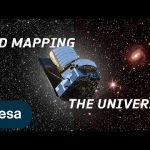
ESA’s Euclid mission will create a 3D-map of the Universe that scientists will use to measure the properties of dark energy and dark matter and uncover the nature of these mysterious components. The map will contain a vast amount of data, it will cover more than a third of the sky and its third dimension will represent time spanning 10 billion years of cosmic history.
But dealing with the huge and detailed set of novel data that Euclid observations will produce is not an easy task. To prepare for this, scientists in the Euclid Consortium have developed one of the most accurate and comprehensive computer simulations of the large-scale structure of the Universe ever produced. They named this the Euclid Flagship simulation.
Running on large banks of advanced processors, computer simulations provide a unique laboratory to model the formation and evolution of large-scale structures in the Universe, such as galaxies, galaxy clusters, and the filamentary cosmic web they form. These state-of-the-art computational techniques allow astrophysicists to trace the motion and behavior of an extremely large number of dark-matter particles over cosmological volumes under the influence of their own gravitational pull. They replicate how and where galaxies form and grow, and are used to predict their distribution across the celestial sphere.
Explore the Euclid Flagship simulation in this video and get a sneak preview of the structure of the dark Universe, as we currently model it. New insights will be brought to you by the Euclid mission in the coming years.
Credits: ESA/Euclid Consortium/Cacao Cinema The authors kindly acknowledge the use of the Splotch package: http://www.mpa-garching.mpg.de/~kdolag/Splotch
★ Subscribe: http://bit.ly/ESAsubscribe and click twice on the bell button to receive our notifications.
We are Europe’s gateway to space. Our mission is to shape the development of Europe’s space capability and ensure that investment in space continues to deliver benefits to the citizens of Europe and the world. Check out https://www.esa.int/ to get up to speed on everything space related.
We know the Moon contains water, but, could future astronauts access and make use of it? That’s the goal. At NASA, we’re actively trying to answer that question. Once it lands at the lunar south pole, our PRIME-1 — Polar Resources Ice Mining Experiment-1 – will robotically sample and analyze ice from beneath the lunar surface, contributing to our search for water on the Moon: https://go.nasa.gov/2QygCmF
🚩 Download Warpath, the best military strategy game: https://bit.ly/3q7s62p Conquer the battlefield alongside 30 million players! Experience top-notch war tactics in the game!
🚩 This video is made possible by the generous support of our Patrons. If you’d like to help us make more free content like this, consider supporting us on https://www.patreon.com/historymarche
🚩 Big thanks to History Rhymes for their collaboration on this video: https://www.youtube.com/@historyrhymes1701
📢 Narrated by David McCallion
📝 Written by Jonathan Woody
🎼 Music: EpidemicSound.com Filmstro
📚 Sources: Joan of Arc: A History by Helen Castor The Agincourt War: A Military History of the Hundred Years’ War from 1369 to 1453 by Alfred H. Burne The Hundred Years War, Volume 4: Cursed Kings by Jonathan Sumption
🚩 Stop data brokers from exposing your information. Go to my sponsor https://aura.com/historymarche to get a 14-day free trial and see if your personal information has been compromised.
🚩 The Battle of Nördlingen (1634) was a crushing victory for the Habsburgs in the Thirty Years’ War. It ended Swedish domination in southern Germany, and it led France to become an active participant in the war.
🚩 This video is made possible by the generous support of our Patrons. If you’d like to help us make more free content like this, consider supporting us on https://www.patreon.com/historymarche
🚩 Big thanks to HistoryVerse for their collaboration on this video: https://www.youtube.com/@Historyverse
📢 Narrated by David McCallion
🎼 Music: EpidemicSound.com Filmstro
📚 Sources: • The Battle of Nördlingen 1634: The Bloody Fight Between Tercios and Brigades (Century of the Soldier), by Alberto Raúl Esteban Ribas (2021) • Battles of the Thirty Years War: From White Mountain to Nordlingen, 1618-1635 (Contributions in Military Studies Book 213), by William P. Guthrie (2001)
How do planets get their names? With the exception of Earth, the planets in our solar system were named after Greek or Roman gods. Today, the job of naming things in space falls to the International Astronomical Union (IAU), the internationally recognized authority for naming celestial bodies and their surface features. NASA scientist Dr. Henry Throop explains more.
🚩 Follow my link to play World War Armies and receive the Pershing tank and a DESERT skin with tokens immedieately after finishing the tutorial: https://wwc.onelink.me/uDzy/historymarche
🚩 Charles XII was one of the greatest military leaders in European history. He defeated Denmark, Poland, Saxony and Russia in a series of brilliant campaigns. A skilled tactician, he had a good eye for choosing a battleground and insisted on personal leadership in battle. His strategic talent, however, was much criticized, especially his decision to wage a long war in Poland and his Russian campaign in 1707-1709.
🚩 This video is made possible by the generous support of our Patrons. If you’d like to help us make more free content like this, consider supporting us on https://www.patreon.com/historymarche
🚩 Big thanks to History Rhymes for their collaboration on this video: https://www.youtube.com/@historyrhymes1701
📢 Narrated by David McCallion
📝 Written by Jonathan Woody
🎼 Music: EpidemicSound.com Filmstro
📚 Sources: Peter the Great: The Strugle for Power, 1671 – 1725 by Paul Bushkovitch
Chicago / Turabian 16th Edition Citation: Bushkovitch, Paul. Peter the Great : the Struggle for Power, 1671-1725. Cambridge ;: Cambridge University Press, 2001.
Military Actions at Narva in 1700 According to the Memoirs of Swedish Warriors by Sergei A. Chirkin
Charles XII at Narva in autum 1700: Testimonies from his confidants by Sergei A. Chirkin
Chicago / Turabian 16th Edition Citation: Chirkin, Sergei A. “Сharles XII at Narva in Autumn 1700: Testimonies from His Confidants.” Mastatskaya i Muzychnaya Adukatsiya 21, no. 3 (2021): 288–292.
The Battle of Narva: November 29th, 1700 by Richard Cavendish
Swedish Gamble at the Battle of Narva by Eric Niderost (Warfare History Network, November 2013)
Go to https://sponsr.is/cs_historymarche and use code HISTORYMARCHE to save 25% off today. Thanks to Curiosity Stream for sponsoring today’s video.
🚩 After the Battle of Ashdown, the Viking army was reinforced and continued the invasion, subjugating all Saxon kingdoms, except Wessex. But Alfred took on the Vikings once again, in perhaps one of the most important battles in the history of England.
🚩 This video is made possible by the generous support of our Patrons. If you’d like to help us make more free content like this, consider supporting us on https://www.patreon.com/historymarche
Here’s a big question: How did life begin on Earth? We don’t quite know, but this fundamental question is a driving force behind astrobiology research at NASA. Understanding how life originated on our planet could inform us about the potential for life to exist throughout the universe.
Astrobiology expert Shawn Domagal-Goldman explains more about our search for answers. Explore more about astrobiology at NASA: https://astrobiology.nasa.gov