NASA Spacesuit Engineer Lindsay Aitchison answers the question “How are we going to the Moon?” Comment on this video using #AskNASA with your questions for upcoming episodes! She addresses key questions about our plans to explore the Moon and Mars in the Artemis Program. Lindsay also highlights how the Gateway will help in our missions to Mars.
A growing number of classrooms in China are equipped with artificial-intelligence cameras and brain-wave trackers. While many parents and teachers see them as tools to improve grades, they’ve become some children’s worst nightmare.
For those looking for ideas for Mission Space Lab, this video offers some tips on how to come up with experiments by taking into account the AstroPi sensors available as well as some practical constraints.
We are Europe’s gateway to space. Our mission is to shape the development of Europe’s space capability and ensure that investment in space continues to deliver benefits to the citizens of Europe and the world. Check out http://www.esa.int/ESA to get up to speed on everything space related.
Plans for human space exploration in the next decades are to leave Earth orbit and go to destinations such as the Moon and Mars. But what are the challenges associated with human survival in space and what kind of research is needed to address these challenges?
Life-support systems expert Lucie Poulet participated in four Mars analogue missions as a crew member and has over eight years of experience working on regenerative life-support systems with various groups such as the Micro-Ecological Life-Support System Alternative (MELiSSA) project and the German Aerospace Center, DLR, in Bremen, Germany.
Space Bites hosts the best talks on space exploration from the most inspiring and knowledgeable speakers from the field. Held at the technical heart of the European Space Agency in The Netherlands, the lectures illustrate challenges of space.
We are Europe’s gateway to space. Our mission is to shape the development of Europe’s space capability and ensure that investment in space continues to deliver benefits to the citizens of Europe and the world. Check out https://www.esa.int/ to get up to speed on everything space related.
Artificial Intelligence, the basic concept has to be explained quickly to a kid. Here is another video on Why your kids should learn AI https://www.youtube.com/watch?v=sUTCn0Bwa-k
NASA has a unique and important view of hurricanes around the planet. Satellites and aircraft watch as storms form, travel across the ocean and sometimes, make landfall. After the hurricanes have passed, the satellites and aircraft see the aftermath of hurricanes, from downed forests to mass power loss. Complete transcript available.
Music credit: “Northern Breeze” by Denis Levaillant [SACEM], “Stunning Horizon” by Maxime Lebidois [SACEM], Ronan Maillard [SACEM], “Magnetic Force” by JC Lemay [SACEM] from Killer Tracks
This video is public domain and along with other supporting visualizations can be downloaded from the Scientific Visualization Studio at: http://svs.gsfc.nasa.gov/13216
NASA is everywhere – our space technology turns up in nearly all corners of modern life. The world has come to rely on GPS signal correction software created by NASA, which enables precision agriculture, airplane navigation, smartphones, Earth science and much more. A lightweight, high-pressure tank NASA invented to hold rocket fuel now stores life-saving oxygen to keep pilots, firefighters and intensive care patients breathing — not to mention gases that power city buses and even paintball guns. Fitness enthusiasts may be surprised to learn about NASA’s contribution to the Bowflex Revolution resistance-exercise home gym.
How do you build a spaceship? It’s not easy – because space is hard. It’s endless vacuum, hot and cold at the same time, streaked with radiation – and you have to fly at eight kilometres per second just to get there. It takes clever engineering – and costly research and development – to operate in orbit. Space is risky, but past payoffs have been vast. Our track record lets us manage that risk, balancing it with chances for rich rewards.
We are Europe’s space agency, enabling its 22 Member States to achieve results that no individual nation can match. we combines space mission development with supporting labs, test and operational facilities plus in-house experts covering every aspect of space, supported through the our Basic Activities.
For our Space19+ set for the end of this year, we are asking Europe’s space ministers for a substantial investment for Basic Activities, to modernise infrastructure and speed up R&D cycles, helping to support a new generation of space missions as efficiently as possible.
★ Subscribe: http://bit.ly/ESAsubscribe and click twice on the bell button to receive our notifications.
ESA is Europe’s gateway to space. Our mission is to shape the development of Europe’s space capability and ensure that investment in space continues to deliver benefits to the citizens of Europe and the world. Check out http://www.esa.int/ESA to get up to speed on everything space related.
The ride home from the International Space Station sees the astronauts brake from 28 800 km/h to a standstill at touchdown in barely three hours. How does the Soyuz spacecraft reenter the atmosphere? And how does the capsule land?
Watch in just two minutes the sequence of events from farewell to landing. This video is based on a training lesson for ESA astronauts, and it features dramatic footage of actual landings.
ESA is Europe’s gateway to space. Our mission is to shape the development of Europe’s space capability and ensure that investment in space continues to deliver benefits to the citizens of Europe and the world. Check out http://www.esa.int/ESA to get up to speed on everything space related.
On Dec. 3, 2018, the OSIRIS-REx spacecraft arrives at its target, near-Earth asteroid Bennu. Here, the team explains mission goals and the process of approach and rendezvous. OSIRIS-REx will study Bennu for two years before collecting a sample to return to Earth.
At the Vehicle Assembly Building at Kennedy Space Center, technicians practice and prepare to stack NASA’s Space Launch System rocket. The SLS fueled-up core stage weighs around 2.3 million pounds and measures 212 feet long.
When NASA’s InSight descends to the Red Planet on Nov. 26, 2018, it’s guaranteed to be a white-knuckle event. Rob Manning, chief engineer at NASA’s Jet Propulsion Laboratory, explains the critical steps that must happen in perfect sequence to get the robotic lander safely to the surface.
Revisit the April 18, 2018, launch of NASA’s Transiting Exoplanet Survey Satellite (TESS) aboard a SpaceX Falcon 9 rocket. TESS is already scanning the skies, identifying planet candidates that may be orbiting distant stars. https://go.nasa.gov/2Q3J9ei
TESS is NASA’s next step in the search for planets outside of our solar system, including those that could support life. The mission will find exoplanets that periodically block part of the light from their host stars, events called transits. TESS will survey 200,000 of the brightest stars near the sun to search for transiting exoplanets.
Artificial Intelligence also known as Machine Intelligence or Intelligence displayed by Machines is a broad concept which is essentially important for our children to learn about, Science and technology are reaching out to new possibilities in developing new AI products every day
Here are a some few Examples of AI for kids which will help them to get a glance about what Artificial Intelligence is all about.
Congress passed the National Aeronautics and Space Act, on July 16 and President Eisenhower signed it into law on July 29, 1958. NASA opened for business on Oct. 1, 1958, with T. Keith Glennan as our first administrator. Our history tells a story of exploration, innovation and discoveries. The next 60 years, that story continues. Learn more: https://www.nasa.gov/60
NASA’s Parker Solar Probe is heading to the Sun.Thermal Protection System Engineer Betsy Congdon (Johns Hopkins APL) outlines why Parker can take the heat. More: https://go.nasa.gov/2O7YKsK | NASA launch schedule: https://go.nasa.gov/2JfklMB
Music credit: Cheeky Chappy [Main Track] by Jimmy Kaleth, Ross Andrew McLean Credit: NASA’s Goddard Space Flight Center Genna Duberstein (USRA): Lead Producer/Lead Editor Rob Andreoli (AIMM): Lead Videographer Betsy Congdon (Johns Hopkins University/APL): Lead Engineer Ryan Fitzgibbons (USRA): Narrator Genna Duberstein (USRA): Writer Steve Gribben (Johns Hopkins University/APL ): Animator Brian Monroe (USRA): Animator Josh Masters (USRA): Animator Michael Lentz (USRA): Animator Genna Duberstein (USRA): Animator Mary P. Hrybyk-Keith (TRAX International Corporation): Illustrator This video is public domain and along with other supporting visualizations can be downloaded from the Scientific Visualization Studio at: https://svs.gsfc.nasa.gov/12867
Hello Friends, I am very excited while creating the video. This video is very close to my heart. Why? I love Marvel series specially the Iron Man and his AI Jarvis.
But, now Jarvis is Vision and at present his AI is Friday. So, i have tried to build same kind of Artificial Intelligence in Python.
RIght now, it a basic one. Which will greet, open C drive folders and good bye.
On Feb. 12, NASA centers across the country hosted “State of NASA” events, following President Trump’s Fiscal Year 2019 budget proposal delivery to the U.S. Congress. The events included an address, by acting NASA Administrator Robert Lightfoot, to the agency’s workforce, from NASA’s Marshall Space Flight Center, in Huntsville, Alabama. During his speech, Lightfoot highlighted how the budget would help the agency achieve its goals for space exploration.
How can you train yourself to be a quantum detector? Quantum interactions happen at impossibly small scales. But the life-size effects are all around you. You can detect quantum mechanics all over — if you know how to look for it.
ADVANCED SCIENTIFIC NOTE: Quantum mechanics would be much more obvious if we had very sensitive eyes. If your eyes identified each photon individually, you would see them land as described in the video, and only build up to this wave pattern. The pattern that we see can be explained classically by waves, it is *ultimately* a quantum phenomenon. The only reason it’s hard to tell is because our light detectors (eyes) aren’t quite sensitive enough.
On Jan. 31, 1958, at 10:48 p.m. EST, Explorer 1 launched into space, hurtling into Earth’s orbit in seven and a half minutes. Read more: https://go.nasa.gov/2nwic63
The next day’s front-page news declared that the United States was now officially in the Space Age.
Music: Look Forward by Laurent Dury, The Space Between by Max Concors, Picking Locks by James Alexander Dorman and Foraging At Dusk by Benjamin James Parsons. Complete transcript available.
This video is public domain and along with other supporting visualizations can be downloaded from the Scientific Visualization Studio at: http://svs.gsfc.nasa.gov/12837
Credit: NASA’s Goddard Space Flight Center/LK Ward
James Bissonette, James Gill, Cas Eliëns, Jeremy Banks, Thomas J Miller Jr MD, Jaclyn Cauley, David F Watson, Jay Edwards, Tianyu Ge, Michael Cao, Caron Hideg, Andrea Di Biagio, Andrey Chursin, Christopher Anthony, Richard Comish, Stephen W. Carson, JoJo Chehebar, Mark Govea, John Buchan, Donal Botkin, Bob Kunz
SCIENTIFIC NOTES:
* The relationship between information and energy comes from Landauer’s Principle, which connects the erasure of information and energy. But, more generally changes in information (e.g. recording information) are related to changes in energy. I will talk more about this in a future episode about the physics of memory, and why you will forget everything you ever knew! https://en.wikipedia.org/wiki/Landauer%27s_principle
* The numbers calculated in this video give a lower limit on the energy to record a particular amount of information, but to create a more permanent storage of information would require more energy.
* Retina display resolution, as it’s name implies, is similar to the eye’s resolution.
Scientific notes:
Stellar mass black holes vs. supermassive black holes
* Stellar mass black holes form from the collapse of massive stars at the ends of their lives, so they have roughly the same mass as a star. Supermassive black holes are physically identical to their smaller counterparts, except they are 10 thousand to a billion times the size of the sun. However, their formation is more of a mystery. They may form from the merging of smaller black holes. http://astronomy.swin.edu.au/cosmos/S/Supermassive+Black+Hole
Supermassive black holes at the center of galaxies
* Almost every large galaxy has a supermassive black hole at its center, but researchers are not yet sure (https://jila.colorado.edu/research/astrophysics/black-holes-galaxies) why that’s the case, how they originate, and what their role is in the creation and evolution of galaxies.
Why are stars different colors?
* The color of a star depends on its temperature (http://www.atnf.csiro.au/outreach/education/senior/astrophysics/photometry_colour.html). The hotter a star, the higher energy its light will be. Higher energy/temperature corresponds with the blue end of the visible spectrum and lower energy/temperature corresponds with the red end.
How does dark matter make stars spin faster?
* In the 1960s, astronomers Vera Rubin and Kent Ford noticed that stars at the edges of galaxies were moving just as fast as stars at the center, which surprised them: it appeared that the force of gravity causing stars to orbit the center of the galaxy was not weakening over distance. Their observation implied that something else, distributed throughout the galaxy, was exerting a gravitation pull. We now know that that “something else,” now named dark matter, accounts for about 85% of the matter in the universe. (It existence was inferred in the 1930s, when the astronomer Fritz Zwicky(http://www2.astro.psu.edu/users/rbc/a1/week_10.html) noticed that galaxies in clusters were moving faster than they should.)
Size of the universe
* The universe is only 13.8 billion years old, but has a radius of about 46 billion light-years. If nothing can travel faster than the speed of light, how can that be? The expansion of the universe, driven by dark energy, is causing distances between objects to grow. Note that it is not moving those objects apart; rather, it is increasing the amount of space between them. https://phys.org/news/2015-10-big-universe.html
Cosmic webs
* Galaxies are not distributed randomly (http://skyserver.sdss.org/dr1/en/astro/structures/structures.asp) in space; instead, clusters of galaxies form web-like patterns. These webs consist of filaments, where dark matter and ordinary (baryonic) matter are concentrated, and voids, where galaxies are scarce. Researchers believe that these large-scale structures grew out of minor fluctuations in density at the beginning of the universe.
Composition of the early universe
* Moments after the Big Bang, the universe formed the nuclei for what would be come the universe’s hydrogen and helium atoms, with one helium nucleus for every 10 or 11 hydrogen (http://umich.edu/~gs265/bigbang.htm). When the first stars formed, there were no heavier elements — those elements formed inside stars.
String Theory Landscape
* The String Theory Landscape is a theory that the universe we live in is one of many universes. It attempts to explain how certain constants of nature seem “fine-tuned” for life, which contradicts the anthropic principle, or the notion that we humans hold a special place in the universe. https://www.scientificamerican.com/article/multiverse-the-case-for-parallel-universe/%0A
Disintegration of the universe
* In the future Degenerate Era of the universe, as space-time expands and stars burn up, all of the matter in stars will be consumed by black holes. But even black holes are not forever. Stephen Hawking theorized that black holes will slowly radiate away their mass in what is now called Hawking radiation until they too dissipate away. http://www.nytimes.com/books/first/a/adams-universe.html
______
MEDIA CREDITS:
Music provided by APM
Sound effects: Freesound.org
Additional Animations:
– Galaxy within Universe: Edgeworx;
– Stars at center of Milky Way – NASA/NCSA University of Illinois Visualization by Frank Summers, Space Telescope Science Institute, Simulation by Martin White and Lars Hernquist, Harvard University
The world is changing and is changing fast. Many of today’s traditional #jobs are at risk. With #AI becoming more predominant, how can we ensure that our children and their children can thrive in this future?
I have a lot of friends who got admitted to Stanford and in this video I summarize things that they’ve told me about their admissions process. Walking around Stanford campus in California! 📗🇺🇸 How I got full financial aid to study in the USA (my book!) – http://bit.ly/2ZwlkRB
SAT/GMAT/GRE preparation – https://goo.gl/nfUAsQ
(These exams are required to get into most of Stanford’s programs)
ESA astronaut Tim Peake shows how to draw blood for research on the International Space Station. Researchers often request samples before, during and after a spaceflight to examine differences.
The tubes of blood are put in a refrigerated centrifuge and then stored in the International Space Station’s –80°C freezer called MELFI for later analysis on Earth.
Our alien friend Paxi, ESA Education’s mascot, went to visitJapanese astronaut Kimiya Yui on board the International Space Station. Kimiya shows Paxi whatit’s like to brush your teeth in weightlessness, an important part of the daywhen living on the ISS.
When is the last time you had dinner with someone without checking Facebook or Instagram on your phone? With smartphones and connected objects invading our everyday lives, it is getting harder and harder to connect with people nowadays. Rand Hindi astounds us by proposing a solution to this problem that might just change our lives.
Join us on our website and on social networks: http://tedxecolepolytechnique.com/ https://www.facebook.com/tedxecolepolytechnique https://twitter.com/TEDxEP
Rand Hindi started programming at ten years old. He founded his first startup when he was fourteen and his web development agency at fifteen. After getting his PhD in Bioinformatics he continued his entrepreneurial activities, attracting attention from Forbes and being named in their “30 people under 30 to watch” list. He aims to profoundly change our lives and relationship with technology through his products and ideas.
This talk was given at a TEDx event using the TED conference format but independently organized by a local community. Learn more at http://ted.com/tedx
While you interact with Tyche more and more, especially kids, they develop the power to express themselves better. Tyche learns incrementally to be able to carry out intelligent conversations with humans. Visual and audio receptors are used to perceive the world around Tyche building its own beliefs.
IBM and its partners are building solutions that will allow individual patients and larger health populations to benefit as providers share and apply insights in real-time. In this video, learn how the IBM Watson Health Cloud can help an avid runner with a heart condition continue to live an active life. This scenario describes the future of health and where things are going, not necessarily what you’d get when you walk into a doctor’s office today. For more information on Watson Health, please visit http://ibm.com/watsonhealth.
Check out cool science kits and toys: www.stevespanglerscience.com
If you’ve ever wanted to make something invisible, our science guy Steve Spangler says he has the secret. Our only question is why he has fragile object, safety glasses and a hammer. Steve is with Mark at the invisibility demo table.
Steve Spangler is a celebrity teacher, science toy designer, speaker, author and an Emmy award-winning television personality. Spangler is probably best known for his Mentos and Diet Coke geyser experiment that went viral in. Spangler is the founder of www.SteveSpanglerScience.com, a Denver-based company specializing in the creation of science toys, classroom science demonstrations, teacher resources and home for Spangler’s popular science experiment archive and video collection. Spangler is a frequent guest on the Ellen DeGeneres Show and Denver 9 News where he takes classroom science experiments to the extreme. For teachers, parents or DIY Science ideas – check out other sources of learning:
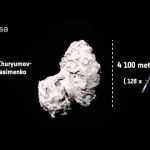
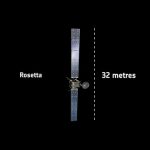
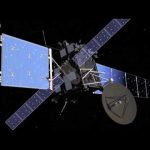
This short animation explains the relative sizes of the Rosetta spacecraft and comet 67P/Churyumov–Gerasimenko. Rosetta is 32 m from tip to tip of the solar wings. The comet measures 4.1 km along its longest length, 128 times the width of Rosetta.
Unlike typical artist’s impressions, this image is scaled to convey the vast difference in size between Rosetta and the comet, even when the spacecraft is in a close 10 km orbit, as depicted here.
Rosetta reached 10 km distance from the comet centre by October 2014.
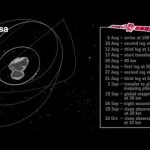
What happens after Rosetta arrives at comet 67P/Churyumov–Gerasimenko? This animation describes the key dates for the next set of manoeuvres that will bring Rosetta even closer to the comet between August and October.
After arriving on 6 August, Rosetta will follow a set of two, three-legged triangular trajectories that require a small thruster burn at each apex. The legs are about 100 km long and it will take Rosetta between three and four days to complete each one.
The first triangle is conducted at a distance of about 100 km from the comet, the second at around 50 km. Then Rosetta will switch to a ‘global mapping phase’ at an altitude of about 30 km. During this period, it will make a ‘night excursion’, whereby the ground track of the spacecraft will be on the night-side of the comet (with the spacecraft still fully illuminated the Sun).
In October Rosetta will transfer to a close mapping phase to observe the comet from a distance of 10 km. The spacecraft will move even closer to dispatch lander Philae to the surface in November.
In this animation the comet is an artist’s impression and is not to scale with the spacecraft. The comet rotation is not representative (67P rotates once per 12.4 hours). Dates may be subject to change.
This short animation explains the relative sizes of the Rosetta spacecraft and comet 67P/Churyumov–Gerasimenko.
Rosetta is 32 m from tip to tip of the solar wings. Assuming the comet measures about 4 km across, that’s 125 times the width of Rosetta.
Unlike typical artist’s impressions, this image is scaled to convey the vast difference in size between Rosetta and the comet, even when the spacecraft is in a close 10 km orbit, as depicted here.
Rosetta arrives at the comet at an altitude of 100 km in the first week of August, and will move progressively closer over the following two months, with the intention to orbit at an altitude of just 10 km, depending on the comet’s activity. For Philae’s deployment in November, Rosetta will come to within a few kilometres of the surface.
The comet depicted in this animation is an artist’s impression.
Earth from Space is presented by Kelsea Brennan-Wessels from the ESA Web-TV virtual studios. A Ramsar wetland of international importance located in southern Iran is featured in the one-hundred-ninth edition.
Visualisation of how the Rosetta spacecraft wakes up from deep space hibernation, 673 million kilometres from the Sun, on 20 January 2014.
Prior to entering hibernation on 8 June 2011, Rosetta was oriented so that its solar arrays faced the Sun, and it began rotating once per minute for stability. The only devices left running were its computer and several heaters.
Rosetta’s computer is programmed to carry out a sequence of events to re-establish contact with the Earth on 20 January, starting with an ‘alarm clock’ at 10:00 GMT. Immediately after, the star trackers begin to warm up. Around 6 hours later the thrusters are fired and the slow rotation stops. A slight adjustment is made to Rosetta’s orientation to ensure that the solar arrays now face the Sun. Then the star trackers switch on to determine its attitude. The spacecraft rotates towards Earth, and the transmitter is switched on. Then Rosetta’s high-gain antenna points to Earth and the signal is sent. The journey takes 45 minutes before the signal is received and mission controllers can begin to check Rosetta’s health, ready for the next phase of the mission.
The first opportunity for receiving a signal on Earth is between 17:30 GMT and 18:30 GMT.


![How do astronauts return to Earth? [with Closed Captions]](https://video.kidibot.ro/wp-content/uploads/2021/07/10518-how-do-astronauts-return-to-earth-with-closed-captions-150x150.jpg)