The AI-powered innovation transforming space medicine. Astronauts can now perform expert-level ultrasounds without Earth-based guidance—keeping them healthy on deep-space missions while paving the way for smarter, more accessible healthcare on Earth.
The future of exploration starts here!
📸 ESA/NASA – Alexander Gerst 📹 ESA – European Space Agency
Innovation is triggered by many drivers. One of these is the constant need for ESA to develop innovative solutions,such asuniquespacecrafttechnologies.
In this first video, Nicolas recalls how he and his team had to think outside the box to find a solution for ESA to communicate with Ulysses. Thespacecraft was flyingaround the north pole of the Sun,which ismuch fartherin deep spacethan satellites had beenlaunched up to that point.
The success of this solution motivated the decision to build ESA’sfirst deep-space communications antennas in New Norcia, in Australia, thus enabling many ESA scientific firstsin deep-space exploration.
The antennas would, some decades after, be critically important receivers forthe messages sent by the very distant Rosetta probe, on its quest to find and land on the comet 67P/Churyumov–Gerasimenko, and other ESA science and exploration missions such as Mars Express, Venus Expressand Cassini-Huygens.
With 35 yearsof experience at ESA, Nicolas Bobrinsky is the former Head of Ground Systems Engineering & Innovation Department. He initiated and further managed the Space Situational Awareness and later the ESA Space Safety Programme.
In four episodes of this new series of ESA Masterclass, Nicolas takes us through major events in his career at ESA, covering cornerstone missions, first attempts, overcoming technical challenges, leading diverse teamsand solving the unexpected problems that are part of any space endeavour.
★ Subscribe: http://bit.ly/ESAsubscribe and click twice on the bell button to receive our notifications.
We are Europe’s gateway to space. Our mission is to shape the development of Europe’s space capability and ensure that investment in space continues to deliver benefits to the citizens of Europe and the world. Check out https://www.esa.int/ to get up to speed on everything space related.
To prepare Europe for future decision making on Space-Based Solar Power, ESA has proposed a preparatory programme for Europe, initially named SOLARIS, for the upcoming ESA Council at Ministerial Level in November 2022.
Space-based solar power is a potential source of clean, affordable, continuous, abundant and secure energy. This basic concept has been given fresh urgency by the need for new sources of clean and secure energy to aid Europe’s transition to a Net Zero carbon world by 2050. If Europe wants to benefit from this game-changing capability then we need to start investing now.
We are Europe’s gateway to space. Our mission is to shape the development of Europe’s space capability and ensure that investment in space continues to deliver benefits to the citizens of Europe and the world. Check out https://www.esa.int/ to get up to speed on everything space related.
With a budget increase of more than 6% from the previous year, NASA will continue to boost its ingenuity in exploration, technology, aeronautics and science. This is a year of innovation.
This budget increases our ability to better understand Earth as a system –allowing us to tackle climate change in new ways. We will develop more climate-friendly aviation systems, like the X-57 Maxwell, and launch the James Webb Space Telescope that will enable groundbreaking research. Including a diverse and more inclusive workforce, we will continue pushing the boundaries of human exploration with Artemis, with goals of landing the first woman and the first person of color on the Moon, as well as fostering our international and commercial partnerships that help to make it all possible.
We look forward to continuing our legacy of inspiring the nation and the next generation of scientists, engineers and explorers, who will help us accomplish the ambitious goals that we’ve set out for NASA.
Producer/Editor: Lacey Young Music: Universal Production Music
Business Insider spoke to 6 tech industry figures at MWC 2018, and asked them what they thought the world would look like in 50 years’ time. From self-driving cars to implanted technology, watch to hear what these experts are predicting for the future.
The sixth Space App Camp was held at ESA’s establishment in Frascati, Italy, in September 2017. The camp offers access to the latest space data – particularly from the European Copernicus programme – to app developers, who work to make the information accessible to a broad audience. Twenty-four developers from 14 countries attended the 2017 camp. In this short video, participants talk about why they attended and what they hoped to achieve.
Mohamad Jebara loves mathematics — but he’s concerned that too many students grow up thinking that this beautiful, rewarding subject is difficult and boring. His company is experimenting with a bold idea: paying students for completing weekly math homework. He explores the ethics of this model and how it’s helping students — and why learning math is crucial in the era of fake news.
The TED Talks channel features the best talks and performances from the TED Conference, where the world’s leading thinkers and doers give the talk of their lives in 18 minutes (or less). Look for talks on Technology, Entertainment and Design — plus science, business, global issues, the arts and more.
ESA’s Global Space Economic Workshop on 13 October 2017 in Paris broughts together leaders of major space and non-space European stakeholders from institutions and commercial sectors, to interactively discuss space-led innovation opportunities and challenges offered by the on-going transformations that are driven by the digital economy and the current and future trends in the global market.
https://www.qualcomm.com/invention/5g
Artificial intelligence is making our devices more than just utilities. From smartphones to healthcare to autonomous cars, our own Gary Brotman explains the potential of AI to make our lives easier and more exciting.
Google’s artificial intelligence company, DeepMind, has developed an AI that has managed to learn how to walk, run, jump, and climb without any prior guidance. The result is as impressive as it is goofy.
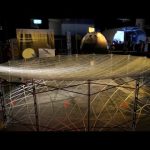
A 5 m-diameter antenna reflector, designed for orbital operations, seen during a test deployment during ESA’s latest Large Deployable Antenna Workshop.
Large-scale antenna reflectors are increasingly required for telecommunications, science and Earth observation missions.
This metal mesh reflector has a ‘double pantograph’ design to form a deployable ring. Once deployed it tensions two opposing, but connected, parabolic shaped nets, one on the top and one on the bottom.
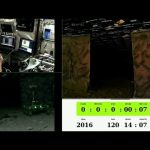
On 29 April 2016, ESA astronaut Tim Peake on the International Space Station took control of a rover, nicknamed ‘Bridget’, in the UK and over two hours drove it into a simulated cave and found and identified targets despite the dark and limited feedback information.
Before and after Tim came online from the orbiting Station, control of the rover was passed several times between engineers at the Airbus D&S ‘Mars Yard’ in Stevenage, UK, Belgium’s ISS User Support Centre in Brussels and ESA’s ESOC operations centre in Darmstadt, Germany. This complex real-time choreography was possible thanks to the ‘Internet in space’ – a network that tolerates disruptions – put in place by teams at ESOC. This network enables remote control of rovers or other devices in the difficult environment of space, with its long distances and frequent connection blackouts inevitable with orbital motion.
During the experiment, a representative mission scenario was set up in which the rover was commanded to go from a lit environment into a challenging dark location (simulating a cave or a shaded crater) and identified a number of science targets. The Mars yard (30 x 13 m) was split into two areas, one lit and one in the dark. From one end of the yard, Bridget was commanded from ESOC until it reached the edge of the shaded area. Then at the edge of the ‘cave’, control was passed to astronaut Tim Peake, on board the Station, who controlled Bridget to drive across the yard, avoiding obstacles and identifying potential science targets, which were marked with a distinctive ultraviolet fluorescent marker. Once the targets were identified and mapped, Tim drove the rover out of the shaded area and handed control back to ESOC, who drove the rover back to its starting point.
This video is a compressed extract that includes highlights of the experiment and includes scenes of the network control centre at ESOC, the Mars Yard at Stevenage and Tim Peake on the ISS. On audio, the voices of astronaut Time Peake, Lionel Ferra, the Eurocom ‘capcom’ controller at ESA’s Astronaut Centre in Cologne, Germany, and Kim Nergaard, the ground segment manager at ESOC, can be heard periodically.
Tiny satellites the size of a small cube, jam-packed with the most advanced nanotechnologies: is this the future of Space missions?
To find out, ESA Euronews went to Tallin, Estonia, where students at the Mektory Space Centre are preparing the launch of their first nanosatellite.
Nanosatellites – tiny cubes of 10cm x 10cm x 10cm, full of nanotechnologies — are going to be more and more important in the future of space exploration, from Mars missions, to the surveillance of asteroids, which could potentially be dangerous for our planet.
Also known as ‘CubeSats’ these tiny satellites open up a whole world of possibilities for those who want to explore space.
A nanoműholdak egyre fontosabbak lesznek az űrkutatásban, a Mars megfigyelésétől a Földre veszélyt jelentő aszteroidák felkutatásáig. A bennük rejlő potenciált mindenki igyekszik kiaknázni, a nagy űrügynökségektől a tudományos diákkörökig. Ez a helyzet a Mektory Űrközpontban, az észt főváros, Talinn műszaki egyetemén, ahol a diákok az első nanoműholdjuk Föld körüli pályára állítását készítik elő.
– Azt hittem, soha nem fogok műholdat építeni, hiszen ilyesmit csak a NASA-nál csinálnak. Most meg műholdat építek az egyetemi laborban – hitetlenkedett az Euronewsnak Marta Hang, az űrközpont programasszisztense.
A Mektory nanoműhold-programja egy nemzetközi egyetemi kezdeményezés, amelyben az oktatók és a hallgatók együttműködnek az űrkutatásban érdekelt és más technológiai cégekkel. A cél az, hogy felkészítsék a hallgatókat arra, hogy az űriparban helyezkedjenek el. A csapat jelenleg az első űrküldetését tervezi.
– Egy kockaműholdat fejlesztünk, amely egy egységből áll, és távérzékelési célokat szolgál, vagyis képeket készít majd a Földről – magyarázza a Mektory Űrközpont igazgatója, Mart Vihmand.
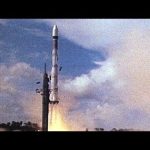
2014 is a special year: the space community is celebrating the anniversary of the construction of Europe as a space power and 50 years of unique achievements in space.
It started with the creation of two entities, entering into force in 1964, the European Launcher Development Organisation (ELDO) and the European Space Research Organisation (ESRO).
A little more than a decade later, the European Space Agency (ESA) would be established, replacing these two organisations and since then serving European cooperation and innovation.
This video recalls the importance of Europe efforts in space and its successes with now a guaranteed and independent access to space and several programs covering all possible areas from Science, to Earth Observation, Human Spaceflight, Telecom and Navigation.
From understanding our Earth, to new clues about possible life elsewhere. From fostering life-changing research in space, to sharing our vision of the future with those destined to journey there. From the end of one monumental mission, to the beginning of a new era in the human exploration of our solar system. “This Year @NASA” looks back at the stories that made 2011 — and help frame our path ahead.