Tag: Interview

  • Post-flight interview with Matthias Maurer | Cosmic Kiss

    Post-flight interview with Matthias Maurer | Cosmic Kiss

    Interview with ESA astronaut Matthias Maurer after the conclusion of his 177-day mission on the International Space Station. During his time in orbit, Matthias supported over 35 European experiments and even more international experiments on board. The outcomes of these experiments will advance our knowledge in areas ranging from human health to materials science, benefiting life on Earth and the future of space exploration. Other highlights included his spacewalk to improve and maintain the Space Station.

    More about the Cosmic Kiss mission: https://www.esa.int/cosmickiss

    ★ Subscribe: http://bit.ly/ESAsubscribe and click twice on the bell button to receive our notifications.

    Check out our full video catalog: http://bit.ly/SpaceInVideos
    Follow us on Twitter: http://bit.ly/ESAonTwitter
    On Facebook: http://bit.ly/ESAonFacebook
    On Instagram: http://bit.ly/ESAonInstagram
    On LinkedIn: https://bit.ly/ESAonLinkedIn
    On Pinterest: https://bit.ly/ESAonPinterest
    On Flickr: http://bit.ly/ESAonFlickr

    We are Europe’s gateway to space. Our mission is to shape the development of Europe’s space capability and ensure that investment in space continues to deliver benefits to the citizens of Europe and the world. Check out https://www.esa.int/ to get up to speed on everything space related.

    Copyright information about our videos is available here: https://www.esa.int/ESA_Multimedia/Terms_and_Conditions

  • Interview with Thomas Pesquet on return to Earth a second time

    Interview with Thomas Pesquet on return to Earth a second time

    ESA astronaut Thomas Pesquet gives a brief interview in Cologne, Germany, less than 48 hours after leaving the International Space Station.

    He talks with ESA Web TV editor Julien Harrod about returning to Earth after his six-month International Space Station mission Alpha, how it feels to splash down in a @SpaceX Crew Dragon, and the differences with the Russian Soyuz spacecraft that flew him to space on his first mission, Proxima, in 2017.

    After completing two six-month Space Station missions in five years, Thomas recounts the changes he saw while observing our planet Earth from 400 km above.

    Thomas is the first European to fly to the International Space Station and return on a commercial spacecraft. SpaceX’s Crew Dragon Endeavour transporting Crew-2 autonomously undocked from the International Space Station and after a series of burns, entered Earth’s atmosphere and deployed parachutes for a soft water-landing. Thomas and crew splashed down on 9 November 2021 at 03:33 GMT (04:33 CET).

    Thomas flew to Cologne, Germany, where he is being monitored by ESA’s space medicine team as he readapts to Earth’s gravity at ESA’s European Astronaut Centre (EAC) and @DLR ‘Envihab’ facility.

    Over 200 experiments were run during Thomas’ time in space, with 40 European ones and 12 new experiments led by the French space agency @CNES. The experiments continue on Earth charting the astronauts physical adaptation to living with gravity again.

    Watch interview in French: https://youtu.be/h98qTwsa2pc

    Follow Thomas: http://bit.ly/ThomasPesquetBlog

    ★ Subscribe: http://bit.ly/ESAsubscribe and click twice on the bell button to receive our notifications.

    Check out our full video catalog: http://bit.ly/SpaceInVideos
    Follow us on Twitter: http://bit.ly/ESAonTwitter
    On Facebook: http://bit.ly/ESAonFacebook
    On Instagram: http://bit.ly/ESAonInstagram
    On LinkedIn: https://bit.ly/ESAonLinkedIn
    On Pinterest: https://bit.ly/ESAonPinterest
    On Flickr: http://bit.ly/ESAonFlickr

    We are Europe’s gateway to space. Our mission is to shape the development of Europe’s space capability and ensure that investment in space continues to deliver benefits to the citizens of Europe and the world. Check out https://www.esa.int/ to get up to speed on everything space related.

    Copyright information about our videos is available here: https://www.esa.int/ESA_Multimedia/Terms_and_Conditions

    #ESA
    #MissionAlpha
    #ThomasPesquet

  • Solar Orbiter operations simulations

    Solar Orbiter operations simulations

    ESA’s Solar Orbiter is getting ready for its launch on an Atlas V rocket provided by NASA and operated by United Launch Alliance from Cape Canaveral, Florida.

    Once in space, and over the course of several years, the spacecraft will repeatedly use the gravity of Venus and Earth to raise its orbit above the poles of the Sun, providing new perspectives on our star, including the first images of the Sun’s polar regions.

    All these operations will be controlled from the European Space Operations Centre (ESOC), Germany, where a dedicated team is currently working on simulations of the first moments in orbit, after separation from the launcher, but also all the delicate manoeuvres of the journey that will make Solar Orbiter mission possible.

    Learn more Solar Orbiter: http://bit.ly/ESASolarOrbiter

    ★ Subscribe: http://bit.ly/ESAsubscribe and click twice on the bell button to receive our notifications.

    Check out our full video catalog: http://bit.ly/SpaceInVideos
    Follow us on Twitter: http://bit.ly/ESAonTwitter
    On Facebook: http://bit.ly/ESAonFacebook
    On Instagram: http://bit.ly/ESAonInstagram
    On Flickr: http://bit.ly/ESAonFlickr

    We are Europe’s gateway to space. Our mission is to shape the development of Europe’s space capability and ensure that investment in space continues to deliver benefits to the citizens of Europe and the world. Check out http://www.esa.int/ESA to get up to speed on everything space related.

    Copyright information about our videos is available here: http://www.esa.int/spaceinvideos/Terms_and_Conditions
    #ESA
    #SolarOrbiter
    #WeAreAllSolarOrbiters

  • Luca Parmitano: back from Beyond

    Luca Parmitano: back from Beyond

    ESA astronaut Luca Parmitano returned from his second long-duration mission to the International Space Station, known as ‘Beyond’, on 6 February 2020. In this interview at ESA’s Astronaut Centre in Cologne, Germany, he shares some of his experiences and feelings after 201 days in orbit.

    This interview was conducted late on the night Luca landed in Cologne, and is the first full interview with him in Europe since he touched down in Kazakhstan at 09:12 GMT (10:12 CET) Thursday 6 February.

    Some of the highlights of Luca’s Beyond mission include becoming the third European and first Italian in command of the Space Station, leading three of four complex spacewalks to maintain the cosmic-ray-detecting Alpha Magnetic Spectrometer AMS-02, gaining the European record for most cumulative spacewalking time, remotely controlling a rock-collecting rover in the Netherlands, supporting over 50 European and 200 international experiments and sharing his experiences with those back on Earth through images and video links.

    One of the main things Luca highlighted throughout his mission was the fragility of our planet and the need to act now for generations to come.

    Watch the interview in Italian here: https://youtu.be/5BZy1Dd56oI

    Follow Luca: http://bit.ly/ESALucaParmitano

     ★ Subscribe: http://bit.ly/ESAsubscribe and click twice on the bell button to receive our notifications.

    Check out our full video catalog: http://bit.ly/SpaceInVideos
    Follow us on Twitter: http://bit.ly/ESAonTwitter
    On Facebook: http://bit.ly/ESAonFacebook
    On Instagram: http://bit.ly/ESAonInstagram
    On Flickr: http://bit.ly/ESAonFlickr

    We are Europe’s gateway to space. Our mission is to shape the development of Europe’s space capability and ensure that investment in space continues to deliver benefits to the citizens of Europe and the world. Check out http://www.esa.int/ESA to get up to speed on everything space related.

    Copyright information about our videos is available here: http://www.esa.int/spaceinvideos/Terms_and_Conditions

    #ESA
    #LucaParmitano
    #MissionBeyond

  • Luca Parmitano: torna da Beyond

    Luca Parmitano: torna da Beyond

    L’astronauta dell’ESA Luca Parmitano è tornato dalla sua seconda missione di lunga durata sulla Stazione Spaziale Internazionale chiamata ‘Beyond’, il 6 febbraio 2020. In questa intervista al Centro astronauti dell’ESA di Colonia in Germania, condivide alcune delle sue esperienze e dei suoi sentimenti dopo 201 giorni in orbita.

    Questa intervista è stata condotta nella tarda notte in cui Luca è atterrato a Colonia, ed è la prima intervista completa con lui in Europa da quando è atterrato in Kazakistan alle 09:12 GMT (10:12 CET) giovedì 6 febbraio.

    Tra i momenti salienti della missione Beyond di Luca ci sono: diventare il terzo europeo e il primo italiano al comando della Stazione Spaziale, condurre tre delle quattro complesse passeggiate spaziali, ottenere il record europeo per la maggior parte del tempo trascorso durante le passeggiate spaziali, controllare a distanza un rover che raccoglie rocce nei Paesi Bassi, condurre oltre 50 esperimenti europei e 200 internazionali e condividere le sue esperienze attraverso immagini e collegamenti video.

    Una delle cose principali che Luca ha evidenziato nel corso della sua missione è stata la fragilità del nostro pianeta e la necessità di agire ora per le generazioni a venire.

    Watch the interview in English here: https://youtu.be/UgqRt08FV_Y

    ★ Subscribe: http://bit.ly/ESAsubscribe and click twice on the bell button to receive our notifications.

    Check out our full video catalog: http://bit.ly/SpaceInVideos
    Follow us on Twitter: http://bit.ly/ESAonTwitter
    On Facebook: http://bit.ly/ESAonFacebook
    On Instagram: http://bit.ly/ESAonInstagram
    On Flickr: http://bit.ly/ESAonFlickr

    We are Europe’s gateway to space. Our mission is to shape the development of Europe’s space capability and ensure that investment in space continues to deliver benefits to the citizens of Europe and the world. Check out http://www.esa.int/ESA to get up to speed on everything space related.

    Copyright information about our videos is available here: http://www.esa.int/spaceinvideos/Terms_and_Conditions
    #ESA
    #LucaParmitano
    #MissionBeyond

  • Solar Orbiter – the Sun close-up

    Solar Orbiter – the Sun close-up

    ESA’s mission to the Sun, Solar Orbiter, is due for launch on an Atlas V 411 from Cape Canaveral, Florida on 9 February 23:03 EST / 04:03 GMT / 05:03 CET on 10 Feb.
     
    Equipped with a suite of ten scientific instruments, Solar Orbiter will capture the first images of the Sun’s poles and make detailed observations of solar activity. Its specially designed heatshield is capable of enduring temperatures of more than 500ºC.

    Solar Orbiter is a space mission of international collaboration between ESA and NASA. The spacecraft has been developed by Airbus.

    Learn more Solar Orbiter: http://bit.ly/ESASolarOrbiter

    ★ Subscribe: http://bit.ly/ESAsubscribe and click twice on the bell button to receive our notifications.

    Check out our full video catalog: http://bit.ly/SpaceInVideos
    Follow us on Twitter: http://bit.ly/ESAonTwitter
    On Facebook: http://bit.ly/ESAonFacebook
    On Instagram: http://bit.ly/ESAonInstagram
    On Flickr: http://bit.ly/ESAonFlickr

    We are Europe’s gateway to space. Our mission is to shape the development of Europe’s space capability and ensure that investment in space continues to deliver benefits to the citizens of Europe and the world. Check out http://www.esa.int/ESA to get up to speed on everything space related.

    Copyright information about our videos is available here: http://www.esa.int/spaceinvideos/Terms_and_Conditions
    #ESA
    #SolarOrbiter
    #WeAreAllSolarOrbiters

  • What is Cheops?

    What is Cheops?

    What is ESA’s Characterising Exoplanet Satellite, Cheops, and how will it improve our knowledge of exoplanets? Find out more in this interview with Kate Isaak, ESA Cheops project scientist.

    More about Cheops: http://bit.ly/ESACheops

    ★ Subscribe: http://bit.ly/ESAsubscribe and click twice on the bell button to receive our notifications.

    Check out our full video catalog: http://bit.ly/SpaceInVideos
    Follow us on Twitter: http://bit.ly/ESAonTwitter
    On Facebook: http://bit.ly/ESAonFacebook
    On Instagram: http://bit.ly/ESAonInstagram
    On Flickr: http://bit.ly/ESAonFlickr

    We are Europe’s gateway to space. Our mission is to shape the development of Europe’s space capability and ensure that investment in space continues to deliver benefits to the citizens of Europe and the world. Check out http://www.esa.int/ESA to get up to speed on everything space related.

    Copyright information about our videos is available here: http://www.esa.int/spaceinvideos/Terms_and_Conditions
    #ESA
    #Cheops
    #Exoplanets

  • Cheops: the hunt for exoplanets

    Cheops: the hunt for exoplanets

    A powerful space telescope, due for launch from Europe’s Spaceport in French Guiana on 17 December 2019, will give scientists a new insight into the nature of planets outside our Solar System.

    Cheops, the ‘Characterising Exoplanet Satellite’, will study known exoplanets that are orbiting bright stars.

    More than 4000 exoplanets have been discovered and Cheops will be targeting known planets between the size of Earth and Neptune, to find out more about their composition, internal structure and whether they might be able to support life.

    Cheops’ mission is a partnership between ESA and Switzerland with additional contributions from Austria, Belgium, France, Germany, Hungary, Italy, Portugal, Spain, Sweden and the UK.

    This film examines the nature of exoplanets, the challenge of exoplanet exploration and features the Cheops Science Operations Centre in Geneva, it includes interviews with Didier Queloz, Chair of the Cheops Science Team and 2019 Nobel Physics Laureate, University of Geneva; Willy Benz, Cheops Principal Investigator, University of Bern; and Matthias Beck, Cheops Ground Segment Manager, University of Geneva).

    Learn more: http://bit.ly/ESACheops

    ★ Subscribe: http://bit.ly/ESAsubscribe and click twice on the bell button to receive our notifications.

    Check out our full video catalog: http://bit.ly/SpaceInVideos
    Follow us on Twitter: http://bit.ly/ESAonTwitter
    On Facebook: http://bit.ly/ESAonFacebook
    On Instagram: http://bit.ly/ESAonInstagram
    On Flickr: http://bit.ly/ESAonFlickr

    We are Europe’s gateway to space. Our mission is to shape the development of Europe’s space capability and ensure that investment in space continues to deliver benefits to the citizens of Europe and the world. Check out http://www.esa.int/ESA to get up to speed on everything space related.

    Copyright information about our videos is available here: http://www.esa.int/spaceinvideos/Terms_and_Conditions
    #ESA
    #Cheops
    #ExoPlanets

  • Cheops: Europe’s exoplanet mission

    Cheops: Europe’s exoplanet mission

    ESA’s first mission dedicated to investigating planets outside our solar system is scheduled for launch on a Soyuz rocket from the European spaceport in French Guiana on 17 December 2019.

    Cheops – Characterising ExOPlanet Satellite – will study known exoplanets that are orbiting bright stars. The aim is to obtain detailed information about these planets to find out more about their composition and internal structure.

    The mission is a partnership between ESA and Switzerland with additional contributions from Austria, Belgium, France, Germany, Hungary, Italy, Portugal, Spain, Sweden and the UK.

    Learn more: http://sci.esa.int/cheops/

    ★ Subscribe: http://bit.ly/ESAsubscribe and click twice on the bell button to receive our notifications.

    Check out our full video catalog: http://bit.ly/SpaceInVideos
    Follow us on Twitter: http://bit.ly/ESAonTwitter
    On Facebook: http://bit.ly/ESAonFacebook
    On Instagram: http://bit.ly/ESAonInstagram
    On Flickr: http://bit.ly/ESAonFlickr

    We are Europe’s gateway to space. Our mission is to shape the development of Europe’s space capability and ensure that investment in space continues to deliver benefits to the citizens of Europe and the world. Check out http://www.esa.int/ESA to get up to speed on everything space related.

    Copyright information about our videos is available here: http://www.esa.int/spaceinvideos/Terms_and_Conditions

    #ESA
    #Cheops
    #ExoPlanets

  • Sentinel-6: charting sea level

    Sentinel-6: charting sea level

    In a cleanroom in Ottobrunn, Germany, the latest Copernicus Sentinel satellite is ready for final testing before it is packed up and shipped to the US for liftoff next year. Designed and built to chart changing sea level, it is the first of two identical Sentinel-6 satellites that will be launched consecutively to continue the time series of sea-level measurements. This new mission builds on heritage from previous ocean topography satellites, including the French–US Topex-Poseidon and Jason missions, previous ESA missions such as the ERS satellites, Envisat and CryoSat, as well as Copernicus Sentinel-3. With millions of people around the world at risk from rising seas, it is essential to continue measuring the changing height of the sea surface so that decision-makers are equipped to take appropriate mitigating action – as is being currently highlighted at the COP-25 Climate Change Conference in Spain.

    Learn more about Sentinel-6: http://bit.ly/Sentinel6

    ★ Subscribe: http://bit.ly/ESAsubscribe and click twice on the bell button to receive our notifications.

    Check out our full video catalog: http://bit.ly/SpaceInVideos

    Follow us on Twitter: http://bit.ly/ESAonTwitter

    On Facebook: http://bit.ly/ESAonFacebook

    On Instagram: http://bit.ly/ESAonInstagram

    On Flickr: http://bit.ly/ESAonFlickr

    We are Europe’s gateway to space. Our mission is to shape the development of Europe’s space capability and ensure that investment in space continues to deliver benefits to the citizens of Europe and the world. Check out http://www.esa.int/ESA to get up to speed on everything space related.

    Copyright information about our videos is available here: http://www.esa.int/spaceinvideos/Terms_and_Conditions
    #ESA
    #EarthObservation
    #Sentinel6

  • YGT experience as a Spacecraft Operations Engineer

    YGT experience as a Spacecraft Operations Engineer

    Nicolas Soubirous, Spacecraft Operations Engineer, shares his Young Graduate Trainee (YGT) experience at ESA, working in the EarthCARE, SEOSat & SMOS Missions Operations Unit at ESOC, Germany.

    Learn more: http://bit.ly/ESAygt

    ★ Subscribe: http://bit.ly/ESAsubscribe and click twice on the bell button to receive our notifications.

    Check out our full video catalog: http://bit.ly/SpaceInVideos
    Follow us on Twitter: http://bit.ly/ESAonTwitter
    On Facebook: http://bit.ly/ESAonFacebook
    On Instagram: http://bit.ly/ESAonInstagram
    On Flickr: http://bit.ly/ESAonFlickr

    We are Europe’s gateway to space. Our mission is to shape the development of Europe’s space capability and ensure that investment in space continues to deliver benefits to the citizens of Europe and the world. Check out http://www.esa.int/ESA to get up to speed on everything space related.

    Copyright information about our videos is available here: http://www.esa.int/spaceinvideos/Terms_and_Conditions
    #ESA
    #YGT
    #SpacecraftOperationsEngineer

  • YGT experience in space architecture and infrastructure

    YGT experience in space architecture and infrastructure

    Ina Cheibas talks about her Young Graduate Trainee (YGT) experience in the Advanced Concepts Team at ESTEC, Netherlands, where her role was to propose and develop additive manufacturing techniques for a space habitat with in situ resources.

    Learn more: http://bit.ly/ESAygt

    ★ Subscribe: http://bit.ly/ESAsubscribe and click twice on the bell button to receive our notifications.

    Check out our full video catalog: http://bit.ly/SpaceInVideos
    Follow us on Twitter: http://bit.ly/ESAonTwitter
    On Facebook: http://bit.ly/ESAonFacebook
    On Instagram: http://bit.ly/ESAonInstagram
    On Flickr: http://bit.ly/ESAonFlickr

    We are Europe’s gateway to space. Our mission is to shape the development of Europe’s space capability and ensure that investment in space continues to deliver benefits to the citizens of Europe and the world. Check out http://www.esa.int/ESA to get up to speed on everything space related.

    Copyright information about our videos is available here: http://www.esa.int/spaceinvideos/Terms_and_Conditions
    #ESA
    #YGT
    #SpaceArchitecture

  • Interview with Jan Wörner after Space19+

    Interview with Jan Wörner after Space19+

    Interview with ESA Director General Jan Wörner following the conclusion of Space19+, the ESA Council at Ministerial Level, held in Seville, Spain, 27-28 November.

    Find out more about the biggest ever budget committed by ESA ministers: http://www.esa.int/About_Us/Corporate_news/ESA_ministers_commit_to_biggest_ever_budget

    ★ Subscribe: http://bit.ly/ESAsubscribe and click twice on the bell button to receive our notifications.

    Check out our full video catalog: http://bit.ly/SpaceInVideos
    Follow us on Twitter: http://bit.ly/ESAonTwitter
    On Facebook: http://bit.ly/ESAonFacebook
    On Instagram: http://bit.ly/ESAonInstagram
    On Flickr: http://bit.ly/ESAonFlickr

    We are Europe’s gateway to space. Our mission is to shape the development of Europe’s space capability and ensure that investment in space continues to deliver benefits to the citizens of Europe and the world. Check out http://www.esa.int/ESA to get up to speed on everything space related.

    Copyright information about our videos is available here: http://www.esa.int/spaceinvideos/Terms_and_Conditions
    #ESA
    #Space19plus
    #TimeForDecisions

  • YGT experience in the ESA Future Missions Office

    YGT experience in the ESA Future Missions Office

    Priya Patel, System Engineer, talks about her experience as a Young Graduate Trainee (YGT) working on the Laser Interferometer Space Antenna Mission (LISA).

    Learn more: http://bit.ly/ESAygt

    ★ Subscribe: http://bit.ly/ESAsubscribe and click twice on the bell button to receive our notifications.

    Check out our full video catalog: http://bit.ly/SpaceInVideos
    Follow us on Twitter: http://bit.ly/ESAonTwitter
    On Facebook: http://bit.ly/ESAonFacebook
    On Instagram: http://bit.ly/ESAonInstagram
    On Flickr: http://bit.ly/ESAonFlickr

    We are Europe’s gateway to space. Our mission is to shape the development of Europe’s space capability and ensure that investment in space continues to deliver benefits to the citizens of Europe and the world. Check out http://www.esa.int/ESA to get up to speed on everything space related.

    Copyright information about our videos is available here: http://www.esa.int/spaceinvideos/Terms_and_Conditions

    #ESA
    #YGT
    #LisaMission

  • Latest from Rosetta

    Latest from Rosetta

    Three years after the Rosetta mission officially ended in 2016, scientists met at ESA’s ESTEC facility in The Netherlands to discuss the latest findings at the final Science Working Team (SWT) meeting.

    From the launch in 2004, to its arrival at comet 67P in 2014, Rosetta has been an emotional and inspiring mission. Its findings have furthered our understanding of comets and changed our perceptions of how the Solar System formed.

    The mission produced an enormous amount of data which will keep many scientists busy for years. The OSIRIS camera, for example, took 100 000 images. These are archived – with the analysis of images recently providing further insight into the comet’s activity.

    Rosetta’s legacy of cometary science and data is not just continuing to produce more work, however, it’s also inspiring the next generation of scientists. Some began working on Rosetta as students and are now taking their experience forward onto ESA’s future Comet Interceptor mission.

    Further insight into the comet’s activity: http://bit.ly/CometCollapsingCliffsAndBouncingBoulders

    ★ Subscribe: http://bit.ly/ESAsubscribe and click twice on the bell button to receive our notifications.

    Check out our full video catalog: http://bit.ly/SpaceInVideos
    Follow us on Twitter: http://bit.ly/ESAonTwitter
    On Facebook: http://bit.ly/ESAonFacebook
    On Instagram: http://bit.ly/ESAonInstagram
    On Flickr: http://bit.ly/ESAonFlickr

    We are Europe’s gateway to space. Our mission is to shape the development of Europe’s space capability and ensure that investment in space continues to deliver benefits to the citizens of Europe and the world. Check out http://www.esa.int/ESA to get up to speed on everything space related.

    Copyright information about our videos is available here: http://www.esa.int/spaceinvideos/Terms_and_Conditions
    #ESA
    #Rosetta
    #SpaceExploration

  • Cheops: science in action

    Cheops: science in action

    Scientists at the Geneva Observatory in Switzerland will be processing data from Cheops, ESA’s Characterising Exoplanet Satellite, scheduled to launch soon to study planets orbiting stars outside our Solar System.

    The Observatory has a rich history studying exoplanets. In 1995, Michel Mayor and Didier Queloz discovered the first exoplanet orbiting a Sun-like star. Now, over 4000 planets are known around stars other than the Sun.

    By observing stars that are already known to host exoplanets, Cheops will make measure very precisely the sizes of planets in the super-Earth to Neptune size range. Combined with existing measurements of planet masses, the Cheops data will make it possible to determine the density of these planets, giving us vital clues about its composition and structure, indicating for example if it is predominantly rocky or gassy, or perhaps harbours significant oceans.

    The Cheops mission is a partnership between ESA and Switzerland with important contributions from Austria, Belgium, France, Germany, Hungary, Italy, Portugal, Spain, Sweden, and the United Kingdom. The Cheops launch slot is scheduled for the last quarter of 2019. This film contains contributions from Didier Queloz, Chair of the Cheops Science Team (University of Geneva); Willy Benz, the Cheops Principal Investigator (University of Bern); and the Cheops Ground Segment Manager, Matthias Beck (University of Geneva).

    Learn more: http://sci.esa.int/cheops/

    ★ Subscribe: http://bit.ly/ESAsubscribe and click twice on the bell button to receive our notifications.

    Check out our full video catalog: http://bit.ly/SpaceInVideos
    Follow us on Twitter: http://bit.ly/ESAonTwitter
    On Facebook: http://bit.ly/ESAonFacebook
    On Instagram: http://bit.ly/ESAonInstagram
    On Flickr: http://bit.ly/ESAonFlickr

    We are Europe’s gateway to space. Our mission is to shape the development of Europe’s space capability and ensure that investment in space continues to deliver benefits to the citizens of Europe and the world. Check out http://www.esa.int/ESA to get up to speed on everything space related.

    Copyright information about our videos is available here: http://www.esa.int/spaceinvideos/Terms_and_Conditions
    #ESA
    #Cheops
    #ExoPlanets

  • ESA and ɸ

    ESA and ɸ

    Josef Aschbacher, Director of Earth Observation Programmes at ESA, reflects on last year’s ɸ-week, and discusses progress made so far. As this year’s ɸ-week kicks off, he looks to the next steps of how Earth observation and the digital revolution can work together. He also mentions a new AI special interest group on space, and an exciting new challenge for the next ɸ-sat.

    Learn everything about ɸ-week: https://phiweek.esa.int

    ★ Subscribe: http://bit.ly/ESAsubscribe and click twice on the bell button to receive our notifications.

    Check out our full video catalog: http://bit.ly/SpaceInVideos
    Follow us on Twitter: http://bit.ly/ESAonTwitter
    On Facebook: http://bit.ly/ESAonFacebook
    On Instagram: http://bit.ly/ESAonInstagram
    On Flickr: http://bit.ly/ESAonFlickr

    We are Europe’s gateway to space. Our mission is to shape the development of Europe’s space capability and ensure that investment in space continues to deliver benefits to the citizens of Europe and the world. Check out http://www.esa.int/ESA to get up to speed on everything space related.

    Copyright information about our videos is available here: http://www.esa.int/spaceinvideos/Terms_and_Conditions
    #ESA
    #PhiWeek
    #FutureEO

  • Luca Parmitano responds to #AskLuca

    Luca Parmitano responds to #AskLuca

    Before ESA astronaut Luca Parmitano was launched to the International Space Station for his second space mission ‘Beyond’ on 20 July 2019, we asked Twitter followers what they would like to #AskLuca. In this video, he answers a few of those questions:

    0:00 – Intro
    0:08 – Have you been specifically trained for the visit (yet to be confirmed) of US commercial crew vehicles?
    0:41 – Do you have a music playlist to listen to and a list of pieces you would like to practice on the guitar during your mission?
    1:25 – What was the biggest sacrifice you made to become an astronaut?
    2:04 – Have you missed the space station since your last mission?
    2:10 – What is one aspect of preparation you did very differently this time compared to the first time?
    2:44 – What is your favourite science-fiction quote?
    2:52 – What is the biggest challenge of your Beyond mission?
    3:03 – Is it harder or easier to head off to space for the second time?
    3:34 – Quali sono le differenze tra preparare una prima missione e una seconda? E cosa cambia nell’addestramento per un Comandante della ISS?
    4:25 – Ti capita di annoiarti nel corso del tuo addestramento? E quanto è dura svolgere il lavoro dell’astronauta?
    5:15 – Ti stai preparando a puntino per la Luna?

    Follow Luca’s mission: http://bit.ly/ESALucaParmitano

    ★ Subscribe: http://bit.ly/ESAsubscribe and click twice on the bell button to receive our notifications.

    Check out our full video catalog: http://bit.ly/SpaceInVideos
    Follow us on Twitter: http://bit.ly/ESAonTwitter
    On Facebook: http://bit.ly/ESAonFacebook
    On Instagram: http://bit.ly/ESAonInstagram
    On Flickr: http://bit.ly/ESAonFlickr

    We are Europe’s gateway to space. Our mission is to shape the development of Europe’s space capability and ensure that investment in space continues to deliver benefits to the citizens of Europe and the world. Check out http://www.esa.int/ESA to get up to speed on everything space related.

    Copyright information about our videos is available here: http://www.esa.int/spaceinvideos/Terms_and_Conditions

    #ESA
    #LucaParmitano
    #MissionBeyond

  • Exploring black holes with LISA and Athena

    Exploring black holes with LISA and Athena

    In this video, our scientists Paul McNamara and Matteo Guainazzi explain how we could combine the observing power of two of our future missions, LISA and Athena, to study these cosmic clashes and their mysterious aftermath for the first time.

    LISA, the Laser Interferometer Space Antenna, will be the first space-borne observatory of gravitational waves – fluctuations in the fabric of spacetime produced by the acceleration of cosmic objects with very strong gravity fields, like pairs of merging black holes. Athena, the Advanced Telescope for High-ENergy Astrophysics, will be the largest X-ray observatory ever built, investigating some of the hottest and most energetic phenomena in the cosmos with unprecedented accuracy and depth. Currently in the study phase, both missions are scheduled for launch in the early 2030s.
    More information: A unique experiment to explore black holes
    http://www.esa.int/Our_Activities/Space_Science/A_unique_experiment_to_explore_black_holes

    Copyright: ESA

    Credits: Event Horizon Telescope Collaboration (black hole image); NASA, ESA and F. Summers, STScI (Hubble Ultra Deep Field flythrough and galaxy merger); Simulating eXtreme Spacetimes Project (gravitational waves and merging black holes); NASA’s Goddard Space Flight Centre (spiralling supermassive black holes); AEI/Milde Science Communication/exozet (LISA orbit sequence); ESA/Hubble, NASA, M. Kornmesser

    ★ Subscribe: http://bit.ly/ESAsubscribe and click twice on the bell button to receive our notifications.

    Check out our full video catalog: http://bit.ly/SpaceInVideos
    Follow us on Twitter: http://bit.ly/ESAonTwitter
    On Facebook: http://bit.ly/ESAonFacebook
    On Instagram: http://bit.ly/ESAonInstagram
    On Flickr: http://bit.ly/ESAonFlickr

    We are Europe’s gateway to space. Our mission is to shape the development of Europe’s space capability and ensure that investment in space continues to deliver benefits to the citizens of Europe and the world. Check out http://www.esa.int/ESA to get up to speed on everything space related.

    Copyright information about our videos is available here: http://www.esa.int/spaceinvideos/Terms_and_Conditions
    #ESA
    #LISA
    #Athena

  • Testing Solar Orbiter

    Testing Solar Orbiter

    The Solar Orbiter spacecraft is undergoing important pre-launch tests at the IABG National Space Centre in Ottobrunn, Germany, ahead of its launch, scheduled for February 2020.

    The mission will study the Sun, but first the spacecraft must pass vibration, acoustic and shock tests. This will ensure the spacecraft can withstand the stresses of lift off and the extreme environments it will encounter while in orbit around the Sun – from the coldness of space, 150 million km away, to temperatures up to 500 ºC reached when it will be a mere 46 million km away, closer than Mercury.

    Solar Orbiter is an ESA-led mission with strong NASA participation. The spacecraft was built and is being tested by Airbus.

    This film contains interviews with César García, ESA Solar Orbiter Project Manager, and Ian Walters, Solar Orbiter Project Manager at Airbus Defence and Space.
    More information: http://bit.ly/GoodVibesForSolarOrbiter

    ★ Subscribe: http://bit.ly/ESAsubscribe and click twice on the bell button to receive our notifications.

    Check out our full video catalogue: http://bit.ly/SpaceInVideos
    Follow ESA on Twitter: http://bit.ly/ESAonTwitter
    On Facebook: http://bit.ly/ESAonFacebook
    On Instagram: http://bit.ly/ESAonInstagram
    On Flickr: http://bit.ly/ESAonFlickr

    ESA is Europe’s gateway to space. Our mission is to shape the development of Europe’s space capability and ensure that investment in space continues to deliver benefits to the citizens of Europe and the world. Check out http://www.esa.int/ESA to get up to speed on everything space related.

    Copyright information about our videos is available here: http://www.esa.int/spaceinvideos/Terms_and_Conditions

    #ESA
    #SpaceScience
    #SolarOrbiter

  • NASA Astronaut Anne McClain Addresses Spacewalk Reassignment

    NASA Astronaut Anne McClain Addresses Spacewalk Reassignment

    During an interview with ABC News on April 1, 2019, NASA Astronaut Anne McClain addressed a question about what would have been the first all-female spacewalk during Women’s History Month. Based on McClain’s recommendation, NASA changed assignments to protect the safety of the crew and the timing of the mission.

    Learn more about the spacewalk reassignment at https://www.nasa.gov/feature/spacewalk-reassignments-what-s-the-deal.

  • Ariane 6 Upper Stage Test bench

    Ariane 6 Upper Stage Test bench

    Rocket engines for Ariane 6 are being tested and qualified at the German Aerospace Center in Lampoldshausen, Germany.

    Several of the facilities on site have been modified for Ariane 6 and a new facility will soon test the launcher’s complete upper stage, simulating as far as possible the conditions it will experience in flight. With testing and development at full pace, Ariane 6 is taking shape for its maiden voyage.

    Learn more about Ariane 6: http://bit.ly/Ariane6ESA

    ★ Subscribe: http://bit.ly/ESAsubscribe and click twice on the bell button to receive our notifications.

    Check out our full video catalog: http://bit.ly/SpaceInVideos
    Follow ESA on Twitter: http://bit.ly/ESAonTwitter
    On Facebook: http://bit.ly/ESAonFacebook
    On Instagram: http://bit.ly/ESAonInstagram
    On Flickr: http://bit.ly/ESAonFlickr

    ESA is Europe’s gateway to space. Our mission is to shape the development of Europe’s space capability and ensure that investment in space continues to deliver benefits to the citizens of Europe and the world. Check out http://www.esa.int/ESA to get up to speed on everything space related.

    Copyright information about our videos is available here: http://www.esa.int/spaceinvideos/Terms_and_Conditions

    #Ariane6
    #ESA
    #Rocket

  • Science at ESA

    Science at ESA

    Science is the underpinning theme of ESA, driving the spiral of inspiration, innovation, infor­mation exchange and interaction with our stakeholders. In this video, Günther Hasinger, ESA Director of Science, reflects on the growth of ESA’s space science programme over the past decades, as well as on its current and future challenges. He also highlights the importance of long-term strategic planning and international cooperation in these endeavours, and finally looks back at some recent successes of ESA’s space science missions.

    Learn more about ESA’s space science missions: http://www.esa.int/science

    Science is everywhere at ESA. As well as exploring the Universe and answering the big questions about our place in space we develop the satellites, rockets and technologies to get there. Science also helps us to care for our home planet. All this week we’re highlighting different aspects of science at ESA. Join the conversation with #ScienceAtESA.

    Credits: ESA/NASA/JPL/University of Arizona (Huygens landing); ESA/Rosetta/Philae/ROLIS/DLR, Stefano Mottola (Philae landing); ESA/Planck Collaboration (cosmic microwave background); ESA/Gaia/DPAC (Milky Way); MPG/ESO (Eagle Nebula, visible); ESA/Herschel/PACS/SPIRE/Hill, Motte, HOBYS Key Programme Consortium (Eagle Nebula, far-infrared); ESA/XMM-Newton/EPIC/XMM-Newton-SOC/Boulanger (Eagle Nebula, X-rays); NASA, ESA/Hubble and the Hubble Heritage Team (Pillars of Creation); ESO (Pillars of Creation, ground-based view); Koppelman, Villalobos & Helmi, Kapteyn Astronomical Institute, University of Groningen (Milky Way simulation); ESA/XMM-Newton/F. Nicastro et al./R. Cen (warm-hot intergalactic medium); ESA/DLR/FU Berlin, CC BY-SA 3.0 IGO (Mars surface); ESA/NASA/JPL/ASI/Univ. Rome (Mars, liquid water under south pole); NASA/JPL-Caltech (Mars view); ESO, M. Kornmesser, L. Calcada (`Oumuamua animation)

    ★ Subscribe: http://bit.ly/ESAsubscribe and click twice on the bell button to receive our notifications.

    Check out our full video catalog: http://bit.ly/SpaceInVideos
    Follow ESA on Twitter: http://bit.ly/ESAonTwitter
    On Facebook: http://bit.ly/ESAonFacebook
    On Instagram: http://bit.ly/ESAonInstagram
    On Flickr: http://bit.ly/ESAonFlickr

    ESA is Europe’s gateway to space. Our mission is to shape the development of Europe’s space capability and ensure that investment in space continues to deliver benefits to the citizens of Europe and the world. Check out http://www.esa.int/ESA to get up to speed on everything space related.

    Copyright information about our videos is available here: http://www.esa.int/spaceinvideos/Terms_and_Conditions

    #ESA
    #ScienceAtESA
    #SpaceScience

  • What is the origin of the Moon?

    What is the origin of the Moon?

    The Moon has been circling the Earth for over four billion years, but where did it come from?

    In this video, Ralf Jaumann, planetary geologist at the German Aerospace Centre, DLR, discusses the four theories that could explain the origin of the Earth-Moon system.

    There are four theories about the origin of the Earth-Moon system.

    The first is that Earth captured a celestial body in its orbit. Another possibility is that a rapidly rotating Earth could have thrown material out to form the Moon around it. A third theory is that Earth and the Moon formed at the same time out of the same material. Today, most scientists believe the Moon is ‘Earth’s child’ – a large body collided with Earth, destroying our planet’s mantle and sending material into orbit from which the Moon formed. This ‘big splash’ theory would explain why the Moon’s rocks are similar to those on Earth.

    Find out more about the why and how of lunar exploration on ESA’s interactive guide of the Moon: https://lunarexploration.esa.int/#/intro

    ★ Subscribe: http://bit.ly/ESAsubscribe and click twice on the bell button to receive our notifications.

    Check out our full video catalog: http://bit.ly/SpaceInVideos
    Follow ESA on Twitter: http://bit.ly/ESAonTwitter
    On Facebook: http://bit.ly/ESAonFacebook
    On Instagram: http://bit.ly/ESAonInstagram
    On Flickr: http://bit.ly/ESAonFlickr

    ESA is Europe’s gateway to space. Our mission is to shape the development of Europe’s space capability and ensure that investment in space continues to deliver benefits to the citizens of Europe and the world. Check out http://www.esa.int/ESA to get up to speed on everything space related.

    Copyright information about our videos is available here: http://www.esa.int/spaceinvideos/Terms_and_Conditions

  • ESA Director General’s press breakfast

    ESA Director General’s press breakfast

    The ESA Director General’s annual new year press breakfast held at ESA’s headquarters in Paris, France, on 16 January 2019. Jan Wörner talked about the achievements of 2018 and the highlights for 2019, with a particular focus on Space19+, the ministerial conference to be held in Seville, Spain, in November 2019. The event was concluded with an interactive question-and-answer session with Director General and ESA’s Programme Directors.

    ★ Subscribe: http://bit.ly/ESAsubscribe and click twice on the bell button to receive our notifications.

    Check out our full video catalog: http://bit.ly/SpaceInVideos
    Follow ESA on Twitter: http://bit.ly/ESAonTwitter
    On Facebook: http://bit.ly/ESAonFacebook
    On Instagram: http://bit.ly/ESAonInstagram
    On Flickr: http://bit.ly/ESAonFlickr

    ESA is Europe’s gateway to space. Our mission is to shape the development of Europe’s space capability and ensure that investment in space continues to deliver benefits to the citizens of Europe and the world. Check out http://www.esa.int/ESA to get up to speed on everything space related.

    Copyright information about our videos is available here: http://www.esa.int/spaceinvideos/Terms_and_Conditions

  • What is Space19+?

    What is Space19+?

    ESA Web TV talks with ESA’s Director General Jan Wörner about the plans for ‘Space19+’, ESA’s next Ministerial Council, and its benefits for citizens.

    Ministers from ESA’s Member States will come together in Seville, Spain, 27-28 November 2019, to secure financing for ESA’s activities in the coming years.

    In this interview the Director General discusses the Space19+ proposal including his plans for space programmes to be carried out by the Agency beyond 2019, covering all aspects of space activities: science and exploration, applications, access to space, operations, research and development. The Space19+ plan also puts ESA in a world-leading position in the emerging field of space safety and security.

    ★ Subscribe: http://bit.ly/ESAsubscribe and click twice on the bell button to receive our notifications.

    Check out our full video catalog: http://bit.ly/SpaceInVideos
    Follow ESA on Twitter: http://bit.ly/ESAonTwitter
    On Facebook: http://bit.ly/ESAonFacebook
    On Instagram: http://bit.ly/ESAonInstagram
    On Flickr: http://bit.ly/ESAonFlickr

    ESA is Europe’s gateway to space. Our mission is to shape the development of Europe’s space capability and ensure that investment in space continues to deliver benefits to the citizens of Europe and the world. Check out http://www.esa.int/ESA to get up to speed on everything space related.

    Copyright information about our videos is available here: http://www.esa.int/spaceinvideos/Terms_and_Conditions

  • Erstes Interview mit Alexander Gerst nach der Rückkehr zur Erde

    Erstes Interview mit Alexander Gerst nach der Rückkehr zur Erde

    (Watch this interview in English: https://youtu.be/oXeetYA2ods)

    Nur wenige Stunden nach dem ESA-Astronaut Alexander Gerst von seiner Horizons-Mission auf der Internationalen Raumstation ISS zurückgekehrt ist, gibt er ein kurzes Interview in der Forschungseinrichtung :envihab auf dem Campus des Deutschen Zentrums für Luft- und Raumfahrt in Köln.
    Alexander Gerst kehrte am 20. Dezember 2018 zusammen mit den Besatzungsmitgliedern Serena Auñón- Chancellor und Sergei Prokopyev in der Sojus MS-09 auf die Erde zurück – demselben Raumschiff, dass sie am 6. Juni 2018 zur Station brachte.
    Die Landung des Trios in der kasachischen Steppe markierte nach über sechs Monaten im Weltraum den erfolgreichen Abschluss der so genannten ISS Expedition 56/57. In dieser Zeit führte Alexander Gerst über 60 europäische Experimente durch, wurde der zweite europäische Kommandant der Internationalen Raumstation, nahm sechs Raumtransporter in Empfang, installierte die erste kommerzielle Forschungsanlage im Columbus-Labor der ESA, sendete eine wichtige Botschaft zum Klimawandel für Delegierte der COP24-Klimakonferenz, machte Echtzeitaufnahmen von einem Sojus-Startabbruch und vieles mehr.
    Horizons war Alexander Gersts zweite Mission auf der Internationalen Raumstation – die erste im Jahr 2014 trug den Namen Blue Dot. Er hat nun 363 volle, allerdings nicht aufeinanderfolgende Tage im Weltraum verbracht (an seinem 364. Tag kehrte er nach Hause zurück).
    In Köln angekommen, wird Alexander Gerst eine Vielzahl an Bord der ISS durchgeführter wissenschaftlich-technischer Experimente auf der Erde mit dem Ziel der vergleichenden Betrachtung und Bewertung der Daten wiederholen. Hinzu kommen medizinische Untersuchungen sowie viel Sport und körperliches Training zum Zwecke der Regenerierung und Rehabilitation.

    ★ Subscribe: http://bit.ly/ESAsubscribe and click twice on the bell button to receive our notifications.

    Check out our full video catalog: http://bit.ly/SpaceInVideos
    Follow ESA on Twitter: http://bit.ly/ESAonTwitter
    On Facebook: http://bit.ly/ESAonFacebook
    On Instagram: http://bit.ly/ESAonInstagram
    On Flickr: http://bit.ly/ESAonFlickr

    ESA is Europe’s gateway to space. Our mission is to shape the development of Europe’s space capability and ensure that investment in space continues to deliver benefits to the citizens of Europe and the world. Check out http://www.esa.int/ESA to get up to speed on everything space related.

    Copyright information about our videos is available here: http://www.esa.int/spaceinvideos/Terms_and_Conditions

  • First interview with Alexander Gerst back on Earth

    First interview with Alexander Gerst back on Earth

    (A German version of this interview is available here: https://youtu.be/Rhv-6TXTSX4)

    Just hours after returning from his Horizons mission on the International Space Station, ESA astronaut Alexander Gerst gives a short interview at the German Aerospace Centre’s ‘:envihab’ facility in Cologne, Germany.

    Alexander returned to Earth alongside crew mates Serena Auñón-Chancellor and Sergei Prokopyev on 20 December 2018 in the same Soyuz MS-09 spacecraft that flew them to the Station on 6 June 2018.

    The trio’s landing in the Kazakh steppe marked the successful conclusion of over six months in space during which Alexander conducted over 60 European experiments, became the second ever European commander of the International Space Station, welcomed six resupply vehicles, installed the first commercial facility for research in the Columbus laboratory, delivered an important message on climate change for leaders at the COP24 climate change conference, captured real-time footage of a Soyuz launch abort and much, much more.

    #Horizons was Alexander’s second mission to the International Space Station – the first was Blue Dot in 2014.

    Now back in Cologne, Alexander will take his time to readapt to Earth’s gravity supported by ESA’s team of space medicine experts. He will also continue to provide ground-based data for researchers to support experiments performed in space.

    Follow Alexander on social media via http://bit.ly/AlexanderGerstESA and on http://bit.ly/HorizonsBlogESA

    ★ Subscribe: http://bit.ly/ESAsubscribe and click twice on the bell button to receive our notifications.

    Check out our full video catalog: http://bit.ly/SpaceInVideos
    Follow ESA on Twitter: http://bit.ly/ESAonTwitter
    On Facebook: http://bit.ly/ESAonFacebook
    On Instagram: http://bit.ly/ESAonInstagram
    On Flickr: http://bit.ly/ESAonFlickr

    ESA is Europe’s gateway to space. Our mission is to shape the development of Europe’s space capability and ensure that investment in space continues to deliver benefits to the citizens of Europe and the world. Check out http://www.esa.int/ESA to get up to speed on everything space related.

    Copyright information about our videos is available here: http://www.esa.int/spaceinvideos/Terms_and_Conditions

  • Artificial intelligence for Earth observation

    Artificial intelligence for Earth observation

    During ESA’s ɸ-week on 12–16 November in Italy, Patrick Helber from the German Research Center for Artificial Intelligence explains how artificial intelligence is being trained with Earth observation data and images such as that from the Copernicus Sentinel-2 mission so features can be detected automatically. This can then be used to classify land cover types automatically, for example.

    ★ Subscribe: http://bit.ly/ESAsubscribe

    Check out our full video catalog: http://bit.ly/SpaceInVideos
    Follow ESA on Twitter: http://bit.ly/ESAonTwitter
    On Facebook: http://bit.ly/ESAonFacebook
    On Instagram: http://bit.ly/ESAonInstagram
    On Flickr: http://bit.ly/ESAonFlickr

    ESA is Europe’s gateway to space. Our mission is to shape the development of Europe’s space capability and ensure that investment in space continues to deliver benefits to the citizens of Europe and the world. Check out http://www.esa.int/ESA to get up to speed on everything space related.

    Copyright information about our videos is available here: http://www.esa.int/spaceinvideos/Terms_and_Conditions

  • Earth from Space: special edition

    Earth from Space: special edition

    Discover more about our planet with the Earth from Space video programme. In this special edition, ESA’s Aeolus mission scientist, Anne Grete Straume, joins us in the cleanroom at Airbus Defence and Space in Toulouse, France. She explains how winds are generated, how they affect our weather, and how Aeolus will measure the wind and how this information will be used to improve weather forecasts and climate models.

    ★ Subscribe: http://bit.ly/ESAsubscribe

    Learn more about Aeolus: http://bit.ly/AeolusESA

  • Aeolus to understand winds

    Aeolus to understand winds

    At the Airbus Defence and Space facility in Toulouse, France, ESA’s Aeolus wind satellite has been prepared for its launch on top of a Vega rocket from Kourou in French Guiana. Liftoff is currently scheduled for August. The development of this latest Earth Explorer started 16 years ago and has now finished.

    From orbit Aeolus will measure wind profiles on a global scale using a pioneering laser technology. These measurements will greatly benefit existing meteorological models and fill a gap in the observations of wind.

    ★ Subscribe: http://bit.ly/ESAsubscribe

    Learn more about Aeolus: http://bit.ly/AeolusESA

  • Earth from Space: special edition

    Earth from Space: special edition

    Discover more about our planet with the Earth from Space video programme. In this special edition, ESA’s Aeolus Project Manager, Anders Elfving, joins us in the cleanroom at Airbus Defence and Space in Toulouse, France, to talk about the challenges in developing the mission’s pioneering laser technology.

    ★ Subscribe: http://bit.ly/ESAsubscribe

    Learn more about Aeolus: http://bit.ly/AeolusESA

  • ESA Euronews: Gaia’s revolution in astronomy

    ESA Euronews: Gaia’s revolution in astronomy

    Astronomy is undergoing a revolution with the release of precision data on 1.7 billion stars in our galaxy from the Gaia space telescope. We head to the historic Observatory of Paris and ESA’s ESTEC base in the Netherlands to find out more.

    It’s fair to say that science has been waiting for centuries, or even millennia for such a detailed survey of the Milky Way, and right now star-gazers are swamped with fresh, high-quality data that they can use to answer every question about the galaxy they ever wanted to ask.

    This video is also available in the following languages:
    German: https://youtu.be/I7EHdEnXGi4
    French: https://youtu.be/dJRPGaS3VB4
    Italian: https://youtu.be/hyOdUHRCDYA
    Spanish: https://youtu.be/BCP4xg6sGeY
    Portuguese: https://youtu.be/OeBMRQmojXc
    Greek: https://youtu.be/Ra0BOhFJ4NU
    Hungarian: https://youtu.be/-PYmrCk1iwM

    ★ Subscribe to our channel: http://bit.ly/ESAsubscribe

    Learn more: http://bit.ly/GaiaRickestStarMap

  • ESA Euronews: Die Revolution von Gaia

    ESA Euronews: Die Revolution von Gaia

    Astronomen haben mit Daten vom Weltraumteleskop Gaia eine Himmelskarte mit mehr als einer Milliarde Sternen erstellt – mehr als genug Material für Jahrzehnte der Forschung.

    ★ Abonniere unseren Kanal: http://bit.ly/ESAsubscribe

    Mehr erfahren: http://www.esa.int/ger/ESA_in_your_country/Germany/Gaia-Daten_liefern_genaueste_Karte_unserer_Galaxie_und_der_unmittelbaren_Nachbarschaft

  • What The World Will Look Like In 50 Years, According To Tech Experts

    What The World Will Look Like In 50 Years, According To Tech Experts

    Business Insider spoke to 6 tech industry figures at MWC 2018, and asked them what they thought the world would look like in 50 years’ time. From self-driving cars to implanted technology, watch to hear what these experts are predicting for the future.

    Tech Insider tells you all you need to know about tech: gadgets, how-to’s, gaming, science, digital culture, and more.
    Subscribe to our channel and visit us at: http://www.businessinsider.com/sai
    TI on Facebook: https://www.facebook.com/techinsider
    TI on Instagram: https://www.instagram.com/tech_insider/
    TI on Twitter: https://twitter.com/techinsider

  • ESA astronaut Luca Parmitano talks science in space

    ESA astronaut Luca Parmitano talks science in space

    From ESA astronaut Luca Parmitano’s hometown in Catania, Italy, Luca talks about the science he ran on the International Space Station.

    The European laboratory Columbus was launched in 2008 and offers scientists a permanent place in space to conduct research that is out of this world.

    Luca’s first spaceflight was in 2013 with Russian cosmonaut Fyodor Yurchikhin and NASA astronaut Karen Nyberg. He conducted over 20 experiments during the Volare mission as flight engineer for Expeditions 36 and 37 and he was the first of ESA’s new generation of astronauts to fly into space.

    Luca talks about space research, being a human guinea pig, dieting to avoid bone disease osteoporosis, human physiology, using ultrasound remotely to diagnose back problems, measuring eye pressure and how his body and mind reacted to living in weightlessness.

    Luca is set for a second mission to the International Space Station in 2019.

    Follow Luca and his adventures in space and on Earth via http://lucaparmitano.esa.int

    More about Columbus here: http://www.esa.int/Columbus

  • ESAC Research Fellows – Maggie Lieu

    ESAC Research Fellows – Maggie Lieu

    Maggie Lieu is an ESAC research fellow working on Euclid, a visible and near-infrared space telescope due to launch in 2021. By measuring the shapes of distant galaxies we can determine the mass of the largest systems in the Universe, galaxy clusters. Euclid will achieve unprecedented shape measurements of galaxies covering almost half of the extragalactic sky.Maggie is developing statistical methods to deal with this upcoming big, noisy dataset, so that we can better understand the physics of galaxy clusters and theirrolein the Dark Universe.

    Go to https://www.cosmos.esa.int/web/esac-science-faculty/home to learn more.

  • Thomas Pesquet: Undocking and landing

    Thomas Pesquet: Undocking and landing

    Highlights from ESA astronaut Thomas Pesquet’s return to Earth at the end of his six-month Proxima mission to the International Space Station on 2 June 2017.

    After farewells and hatch closure, Thomas and his Expedition 50/51 crewmate and Soyuz commander Oleg Novitsky undocked from the International Space Station at 12:47 CEST (10:47 GMT). Just a few hours later their spacecraft reentered Earth’s atmosphere, landing in the Kazakh Steppe at 16:10 CEST (14:10 GMT). Thomas and Oleg were helped out of the Soyuz by a recovery crew and, after medical checks, they were flown to Karaganda airport where they received the traditional welcoming ceremony. Thomas then flew directly from Karaganda to Cologne, in Germany, home to the European Astronaut Centre, to start post-flight testing.

    Thomas and Oleg spent 196 days in space. Thomas took part in more than 60 experiments during his Proxima mission. His experiments are helping to understand the human brain, ocean currents and radiation in space, how atoms behave and tested new spacecraft materials. Other highlights included his two spacewalks to improve and maintain the Space Station.

    More about the Proxima mission: http://www.esa.int/proxima
    Connect with Thomas: http://thomaspesquet.esa.int

  • Tonight Showbotics: Jimmy Meets Sophia the Human-Like Robot

    Tonight Showbotics: Jimmy Meets Sophia the Human-Like Robot

    Jimmy Fallon demos amazing new robots from all over the world, including an eerily human robot named Sophia that plays rock-paper-scissors.

    Subscribe NOW to The Tonight Show Starring Jimmy Fallon: http://bit.ly/1nwT1aN

    Watch The Tonight Show Starring Jimmy Fallon Weeknights 11:35/10:35c
    Get more Jimmy Fallon:
    Follow Jimmy: http://Twitter.com/JimmyFallon
    Like Jimmy: https://Facebook.com/JimmyFallon

    Get more The Tonight Show Starring Jimmy Fallon:
    Follow The Tonight Show: http://Twitter.com/FallonTonight
    Like The Tonight Show: https://Facebook.com/FallonTonight
    The Tonight Show Tumblr: http://fallontonight.tumblr.com/

    Get more NBC:
    NBC YouTube: http://bit.ly/1dM1qBH
    Like NBC: http://Facebook.com/NBC
    Follow NBC: http://Twitter.com/NBC
    NBC Tumblr: http://nbctv.tumblr.com/

    The Tonight Show Starring Jimmy Fallon features hilarious highlights from the show including: comedy sketches, music parodies, celebrity interviews, ridiculous games, and, of course, Jimmy’s Thank You Notes and hashtags! You’ll also find behind the scenes videos and other great web exclusives.

    Tonight Showbotics: Snakebot, Sophia, eMotion Butterflies
    http://www.youtube.com/fallontonight
    #FallonTonight #SophiaRobot #HansonRobotics

  • First interview with Tim Peake back on Earth

    First interview with Tim Peake back on Earth

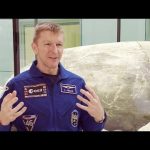
    This interview with ESA astronaut Tim Peake was recorded in Cologne, Germany, one day after his return from a six-month stay on the International Space Station.

    Tim Peake, NASA astronaut Tim Kopra and commander Yuri Malenchenko landed in the steppe of Kazakhstan on Saturday, 18 June in their Soyuz TMA-19M spacecraft at 09:15 GMT. The trio spent 186 days on the International Space Station.

    The landing brings Tim Peake’s Principia mission to an end but the research continues. Tim is the eighth ESA astronaut to complete a long-duration mission in space. He was the third after Alexander Gerst and Andreas Mogensen to fly directly to ESA’s astronaut home base in Cologne, Germany, for medical checks and for researchers to collect more data on how Tim’s body and mind have adapted to living in space.

    More about the Principia mission: http://www.esa.int/principia

    Follow Tim Peake via http://timpeake.esa.int