Tag: Light

  • Fruit-Power Battery – Sick Science! #080

    Fruit-Power Battery – Sick Science! #080

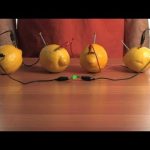
    Read the full experiment at http://www.stevespanglerscience.com/experiment/fruit-power-battery Voltaic batteries of all shapes and sizes are objects that convert chemical energy into electrical energy. You probably use batteries to power your cell phone, iPod, or any number of wireless gadgets. But did you know that you can actually use chemical energy stored within a lemon to power a small LED light? It’s true, and we’ll show you exactly how in the Fruit-Power Battery experiment.

    Want more experiments like this? Check out http://www.stevespanglerscience.com/product/naked-eggs-and-flying-potatoes

    Sick Science™ is a trademark of Steve Spangler, inc.

    © 2012 Steve Spangler Science all rights reserved

  • Anti-Gravity Cone?!

    Anti-Gravity Cone?!

    Einstein thought it impossible: a ball rolling uphill! This new experiment shows, for the first time ever, a ball can actually defy gravity.

    SUBSCRIBE: https://www.youtube.com/WhatThePhysics?sub_confirmation=1

    The next video released will explain how the Anti-Gravity Cone actually works; what force overpowers the force of gravity?

    ** PRODUCTION CREDITS
    ————————————————————

    Host, Producer: Greg Kestin
    Filming: Daniel Thomson, Greg Kestin, Lauren Liebhaber, Yasmeen Ketcherside, Kelsey Tsipis, Tim Treuer
    Research, Writing: Greg Kestin, Samia Bouzid
    Editing, Animating: Greg Kestin
    Editorial Input: Julia Cort, Ari Daniel
    Media: Shutterstock
    Special thanks to Entire NOVA team
    From the producers of PBS NOVA
    © WGBH Educational Foundation
    Funding provided by FQXi
    Music provided by APM

  • The Coriolis Effect

    The Coriolis Effect

    The Coriolis effect says that anytime you’re rotating—whether it’s on a playground toy or your home planet—objects moving in straight lines will appear to curve. This bizarre phenomenon affects many things, from the paths of missiles to the formation of hurricanes.

    You may have heard that the Coriolis effect makes water in the bathtub spiral down the drain in a certain way, or that it determines the way that a toilet flushes. That’s actually wrong.

    Although, as you may have noticed while tracking a hurricane on the news, storms in the Northern Hemisphere spin counterclockwise, while those in the Southern Hemisphere spin clockwise. Why do storms spin in different directions depending on their location? And why do they spin in the first place? The answer is the Coriolis effect.

    SUBSCRIBE here: https://www.youtube.com/WhatThePhysics?sub_confirmation=1

    ** PRODUCTION CREDITS
    ————————————————————

    – Host, Producer: Greg Kestin
    – Filming: Greg Kestin
    – Research, Writing: Greg Kestin
    Samia Bouzid

    – Editing, Animating: Samia Bouzid
    Greg Kestin

    – Editorial Input: Julia Cort, Ari Daniel
    – Science consultants: David Holland, Louis Deslauriers, Kerry Emanuel, Daniel Jacob
    – Media: Shutterstock, NASA, ESA
    – Special thanks: Harvard Lecture Demonstration Group (Daniel Davis, Allen Crockett, Daniel Rosenberg)
    – Special thanks: Entire NOVA team
    – From the producers of PBS NOVA © WGBH Educational Foundation – Funding provided by FQXi
    – Music provided by APM

  • Could You Travel to Another Galaxy?

    Could You Travel to Another Galaxy?

    Visiting an outside galaxy—in your lifetime—is possible! The one trick: time dilation.
    SUBSCRIBE: https://bit.ly/2o2WYxD

    DIY Particle Detector: https://youtu.be/wN_DMMQEhfQ

    PRODUCTION CREDITS

    Host, Producer: Greg Kestin
    Research, Writing: Samia Bouzid, Greg Kestin
    Editing, Animating: Daniel Thomson
    Editorial Input from: Julia Cort, Ari Daniel
    Special thanks: Entire NOVA team
    From the producers of PBS NOVA © WGBH Educational Foundation Funding provided by FQXi Music provided by APM

  • The Deer Illusion – Time Dilation Explained

    The Deer Illusion – Time Dilation Explained

    This illusion tricks your brain into slowing down time. And it can help explain REAL time dilation, thanks to the constant speed of light.

    “How To Travel to Another Galaxy” will be out next week––subscribe so you won’t miss it! https://bit.ly/2o2WYxD

    PRODUCTION CREDITS

    Host, Producer: Greg Kestin
    Filming: Greg Kestin
    Research, Writing: Greg Kestin, Samia Bouzid
    Editing, Animating: Samia Bouzid, Lauren Liebhaber
    Editorial Input from: Julia Cort, Ari Daniel
    Special thanks: Entire NOVA team
    From the producers of PBS NOVA © WGBH Educational Foundation Funding provided by FQXi Music provided by APM

  • 5 of the Biggest Puzzles about the Universe

    5 of the Biggest Puzzles about the Universe

    Test yourself! How well can you solve some of the biggest cosmic puzzles? You get one clue: redshift.
    SUBSCRIBE: https://www.youtube.com/WhatThePhysics?sub_confirmation=1

    Host, Producer: Greg Kestin
    Filming: Greg Kestin
    Research, Writing: Greg Kestin, Samia Bouzid
    Editing, Animating: Daniel Thomson
    Editorial Input from: Julia Cort, Ari Daniel
    Science consultant: Susana Deustua
    Media: Shutterstock, NASA, ESA
    Special thanks: Entire NOVA team
    From the producers of PBS NOVA © WGBH Educational Foundation Funding provided by FQXi Music provided by APM
    Music: APM

  • How Redshift Revealed the Universe

    How Redshift Revealed the Universe

    One small clue revealed the biggest secrets of the universe!
    SUBSCRIBE: https://www.youtube.com/WhatThePhysics?sub_confirmation=1

    Host, Producer: Greg Kestin
    Filming: Greg Kestin
    Research, Writing: Greg Kestin, Samia Bouzid
    Editing, Animating: Samia Bouzid, Greg Kestin
    Editorial Input from: Julia Cort, Ari Daniel
    Science consultant: Susana Deustua
    Media: Shutterstock, NASA, ESA
    Special thanks: Entire NOVA team
    From the producers of PBS NOVA © WGBH Educational Foundation Funding provided by FQXi Music provided by APM

  • What the Physics?! Trailer

    What the Physics?! Trailer

    What the Physics?! is about the fun and amazing physics around you, in you, and of you. With host Greg Kestin, theoretical physicist at Harvard University.
    SUBSCRIBE: https://www.youtube.com/WhatThePhysics?sub_confirmation=1

    Host, Producer: Greg Kestin
    Writing: Greg Kestin, Samia Bouzid
    Editorial Input from: Julia Cort, Ari Daniel
    Filming: Greg Kestin
    Editing: Greg Kestin & Daniel Thomson
    Special thanks: Entire NOVA team
    From the producers of PBS NOVA © WGBH Educational Foundation Funding provided by FQXi
    Music provided by APM

  • Physics Is Erasing Your Memory

    Physics Is Erasing Your Memory

    No memory is safe—whether you store it in your brain, a hard drive, or your diary. Thanks to physics, no memory can last forever.
    SUBSCRIBE: https://www.youtube.com/WhatThePhysics?sub_confirmation=1

    Host, Producer: Greg Kestin
    Research and Writing: Samia Bouzid, Greg Kestin
    Editorial Input from: Julia Cort, Ari Daniel
    Science Consultant: Murti Salapaka, Saurav Talukdar, Abu Sebastian
    Filming, Editing, and Animation: Greg Kestin
    Filming, Writing, & Editing Contributions from: Lauren Liebhaber, Daniel Thomson
    Media: Shutterstock, CytoViva (Nanoparticles in water)
    Brownian Motion Footage courtesy of Sam Snook of Latimer Arts College
    Special thanks: Entire NOVA team
    From the producers of PBS NOVA © WGBH Educational Foundation
    Funding provided by FQXi
    Music provided by APM

  • What Does an Atom Look Like?

    What Does an Atom Look Like?

    You’ve probably seen atoms like this emoji ⚛ everywhere from science textbooks to the logo for The Big Bang Theory. But what does an atom really look like? The truth is much stranger.
    SUBSCRIBE: http://youtube.com/whatthephysics?sub

    NOVA Wonders “What’s the Universe Made of?” https://www.pbs.org/video/nova-wonders-whats-the-universe-made-of-2eyoyw/

    More information on electron orbitals: http://www.mesacc.edu/~kev2077170/supplements/Atoms&orbitals.pdf

    Host, Producer: Greg Kestin
    Research and Writing: Samia Bouzid, Greg Kestin
    Editorial Input from: Julia Cort, Ari Daniel
    Science Consultant: Or Hen
    Filming, Editing, and Animation: Greg Kestin
    Media: Shutterstock
    Special thanks: Entire NOVA team
    From the producers of PBS NOVA © WGBH Educational Foundation
    Funding provided by FQXi
    Music provided by APM

  • What Is Dark Energy?

    What Is Dark Energy?

    Galaxies have been flying apart faster and faster since the early universe. Astronomers say the culprit is dark energy. But what is dark energy?

    SUBSCRIBE: http://youtube.com/whatthephysics?sub

    Host, Producer: Greg Kestin
    Research, Writing: Samia Bouzid, Greg Kestin
    Editorial Input from: Julia Cort, Ari Daniel
    Filming, Editing, and Animation: Greg Kestin
    Science consultant: Steven A. Rodney, Mark Trodden
    Media courtesy of ESO, NASA
    Special thanks: Entire NOVA team
    From the producers of PBS NOVA © WGBH Educational Foundation
    Funding provided by FQXi
    Music provided by APM

  • Uploading Your Mind Is 100 Percent Fatal

    Uploading Your Mind Is 100 Percent Fatal

    Could you ever make a perfect copy of your brain? Perhaps…but not without a price.

    SUBSCRIBE: http://youtube.com/whatthephysics?sub

    Host, Producer: Greg Kestin
    Research: Samia Bouzid, Greg Kestin, Peter Chang
    Writing: Samia Bouzid, Greg Kestin
    Editorial Input from: Julia Cort, Ari Daniel
    Filming, Editing, and Animating: Greg Kestin, Samia Bouzid
    Scientific Consultants: Mark Hillery, Scott Aaronson
    Special thanks: Entire NOVA team
    From the producers of PBS NOVA © WGBH Educational Foundation
    Funding provided by FQXi
    Music provided by APM
    Sound effects: Freesound.org
    Silicone heart footage courtesy of ETH Zürich
    Fireball animation courtesy of Videocopilot.net

  • 3 Ways Black Holes Could Break Physics

    3 Ways Black Holes Could Break Physics

    What if the Earth were swallowed by a black hole? Would humanity’s legacy be gone forever? Or could you somehow get back that information from behind the event horizon?

    There are three possible answers to this question…but they all break physics as we know it!

    SUBSCRIBE: http://youtube.com/whatthephysics?sub

    Learn more in NOVA’s two-hour special, “Black Hole Apocalypse”: http://www.pbs.org/wgbh/nova/space/black-hole-apocalypse.html

    CREDITS:
    Host, Producer: Greg Kestin
    Research: Samia Bouzid, Greg Kestin, and Peter Chang
    Writing: Samia Bouzid, Greg Kestin
    Editorial Input from: Julia Cort, Ari Daniel
    Filming, Editing, and Animation: Greg Kestin and Samia Bouzid
    Scientific Consultants: Joe Polchinski, Netta Engelhardt, Steve Giddings
    Special thanks: Entire NOVA team
    From the producers of PBS NOVA © WGBH Educational Foundation
    Funding provided by FQXi
    Music provided by APM
    Sound effects: Freesound.org
    Images: MEDIODESCOCIDO (Stewie Griffin) and Paul Anderson (Grumpy Cat)

  • 360° Dive into a BLACK HOLE

    360° Dive into a BLACK HOLE

    You just jumped into a black hole! Here’s what you’ll see as you hurtle toward the event horizon.

    SUBSCRIBE: http://youtube.com/whatthephysics?sub

    Learn more in NOVA’s two-hour special, “Black Hole Apocalypse”: http://www.pbs.org/wgbh/nova/space/black-hole-apocalypse.html

    CREDITS:
    Host, Producer: Greg Kestin
    Researchers: Samia Bouzid, Peter Chang
    Writers: Samia Bouzid, Greg Kestin
    Scientific Consultants: Joe Polchinski, Andrew Hamilton, Netta Engelhardt, Steve Giddings, Ethan Siegel, Janna Levin
    Editorial Input from: Julia Cort, Ari Daniel
    Filming and Editing: Greg Kestin
    Animation: Greg Kestin and Francesco Castelnovo
    Special thanks: Entire NOVA team
    From the producers of PBS NOVA © WGBH Educational Foundation
    Funding provided by FQXi
    Music provided by APM
    Sound effects: Freesound.org

  • BLACK HOLE Choose Your Own Adventure

    BLACK HOLE Choose Your Own Adventure

    Have you ever wondered what it would be like to fall into a black hole? Take a 360° adventure to find out!
    SUBSCRIBE: http://youtube.com/whatthephysics?sub

    Learn more in NOVA’s two-hour special, “Black Hole Apocalypse”: http://www.pbs.org/wgbh/nova/space/black-hole-apocalypse.html

    CREDITS:
    Host, Producer: Greg Kestin
    Researchers: Samia Bouzid, Peter Chang
    Writers: Samia Bouzid, Greg Kestin
    Scientific Consultants: Joe Polchinski, Andrew Hamilton, Netta Engelhardt, Steve Giddings, Ethan Siegel, Janna Levin
    Editorial Input from: Julia Cort, Ari Daniel
    Filming and Editing: Greg Kestin
    Animation: Greg Kestin and Francesco Castelnovo
    Special thanks: Entire NOVA team
    From the producers of PBS NOVA © WGBH Educational Foundation
    Funding provided by FQXi
    Music provided by APM
    Sound effects: Freesound.org

    Links to unlisted videos along this adventure:
    Push Greg into Black Hole: https://www.youtube.com/watch?v=Mpgw0oWLzS8
    Jump into Black Hole: https://www.youtube.com/watch?v=YRPpwUA6nQA
    Quantum Death: https://www.youtube.com/watch?v=SiutiEXlS60
    Gravity Death: https://www.youtube.com/watch?v=QIsRZ0nNYcs
    Greg Quantum Death: https://www.youtube.com/watch?v=hEEtfkclPDw
    Greg Gravity Death: https://www.youtube.com/watch?v=u0VdQTkc-78

  • 5 Unbelievable Facts: FAKE? or PHYSICS?

    5 Unbelievable Facts: FAKE? or PHYSICS?

    Test yourself with our April Fools’ Day game: Fake or physics?
    SUBSCRIBE: http://youtube.com/whatthephysics?sub

    LINKS AND DETAILS:
    More details:
    #1. Speed of sound: Unlike light, sound needs a medium to travel through, and its speed depends on characteristics of that medium like density and temperature. In the extreme environment of a neutron star’s core, sound can travel extremely fast. But knowing that sound can’t surpass the speed of light, physicists can narrow down their models of neutron stars to include only those where “extremely fast” is less than light speed.

    For more: http://www.phys.utk.edu/news/archives/2015/speed-of-sound.pdf

    #2. Invisibility: The invisibility lens pictured in the video was developed at the University of Rochester. For more on how it works: http://www.rochester.edu/newscenter/watch-rochester-cloak-uses-ordinary-lenses-to-hide-objects-across-continuous-range-of-angles-70592/

    A more recent attempt at invisibility: https://www.ft.com/content/c6864c76-de7d-11e7-a0d4-0944c5f49e46

    #3. Relativity rainbows: A team at MIT created a game called “A Slower Speed of Light” that lets you see the world as you would at near-light speeds. Their trailer: https://www.youtube.com/watch?v=uu7jA8EHi_0

    #4. Acoustic levitation: A demo from Harvard Natural Sciences Lecture Demonstrations: https://www.youtube.com/watch?v=XpNbyfxxkWE

    #5: Quantum cloning: A video from MinutePhysics on why quantum mechanics doesn’t allow cloning: https://www.youtube.com/watch?v=owPC60Ue0BE

    CREDITS:
    Host, Producer: Greg Kestin
    Researchers: Greg Kestin, Samia Bouzid
    Writers: Samia Bouzid, Greg Kestin
    Editorial Input from: Julia Cort, Ari Daniel
    Filming: Greg Kestin
    Editing: Greg Kestin, Samia Bouzid
    Media: Hubble, NASA
    Special thanks: Entire NOVA team
    From the producers of PBS NOVA © WGBH Educational Foundation
    Funding provided by FQXi
    Ultrasonic Levitation video footage courtesy Harvard Natural Sciences Lecture Demonstrations
    Ultrasonic Levitation still courtesy of Argonne National Laboratory
    Music provided by APM
    Sound effects: Freesound.org

  • Stephen Hawking – His Wisdom, Wit, and Work

    Stephen Hawking – His Wisdom, Wit, and Work

    “The past tells us who we are. Without it, we lose our identity.” —Stephen Hawking

    Today we’re remembering Stephen Hawking, who shone light on the darkest places in the universe.

    Video about information paradox: https://youtu.be/jyFAsbBvZ70

    Credits
    Host, Producer: Greg Kestin
    Researchers: Greg Kestin, Samia Bouzid
    Writers: Samia Bouzid, Greg Kestin
    Editorial Input from: Julia Cort, Ari Daniel
    Black Hole Animations: Edgeworx
    Special thanks: Entire NOVA team
    From the producers of PBS NOVA © WGBH Educational Foundation
    Funding provided by FQXi
    Music provided by APM
    Sound effects: Freesound.org

  • Do Parallel Universes Exist?

    Do Parallel Universes Exist?

    Could we be living in one of many parallel universes? Find out why some physicists think we might.
    – Subscribe: https://www.youtube.com/WhatThePhysics?sub_confirmation=1

    Have questions, ask me:
    twitter @gkestin

    *learn more about electron volts here: https://en.wikipedia.org/wiki/Electronvolt

    Host, Producer: Greg Kestin
    Researchers: Samia Bouzid, Drew Gannon, Peter Chang
    Writers: Samia Bouzid, Greg Kestin
    Fish voices: Tiffany Dill, Arlo Perez
    Scientific Consultant: Alan Lightman, Curtis McCully
    Editorial Input from: Julia Cort, Ari Daniel
    Filming: Greg Kestin
    Animation and Editing: Greg Kestin
    Special thanks: Entire NOVA team
    From the producers of PBS NOVA © WGBH Educational Foundation
    Funding provided by FQXi
    Music provided by APM

  • What is Dark Matter? A New Clue!

    What is Dark Matter? A New Clue!

    Scientists may have found clues to the nature of dark matter in a signal from the universe’s first stars.
    – Subscribe: https://www.youtube.com/WhatThePhysics?sub_confirmation=1

    Here is the research paper: https://www.nature.com/articles/nature25792
    Authors: Judd D. Bowman, Alan E. E. Rogers, Raul A. Monsalve, Thomas J. Mozdzen & Nivedita Mahesh

    This evidence seems to suggest that the dark matter is particles that are less than four times the mass of a proton and are moving at non-relativistic speeds. This is consistent with dark matter particles being so-called WIMPs: https://en.wikipedia.org/wiki/Weakly_interacting_massive_particles.

    Have questions, ask me:
    twitter @gkestin

    Credits
    Host, Producer: Greg Kestin
    Researchers: Greg Kestin, Samia Bouzid
    Writers: Greg Kestin, Samia Bouzid
    Scientific Consultant: Douglas Finkbeiner
    Editorial input from: Julia Cort, Ari Daniel
    Filming: Greg Kestin
    Animation and Editing: Greg Kestin
    Special thanks: Avi Loeb, entire NOVA team
    Media Courtesy of: NASA, ESO, and CERN
    Dark matter halo footage courtesy of ESO/L. Calçada.
    From the producers of PBS NOVA © WGBH Educational Foundation
    Funding provided by FQXi
    Music provided by APM

  • Q&A with Greg – Black Holes, Consciousness, My Research, and More!

    Q&A with Greg – Black Holes, Consciousness, My Research, and More!

    We did something a little different in this episode and answered questions from you, our viewers. If you have a questions about the universe, past videos, or life as a scientist, leave a comment below!

    Subscribe: https://www.youtube.com/WhatThePhysics?sub_confirmation=1

    Three of the answers are related to previous videos:
    – How to See Quantum with the Naked Eye: https://www.youtube.com/watch?v=YiZP6YpnMds
    – Can We Measure Consciousness? https://www.youtube.com/watch?v=laOZjSFdj24
    – 3 Things Faster than Light: https://www.youtube.com/watch?v=kNqf-FsUMww

    Images courtesy of CERN and ATLAS.

  • How to See Quantum with the Naked Eye

    How to See Quantum with the Naked Eye

    How can you train yourself to be a quantum detector? Quantum interactions happen at impossibly small scales. But the life-size effects are all around you. You can detect quantum mechanics all over — if you know how to look for it.

    Subscribe: https://www.youtube.com/WhatThePhysics?sub_confirmation=1

    Have questions, ask me:
    twitter @gkestin

    Check out https://www.youtube.com/user/EugeneKhutoryansky, who was kind enough to share his water wave animation with us.

    ADVANCED SCIENTIFIC NOTE: Quantum mechanics would be much more obvious if we had very sensitive eyes. If your eyes identified each photon individually, you would see them land as described in the video, and only build up to this wave pattern. The pattern that we see can be explained classically by waves, it is *ultimately* a quantum phenomenon. The only reason it’s hard to tell is because our light detectors (eyes) aren’t quite sensitive enough.

    CREDITS:

    Host, Producer: Greg Kestin

    Researcher: Samia Bouzid

    Writers: Samia Bouzid, Greg Kestin

    Scientific Consultant: Louis Deslauriers

    Editorial Input from: Julia Cort, Ari Daniel

    Animation and Editing: Greg Kestin

    Special thanks: Entire NOVA team

    From the producers of PBS NOVA © WGBH Educational Foundation

    Funding provided by FQXi

    Music provided by APM

    Footage of bridge and man holding child: Videoblocks

    Sound effects: Freesound.org

  • First Light Detected from Gravitational Wave Event on This Week @NASA – October 20, 2017

    First Light Detected from Gravitational Wave Event on This Week @NASA – October 20, 2017

    For the first time, NASA scientists have detected light tied to a gravitational-wave event. The gravitational wave – caused by an explosive merger of two neutron stars, about 130 million light-years from Earth – produced a gamma-ray burst and a rarely seen flare-up called a “kilonova”. The phenomenon was captured by our Fermi, Swift, Hubble, Chandra and Spitzer missions, along with dozens of NASA-funded ground-based observatories. Also, Trio of Station Spacewalks Completed, Fresh Findings from Cassini, and Test of SLS RS-25 Flight Engine!

    This video is available for download from NASA’s Image and Video Library: https://images.nasa.gov/#/details-NHQ_20171023_This%20Week%20@%20NASA.html

  • 3 Things ‘Faster Than Light’

    3 Things ‘Faster Than Light’

    These 3 things go “faster” than the speed of light. How’s that even possible?
    Subscribe: http://www.youtube.com/channel/UCj1gf
    ↓Want more info?↓

    More about the experiment:
    Marissa Giustina’s research: http://arxiv.org/abs/1511.03190

    Advanced scientific note about Doppler: If there is a light moving away from you at constant velocity in static flat (Minkowski) space-time, no matter how red it is, you will never conclude it is going faster than light. But, here I am discussing the conclusions one might come to if you mistakenly use Doppler in the context of the curved space-time of the universe (where there is expansion). Interpreting the huge redshift as a result of the doppler effect, could make one think that galaxies we see are moving away at speeds approaching light speed. And since what we are actually seeing is light from those galaxies from billions of years ago, and given that the universe is expanding, you might be tempted to say that they have since “accelerated” to faster than the speed of light. You might go further and say that there are more distant galaxies that we can’t see which are moving away even faster. So you might conclude there are galaxies moving faster than light in the universe. But the redshift isn’t from doppler and this “acceleration” of the expanding universe isn’t actually causing a true increase in velocity.

    Sometimes astronomers do say there is a faster than light “recession speed” by pretending the expansion of the universe is causing distant galaxies to move away from each other at a corresponding velocity, but that’s misleading. In general relativity, you can actually have an increase in space between objects without causing a corresponding increase in the relatives velocities of those objects.

    CREDITS:

    Host, Writer, Animator, Editor:
    Greg Kestin

    From the producers of PBS NOVA
    © WGBH Educational Foundation

    Funding provided by FQXi

    Special thanks:
    Marissa Giustina
    Nick Hutzler
    Julie Elksy
    Byron Drury
    Jacob Barandes
    Tyler Howe
    Lissy Herman
    Ari Daniel
    Lauren Aguirre
    Kristine Allington
    Allison Eck
    Anna Rotschild

    MEDIA CREDITS:

    Music provided by APM:
    Deep_Science_No-perc
    Mysteries_of_Science_B
    Dreaming_of_the_Stars_a
    Curiosity_Kills_the_Cat_2
    Conundrum_a

    Images:
    Stars – Rene Barrios
    Earth – Eirika
    galaxy spiral (by coornio – diviantart)
    Squirrel with scissors – 60811670 – Dollarphotoclub
    Equations – 91613623 – Dollarphotoclub
    Maxresdefault – Sean Stewart
    Marissa Giustina – Lammerhuber
    Tangled cat – David Swayze
    Cat doll – Vicky Somma

    Stock footage:
    train-exits-tunnel – Pond5
    Bin_pulsar_442 – Courtesy of Nasa
    Expanding in space (40294) – Courtesy of Nasa
    WMAP_archive – Courtesy of Nasa

  • What’s the Physics Behind Texting?

    What’s the Physics Behind Texting?

    What’s the science behind texting? When you hit send, how does your message leave your phone and make the journey to your friend’s phone?
    Subscribe: http://youtube.com/whatthephysics?sub_confirmation=1
    ↓Want more info?↓

    CREDITS:

    Host, Writer, Animator, Editor:
    Greg Kestin

    Special thanks:
    Tyler Howe
    Julie Elsky
    Lissy Herman
    Patrick Mitran
    Jerry Gibson
    Lauren Aguirre
    Kristine Allington
    Anna Rothschild
    Allison Eck
    Ari Daniel
    Lauren Miller

    From the producers of PBS NOVA
    © WGBH Educational Foundation

    Funding provided by FQXi

    SCIENTIFIC NOTES:
    – Messages can also be encoded by altering the phase of the signal being sent from the antenna.
    – Phones use several (~8) frequencies at one time, and since there are limited frequencies (~100) for the tower to use, manages the sharing of them.

    MEDIA CREDITS:

    Music provided by APM:
    Curio C

    Sound effects:
    Freesound.org

    Images:
    Two tree cell towers (Devra)
    Top of cell tower (Ervins Strauhmanis)

    Stock footage from Pond5:
    digital-computer-brain-binary
    bangkok-city-skyline-aerial-da
    aerial-fly-over-green-forest-c

  • Does this look white to you?

    Does this look white to you?

    When you mix red and green, what do you get? White light is all of the colors, right? So, how do computer screens show you every wavelength of light? Or do they?

    Only some humans can see this type of light https://www.youtube.com/watch?v=CSu0cV3fqi8
    Singing this Note is IMPOSSIBLE! https://www.youtube.com/watch?v=F64xcPKKES8

    https://instagram.com/thephysicsgirl
    https://twitter.com/thephysicsgirl
    https://facebook.com/thephysicsgirl
    https://physicsgirl.org

    Help us translate our videos! http://www.youtube.com/timedtext_cs_panel?c=UC7DdEm33SyaTDtWYGO2CwdA&tab=2

    Host/Writer: Dianna Cowern
    Editor: sefdstuff.com/science

    Physics Girl has joined PBS Digital Studios! https://www.youtube.com/user/pbsdigitalstudios

    RGB Image: Luís Flávio Loureiro dos Santos, https://video.kidibot.ro/wp-content/uploads/2020/12/youtubomatic/a-3ELCD_RGB.jpg

  • LED Throwies – Sick Science! #202

    LED Throwies – Sick Science! #202

    For the full experiment, click here: http://www.stevespanglerscience.com/lab/experiments/led-throwies

    Graffiti Research Lab first introduced us to the awesome throwie idea, and we loved it. Ever since, we’ve been playing around with the idea of using light-emitting diodes (LED) and throwies as a great hands-on method to teaching science. You can do it, too, and we’ll show you how!

    Want more experiments like this? Check out http://www.stevespanglerscience.com/product/naked-eggs-and-flying-potatoes

    Sick Science™ is a trademark of Steve Spangler, inc.

    © 2014 Steve Spangler Science all rights reserved

  • First Light for AMS on This Week @ NASA…

    First Light for AMS on This Week @ NASA…

    Researchers have published the first findings of the Alpha Magnetic Spectrometer (AMS), a particle physics detector on the International Space Station that searches for various types of unusual cosmic matter. Scientists hope that by measuring cosmic rays, AMS will provide new data about the formation of the Universe, antimatter, and evidence of the mysterious dark matter believed to make up most of the Universe. Also, MATERIALS IN SPACE, OBSERVING EARTH, FARTHEST SUPERNOVA YET, BLOWING IN THE WIND, EARTH MONTH 2013 and more!

  • Light Ice Heavy Water – Sick Science! #126

    Light Ice Heavy Water – Sick Science! #126

    Find out the science behind Light Ice Heavy Water here http://www.stevespanglerscience.com/experiment/light-ice-cube-heavy-water

    Want more experiments like this? Check out http://www.stevespanglerscience.com/product/naked-eggs-and-flying-potatoes

    Sick Science™ is a trademark of Steve Spangler, inc.

    © 2013 Steve Spangler Science all rights reserved

  • Light Relight – Sick Science! #117

    Light Relight – Sick Science! #117

    Read the full experiment at http://www.stevespanglerscience.com/experiment/flame-light-relight
    There’s a lot of chemistry behind the simple lighting or extinguishing of a flame. Would you believe us if we told you that you could extinguish a flame just by placing it partway into a graduated cylinder? What if we told you that you could relight the fire without a match or lighter? Both propositions seem unlikely, if not downright impossible. With the Flame Light Relight experiment, however, you’ll see how a few household items can mix together and create a fire-based experience you have to see to believe.

    Want more experiments like this? Check out http://www.stevespanglerscience.com/product/naked-eggs-and-flying-potatoes

    Sick Science™ is a trademark of Steve Spangler, inc.

    © 2012 Steve Spangler Science all rights reserved

  • Black Light Secret Message – Sick Science! #110

    Black Light Secret Message – Sick Science! #110

    Highlighters have a number of uses, from helping acknowledge important text to acting as brightly-colored markers in our favorite coloring book. Around Halloween, though, we’ve found an entirely different use for them. With the Black Light Secret Message experiment, you’ll see that certain highlighters aren’t just brightly-colored – they actually glow underneath a black light! The secret messages and floating images you’ll create with this experiment are sure to create screams of joy and shrieks of excitement.

    Need a mini black light? http://www.stevespanglerscience.com/product/1433

    Read the full experiment at http://www.stevespanglerscience.com/experiment/black-light-secret-message

    Want more experiments like this? Check out http://www.stevespanglerscience.com/product/naked-eggs-and-flying-potatoes

    Sick Science™ is a trademark of Steve Spangler, inc.

    © 2012 Steve Spangler Science all rights reserved

  • How Much Does a Shadow Weigh?

    How Much Does a Shadow Weigh?

    Veritasium SLINKY video: http://bit.ly/SGD73o
    Veritasium channel… SUBSCRIBE: http://bit.ly/RoMMH7
    A great Veritasium episode about using video to teach: http://bit.ly/VOsZVx

    Vsauce2 LEANBACK about shadows: http://bit.ly/VOt8rP

    Vsauce3 explains how realistic SimCity is… SUBSCRIBE: http://bit.ly/PMThlp

    ALL MUSIC BY: http://www.soundcloud.com/JakeChudnow
    Jake’s YouTube channel: https://www.youtube.com/jakechudnow

    Vsauce on Twitter (lots of extra mindblows): http://www.Twitter.com/TweetSauce
    Vsauce on Facebook (your chance to blow MY MIND): http://www.Facebook.com/VsauceGaming

    Hand shadow book: http://books.google.co.uk/books/about/Fun_with_Hand_Shadows.html?id=UhjBUYIUmO0C&redir_esc=y

    Light “pushes” us: http://www.straightdope.com/columns/read/2987/do-shadows-weigh-anything

    Solar Sail: http://www.jspec.jaxa.jp/e/activity/ikaros.html

    solar sail GIF: http://www.jspec.jaxa.jp/e/activity/images/ikaros/pic_10.gif

    Venutian Shadows: http://www.digitalsky.org.uk/venus/shadow-of-venus.html

    Speed of light in different materials: http://cadlab6.mit.edu/2.009.wiki/anchor/index.php?title=Speed_of_light_in_vacuum%2C_air%2C_glass

    sonic boom demonstration: http://demonstrations.wolfram.com/WavesFromAMovingSource/

    Cherenkov radiation: http://profmattstrassler.com/articles-and-posts/particle-physics-basics/cerenkov-radiation/

    and: http://en.wikipedia.org/wiki/Cherenkov_radiation

    Photonic booms in your eyes: http://en.wikipedia.org/wiki/Cosmic_ray_visual_phenomena

    Pushing a lightyear-long object: http://www.physicsforums.com/showthread.php?t=386687

    compression / longitudinal waves: http://en.wikipedia.org/wiki/Longitudinal_waves

    cool site for putting things in perspective (this link is for 1 sq. inch): http://www.bluebulbprojects.com/measureofthings/doShowResults.asp?comp=area&unit=in2&amt=1&sort=pr&p=1

    Also this is important: http://animalsbeingdicks.com/post/23101742089/clean-get-away

  • Build a Light Bulb – Sick Science! #079

    Build a Light Bulb – Sick Science! #079

    Read the full experiment at http://www.stevespanglerscience.com/content/experiment/build-a-light-bulb-circuit-science When you are conducting experiments and demonstrations using electricity, you’ll use the science of circuits. Amazing things are possible with circuits including alarms, radios, and lights. In the Build a Light Bulb experiment, you’ll use household items to construct a complete circuit that results in a homemade light bulb.

    Want more experiments like this? Check out http://www.stevespanglerscience.com/product/fire-bubbles-exploding-toothpaste-book

    Sick Science™ is a trademark of Steve Spangler, inc.

    © 2012 Steve Spangler Science all rights reserved

  • Microwave Light Bulb – Sick Science! #078

    Microwave Light Bulb – Sick Science! #078

    Read the full experiment at http://www.stevespanglerscience.com/experiment/microwave-lightbulb
    We love to see what microwaves do to common household items. We’ve shrunk potato chip bags and turned Ivory Soap into a fluffy soap souffle. What more could we want to do? We heard that it’s possible to actually make a lightbulb light-up if you do it right. And sure enough, we figured it out.

    Want more experiments like this? Check out http://www.stevespanglerscience.com/product/fire-bubbles-exploding-toothpaste-book

    Sick Science™ is a trademark of Steve Spangler, inc.

    © 2012 Steve Spangler Science all rights reserved

  • Light Writer – Sick Science! #037

    Light Writer – Sick Science! #037

    Have you ever tried writing in the dark? Even something as simple as your own name might turn out looking like you were writing in an earthquake. We knew there had to be a better way, and after giving Steve and his team a bit of time they came up with a beautiful and amazing solution – Light Writer. It’s a phenomenal trip into the world of optics, photography, and fun.

    Want more experiments like this? Check out http://www.stevespanglerscience.com/product/naked-eggs-and-flying-potatoes

    Sick Science™ is a trademark of Steve Spangler, inc.

    © 2011 Steve Spangler Science all rights reserved

  • White Lightning Stick – 4th of July Light Toy

    White Lightning Stick – 4th of July Light Toy

    Order this and other cool science toys at http://www.stevespanglerscience.com/product/white-lightning-stick Don’t be fooled into believing the White Lightning Stick is an ordinary styrofoam tube… press the button on one end and watch it become a strobing, color-morphing, hand-held light show. It’s a great addition to any party and can even help you teach about the effects of strobing lights and color mixing. It’s durable, it’s entertaining, and the White Lightning Stick will be a hit no matter you intended to use it. Perfect to take to the park on the 4th of July!

    About Steve Spangler Science…

    Steve Spangler is a celebrity teacher, science toy designer, speaker, author and an Emmy award-winning television personality. Spangler is probably best known for his Mentos and Diet Coke geyser experiment that went viral in 2005 and prompted more than 1,000 related YouTube videos. Spangler is the founder of www.SteveSpanglerScience.com, a Denver-based company specializing in the creation of science toys, classroom science demonstrations, teacher resources and home for Spangler’s popular science experiment archive and video collection. Spangler is a frequent guest on the Ellen DeGeneres Show where he takes classroom science experiments to the extreme. Check out his pool filled with 2,500 boxes of cornstarch!

    Cool Science Toys – http://www.SteveSpanglerScience.com
    Sign up for the Experiment of the Week – http://www.stevespanglerscience.com/experiment-of-the-week
    Watch Spangler’s Science Videos – http://www.stevespanglerscience.com/video/
    Attend a Spangler Hands-on Science Workshop for Teachers – http://www.stevespanglerscience.com/teacher_training/
    Visit Spangler’s YouTube Channel – http://www.youtube.com/stevespanglerscience

    Join the conversation on Steve Spangler’s blog – http://www.SteveSpangler.com

    Additional Information:

    On the education side, Spangler started his career as a science teacher in the Cherry Creek School district for 12 years. Today, Steve travels extensively training teachers in ways to make learning more engaging and fun. His hands-on science boot camps and summer institutes for teachers inspire and teach teachers how to prepare a new generation for an ever-changing work force. Over the last 15 years, he has also made more than 500 television appearances as an authority on hands-on science and inquiry-based learning.

    On the business side, Spangler is the founder and CEO of Steve Spangler Science, a Denver-based company specializing in the creation of educational toys and kits and hands-on science training services for teachers. The companys unique business strategies and viral creations have been featured in the Wall Street Journal, Inc. Magazine, Wired and TIME Magazine where online readers voted Steve Spangler #18 in the Top 100 Most Influential People of the Year for 2006 (what were they thinking?). You’ll find more than 140 Spangler created products available online at SteveSpanglerScience.com and distributed to toy stores and mass-market retailers worldwide.

    Spangler joined NBC affiliate 9News in 2001 as the science education specialist. His weekly experiments and science segments are designed to teach viewers creative ways to make learning fun. His now famous Mentos Geyser experiment, turning 2-liter bottles of soda into erupting fountains, became an Internet sensation in September 2005 when thousands of people started posting their own Mentos explosions on YouTube.com.

    As founder of SteveSpanglerScience.com, Spangler and his design team have developed more than 140 educational toys and science-related products featured by mass-market retailers like Target, Wal-Mart, Toys R’ Us, Discovery Channel Stores and over 1,400 independent specialty toy stores. His educational science catalog and on-line business offers more than a thousand science toys and unique learning resources. Recently, Spangler has been featured in the Wall Street Journal, Inc. Magazine, WIRED, the History Channel, Food Network and TIME Magazine where on-line readers voted Steve Spangler #18 in the Top 100 Most Influential People of the Year for 2006.

    His recent appearances on the Ellen DeGeneres Show have taught viewers how to blow up their food, shock their friends, create mountains of foam, play on a bed of nails, vanish in a cloud of smoke and how to turn 2,500 boxes of cornstarch and a garden hose into a swimming pool of fun.

  • White Lightning Stick – Cool Light Toy

    White Lightning Stick – Cool Light Toy

    Order now at http://www.stevespanglerscience.com/product/white-lightning-stick Don’t be fooled into believing the White Lightning Stick is an ordinary styrofoam tube… press the button on one end and watch it become a strobing, color-morphing, hand-held light show. It’s a great addition to any party and can even help you teach about the effects of strobing lights and color mixing. It’s durable, it’s entertaining, and the White Lightning Stick will be a hit no matter you intended to use it.

    About Steve Spangler Science…

    Steve Spangler is a celebrity teacher, science toy designer, speaker, author and an Emmy award-winning television personality. Spangler is probably best known for his Mentos and Diet Coke geyser experiment that went viral in 2005 and prompted more than 1,000 related YouTube videos. Spangler is the founder of www.SteveSpanglerScience.com, a Denver-based company specializing in the creation of science toys, classroom science demonstrations, teacher resources and home for Spangler’s popular science experiment archive and video collection. Spangler is a frequent guest on the Ellen DeGeneres Show where he takes classroom science experiments to the extreme. Check out his pool filled with 2,500 boxes of cornstarch!

    Cool Science Toys – http://www.SteveSpanglerScience.com
    Sign up for the Experiment of the Week – http://www.stevespanglerscience.com/experiment-of-the-week
    Watch Spangler’s Science Videos – http://www.stevespanglerscience.com/video/
    Attend a Spangler Hands-on Science Workshop for Teachers – http://www.stevespanglerscience.com/teacher_training/
    Visit Spangler’s YouTube Channel – http://www.youtube.com/stevespanglerscience

    Join the conversation on Steve Spangler’s blog – http://www.SteveSpangler.com

    Additional Information:

    On the education side, Spangler started his career as a science teacher in the Cherry Creek School district for 12 years. Today, Steve travels extensively training teachers in ways to make learning more engaging and fun. His hands-on science boot camps and summer institutes for teachers inspire and teach teachers how to prepare a new generation for an ever-changing work force. Over the last 15 years, he has also made more than 500 television appearances as an authority on hands-on science and inquiry-based learning.

    On the business side, Spangler is the founder and CEO of Steve Spangler Science, a Denver-based company specializing in the creation of educational toys and kits and hands-on science training services for teachers. The companys unique business strategies and viral creations have been featured in the Wall Street Journal, Inc. Magazine, Wired and TIME Magazine where online readers voted Steve Spangler #18 in the Top 100 Most Influential People of the Year for 2006 (what were they thinking?). You’ll find more than 140 Spangler created products available online at SteveSpanglerScience.com and distributed to toy stores and mass-market retailers worldwide.

    Spangler joined NBC affiliate 9News in 2001 as the science education specialist. His weekly experiments and science segments are designed to teach viewers creative ways to make learning fun. His now famous Mentos Geyser experiment, turning 2-liter bottles of soda into erupting fountains, became an Internet sensation in September 2005 when thousands of people started posting their own Mentos explosions on YouTube.com.

    As founder of SteveSpanglerScience.com, Spangler and his design team have developed more than 140 educational toys and science-related products featured by mass-market retailers like Target, Wal-Mart, Toys R’ Us, Discovery Channel Stores and over 1,400 independent specialty toy stores. His educational science catalog and on-line business offers more than a thousand science toys and unique learning resources. Recently, Spangler has been featured in the Wall Street Journal, Inc. Magazine, WIRED, the History Channel, Food Network and TIME Magazine where on-line readers voted Steve Spangler #18 in the Top 100 Most Influential People of the Year for 2006.

    His recent appearances on the Ellen DeGeneres Show have taught viewers how to blow up their food, shock their friends, create mountains of foam, play on a bed of nails, vanish in a cloud of smoke and how to turn 2,500 boxes of cornstarch and a garden hose into a swimming pool of fun.

  • Light Sticks – Cool Halloween Science

    Light Sticks – Cool Halloween Science

    Just give the plastic light stick a little “snap” and a shake and the liquid inside begins to glow. Some people call it liquid light. Our experience tells us that with light comes heat… but not this time. Light sticks are more popular than ever and have become almost required apparel for Halloween to cast an eerie glow on the candy seekers. Light sticks are also a great and inexpensive teaching tool for students to learn how temperature affects the rate of the chemical reaction.

    About Steve Spangler…

    Steve Spangler is a celebrity teacher, science toy designer, speaker, author and an Emmy award-winning television personality. Spangler is probably best known for his Mentos and Diet Coke geyser experiment that went viral in. Spangler is the founder of www.SteveSpanglerScience.com, a Denver-based company specializing in the creation of science toys, classroom science demonstrations, teacher resources and home for Spangler’s popular science experiment archive and video collection. Spangler is a frequent guest on the Ellen DeGeneres Show and Denver 9 News where he takes classroom science experiments to the extreme. For teachers, parents or DIY Science ideas – check out other sources of learning:
    Join the Science Club and check out other cool science experiments at – http://www.SteveSpanglerScience.com

    Sign up to receive a FREE Experiment of the Week- http://www.stevespanglerscience.com/experiment-of-the-week

    Attend a Spangler Hands-on Science Workshop for Teachers – http://www.stevespanglerscience.com/training

    Watch Steve on Local and National Media Appearances on YouTube at: https://www.youtube.com/user/SpanglerScienceTV

  • Tesla Coil – Cool Science Experiment

    Tesla Coil – Cool Science Experiment

    Check out this and other cool science experiments at http://www.stevespanglerscience.com/experiments/ Ordinary people use standard electricity from the wall to power a light. Oh, but not you! Why use normal electricity from the wall outlet when you can make your own? Get ready to amaze everyone with this shocking display of science.

    About Steve Spangler Science…

    Steve Spangler is a celebrity teacher, science toy designer, speaker, author and an Emmy award-winning television personality. Spangler is probably best known for his Mentos and Diet Coke geyser experiment that went viral in 2005 and prompted more than 1,000 related YouTube videos. Spangler is the founder of www.SteveSpanglerScience.com, a Denver-based company specializing in the creation of science toys, classroom science demonstrations, teacher resources and home for Spangler’s popular science experiment archive and video collection. Spangler is a frequent guest on the Ellen DeGeneres Show where he takes classroom science experiments to the extreme. Check out his pool filled with 2,500 boxes of cornstarch!

    Cool Science Toys – http://www.SteveSpanglerScience.com
    Sign up for the Experiment of the Week – http://www.stevespanglerscience.com/experiment-of-the-week
    Watch Spangler’s Science Videos – http://www.stevespanglerscience.com/video/
    Attend a Spangler Hands-on Science Workshop for Teachers – http://www.stevespanglerscience.com/teacher_training/
    Visit Spangler’s YouTube Channel – http://www.youtube.com/stevespanglerscience

    Join the conversation on Steve Spangler’s blog – http://www.SteveSpangler.com

    Additional Information:

    On the education side, Spangler started his career as a science teacher in the Cherry Creek School district for 12 years. Today, Steve travels extensively training teachers in ways to make learning more engaging and fun. His hands-on science boot camps and summer institutes for teachers inspire and teach teachers how to prepare a new generation for an ever-changing work force. Over the last 15 years, he has also made more than 500 television appearances as an authority on hands-on science and inquiry-based learning.

    On the business side, Spangler is the founder and CEO of Steve Spangler Science, a Denver-based company specializing in the creation of educational toys and kits and hands-on science training services for teachers. The companys unique business strategies and viral creations have been featured in the Wall Street Journal, Inc. Magazine, Wired and TIME Magazine where online readers voted Steve Spangler #18 in the Top 100 Most Influential People of the Year for 2006 (what were they thinking?). You’ll find more than 140 Spangler created products available online at SteveSpanglerScience.com and distributed to toy stores and mass-market retailers worldwide.

    Spangler joined NBC affiliate 9News in 2001 as the science education specialist. His weekly experiments and science segments are designed to teach viewers creative ways to make learning fun. His now famous Mentos Geyser experiment, turning 2-liter bottles of soda into erupting fountains, became an Internet sensation in September 2005 when thousands of people started posting their own Mentos explosions on YouTube.com.

    As founder of SteveSpanglerScience.com, Spangler and his design team have developed more than 140 educational toys and science-related products featured by mass-market retailers like Target, Wal-Mart, Toys R’ Us, Discovery Channel Stores and over 1,400 independent specialty toy stores. His educational science catalog and on-line business offers more than a thousand science toys and unique learning resources. Recently, Spangler has been featured in the Wall Street Journal, Inc. Magazine, WIRED, the History Channel, Food Network and TIME Magazine where on-line readers voted Steve Spangler #18 in the Top 100 Most Influential People of the Year for 2006.

    His recent appearances on the Ellen DeGeneres Show have taught viewers how to blow up their food, shock their friends, create mountains of foam, play on a bed of nails, vanish in a cloud of smoke and how to turn 2,500 boxes of cornstarch and a garden hose into a swimming pool of fun.

  • Liquid Light – Cool Science Experiment

    Liquid Light – Cool Science Experiment

    Steve and Julie show Mark the secret to light sticks and how they are able to glow.

    Check out this and other cool science experiments at http://www.stevespanglerscience.com/experiments/

    About Steve Spangler Science…

    Steve Spangler is a celebrity teacher, science toy designer, speaker, author and an Emmy award-winning television personality. Spangler is probably best known for his Mentos and Diet Coke geyser experiment that went viral in. Spangler is the founder of www.SteveSpanglerScience.com, a Denver-based company specializing in the creation of science toys, classroom science demonstrations, teacher resources and home for Spangler’s popular science experiment archive and video collection. Spangler is a frequent guest on the Ellen DeGeneres Show and Denver 9 News where he takes classroom science experiments to the extreme. For teachers, parents or DIY Science ideas – check out other sources of learning:
    Join the Science Club and check out other cool science experiments at – http://www.SteveSpanglerScience.com

    Sign up to receive a FREE Experiment of the Week- http://www.stevespanglerscience.com/experiment-of-the-week

    Attend a Spangler Hands-on Science Workshop for Teachers – http://www.stevespanglerscience.com/training

    Watch Steve on Local and National Media Appearances on YouTube at: https://www.youtube.com/user/SpanglerScienceTV