Machine learning is the scientific study of algorithms and statistical models that computer systems use to perform a specific task without using explicit instructions, relying on patterns and inference instead. It is seen as a subset of artificial intelligence
Subscribe to TV5 Tech Alert : http://bit.ly/2MMvBpN
Like Us on Facebook : www.facebook.com/TV5TechAlert
A growing number of classrooms in China are equipped with artificial-intelligence cameras and brain-wave trackers. While many parents and teachers see them as tools to improve grades, they’ve become some children’s worst nightmare.
Givemefive.in is a new generation AI and programming learning platform for kids through videos and hands an activities . In this video kids will understand what is intelligence , human intelligence and artificial intelligence.
If you want to learn more about AI , and get access to hands on experiment AI kits write to us at support@givemefive.in
An detailed introduction to https://machinelearningforkids.co.uk – a free tool for school children to learn about artificial intelligence and machine learning by making their own machine learning-powered projects.
I demonstrate some of the projects that children have made, and describe the lessons they learned through making them.
This is an updated version of a video I recorded a couple of years ago (https://www.youtube.com/watch?v=2drwelVD4Qw) – updated to reflect things like:
– changes in the tool’s UI
– move from Scratch 2 to Scratch 3
– support for sound machine learning models
– support for Python projects
– MIT App Inventor integration
– support for using the site without registration
“Machine Learning: Living in the Age of AI,” examines the extraordinary ways in which people are interacting with AI today. Hobbyists and teenagers are now developing tech powered by machine learning and WIRED shows the impacts of AI on schoolchildren and farmers and senior citizens, as well as looking at the implications that rapidly accelerating technology can have. The film was directed by filmmaker Chris Cannucciari, produced by WIRED, and supported by McCann Worldgroup.
Also, check out the free WIRED channel on Roku, Apple TV, Amazon Fire TV, and Android TV. Here you can find your favorite WIRED shows and new episodes of our latest hit series Tradecraft.
ABOUT WIRED
WIRED is where tomorrow is realized. Through thought-provoking stories and videos, WIRED explores the future of business, innovation, and culture.
Machine Learning: Living in the Age of AI | A WIRED Film
Learn how to create an expert level artificial intelligence to play Connect Four using Python. We start out with a very simple implementation of just dropping a piece randomly and then progress to choosing a column based on score and then finally implementing the minimax algorithm with alpha beta pruning.
Some Fortune 500 companies are using tools that deploy artificial intelligence to weed out job applicants. But is this practice fair? In this episode of Moving Upstream, WSJ’s Jason Bellini investigates.
Watch for new episodes of Moving Upstream this fall.
This video on “Supervised and Unsupervised Learning” will help you understand what is machine learning, what are the types of Machine learning, what is supervised machine learning, types of supervised machine learning, what is unsupervised learning, types of unsupervised learning and what are the differences between supervised and unsupervised machine learning. In supervised learning, the model learns from a labeled data whereas in unsupervised learning, model trains itself on unlabelled data. Now, let us get started and understand supervised and unsupervised learning and how they are different from each other.
Below are the topics explained in this supervised and unsupervised learning in Machine Learning Tutorial-
1. What is Machine Learning
– Types of Machine Learning
– Supervised Learning
– Unsupervised Learning
2. Supervised Learning
– Types of Supervised Learning
3. Unsupervised Learning
– Types of Unsupervised Learning
About Simplilearn Machine Learning course:
A form of artificial intelligence, Machine Learning is revolutionizing the world of computing as well as all people’s digital interactions. Machine Learning powers such innovative automated technologies as recommendation engines, facial recognition, fraud protection and even self-driving cars.This Machine Learning course prepares engineers, data scientists and other professionals with the knowledge and hands-on skills required for certification and job competency in Machine Learning.
Why learn Machine Learning?
Machine Learning is taking over the world- and with that, there is a growing need among companies for professionals to know the ins and outs of Machine Learning
The Machine Learning market size is expected to grow from USD 1.03 Billion in 2016 to USD 8.81 Billion by 2022, at a Compound Annual Growth Rate (CAGR) of 44.1% during the forecast period.
What skills will you learn from this Machine Learning course?
By the end of this Machine Learning course, you will be able to:
1. Master the concepts of supervised, unsupervised and reinforcement learning concepts and modeling.
2. Gain practical mastery over principles, algorithms, and applications of Machine Learning through a hands-on approach which includes working on 28 projects and one capstone project.
3. Acquire a thorough knowledge of the mathematical and heuristic aspects of Machine Learning.
4. Understand the concepts and operation of support vector machines, kernel SVM, naive Bayes, decision tree classifier, random forest classifier, logistic regression, K-nearest neighbors, K-means clustering and more.
5. Be able to model a wide variety of robust Machine Learning algorithms including deep learning, clustering, and recommendation systems
We recommend this Machine Learning training course for the following professionals in particular:
1. Developers aspiring to be a data scientist or Machine Learning engineer
2. Information architects who want to gain expertise in Machine Learning algorithms
3. Analytics professionals who want to work in Machine Learning or artificial intelligence
4. Graduates looking to build a career in data science and Machine Learning
Arjun, a bright 7th grade alumnus of Camp K12’s AI course, shows off the intelligent movie search engine “CinemaBin” that he developed, and shares why he believes every middle school student should learn AI.
FREE AI SUMMER SCHOOL FOR KIDS – WATCH A FUTURE AI TALENT SPEAK ON HER EXPERIENCE.
Africa’s AI future is great! We are excited to host amazing kids at our AI Summer School. They learnt Introductory Python programming, they applied codes in interacting with robotic objects (e.g. drones) and did intro Machine Learning with y=mx+c linear equation for prediction. Amazing how they grasped the concept of regression/dependent and independent variables in prediction.Listen to future AI superstar, Victory Yinka-Banjo as she shares her experience.Batch 2 will run 13-17 August. Selection has been sent to all the participants.
Artificial Intelligence also known as Machine Intelligence or Intelligence displayed by Machines is a broad concept which is essentially important for our children to learn about, Science and technology are reaching out to new possibilities in developing new AI products every day
Here are a some few Examples of AI for kids which will help them to get a glance about what Artificial Intelligence is all about.
🔥 NIT Warangal Post Graduate Program on AI and Machine Learning: https://www.edureka.co/nitw-ai-ml-pgp
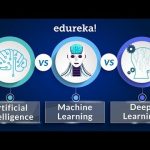
This Edureka Machine Learning tutorial (Machine Learning Tutorial with Python Blog: https://goo.gl/fe7ykh ) on “AI vs Machine Learning vs Deep Learning” talks about the differences and relationship between AL, Machine Learning and Deep Learning. Below are the topics covered in this tutorial:
1. AI vs Machine Learning vs Deep Learning
2. What is Artificial Intelligence?
3. Example of Artificial Intelligence
4. What is Machine Learning?
5. Example of Machine Learning
6. What is Deep Learning?
7. Example of Deep Learning
8. Machine Learning vs Deep Learning
How it Works?
1. This is a 5 Week Instructor led Online Course,40 hours of assignment and 20 hours of project work
2. We have a 24×7 One-on-One LIVE Technical Support to help you with any problems you might face or any clarifications you may require during the course.
3. At the end of the training you will be working on a real time project for which we will provide you a Grade and a Verifiable Certificate!
– – – – – – – – – – – – – – – – –
About the Course
Edureka’s Python Online Certification Training will make you an expert in Python programming. It will also help you learn Python the Big data way with integration of Machine learning, Pig, Hive and Web Scraping through beautiful soup. During our Python Certification training, our instructors will help you:
1. Master the Basic and Advanced Concepts of Python
2. Understand Python Scripts on UNIX/Windows, Python Editors and IDEs
3. Master the Concepts of Sequences and File operations
4. Learn how to use and create functions, sorting different elements, Lambda function, error handling techniques and Regular expressions ans using modules in Python
5. Gain expertise in machine learning using Python and build a Real Life Machine Learning application
6. Understand the supervised and unsupervised learning and concepts of Scikit-Learn
7. Master the concepts of MapReduce in Hadoop
8. Learn to write Complex MapReduce programs
9. Understand what is PIG and HIVE, Streaming feature in Hadoop, MapReduce job running with Python
10. Implementing a PIG UDF in Python, Writing a HIVE UDF in Python, Pydoop and/Or MRjob Basics
11. Master the concepts of Web scraping in Python
12. Work on a Real Life Project on Big Data Analytics using Python and gain Hands on Project Experience
– – – – – – – – – – – – – – – – – – –
Why learn Python?
Programmers love Python because of how fast and easy it is to use. Python cuts development time in half with its simple to read syntax and easy compilation feature. Debugging your programs is a breeze in Python with its built in debugger. Using Python makes Programmers more productive and their programs ultimately better. Python continues to be a favorite option for data scientists who use it for building and using Machine learning applications and other scientific computations.
Python runs on Windows, Linux/Unix, Mac OS and has been ported to Java and .NET virtual machines. Python is free to use, even for the commercial products, because of its OSI-approved open source license.
Python has evolved as the most preferred Language for Data Analytics and the increasing search trends on python also indicates that Python is the next “Big Thing” and a must for Professionals in the Data Analytics domain.
For more information, please write back to us at sales@edureka.co or call us at IND: 9606058406 / US: 18338555775 (toll-free).
Customer Review
Sairaam Varadarajan, Data Evangelist at Medtronic, Tempe, Arizona: “I took Big Data and Hadoop / Python course and I am planning to take Apache Mahout thus becoming the “customer of Edureka!”. Instructors are knowledge… able and interactive in teaching. The sessions are well structured with a proper content in helping us to dive into Big Data / Python. Most of the online courses are free, edureka charges a minimal amount. Its acceptable for their hard-work in tailoring – All new advanced courses and its specific usage in industry. I am confident that, no other website which have tailored the courses like Edureka. It will help for an immediate take-off in Data Science and Hadoop working.”
How does an autoencoder work? Autoencoders are a type of neural network that reconstructs the input data its given. But we don’t care about the output, we care about the hidden representation its learned. Its a lower dimensional compression of the input that preserves its features. We can use this learned representation for tasks like image colorization, dialogue generation, and anomaly detection.
And please support me on Patreon: https://www.patreon.com/user?u=3191693
Signup for my newsletter for exciting updates in the field of AI: https://goo.gl/FZzJ5w
Hit the Join button above to sign up to become a member of my channel for access to exclusive content!
Produced in association with Arm, this short and thoughtful film looks at the role robots powered by Artificial Intelligence (AI) may be set to play in our lives: from becoming our friends and keeping us company; to helping children with autism communicate; or assisting a rapidly ageing population. Jem Davies, Fellow and General Manager for Machine Learning at Arm, joins other experts from industry and academia to offer their perspective on the future possibilities for companion robots and AI.
Written and directed by: Colin Ramsay and James Uren
Producer: Colin Ramsay
Executive Producer: Beth Singler
A Little Dragon Films production
Co-funded by the Faraday Institute for Science and Religion
So we’ve talked a lot in this series about how computers fetch and display data, but how do they make decisions on this data? From spam filters and self-driving cars, to cutting edge medical diagnosis and real-time language translation, there has been an increasing need for our computers to learn from data and apply that knowledge to make predictions and decisions. This is the heart of machine learning which sits inside the more ambitious goal of artificial intelligence. We may be a long way from self-aware computers that think just like us, but with advancements in deep learning and artificial neural networks our computers are becoming more powerful than ever.
Deep learning and Neural Networks are probably one of the hottest tech topics right now. Large corporations and young startups alike are all gold-rushing this state of the art field. If you think big data is important, then you should care about deep learning. Deep Learning (DL) and Neural Network (NN) is currently driving some of the most ingenious inventions this century. Their incredible ability to learn from data and the environment makes them the first choice for machine learning scientists.
Deep Learning and Neural Network lies in the heart of products such as self-driving cars, image recognition software, recommender systems and the list goes on. Evidently, being a powerful algorithm, it is highly adaptive to various data types as well.
People think neural network is an extremely difficult topic to learn. Therefore, either some of them don’t use it, or the ones who use it, use it as a black box. Is there any point in doing something without knowing how is it done? NO! That’s why you’ve’ come to right place at Augmented Startups to Learn about Artificial Neural Networks, so sit back relax and see how deep the rabbit hole goes.
————————————————————
Support us on Patreon
►AugmentedStartups.info/Patreon
Chat to us on Discord
►AugmentedStartups.info/discord
Interact with us on Facebook
►AugmentedStartups.info/Facebook
Check my latest work on Instagram
►AugmentedStartups.info/instagram
Learn Advanced Tutorials on Udemy
►AugmentedStartups.info/udemy
————————————————————
To learn more on Artificial Intelligence, Augmented Reality IoT, Deep Learning FPGAs, Arduinos, PCB Design and Image Processing then check out http://augmentedstartups.info/home
https://www.qualcomm.com/invention/5g
Artificial intelligence is making our devices more than just utilities. From smartphones to healthcare to autonomous cars, our own Gary Brotman explains the potential of AI to make our lives easier and more exciting.
Machine Learning can be an incredibly beneficial tool to uncover hidden insights and predict future trends.
This free Machine Learning with Python course will give you all the tools you need to get started with supervised and unsupervised learning.
This Machine Learning with Python course dives into the basics of machine learning using an approachable, and well-known, programming language. You’ll learn about Supervised vs Unsupervised Learning, look into how Statistical Modeling relates to Machine Learning, and do a comparison of each.
Look at real-life examples of Machine learning and how it affects society in ways you may not have guessed!
Explore many algorithms and models:
Popular algorithms: Classification, Regression, Clustering, and Dimensional Reduction.
Popular models: Train/Test Split, Root Mean Squared Error, and Random Forests.
Want to learn more about AI and machine learning? Take this free HubSpot Academy course: https://bit.ly/2Sm2rzG
What is AI? What is machine learning and how does it work? You’ve probably heard the buzz. The age of artificial intelligence has arrived. But that doesn’t mean it’s easy to wrap your mind around. For the full story on the rise of artificial intelligence, check out The Robot Revolution: http://hubs.ly/H0630650
Let’s break down the basics of artificial intelligence, bots, and machine learning. Besides, there’s nothing that will impact marketing more in the next five to ten years than artificial intelligence. Learn what the coming revolution means for your day-to-day work, your business, and ultimately, your customers.
Every day, a large portion of the population is at the mercy of a rising technology, yet few actually understand what it is.
Artificial intelligence. You know, HAL 9000 and Marvin the Paranoid Android?
Thanks to books and movies, each generation has formed its own fantasy of a world ruled — or at least served — by robots. We’ve been conditioned to expect flying cars that steer clear of traffic and robotic maids whipping up our weekday dinner.
But if the age of AI is here, why don’t our lives look more like the Jetsons?
Well, for starters, that’s a cartoon. And really, if you’ve ever browsed Netflix movie suggestions or told Alexa to order a pizza, you’re probably interacting with artificial intelligence more than you realize.
And that’s kind of the point. AI is designed so you don’t realize there’s a computer calling the shots. But that also makes understanding what AI is — and what it’s not — a little complicated.
In basic terms, AI is a broad area of computer science that makes machines seem like they have human intelligence.
So it’s not only programming a computer to drive a car by obeying traffic signals, but it’s when that program also learns to exhibit signs of human-like road rage.
As intimidating as it may seem, this technology isn’t new. Actually, for the past half-a-century, it’s been an idea ahead of its time.
The term “artificial intelligence” was first coined back in 1956 by Dartmouth professor John McCarthy. He called together a group of computer scientists and mathematicians to see if machines could learn like a young child does, using trial and error to develop formal reasoning. The project proposal says they’ll figure out how to make machines “use language, form abstractions and concepts, solve kinds of problems now reserved for humans, and improve themselves.”
That was more than 60 years ago.
Since then, AI has remained for the most part in university classrooms and super secret labs … But that’s changing.
Like all exponential curves, it’s hard to tell when a line that’s slowly ticking upwards is going to skyrocket.
But during the past few years, a couple of factors have led to AI becoming the next “big” thing: First, huge amounts of data are being created every minute. In fact, 90% of the world’s data has been generated in the past two years. And now thanks to advances in processing speeds, computers can actually make sense of all this information more quickly. Because of this, tech giants and venture capitalists have bought into AI and are infusing the market with cash and new applications.
Very soon, AI will become a little less artificial, and a lot more intelligent.
Now the question is: Should you brace yourself for yet another Terminator movie, live on your city streets?
Not exactly. In fact, stop thinking of robots. When it comes to AI, a robot is nothing more than the shell concealing what’s actually used to power the technology.
That means AI can manifest itself in many different ways. Let’s break down the options…
First, you have your bots. They’re text-based and incredibly powerful, but they have limitations.
Ask a weather bot for the forecast, and it will tell you it’s partly cloudy with a high of 57. But ask that same bot what time it is in Tokyo, and it’ll get a little confused. That’s because the bot’s creator only programmed it to give you the weather by pulling from a specific data source.
Natural language processing makes these bots a bit more sophisticated. When you ask Siri or Cortana where the closest gas station is, it’s really just translating your voice into text, feeding it to a search engine, and reading the answer back in human syntax. So in other words, you don’t have to speak in code.
Machine intelligence, artificial intelligence, machine learning, artificial intelligence tutorial, machine learning tutorial, evolution of machine learning, advantages of artificial intelligence, applications of artificial intelligence, ai meaning, machine learning applications, artificial intelligence examples.
Want to stay current on emerging tech? Check out our free guide today: http://bit.ly/2GJesc2
This experiment lets you make music through machine learning. A neural network was trained on many examples and it learns about musical concepts, building a map of notes and timings. You just play a few notes, and see how the neural net responds. http://g.co/aiexperiments
Built by Yotam Mann with friends on the Magenta and Creative Lab teams at Google. It uses Tone.js and open-source tools from the Magenta project.
This is a game built with machine learning. You draw, and a neural network tries to guess what you’re drawing. Of course, it doesn’t always work. But the more you play with it, the more it will learn. It’s just one example of how you can use machine learning in fun ways.
Built by Jonas Jongejan, Henry Rowley, Takashi Kawashima, Jongmin Kim, with friends at Google Creative Lab and Data Arts Team.
With all of the exciting A.I. stuff happening, there are lots of people eager to start tinkering with machine learning technology. That’s why we’ve created A.I. Experiments, a site that showcases simple experiments that let anyone play with this technology hands-on, and resources for creating your own experiments.
Various visualizations featured in video made by Gene Kogan. Additional footage by Sarah Riazati.
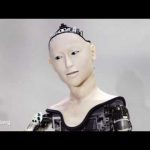
Japan has a unique fascination with androids and the quest to make robots more like humans. One of the country’s most original thinkers in this area is Professor Takashi Ikegami of the University of Tokyo. He has created androids filled with sensors and artificial intelligence software. The technology allows them to perceive the outside world and react to it as they see fit. Hello World host Ashlee Vance traveled to Tokyo to meet with Professor Ikegami and see his latest android creation. The robot they encounter flails about and makes strange gurgling noises as it responds to their movements and conversation. While it all looks rudimentary today, the technology is the precursor of what Ikegami predicts will be a new robotic life form that has its own culture, language, and desires. What could go wrong?
The objective of this course is to give you a holistic understanding of machine learning, covering theory, application, and inner workings of supervised, unsupervised, and deep learning algorithms.
In this series, we’ll be covering linear regression, K Nearest Neighbors, Support Vector Machines (SVM), flat clustering, hierarchical clustering, and neural networks.
For each major algorithm that we cover, we will discuss the high level intuitions of the algorithms and how they are logically meant to work. Next, we’ll apply the algorithms in code using real world data sets along with a module, such as with Scikit-Learn. Finally, we’ll be diving into the inner workings of each of the algorithms by recreating them in code, from scratch, ourselves, including all of the math involved. This should give you a complete understanding of exactly how the algorithms work, how they can be tweaked, what advantages are, and what their disadvantages are.
In order to follow along with the series, I suggest you have at the very least a basic understanding of Python. If you do not, I suggest you at least follow the Python 3 Basics tutorial until the module installation with pip tutorial. If you have a basic understanding of Python, and the willingness to learn/ask questions, you will be able to follow along here with no issues. Most of the machine learning algorithms are actually quite simple, since they need to be in order to scale to large datasets. Math involved is typically linear algebra, but I will do my best to still explain all of the math. If you are confused/lost/curious about anything, ask in the comments section on YouTube, the community here, or by emailing me. You will also need Scikit-Learn and Pandas installed, along with others that we’ll grab along the way.
Machine learning was defined in 1959 by Arthur Samuel as the “field of study that gives computers the ability to learn without being explicitly programmed.” This means imbuing knowledge to machines without hard-coding it.
Six lines of Python is all it takes to write your first machine learning program! In this episode, we’ll briefly introduce what machine learning is and why it’s important. Then, we’ll follow a recipe for supervised learning (a technique to create a classifier from examples) and code it up.
While you interact with Tyche more and more, especially kids, they develop the power to express themselves better. Tyche learns incrementally to be able to carry out intelligent conversations with humans. Visual and audio receptors are used to perceive the world around Tyche building its own beliefs.