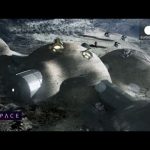
When astronauts return to the lunar surface they are probably going to be doing more driving than walking – but to keep billowing moondust at bay they are going to need roads. An ESA project reported in today’s Nature Scientific Reports tested the creation of roadworthy surfaces by melting simulated moondust with a powerful laser.
Going to the Moon was the first step. Staying there is the next ambition.
ESA is a key partner in NASA’s Artemis programme, which aims to return people to the Moon by the end of the decade. Dozens of other international public and private missions are setting their sights on the lunar surface in the coming years.
But to achieve a permanent and sustainable presence on the Moon, reliable and autonomous lunar communications and navigation services are required.
This is why ESA is working with its industrial partners on the Moonlight initiative, to become the first off-planet commercial telecoms and satellite navigation provider.
Following their launch, three or four satellites will be carried into lunar orbit by a space tug and deployed one by one, to form a constellation of lunar satellites. The number and specification of these satellites are currently being defined.
The constellation’s orbits are optimised to give coverage to the lunar south pole, whose sustained sunlight and polar ice make it the focus of upcoming missions.
Moonlight will provide data capacities sufficient to serve these planned and future missions, with a navigation service that enables accurate real-time positioning for all lunar missions.
★ Subscribe: http://bit.ly/ESAsubscribe and click twice on the bell button to receive our notifications.
We are Europe’s gateway to space. Our mission is to shape the development of Europe’s space capability and ensure that investment in space continues to deliver benefits to the citizens of Europe and the world. Check out https://www.esa.int/ to get up to speed on everything space related.
ESA is Europe’s gateway to space. Our mission is to shape the development of Europe’s space capability and ensure that investment in space continues to deliver benefits to the citizens of Europe and the world. Check out http://www.esa.int/ESA to get up to speed on everything space related.
ESA is Europe’s gateway to space. Our mission is to shape the development of Europe’s space capability and ensure that investment in space continues to deliver benefits to the citizens of Europe and the world. Check out http://www.esa.int/ESA to get up to speed on everything space related.
ESA is Europe’s gateway to space. Our mission is to shape the development of Europe’s space capability and ensure that investment in space continues to deliver benefits to the citizens of Europe and the world. Check out http://www.esa.int/ESA to get up to speed on everything space related.
ESA is Europe’s gateway to space. Our mission is to shape the development of Europe’s space capability and ensure that investment in space continues to deliver benefits to the citizens of Europe and the world. Check out http://www.esa.int/ESA to get up to speed on everything space related.
ESA is Europe’s gateway to space. Our mission is to shape the development of Europe’s space capability and ensure that investment in space continues to deliver benefits to the citizens of Europe and the world. Check out http://www.esa.int/ESA to get up to speed on everything space related.
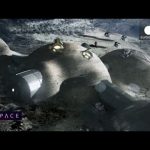
Italian ESA astronaut Samantha Cristoforetti, speaking from the European Astronaut Centre near Cologne in Germany, has a message of thanks to all those who’ve entered our Lunar 3D printing competition so far. A new lunar analogue test facility, called Luna for short, is currently being set up at EAC to test the technologies and techniques needed for any future Moon base – with 3D printing high on the list. And a team ESA’s technical centre in Noordwijk, the Netherlands, is overseeing a project to research in detail how 3D printing could be used in such a Moon base. We’re also interested in the human factor: what would you 3D print to make the Moon feel like home? That’s why we’re crowdsourcing your ideas through this competition. The closing date is 23 September 2018.
ESA is Europe’s gateway to space. Our mission is to shape the development of Europe’s space capability and ensure that investment in space continues to deliver benefits to the citizens of Europe and the world. Check out http://www.esa.int/ESA to get up to speed on everything space related.
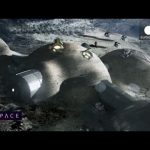
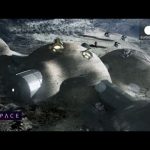
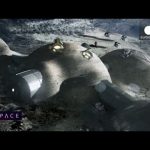
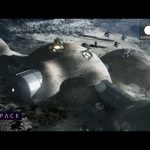
Jan Woerner, Director General of the European Space Agency, has a bold new vision for space exploration. “My intention is to build up a permanent base station on the Moon,” he tells Euronews from the agency’s main control room in Darmstadt. “Meaning that it’s an open station, for different member states, for different states around the globe.”
Mankind has never had a permanent lunar presence, and so this new vision, that Woerner likes to call the ‘Moon village’, would represent a giant leap in space exploration.
Le directeur général de l’Agence spatiale européenne dit vouloir construire une base permanente sur la Lune. Ce projet incroyable prend peu à peu forme à mesure que les scientifiques européens commencent à sérieusement y réfléchir. Nous avons rencontré quelques-uns de ceux qui pourraient faire de ce rêve, une réalité, notamment au Centre européen des astronautes à Cologne.
“J’ai l’intention de construire une base permanente sur la Lune : ce sera une station ouverte pour différents Etats participants, des pays des quatre coins du monde,” explique posément le nouveau directeur général de l’Agence spatiale européenne.
Die Europäische Weltraumorganisation ESA will ein tollkühnes Projekt in Angriff nehmen: Sie will ein Dorf auf dem Mond bauen. Die permanente Station soll an dem Ort entstehen, an dem einst die Russen landeten und die Amerikaner erste Schritte machten. ESA-Chef Jan Woerner hat eine Vision: “Ich will eine permanente Mondstation bauen. Es wäre eine offene Station für mehrere Länder aus der ganzen Welt.”
Die Apollo-Ära hat gezeigt, dass Träume Wirklichkeit werden können. Die Forscher damals hatten ein klares Ziel vor Augen: die Mondlandung. ESA-Astronaut Andreas Mogensen scheint zuversichtlich: “In den 1960er Jahren haben sie das innerhalb von zehn Jahren geschafft. Heute sind wir technologisch gesehen viel weiter. Wir können es also noch einmal machen.”
Die Mondstation würde die Internationale Raumstation, ISS, ablösen. Sie wäre das neue gemeinsame Raumfahrt-Projekt, an dem alle teilnehmen könnten. “Die Amerikaner, die Russen, die Chinesen, die Inder und die Japaner werden mitmachen. Und andere Länder werden ebenfalls etwas beisteuern,” so Woerner.
– Feltett szándékom egy állandó bázisállomás építése a Holdra – mondja az Európai Űrügynökség vezetője, Jan Woerner. – Ez egy közös bázis lenne a partnereinkkel, amit a világ más országaival közösen építenénk és használnánk. Benne lesznek az amerikaiak, az oroszok, a kínaiak az indiaiak, a japánok és kisebb hozzájárulással más országok is.
A jelenlegi helyzetben a Holdbázis álomnak tűnik – de az Apolló-program során már kiderült, hogy megfelelő költségvetés mellett óriási technológiai ugrások lehetségesek. A tervek szerint ez lenne az új globális űrprojekt a Nemzetközi Űrállomás után.
Tornare sulla Luna? La prossima tappa dell’esplorazione spaziale, dopo l’esperienza della Stazione Spaziale Internazionale, prevede molto di più. L’Agenzia spaziale europea ha un nuovo obiettivo: costruire una base permanente sulla luna.
I russi furono i primi a lanciare una missione sulla luna mentre gli americani i primi a camminare sulla sua superficie. Oggi la luna continua ad essere al centro di ambiziose ricerche come ci conferma anche il direttore generale dell’Agenzia spaziale europea Jan Wörner. Una base internazionale, una stazione aperta ai diversi Stati membri dell’Agenzia e ai paesi di tutto il mondo.
Un sogno animato dalla stessa passione che ha portato il primo uomo sulla Luna. Certo finora nessuno ha mai realizzato un progetto simile. Dalla missione spaziale Apollo sono stati fatti passi da gigante.
O homem que está à frente da Agência Espacial Europeia (ESA) tem um ambicioso objetivo: construir uma base permanente na Lua. É no Centro Europeu de Astronautas em Colónia, na Alemanha, que estão a ser dados os primeiros passos nessa direção.
Em 1959, os russos conseguiram aterrar uma nave não tripulada na Lua; dez anos mais tarde, os americanos passearam na sua superfície. Hoje em dia, o plano é ficar. _”O meu objetivo é construir uma base permanente na Lua. Uma estrutura aberta à participação de diferentes países”_, declara Jan Wörner, diretor geral da ESA. A ideia é criar um projeto global à semelhança da Estação Espacial Internacional.
O Centro Europeu de Astronautas em Colónia organizou um workshop precisamente sobre como erguer uma espécie de pequena aldeia sobre a superfície lunar. A presença de certos metais, minerais e de água gelada pode representar um contributo valioso. Segundo Bernard Foing, diretor do Grupo Internacional de Exploração Lunar, _”a Lua tem imensos recursos. Encontrámos gelo nos polos, encontrámos áreas que estão quase constantemente expostas ao Sol. São zonas que nos podem fornecer recursos para utilizarmos na construção ou na manutenção da vida dos astronautas na base lunar.”_
La nueva cúpula de la Agencia Espacial Europea (ESA) quiere construir una base permanente en la Luna. El lugar donde hace medio siglo los rusos llegaron por primera vez y los estadounidenses dieron sus primeros pasos. Se trata de un proyecto muy ambicioso en el que ya está trabajando el Centro Europeo de Astronautas con sede en la ciudad alemana de Colonia.
“Mi intención es construir una base permanente en la luna, una estación abierta a diferentes estados miembros de todo el mundo”, asegura Jan Woerner, director de la ESA.
Space exploration is a major global issue and Europe wants to be in the driving seat. It therefore needs to develop a global vision and a strategic action plan.
Space exploration is a major global issue and Europe wants to be in the driving seat. It therefore needs to develop a global vision and a strategic action plan.
Space exploration is a major global issue and Europe wants to be in the driving seat. It therefore needs to develop a global vision and a strategic action plan.
Space exploration is a major global issue and Europe wants to be in the driving seat. It therefore needs to develop a global vision and a strategic action plan.
Space exploration is a major global issue and Europe wants to be in the driving seat. It therefore needs to develop a global vision and a strategic action plan.