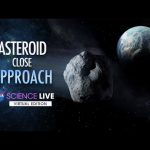
Have you heard about an asteroid close-approach happening on April 29? Asteroid 1998 OR2 poses no threat to our planet, but we can still learn a lot by studying it. Don’t miss a special Planetary Defense episode of NASA Science Live on Monday, April 27 at 3:00 p.m. EDT to learn how we find, track and monitor asteroids and near-Earth Objects.
Tag: NASA
-
Hubble’s Collection of Anniversary Images
Each year, the NASA/ESA Hubble Space Telescope dedicates a small portion of its precious observing time to taking a special anniversary image, showcasing particularly beautiful and meaningful objects. These images continue to challenge scientists with exciting new surprises and to enthral the public with ever more evocative observations.
To celebrate Hubble’s 30th anniversary, let’s look back at the beauty and science behind each of the anniversary images unveiled as of 2005. In this video, we will also feature the very special 2020 Hubble Space Telescope 30th anniversary image.
Learn more: http://bit.ly/HubbleCelebratesIts30thAnniversaryWithATapestreOfBlazingStarbirth
Credit:
Directed by: Bethany Downer
Visual design and editing: Martin Kornmesser
Written by: Bethany Downer
Narration: Sara Mendes da Costa
Images & VIdeos: NASA, ESA, M.Kornmesser, L. Calçada, ESO, NAOJ, G. Bacon, L. Frattare, Z. Levay and F. Summers (STScI/AURA), D. Lennon and E. Sabbi (ESA/STScI), J. Anderson, S.E. de Mink, R. van der Marel, T. Sohn, and N. Walborn (STScI), L. Bedin (INAF, Padua), C. Evans (STFC), H. Sana (Amsterdam), N. Langer (Bonn), P. Crowther (Sheffield), A. Herrero (IAC, Tenerife), N. Bastian (USM, Munich), and E. Bressert (ESO), the Hubble Heritage Team, T. Davis, L. Frattare, Z. Levay, (Viz 3D team, STScI), J. Anderson (STScI), the Hubble Heritage Team (STScI/AURA), A. Nota (ESA/STScI), and the Westerlund 2 Science Team, Eckhard Slawik (e.slawik@gmx.net).
Music: Johan B. Monell (www.johanmonell.com
Web and technical support: Raquel Yumi Shida
Executive producer: Mariya Lyubenova★ Subscribe: http://bit.ly/ESAsubscribe and click twice on the bell button to receive our notifications.
Check out our full video catalog: http://bit.ly/SpaceInVideos
Follow us on Twitter: http://bit.ly/ESAonTwitter
On Facebook: http://bit.ly/ESAonFacebook
On Instagram: http://bit.ly/ESAonInstagram
On Flickr: http://bit.ly/ESAonFlickrWe are Europe’s gateway to space. Our mission is to shape the development of Europe’s space capability and ensure that investment in space continues to deliver benefits to the citizens of Europe and the world. Check out http://www.esa.int/ESA to get up to speed on everything space related.
Copyright information about our videos is available here: http://www.esa.int/spaceinvideos/Terms_and_Conditions
#ESA
#Hubble
#Hubble30 -
30 Years of Science with the Hubble Space Telescope
On 24 April 1990 the NASA/ESA Hubble Space Telescope was sent into orbit aboard the space shuttle Discovery, the first space telescope of its kind. It offered a new view of the Universe and has, for 30 years, reached and surpassed all expectations, beaming back data and images that have changed scientists’ understanding of the Universe and the public’s perception of it. Hubble’s discoveries have revolutionised nearly all areas of current astronomical research, from planetary science to cosmology, and its pictures are unmistakably out of this world.
This video revisits some of Hubble’s biggest science discoveries throughout its three decades of operation to celebrate the telescope’s 30th anniversary.
Learn more: http://bit.ly/HubbleCelebratesIts30thAnniversaryWithATapestreOfBlazingStarbirth
Credit:
Directed by: Bethany Downer
Visual design and editing: Martin Kornmesser
Written by: Bethany Downer
Narration: Sara Mendes da Costa
Images & Videos: NASA, ESA, M.Kornmesser, L. Calçada, ESO, G. Bacon (STScI), theHubble Heritage Team (STScI/AURA)-ESA/Hubble Collaboration, and H. Bond (STScI and Pennsylvania State University), A. Feild (STScI), and A. Riess (STScI/JHU), D. Jewitt (UCLA), F. Summers, Z. Levay, J. DePasquale, L. Hustak, L. Frattare, M. Robberto (STScI), R. Hurt (Caltech/IPAC) Acknowledgement: R. Gendler, spaceengine.org.
Music: Johan B. Monell (www.johanmonell.com)
Web and technical support: Raquel Yumi Shida
Executive producer: Mariya Lyubenova★ Subscribe: http://bit.ly/ESAsubscribe and click twice on the bell button to receive our notifications.
Check out our full video catalog: http://bit.ly/SpaceInVideos
Follow us on Twitter: http://bit.ly/ESAonTwitter
On Facebook: http://bit.ly/ESAonFacebook
On Instagram: http://bit.ly/ESAonInstagram
On Flickr: http://bit.ly/ESAonFlickrWe are Europe’s gateway to space. Our mission is to shape the development of Europe’s space capability and ensure that investment in space continues to deliver benefits to the citizens of Europe and the world. Check out http://www.esa.int/ESA to get up to speed on everything space related.
Copyright information about our videos is available here: http://www.esa.int/spaceinvideos/Terms_and_Conditions
#ESA
#Hubble
#Hubble -
Hubble: 30 years unveiling the universe
This month marks the 30th anniversary of the international Hubble Space Telescope.
Launched on 24 April 1990, and deployed from the Space Shuttle Discovery cargo bay a day later (25 April 1990), the telescope has given us a new perspective on the Universe.
The joint NASA/ESA mission has shown us distant galaxies and spectacular nebulae. It has revealed supermassive black holes and planets in distant solar systems; and has proved that the Universe is not only expanding, the expansion is accelerating.
Hubble’s mission has also been eventful. When it was first launched, a defect in the mirror meant it sent back blurry images. Since then, five servicing missions have enabled the telescope to be improved and upgraded. Today, it is still going strong.
Learn more: http://bit.ly/HubbleCelebratesIts30thAnniversaryWithATapestreOfBlazingStarbirth
★ Subscribe: http://bit.ly/ESAsubscribe and click twice on the bell button to receive our notifications.
Check out our full video catalog: http://bit.ly/SpaceInVideos
Follow us on Twitter: http://bit.ly/ESAonTwitter
On Facebook: http://bit.ly/ESAonFacebook
On Instagram: http://bit.ly/ESAonInstagram
On Flickr: http://bit.ly/ESAonFlickrWe are Europe’s gateway to space. Our mission is to shape the development of Europe’s space capability and ensure that investment in space continues to deliver benefits to the citizens of Europe and the world. Check out http://www.esa.int/ESA to get up to speed on everything space related.
Copyright information about our videos is available here: http://www.esa.int/spaceinvideos/Terms_and_Conditions
#ESA
#Hubble
#Hubble30 -
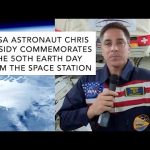
NASA Astronaut Chris Cassidy Commemorates the 50th Earth Day from the International Space Station
On the 50th anniversary of Earth Day, NASA astronaut Chris Cassidy of Expedition 63 reflects on what Earth Day means to him.
This Earth Day, we can still collectively appreciate the beauty of our planet and the extraordinary science that helps us understand how it all works — and we can do it from our homes. Join us in commemorating the 50th anniversary with #EarthDayAtHome.
-

NASA Science Live: Earth Day at Home
Happy Earth Day! Join NASA experts on the 50th anniversary of Earth Day as we explore important discoveries made about our planet, talk with teams creating green technology that benefits life on Earth, explore a new type of aircraft making flight greener and cleaner, and hear from a NASA inventor who has turned coral reef science into an interactive app that allows you to participate in science from home. Celebrate #EarthDayatHome with NASA.
-
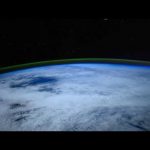
Earth Day 2020: NASA Puts Space to Work for the Planet
NASA’s unique vantage point of space allows us to better understand Earth’s interconnected systems and use that knowledge to live sustainably on our home planet, protect life around the world, and adapt to natural and human-caused changes. As NASA joins the world in observing the 50th anniversary of Earth Day, we reaffirm our commitment to understanding our planet’s interconnected systems to help protect them for future generations.
View this video in Spanish on our NASA en Español YouTube channel: https://youtu.be/x-AjWa27zr8
Learn more about how we’re celebrating #EarthDayAtHome: https://www.nasa.gov/press-release/nasa-marks-earth-day-s-50th-anniversary-with-earthdayathome/
-

NASA Live: Earth Views from the Space Station
Currently, live views from the International Space Station (ISS) are streaming from an external camera mounted on the ISS module called Node 2. Node 2 is located on the forward part of the ISS. The camera is looking forward at an angle so that the International Docking Adapter 2 (IDA2) is visible. If the Node 2 camera is not available due to operational considerations for a longer period of time, a continuous loop of recorded HDEV imagery will be displayed. The loop will have “Previously Recorded” on the image to distinguish it from the live stream from the Node 2 camera. After HDEV stopped sending any data on July 18, 2019, it was declared, on August 22, 2019, to have reached its end of life.
Thank you to all who shared in experiencing and using the HDEV views of Earth from the ISS to make HDEV so much more than a Technology Demonstration Payload!
-

Paxi on the ISS: Recycling air and water
Our alien friend Paxi went to visit American astronaut Joe Acaba on board the International Space Station. Joe explains how the ISS recycles air and water.
★ Subscribe: http://bit.ly/ESAsubscribe and click twice on the bell button to receive our notifications.
Check out our full video catalog: http://bit.ly/SpaceInVideos
Follow us on Twitter: http://bit.ly/ESAonTwitter
On Facebook: http://bit.ly/ESAonFacebook
On Instagram: http://bit.ly/ESAonInstagram
On Flickr: http://bit.ly/ESAonFlickrWe are Europe’s gateway to space. Our mission is to shape the development of Europe’s space capability and ensure that investment in space continues to deliver benefits to the citizens of Europe and the world. Check out http://www.esa.int/ESA to get up to speed on everything space related.
Copyright information about our videos is available here: http://www.esa.int/spaceinvideos/Terms_and_Conditions
#ESAKids
#Paxi
#WorldWaterDay -

NASA Live: Earth Views from the Space Station
Currently, live views from the International Space Station (ISS) are streaming from an external camera mounted on the ISS module called Node 2. Node 2 is located on the forward part of the ISS. The camera is looking forward at an angle so that the International Docking Adapter 2 (IDA2) is visible. If the Node 2 camera is not available due to operational considerations for a longer period of time, a continuous loop of recorded HDEV imagery will be displayed. The loop will have “Previously Recorded” on the image to distinguish it from the live stream from the Node 2 camera. After HDEV stopped sending any data on July 18, 2019, it was declared, on August 22, 2019, to have reached its end of life.
Thank you to all who shared in experiencing and using the HDEV views of Earth from the ISS to make HDEV so much more than a Technology Demonstration Payload!
-

Addressing the Coronavirus Pandemic on This Week @NASA – March 20, 2020
NASA addresses the coronavirus pandemic, some online material to stay connected with NASA, and more testing with our Orion spacecraft … a few of the stories to tell you about – This Week at NASA!
This video is available for download from NASA’s Image and Video Library: https://images.nasa.gov/details-NHQ_2020_0320_Addressing%20the%20Coronavirus%20Pandemic%20on%20This%20Week%20@NASA%20%E2%80%93%20March%2020,%202020
-

NASA Remembers Apollo Astronaut Al Worden
NASA astronaut Al Worden has died at the age of 88.
Worden served as command module pilot for Apollo 15 with Dave Scott and Jim Irwin. During the mission Worden became the first human to carry out a deep space walk. He logged 38 minutes in extravehicular activity outside the command module, “Endeavour.”
During 1972-1973, Worden was Senior Aerospace Scientist at the NASA Ames Research Center, and from 1973 to 1975, he was chief of the Systems Study Division at Ames.
This video is available for download from NASA’s Image and Video Library: https://images.nasa.gov/details-al%20worden_fixed
-
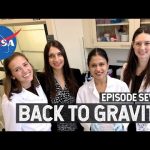
NASA Explorers S4 E7: Back to Gravity
With the experiment’s journey complete, Elaine Horn-Ranney Ph.D. and Parastoo Khoshaklagh Ph.D. now join the thousands of scientists who’ve performed research aboard the International Space Station, making the most of what microgravity has to teach us.
Although the thrill of the rocket launch may be over, our scientists still have one of the most exciting parts of their journey ahead: sharing their results with the world.
See more NASA Explorers season 4 bonus content: https://go.nasa.gov/2FKavmn
Stay up to date with ISS Research on Twitter: https://twitter.com/ISS_Research
Watch all NASA Explorers season 4 episodes: https://www.youtube.com/playlist?list=PL2aBZuCeDwlQDM6x6FpHE_X0iL7hvoRpR
#S4E7 -
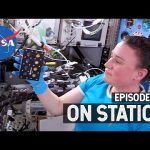
NASA Explorers S4 E6: On Station
Now that our researchers’ experiment is on the International Space Station, it’s time to test how their samples behave in microgravity. This week on NASA Explorers, the astronauts conduct science in space, while a team back here on Earth runs their own piece of the project.
See more NASA Explorers season 4 bonus content: https://go.nasa.gov/2FKavmn
Stay up to date with ISS Research on Twitter: https://twitter.com/ISS_Research
Watch all NASA Explorers season 4 episodes: https://www.youtube.com/playlist?list=PL2aBZuCeDwlQDM6x6FpHE_X0iL7hvoRpR
#S4E6 -

NASA Live: Earth Views from the Space Station
The High Definition Earth-Viewing (HDEV) experiment on the International Space Station has experienced a loss of data, and ground computers are no longer receiving communications from the payload. A team of engineers are reviewing the available health and status information from HDEV to identify what may have occurred. Additional updates will be published as they become available.
-
NASA Explorers S4 E5: Journey to Space
The day has finally arrived. After years of work, our team of scientists is at the Kennedy Space Center in the hopes of seeing their research liftoff to the International Space Station. Join us this week on NASA Explorers for the countdown, the emotion and, hopefully, the launch.
See more NASA Explorers season 4 bonus content: https://go.nasa.gov/2FKavmn
Stay up to date with ISS Research on Twitter: https://twitter.com/ISS_Research
Watch all NASA Explorers season 4 episodes: https://www.youtube.com/playlist?list=PL2aBZuCeDwlQDM6x6FpHE_X0iL7hvoRpR
#S4E5 -
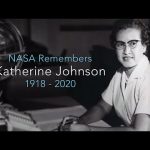
NASA Remembers Hidden Figure Katherine Johnson
Pioneering NASA mathematician Katherine Johnson has died at the age of 101. Johnson was part of a group of African-American women who worked on critical mathematical calculations in the early days of human spaceflight, as chronicled in the best-selling book and hit movie “Hidden Figures.”
“She was an American hero and her pioneering legacy will never be forgotten,” said NASA Administrator Jim Bridenstine.
-

Earth from Space: Houston, Texas
The Copernicus Sentinel-1 mission takes us over Houston, the most populous city in Texas and the fourth largest in the US, in this week’s edition of the Earth from Space programme.
Download the image: https://www.esa.int/ESA_Multimedia/Images/2020/02/Houston_Texas
★ Subscribe: http://bit.ly/ESAsubscribe and click twice on the bell button to receive our notifications.
Check out our full video catalog: http://bit.ly/SpaceInVideos
Follow us on Twitter: http://bit.ly/ESAonTwitter
On Facebook: http://bit.ly/ESAonFacebook
On Instagram: http://bit.ly/ESAonInstagram
On Flickr: http://bit.ly/ESAonFlickrWe are Europe’s gateway to space. Our mission is to shape the development of Europe’s space capability and ensure that investment in space continues to deliver benefits to the citizens of Europe and the world. Check out http://www.esa.int/ESA to get up to speed on everything space related.
Copyright information about our videos is available here: http://www.esa.int/spaceinvideos/Terms_and_Conditions
#ESA
#EarthFromSpace
#Houston -
NASA Explorers S4 E4: Before the Rocket
Our team of scientists is just days away from their research being loaded onto a SpaceX rocket that will carry their experiment to the International Space Station. This week on #NASAExplorers, we are following along with them in the busy days leading up to launch at Kennedy Space Center, as they do all of the last-minute preparations to get their experiment ready for microgravity.
See more NASA Explorers season 4 bonus content: https://go.nasa.gov/2FKavmn
Stay up to date with ISS Research on Twitter: https://twitter.com/ISS_Research
Watch all NASA Explorers season 4 episodes: https://www.youtube.com/playlist?list=PL2aBZuCeDwlQDM6x6FpHE_X0iL7hvoRpR
#S4E4 -
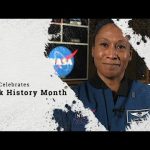
NASA Black History Month Astronaut Profile – Jeanette Epps
“She always taught us that there’s no reason you can’t do these things.” NASA astronaut Dr. Jeanette Epps recalls who encouraged her to reach for the stars and talks about inspiring the #Artemis generation of young girls.
-

Hear from Record-Breaking NASA Astronaut Christina Koch
NASA astronaut Christina Koch returned to Earth on Thursday, Feb. 6 after logging 328 days in space – the longest spaceflight in history by a woman.
Hear from the inspirational astronaut in a post flight news conference at 3:30 p.m. EST Wednesday, Feb. 12 from our Johnson Space Center in Houston.
-
NASA Explorers S4 E3: Training the Astronauts
Astronauts train all over the world, including at NASA’s Johnson Space Center in Houston, Texas. Here, they learn not just how to live in space, but also how to conduct science in microgravity. Astronauts serve as the eyes and hands of researchers while their experiments are aboard the space station, so they must be trained in everything from using a microscope, to maintaining the equipment for combustion experiments.
Follow along with #NASAExplorers as we go to class with NASA astronaut Mike Fincke.
See more NASA Explorers season 4 bonus content here: https://go.nasa.gov/2FKavmn
Stay up to date with ISS Research on Twitter: https://twitter.com/ISS_Research
#S4E3 -
Explorers Wanted: NASA to Hire More New Artemis Generation Astronauts
NASA is hiring astronauts. Do YOU have what it takes to join the next astronaut class?
To join the journey, astronaut candidates must have earned a master’s degree from an accredited institution in engineering, biological science, physical science, computer science or mathematics. The requirement for the master’s degree can also be met by:
• Two years (36 semester hours or 54 quarter hours) of work toward a Ph.D.
program in a related science, technology, engineering or math field;
• A completed doctor of medicine or doctor of osteopathic medicine degree;
• Completion (or current enrollment that will result in completion by June 2021) of a
nationally recognized test pilot school program.Candidates also must have at least two years of related, progressively responsible professional experience, or at least 1,000 hours of pilot-in-command time in jet aircraft. Astronaut candidates must pass the NASA long-duration spaceflight physical.
Applications open March 2, 2020.
For more information about a career as a NASA astronaut, and application requirements, visit:
http://www.nasa.gov/astronautsThis video is available for download from NASA’s Image and Video Library:
images-assets.nasa.gov/video/recruitment_final/recruitment_final~orig.mp4 -

Solar Orbiter launch highlights
Highlights from the preparation and liftoff of ESA’s Sun-exploring mission Solar Orbiter.
Solar Orbiter lofted to space aboard the US Atlas V 411 rocket from NASA’s spaceport in Cape Canaveral, Florida at 04:03 GMT (05:03 CET) on 10 February 2020.
An ESA-led mission with strong NASA participation, Solar Orbiter carries a set of ten instruments for imaging the surface of the Sun and studying the environment in its vicinity. The spacecraft will travel around the Sun on an elliptical orbit that will take it as close as 42 million km away from the Sun’s surface, about a quarter of the distance between the Sun and Earth. The orbit will allow Solar Orbiter to see some of the never-before-imaged regions of the Sun, including the poles, and shed new light on what gives rise to solar wind, which can affect infrastructure on Earth.
More about Solar Orbiter: https://www.esa.int/solarorbiter
★ Subscribe: http://bit.ly/ESAsubscribe and click twice on the bell button to receive our notifications.
Check out our full video catalog: http://bit.ly/SpaceInVideos
Follow us on Twitter: http://bit.ly/ESAonTwitter
On Facebook: http://bit.ly/ESAonFacebook
On Instagram: http://bit.ly/ESAonInstagram
On Flickr: http://bit.ly/ESAonFlickrWe are Europe’s gateway to space. Our mission is to shape the development of Europe’s space capability and ensure that investment in space continues to deliver benefits to the citizens of Europe and the world. Check out http://www.esa.int/ESA to get up to speed on everything space related.
Copyright information about our videos is available here: http://www.esa.int/spaceinvideos/Terms_and_Conditions
#ESA
#SolarOrbiter
#WeAreAllSolarOrbiters -

State of NASA Address from Administrator Bridenstine
What have we accomplished and what’s ahead in our mission to explore the Moon, Mars and worlds beyond? On Monday, Feb. 10, 2020, NASA Administrator Jim Bridenstine spoke from the Stennis Space Center, giving a “State of NASA” update on the Artemis program and more.
-
NASA 2020: A Year of Action
This year, NASA is building momentum across the agency and across every mission. This is a year of action. With each milestone, NASA is preparing to go farther than ever before.
NASA is going to the Moon and on to Mars, in a measured, sustainable way. Working with U.S. companies and international partners, NASA will push the boundaries of human exploration forward to the Moon. NASA is working to establish a permanent human presence on the Moon within the next decade to uncover new scientific discoveries and lay the foundation for private companies to build a lunar economy. We inspire generations and change the course of history as we realize the next great scientific, economic and technical achievements in space.This video is available for download from NASA’s Image and Video Library: https://images.nasa.gov/details-NHQ_2020_0210_NASA%202020%20A%20Year%20of%20Action
-
Solar Orbiter liftoff
ESA’s new Sun-exploring mission Solar Orbiter lofted to space aboard the US Atlas V 411 rocket from NASA’s spaceport in Cape Canaveral, Florida at 04:03 GMT (05:03 CET) on 10 February 2020.
Solar Orbiter, an ESA-led mission with strong NASA participation, carries a set of ten instruments for imaging the surface of the Sun and studying the environment in its vicinity. The spacecraft will travel around the Sun on an elliptical orbit that will take it as close as 42 million km away from the Sun’s surface, about a quarter of the distance between the Sun and Earth. The orbit will allow Solar Orbiter to see some of the never-before-imaged regions of the Sun, including the poles, and shed new light on what gives rise to solar wind, which can affect infrastructure on Earth.
More about Solar Orbiter: https://www.esa.int/solarorbiter
★ Subscribe: http://bit.ly/ESAsubscribe and click twice on the bell button to receive our notifications.
Check out our full video catalog: http://bit.ly/SpaceInVideos
Follow us on Twitter: http://bit.ly/ESAonTwitter
On Facebook: http://bit.ly/ESAonFacebook
On Instagram: http://bit.ly/ESAonInstagram
On Flickr: http://bit.ly/ESAonFlickrWe are Europe’s gateway to space. Our mission is to shape the development of Europe’s space capability and ensure that investment in space continues to deliver benefits to the citizens of Europe and the world. Check out http://www.esa.int/ESA to get up to speed on everything space related.
Copyright information about our videos is available here: http://www.esa.int/spaceinvideos/Terms_and_Conditions
#ESA
#SolarOrbiter
#WeAreAllSolarOrbiters -
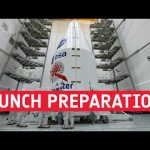
Solar Orbiter launch preparations
ESA’s Solar Orbiter satellite in a cleanroom at the Astrotech payload processing facility near Kennedy Space Centre, Florida. The spacecraft is seen being mounted onto the payload adaptor ring and encapsulated into a fairing, which will protect the satellite and the rocket upper stage during the turbulent ascent through Earth’s atmosphere.
Learn more about Solar Orbiter: http://bit.ly/ESASolarOrbiter
The video was created with support from Airbus/Astrotech/ULA/NASA
★ Subscribe: http://bit.ly/ESAsubscribe and click twice on the bell button to receive our notifications.
Check out our full video catalog: http://bit.ly/SpaceInVideos
Follow us on Twitter: http://bit.ly/ESAonTwitter
On Facebook: http://bit.ly/ESAonFacebook
On Instagram: http://bit.ly/ESAonInstagram
On Flickr: http://bit.ly/ESAonFlickrWe are Europe’s gateway to space. Our mission is to shape the development of Europe’s space capability and ensure that investment in space continues to deliver benefits to the citizens of Europe and the world. Check out http://www.esa.int/ESA to get up to speed on everything space related.
Copyright information about our videos is available here: http://www.esa.int/spaceinvideos/Terms_and_Conditions
#ESA
#SolarOrbiter
#WeAreAllSolarOrbiters -

Solar Orbiter operations simulations
ESA’s Solar Orbiter is getting ready for its launch on an Atlas V rocket provided by NASA and operated by United Launch Alliance from Cape Canaveral, Florida.
Once in space, and over the course of several years, the spacecraft will repeatedly use the gravity of Venus and Earth to raise its orbit above the poles of the Sun, providing new perspectives on our star, including the first images of the Sun’s polar regions.
All these operations will be controlled from the European Space Operations Centre (ESOC), Germany, where a dedicated team is currently working on simulations of the first moments in orbit, after separation from the launcher, but also all the delicate manoeuvres of the journey that will make Solar Orbiter mission possible.
Learn more Solar Orbiter: http://bit.ly/ESASolarOrbiter
★ Subscribe: http://bit.ly/ESAsubscribe and click twice on the bell button to receive our notifications.
Check out our full video catalog: http://bit.ly/SpaceInVideos
Follow us on Twitter: http://bit.ly/ESAonTwitter
On Facebook: http://bit.ly/ESAonFacebook
On Instagram: http://bit.ly/ESAonInstagram
On Flickr: http://bit.ly/ESAonFlickrWe are Europe’s gateway to space. Our mission is to shape the development of Europe’s space capability and ensure that investment in space continues to deliver benefits to the citizens of Europe and the world. Check out http://www.esa.int/ESA to get up to speed on everything space related.
Copyright information about our videos is available here: http://www.esa.int/spaceinvideos/Terms_and_Conditions
#ESA
#SolarOrbiter
#WeAreAllSolarOrbiters -
NASA Explorers S4 E2: The Scientists
Putting your life’s work on top of a rocket may seem like a daunting task, but that’s exactly what scientists have been doing for decades as they launch their research to the International Space Station.
This season on #NASAExplorers, we’re exploring why we send science to space, and what it takes to get it there. Spoiler alert: you don’t have to be a rocket scientist to conduct research in microgravity. This week, meet a team of researchers who are launching an experiment to space for the first time.
See more NASA Explorers season 4 bonus content here: https://go.nasa.gov/2FKavmn
Stay up to date with ISS Research on Twitter: https://twitter.com/ISS_Research
#S4E2 -
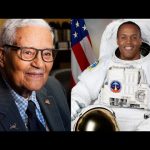
NASA Salutes Aviation and Space Excellence
Get a dose of #MorningMotivation from a 100-year-old Tuskegee Airman and one of our NASA Astronauts! 👨🏽🚀✈️
On Wednesday, Feb. 5 at 11:30 a.m. EST, retired Air Force Col. Charles McGee, who served during World War II, joins astronaut Alvin Drew, who logged more than 612 hours in space, to talk about their experiences and what it means to be a trailblazer. Tune in and be inspired to follow your dreams.
-

NASA Live: Earth Views from the Space Station
The High Definition Earth-Viewing (HDEV) experiment on the International Space Station has experienced a loss of data, and ground computers are no longer receiving communications from the payload. A team of engineers are reviewing the available health and status information from HDEV to identify what may have occurred. Additional updates will be published as they become available.
-
NASA Explorers S4 E1: Orbiting Laboratory
Things behave a bit differently aboard the International Space Station, thanks to microgravity.
Sure, floating looks like fun, but it could also unlock new scientific discoveries.
Microgravity makes the station the perfect place to perform research that is changing the lives of people on Earth, and preparing us to go deeper into space. This season on #NASAExplorers, we are following science into low-Earth orbit and seeing what it takes to do research aboard the space station.
See more NASA Explorers season 4 bonus content here: https://go.nasa.gov/2FKavmn
#S4E1
-
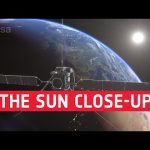
Solar Orbiter – the Sun close-up
ESA’s mission to the Sun, Solar Orbiter, is due for launch on an Atlas V 411 from Cape Canaveral, Florida on 9 February 23:03 EST / 04:03 GMT / 05:03 CET on 10 Feb.
Equipped with a suite of ten scientific instruments, Solar Orbiter will capture the first images of the Sun’s poles and make detailed observations of solar activity. Its specially designed heatshield is capable of enduring temperatures of more than 500ºC.Solar Orbiter is a space mission of international collaboration between ESA and NASA. The spacecraft has been developed by Airbus.
Learn more Solar Orbiter: http://bit.ly/ESASolarOrbiter
★ Subscribe: http://bit.ly/ESAsubscribe and click twice on the bell button to receive our notifications.
Check out our full video catalog: http://bit.ly/SpaceInVideos
Follow us on Twitter: http://bit.ly/ESAonTwitter
On Facebook: http://bit.ly/ESAonFacebook
On Instagram: http://bit.ly/ESAonInstagram
On Flickr: http://bit.ly/ESAonFlickrWe are Europe’s gateway to space. Our mission is to shape the development of Europe’s space capability and ensure that investment in space continues to deliver benefits to the citizens of Europe and the world. Check out http://www.esa.int/ESA to get up to speed on everything space related.
Copyright information about our videos is available here: http://www.esa.int/spaceinvideos/Terms_and_Conditions
#ESA
#SolarOrbiter
#WeAreAllSolarOrbiters -
NASA Explorers: Microgravity
The International Space Station, a laboratory like no other, offers something we can’t get on our home planet: Microgravity. Come along with #NASAExplorers as we follow a team of scientists during their journey to launch their research off our planet to the space station, and to see what microgravity may reveal. #S4E0
-

Grand tour of the International Space Station with Drew and Luca | Single take
ESA astronaut Luca Parmitano and NASA astronaut Drew Morgan take you on a unique tour of the International Space Station shot in one take with two cameras strapped together. Luca and Drew take it in turns to guide you through the modules and spacecraft docked to the orbital outpost.
Starting from the Soyuz MS-15 spacecraft that bought Drew to the Space Station, the duo show each module and spacecraft docked with the International Space Station at the time it was recorded around the New Year 2020. Passing colleagues include NASA astronaut Jessica Meir and Christina Koch exercising and Russian cosmonauts Alexander Skvortsov and Oleg Skripochka.
This is the first tour of the International Space Station with two astronauts presenting and the first done in a single take.
At the time of recording three supply vehicles were docked, the Russian Progress MS-13, Space-X’s Dragon-19 and Northrup Grumman’s Cygnus-12, as well as two astronaut vehicles the Soyuz MS-15 and Soyuz MS-13.
The map overlay graphic erroneously shows the future Nauka module instead of Pirs. The Russian Multipurpose Laboratory Module Nauka is planned for launch in the future and will replace Pirs, but we put it on the map already.
Skip to specific modules or features such as the toilets using the timestamps below:
00:00:06 Soyuz MS-15
00:04:53 Zvezda service module
00:08:01 Pirs
00:09:27 Mini Research Module-2 (MRM-2)
00:10:30 Soyuz MS-13
00:11:44 MRM-2
00:12:27 Progress
00:13:19 Functional Cargo Block (FGB)
00:07:12 Mini Research Module-1 (MRM-1)
00:19:36 Pressurised Mating Adapter
00:20:42 Node-1 Unity
00:22:46 Northrup Grumman Cygnus-12
00:27:32 Quest Airlock
00:29:27 Node-3 Tranquility
00:30:58 T2 Treadmill
00:31:17 Toilet
00:33:38 Cupola at night
00:34:11 Permanent Multipurpose Module Leonardo (PMM)
00:36:42 US laboratory Destiny
00:37:45 Robotics station for Canadarm2
00:38:40 Exercise bike
00:42:21 Node-2 Harmony
00:44:40 Space X Dragon
00:46:35 European laboratory Columbus
00:49:53 Japanese laboratory Kibo
00:56:17 Space Station fly through
01:00:43 Cupola daytime
01:04:27 Goodbye from Cupola★ Subscribe: http://bit.ly/ESAsubscribe and click twice on the bell button to receive our notifications.
Check out our full video catalog: http://bit.ly/SpaceInVideos
Follow us on Twitter: http://bit.ly/ESAonTwitter
On Facebook: http://bit.ly/ESAonFacebook
On Instagram: http://bit.ly/ESAonInstagram
On Flickr: http://bit.ly/ESAonFlickrWe are Europe’s gateway to space. Our mission is to shape the development of Europe’s space capability and ensure that investment in space continues to deliver benefits to the citizens of Europe and the world. Check out http://www.esa.int/ESA to get up to speed on everything space related.
Copyright information about our videos is available here: http://www.esa.int/spaceinvideos/Terms_and_Conditions
#ESA
#LucaParmitano
#InternationalSpaceStation -
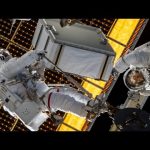
NASA Astronauts Spacewalk Outside the International Space Station on Jan. 20, 2020
On Monday, Jan. 20 starting at 6:50 a.m. EST, NASA astronauts Jessica Meir and Christina Koch will step outside of the International Space Station into the vacuum of space together. The duo will wrap up the work of installing new lithium-ion batteries to upgrade the orbiting lab’s power systems. The spacewalk is scheduled to last about six-and-a-half hours.
-
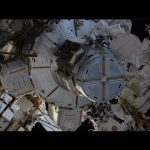
Battery Upgrades Resume Aboard the Space Station on This Week @NASA – January 18, 2020
Spacewalkers resume battery upgrades aboard the space station, a post-flight visit from a couple of recently returned space station astronauts, and a key piece of SLS hardware moves closer to a critical test series … a few of the stories to tell you about – This Week at NASA!
This video is available for download from NASA’s Image and Video Library: https://images.nasa.gov/details-NHQ_2019_0118_Battery%20Upgrades%20Resume%20Aboard%20the%20Space%20Station%20on%20This%20Week%20@NASA%20%E2%80%93%20January%2018,%202020
-

NASA Live: Earth Views from the Space Station
The High Definition Earth-Viewing (HDEV) experiment on the International Space Station has experienced a loss of data, and ground computers are no longer receiving communications from the payload. A team of engineers are reviewing the available health and status information from HDEV to identify what may have occurred. Additional updates will be published as they become available.
-
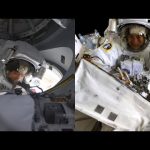
NASA Astronauts Spacewalk Outside the International Space Station on Jan. 15, 2020
On Wednesday, Jan. 15, NASA astronauts Jessica Meir and Christina Koch will step outside of the International Space Station into the vacuum of space together. The duo will replace old nickel-hydrogen batteries with newer, more powerful lithium-ion batteries to continue upgrading station power systems on the Port-6 truss structure. The spacewalk is scheduled to begin at 6:50 a.m. EST and last about six-and-a-half hours.