Tag: NASA

  • Brad Pitt Speaks with NASA Astronaut Nick Hague Aboard the International Space Station

    Brad Pitt Speaks with NASA Astronaut Nick Hague Aboard the International Space Station

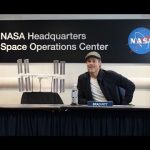
    “What’s a spacewalk like? What do you feel?” As NASA prepares to send the first woman and next man to the Moon by 2024 under the #Artemis program, Brad Pitt is playing an astronaut in his latest film, Ad Astra. On Sept. 16 from NASA Headquarters in Washington, the actor spoke to astronaut Nick Hague about what it’s truly like to live and work in space.

    Here are the questions that Brad Pitt asked Nick Hague?
    0:59 How did we do [in the movie]? How was our Zero-G?
    1:33 Do you know what everything is on the wall behind you?
    2:33 What are the repercussions on your body in Zero-G?
    2:38 How do you gauge your waking hours if you see 16 sunrises and sunsets each day?
    3:50 Is there a night shift?
    4:45 Could you see the Chandrayaan-2 Moon mission from the International Space Station?
    6:15 What are your current missions?
    8:02 What does spaceflight affect your mental state? How do you keep it at peace?
    9:25 What is your experience like as you look back on Earth?
    10:57 Who controls the jam box?
    11:49 How are you able to stay in a single space?
    12:53 How are you using 3D printing in space?
    14:33 What is a spacewalk like?
    16:18 Who is more believable playing an astronaut (George Clooney or Brad Pitt)?
  • Inside NASA’s Psyche Mission to Learn about Collisions and Crater Formation

    Inside NASA’s Psyche Mission to Learn about Collisions and Crater Formation

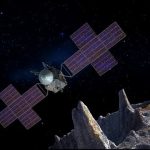
    One of the first steps in understanding the geology of Psyche is for the Psyche science team to find out more about collisions and crater formation on metallic asteroids. Join Psyche Mission Science Team Co-Investigator Simone Marchi of the Southwest Research Institute as he explains how impact experiments are conducted at NASA’s Ames Vertical Gun Range and what we can learn about the cratering process to further understand and interpret the geology of Psyche.

    Learn more about the mission: https://www.jpl.nasa.gov/missions/psyche/

  • An Exoplanet Discovery from Hubble on This Week @NASA – September 13, 2019

    An Exoplanet Discovery from Hubble on This Week @NASA – September 13, 2019

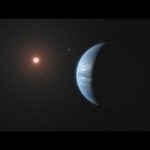
    Hubble makes an exoplanet discovery, the next space station crew gets ready to launch, and back to work in Florida after weathering the storm … a few of the stories to tell you about – This Week at NASA!

    This video is available for download from NASA’s Image and Video Library: https://images.nasa.gov/details-NHQ_2019_0913_An%20Exoplanet%20Discovery%20from%20Hubble%20on%20This%20Week%20@NASA%20%E2%80%93%20September%2013,%202019.html

  • Views of Hurricane Dorian from the International Space Station – September 6, 2019

    Views of Hurricane Dorian from the International Space Station – September 6, 2019

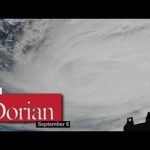
    Cameras outside the International Space Station captured views at 8:10 a.m. Eastern time September 6 of a weakening Hurricane Dorian from 260 miles in altitude as it churned just off the outer banks of North Carolina. In its 8 a.m. EDT advisory, the National Hurricane Center said category 1 Hurricane Dorian is moving toward the northeast near 14 mph with maximum sustained winds of 90 miles an hour. The general motion of Dorian, with an increase in forward speed, is expected through Saturday. On the forecast track, the center of Dorian will move near or over the coast of North Carolina during the next several hours. The center should move to the southeast of extreme southeastern New England tonight and Saturday morning, and then across Nova Scotia late Saturday or Saturday night.

    Dorian should remain a potent hurricane as it moves near or along the coast of North Carolina during the next several hours. Dorian is forecast to become a post-tropical cyclone with hurricane-force winds by Saturday night as it approaches Nova Scotia. Hurricane-force winds extend outward up to 45 miles from the center of the system and tropical-storm-force winds extend outward up to 220 miles.

    Download this video: https://images.nasa.gov/details-iss060m262491204_Expedition_60_Hurricane_Dorian_Flyover_09-06-19.html

    For the latest updates on Hurricane Dorian from NASA, visit: https://blogs.nasa.gov/hurricanes/tag/dorian-2019/

  • Keeping an eye on Hurricane Dorian from Space on This Week @NASA – September 6, 2019

    Keeping an eye on Hurricane Dorian from Space on This Week @NASA – September 6, 2019

    Keeping an eye on Hurricane Dorian, the next crew headed to the International Space Station, and a better understanding of Sun-driven space weather … a few of the stories to tell you about – This Week at NASA!

    This video is available for download from NASA’s Image and Video Library: https://images.nasa.gov/details-NHQ_2019_0906_Keeping%20an%20eye%20on%20Hurricane%20Dorian%20from%20Space%20on%20This%20Week%20@NASA%20%E2%80%93%20September%206,%202019.html

  • Views of Hurricane Dorian from the International Space Station – September 2, 2019

    Views of Hurricane Dorian from the International Space Station – September 2, 2019

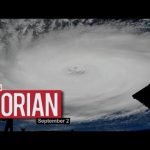
    Cameras outside the International Space Station captured views at 11:27 a.m. EDT on Sept. 2 of Hurricane Dorian from 260 miles in altitude as it churned over northwestern Bahamas. In its 11:00 a.m. EDT advisory, the National Hurricane Center said Dorian was almost stationary, moving toward the west at just 1 mile an hour just over 100 miles east of West Palm Beach, Florida, packing catastrophic sustained winds of 155 miles an hour. A slow westward to west-northwestward motion is forecast during the next day or so, followed by a gradual turn toward the northwest and north. On this track, the core of extremely dangerous Hurricane Dorian will continue to pound Grand Bahama Island through much of today and tonight. The hurricane will move dangerously close to the east coast of Florida tonight through Wednesday evening and dangerously close to the Georgia and South Carolina coasts Wednesday night and Thursday. Currently, Dorian is a category 4 hurricane on the Saffir-Simpson Hurricane Wind Scale. Although gradual weakening is forecast, Dorian is expected to remain a powerful hurricane during the next couple of days while moving on a possible track up the southeastern U.S. seaboard.

    Download this footage: https://images.nasa.gov/details-jsc2019m000806_Hurricane_Dorian_190902.html

    For the latest updates on Hurricane Dorian from NASA, visit: https://blogs.nasa.gov/hurricanes/tag/dorian-2019/

  • Views of Hurricane Dorian from the International Space Station – September 1, 2019

    Views of Hurricane Dorian from the International Space Station – September 1, 2019

    Cameras outside the International Space Station captured views September 1 of Hurricane Dorian from 260 miles in altitude at 12:16 p.m. Eastern time as it churned over the Atlantic Ocean over the northern Bahamas. The storm, which is moving in a westerly direction with sustained winds of 180 miles an hour, is a dangerous Category 5 hurricane, carrying the strongest winds in recorded history for the northwestern Bahamas. The National Hurricane Center said in its 11 a.m. EDT advisory that Dorian is inflicting catastrophic damage to the Abacos and Grand Bahama Islands. Dorian is forecast to approach the east coast of Florida before taking a possible track up the southeastern U.S. seaboard later this week.

    Download this video: https://images.nasa.gov/details-jsc2019m000805_Hurricane_Dorian_190901.html

    For the latest updates on Hurricane Dorian from NASA, visit: https://blogs.nasa.gov/hurricanes/tag/dorian-2019/

  • Views of Hurricane Dorian from the International Space Station – August 30, 2019

    Views of Hurricane Dorian from the International Space Station – August 30, 2019

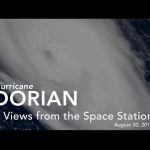
    Cameras outside the International Space Station captured views August 30 of rapidly intensifying Hurricane Dorian at 12:18 p.m. Eastern time as it churned over the Atlantic Ocean. The storm, which is moving to the northwest, is forecast by the National Hurricane Center to approach the east coast of Florida Monday evening as a likely category 4 hurricane.

    To download this video, visit https://images.nasa.gov/details-jsc2019m000803_Hurricane_Dorian_190830.html

    For the latest updates on orbital views of Hurricane Dorian from NASA, visit: https://blogs.nasa.gov/hurricanes/tag/dorian-2019/

  • Celebrating Contributions by Women to Space Exploration on This Week @NASA – August 30, 2019

    Celebrating Contributions by Women to Space Exploration on This Week @NASA – August 30, 2019

    Celebrating contributions by women to space exploration, a spotlight on the leading role of women in our Artemis program, and views from the space station of Hurricane Dorian … a few of the stories to tell you about – This Week at NASA!

    This video is available for download from NASA’s Image and Video Library: https://images.nasa.gov/details-NHQ_2019_0830_Celebrating%20Contributions%20by%20Women%20to%20Space%20Exploration%20on%20This%20Week%20@NASA%20%E2%80%93%20August%2030,%202019.html

  • NASA in Silicon Valley Live: Space Robots

    NASA in Silicon Valley Live: Space Robots

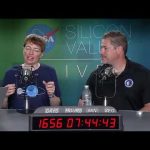
    Robots + astronauts = a match made in space exploration 🤖👩‍🚀! Join us at 7 p.m. EDT for a new episode of NASA in Silicon Valley Live to hear our experts explain how we design & build robots to work with humans in space:

  • NASA Honors Space Mathematician Katherine Johnson on her 101st Birthday

    NASA Honors Space Mathematician Katherine Johnson on her 101st Birthday

    Aug. 26, 2019 marks the 101st birthday of no longer hidden figure Katherine Johnson. With slide rules and pencils, Katherine, a legendary NASA mathematician – and the other human computers who worked at the agency – helped our nation’s space program get off the ground, but it was their confidence, bravery and commitment to excellence that broke down racial and social barriers that continue to inspire to this day. To learn more about Katherine and other trailblazing ‘human computers,’ visit: https://www.nasa.gov/modernfigures

  • Space Pioneers Celebrated by NASA on Women’s Equality Day

    Space Pioneers Celebrated by NASA on Women’s Equality Day

    NASA joins organizations across the world to celebrate Women’s Equality Day on August 26.

    The date was selected to celebrate the Women’s Suffrage Movement’s greatest victory—women’s achievement of full voting rights following the ratification of the 19th Amendment to the U.S. Constitution in 1920. The Women’s Equality Day observance not only commemorates the passage of the 19th Amendment, but also represents women’s continuing efforts toward full equality. Learn about women at NASA by visiting: https://women.nasa.gov/

  • A Parking Spot for Future Commercial Flights to the Space Station on This Week @NASA–August 23, 2019

    A Parking Spot for Future Commercial Flights to the Space Station on This Week @NASA–August 23, 2019

    A new parking spot for future flights to the International Space Station, the sixth meeting of the National Space Council, and work in Ohio on our Moon to Mars effort … a few of the stories to tell you about – This Week at NASA!

    This video is available for download from NASA’s Image and Video Library: https://images.nasa.gov/details-NHQ_2019_0823_A%20Parking%20Spot%20for%20Future%20Commercial%20Flights%20to%20the%20Space%20Station%20on%20This%20Week%20@NASA%20%E2%80%93%20August%2023,%202019.html

  • Marshall to Lead Human Landing System Development on This Week @NASA – August 16, 2019

    Marshall to Lead Human Landing System Development on This Week @NASA – August 16, 2019

    An update on development of a human lunar landing system, the final four sites selected for our first asteroid sample return mission, and our Parker Solar Probe prepares for another close encounter … a few of the stories to tell you about – This Week at NASA!

    This video is available for download from NASA’s Image and Video Library: https://images.nasa.gov/details-NHQ_2019_0816_Marshall%20to%20Lead%20Human%20Landing%20System%20Development%20on%20This%20Week%20@NASA%20%E2%80%93%20August%2016,%202019.html

  • Testing Orion’s “Powerhouse” on This Week @NASA – August 9, 2019

    Testing Orion’s “Powerhouse” on This Week @NASA – August 9, 2019

    A critical test of the “powerhouse” for our Orion spacecraft, Curiosity is still going strong after seven Earth years on Mars, and Hubble’s new portrait of Jupiter … a few of the stories to tell you about – This Week at NASA!

    This video is available for download from NASA’s Image and Video Library: https://images.nasa.gov/details-NHQ_2019_0809_Testing%20Orion%E2%80%99s%20%E2%80%9CPowerhouse%E2%80%9D%20on%20This%20Week%20@NASA%20-%20August%209,%202019.html

  • A New Opportunity to Deliver Payloads to the Moon on This Week @NASA – August 2, 2019

    A New Opportunity to Deliver Payloads to the Moon on This Week @NASA – August 2, 2019

    The latest opportunity for payload delivery services to the Moon, new partnerships to help advance the commercial space business, and a “hat trick” for one of our planet-hunting spacecraft … a few of the stories to tell you about – This Week at NASA!

    This video is available for download from NASA’s Image and Video Library: https://images.nasa.gov/details-NHQ_2019_0802_A%20New%20Opportunity%20to%20Deliver%20Payloads%20to%20the%20Moon%20on%20This%20Week%20@NASA%20%E2%80%93%20August%202,%202019.html

  • NASA Explorers: Apollo Story Roundup

    NASA Explorers: Apollo Story Roundup

    Throughout the series, you heard memories of the first Moon landing from people all over the world. In this bonus episode, we share a few more stories: a trip to Rome, a girl with binoculars and a reel-to-reel tape recorder.

    You can find the series, soundtrack, artwork, and more here: https://www.nasa.gov/nasa-explorers-apollo

    Join the NASA Explorers community on Facebook: https://www.facebook.com/NASAExplorersSeries/

    Credit: NASA’s Goddard Space Flight Center

    Elizabeth Tammi (GSFC Interns): Producer
    Katie Atkinson (GSFC Interns): Narrator
    Katie Atkinson (GSFC Interns): Producer
    Haley Reed (ADNET): Producer
    Micheala Sosby (NASA/GSFC): Producer
    Aaron E. Lepsch (ADNET): Technical Support

    Music by Lee Rosevere and Daniel Wytanis

    This video is public domain and along with other supporting visualizations can be downloaded from the Scientific Visualization Studio at: https://svs.gsfc.nasa.gov/13204

  • NASA Explorers: Moon Detective

    NASA Explorers: Moon Detective

    What happened to the lost data from the Apollo era? Get to know the “data detectives” who are tracking it down. The science experiments the Apollo astronauts conducted from the surface of the Moon provide a long-term data record that’s crucial to understanding our Moon as a complete system. Today’s scientists are looking forward to future human exploration of the Moon and the discoveries to follow.
    Ketan from Sugarland, Texas, tells us about his childhood in Mumbai, India, and how his father made sure his children got a firsthand look at the Moon landing.

    You can find the series, soundtrack, artwork, and more here: https://www.nasa.gov/nasa-explorers-apollo

    Join the NASA Explorers community on Facebook: https://www.facebook.com/NASAExplorersSeries/

    Credit: NASA’s Goddard Space Flight Center

    Katie Atkinson (GSFC Interns): Narrator
    Katie Atkinson (GSFC Interns): Producer
    Haley Reed (ADNET): Producer
    Micheala Sosby (NASA/GSFC): Producer
    Aaron E. Lepsch (ADNET): Technical Support

    Music by Lee Rosevere and Daniel Wytanis

    This video is public domain and along with other supporting visualizations can be downloaded from the Scientific Visualization Studio at: https://svs.gsfc.nasa.gov/13204

  • NASA Explorers: Moon Girl

    NASA Explorers: Moon Girl

    Meet the scientists who are making big discoveries by studying some very tiny rocks. The women of NASA’s Mid-Atlantic Noble Gas Research Laboratory (MNGRL) are getting ready to analyze never-before-seen Moon samples. These samples, collected by Apollo astronauts and brought back to Earth, have been carefully preserved for half a century so they could be studied by future generations of scientists.

    Sophie, a 13-year-old from Athens, Greece, shares how lunar exploration inspires her to become an astrophysicist.

    You can find the series, soundtrack, artwork, and more here: https://www.nasa.gov/nasa-explorers-apollo

    Join the NASA Explorers community on Facebook: https://www.facebook.com/NASAExplorersSeries/

    Credit: NASA’s Goddard Space Flight Center

    Katie Atkinson (GSFC Interns): Narrator
    Katie Atkinson (GSFC Interns): Producer
    Haley Reed (ADNET): Producer
    Micheala Sosby (NASA/GSFC): Producer
    Aaron E. Lepsch (ADNET): Technical Support

    Music by Lee Rosevere and Daniel Wytanis

    This video is public domain and along with other supporting visualizations can be downloaded from the Scientific Visualization Studio at: https://svs.gsfc.nasa.gov/13204

  • NASA Explorers: The Family Moon Business

    NASA Explorers: The Family Moon Business

    Lunar exploration runs in the family for the Petros. NASA lunar scientist Noah Petro interviews his father, Denis, about his work as an Apollo program engineer. In a heartfelt conversation, Noah and his dad examine the human impact of the momentous Apollo 11 mission and their shared passion for science and learning.

    Ginny from Danville, Kentucky, tells a story about celebrating the Moon landing with her childhood friends and a secret lemonade stand.

    You can find the series, soundtrack, artwork, and more here: https://www.nasa.gov/nasa-explorers-apollo

    Join the NASA Explorers community on Facebook: https://www.facebook.com/NASAExplorersSeries/

    Credit: NASA’s Goddard Space Flight Center

    Katie Atkinson (GSFC Interns): Narrator
    Katie Atkinson (GSFC Interns): Producer
    Haley Reed (ADNET): Producer
    Micheala Sosby (NASA/GSFC): Producer
    Aaron E. Lepsch (ADNET): Technical Support

    Music by Lee Rosevere and Daniel Wytanis

    This video is public domain and along with other supporting visualizations can be downloaded from the Scientific Visualization Studio at: https://svs.gsfc.nasa.gov/13204

  • Apollo 11: Celebrating NASA’s Historic Moon Landing

    Apollo 11: Celebrating NASA’s Historic Moon Landing

    The primary objective of Apollo 11 was to complete a national goal set by President John F. Kennedy on May 25, 1961: perform a crewed lunar landing and return to Earth. The success of the mission was celebrated globally and united all humankind. This video shows the parades that celebrated the successful return of Neil Armstrong, Michael Collins and Buzz Aldrin.

    For more information on the Apollo Program, visit https://www.nasa.gov/specials/apollo50th/

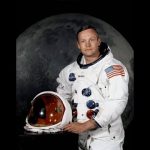
  • Apollo 11: Neil Armstrong’s Reflections on NASA’s Mission to Land on the Moon

    Apollo 11: Neil Armstrong’s Reflections on NASA’s Mission to Land on the Moon

    Neil A. Armstrong, commander of the Apollo 11 mission to land on the Moon, reflects on the successful mission and his experience in lunar exploration.

    For more information on the Apollo Program, visit https://www.nasa.gov/specials/apollo50th/

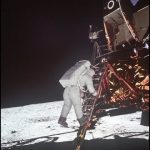
  • Apollo 11: One Small Step on the Moon for All Mankind

    Apollo 11: One Small Step on the Moon for All Mankind

    Neil Armstrong and Buzz Aldrin spent more than two hours outside their spacecraft on the Moon. They studied the surface. They collected rocks. After almost a day, they blasted off. They docked with Michael Collins in orbit around the Moon.

    For more information on their voyage to the Moon and one small step on the lunar surface for all of mankind, visit https://www.nasa.gov/specials/apollo50th/

  • Apollo 11: Landing on the Moon

    Apollo 11: Landing on the Moon

    On July 20, 1969, humans walked on another world for the first time in history, achieving the goal that President John F. Kennedy had set in 1961, before Americans had even orbited the Earth. After a landing that included dodging a lunar crater and boulder field just before touchdown, Apollo 11 astronauts Neil Armstrong and Buzz Aldrin explored the area around their lunar landing site for more than two hours.

    When the lunar module landed at 4:17 p.m EDT, only 30 seconds of fuel remained. Armstrong radioed “Houston, Tranquility Base here. The Eagle has landed.” Mission control erupted in celebration as the tension breaks, and a controller tells the crew “You got a bunch of guys about to turn blue, we’re breathing again.”

    For more information on the Apollo Program, visit https://www.nasa.gov/specials/apollo50th/

  • Seeking Landers to Return Humans to the Moon on This Week @NASA – July 26, 2019

    Seeking Landers to Return Humans to the Moon on This Week @NASA – July 26, 2019

    Seeking ideas for landing systems to return humans to the Moon, showcasing our aeronautics research efforts, and the science connection to Apollo 11’s splashdown … a few of the stories to tell you about – This Week at NASA!

    This video is available for download from NASA’s Image and Video Library: https://images.nasa.gov/details-NHQ_2019_0726_Seeking%20Landers%20to%20Return%20Humans%20to%20the%20Moon%20on%20This%20Week%20@NASA%20%E2%80%93%20July%2026,%202019.html

  • NASA in Silicon Valley Live: How to Get an Internship at NASA

    NASA in Silicon Valley Live: How to Get an Internship at NASA

    Ever wanted to intern at NASA? Join us today on #NationalInternDay for a new episode of NASA in Silicon Valley Live and learn how to get an internship at NASA. Watch as experts answer questions and hear from current interns. Tune in at 7pm ET:

  • NASA Remembers Legendary Flight Director Chris Kraft

    NASA Remembers Legendary Flight Director Chris Kraft

    Christopher C. Kraft, Jr., who died July 22, 2019, created the concept of NASA’s Mission Control and developed its organization, operational procedures and culture, then made it a critical element of the success of the nation’s human spaceflight programs.

    “America has truly lost a national treasure today with the passing of one of NASA’s earliest pioneers – flight director Chris Kraft,” NASA Administrator Jim Bridenstine said in a statement. “We send our deepest condolences to the Kraft family.”

    This video is available for download from NASA’s Image and Video Library: https://images.nasa.gov/details-NHQ_2019_0722_NASA%20Remembers%20Legendary%20Flight%20Director%20Chris%20Kraft.html

  • Celebrating the 50th anniversary of Apollo 11 on This Week @NASA – July 22, 2019

    Celebrating the 50th anniversary of Apollo 11 on This Week @NASA – July 22, 2019

    Celebrating the 50th anniversary of Apollo 11, moving toward the first flight of our Artemis Program, and a new crew to the space station on an historic date for humans in space … a few of the stories to tell you about – This Week at NASA!

    This video is available for download from NASA’s Image and Video Library: https://images.nasa.gov/details-NHQ_2019_0722_Celebrating%20the%2050th%20anniversary%20of%20Apollo%2011%20on%20This%20Week%20@NASA%20%E2%80%93%20July%2022,%202019.html

  • We Go as the Artemis Generation

    We Go as the Artemis Generation

    We Go: To the Moon and on to Mars. Our generation, the Artemis generation, will explore farther than we’ve ever gone before. The Artemis program will send the first woman and next man to walk on the surface of the Moon and build a sustainable base to prepare for missions to Mars and beyond.

  • NASA in Silicon Valley Live: Apollo 50th Anniversary Preview

    NASA in Silicon Valley Live: Apollo 50th Anniversary Preview

    #Apollo50th: Let’s talk about it! 🚀 Join us for an episode of NASA in Silicon Valley Live where we’ll discuss #Apollo11, the people who contributed to the mission and its impact on humanity. Tune in starting at 7 p.m. EDT:

  • The Moon camera

    The Moon camera

    Which camera to send to the Moon? The iconic images taken with the Hasselblad 500 series captivated the world. Today, Hasselblad cameras are synonymous with the Apollo missions. We visited Gothenburg to find out how a Swedish camera made it to the Moon.

    Learn more: http://bit.ly/BuzzAldrinAndTheEagle

    ★ Subscribe: http://bit.ly/ESAsubscribe and click twice on the bell button to receive our notifications.

    Check out our full video catalog: http://bit.ly/SpaceInVideos
    Follow us on Twitter: http://bit.ly/ESAonTwitter
    On Facebook: http://bit.ly/ESAonFacebook
    On Instagram: http://bit.ly/ESAonInstagram
    On Flickr: http://bit.ly/ESAonFlickr

    We are Europe’s gateway to space. Our mission is to shape the development of Europe’s space capability and ensure that investment in space continues to deliver benefits to the citizens of Europe and the world. Check out http://www.esa.int/ESA to get up to speed on everything space related.

    Copyright information about our videos is available here: http://www.esa.int/spaceinvideos/Terms_and_Conditions

    #ESA
    #Apollo
    #Hasselblad

  • Mission Control at NASA Johnson Space Center: History and Restoration

    Mission Control at NASA Johnson Space Center: History and Restoration

    “This is Mission Control, Houston.” From this legendary room, America conducted some of its most amazing space missions. This video montage captures the significance of the Historic Mission Control Center at the NASA Johnson Space Center, which has undergone a massive restoration to bring the room back to life as it appeared during the Apollo era. Historians and technicians have made every effort to ensure historical accuracy and to preserve this room for future generations. As NASA looks to send humans deeper into space than ever before with the Artemis Program, Historic Mission Control will serve as a reminder that anything is possible.
    News release: https://go.nasa.gov/30eykLm
    Download this video: https://images.nasa.gov/details-jsc2019m000564_HistoricMissionControl_FB_MP4.html

  • NASA Astronauts Celebrate the 50th Anniversary of the Moon Landing On Board the Space Station

    NASA Astronauts Celebrate the 50th Anniversary of the Moon Landing On Board the Space Station

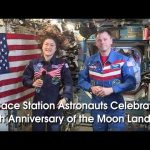
    NASA Astronauts Christina Koch and Nick Hague join the world in celebrating the 50th anniversary of the Apollo 11 Moon landing — only, they do it from around 250 miles (~400 km) above the Earth’s surface on board the International Space Station.

    The accomplishments of the Apollo program did not only take humans farther than ever before, but they have prepared us to take humans even farther. Learn more about our plans to bring humans to the Moon, Mars and beyond with our Artemis program: https://www.nasa.gov/specials/moon2mars/

  • A Virtual Glimpse into our Artemis 1 Mission on This Week @NASA – July 12, 2019

    A Virtual Glimpse into our Artemis 1 Mission on This Week @NASA – July 12, 2019

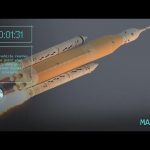
    A virtual glimpse into our Artemis 1 mission, a key piece of hardware arrives for our Orion spacecraft, and a testing milestone for our Space Launch System rocket.

    This video is available for download from NASA’s Image and Video Library: https://images.nasa.gov/details-NHQ_2019_0712_A%20Virtual%20Glimpse%20into%20our%20Artemis%201%20Mission%20on%20This%20Week%20@NASA%20%E2%80%93%20July%2012,%202019.html

  • A Successful Milestone Test for Our Artemis Program on This Week @NASA – July 5, 2019

    A Successful Milestone Test for Our Artemis Program on This Week @NASA – July 5, 2019

    A milestone test for our Artemis Program, an update on our Commercial Lunar Payload Services project, and more honors for a NASA icon … a few of the stories to tell you about – This Week at NASA!

    This video is available for download from NASA’s Image and Video Library: https://images.nasa.gov/details-NHQ_2019_0705_A%20Successful%20Milestone%20Test%20for%20Our%20Artemis%20Program%20on%20This%20Week%20@NASA%20%E2%80%93%20July%205,%202019.html

  • Happy 4th of July from the Space Station Crew

    Happy 4th of July from the Space Station Crew

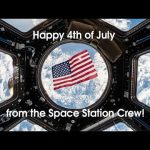
    Aboard the International Space Station, Expedition 60 Flight Engineers Nick Hague and Christina Koch of NASA honored America’s 243rd birthday by wishing Americans at home and around the world a happy 4th of July.

    Learn more about the research on board our orbiting laboratory: https://www.nasa.gov/mission_pages/station/main/index.html

  • Launch of Orion Spacecraft Ascent Abort-2 Test

    Launch of Orion Spacecraft Ascent Abort-2 Test

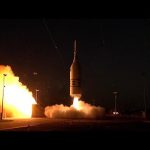
    Watch a fully functional launch abort system (LAS) and test Orion spacecraft launch to an altitude of 31,000 feet at Mach 1.15 (more than 1,000 mph)! On July 2, 2019, NASA successfully demonstrated the Orion spacecraft’s launch abort system can outrun a speeding rocket and pull astronauts to safety during an emergency during launch. News release: https://go.nasa.gov/2Xg7mkJ Orion was launched atop a Northrop Grumman provided booster from Launch Pad 46 at Cape Canaveral Air Force Station in Florida. The test is another milestone in the agency’s preparation for Artemis missions to the Moon that will lead to astronaut missions to Mars.

  • NASA in Silicon Valley Live: Moon 2024

    NASA in Silicon Valley Live: Moon 2024

    Our greatest adventures remain ahead of us as our #Artemis program will send the first woman and next man to the Moon in five years! Join us at 6 p.m. EDT for a new episode of NASA in Silicon Valley Live to learn about our plans to explore the lunar surface and eventually send humans to Mars.

  • NASA Explorers: Giant Leaps

    NASA Explorers: Giant Leaps

    What does a half-century of lunar science sound like? Join Moon data expert Ernie Wright on a musical time-traveling journey through the Apollo program and the exploration era of today. We explore what we knew about the Moon before Apollo, what we discovered because of it and the mysteries today’s scientists are working to solve.

    Elena, from Nantes, France, shares her memory of watching the Apollo 11 landing from a friend’s house in Seattle.

    You can find the series, soundtrack, artwork, and more here: https://www.nasa.gov/nasa-explorers-apollo

    Join the NASA Explorers community on Facebook: https://www.facebook.com/NASAExplorersSeries/

    Credit: NASA’s Goddard Space Flight Center

    Katie Atkinson (GSFC Interns): Narrator
    Katie Atkinson (GSFC Interns): Producer
    Haley Reed (ADNET): Producer
    Micheala Sosby (NASA/GSFC): Producer
    Aaron E. Lepsch (ADNET): Technical Support

    Data sonification by SYSTEM Sounds/Matt Russo and Andrew Santaguida
    Music by Lee Rosevere and Daniel Wyantis

    This video is public domain and along with other supporting visualizations can be downloaded from the Scientific Visualization Studio at: https://svs.gsfc.nasa.gov/13204

  • Introducing NASA Explorers: Apollo, an Audio Series

    Introducing NASA Explorers: Apollo, an Audio Series

    NASA Explorers: Apollo is an audio series that tells stories of the Moon and the people who explore it. During the Apollo program, the Moon became a part of the human domain. Twelve astronauts walked on the lunar surface, conducted research there and collected Moon rocks to bring back to Earth for study. Fifty years after humanity’s first steps on the Moon, today’s lunar scientists are searching for answers to the big questions: How did the Moon form? How did our solar system evolve? Did the Moon help life on Earth get its start?

    Meet a Moon detective, scientists who study space rocks and people from all over the world whose lives were shaped by the epic adventures of the Apollo program. You can listen to NASA Explorers: Apollo on Apple Podcasts, SoundCloud, Google Play and Facebook Watch.

    You can find the series, soundtrack, artwork, and more here: https://www.nasa.gov/nasa-explorers-apollo

    Join the NASA Explorers community on Facebook: https://www.facebook.com/NASAExplorersSeries/

    Credit: NASA’s Goddard Space Flight Center

    Kaliah Hobbs (GSFC Interns): Lead Producer
    Haley Reed (ADNET): Lead Producer
    Katie Atkinson (GSFC Interns): Narrator
    Katie Atkinson (GSFC Interns): Producer
    Micheala Sosby (NASA/GSFC): Producer
    Aaron E. Lepsch (ADNET): Technical Support

    Music credits: “Tycho’s Daydream” by Daniel Wyantis

    This video is public domain and along with other supporting visualizations can be downloaded from the Scientific Visualization Studio at: https://svs.gsfc.nasa.gov/13204