Tag: NASA

  • Media Briefed on New NASA Hurricane Mission

    Media Briefed on New NASA Hurricane Mission

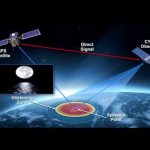
    NASA held a media briefing on Nov. 10 at the agency’s headquarters to discuss the upcoming Cyclone Global Navigation Satellite System (CYGNSS) mission. GYGNSS is a constellation of eight microsatellites that will gather never-before-seen details on the formation and intensity of tropical cyclones and hurricanes.

    CYGNSS, targeted for a Dec. 12 launch from Cape Canaveral Air Force Station in Florida, is the first mission competitively selected by NASA’s Earth Venture program. This program focuses on low-cost, science-driven missions to enhance our understanding of the current state of Earth and its complex, dynamic system and enable continual improvement in the prediction of future changes.

  • Humanity’s Eye into the Universe on This Week @NASA – November 4, 2016

    Humanity’s Eye into the Universe on This Week @NASA – November 4, 2016

    During a Nov. 2 media event at NASA’s Goddard Space Flight Center, Administrator Charlie Bolden was joined by Goddard Center Director Chris Scolese and Senior Project Scientist, Dr. John Mather for an update on the James Webb Space Telescope, including a rare glimpse at the telescope’s primary mirror. Engineers and technicians recently completed a “Center of Curvature” test on the mirror, which measures the shape of the mirror. This is the first important optical measurement before the mirror goes into the testing chambers. Meanwhile, the telescope’s sunshield layers also have been finished. This will protect Webb’s sensitive instruments from the sun when the telescope is in space. The Webb Telescope, which is targeted for launch in 2018, will study every phase in the history of our universe, including the cosmos’ first luminous glows, the formation of planetary systems capable of supporting life, and the evolution of our own solar system. Also, Expedition 49 Returns Safely from the International Space Station, Next Space Station Crew Travels to Launch Site, Agency Innovation Mission Day, SDO Captures Lunar Transit, and World Altitude Record for MMS!

  • Women @NASA: Amy Mainzer

    Women @NASA: Amy Mainzer

    Amy Mainzer is a senior research scientist at NASA’s Jet Propulsion Laboratory. She served as deputy project scientist for NASA’s Wide-field Infrared Survey Explorer mission, an Earth-orbiting telescope designed to survey the entire sky in heat-sensitive infrared wavelengths. Following successful completion of its prime mission, this telescope was renamed NEOWISE and given a new mission to characterize asteroids and comets; Mainzer is the principal investigator. She also is the principal investigator of the proposed Near-Earth Object Camera mission, which would carry out a comprehensive survey of asteroids and comets using a dedicated space telescope surveying the solar system from a vantage point beyond the Earth’s Moon.

  • Women @NASA

    Women @NASA

    Producer Kathleen Kennedy and actor Daisy Ridley took a pause on the set of Star Wars: Episode VIII, to talk about the amazing women that work at NASA.

    For more information visit:
    https://women.nasa.gov

  • NASA Updates Status of Mission to Jupiter

    NASA Updates Status of Mission to Jupiter

    Team members of NASA’s Juno mission to Jupiter discussed the latest science results, an amateur imaging processing campaign, and the recent decision to postpone a scheduled burn of the spacecraft’s main engine, during a media briefing on Oct. 19. The agency’s Juno spacecraft entered orbit around Jupiter on July 4. On Aug. 27, it performed its first close flyby of the planet. It was the first time Juno had its entire suite of science instruments activated and observing the planet as the spacecraft zoomed past.

  • Orbital ATK Launches to ISS from NASA’s Wallops Flight Facility

    Orbital ATK Launches to ISS from NASA’s Wallops Flight Facility

    On Oct. 17, Orbital ATK launched its Cygnus cargo spacecraft atop an Antares rocket to the International Space Station. The spacecraft launched from the Mid-Atlantic Regional Spaceport at NASA’s Wallops Flight Facility in Virginia. This is the sixth cargo mission to the International Space Station for Orbital ATK.

  • Making Human Settlement of Space a Reality on This Week @NASA – October 14, 2016

    Making Human Settlement of Space a Reality on This Week @NASA – October 14, 2016

    An Oct. 11 opinion article written by President Barack Obama and published by CNN, outlined a vision for the future of space exploration. In it, the president echoed the words in his 2015 State of the Union address about the importance of sending humans on a roundtrip mission to Mars by the 2030s, and developing technology to help us stay on the Red Planet for an extended time. That same day in a blog post, NASA Administrator Charlie Bolden and John Holdren, assistant to the President for Science and Technology, discussed two NASA initiatives that build on the president’s vision and use public-private partnerships to enable humans to live and work in space in a sustainable way. The first was the selection of six companies to develop habitation systems as part of the agency’s Next Space Technologies for Exploration Partnerships or “NextSTEP” program, designed to lay the groundwork for deep space missions. And this fall as part of the second initiative, NASA will start the process of providing companies with a potential opportunity to add their own modules and other capabilities to the International Space Station. The move is in-line with NASA’s plan to support and foster the growing community of scientists and entrepreneurs conducting research and growing businesses in space. Also, White House Frontiers Conference, Kennedy Reopens After Hurricane Matthew, Orion Service Module Vibration Tests, SLS Liquid Hydrogen Fuel Tank Completed, and Aviation Safety Reporting System Turns 40!

  • Aspira con NASA/Aspire with NASA

    Aspira con NASA/Aspire with NASA

    In recognition of Hispanic Heritage Month NASA hosted an event at the agency’s headquarters in Washington Tuesday, Oct. 4, called Aspira con NASA (Aspire with NASA). The event featured a video message from NASA Administrator Charles Bolden as well as presentations from guest speakers Diana Trujillo, mission lead for Mars Curiosity Rover, and former NASA astronaut José Hernández. Each shared stories of aspiration, inspiration and exploration.

  • NASA Hispanic Heritage Month Employee Profile –  Claudia Herrera – Armstrong Flight Research Center

    NASA Hispanic Heritage Month Employee Profile – Claudia Herrera – Armstrong Flight Research Center

    Claudia Herrera has been with NASA Armstrong Flight Research Center since January of 2005, and works as a Structural Dynamics engineer. Claudia is involved in the life cycle phase of flight‑test projects that take finite element models to flight‑test validation, participating in both the analytical and ground and flight test aspects of model correlation and verification.

  • Asteroid Redirect Mission Briefing on This Week @NASA – September 19, 2016

    Asteroid Redirect Mission Briefing on This Week @NASA – September 19, 2016

    On Sept. 14, officials from the White House and NASA discussed the space agency’s Asteroid Redirect Mission (ARM) during a televised event at NASA’s Goddard Space Flight Center. On the mission, which is targeted for launch in Dec. 2021, NASA plans to send a robotic spacecraft to an asteroid tens of millions of miles from Earth, capture a multi-ton boulder, and bring it to an orbit near the moon for future exploration by astronauts on a following mission aboard NASA’s Orion spacecraft. During the live discussion, John Holdren, assistant to President Obama for Science and Technology, NASA Administrator Charles Bolden and ARM Program Director Michele Gates highlighted the mission’s scientific and technological benefits, how the mission will support NASA’s goal of sending humans to Mars in the 2030s, and how it will demonstrate technology relevant to defending Earth from potentially hazardous asteroids. Also, Astronaut Tim Kopra Visits DC Area, The Warmest August in 136 Years, and 2016 Arctic Sea Ice Minimum Ties 2nd Lowest on Record!

  • NASA Astronaut Talks with Cancer Patients about Cancer Research on the International Space Station

    NASA Astronaut Talks with Cancer Patients about Cancer Research on the International Space Station

    Aboard the International Space Station, Expedition 49 Flight Engineer Kate Rubins of NASA discussed research aboard the orbital laboratory with patients from the MD Anderson Cancer Center in Houston and center officials visiting mission control during an in-flight event Sept. 16. Rubins wore a suit flown to the station that she helped to fabricate pre-flight, illustrating the need for a heightened awareness of cancer research.

  • NASA Hispanic Heritage Month Employee Profile – Scarlin Hernandez – JWST Spacecraft Engineer (STScI)

    NASA Hispanic Heritage Month Employee Profile – Scarlin Hernandez – JWST Spacecraft Engineer (STScI)

    Scarlin Hernandez is a Spacecraft Engineer for the James Webb Space Telescope at the Space Telescope Science Institute in Baltimore, MD.  She tests and verifies the ground systems that will be used to command and control the telescope once it’s in space. The telescope will be used to discover new planets and the first stars after the dark ages.  The National Science Foundation awarded her a full college scholarship to the Capitol Technology University (CTU) in Laurel, MD.  Scarlin completed a internship at NASA’s Goddard Space Flight Center, and by the age of 20, she was part of the ground control system team for the Tropical Rainfall Measuring Mission (TRMM) satellite.  In 2013, she earned a Bachelor’s degree in Computer Engineering, but she found her real niche in Astronautical Engineering.  After graduation, Scarlin was the mission planning lead for the TRMM mission before transferring to work on the James Webb Space Telescope mission.

  • Record Breaking NASA Astronaut Discusses His Recent Mission

    Record Breaking NASA Astronaut Discusses His Recent Mission

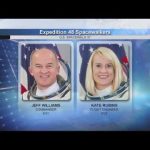
    During a live satellite interview Sept. 14 on NASA TV, astronaut and Expedition 48 Commander Jeff Williams spoke about his recent record-breaking mission aboard the International Space Station.

    Williams and Russian crewmates Alexey Ovchinin and Oleg Skripochka, of the Russian space agency Roscosmos, returned to Earth Sept. 6 in Kazakhstan (7:13 a.m. Sept. 7, Kazakhstan time) to wrap up a 172 day mission aboard the station. Williams now has spent 534 days in space, making him first on the all-time NASA astronaut list. During the mission, Williams was instrumental in preparing the station for the future arrival of U.S. commercial crew spacecraft. The first International Docking Adapter was installed during a spacewalk by Williams and fellow NASA astronaut Kate Rubins Aug. 19. Outfitted with a host of sensors and systems, the adapter’s main purpose is to connect spacecraft bringing astronauts to the station in the future. Its first users are expected to be Boeing’s CST-100 Starliner and SpaceX’s Crew Dragon spacecraft, now in development in partnership with NASA.

  • NASA Astronaut Talks to Students about Life Aboard the Space Station

    NASA Astronaut Talks to Students about Life Aboard the Space Station

    Aboard the International Space Station, Expedition 49 Flight Engineer Kate Rubins of NASA discussed life and research aboard the orbital laboratory with students at the Vintage High School in Napa, California during an in-flight educational event Sept. 14. Rubins, who is in the third month of a four-month mission on the station, is a 1996 graduate of Vintage High School. She recently conducted two spacewalks outside the outpost to install the first International Docking Adapter that U.S. commercial crew spacecraft will link up to in the future, as well as new high definition cameras on the station’s truss.

  • White House, NASA Discuss Asteroid Redirect Mission

    White House, NASA Discuss Asteroid Redirect Mission

    Officials from the White House Office of Science and Technology Policy (OSTP) and NASA held a live Asteroid Redirect Mission (ARM) discussion at the space agency’s Goddard Space Flight Center in Greenbelt, Maryland. During the event on Wednesday, Sept. 14, OSTP’s Dr. John P. Holdren, NASA’s Administrator Charles Bolden and ARM Program Director Dr. Michele Gates, highlighted the mission’s scientific and technological benefits, how the mission will support NASA’s goal of sending humans to Mars in the 2030s, and how ARM will demonstrate technology relevant to defending Earth from potentially hazardous asteroids.

  • Asteroid Sample Return Mission Launches on This Week @NASA – September 9, 2016

    Asteroid Sample Return Mission Launches on This Week @NASA – September 9, 2016

    On Sept. 8, NASA launched the Origins, Spectral Interpretation, Resource Identification, Security – Regolith Explorer, or OSIRIS-REx mission from Cape Canaveral Air Force Station in Florida. OSIRIS-REx, the first U.S. mission to sample an asteroid, is scheduled to arrive at near-Earth asteroid Bennu in 2018. Mission plans call for the spacecraft to survey the asteroid, retrieve a small sample from its surface, and return the sample to Earth for study in 2023. Analysis of that sample is expected to reveal clues about the history of Bennu over the past 4.5 billion years, as well as clues about the evolution of our solar system. Also, Williams’ Record-Breaking Spaceflight Concludes, Next ISS Crew Prepares for Launch, Sample Return Robot Challenge, NASA X-Plane Gets its Wing, and Convergent Aeronautics Solutions Showcase!

  • NASA Continues to Boldy Go!

    NASA Continues to Boldy Go!

    50 years ago Star Trek premiered on the small screen. Today, stars of the original series; William Shatner, Nichelle Nichols and George Takei share their excitement and passion for the real space exploration being done by NASA.

    #StarTrek50

  • NASA Uncovering the Secrets of Asteroids

    NASA Uncovering the Secrets of Asteroids

    NASA scientists discussed asteroids, how they relate to the origins of our solar system, and the search for life beyond Earth during this Sept. 7 event at the agency’s Kennedy Space Center, in Florida. The event was held in conjunction with other pre-launch activities related to the Origins Spectral Interpretation Resource Identification Security – Regolith Explorer, or OSIRIS-REx mission. OSIRIS-REx will be the first U.S. mission to sample an asteroid. The spacecraft is targeted to launch Sept. 8 at 7:05 p.m. EDT to the near-Earth asteroid Bennu, arriving in 2018, to survey the surface, retrieve at least 60 grams (2.1 ounces) of surface material, and return it to Earth in 2023 for study. Analysis of the sample will reveal the earliest stages of the solar system’s evolution and the history of Bennu over the past 4.5 billion years.

  • NASA VR/360 Astronaut Training: Space Walk

    NASA VR/360 Astronaut Training: Space Walk

    A 360-degree immersive virtual reality (VR) viewing experience, featuring exclusive astronaut training footage from NASA’s Neutral Buoyancy Laboratory (NBL) in Houston, Texas. The stunning NASA VR/360 video, produced by Harmonic, offers a variety of perspectives – in the pool and out – as astronauts complete space-walk training for future missions to the International Space Station (ISS).

  • Second ISS Spacewalk in Two Weeks on This Week @NASA – September 2, 2016

    Second ISS Spacewalk in Two Weeks on This Week @NASA – September 2, 2016

    Outside the International Space Station, Expedition 48 Commander Jeff Williams and Flight Engineer Kate Rubins of NASA conducted a spacewalk Sept. 1 to retract a thermal radiator, install the first of several enhanced high definition cameras on the station’s truss and tighten bolts on a joint that enables one of the station’s solar arrays to rotate. This was the second spacewalk for the pair in just 13 days. They installed the station’s first international docking adapter during their previous spacewalk on Aug. 19. The adapter will provide a parking place for new U.S. commercial crew spacecraft delivering astronauts to the station on future missions. Also, Space Station Cameras Capture Hurricanes, Future Space Station Crews Prepare for Missions, Record-Breaking Galaxy Cluster Discovered, Up-Close with Jupiter, and more!

  • Happy 50th Anniversary Star Trek

    Happy 50th Anniversary Star Trek

    In recognition of Star Trek’s 50th anniversary NASA wishes the entire Star Trek family a happy anniversary. Thanks for the inspiration, Live long and prosper.
    #StarTrek50

    For more information visit:
    http://www.nasa.gov/startrek

  • Dragon Cargo Spacecraft Departs the ISS on This Week @NASA – August 26, 2016

    Dragon Cargo Spacecraft Departs the ISS on This Week @NASA – August 26, 2016

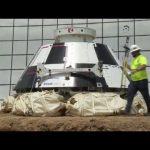
    The SpaceX Dragon cargo spacecraft left the International Space Station on August 26. The Dragon departed the station five weeks after delivering almost 5,000 pounds of supplies, experiments and equipment to the orbital complex – including an international docking adapter for use by future American commercial crew spacecraft transporting astronauts to the station. The station’s Canadarm2 robotic arm was used to grapple the Dragon, move it away from the ISS, and release it for its return trip to Earth. The capsule is returning with about 3,000 pounds of cargo and experiments for researchers and investigators. Also, New U.S. Endurance Record in Space, Next U.S. Spacewalk Previewed, Boeing CST-100 Starliner Land Drop Test, SLS Liquid Hydrogen Test Tank Moved, and Celebrating National Parks, from Space!

  • RS-25 Rocket Engine Test Firing

    RS-25 Rocket Engine Test Firing

    The 7.5-minute test conducted at NASA’s Stennis Space Center is part of a series of tests designed to put the upgraded former space shuttle engines through the rigorous temperature and pressure conditions they will experience during a launch. The tests also support the development of a new controller, or “brain,” for the engine, which monitors engine status and communicates between the rocket and the engine, relaying commands to the engine and transmitting data back to the rocket.

  • NASA Social Goes Behind the Scenes of our Journey to Mars

    NASA Social Goes Behind the Scenes of our Journey to Mars

    A NASA Social was held on August 18 at the Michoud Assembly Facility in New Orleans, Louisiana, and at the Stennis Space Center near Bay St. Louis, Mississippi to give the members of social and traditional media an opportunity to see the progress being made on sending humans to Mars. The event featured tours of the manufacturing facilities at Michoud where work is underway on the core stage of the Space Launch System (SLS) — NASA’s new heavy-lift rocket that will send humans to deep space destinations, a test firing of the mighty RS-25 rocket engine that will power the SLS, and other rare behind the scenes look at other things NASA is doing to get ready for the Journey to Mars and other deep space travel.

  • NASA TV Briefing Previews Launch of Asteroid Bound Spacecraft

    NASA TV Briefing Previews Launch of Asteroid Bound Spacecraft

    On August 17, NASA hosted a briefing at the agency’s headquarters in Washington, DC to preview the launch of the Origins, Spectral Interpretation, Resource Identification, Security-Regolith Explorer (OSIRIS-REx) spacecraft – the first U.S. spacecraft destined to rendezvous with, study and return a sample of an asteroid. OSIRIS-REx will launch September 8 from Cape Canaveral Air Force Station in Florida on its mission to study, in detail, an asteroid called Bennu. The mission represents a valuable opportunity to learn more about the origins of our solar system, the sources of water and organic molecules on Earth, and the hazards and resources in near-Earth space.

  • NASA TV Briefing Previews Upcoming U S  Spacewalk to Install Space Station Docking Port

    NASA TV Briefing Previews Upcoming U S Spacewalk to Install Space Station Docking Port

    NASA TV aired a briefing from the agency’s Johnson Space Center in Houston on Monday, August 15, to preview the August 19 spacewalk to install a new gateway for American commercial crew spacecraft at the International Space Station — a significant milestone in NASA’s work to return crew launches to U.S. soil. Experts from the ISS and commercial crew programs discussed the process and significance of installing and connecting the first of the two international docking adapters (IDAs), which was launched on a SpaceX Dragon cargo spacecraft and arrived at the station July 20. Expedition 48 Commander Jeff Williams and Flight Engineer Kate Rubins of NASA will conduct the spacewalk to install the equipment. Coverage of the spacewalk will begin at 6:30 a.m. EDT Aug. 19, on NASA TV and the agency’s website, with the spacewalk scheduled to begin at 8:05 a.m.

  • Extreme Underwater Mission on This Week @NASA – July 29, 2016

    Extreme Underwater Mission on This Week @NASA – July 29, 2016

    The 21st NASA Extreme Environment Mission Operations got underway July 21 in the Florida Keys. NASA astronauts Reid Wiseman and Megan McArthur are part of the international crew of NEEMO-21 aquanauts performing research during the 16-day mission, which takes place about 60 feet below the surface of the Atlantic Ocean, in the Aquarius habitat – the world’s only undersea science station. Simulated spacewalks are designed to evaluate tools and mission operation techniques that could be used on future space missions. NEEMO-21’s objectives include testing a mini DNA sequencer similar to the one NASA astronaut Kate Rubins also will test aboard the International Space Station, and a telemedicine device that will be used for future space applications. The mission also will simulate communications delays like those that would be encountered on a mission to Mars. Also, Space Launch System Work Platforms, All-Electric X-Plane Arrives, Asteroid Mission Technology, and NASA @Comic-Con International.

  • NASA Q&A With the Stars of STAR TREK: BEYOND

    NASA Q&A With the Stars of STAR TREK: BEYOND

    Chris Pine and Zachary Quinto sit down to answer NASA trivia questions with Gay Yee Hill of NASA’s Jet Propulsion Laboratory.

    For more information:
    http://www.nasa.gov/startrek

  • NASA Does Facebook Live Update on the Next Mars Rover

    NASA Does Facebook Live Update on the Next Mars Rover

    The team developing NASA’s next rover mission to Mars has received a go-ahead from the agency to proceed with building the rover for launch in 2020. A July 15 Facebook Live event from NASA’s Jet Propulsion Laboratory featured updated news about the Mars 2020 rover and its mission. It will be almost identical to the Curiosity rover currently on Mars, but will have enhanced landing technology, the ability to prepare soil and rock samples for return to Earth and microphones to capture sound. The rover will look for signs of past life in a region of the Red Planet where the ancient environment was favorable for microbial life.

  • Happy 4th of July, from NASA

    Happy 4th of July, from NASA

    To all Americans — in space and on Earth — NASA wishes you a safe and happy July 4th Independence Day.

  • Space Launch System Booster Test Fired on This Week @NASA  – July 1, 2016

    Space Launch System Booster Test Fired on This Week @NASA – July 1, 2016

    On June 28, the booster for NASA’s Space Launch System (SLS) rocket was fired up for a major two-minute full-duration qualification ground test at Orbital ATK Propulsion Systems’ test facilities in Promontory, Utah. Engineers will evaluate test data on the motor’s performance using cold propellant, the steering operation of its redesigned nozzle, and other operational data to help qualify the booster for flight. This is the last time the booster will be fired in a test environment before it’s used for the first uncrewed test flight of SLS with NASA’s Orion spacecraft, known as Exploration Mission-1, in late 2018. Also, SLS Test Hardware Arrives at Marshall, Juno Arrives at Jupiter July 4th, Test Lab Launched to Streamline Air Travel, Russian Docking System Tested on ISS, and NASA 2016 Agency Honor Award Distinguished Honorees.

  • NASA Agency Awards Recognize Outstanding Employee Contributions

    NASA Agency Awards Recognize Outstanding Employee Contributions

    During the 2016 NASA Honor Awards Ceremony on June 28 at Ames Research Center, NASA Administrator Charlie Bolden presented Distinguished Service and Distinguished Public Service Medals to individual employees who have made extraordinary and indelible contributions to the agency’s mission success. These awards are the agency’s most prestigious and distinguished honors.

  • NASA Celebrates Makers

    NASA Celebrates Makers

    NASA works with the Maker community to create new ideas and technologies to drive exploration here on Earth and out in space. The agency uses prizes and challenges, like the Future Engineers 3-D printing challenge for students, and programs like the CubeSat Launch Initiative, which works with students across the country to build and launch small satellites, to encourage innovation and STEM development. During the National Week of Making 2016, NASA committed to continuing its work in order to help groups in all 50 states launch a satellite into orbit.

    For more information:
    http://www.nasa.gov/feature/calling-all-makers-visit-nasa-solve

    http://www.nasa.gov/mission_pages/station/research/news/multipurpose_precision_maintenance_tool

    http://www.nasa.gov/feature/first-cubesat-built-by-an-elementary-school-deployed-into-space

  • Welcome Back to Earth

    Welcome Back to Earth

    Expedition 47 Commander Tim Kopra of NASA, Soyuz Commander Yuri Malenchenko of Roscosmos and Flight Engineer Tim Peake of ESA (European Space Agency) were greeted in a traditional ceremony in Kazakhstan June 18, a few hours after their safe return to Earth from a 186 day mission on the International Space Station.

  • What’s this NASA NAAMES thing all about?

    What’s this NASA NAAMES thing all about?

    Kasha Patel and Mike Behrenfeld chat about the North Atlantic Aerosols and Marine Ecosystems Study (NAAMES). This NASA field experiment took to the sea in May to investigate the world’s largest plankton bloom and how it gives rise to small organic particles that leave the ocean and end up in the atmosphere, ultimately influencing clouds and climate.

    For more information:
    https://blogs.nasa.gov/earthexpeditions/tag/naames/

  • NASA’s Kate Rubins Prepares for Mission to the Space Station

    NASA’s Kate Rubins Prepares for Mission to the Space Station

    Footage of NASA Astronaut Kate Rubins training with her Expedition 48/49 crewmates in preparation for their upcoming mission to the International Space Station. Rubins, Anatoly Ivanishin of Roscosmos and Takuya Onishi of the Japan Aerospace Exploration Agency launch June 24 from the Baikonur Cosmodrome in Kazakhstan for a four-month tour aboard the ISS.

  • NASA Celebrates Memorial Day

    NASA Celebrates Memorial Day

    In recognition of Memorial Day, NASA remembers the men and women who have served in the U.S. armed forces and the sacrifices they’ve made to preserve the freedoms, safety and liberties of Americans throughout our country and around the world.

  • Retired Astronaut Scott Kelly Reflects on Year-Long ISS Mission

    Retired Astronaut Scott Kelly Reflects on Year-Long ISS Mission

    An agency wide All-Hands event on May 25 at NASA Headquarters featured Deputy Administrator Dava Newman and retired NASA astronaut Scott Kelly, reflecting on Kelly’s one-year mission aboard the International Space Station. The event, shown on NASA TV and the agency’s website, also featured video highlights of the mission and questions from employees watching at NASA centers around the country. During the unprecedented ISS mission, Kelly and Mikhail Kornienko of Roscosmos collected critical data on how the human body responds to long duration space flight.

  • Space Station’s 100,000th Orbit on This Week @NASA – May 20, 2016

    Space Station’s 100,000th Orbit on This Week @NASA – May 20, 2016

    On May 16, the International Space Station completed its 100,000th orbit of Earth since the launch of the first component on Nov. 20, 1998. In that time, the station has traveled more than 2.6 billion miles – which is roughly the equivalent of about 10 round trips between Earth and Mars, at the average distance between the two planets. The space station zips around our planet at 17,500 miles per hour – completing each orbit in just 90 minutes – giving the crew onboard the unique opportunity to experience 16 sunrises and sunsets per day and to capture some great images of Earth. Also, CubeSats Deployed from ISS, Humans to Mars Summit 2016, Orion’s Water Drop Test “Passengers”, There’s No Place Like Space and more!

  • NASA and Angry Birds

    NASA and Angry Birds

    Bill Hader, Leonard of Angry Birds, cracks the egg on how NASA enlisted the ANGRY BIRDS for space exploration and education.

    Check out Astronaut Don Pettit’s out of this world physics lesson:
    https://youtu.be/deAcVKv5_2I