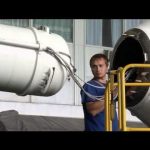
At the Baikonur Cosmodrome in Kazakhstan, Expedition 37/38 Soyuz Commander Oleg Kotov and Flight Engineer Sergey Ryazanskiy of the Russian Federal Space Agency (Roscosmos) and NASA Flight Engineer Michael Hopkins conducted their final fit check “dress rehearsal” in their Soyuz TMA-10M spacecraft and conducted other ceremonial activities Sept. 20. The Soyuz spacecraft was mated to its booster rocket on Sept. 22, and moved to the launch pad on a railcar Sept. 23 for final preparations before launch to the International Space Station on Sept. 26, Kazakh time. The trio will spend five and a half months onboard ISS, joining station Commander Fyodor Yurchikhin of Roscosmos, Flight Engineer Karen Nyberg of NASA and Flight Engineer Luca Parmitano of the European Space Agency. The footage also includes interviews at the launch pad Sept. 23 with Joel Montalbano, Deputy ISS Program Manager, and Ellen Ochoa, Director of the Johnson Space Center.
Tag: NASA
-
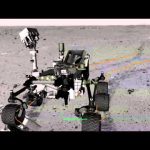
NASA Curiosity Rover Report — September 19, 2013
A NASA Mars Curiosity rover team member gives an update on developments and status of the planetary exploration mission. The Mars Science Laboratory spacecraft delivered Curiosity to its target area on Mars at 1:31:45 a.m. EDT on Aug. 6, 2012 which includes the 13.8 minutes needed for confirmation of the touchdown to be radioed to Earth at the speed of light. The rover will conduct a nearly two-year prime mission to investigate whether the Gale Crater region of Mars ever offered conditions favorable for microbial life.
Curiosity carries 10 science instruments with a total mass 15 times as large as the science payloads on NASA’s Mars rovers Spirit and Opportunity. Some of the tools, such as a laser-firing instrument for checking rocks’ elemental composition from a distance, are the first of their kind on Mars. Curiosity will use a drill and scoop, which are located at the end of its robotic arm, to gather soil and powdered samples of rock interiors, then sieve and parcel out these samples into the rover’s analytical laboratory instruments.
-
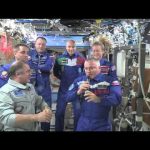
Voyager in Interstellar Space! On This Week @NASA
During a press briefing at NASA headquarters, scientists announced that the Voyager 1 spacecraft has officially left our solar bubble and has reached interstellar space. The Voyager Interstellar Mission (VIM) seeks to extend NASA’s exploration of the solar system beyond the outer planets — to the outer limits of the Sun’s sphere of influence, and possibly beyond. Voyager 1 and its twin Voyager 2 were launched 16 days apart in 1977. Also, Off the Earth, For the Earth, Comings and Goings, Flight Of Cygnus, Rockets 2 Racecars, InSight Landing Sites and more!
-

NASA’s Voyager 1 is in Interstellar Space
NASA’s Voyager 1 spacecraft has traveled beyond our solar bubble and has entered interstellar space. During a NASA Headquarters briefing, the Voyager team assessing the data determined the craft is in a transitional region immediately outside the solar bubble where some effects from our sun are still evident. New, unexpected data indicate that Voyager 1 has been traveling through the plasma, or ionized gas, that originates in the space between the stars. The spacecraft is now bathed in interstellar plasma, the material ejected from the death of nearby stars millions of years ago. Speakers on the occasion were – Ed Stone- Voyager project scientist, California Institute of Technology; Don Gurnett – Voyager plasma wave investigation principal investigator, University of Iowa; Suzanne Dodd – Voyager project manager, Jet Propulsion Laboratory; and Gary Zank, physics department chair, University of Alabama in Huntsville.
-
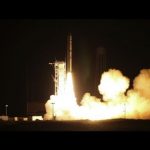
LADEE Launches! On This Week @NASA
LADEE, the Lunar Atmosphere and Dust Environment Explorer robotic probe launched Friday night atop an Orbital Sciences Corporation Minotaur V rocket. The first deep space mission from Wallops Flight Facility, LADEE will orbit the moon to collect information about its atmosphere and environmental influences on lunar dust. Data from LADEE will help scientists better understand other planetary bodies in our solar system. Also, Antares Update, Asteroid Ideas Selected, MAVEN’s Wings, Next ISS Crew, Testing, Testing!, Lori Garver Farewell, Be Prepared! and more!
-
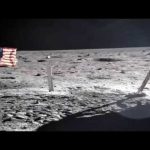
NASA Remembers Neil Armstrong
One year after his death, NASA is remembering Apollo 11 commander Neil Armstrong, the first man to set foot on another world.
As part of the tribute, Grammy-nominated artist Eric Brace, with some video assistance from NASA, honors Armstrong with an original composition, “Tranquility Base.”
-

NASA Briefing Previews Lunar Mission
During a televised news briefing from NASA Headquarters on Thursday, Aug. 22, panelists discussed the agency’s next mission to the moon, and the first lunar mission launching from the Virginia coast. NASA’s Lunar Atmosphere and Dust Environment Explorer (LADEE) mission is scheduled to launch at 11:27 p.m. Friday, Sept. 6, from NASA’s Wallops Flight Facility on Wallops Island, Va. Data from the mission will provide unprecedented information about the environment around the moon and give scientists a better understanding of other planetary bodies in our solar system and beyond.
-

NASA Introduces Media to New Astronaut Candidates
Eight astronaut candidates who arrived at NASA’s Johnson Space Center in Houston this week to begin training participated in a news conference with NASA Administrator Charles Bolden on Tuesday, Aug. 20. The candidates were selected come from the second largest pool of applicants NASA has ever received — more than 6,000. During the next two years, the group will participate in a variety of technical training activities at space centers and remote locations around the globe to prepare for missions that will help the agency push the boundaries of exploration and travel to new destinations in the solar system.
-
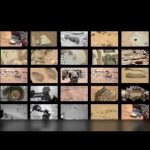
One Year on Mars! On This Week @NASA
So what can a planetary rover do with a year on Mars? All NASA’s Curiosity rover did was beam back over 190 gigabits of data, more than 36-thousand images and zap 75-thousand-plus laser shots at science targets … and oh by the way, it also completed the mission’s main science goal by finding evidence that life was possible on Mars in the past. The agency celebrated the one year anniversary of Curiosity’s landing on Mars with live events from the Jet Propulsion Laboratory — featuring rover team members. And at NASA Headquarters — a discussion about how Curiosity and other robotic projects are benefitting future human space exploration. Also, Maven Arrives, Garver Leaving NASA, Great Ball of Fire, Supply Ship Arrives Safely, Carbon Copy, The First Barrel Segment and more!
-

NASA Managers Brief Media on Spacewalk Leak
During a news conference carried live on NASA Television, NASA managers at Johnson Space Center discussed the water leak that occurred inside the helmet of European Space Agency astronaut Luca Parmitano during the July 16 spacewalk outside the International Space Station.
Parmitano and NASA astronaut Chris Cassidy were more than an hour into the spacewalk when Parmitano reported a buildup of water inside his helmet. Flight Director David Korth ended the spacewalk early at the 1-hour, 32-minute mark into the planned 6 1/2 hour excursion.
-
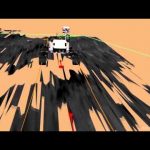
NASA Mars Curiosity Rover Report — July 11, 2013
A NASA Mars Curiosity rover team member gives an update on developments and status of the planetary exploration mission. The Mars Science Laboratory spacecraft delivered Curiosity to its target area on Mars at 1:31:45 a.m. EDT on Aug. 6, 2012 which includes the 13.8 minutes needed for confirmation of the touchdown to be radioed to Earth at the speed of light. The rover will conduct a nearly two-year prime mission to investigate whether the Gale Crater region of Mars ever offered conditions favorable for microbial life.
Curiosity carries 10 science instruments with a total mass 15 times as large as the science payloads on NASA’s Mars rovers Spirit and Opportunity. Some of the tools, such as a laser-firing instrument for checking rocks’ elemental composition from a distance, are the first of their kind on Mars. Curiosity will use a drill and scoop, which are located at the end of its robotic arm, to gather soil and powdered samples of rock interiors, then sieve and parcel out these samples into the rover’s analytical laboratory instruments.
-
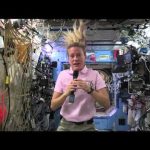
NASA Astronaut Chats from Space with Home State Media
Aboard the International Space Station, Expedition 36 Flight Engineer Karen Nyberg, a native of Vining, Minn., discussed life and research on the orbital laboratory with KMSP-TV in Minneapolis during an in-flight interview on July 3. Nyberg arrived on the station in late May and will remain in orbit until mid-November.
-
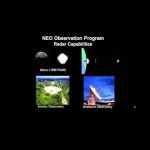
NASA Announces Asteroid Grand Challenge
NASA announced Tuesday a Grand Challenge focused on finding all asteroid threats to human populations and knowing what to do about them.
The challenge, which was announced at an asteroid initiative industry and partner day at NASA Headquarters in Washington, is a large-scale effort that will use multi-disciplinary collaborations and a variety of partnerships with other government agencies, international partners, industry, academia, and citizen scientists. It complements NASA’s recently announced mission to redirect an asteroid and send humans to study it.
-
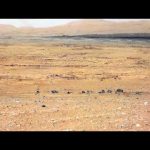
NASA Mars Curiosity Rover Report — June 7, 2013
A NASA Mars Curiosity rover team member gives an update on developments and status of the planetary exploration mission. The Mars Science Laboratory spacecraft delivered Curiosity to its target area on Mars at 1:31:45 a.m. EDT on Aug. 6, 2012 which includes the 13.8 minutes needed for confirmation of the touchdown to be radioed to Earth at the speed of light. The rover will conduct a nearly two-year prime mission to investigate whether the Gale Crater region of Mars ever offered conditions favorable for microbial life.
Curiosity carries 10 science instruments with a total mass 15 times as large as the science payloads on NASA’s Mars rovers Spirit and Opportunity. Some of the tools, such as a laser-firing instrument for checking rocks’ elemental composition from a distance, are the first of their kind on Mars. Curiosity will use a drill and scoop, which are located at the end of its robotic arm, to gather soil and powdered samples of rock interiors, then sieve and parcel out these samples into the rover’s analytical laboratory instruments.
-
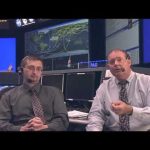
NASA Aerospace Engineer Talks Space with Students
NASA Johnson Space Center Aerospace Engineer Jason Barbour answers questions from 5th grade students at Public School 174 Queens in Queens, New York during a NASA Digital Learning Network (DLN) interactive broadcast.
NASA DLN broadcasts are connecting students around the country with the live mission operations being done by the International Space Station Flight Control Team. ISS flight controllers, astronauts and scientists answer student’s questions about living and working in space, how the Houston mission control center operates, and a wealth of other topics related to Science, Technology, Engineering, and Mathematics.
-

NASA Television Covers the Launch of the Next ISS Crew
Expedition 36/37 Soyuz Commander Fyodor Yurchikhin of the Russian Federal Space Agency (Roscosmos), NASA Flight Engineer Karen Nyberg and Flight Engineer Luca Parmitano of the European Space Agency launched on the Russian Soyuz TMA-09M spacecraft on May 29, Kazakh time (May 28, U.S. time) from the Baikonur Cosmodrome in Kazakhstan to begin an accelerated six-hour journey to the International Space Station. Once aboard, the trio will start a five and a half month mission, joining station Commander Pavel Vinogradov of Roscosmos, Flight Engineer Chris Cassidy of NASA and Russian Flight Engineer Alexander Misurkin, who have been on the station since late March. The footage includes the crew’s pre-launch ceremonial activities at their Cosmonaut Hotel crew quarters, their departure from the Cosmonaut Hotel to their suit up facility in the Cosmodrome, the
-
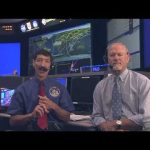
NASA Astronaut Talks Space with Students
NASA Astronaut Mario Runco answers questions from 9-12th grade students at Deptford High School in Deptford, NJ during a NASA Digital Learning Network (DLN) interactive broadcast.
NASA DLN broadcasts are connecting students around the country with the live mission operations being done by the International Space Station Flight Control Team. ISS flight controllers, astronauts and scientists answer student’s questions about living and working in space, how the Houston mission control center operates, and a wealth of other topics related to Science, Technology, Engineering, and Mathematics.
-
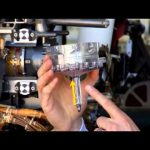
NASA Mars Curiosity Rover Report – May 16, 2013
A NASA Mars Curiosity rover team member gives an update on developments and status of the planetary exploration mission. The Mars Science Laboratory spacecraft delivered Curiosity to its target area on Mars at 1:31:45 a.m. EDT on Aug. 6, 2012 which includes the 13.8 minutes needed for confirmation of the touchdown to be radioed to Earth at the speed of light. The rover will conduct a nearly two-year prime mission to investigate whether the Gale Crater region of Mars ever offered conditions favorable for microbial life.
Curiosity carries 10 science instruments with a total mass 15 times as large as the science payloads on NASA’s Mars rovers Spirit and Opportunity. Some of the tools, such as a laser-firing instrument for checking rocks’ elemental composition from a distance, are the first of their kind on Mars. Curiosity will use a drill and scoop, which are located at the end of its robotic arm, to gather soil and powdered samples of rock interiors, then sieve and parcel out these samples into the rover’s analytical laboratory instruments.
-

NASA Connects Space Station and “Star Trek Into Darkness” Crews in a Google+ Hangout
Astronaut Chris Cassidy, from aboard the International Space Station participated in a Google+ hangout with fellow astronauts at Johnson Space Center and cast members of the new film, “Star Trek Into Darkness” to discuss how work aboard the ISS is turning science fiction into reality. The astronauts and Star Trek cast asked questions of each other and fielded questions from social media followers at several locations, including the Intrepid Museum in New York City (home of the space shuttle Enterprise) and the Smithsonian’s National Air and Space Museum in Washington, DC.
-
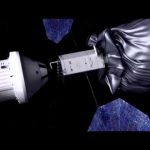
NASA Announces Asteroid Identification, Capture and Sampling Initiative
President Obama’s FY2014 budget request for NASA enables the agency to leverage capabilities in the Human Exploration and Operations, Science and Space Technology Mission Directorates to make significant yet affordable advances in our nation’s capabilities and achieve the space goals set by the Administration. NASA will improve detection and characterization of asteroids, pursue solar electric propulsion demonstration, develop a mechanism to capture an asteroid and redirect it to a stable orbit in the Earth-moon system and begin designing a mission to send humans to it using the Space Launch System rocket and Orion spacecraft.
-
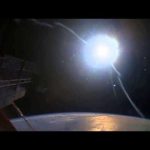
NASA Celebrates Earth Month 2013: NASA Science Eyes
NASA’s fleet of science satellites and research aircraft are at work around the world 24/7 helping scientists discover just how our living planet really works. Take a look at some of the insights and don’t forget to celebrate Earth Day on April 22!
-

NASA Celebrates Earth Month 2013: The View from Orbit
Take a look at the beauty and wonder of our home planet as seen from space by astronauts on the International Space Station. And don’t forget to celebrate Earth Day on April 22!
-
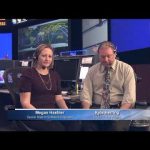
NASA Engineer Shares Software Smarts
Students on NASA’s Digital Learning Network hear from NASA’s Megan Hashier about her role as software Engineer for the International Space Station. Host: Kyle Herring.
-

NASA Mars Curiosity Rover Report — March 15, 2013
A NASA Mars Curiosity rover team member gives an update on developments and status of the planetary exploration mission. The Mars Science Laboratory spacecraft delivered Curiosity to its target area on Mars at 1:31:45 a.m. EDT on Aug. 6, 2012 which includes the 13.8 minutes needed for confirmation of the touchdown to be radioed to Earth at the speed of light. The rover will conduct a nearly two-year prime mission to investigate whether the Gale Crater region of Mars ever offered conditions favorable for microbial life.
Curiosity carries 10 science instruments with a total mass 15 times as large as the science payloads on NASA’s Mars rovers Spirit and Opportunity. Some of the tools, such as a laser-firing instrument for checking rocks’ elemental composition from a distance, are the first of their kind on Mars. Curiosity will use a drill and scoop, which are located at the end of its robotic arm, to gather soil and powdered samples of rock interiors, then sieve and parcel out these samples into the rover’s analytical laboratory instruments.
-

NASA Long-Distance Google+ Hangout to Connect with Space Station
In a first for the agency, NASA hosted a Google+ Hangout live with the International Space Station on Feb. 22, 2013 from 10:30 a.m EST to 11:30 a.m. EST. Google+ Hangouts allow people to chat face-to-face while thousands more can tune in to watch the conversation live on Google+ or YouTube. This unique opportunity connected you, our fans, with astronauts living and working on the orbiting laboratory 240 miles above the Earth.
During the event, several video questions were selected and answered by astronauts on the space station and on the ground. Additionally, NASA asked real-time questions submitted by our followers on Google+, Twitter, and Facebook. During the hangout, astronauts Kevin Ford, Chris Hadfield and Tom Marshburn will answer questions and provide insights about life aboard the station. Station crews conduct a variety of science experiments and perform station maintenance during their six-month stay on the outpost. Their life aboard the station in near-weightlessness requires unique approaches to everyday activities such as eating, sleeping and exercising.
-

NASA Star Party Helps Celebrate Inauguration
Video of a NASA star gazing “party” at the David M. Brown Planetarium in Arlington, Va. on Jan. 19. Free and open to the public, the event featured astronomers, astronauts, and other experts answering questions about the night sky. Telescopes were provided; planetarium shows were also held.
-
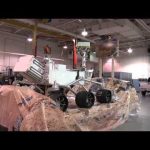
NASA Preps for Inaugural Parade
Video of preparations at the Joint Base Anacostia Bolling in Washington, D.C. on Jan. 19 for the two NASA floats scheduled to appear in Monday’s Presidential Inaugural Parade. The floats will feature full-scale models of NASA’s Orion, the multi-purpose capsule that will take our astronauts farther into space than ever, and the Curiosity rover now on Mars.
-
Happy Holidays, NASA TV Style!
Our wish for a happy holiday season, and a healthy and prosperous 2013!
-

NASA Seeks to Debunk Doomsday Prophecy
As 2012 draws to a close, many websites, books and cable
television shows are erroneously predicting the end of the world. These claims range from fears that a rogue planet is heading toward Earth, to solar flares torching our planet. David Morrison, a senior scientist and astrobiologist at NASA’s Ames Research Center is working to inform the public that each of the claims are false and there is no reason that December 21, 2012 will be different from any other day on Earth. -
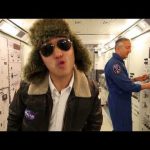
“NASA Johnson Style” (“Gangnam Style” Parody)
NASA astronauts and scientists are among those in this educational parody of Psy’s popular music video. “NASA Johnson Style” was created, written and produced by the Houston center’s co-op students who volunteered for the project ” to inform the public about the amazing work going on at NASA and the Johnson Space Center.”
“NASA Johnson Style” lyrics:
NASA Johnson Style
Johnson StyleWelcome to NASA’s Johnson Space Center
We are coming in hot so don’t burn up as we enter
We do science everyday that affects your daily life
Throw them up for manned space flightScience everywhere
As we engineer the marvels
That fly though the air
And take us way beyond earth’s levelsScience everywhere
Because we engineer the marvels
That fly though the air
Flys us through the airControl the mission out of Johnson
This is ground, hey!
And this is space, hey!
Tell me Houston what’s the problem
It’s okay!
It’s okay!
Because there’s flight controllers on the job todayNASA Johnson STYLE!
Johnson STYLE!
NA, NA, NA, NA NASA Johnson STYLE!
Johnson STYLE!
NA, NA, NA, NA NASA Johnson STYLE!
EYYYYYY science daily!
NA, NA, NA, NA, NASA STYLE!
EYYYYYY it’s amazing!
NA, NA, NA, NA ey ey ey ey ey ey!!
Orbiting earth, international space station
Where we work and live in space with a crew from several nations
Got Japanese, and Russians, that European charm
Throw them up, like the Canada ArmKicking out research
29k cubic feet, revolves around the earth
Science microgravity, revolves around the earth
Columbus, JEM, and Destiny
Kicking out research
Kicking out researchTrain the astronauts at Johnson
To go to space, hey!
To go to space, hey!
Cause the missions of tomorrow
Start today, hey!
Start today, hey!
As we engineer the future day by dayNASA Johnson STYLE!
Johnson STYLE!
NA, NA, NA, NA NASA Johnson STYLE!
Johnson STYLE!
NA, NA, NA, NA NASA Johnson STYLE!
EYYYYYY science daily!
NA, NA, NA, NA, NASA STYLE!
EYYYYYY it’s amazing!
NA, NA, NA, NA ey ey ey ey ey ey!!Orion or SLS, MPCV
We cannot feel the floor, cause the lack gravity
The destinations are an asteroid, mars, or moon
We are blasting off start the countdown soon
[Sound clip: launch countdown]EYYYYYY science daily!
NA, NA, NA, NA, NASA STYLE!
EYYYYYY it’s amazing!
NA, NA, NA, NA ey ey ey ey ey ey!!
NASA Johnson StyleSpecial thanks to astronauts Tracy Caldwell Dyson, Mike Massimino and Clay Anderson
Special thanks to Mr. Mike Coats, Dr. Ellen Ochoa, and all supporting senior staff members• Category
Science & Technology
• License
Standard YouTube License -
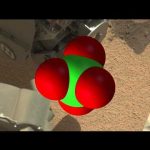
NASA’s Mars Curiosity Rover Report #17 — December 7, 2012
A NASA’s Mars Curiosity rover team member gives an update on developments and status of the planetary exploration mission. The Mars Science Laboratory spacecraft delivered Curiosity to its target area on Mars at 1:31:45 a.m. EDT on Aug. 6, which includes the 13.8 minutes needed for confirmation of the touchdown to be radioed to Earth at the speed of light. The rover will conduct a nearly two-year prime mission to investigate whether the Gale Crater region of Mars ever offered conditions favorable for microbial life.
-
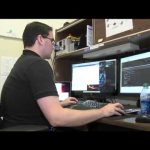
NASA National Native American Heritage Month Profile — Kody Ensley
Kody Ensley works at Johnson Space Center as a software engineer for the Robotics Systems Technology Branch of NASA’s Software, Robotics, and Simulation Division. He works to develop software for Robonaut 2, the humanoid robot currently residing aboard the International Space Station. Ensley is a graduate of Salish Kootenai College in Pablo Montana, where he completed a four-year pilot program in computer engineering for Native American students, which was established through coordination with JSC employees. Ensley completed two internships at JSC and held a co-op position before being hired by the Robotics Systems Technology Branch in July 2012.
-

Beyond 2012: Google+ Hangout with NASA
Stories about the fictional planet Nibiru and predictions of the end of the world in December 2012 have blossomed on the Internet. Contrary to some of the common beliefs out there, Dec. 21, 2012 won’t be the end of the world as we know, however, it will be another winter solstice.
Social media users joined NASA and other scientists for a lively discussion at 2:00 p.m. EST on Wednesday, November 28, 2012 to discuss the 2012 rumors propagated across the internet. We had a great panel of experts on hand including:
– David Morrison, astrobiologist from NASA’s Ames Research Center
– Don Yeomans, asteroid scientist from NASA’s Jet Propulsion Laboratory
– Mitzi Adams, solar/archaeoastronomer from NASA’s Marshall Space Flight Center
– Lika Guhathakurta, heliophysicist from NASA Headquarters
– Paul Hertz, astrophysicist from NASA Headquarters
– Andrew Fraknoi, science educator from Foothill College in Los Altos Hills, Calif.Find out more about these rumors at http://www.nasa.gov/2012
-

NASA National Native American Heritage Month Profile — Raquel Redhouse
Raquel Redhouse is a mechanical engineer working in the Systems Definition & Communications Branch at NASA’s Glenn Research Center. She supports the Multi-Purpose Crew Vehicle (MPCV) Program Requirements Management Office (RMO). The RMO is responsible for the development, maintenance, and tracking of the Orion system and interface requirements. She is an active member of Glenn’s Advisory Group for Native Americans and the President of the local Lake Erie Professional Chapter of the American Indian Science & Engineering Society (AISES).
-
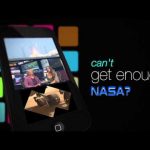
NASA App Puts Universe at Your Fingertips
Are you on the go with your Smart Phone or Tablet? Want to know more about what’s happening at NASA and how it affects you? Then make sure you update or install the latest NASA App from Google Play or the Apple App store to your mobile device because there’s more “Space” in your life than you know. Get the NASA App at the App store and Android Market today.
-
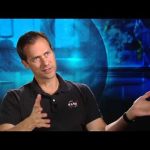
NASA’s Marshburn Discusses ISS Mission
Expedition 34/35 Flight Engineer Tom Marshburn is interviewed about his upcoming stay aboard the International Space Station. Marshburn is scheduled to fly aboard a Soyuz spacecraft to the ISS in December and remain in space until May with crewmates Chris Hadfield and Roman Romanenko.