Tag: Orion

  • NASA’s Test Orion Spacecraft in the Pacific Ocean at Sunset

    NASA’s Test Orion Spacecraft in the Pacific Ocean at Sunset

    Orion is NASA’s spacecraft for carrying astronauts on exploration missions to the Moon and beyond. When Orion returns to Earth from space, it will be slowed by parachutes before splashdown. Here, NASA’s recovery team and the U.S. Navy practice recovering a test Orion capsule from the ocean waters. Bonus: stunning views of the sunset in the Pacific off the coast of California!

    This footage was captured on Nov. 1, 2018, during Underway Recovery Test-7 (URT-7) — one in a series of tests that NASA’s Exploration Ground Systems Recovery Team and the U.S. Navy are conducting: https://go.nasa.gov/2Ph6Mnr. These tests verify and validate procedures and hardware that will be used to recover the Orion spacecraft after it splashes down in the Pacific Ocean following deep space exploration missions.

    NASA/Jamie Peer
    Editor: NASA/Nasreen Alkhateeb

    Download original footage: https://images.nasa.gov/details-KSC_20181101_MH_JBP_0002_BTA_Open_Water_Sunset_DRONE.html
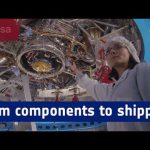
  • Orion service module – from components to shipping

    Orion service module – from components to shipping

    A look at the elements that make up the European service module that will provide power, water, air and electricity to NASA’s Orion Moon module.

    Made in Europe the service module is integrated in Bremen, Germany, from where it will be shipped to NASA’s Kennedy Space Center in the USA for testing and getting ready for launch.

    Inside the Service Module, large tanks hold fuel as well consumables for the astronauts: oxygen, nitrogen and water.

    Radiators and heat exchangers keep the astronauts and equipment at a comfortable temperature, while the module’s structure is the backbone of the entire vehicle, like a car chassis.

    The European Service Module is built by main contractor Airbus, with many companies all over Europe supplying components.

    Orion will eventually fly beyond the Moon with astronauts, the first time a spacecraft will support humans with European hardware will also be the farthest humans ever travel from Earth. The first mission – without astronauts – is getting ready for launch in 2019.

    Find out more about Orion and ESM: http://www.esa.int/orion

    ★ Subscribe: http://bit.ly/ESAsubscribe

    Check out our full video catalog: http://bit.ly/SpaceInVideos

    Follow ESA on Twitter: http://bit.ly/ESAonTwitter
    On Facebook: http://bit.ly/ESAonFacebook
    On Instagram: http://bit.ly/ESAonInstagram
    On Flickr: http://bit.ly/ESAonFlickr

    ESA is Europe’s gateway to space. Our mission is to shape the development of Europe’s space capability and ensure that investment in space continues to deliver benefits to the citizens of Europe and the world.

    Check out http://www.esa.int/ESA to get up to speed on everything space related.

  • Watching Hurricane Florence from Space on This Week @NASA – September 15, 2018

    Watching Hurricane Florence from Space on This Week @NASA – September 15, 2018

    Major hurricane Florence, seen from space, our mission to size up land and sea ice on Earth, and “catching big air” … another successful test for our Orion spacecraft … a few of the stories to tell you about – This Week at NASA!

    This video is available for download from NASA’s image and Video Library: https://images.nasa.gov/details-Watching Hurricane Florence from Space on This Week @NASA – September 15, 2018.html

  • Flight Through Orion Nebula in Visible and Infrared Light

    Flight Through Orion Nebula in Visible and Infrared Light

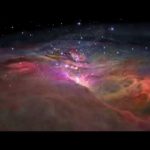
    By combining the visible and infrared capabilities of the Hubble and Spitzer space telescopes, astronomers and visualization specialists from NASA’s Universe of Learning program have created a spectacular, three-dimensional, fly-through movie of the magnificent Orion nebula, a nearby stellar nursery. Using actual scientific data along with Hollywood techniques, a team at the Space Telescope Science Institute in Baltimore, Maryland, and the Caltech/IPAC in Pasadena, California, has produced the best and most detailed multi-wavelength visualization yet of the Orion nebula.
    Credits: Space Telescope Science Institute
    More: https://www.nasa.gov/feature/goddard/2018/hubble-yields-new-discoveries-at-the-winter-aas-meeting
    Download: http://hubblesite.org/news_release/news/2018-04

  • The future of the Orion constellation

    The future of the Orion constellation

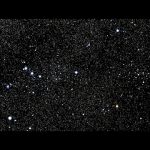
    This video reveals how our view of the Orion constellation will evolve over the next 450 000 years.

    Amid a myriad of drifting stars, the shape of Orion as defined by its brightest stars is slowly rearranged into a new pattern as time goes by.

    The portion of the sky depicted in the video measures 40 x 20º – as a comparison, the diameter of the full Moon in the sky is about half a degree.

    The video is based on data from ESA’s Gaia and Hipparcos satellites, as well as additional information from ground-based observations.

    A speeded-up version of the video is available here: http://sci.esa.int/gaia/59209

    Full story: The future of the Orion constellation http://www.esa.int/Our_Activities/Space_Science/Gaia/The_future_of_the_Orion_constellation

    The evolution of two million stellar positions on the entire sky is shown here: https://www.youtube.com/watch?v=87lgSRVUSxM

    Copyright: ESA/Gaia/DPAC CC BY-SA 3.0 IGO: https://creativecommons.org/licenses/by-sa/3.0/igo/

  • ESA astronauts training in Houston

    ESA astronauts training in Houston

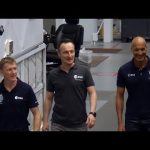
    Four ESA astronauts have recently been training at NASA’s Johnson Space Centre (JSC) in Houston, Texas. For ESA’s newest astronaut Matthias Maurer, it was a chance to inspect a mock-up of NASA’s future space vehicle Orion alongside Tim Peake and Luca Parmitano, both experienced astronauts. Tim and Matthias have undergone spacewalk training in the neutral buoyancy pool. Alexander Gerst is also at JSC, training for his 2018 long-duration mission to the ISS.

    Connect with the astronauts: http://www.esa.int/astronauts

  • Webb Telescope Passes Important Optical Test on This Week @NASA – May 5, 2017

    Webb Telescope Passes Important Optical Test on This Week @NASA – May 5, 2017

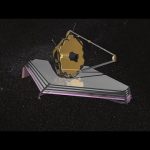
    NASA’s James Webb Space Telescope (JWST) has successfully passed the center of curvature test at Goddard Space Flight Center, in Greenbelt, Md. This important optical measurement of Webb’s fully assembled primary mirror was the final test held at Goddard before the telescope is shipped off for end-to-end cryogenic testing at Johnson Space Center in Houston. When that’s complete, the world’s most advanced observatory goes to Northrop Grumman Aerospace Systems in Redondo Beach, California, for final assembly and testing. Webb is targeted for launch in 2018 on a mission to help unravel some of the greatest mysteries of the universe. Also, Cassini Update, NASA Visits Midwest Company Helping Build Orion, Orion’s Launch Abort System Motor Tested, Wind Tunnel Tests Continue with SLS, and Community College Aerospace Scholars!

  • Orion and the European Service Module

    Orion and the European Service Module

    NASA’s Orion spacecraft will take astronauts to destinations at or beyond low Earth orbit. In January 2013, it was announced that ESA would provide the European Service Module (ESM) for Orion’s first uncrewed mission. Derived from ESA’s Automated Transfer Vehicle cargo spacecraft, the ESM will provide life support, propulsion and structural functions for Orion. In February 2017, a contract was signed for a second ESM to be used on Orion’s first crewed flight, which will carry astronauts beyond the Moon and back.

    More about European Service Module:
    http://www.esa.int/Our_Activities/Human_Spaceflight/Orion/European_Service_Module

  • Orion Spacecraft Parachute Test on This Week @NASA – March 10, 2017

    Orion Spacecraft Parachute Test on This Week @NASA – March 10, 2017

    NASA conducted the latest successful test of the Orion spacecraft’s parachute system on March 8 in the skies above the U.S. Army’s Yuma Proving Ground in Arizona. The test was designed to evaluate the parachutes’ performance in an emergency abort situation that would require Orion to be jettisoned from the agency’s Space Launch System rocket during a launch. Even at this relatively low altitude, the parachutes are designed to fully deploy and safely return Orion and its crew to Earth. Also, Shin Honored by Aviation Week, Space Station Resupply Mission Targeted for March 19, Small Business Innovation Proposals Selected, Deep Space Atomic Clock, Modern Figures Virtual Tour, and NASA Aero “Night of Flight”!

  • NASA 2017 – Building the Future

    NASA 2017 – Building the Future

    NASA looks forward to 2017.
    For more information on NASA in 2016 and beyond, visit:
    https://www.nasa.gov/press-release/nasa-reveals-the-unknown-in-2016

  • Women @NASA: Charlie Blackwell-Thompson

    Women @NASA: Charlie Blackwell-Thompson

    Daisy Ridley of Star Wars fame introduces us to Charlie Blackwell-Thompson, Space Launch System/Orion Launch Director.

    http://www.nasa.gov/feature/blackwell-thompson-named-launch-director-for-slsorion

  • Suited Test in Orion on This Week @NASA – April 1, 2016

    Suited Test in Orion on This Week @NASA – April 1, 2016

    Engineers at Johnson Space Center in Houston are using a mockup of NASA’s Orion spacecraft to evaluate how well astronauts are able to operate Orion’s rotational hand controller and cursor control device, while dressed in spacesuits. The controllers operate the displays and control system used to maneuver and interact with the spacecraft. The testing aims to provide data that can be used to make adjustments needed to ensure future Orion crews can interact appropriately with the spacecraft’s control system during deep space missions. Also, Milestone for Spaceport of the Future, Russian Supply Ship Launches to ISS, Team Selected to Build Planet-Hunting Instrument, First Heat Map of Super Earth and Milestone for Green Propellant Mission!

  • A chat with Congress, from space on This Week @NASA – December 4, 2015

    A chat with Congress, from space on This Week @NASA – December 4, 2015

    A Dec. 2 event with the House of Representatives Committee on Science, Space and Technology, featured a live chat with NASA’s Scott Kelly and Kjell Lindgren from onboard the International Space Station. Kelly and Lindgren answered questions from Texas Representative and Chairperson Lamar Smith and other committee members, about life on the station and the research on the orbital laboratory. Kelly is in the ninth month of his year-long mission with Russian cosmonaut Mikhail Kornienko to gather biomedical data that will help formulate a human mission to Mars, while Lindgren is preparing to return to Earth Dec. 11 to complete a 141-day mission. Also, Next space station crew preparing for launch, Orion powerhouse ready for testing, Anniversary of Orion’s first flight test, Your planet is changing. We’re on it, and Preparing Earth observation tool for space station!

  • Japanese supply ship delivers to space station on This Week @NASA – August 28, 2015

    Japanese supply ship delivers to space station on This Week @NASA – August 28, 2015

    It was a busy week for the crew aboard the International Space Station. The Japanese Aerospace Exploration Agency’s fifth H-II Transfer Vehicle, or HTV-5 arrived on Aug. 24 with more than 8,000 pounds of equipment, supplies and experiments in its pressurized cargo compartment. The delivery included an investigation that will search for signatures of dark matter, as well as enough additional food and supplies to last through 2015. Also, Soyuz relocated to Zvezda, Orion parachute drop test, Rising Seas, Hurricane Katrina remembrance, Tail first crash test, Webb telescope’s backplane arrives and Hubble’s double black hole!

  • Video Gives Inside Look at Trial by Fire for NASA’s Orion Spacecraft

    Video Gives Inside Look at Trial by Fire for NASA’s Orion Spacecraft

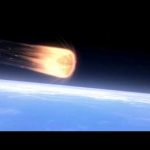
    The video begins 10 minutes before Orion’s 11:29 a.m. EST splashdown in the Pacific Ocean, just as the spacecraft was beginning to experience Earth’s atmosphere. Peak heating from the friction caused by the atmosphere rubbing against Orion’s heat shield comes less than two minutes later, and the footage shows the plasma created by the interaction change from white to yellow to lavender to magenta as the temperature increases. The video goes on to show the deployment of Orion’s parachutes and the final splash as it touches down.

  • Orion’s first flight on This Week @NASA – December 8, 2014

    Orion’s first flight on This Week @NASA – December 8, 2014

    The successful first flight test of NASA’s Orion spacecraft on Dec. 5 not only was a historic moment for the agency – but also was a critical step on NASA’s Journey to Mars. Orion rode to space from Cape Canaveral Air Force Station on a Delta IV heavy rocket with no crew, but loaded with about 1,200 sensors. The flight test basically was a compilation of the riskiest events that will happen when astronauts fly on Orion on deep space missions. Also, Journey to Mars briefing, 1st SLS flight barrel and Commercial crew milestone.

  • Orion Soars on First Flight Test

    Orion Soars on First Flight Test

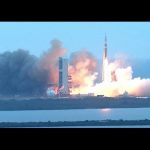
    NASA’s Orion spacecraft launched successfully atop a United Launch Alliance Delta IV Heavy rocket Dec. 5 at 7:05 a.m. EST from Space Launch Complex 37 at Cape Canaveral Air Force Station in Florida. Orion’s Exploration Flight Test-1 (EFT-1), is the first flight test for NASA’s new deep space capsule and is a critical step on NASA’s journey to Mars. The 4.5 hour flight is scheduled to conclude with the splashdown of Orion in the Pacific Ocean.

  • New crew launches to ISS on This Week @NASA – November 28, 2014

    New crew launches to ISS on This Week @NASA – November 28, 2014

    NASA’s Terry Virts and Expedition 42/43 crewmates, Anton Shkaplerov of the Russian Federal Space Agency and the European Space Agency’s Samantha Cristoforetti, launched Nov. 23 at 4:01 p.m. Eastern Standard Time, from Baikonur, Kazakhstan. Almost six hours later, their Soyuz spacecraft docked to the International Space Station – where they joined Expedition 42 Commander Barry Wilmore of NASA, and Flight Engineers Alexander Samokutyaev and Elena Serova of Roscosmos – returning the station crew to its full complement of six people. Also, First 3-D printed object in space, Orion flight test update, New airborne Earth Science missions and Happy Thanksgiving from space!

  • Orion flight test previewed on This Week @NASA – November 7, 2014

    Orion flight test previewed on This Week @NASA – November 7, 2014

    A NASA media briefing on Nov. 6 at Kennedy Space Center highlighted the fully assembled Orion spacecraft and details of its first test flight, scheduled for Dec. 4. The 4 and-a-half hour flight, called Exploration Flight Test-1, will send Orion 3,600 miles from Earth on a two-orbit flight to confirm its critical systems are ready for the challenges of eventually sending astronauts on deep space missions to an asteroid and Mars. Also, Delta IV Heavy wet dress test, Next ISS crew trains, Space agency leaders support ISS, Curiosity confirms orbital data and more!

  • NASA Premieres ‘Trial By Fire’ video on Orion’s Flight Test

    NASA Premieres ‘Trial By Fire’ video on Orion’s Flight Test

    As the flight test of NASA’s Orion spacecraft nears, the agency released Oct. 8 a video detailing the spacecraft’s test and the critical systems engineers will evaluate during the Dec. 4 flight. Orion is in the final stages of preparation for the uncrewed flight test that will take it 3,600 miles above Earth on a 4.5-hour mission to test many of the systems necessary for future human missions into deep space. After two orbits, Orion will reenter Earth’s atmosphere at almost 20,000 miles per hour, and reach temperatures near 4,000 degrees Fahrenheit, before its parachute system deploys to slow the spacecraft for a splashdown in the Pacific Ocean.

    On future missions, the Orion spacecraft will carry astronauts farther into the solar system than ever before, including to an asteroid and Mars.

  • Orion’s protective backshell installed on This Week @NASA – August 25, 2014

    Orion’s protective backshell installed on This Week @NASA – August 25, 2014

    Engineers at Kennedy Space Center have finished installing the Orion spacecraft’s backshell – the black protective tiles on the cone-shaped sides of NASA’s new deep space capsule. The backshell tiles are the same type that protected the underside of space shuttles — and will not only provide protection from debris while in space but from extreme temperatures in that area of the spacecraft as it returns from space – which could exceed 31-hundred degrees Fahrenheit. Also, SLS anti-geyser testing, Webb’s replica backplane, Arctic Sea ice loss, Ancient Earth, Alien Earths and more!

  • Orion recovery test update on This Week @NASA – August 8, 2014

    Orion recovery test update on This Week @NASA – August 8, 2014

    NASA wrapped up its second Underway Recovery Test Aug. 4 with the Orion spacecraft, off the coast of San Diego, California. The agency teamed with Lockheed Martin, the U.S. Navy and the Department of Defense’s Human Space Flight Support Detachment 3 to evaluate primary and alternative methods to recover Orion after the spacecraft safely splashes down in the ocean at the conclusion of future deep space missions. Orion’s first spaceflight test with a splashdown in the Pacific Ocean is targeted for December. Also, Low-Density Supersonic Decelerator update, 2nd anniversary: 7 Minutes of Terror, Bolden visits MMS at Naval Research Lab, Scanning for algal blooms, Earth science showcase, and more!

  • Bolden Testifies About the Budget on This Week @NASA

    Bolden Testifies About the Budget on This Week @NASA

    NASA Administrator Charlie Bolden responded to questions at a Congressional hearing about the agency’s $17.5 billion FY2015 budget proposal, which affirms the bi-partisan plan agreed to by Congress and the President for NASA to carry out an ambitious deep space exploration program. One that includes sending humans to an asteroid and Mars, extending use of the International Space Station to at least 2024, developing the Orion spacecraft and Space Launch System rocket and fostering commercial partnerships. Also, Asteroid Initiative Opportunities Forum, Nyberg and Parmitano in DC, Welcome to space! GPM’s first light, Exploration Design Challenge, Composite cryo tank delivered and Angry Nerd robot!

  • Administrator Visits Aeronautics and Space Research Facilities on This Week @NASA

    Administrator Visits Aeronautics and Space Research Facilities on This Week @NASA

    NASA Administrator Charlie Bolden visited aeronautics and space research facilities at Ames Research Center on March 17, including the laboratory for the volleyball-sized satellites called SPHERES, which are used onboard the International Space Station for space robotics and spacecraft navigation experiments. He also saw the high-fidelity airport control tower simulator called, “Future Flight Central”, used by NASA, the Federal Aviation Administration and other industry partners for joint research on next-generation air traffic management. Also, Rocket for Orion’s flight test highlighted, Future explorer celebrated at KSC, NASA’s new Chief Technologist, Coastal Flooding Challenge, Next space station crews , Hubble 24th anniversary image and more!

  • MAVEN is on the way on This Week @NASA

    MAVEN is on the way on This Week @NASA

    The Mars Atmosphere and Volatile EvolutioN, or MAVEN spacecraft launched from Cape Canaveral Air Force Station in Florida on a 10-month journey to Mars. MAVEN will take critical measurements of the Martian upper atmosphere to investigate how loss of the atmosphere to space impacted the history of water on the planet’s surface. Also, Happy anniversary, ISS!, Asteroid Ideas, LADEE in science orbit, Orion progress, Rocket autopilot test, Commercial crew, and more!

  • MAVEN is on the way on This Week @NASA

    MAVEN is on the way on This Week @NASA

    The Mars Atmosphere and Volatile EvolutioN, or MAVEN spacecraft launched from Cape Canaveral Air Force Station in Florida on a 10-month journey to Mars. MAVEN will take critical measurements of the Martian upper atmosphere to investigate how loss of the atmosphere to space impacted the history of water on the planet’s surface. Also, Happy anniversary, ISS!, Asteroid Ideas, LADEE in science orbit, Orion progress, Rocket autopilot test, Commercial crew, and more!

  • NASA’s Orion: From Factory to Flight

    NASA’s Orion: From Factory to Flight

    NASA is making steady progress on building the Orion spacecraft, which will take astronauts deeper into space than ever before. Take a look at the latest achievements and milestones in “Orion: From Factory to Flight” as Orion gets ready for its first orbital test flight in 2014.