Tag: Philae lander

  • How we made history by landing on a comet?

    How we made history by landing on a comet?

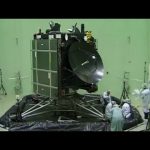
    On 12 November 2014, after a ten-year journey through the Solar System and over 500 million kilometres from home, Rosetta’s lander Philae made space exploration history by touching down on a comet for the first time. On the occasion of the tenth anniversary of this extraordinary feat, we celebrate by taking a look back over the mission’s highlights.

    Rosetta was an ESA mission with contributions from its Member States and NASA. It studied Comet 67P/Churyumov-Gerasimenko for over two years, including delivering lander Philae to the comet’s surface. Philae was provided by a consortium led by DLR, MPS, CNES and ASI.

    Credits: ESA – European Space Agency

    ★ Subscribe: http://bit.ly/ESAsubscribe and click twice on the bell button to receive our notifications.

    Check out our full video catalog: http://bit.ly/SpaceInVideos
    Follow us on Twitter: http://bit.ly/ESAonTwitter
    On Facebook: http://bit.ly/ESAonFacebook
    On Instagram: http://bit.ly/ESAonInstagram
    On LinkedIn: https://bit.ly/ESAonLinkedIn
    On Pinterest: https://bit.ly/ESAonPinterest
    On Flickr: http://bit.ly/ESAonFlickr

    We are Europe’s gateway to space. Our mission is to shape the development of Europe’s space capability and ensure that investment in space continues to deliver benefits to the citizens of Europe and the world. Check out https://www.esa.int/ to get up to speed on everything space related.

    Copyright information about our videos is available here: https://www.esa.int/ESA_Multimedia/Terms_and_Conditions

    #ESA #Comet #RosettaMission
  • Rosetta’s ever-changing view of a comet

    Rosetta’s ever-changing view of a comet

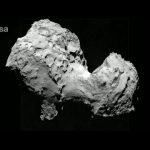
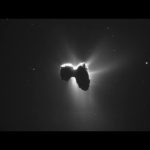
    These 210 images reflect Rosetta’s ever-changing view of Comet 67P/Churyumov–Gerasimenko between July 2014 and September 2016.

    The sequence begins in the month leading up to Rosetta’s arrival on 6 August, when the comet was barely a few pixels in the field of view. Suddenly, the curious shape was revealed and Rosetta raced to image its surface, coming within 10 km, to find a suitable place for Philae to land just three months later.

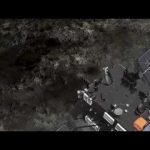
    Philae’s landing is featured with the ‘farewell’ images taken by both spacecraft of each other shortly after separation, and by Philae as it drew closer to the surface at its first touchdown point. An image taken at the final landing site is also shown.The subsequent images, taken by Rosetta, reflect the varying distance from the comet as well as the comet’s rise and fall in activity as they orbited the Sun.

    Before the comet reached its most active phase in August 2015, Rosetta was able to make some close flybys, including one in which the lighting geometry from the Sun was such that the spacecraft’s shadow could be seen on the surface.

    Then, owing to the increase of dust in the local environment, Rosetta had to maintain a safer distance and carry out scientific observations from afar, but this also gave some impressive views of the comet’s global activity, including jets and outburst events.

    Once the activity began to subside, Rosetta could come closer again and conduct science nearer to the nucleus, including capturing more high-resolution images of the surface, and looking out for changes after this active period.

    Eventually, as the comet returned to the colder outer Solar System, so the available solar power to operate Rosetta fell. The mission concluded with Rosetta making its own dramatic descent to the surface on 30 September 2016, the final images taken reflected in the last images shown in this montage.

    Explore thousands of Rosetta images in our Archive Image Browser: https://imagearchives.esac.esa.int/

    More about Rosetta and its science discoveries: http://www.esa.int/Our_Activities/Space_Science/Rosetta

    Credits: ESA/Rosetta/NavCam – CC BY-SA IGO 3.0; ESA/Rosetta/MPS for OSIRIS Team MPS/UPD/LAM/IAA/SSO/INTA/UPM/DASP/IDA; ESA/Rosetta/Philae/CIVA; ESA/Rosetta/Philae/ROLIS/DLR

  • The amazing adventures of Rosetta and Philae (German)

    The amazing adventures of Rosetta and Philae (German)

    Watch the amazing cartoon adventures of Rosetta and Philae, now back-to-back in one special feature-length production.

    Find out how Rosetta and Philae first got inspired to visit a comet, and follow them on their incredible ten-year journey through the Solar System to their destination, flying around planets and past asteroids along the way. Watch as Philae tries to land on the comet and deals with some unexpected challenges!

    Learn about the fascinating observations that Rosetta made as she watched the comet change before her eyes as they got closer to the Sun and then further away again. Finally, wish Rosetta farewell, as she, too, finishes her amazing adventure on the surface of the comet. Keep watching for one last surprise!

    This video is also available in
    English: https://www.youtube.com/watch?v=HD2zrF3I_II />Italian: https://www.youtube.com/watch?v=mOE1lt-t3JY />French: https://www.youtube.com/watch?v=t2qcopytSbQ />Spanish: https://www.youtube.com/watch?v=jfU09NXRnfI

  • The amazing adventures of Rosetta and Philae (Spanish)

    The amazing adventures of Rosetta and Philae (Spanish)

    Watch the amazing cartoon adventures of Rosetta and Philae, now back-to-back in one special feature-length production.

    Find out how Rosetta and Philae first got inspired to visit a comet, and follow them on their incredible ten-year journey through the Solar System to their destination, flying around planets and past asteroids along the way. Watch as Philae tries to land on the comet and deals with some unexpected challenges!

    Learn about the fascinating observations that Rosetta made as she watched the comet change before her eyes as they got closer to the Sun and then further away again. Finally, wish Rosetta farewell, as she, too, finishes her amazing adventure on the surface of the comet. Keep watching for one last surprise!

  • The amazing adventures of Rosetta and Philae (French)

    The amazing adventures of Rosetta and Philae (French)

    Watch the amazing cartoon adventures of Rosetta and Philae, now back-to-back in one special feature-length production.

    Find out how Rosetta and Philae first got inspired to visit a comet, and follow them on their incredible ten-year journey through the Solar System to their destination, flying around planets and past asteroids along the way. Watch as Philae tries to land on the comet and deals with some unexpected challenges!

    Learn about the fascinating observations that Rosetta made as she watched the comet change before her eyes as they got closer to the Sun and then further away again. Finally, wish Rosetta farewell, as she, too, finishes her amazing adventure on the surface of the comet. Keep watching for one last surprise!

  • The amazing adventures of Rosetta and Philae

    The amazing adventures of Rosetta and Philae

    Watch the amazing cartoon adventures of Rosetta and Philae, now back-to-back in one special feature-length production.

    Find out how Rosetta and Philae first got inspired to visit a comet, and follow them on their incredible ten-year journey through the Solar System to their destination, flying around planets and past asteroids along the way. Watch as Philae tries to land on the comet and deals with some unexpected challenges!

    Learn about the fascinating observations that Rosetta made as she watched the comet change before her eyes as they got closer to the Sun and then further away again. Finally, wish Rosetta farewell, as she, too, finishes her amazing adventure on the surface of the comet. Keep watching for one last surprise!

    This video is also available in
    Italian: https://www.youtube.com/watch?v=mOE1lt-t3JY
    French: https://www.youtube.com/watch?v=t2qcopytSbQ
    Spanish: https://www.youtube.com/watch?v=jfU09NXRnfI
    German: https://www.youtube.com/watch?v=gDmp4ZhSuIc

  • Once upon a time… mission complete

    Once upon a time… mission complete

    On the last day of her incredible mission, Rosetta slowly descends to the surface of Comet 67P/Churyumov-Gerasimenko. After having sent her extraordinary data back home, she is ready to join Philae for a well deserved rest on the comet. But is there one last surprise in store?

    This video is available in the following languages:
    English https://www.youtube.com/watch?v=vcYo-qQ5HbA
    German https://www.youtube.com/watch?v=4ngPV02ie4g
    Spanish https://www.youtube.com/watch?v=1PI103Je-cE
    French https://www.youtube.com/watch?v=MwML3kdmbPk
    Italian https://www.youtube.com/watch?v=X_vaJmUt37s

    More about Rosetta:
    http://rosetta.esa.int
    http://blogs.esa.int/rosetta

    Credit: ESA

  • (German) Once upon a time… mission complete

    (German) Once upon a time… mission complete

    On the last day of her incredible mission, Rosetta slowly descends to the surface of Comet 67P/Churyumov-Gerasimenko. After having sent her extraordinary data back home, she is ready to join Philae for a well deserved rest on the comet. But is there one last surprise in store?

    More about Rosetta:
    http://rosetta.esa.int
    http://blogs.esa.int/rosetta

    Credit: ESA

  • (French) Once upon a time… mission complete

    (French) Once upon a time… mission complete

    On the last day of her incredible mission, Rosetta slowly descends to the surface of Comet 67P/Churyumov-Gerasimenko. After having sent her extraordinary data back home, she is ready to join Philae for a well deserved rest on the comet. But is there one last surprise in store?

    More about Rosetta:
    http://rosetta.esa.int
    http://blogs.esa.int/rosetta

    Credit: ESA

  • (Italian) Once upon a time… mission complete

    (Italian) Once upon a time… mission complete

    On the last day of her incredible mission, Rosetta slowly descends to the surface of Comet 67P/Churyumov-Gerasimenko. After having sent her extraordinary data back home, she is ready to join Philae for a well deserved rest on the comet. But is there one last surprise in store?

    More about Rosetta:
    http://rosetta.esa.int
    http://blogs.esa.int/rosetta

    Credit: ESA

  • Rosetta’s journey around the comet

    Rosetta’s journey around the comet

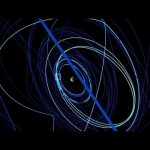
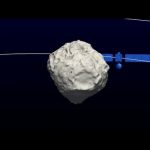
    Animation visualising Rosetta’s two-year journey around Comet 67P/Churyumov–Gerasimenko.

    The animation begins on 31 July 2014, during Rosetta’s final approach to the comet after its ten-year journey through space. The spacecraft arrived at a distance of 100 km on 6 August whereupon it gradually approached the comet and entered initial mapping orbits that were needed to select a landing site for Philae. These observations also enabled the first comet science of the mission. The manoeuvres in the lead up to, during and after Philae’s deployment on 12 November are seen, before Rosetta settled into longer-term science orbits.

    In February and March 2015 the spacecraft made several flybys. One of the closest flybys triggered a ‘safe mode’ event that forced it to retreat temporarily until it was safe to gradually draw closer again. The comet’s increased activity in the lead up to and after perihelion in August 2015 meant that Rosetta remained well beyond 100 km distances for several months.

    In June 2015, contact was restored with Philae again – albeit temporary, with no permanent link able to be maintained, despite a series of dedicated trajectories flown by Rosetta for several weeks.

    Following perihelion, Rosetta performed a dayside far excursion some 1500 km from the comet, before re-approaching to closer orbits again, enabled by the reduction in the comet’s activity. In March–April 2016 Rosetta went on another far excursion, this time on the night side, followed by a close flyby and orbits dedicated to a range of science observations.

    The animation finishes at 9 August 2016, before the details of the end of mission orbits were known. A visualisation of the trajectories leading to the final descent to the surface of the comet on 30 September will be provided once available.

    The trajectory shown in this animation is created from real data, but the comet rotation is not. An arrow indicates the direction to the Sun as the camera viewpoint changes during the animation.

  • Once upon a time… Rosetta’s second year at the comet

    Once upon a time… Rosetta’s second year at the comet

    Rosetta describes the exciting discoveries she made during her second year at Comet 67P/Churyumov-Gerasimenko, after the comet made its closest approach to the Sun along its orbit. She also tells us about her efforts to contact Philae, and starts counting down to her own mission finale.

    This video is available in the following languages:
    English https://www.youtube.com/watch?v=lxdDx8frN_Y
    Spanish https://www.youtube.com/watch?v=zM-ZJBinuBk
    French https://www.youtube.com/watch?v=bFF1izh10PM
    Italian https://www.youtube.com/watch?v=3aS1pgOU8Gs
    German https://www.youtube.com/watch?v=ne_PvPJZYL4

  • Philae facing eternal hibernation

    Philae facing eternal hibernation

    15 months after Philae made its historic landing on a comet, its legacy is enormous even if Rosetta’s lander is facing eternal hibernation.

    Mission teams are now looking ahead to the grand finale: making a controlled impact of the Rosetta orbiter on the comet next September.Rosetta arrived at Comet 67P/Churyumov–Gerasimenko on 6 August 2014 and Philae was delivered to the surface on 12 November. After touching down Philae bounced several times and completed 80% of its planned first science sequence before falling into hibernation. 

    A contact was made with the lander on 13 June and intermittent contacts were made up to 9 July. However the results of Philae mission are unique and complement all the science harvested by the orbiter Rosetta who is continuing its quest before being sent directly to the surface of 69P late September.

  • Rosetta Philae landing: one year

    Rosetta Philae landing: one year

    It’s been an extraordinary year for the Rosetta comet mission since Philae landed on the surface of Comet 67P/Churyumov-Gerasimenko on 12 November 2014.

    Continual data from the orbiter, together with information collected over several days from the lander, is providing a comprehensive picture of a remnant from our Solar System.

    This film covers the most recent science news from the Rosetta mission, as well as selected scientific highlights from the last year. It includes the comet’s unusual surface terrace structure, its formation from two colliding objects producing the unusual rubber duck shape, how water is transported from inside the comet towards the surface, and the surprising detection of molecular oxygen – familiar on Earth but not on a comet.

    Find out more about the Rosetta mission: http://rosetta.esa.int/

  • The Rosetta Mission

    The Rosetta Mission

    The Rosetta Mission has captured the interest and imagination of a generation and it is not over yet! Take a look at this Royal Observatory Greenwich video which explains what Rosetta and Philae have achieved as well as the impact the mission has had on our knowledge of our very own solar system. http://bit.ly/rogvideo #rogrosetta

    Credits:
    ROG – Creator
    Beakus – Producer
    Amaël Isnard – Director

  • ESAHangout: Rosetta mission’s day in the Sun

    ESAHangout: Rosetta mission’s day in the Sun

    A Google hangout with Rosetta mission experts to celebrate perihelion – the closest point to the Sun along the comet’s orbit – which occurred on the morning of on 13 August 2015.

    Joining our host Emily Baldwin (ESA Space Science Editor) were:
    Nico Altobelli – Acting Rosetta Project Scientist, ESAC
    Michael Küppers – Rosetta Science Operations Coordinator, ESAC
    Sylvain Lodiot – Rosetta Spacecraft Operations Manager, ESOC
    Armelle Hubault – Rosetta spacecraft operations engineer, ESOC
    Barbara Cozzoni – Philae Lander engineer, DLR
    Holger Sierks – OSIRIS Principal Investigator, MPS
    Joel Parker – Alice instrument Deputy-PI, SwRI
    Colin Snodgrass – Professional ground-based observing campaign coordinator, Open University
    Aurelie Moussi-Soffys – Science activities manager SONC (Philae)

    Date: 13 August 2015
    Time: 15:00-17:00 CEST (13:00-15:00 GMT)

    Background info on perihelion: http://www.esa.int/Our_Activities/Space_Science/Rosetta/Rosetta_preparing_for_perihelion

    #Perihelion2015 #Rosetta #hangoutsonair

  • Philae’s mission at comet 67P

    Philae’s mission at comet 67P

    Extended version of Philae touchdown animation to include visualisations of some of the science experiments on the lander.

    The animation begins with the deployment of Philae from Rosetta at comet 67P/Churyumov–Gerasimenko in November 2014. Rosetta will come to within about 10 km of the nucleus to deploy Philae, which will take several hours to reach the surface. Because of the comet’s extremely low gravity, landing gear will absorb the small forces of landing while ice screws in the probe’s feet and a harpoon system will lock the probe to the surface. At the same time a thruster on top of the lander will push it down to counteract the impulse of the harpoon imparted in the opposite direction. Once it is anchored to the comet, the lander will begin its primary science mission, based on its 64-hour initial battery lifetime. The animation then shows five of Philae’s 10 instruments in action: CIVA, ROLIS, SD2, MUPUS and APXS.

    Rosetta’s Philae lander is provided by a consortium led by DLR, MPS, CNES and ASI.

    Also watch:
    Philae touchdown animation: http://youtu.be/BzfJlXHiagw
    Philae’s panoramic camera (CIVA): http://youtu.be/k1IFU6kxcD8
    Science on the comet: http://youtu.be/Pi0rwJktEF8

    Credits: ESA/ATG medialab

  • Rosetta Spacecraft at ESA’s ESTEC Test Centre

    Rosetta Spacecraft at ESA’s ESTEC Test Centre

    The road to humankind’s first rendezvous with a comet began at ESA’s technical centre in the Netherlands. The pioneering Rosetta spacecraft and its Philae lander were tested in simulated space conditions to ensure they could withstand the difficult journey.

    Credits: ESA