At present it’s as though the distance ladder observed by Hubble and Webb has firmly set an anchor point on one shoreline of a river, and the afterglow of the Big Bang observed by our Planck mission from the beginning of the Universe is set firmly on the other side. How the Universe’s expansion was changing in the billions of years between these two endpoints has yet to be directly observed.
📹 ESA – European Space Agency 📸 NASA, ESA, CSA, Space Telescope Science Inst., A. Riess (JHU/STScI)
Did you know that in microgravity you can better study liquid metals and how they solidify?
Research in space on metallurgy helps improving production processes while enhancing properties for stronger, lighter and durable materials.
The step to space research is closer than you might think. Get involved with spaceflight research via https://www.esa.int/spaceflightAO. Find out about our commercial partnerships and opportunities in human and robotic exploration via https://www.esa.int/explorationpartners to run your research in microgravity as well.
★ Subscribe: http://bit.ly/ESAsubscribe and click twice on the bell button to receive our notifications.
We are Europe’s gateway to space. Our mission is to shape the development of Europe’s space capability and ensure that investment in space continues to deliver benefits to the citizens of Europe and the world. Check out https://www.esa.int/ to get up to speed on everything space related.
Did you know that in microgravity we are preparing one of the most promising fuels for the future?
Microgravity is helping to find answers and models to refine the processes needed to efficiently burn solid fuel like iron dust. Are we witnessing the rise of a new “Iron Age”? Could we use metal powders instead of petrol to fuel our cars?
Solid fuels are used for burning a match, lighting a sparkler on New Year’s Eve as well as the fuel inside the boosters of Ariane and of other rockets. But metals such as iron can also burn, in powder form, and are entirely smokeless and carbon free.
Metals could be produced using clean energy, such as from solar cells or wind turbines. That electricity is stored as chemical energy in the metal powder at energy densities that are competitive with fossil fuels. This has the potential to reduce greenhouse gasses emission globally, but a barrier to implementing this technology is the development of combustion systems that can efficiently burn the metal fuels, which requires a solid understanding of their combustion physics.
To understand the physics of metal fuel combustion, a cluster of iron powder needs to be suspended for about 30 seconds, the time needed to observe and study how a flame propagates. Researchers used sounding rockets and parabolic flights to run experiments in weightlessness and to validate existing models, yielding promising results.
The density of iron particles and the composition of gases in the combustion chamber are essential parameters, like in a petrol car engine. Microgravity allows for the study of the laws of flame propagation, to optimise parameters in industrial burner designs, and reduce impact on the environment.
These space experiments also help us understand similar phenomena, such as the spreading of contagious microbes and forest fires.
In a vote of confidence for the technique a student team at TU Eindhoven in The Netherlands worked with industrial partners to design a metal combustion facility now installed at Swinkels Family Brewers, subsidised by the Dutch province of Noord-Brabant, used to produce steam for the brewing process.
The step to space research is closer than you might think. Get involved with spaceflight research via https://www.esa.int/spaceflightAO. Find out about our commercial partnerships and opportunities in human and robotic exploration via https://www.esa.int/explorationpartners to run your research in microgravity as well.
★ Subscribe: http://bit.ly/ESAsubscribe and click twice on the bell button to receive our notifications.
We are Europe’s gateway to space. Our mission is to shape the development of Europe’s space capability and ensure that investment in space continues to deliver benefits to the citizens of Europe and the world. Check out https://www.esa.int/ to get up to speed on everything space related.
“Niciodata nu vom putea intelege natura asa de bine ca filozofii greci… Noi stim prea mult” spunea John R. Pierce.
Cunoasterea stiintifica accelerata a ultimelor secole ne-a schimbat perspectiva lumii pentru totdeauna. Povestile bunicii si ale strabuncii mele s-au transformat. Ce povesti le vom spune noi copiilor cand vom fi bunici? Ce perspectiva le vom da asupra lumii? Cristian Presură studied physics and engineering. In 2002, he received his PhD in physics from the Groningen University, Netherlands. Since then he is a Research Scientist at Philips Research Eindhoven. His research focuses on medical sensors and resulted in a few dozens of patents.
Cristian finds time to write for the public some of the most accurate yet accessible science popularization books and articles. His first book, „Narrated Physics”, was an instant hit on Romanian market and received numerous prizes, such as the Romanian Academy prize and the medal of the Romanian Society of Mathematical Sciences.
He regularly gives physics courses in summer student camps, writes to journals, and appears regularly on radio and TV. He has also a popular YouTube channel for science. This talk was given at a TEDx event using the TED conference format but independently organized by a local community. Learn more at https://www.ted.com/tedx
Read the full experiment at www.stevespanglerscience.com/experiment/incredible-can-crusher
There are lots of different ways to crush a soda can… with your foot, in your hands, on your head. But nothing compares to the fun you’ll have doing the soda can implosion experiment. Just wait until the can goes “POP” and then you’ll see who has nerves of steel.
Our alien friend Paxi, went to visit American astronaut Anne McClain on board the International Space Station. Anne explains to Paxi how astronauts move around in weightlessness on the ISS.
Credits: ESA/NASA
★ Subscribe: http://bit.ly/ESAsubscribe and click twice on the bell button to receive our notifications.
ESA is Europe’s gateway to space. Our mission is to shape the development of Europe’s space capability and ensure that investment in space continues to deliver benefits to the citizens of Europe and the world. Check out http://www.esa.int/ESA to get up to speed on everything space related.
A simple and clear explanation of all the important features of quantum physics that you need to know. Check out this video’s sponsor https://brilliant.org/dos
I have spent a lot of time thinking about how best to explain quantum physics and this is the result of all my hours of pondering, and I’m really happy with how it turned out. I decided to just explain it as it actually is, rather than rely on analogies. The video explains the quantum wavefunction, particle-wave duality, the measurement problem, the double-slit experiment, superposition, entanglement, quantum tunnelling, the Heisenberg uncertainty principle, and energy quantisation. Let me know if it was helpful! Cheers Dx
Thanks so much to my supporters on Patreon. If you enjoy my videos and would like to help me make more this is the best way and I appreciate it very much. https://www.patreon.com/domainofscience
Further reading
For a more detailed introduction to quantum physics: ‘The Quantum Universe’ by Brian Cox and Jeff Forshaw is good.
And a slightly more advanced but fantastic description of what we do and don’t know about quantum physics is the excellent book ‘Beyond Weird’ by Philip Ball.
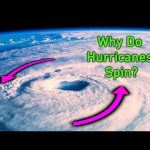
The Coriolis effect says that anytime you’re rotating—whether it’s on a playground toy or your home planet—objects moving in straight lines will appear to curve. This bizarre phenomenon affects many things, from the paths of missiles to the formation of hurricanes.
You may have heard that the Coriolis effect makes water in the bathtub spiral down the drain in a certain way, or that it determines the way that a toilet flushes. That’s actually wrong.
Although, as you may have noticed while tracking a hurricane on the news, storms in the Northern Hemisphere spin counterclockwise, while those in the Southern Hemisphere spin clockwise. Why do storms spin in different directions depending on their location? And why do they spin in the first place? The answer is the Coriolis effect.
Curiozitatea, povestea şi ecuaţiile sunt coloana vertrebrală a fizicii. Curiozitatea este scânteia care, odată ce pătrunde în creier, declanşează o reacţie în lanţ. Aşa cum ştim de la copii, curiozitatea este satisfăcută prin poveşti. Acesta este al doilea pas. Deși frumoase, poveștile nu descriu cantitativ și precis natura. De aceea, pentru a încheia povestea, trebuie să învățam să folosim matematica, limbajul universal al naturii. „Fizica este o cale de a te descoperi pe tine insuti”, asa cum ne marturiseste Cristian Presura.
Fiind unul dintre cei mai cunoscuti fizicieni romani contemporani, Cristian Presura s-a descoperit pe sine prin fizica. Nascut in 1971 acesta a studiat Fizica la Universitatea din Bucuresti. Dupa terminarea studiilor a lucrat la Intitutul de Fizica Atomica unde a studiat proprietatile laserelor in medii active si solide.
A caracterizat proprietatile optice ale sistemelor corelate de electroni, obtinadu-si astfel doctoratul in fizica la Universitatea Groningen din Olanda în anul 2002. In urma cercetarilor sale, Cristian a publicat rezultatele descoperite în numeroase lucrari publicate in reviste de specialitate precum : Science.
In prezent Cristian este dedicate domeniului cercetarii si doreste sa aduca inovatie prin descoperirile sale. Acesta lucreaza ca cercetator la compania Philips si este specializat in sensozi medicali. Alaturi de echipa sa, a inventat primul ceas ce poate masura pulsul sportivilor exclusiv pe baza sensorilor optici. Cristian Presura este totodata membru al asociatiei cercetatorilor romani Ad Astra.
Dedicarea lui Cristian pentru cercetare nu se opreste aici. Acesta a publicat de-a lungul carierei sale zeci de lucrari si brevete, una dintre cele mai cunsocute fiind volumul “Fizica povestita”, o lucrare distinsa ce a fost premiata cu Premiul Academiei Romane in domeniul stiintelor fizice.
Din dorinta de a populariza stiinta si in particular fizica, Cristian este fondator al asociatiei Stiinte pentru Toti. This talk was given at a TEDx event using the TED conference format but independently organized by a local community. Learn more at https://www.ted.com/tedx
The universe is incredibly old, astoundingly vast and populated by trillions of planets — so where are all the aliens? Astronomer Stephen Webb has an explanation: we’re alone in the universe. In a mind-expanding talk, he spells out the remarkable barriers a planet would need to clear in order to host an extraterrestrial civilization — and makes a case for the beauty of our potential cosmic loneliness. “The silence of the universe is shouting, ‘We’re the creatures who got lucky,’” Webb says.
The TED Talks channel features the best talks and performances from the TED Conference, where the world’s leading thinkers and doers give the talk of their lives in 18 minutes (or less). Look for talks on Technology, Entertainment and Design — plus science, business, global issues, the arts and more.
You’ve probably seen atoms like this emoji ⚛ everywhere from science textbooks to the logo for The Big Bang Theory. But what does an atom really look like? The truth is much stranger.
SUBSCRIBE: http://youtube.com/whatthephysics?sub
What if the Earth were swallowed by a black hole? Would humanity’s legacy be gone forever? Or could you somehow get back that information from behind the event horizon?
There are three possible answers to this question…but they all break physics as we know it!
Have you ever wondered what it would be like to fall into a black hole? Take a 360° adventure to find out!
SUBSCRIBE: http://youtube.com/whatthephysics?sub
LINKS AND DETAILS:
More details:
#1. Speed of sound: Unlike light, sound needs a medium to travel through, and its speed depends on characteristics of that medium like density and temperature. In the extreme environment of a neutron star’s core, sound can travel extremely fast. But knowing that sound can’t surpass the speed of light, physicists can narrow down their models of neutron stars to include only those where “extremely fast” is less than light speed.
#3. Relativity rainbows: A team at MIT created a game called “A Slower Speed of Light” that lets you see the world as you would at near-light speeds. Their trailer: https://www.youtube.com/watch?v=uu7jA8EHi_0
This evidence seems to suggest that the dark matter is particles that are less than four times the mass of a proton and are moving at non-relativistic speeds. This is consistent with dark matter particles being so-called WIMPs: https://en.wikipedia.org/wiki/Weakly_interacting_massive_particles.
We did something a little different in this episode and answered questions from you, our viewers. If you have a questions about the universe, past videos, or life as a scientist, leave a comment below!
How can you train yourself to be a quantum detector? Quantum interactions happen at impossibly small scales. But the life-size effects are all around you. You can detect quantum mechanics all over — if you know how to look for it.
ADVANCED SCIENTIFIC NOTE: Quantum mechanics would be much more obvious if we had very sensitive eyes. If your eyes identified each photon individually, you would see them land as described in the video, and only build up to this wave pattern. The pattern that we see can be explained classically by waves, it is *ultimately* a quantum phenomenon. The only reason it’s hard to tell is because our light detectors (eyes) aren’t quite sensitive enough.
NOVA has teamed up with Cook’s Illustrated to cook up a recipe for stars and black holes – a culinary “course” on how the most mysterious objects in the universe are created.
SCIENTIFIC NOTES:
* The relationship between information and energy comes from Landauer’s Principle, which connects the erasure of information and energy. But, more generally changes in information (e.g. recording information) are related to changes in energy. I will talk more about this in a future episode about the physics of memory, and why you will forget everything you ever knew! https://en.wikipedia.org/wiki/Landauer%27s_principle
* The numbers calculated in this video give a lower limit on the energy to record a particular amount of information, but to create a more permanent storage of information would require more energy.
* Retina display resolution, as it’s name implies, is similar to the eye’s resolution.
What makes a brain or machine conscious? Will robots become more conscious than we are? One theory, which can actually calculate consciousness, is beginning to provide some answers.
Subscribe: http://youtube.com/whatthephysics?sub_confirmation=1
↓Want more info?↓
Scientific notes:
Stellar mass black holes vs. supermassive black holes
* Stellar mass black holes form from the collapse of massive stars at the ends of their lives, so they have roughly the same mass as a star. Supermassive black holes are physically identical to their smaller counterparts, except they are 10 thousand to a billion times the size of the sun. However, their formation is more of a mystery. They may form from the merging of smaller black holes. http://astronomy.swin.edu.au/cosmos/S/Supermassive+Black+Hole
Supermassive black holes at the center of galaxies
* Almost every large galaxy has a supermassive black hole at its center, but researchers are not yet sure (https://jila.colorado.edu/research/astrophysics/black-holes-galaxies) why that’s the case, how they originate, and what their role is in the creation and evolution of galaxies.
Why are stars different colors?
* The color of a star depends on its temperature (http://www.atnf.csiro.au/outreach/education/senior/astrophysics/photometry_colour.html). The hotter a star, the higher energy its light will be. Higher energy/temperature corresponds with the blue end of the visible spectrum and lower energy/temperature corresponds with the red end.
How does dark matter make stars spin faster?
* In the 1960s, astronomers Vera Rubin and Kent Ford noticed that stars at the edges of galaxies were moving just as fast as stars at the center, which surprised them: it appeared that the force of gravity causing stars to orbit the center of the galaxy was not weakening over distance. Their observation implied that something else, distributed throughout the galaxy, was exerting a gravitation pull. We now know that that “something else,” now named dark matter, accounts for about 85% of the matter in the universe. (It existence was inferred in the 1930s, when the astronomer Fritz Zwicky(http://www2.astro.psu.edu/users/rbc/a1/week_10.html) noticed that galaxies in clusters were moving faster than they should.)
Size of the universe
* The universe is only 13.8 billion years old, but has a radius of about 46 billion light-years. If nothing can travel faster than the speed of light, how can that be? The expansion of the universe, driven by dark energy, is causing distances between objects to grow. Note that it is not moving those objects apart; rather, it is increasing the amount of space between them. https://phys.org/news/2015-10-big-universe.html
Cosmic webs
* Galaxies are not distributed randomly (http://skyserver.sdss.org/dr1/en/astro/structures/structures.asp) in space; instead, clusters of galaxies form web-like patterns. These webs consist of filaments, where dark matter and ordinary (baryonic) matter are concentrated, and voids, where galaxies are scarce. Researchers believe that these large-scale structures grew out of minor fluctuations in density at the beginning of the universe.
Composition of the early universe
* Moments after the Big Bang, the universe formed the nuclei for what would be come the universe’s hydrogen and helium atoms, with one helium nucleus for every 10 or 11 hydrogen (http://umich.edu/~gs265/bigbang.htm). When the first stars formed, there were no heavier elements — those elements formed inside stars.
String Theory Landscape
* The String Theory Landscape is a theory that the universe we live in is one of many universes. It attempts to explain how certain constants of nature seem “fine-tuned” for life, which contradicts the anthropic principle, or the notion that we humans hold a special place in the universe. https://www.scientificamerican.com/article/multiverse-the-case-for-parallel-universe/%0A
Disintegration of the universe
* In the future Degenerate Era of the universe, as space-time expands and stars burn up, all of the matter in stars will be consumed by black holes. But even black holes are not forever. Stephen Hawking theorized that black holes will slowly radiate away their mass in what is now called Hawking radiation until they too dissipate away. http://www.nytimes.com/books/first/a/adams-universe.html
______
MEDIA CREDITS:
Music provided by APM
Sound effects: Freesound.org
Additional Animations:
– Galaxy within Universe: Edgeworx;
– Stars at center of Milky Way – NASA/NCSA University of Illinois Visualization by Frank Summers, Space Telescope Science Institute, Simulation by Martin White and Lars Hernquist, Harvard University
What if everything in the universe came to your doorstep…in a box?! What The Physics is BACK! Future episodes will explore the universe—but first, let’s unbox it.
Subscribe: http://youtube.com/whatthephysics?sub…
↓Want more info?↓
SCIENTIFIC NOTES:
Explosive young stars
* The average lifetime of a star is about 10 billion years, but the bigger the star, the shorter its life. One rare type of star, called a hypergiant, can be tens, hundreds, or even a thousand times the mass of our sun. These stars burn out and explode into supernovae in just a few million years. http://www.guide-to-the-universe.com/hypergiant-star.html
Black holes
* Black holes form from the collapse of a massive star at the end of its life, but this only happens in stars about three times as massive as the sun. http://burro.case.edu/Academics/Astr201/EndofSun.pdf
How big is the universe?
* Probably infinite. No one knows the size of the universe for sure, and we may never know, but the latest thinking is that it probably goes on forever. https://map.gsfc.nasa.gov/universe/uni_shape.html
Standard cosmological model
* According to the standard cosmological model, the universe started with a big bang, underwent rapid inflation within the first fraction of a second, and continues to expand, driven by a vacuum energy called dark energy. All of the structure we see in the universe has come from interactions between dark energy and dark matter (which accounts for about 85% of the universe’s matter). This model describes and predicts many phenomena in the universe but is not perfect. https://physics.aps.org/articles/v8/108
False vacuum model
* The false vacuum model is a real, albeit unlikely theory. All the fundamental forces of nature have corresponding fields (e.g., gravitational fields, magnetic fields, etc.), and we generally believe that the universe is at rest in a global minimum of the potentials of those fields. But if we are instead at rest in a local minimum, or a “false vacuum,” the universe could potentially be nudged, catastrophically, into a lower minimum.
Recycling stars into life
* Before the first stars, the universe was all hydrogen and helium. All heavier elements, including the building blocks of life, were forged in stars.
Dark matter and dark energy
* Only 5% of the universe is made up of matter we can see. The “missing mass” later dubbed dark matter was first noticed in the 1930s; dark energy was discovered in the 1990s. In both cases, their existence was inferred by their effect on objects they interact with. However, they are still not directly observable, so nobody knows yet what they are made of.
Leftover light from the Big Bang
* The theory of the Big Bang predicted the existence of cool radiation pervading the universe, left over from its beginning. In an accidental discovery, two New Jersey scientists discovered the cosmic microwave background, a nearly uniform bath of radiation throughout the universe at a temperature of about 3 Kelvin, or -454 degrees Fahrenheit.
Gravitational waves
* Albert Einstein predicted the existence of gravitational waves in his theory of general relativity in 1916. According to his theory, the acceleration of massive objects, like black holes, should send ripples through space-time at the speed of light. A century after his prediction, two merging black holes sent a ripple through space-time that was detected on Earth as a signal that stretched the 4-kilometer arms of a detector by less than 1/1,000 the width of a proton.
Cosmic dust
* Cosmic dust is cast off from stars at the end of their lives and hovers in galaxies as clouds. These clouds of dust absorb ultraviolet and visible light, obscuring much of what lies behind them. This makes it notoriously difficult to study things like the dusty center of our galaxy.
The observable universe
* The universe is 13.8 billion years old. Since the distance we can observe is limited by the time it takes light to travel to Earth, we can only ever observe a fraction of the universe: an expanding sphere around us that is now about 46 billion years in radius. However, the universe is much larger than what we can observe.
CREDITS:
Host, Writer, Producer: Greg Kestin
Animation & Compositing: Danielle Gustitus
Contributing Writers: Lissy Herman, HCSUCS
Filming, Writing, & Editing Contributions from:
Samia Bouzid and David Goodliffe
Creation of Sad Star Image: Drew Ganon
Special thanks:
Julia Cort
Lauren Aguirre
Ari Daniel
Anna Rothschild
Allison Eck
Fernando Becerra
And the entire NOVA team
Advanced scientific note about Doppler: If there is a light moving away from you at constant velocity in static flat (Minkowski) space-time, no matter how red it is, you will never conclude it is going faster than light. But, here I am discussing the conclusions one might come to if you mistakenly use Doppler in the context of the curved space-time of the universe (where there is expansion). Interpreting the huge redshift as a result of the doppler effect, could make one think that galaxies we see are moving away at speeds approaching light speed. And since what we are actually seeing is light from those galaxies from billions of years ago, and given that the universe is expanding, you might be tempted to say that they have since “accelerated” to faster than the speed of light. You might go further and say that there are more distant galaxies that we can’t see which are moving away even faster. So you might conclude there are galaxies moving faster than light in the universe. But the redshift isn’t from doppler and this “acceleration” of the expanding universe isn’t actually causing a true increase in velocity.
Sometimes astronomers do say there is a faster than light “recession speed” by pretending the expansion of the universe is causing distant galaxies to move away from each other at a corresponding velocity, but that’s misleading. In general relativity, you can actually have an increase in space between objects without causing a corresponding increase in the relatives velocities of those objects.
Special thanks:
Marissa Giustina
Nick Hutzler
Julie Elksy
Byron Drury
Jacob Barandes
Tyler Howe
Lissy Herman
Ari Daniel
Lauren Aguirre
Kristine Allington
Allison Eck
Anna Rotschild
MEDIA CREDITS:
Music provided by APM:
Deep_Science_No-perc
Mysteries_of_Science_B
Dreaming_of_the_Stars_a
Curiosity_Kills_the_Cat_2
Conundrum_a
Images:
Stars – Rene Barrios
Earth – Eirika
galaxy spiral (by coornio – diviantart)
Squirrel with scissors – 60811670 – Dollarphotoclub
Equations – 91613623 – Dollarphotoclub
Maxresdefault – Sean Stewart
Marissa Giustina – Lammerhuber
Tangled cat – David Swayze
Cat doll – Vicky Somma
Stock footage:
train-exits-tunnel – Pond5
Bin_pulsar_442 – Courtesy of Nasa
Expanding in space (40294) – Courtesy of Nasa
WMAP_archive – Courtesy of Nasa
In the third act of “Swan Lake”, the Black Swan pulls off a seemingly endless series of turns, bobbing up and down on one pointed foot and spinning around and around and around … thirty-two times. How is this move — which is called a fouetté — even possible? Arleen Sugano unravels the physics of this famous ballet move.
Lesson by Arlene Sugano, animation by Dancing Line Productions.
Does gravity change the color of light all around you? Einstein thought so. Did this ingenious experiment proved him right?
Subscribe: http://youtube.com/whatthephysics?sub…
↓Want more info?↓
Special thanks:
Tyler Howe
Ari Daniel
Paul Horowitz
Sara Tewksbury
Seeta Joseph
Karishma Desai
Lauren Aguirre
Kristine Allington
Allison Eck
Lauren Miller
Stuart McNeil