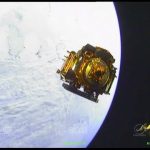
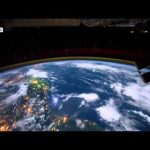
This superb footage was acquired by cameras on the Soyuz Fregat upper stage that released Sentinel-1A into orbit on 3 April 2014. It shows the Sentinel-1A satellite separating from the Fregat to start its life in orbit around Earth.
The 2.3 tonne satellite lifted off on a Soyuz rocket from Europe’s Spaceport in Kourou, French Guiana at 21:02 GMT (23:02 CEST). The first stage separated 118 sec later, followed by the fairing (209 sec), stage 2 (287 sec) and the upper assembly (526 sec). After a 617 sec burn, the Fregat upper stage delivered Sentinel into a Sun-synchronous orbit at 693 km altitude. The satellite separated from the upper stage 23 min 24 sec after liftoff.
Sentinel-1 is the first in the family of satellites for Europe’s Copernicus programme. It carries an advanced radar to scan Earth’s surface in all weather conditions and regardless of whether it is day or night. This new mission will be used to care for many aspects of our environment, from detecting and tracking oil spills and mapping sea ice to monitoring movement in land surfaces and mapping changes in the way land is used.
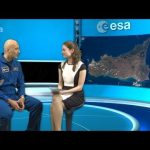
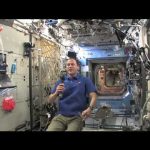
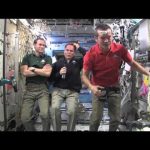
Discover more about our planet with the Earth from Space video programme. In this special edition, ESA astronaut Luca Parmitano joins the show to share his view of Earth from space while on the International Space Station.
Space missions have been chasing comets since the launch of the Giotto spacecraft in 1985. NASA’s Stardust mission flew through a comet’s tail in 2006 and brought a sample of dust back to Earth. Glycene was found in this sample, one of the four basic amino acids in our DNA. We can make a fake comet on Earth using a recipe of water ice, liquid nitrogen and fine carbon particles. By testing the fake comet and simulating the conditions of space, this will help scientists interpret data from ESA’s latest comet chaser – Rosetta. With ESA’s comet chaser Rosetta expectations are great : for the first time a probe will be flying alongside a comet and even placing a lander on its surface.
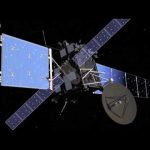
This short movie tells the story of Rosetta’s journey through the Solar System so far, through the voices of some of the many people involved in this exciting mission. ESA’s Rosetta spacecraft launched in March 2004 and has since been chasing down comet 67P/Churyumov-Gerasimenko, where it will become the first space mission to orbit a comet, the first to attempt a landing on a comet’s surface, and the first to follow a comet as it swings around the Sun. In the last ten years Rosetta has made 3 flybys of Earth and 1 of Mars, and passed by and imaged asteroids Steins and Lutetia. Operating on solar energy alone, in June 2011 Rosetta was placed into deep space hibernation as it cruised nearly 800 million kilometres from the warmth of the Sun, close to the orbit of Jupiter. On 20 January, Rosetta will wake up at 673 million kilometres from the Sun and about 9 million km from the comet, ready for the next leg of its epic adventure.
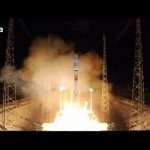
Soyuz flight VS06, with the Gaia space observatory, lifted off from Europe’s Spaceport, French Guiana, on 19 December 2013. This timelapse movie shows Gaia sunshield deployment test, the transfer of the Soyuz from the assembly building to the launch pad and the lift off.
On 29 December 2013, ESA’s Mars Express will make the closest flyby yet of the Red Planet’s moon Phobos, skimming past only 45 km above its surface.
As the spacecraft passes close to Phobos, it will be pulled slightly off course by the moon’s gravity, by a few tens of centimetres. This small deviation will be measured using the spacecraft’s radio signals, and then translated into measurements of gravity, mass and density at different locations on the moon.
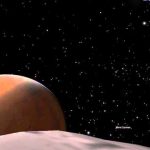
This animation shows the flyby (speeded up) as if you were standing on Phobos, with Mars in the background and Mars Express sweeping out an arc above. Toward the end of the sequence, Mars Express disappears behind Mars and out of sight of Phobos.
Visualisation of how the Rosetta spacecraft wakes up from deep space hibernation, 673 million kilometres from the Sun, on 20 January 2014.
Prior to entering hibernation on 8 June 2011, Rosetta was oriented so that its solar arrays faced the Sun, and it began rotating once per minute for stability. The only devices left running were its computer and several heaters.
Rosetta’s computer is programmed to carry out a sequence of events to re-establish contact with the Earth on 20 January, starting with an ‘alarm clock’ at 10:00 GMT. Immediately after, the star trackers begin to warm up. Around 6 hours later the thrusters are fired and the slow rotation stops. A slight adjustment is made to Rosetta’s orientation to ensure that the solar arrays now face the Sun. Then the star trackers switch on to determine its attitude. The spacecraft rotates towards Earth, and the transmitter is switched on. Then Rosetta’s high-gain antenna points to Earth and the signal is sent. The journey takes 45 minutes before the signal is received and mission controllers can begin to check Rosetta’s health, ready for the next phase of the mission.
The first opportunity for receiving a signal on Earth is between 17:30 GMT and 18:30 GMT.
Íme az űrkadétok: három fiatal mérnök, akiknek a munkája a szó szoros értelmében földönkívüli élményt jelent. A szakértők olyan új generációjáról van szó, akiknek az űrutazásról szóló álmaikat sikerült kézzelfogható karrierre váltaniuk.
Meet the space cadets, three young engineers with enviable jobs that are quite literally out of this world. This edition of Space focuses on three professionals who’ve turned their dreams of working in space into real down-to- Earth careers.
In the UK, 26-year-old Abbie Hutty, a spacecraft structures engineer at Astrium, is a proud member of the ExoMars team. She is developing the structure of the mission’s rover, ensuring that the actual body of the vehicle and other components are all structurally strong enough to withstand the launch from Earth, and landing on Mars.
Twenty-seven-year-old Marc Costa Sitjà, Science Operations Engineer at the European Space Agency, uses the huge antenna at Cebreros, west of Madrid, to ‘drive’ ESA’s Venus Express spacecraft around the planet. Every day he sends commands and receives data to and from the spacecraft from the agency’s ESAC facility near the Spanish capital.
Maria Komu, a 27-year-old researcher at the Finnish Meteorological Institute, works on Finnish mini satellite Aalto-1, and has a hands-on role developing a weather instrument for ESA’s ExoMars EDM mission.
Space is a childhood dream turned reality for all three. For Abbie the realisation that space wasn’t just science fiction came when she was still at school and she heard of the Beagle 2 mission to Mars, a lander that was developed in the UK by British engineers. Maria tells the story of a book about a school visit around the solar system that enchanted her as a young girl. Meanwhile Marc cites a vivid blue image of Venus as an inspiration to his career.
Abbie, Marc and Maria are all educated to masters level, while Maria continues studying towards a doctorate. They’re on the first steps of the career ladder, and that means plenty of learning ‘on-the-job’. Maria had to master soldering, programming, and testing, Marc developed his skills by creating software that helped a mission to better fulfill its purpose, while Abbie had to understand better the behaviour of particular materials in the cold vacuum of space.
The excitement of working in space is summed up by Abbie: “I think the space industry is quite a privileged industry to work in, because whilst you are still managing projects and meeting schedules and deadlines, and creating a product, at the end of the day that requires a certain amount of processes down on it, you can also come down to the clean rooms and look through the window and see your part of a spaceship, and think ‘that’s going to Mars, and I did that bit’, and you don’t get that anywhere else.”
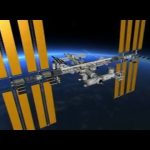
Get an idea of what it feels like to see the International Space Station from the outside, as an astronaut on a spacewalk. Put your 3D glasses on to appreciate the size of humankind’s orbital laboratory and watch a Soyuz spacecraft undock and a docking with ESA’s supply spacecraft Automated Transfer Vehicle.
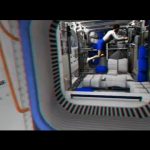
Put your 3D glasses on for this virtual visit of the International Space Station’s modules. Float through the space laboratories and connecting modules from the perspective of an astronaut.
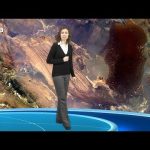
Earth from Space is presented by Kelsea Brennan-Wessels from the ESA Web-TV virtual studios. The eighty-fourth edition features an Envisat image of the Dasht-e Lut salt desert in southeast Iran.
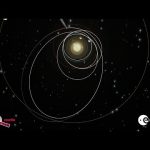
This animation tracks Rosetta’s journey through the Solar System, using gravity slingshots from Earth and Mars to reach its final destination: Comet 67P/Churyumov–Gerasimenko. Rosetta made three flybys of Earth, on 4 March 2005, 13 November 2007 and 13 November 2009, and one of Mars, on 25 February 2007. Rosetta has also visited two asteroids, taking extensive close-up images of 2867 Steins on 5 September 2008 and 21 Lutetia on 10 July 2010. Once the spacecraft is woken up from deep space hibernation on 20 January 2014, it will head for rendezvous with the comet in May. In November the Philae probe will be deployed to the comet surface. Rosetta will follow the comet to its closest distance to the Sun on 13 August 2015 and as it moves back towards the outer Solar System. The nominal mission end is December 2015.
Credits: ESA
NASA’s Voyager 1 spacecraft has traveled beyond our solar bubble and has entered interstellar space. During a NASA Headquarters briefing, the Voyager team assessing the data determined the craft is in a transitional region immediately outside the solar bubble where some effects from our sun are still evident. New, unexpected data indicate that Voyager 1 has been traveling through the plasma, or ionized gas, that originates in the space between the stars. The spacecraft is now bathed in interstellar plasma, the material ejected from the death of nearby stars millions of years ago. Speakers on the occasion were – Ed Stone- Voyager project scientist, California Institute of Technology; Don Gurnett – Voyager plasma wave investigation principal investigator, University of Iowa; Suzanne Dodd – Voyager project manager, Jet Propulsion Laboratory; and Gary Zank, physics department chair, University of Alabama in Huntsville.
During the Living Planet Symposium 2013 in Edinburgh, UK, Shubha Sathyendranath, Science Leader of the Ocean Colour CCI project, joined us to discuss ocean colour and the Climate Change Initiative.
We wanted to know: How often do astronauts wash their clothes in space? We asked the members of the public in Europe what they think. Watch the video to discover the answer.
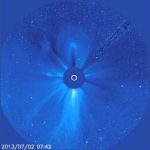
Two coronal mass ejections (CMEs) expand side-by-side from the Sun and out into space in this movie, playing out in front of the ESA/NASA Solar and Heliospheric Observatory, SOHO, on 1-2 July 2013.
The shaded disc at the centre of the image is a mask in SOHO’s LASCO instrument that blots out direct sunlight to allow study of the faint details in the Sun’s corona. The white circle added within the disc shows the size and position of the visible Sun.
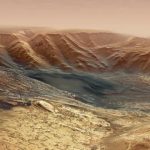
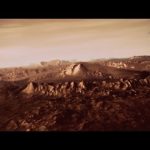
Fly-through movie of Hebes Chasma, the northernmost part of Valles Marineris. The movie was created from images taken by the High Resolution Stereo Camera on Mars Express.
Marte sigue intrigando a los científicos. Hay robots que se han enviado para que vuelen sobre Marte, para que se desplacen por el planeta e incluso para perforen y recojan muestras. Todo, para buscar señales y saber si alguna vez, quizá hace mucho tiempo, hubo algún tipo de vida. Encontrar cualquier evidencia equiere la habilidad de los mejores detectives: científicos, robots y satélites que estudian el planeta con todo detalle.
“Si ha habido vida más allá de la Tierra el destino ideal sería Marte”, dice el cientifico de la ESA Olivier Witasse. Un destino ideal pero también un rompecabezas que los investigadores están empezando a reconstruir.
Las primeras fotos de Marte las tomó la sonda Mariner 4 en 1965. Estas imágenes alimentaron las especulaciones sobre la existencia de agua y vida. En los años 70 se continuó investigando el planeta con las misiones Viking. Luego llegaron los vehículos exploradores. El año pasado aterrizó el robot Curiosity de la Nasa. Pesa 900 kilos y es capaz de recoger rocas y analizarlas. Curiosty no busca restos de vida, sino signos de habitabilidad. El robot tiene un potente láser diseñado por ingenieros estadounidenses y franceses. Su potente luz es capaz de convertir una roca o partes de una roca en una bola de fuego para analizar los elementos de los que está compuesta.
La búsqueda que ha hecho Curiosity ha tenido éxito. De hecho, en el lugar donde aterrizó hubo alguna vez agua a una temperatura adecuada, con niveles de acidez apropiados para la formación de la vida. Pero hace unos tres mil millones de años todo cambió, porque el campo magnético de Marte se desvaneció y gran parte de la atmófera se perdió.
La sonda Mars Express también ha encontrado depósitos de hielo debajo de la superficie del planeta, que están ocultos por el polvo. Y también descubrió algo más misterioso e intrigante: metano. El programa europeo ExoMars lanzará en 2016 un satélite para examinar este gas. Y dos años después un robot recorrerá el planeta rojo. Será la primera misión que busque directamente señales de vida ahora y en el pasado. Todavía no se sabe dónde aterrizará el robot ExoMars porque los científicos no se han puesto de acuerdo, de momento. Se cree que pudo existir algún tipo de vida hace unos 4.000 millones de años. Y las mejores localizaciones son los valles antiguos donde había agua.
Los secretos de Marte se esconden a menudo debajo del polvo del planeta. Sin embargo, se están haciendo progresos de forma muy rápida para unir las piezas del rompecabezas. Y puede que tambien estos descubrimientos den alguna respuesta sobre nuestro origen en la Tierra.
Criámos missões científicas para percorrerem Marte e, dentro em breve, explorarem o subsolo, de forma a suplantar vários desafios. Mas a pergunta maior para a qual procuramos uma resposta é a seguinte: alguma vez houve vida neste planeta? “Se já existiu vida fora da Terra, então Marte é a hipótese mais óbvia”, afirma Olivier Witasse, da Agência Espacial Europeia (ESA).
A Mars Express tem-nos ajudado a avançar consideravelmente no conhecimento deste planeta. A sonda acaba de celebrar dez anos em órbita – a missão inicial da ESA estava programada para dois. Os dados que tem recolhido permitem criar mapas a 3 dimensões da superfície marciana e sinalizar locais onde podem existir minerais. Segundo Witasse, “houve muitas descobertas nestes últimos dez anos: a deteção dos minerais hidratados, por exemplo, que foram formados na presença de água, diz-nos que existiu realmente água em Marte durante vários milhões de anos.”
Já as primeiras fotografias de Marte a partir da sonda Mariner 4, em 1965, começaram a alimentar as especulações prolongadas na década seguinte com as missões Viking. O ano passado, a NASA fez aterrar o robô Curiosity no Planeta Vermelho. Um verdadeiro laboratório científico capaz de efetuar recolhas e análises. O objetivo anunciado não é tanto procurar sinais de vida, mas sim condições de habitabilidade.
A cabeça do robô integra um laser conhecido por ChemCam, que foi concebido e desenvolvido por um grupo de engenheiros em Toulouse, em França. A sua função é disparar sobre rochas, fragmentando-as, para depois as analisar e revelar a sua composição. No local onde o Curiosity aterrou já terá havido água a uma temperatura adequada para a habitabilidade, com a acidez apropriada e durante um longo período de tempo. Mas, há 3 mil milhões de anos, tudo isso mudou: a alteração do campo magnético do planeta parece ter dissipado a atmosfera. Anouck Ody, investigadora da Universidade de Lyon, realça que “a atmosfera de Marte tem uma pressão demasiada fraca para que a água líquida se estabilize à superfície. No entanto, é possível encontrar água na atmosfera e, em forma de gelo, nas calotas polares, tanto a norte, como a sul.”
A Mars Express revelou enormes depósitos de gelo debaixo da superfície. E descobriu outra coisa ainda mais intrigante: a existência de metano. “Em 2004, logo no início da missão, a Mars Express encontrou pequenas quantidades de metano na atmosfera. É uma descoberta cuja autenticidade ainda é motivo de debate. No entanto, se houver mesmo metano, é preciso explicar como é que ele se dissolve na atmosfera, e o que é que o está constantemente a gerar. Há muitas discussões sobre o assunto. Pode tratar-se de atividade geológica – uma reação entre as rochas do subsolo e a água líquida, o que significaria que Marte é um planeta ativo geologicamente. Ou então, o metano está a ser produzido por uma atividade biológica,” aponta Olivier Witasse.
A missão europeia Exomars promete esclarecer grande parte destes mistérios. A partir de 2016, uma sonda vai começar a monitorizar a órbita marciana; dois anos mais tarde, um novo veículo robotizado irá percorrer o planeta com uma importante inovação: será capaz de recolher amostras a dois metros de profundidade.
Είναι ο άνθρωπος μόνος του στο σύμπαν; Στο υπαρξιακό αυτό ερώτημα προσπαθεί να απαντήσει η διαστημική τεχνολογία. Ρομποτικά οχήματα έχουν αποσταλεί εδώ και πολλά χρόνια στον Άρη, για να αναζητήσουν αποδείξεις ύπαρξης ζωής στον κόκκινο πλανήτη.
Σύμφωνα με τους επιστήμονες, αν υπήρχε ζωή μακριά από τη Γη, ο Άρης θα ήταν η πιο προφανής επιλογή. Η στοιχειοθέτηση ωστόσο των αποδείξεων είναι μια υπόθεση εξαιρετικά δύσκολη. Μοιάζει με ένα παζλ, που μόλις ολοκληρωθεί θα μας δώσει μια πλήρη εικόνα αυτού που ονομάζουμε «ζωή στο σύμπαν». Τα κομμάτια του μόλις έχουν αρχίσει να τοποθετούνται.
Η ανακάλυψη στοιχείων που αποδεικνύουν την ύπαρξη ζωής στον Άρη απαιτεί την αξιοποίηση της τελευταίας τεχνολογίας και τη στενή συνεργασία των κορυφαίων επιστημόνων.
Η αποστολή Mars Express της Ευρωπαϊκής Υπηρεσίας Διαστήματος συνέβαλε τα μέγιστα στην αλματώδη πρόοδο της εξερεύνησης του Άρη. Ο δορυφόρος παραμένει εδώ και σχεδόν μια δεκαετία σε τροχιά γύρω από τον κόκκινο πλανήτη. Συλλέγει στοιχεία που επιτρέπουν στους επιστήμονες να δημιουργήσουν τρισδιάστατους χάρτες της επιφάνειας και να εντοπίσουν που βρίσκονται ακριβώς βασικά μέταλλα και άλλα στοιχεία, πολύτιμα για την έρευνα.
«Η σπουδαιότερη ανακάλυψη είναι η ανίχνευση των λεγόμενων ένυδρων ορυκτών. Πρόκειται για ορυκτά που σχηματίστηκαν με την παρουσία νερού και αποδεικνύουν την ύπαρξη νερού στην επιφάνεια του Άρη για αρκετά εκατομμύρια χρόνια», αναφέρει ο Ολιβιέ Βιτάς, επιστήμονας του προγράμματος ExoMars.
Η ανακάλυψη ένυδρων ορυκτών σε διάφορες περιοχές στον Άρη, έχει προκαλέσει το ενδιαφέρον των επιστημόνων. Τώρα προσπαθούν να εντοπίσουν τα σημεία όπου υπάρχουν υπολείμματα αργίλου ή θειικών αλάτων. Αν τα καταφέρουν θα ξέρουν πού ακριβώς υπήρχε κάποτε νερό.
«Ο άργιλος ή πηλός προέρχεται απο μια ένωση που απαιτεί την παρουσία νερού . Χρειάζεται αρκετός χρόνος για να μετατραπεί ένα πέτρωμα σε άργιλο. Τα θειικά άλατα σχηματίζονται ταχύτερα και είναι παρόμοια με αυτά που υπάρχουν σε λίμνες με αλμυρό νερό στη Γη. Εκεί βρίσκουμε μεταλλικό νερό. Όταν αυτό εξατμίζεται, τα μέταλλα μένουν στην επιφάνεια των ιζημάτων» υποστηρίζει ο Νταμιέν Λοιζό, ερευνητής του πανεπιστημίου της Λιόν.
Οι πρώτες εικόνες του κόκκινου πλανήτη από το διαστημόπλοιο Μάρινερ 5, τροφοδότησαν μια έντονη συζήτηση για την ύπαρξη νερού και άρα ζωής στον Άρη. Ακολούθησαν οι αποστολές του Βίκινγκ, τη δεκαετία του ’70 και ύστερα μια σειρά μικρών οχημάτων που πάτησαν το έδαφος του Άρη.
Πέρυσι, η ΝΑΣΑ κατάφερε να προσεδαφίσει το ρομποτικό όχημα Curiosity στον κόκκινο πλανήτη. Πρόκειται για ένα κινητό επιστημονικό εργαστήριο, βάρους 900 κιλών, με δυνατότητα να συλλέγει και να αναλύει πετρώματα.
Esattamente dieci anni fa cominciava l’avventura di Mars Express, la missione dell’Agenzia Spaziale Europea (ESA) sull’enigmatico pianeta rosso.
Marte è l’ultima frontiera dell’esplorazione spaziale. La comunità scientifica è a caccia di prove dell’esistenza di vita — presente o passata — tra le speranze di molti che vorrebbero che questo fosse un pianeta abitabile.
Ma trovare vita su Marte è come mettere insieme i pezzi di un puzzle, un’avventura affascinante che abbiamo appena cominciato.
Le sfide sono molte. “La cosa più frustrante è la quantità di polveri in certe regioni, che non ci permettono di avere accesso alla superficie sottostante, sia con una rover che dall’orbita.” dice Anouck Ody, Ricercatrice dell’Università di Lione.
Le nostre conoscenze sul pianeta Marte hanno fatto grossi balzi negli ultimi dieci anni, grazie alla missione Mars Express. Il satellite ha raccolto dati che hanno permesso agli scienziati di creare mappe in 3D della superficie del pianeta rosso, studiare i minerali che la compongono e la sua atmosfera. “In dieci anni abbiamo fatto molte scoperte. Se dovessi evidenziarne alcune comincerei con l’individuazione di quelli che chiamiamo “minerali idrati”, che si sono formati in presenza di acqua e che quindi ci mostrano che su Marte per milioni di anni c’è stata acqua” spiega Olivier Witasse, scienziato di Mars Express, ESA.
Le prime foto di Marte, scattate dalla sonda americana Mariner 4 nel 1965 mostrarono un pianeta arido ed inospitale, ma le ricerche di acqua — e di vita — continuarono negli anni Settanta con il programma Viking della Nasa ed il primo atterraggio morbido delle sue due sonde su terra rossa. Da allora ad aprirsi strada sul pianeta sono state le rover, ultimo l’atterraggio spettacolare dello scorso anno di Curiosity ( Mars Science Laboratory) il laboratorio scientifico da 900 kg della Nasa in grado di scavare ed analizzare rocce, per studiare non solo le possibilili tracce di vita, ma anche dell’abilitabilità del pianeta.
La testa di Curiosity è il ChemCam, un laser infrarosso, che ha il compito di sparare raggi sulle rocce marziane e poi analizzare il plasma incandescente e lo spettro di luce emessa per capirne la composizione.
ChemCam può sparare raggi laser e colpire bersagli ad una distanza di 6 metri. Se dalle analisi questi risultano interessanti dal punto di vista scientifico, la rover si avvicina e perfora la superficie per raccogliere un piccolo campione da analizzare. “Siamo andati in un bacino che assomiglia ad un antico lago. Questo ci ha permesso di porci la domanda sull’abilitabilità di quest’area. Se le condizioni che un giorno hanno portato alla formazione di vita sulla terra, si ricreassero in un altro posto, potrebbe sorgervi vita?” si chiede Olivier Gasnault, ChemCam Co-ricercatore, CNRS.
Curiosity ha portato ad un’importante scoperta. I ciottoli levigati vicino al sito in cui la sonda è atterrata sarebbero la prova che sulla superficie del pianeta sia scorsa acqua, per molti anni, alla temperatura e acidità giuste da renderlo un pianeta abitabile. Circa 3 miliardi di anni fa però i campi magnetici si affievolirono e l’atmosfera divenne rarefatta.
“Marte oggi ha un’atmosfera troppo rarefatta e una pressione troppo bassa perchè sulla superficie possa esserci acqua in forma liquida. Ma è stata trovata nell’atmosfera e in forma di ghiaccio, principalmente nelle calotte polari” ci mostra Anouck Ody, dell’Università di Lione
Mars Express ha mostrato che ci sono depositi di ghiaccio sotto la superficie del pianeta, nascosti dalle polveri. Ma ha fatto anche un’altra scoperta, forse ancora più misteriosa ed intrigante: il metano. “Mars Express nel 2004, appena all’inizio della sua missione ha rivelato la presenza di metano nell’atmosfera in quantità molto piccole. — Olivier Witasse, scienziato di Mars Express, ESA — Ci sono ancora dibattiti sulla veridicità di questa osservazione ma se il metano fosse davvero presente servirebbe una spiegazione: Questo gas si distrugge nell’atmosfera, dunque dovrebbe esserci una fonte che continua ad emetterlo. Ci sono molte discussioni su quale possa essere questa fonte, potrebbe essere prodotto da attività geologica, dalla reazione tra rocce sotterranee e acqua liquida. Per generare metano Marte dovrebbe essere geologicamente attivo o potrebbe essere attività biologica a produrre il gas”.
Europe’s off to Mars. Again. We have sent robots to fly over Mars, crawl over Mars and soon to dig down into Mars – searching for signs that once, perhaps deep in the past, this planet may have been home to life. It might be an obvious choice, but still a puzzle, and one that we’re only just beginning to piece together. And finding evidence of life will require the skill of the finest detectives.
This is a mystery that Europe’s ExoMars mission is ready to solve. In 2016 it will have a satellite in orbit around Mars, designed to test for methane, and by 2018 this rover will be rolling around the Red Planet. The mission will be the first to set out with the direct intention of finding signs of life, now, and in the past.
The journey of Mars Express, from drawing board through launch, to its key science highlights during ten years of operations. With its suite of seven instruments, Mars Express has studied the subsurface of the Red Planet to the upper atmosphere and beyond to the two tiny moons Phobos and Deimos, providing an in depth analysis of the planet’s history and returning stunning 3D images.
Jaden Smith, star of Columbia Pictures’ movie “After Earth,” describes the contributions of the agency’s Earth science program to environmental awareness and exploration of our home planet.
Astronaut Chris Cassidy, from aboard the International Space Station participated in a Google+ hangout with fellow astronauts at Johnson Space Center and cast members of the new film, “Star Trek Into Darkness” to discuss how work aboard the ISS is turning science fiction into reality. The astronauts and Star Trek cast asked questions of each other and fielded questions from social media followers at several locations, including the Intrepid Museum in New York City (home of the space shuttle Enterprise) and the Smithsonian’s National Air and Space Museum in Washington, DC.
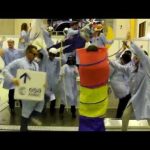
This version of the “Harlem Shake” video, called the “ESTEC Shake”, was filmed on a real ‘electrodynamic shaker’, normally used to test spacecraft at the European Space Agency’s technical centre, ESTEC, in Noordwijk, the Netherlands. One of the major risks faced by satellites stems from the high vibrations they experience during launch. It is essential to test spacecraft and their components under similar conditions on such shakers to make sure they will survive the violent ride into space.
ESA’s Test Centre is the largest centre of its kind in Europe, and one of the largest in the world.
The video was filmed by ESTEC volunteers, in their own time, at zero cost, while the shaker unit was being reconfigured. Strict safety, security and cleanroom procedures were followed during filming.
Aboard the International Space Station, Expedition 35 Flight Engineer Tom Marshburn of NASA discussed his mission, research activities and answered social media questions offered by lead singer Jared Leto of the musical rock group “30 Seconds to Mars” during a tour of Mission Control, Houston by the group March 18. The members of the Los Angeles-based group, which was originally formed in 1998, are huge space enthusiasts, and recently had a sample of their music flown to the station on the SpaceX/Dragon cargo ship for the crew’s listening pleasure.
Aboard the International Space Station, Expedition 34 Commander Kevin Ford of NASA, Flight Engineer Tom Marshburn of NASA and Flight Engineer Chris Hadfield of the Canadian Space Agency fielded questions from social media during a Google Plus hangout February 22, the first for the station. The three astronauts answered questions from the online community who have been interested to watch and ask questions to astronauts both on orbit and on the ground. People from around the world were able to view the Hangout live on NASA’s YouTube channel and were invited to ask questions by uploading a video question to YouTube with the hashtag #askISS, as well as from followers on Google Plus or Twitter, who were able to ask a question in advance of or during the event using the hashtag #askNASA, or on NASA’s Facebook page.
In a first for the agency, NASA hosted a Google+ Hangout live with the International Space Station on Feb. 22, 2013 from 10:30 a.m EST to 11:30 a.m. EST. Google+ Hangouts allow people to chat face-to-face while thousands more can tune in to watch the conversation live on Google+ or YouTube. This unique opportunity connected you, our fans, with astronauts living and working on the orbiting laboratory 240 miles above the Earth.
During the event, several video questions were selected and answered by astronauts on the space station and on the ground. Additionally, NASA asked real-time questions submitted by our followers on Google+, Twitter, and Facebook. During the hangout, astronauts Kevin Ford, Chris Hadfield and Tom Marshburn will answer questions and provide insights about life aboard the station. Station crews conduct a variety of science experiments and perform station maintenance during their six-month stay on the outpost. Their life aboard the station in near-weightlessness requires unique approaches to everyday activities such as eating, sleeping and exercising.
Rock band Marillion have a long-standing interest in science and exploration. In particular, guitarist Steve Rothery is fascinated by the images of Earth as seen from the International Space Station. He wrote a piece of music called “Space” some time ago and thought it would make a great accompaniment to video footage taken by astronauts on the Station.
Steve said, “I recorded this about ten years ago but it was never used. Today, my thought was to dedicate it to André Kuipers and all the space station crews past, present and future.”
Earlier, Marillion had sent a compilation of their songs up to the Space Station for ESA astronaut André Kuipers and the Expedition 30/31 crew.
Original music: ‘Space’ by S. Rothery/Marillion) Video previously published by M. König (images courtesy NASA/Image Science & Analysis Laboratory)
The meteor that exploded over the Urals of central Russia was seen by Eumetsat’s Meteosat-9, at the edge of the satellite view. Hundreds of people were reportedly injured as the meteor’s massive sonic boom caused widespread damage.
ESA’s Flight Dynamics team uses cutting-edge computational techniques to plan, determine and control complex spacecraft trajectories. They apply fundamental physics and mathematics to 21st century spacecraft orbiting Earth and voyaging deep into our Solar System.
The Flight Dynamics team delivers precise orbital determinations enabling ground controllers to know where the spacecraft are located and prepare the manoeuvres to reach their targets like the Moon, Mars, Venus, a comet or a spacecraft constellation. The Flight Dynamics team also conducts mission analysis — they brainstorm about how robotic spacecraft can reach and return data from anywhere in the Solar System.
Flight dynamics scientists work as part of the team operating every ESA mission, whether in low-Earth orbit or soaring deep into our Solar System. They provide precise orbital calculations, determining where the spacecraft are located, which direction they’re facing, where they’re going and how far they’ve travelled.
This information is vital and is used every day not only by the mission controllers but also by supporting teams such as the Estrack station engineer, who have to know where to point their tracking antennas, what time to start ‘listening’ for a signal and how long a spacecraft will be visible.
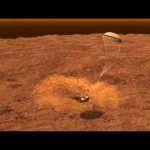
A new rendering of Huygens descent and touchdown created using real data recorded by the probe’s instruments as it descended to the surface of Titan, Saturn’s largest moon, on 14 January 2005.
The animation takes into account Titan’s atmospheric conditions, including the Sun and wind direction, the behaviour of the parachute (with some artistic interpretation only on the movement of the ropes after touchdown), and the dynamics of the landing itself. Even the stones immediately facing Huygens were rendered to match the photograph of the landing site returned from the probe, which is revealed at the end of the animation.
Split into four sequences, the animation first shows a wide-angle view of the descent and landing followed by two close-ups of the touchdown from different angles, and finally a simulated view from Huygens itself — the true Huygens experience.
This animation was released on the eighth anniversary of Huygen’s touchdown on Titan as a Space Science Image of the Week feature.
Animation: ESA–C. Carreau/Schröder, Karkoschka et al (2012). Image from Titan’s surface: ESA/NASA/JPL/University of Arizona
In her final days as Commander of the International Space Station, Sunita Williams of NASA recorded an extensive tour of the orbital laboratory and downlinked the video on Nov. 18, just hours before she, cosmonaut Yuri Malenchenko and Flight Engineer Aki Hoshide of the Japan Aerospace Exploration Agency departed in their Soyuz TMA-05M spacecraft for a landing on the steppe of Kazakhstan. The tour includes scenes of each of the station’s modules and research facilities with a running narrative by Williams of the work that has taken place and which is ongoing aboard the orbital outpost.
You, together with your 500 million fellow citizens from ESA’s 20* European member nations, are the collective owners of one of the world’s leading space agencies.
The European Space Agency is an intergovernmental organisation, a cooperative coming together of its Member States in their national interest and common good.
This new video offers a quick introduction: Europe, meet ESA.
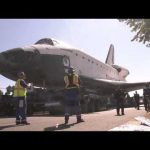
Space Shuttle Endeavour’s two-day trip from Los Angeles International Airport through the streets of Los Angeles to the California Science Center is underway. The planned transport route of NASA’s youngest orbiter takes it past several well-known L.A. landmarks.
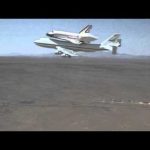
NASA’s 747 Shuttle Carrier Aircraft, carrying space shuttle Endeavour, as it flew over NASA’s Ames Research Center in Mountain Valley, Calif. on Sept. 21.
NASA’s Shuttle Carrier Aircraft (SCA) with space shuttle Endeavour mounted atop arrived Sept. 20 at the agency’s Dryden Flight Research Center on Edwards Air Force Base in California.
Following an overnight stay, the SCA and Endeavour will salute the Edwards Air Force Base area early Friday, Sept. 21 with a low flyby northbound to Sacramento and the San Francisco Bay area. Next the aircraft will travel south, making a pass over NASA’s Ames Research Center, Vandenberg Air Force Base and NASA’s Jet Propulsion Laboratory before heading into the Los Angeles area.
Finally, the SCA and Endeavour will land about noon PDT at Los Angeles International Airport, for an arrival ceremony before Endeavour is taken off the SCA and transported to its permanent home at the California Science Center next month.